Kenneth Booth

Footage captures challenging A47 damaged bridges repair works

GRAHAM’s Highways Director, Dave Brown, has praised his team’s “technical expertise” following the repair of two accident damaged bridges on the A47 in Norfolk. A time-lapse video has captured the painstaking work, which shows two 28-metre-long beams, each weighting ten tonnes, being lifted into position on the bridges at the

Read More »

What is an automated storage and retrieval system (AS/RS)?

Automation is nothing new in the manufacturing and distribution industry. After all, robots have been helping out on production lines since the 1970s, from shuttling parts to constructing car chassis. But the latest wave of automation is both more autonomous and more mobile than ever before – and it’s already

Read More »

Commercial LED Lighting: Worth the Switch

There was a time when commercial lighting meant constant maintenance, high costs and enormous inefficiency, and all that without any guarantee that the lights would be very bright. Industrial lighting was a necessity, but good options were thin on the ground. Luckily, those days are over. Today’s commercial LED flood

Read More »

Is your electric meter smart? – Answering the myths behind smart meters

Misconceptions around advanced technologies often lead to the emergence of urban legends. This is currently the case for the integration of smart electric meters. Here, Jonathan DiGiacomandrea, applications engineering manager at battery specialist Ultralife Corporation, explains some of the truths behind powering the energy saving devices. With a global consciousness

Read More »

Will the sun shine on UK construction this summer?

Fair weather conditions are helping the UK construction industry to recover from the disruption of the unsettled winter of 2018, but there is some doubt over how long this uplift will last. Actuated Valve Supplies have produced a round up of the construction industry at present. According to the IHS

Read More »

Wellbeing is the new bottom line

Property experts gathered in London on Clean Air Day (21 June) to explore wellbeing in the built environment during a Carbon2018 breakfast seminar. Wellbeing is not a new subject it been around for a long time. However, it has suddenly risen up the agenda for building owners, designers and occupants

Read More »

Forbo Flooring Systems announces its ProCure 22 approved status

Increasing its presence further in the healthcare sector, Forbo Flooring Systems has been appointed as an approved supplier on the Department of Health’s ProCure22 Framework for NHS and social care construction schemes in England. This means the company’s floor covering solutions, from entrance to exit, are approved for the healthcare

Read More »

Richardson and Starling celebrate trade title hatrick – Building preservation company picks up collection of awards at trade body ceremony

Scotland’s largest building preservation company, Richardson and Starling, has won a national trade body’s contractor of the year title for a record third successive year. The Cambuslang-based organisation retained the ‘Contractor of the Year, Damp and Timber Treatment’ title at The Property Care Association’s Best Practice Awards held last month

Read More »
Latest Issue
Issue 344 : Sep 2026

Kenneth Booth

Footage captures challenging A47 damaged bridges repair works

GRAHAM’s Highways Director, Dave Brown, has praised his team’s “technical expertise” following the repair of two accident damaged bridges on the A47 in Norfolk. A time-lapse video has captured the painstaking work, which shows two 28-metre-long beams, each weighting ten tonnes, being lifted into position on the bridges at the Saddlebow interchange in Kings Lynn. The restorative programme was necessary following damage incurred by an over-height vehicle. The £3.1m project began last October and was completed in May 2018. It was delayed slightly as a crack was unexpectedly uncovered on one of the bridge decks. The scheme involved jacking the bridge, the hydro demolition of the bridge deck and the removal of the steel edge beam before the damaged beams on the bridge were replaced. The deck was subsequently concreted. “This was a very challenging project and one, which demonstrated the full range of technical expertise of our team,” said Dave. “The footage in the video showcases the complexity of the work involved and how our team rose to the challenge. We are pleased to have supported Highways England in improving road safety while also improving journey quality for drivers.” The repair work to the bridges at the Saddlebow interchange was part of a wider £18m package of work, consisting of approximately 70 different schemes, to maintain the A47 in Norfolk. GRAHAM has also carried out similar works in Cambridgeshire and Suffolk. Highways England Project Manager, Ajith Nair, said: “We’re very grateful to drivers for their patience while we completed this vital work. The footage shows the amount and scale of the work we’ve been doing. It will help drivers to realise how busy we’ve been and why the roads over the bridges needed to be closed while we were repairing them.” GRAHAM has extensive highways experience and has delivered complex projects throughout the UK and Ireland including the award winning A138 Chelmer Viaduct in Chelmsford, Essex and the £277m M80 Stepps to Haggs scheme, which has transformed one of Scotland’s busiest stretches of road network. For more information on GRAHAM’s highways projects please visit: https://graham-uat.hosted.positive.co.uk/projects?expertise=Civil+Engineering

Read More »

What is an automated storage and retrieval system (AS/RS)?

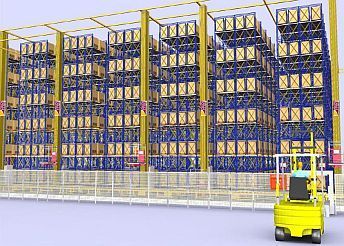
Automation is nothing new in the manufacturing and distribution industry. After all, robots have been helping out on production lines since the 1970s, from shuttling parts to constructing car chassis. But the latest wave of automation is both more autonomous and more mobile than ever before – and it’s already at work in a facility near you. Here’s what you need to know about robots and storage, or what’s known as an automated storage and retrieval system (AS/RS).   An AS/RS is a computer-controlled system that’s designed to locate, place and retrieve loads from racking and other storage. An AS/RS usually operates with complete autonomy, although it will tend to have some human oversight. In large scale operations, the AS/RS will receive its orders automatically in conjunction with an eCommerce system, and will set to work retrieving the items in question.   The AS/RS concept has been around in some form since the 1960s. You may recognise the concept from depictions of archives in science fiction: a robot on a shuttle, lift or crane navigates a line of shelves, plucks out an item, and returns it to the operator. Many of today’s systems operate in a similar fashion, though their abilities have increased: modern systems can now pick smaller, more delicate items, and do so with dramatically improved speed.   The most common automated storage systems operate by moving autonomous vehicles along guided rollers alongside shelves. When they are in position, a series of lifts carry the vehicle up to the correct pallet, which is then withdrawn from the shelf and ferried back. This is often quicker and always safer than involving employees in the retrieval process, and allows human resources to be distributed elsewhere in the business.   An AS/RS using lifts is also known as a Vertical Lift Module (VLM). A VLM allows for storage on more levels than are traditionally available in a pallet racking solution, with the potential for eight or more tiers of as much as 100 ft tall. Such a system can accommodate over 14,000 pallets in just 30,000 square feet of floor space – saving up to 70,000 sq/ft saving on a traditional three-tiered layout. The efficiency savings this provides can then be reinvested in further internal and external expansion for production or distribution purposes.   Amazon’s Kiva robots represent the current pinnacle of this technology. These squat, heavy lifting robots are what’s known as Unit Load AS/RS, and are more reminiscent of giant Roombas than your stereotypical robot. They’ve proved so efficient however that Amazon has rolled them out to its global warehouses, and they now help to manage the bulk of its Amazon Pantry stock.   The robots are able to navigate down aisles of racking without collisions, and can locate pallets by scanning QR codes, a blocky barcode like image. They can then lift an entire pallet on their ‘back’, and carry it to human workers to open and pack the contents. All of this is carried out autonomously based on order volume for various products, and is only overseen by a human controller.   The development of both sensor and wireless technology has dramatically altered the capabilities of an AS/RS. Advanced sensors similar to those used in autonomous cars prevent the robots from colliding with storage units or people, ensuring safe retrieval. The ability to grip and locomote with greater dexterity has also allowed for smaller objects to be transported, and the development of what are known as Mini-Load AS/RS.   Wireless technologies such as RFID, Wi-Fi and NFC meanwhile allow the units to communicate information wirelessly, locating objects which have been tagged with visual codes or microchips. They can then tell a centralised system when they have successfully retrieved the item, automating the inventory management process with absolute accuracy.   Automated storage and retrieval systems have a number of requirements which may be beyond smaller businesses; these include heavy health & safety oversight, centralised inventory management and eCommerce systems, and significant capital investment.   Many businesses may benefit instead from the installation of more efficient, high density pallet racking, or the space saving effects of a mobile shelving solution. For those at the cutting edge, however, AS/RS represents the pinnacle of efficiency savings in storage and distribution, and something to keep a watchful eye on for the future.   This post was written by Invicta Pallet Racking. For over 25 years we have been at the forefront of the archive storage industry throughout the UK and Europe, designing and installing some of the largest racking and storage systems currently found on the market.

Read More »

Commercial LED Lighting: Worth the Switch

There was a time when commercial lighting meant constant maintenance, high costs and enormous inefficiency, and all that without any guarantee that the lights would be very bright. Industrial lighting was a necessity, but good options were thin on the ground. Luckily, those days are over. Today’s commercial LED flood lights are cutting edge, offering features previously thought impossible and revolutionising their surroundings. Let’s look at one sports village in Sutton, where tennis and badminton courts were transformed by the adoption of high-quality LED lighting.   Better quality light  Like most sports, both tennis and badminton need high levels of light in order for players to perform well. There should be minimal glare and shadow, and the court should be as evenly lit as possible. Yet the courts at Sutton Sports Village were dim and in desperate need of an upgrade. Fitted with fluorescent tubes, light level readings were only averaging around 300 lux. The presence of darkness made it hard to spot balls or shuttlecocks until it was too late. The UniBay lighting fixture was designed by UK lighting manufacturers Pulsar in collaboration with England sports bodies and players, and so was a perfect choice for Sutton’s revamp. Whilst most LED lights run using Pulse Width Modulation (PWM), the UniBay130 instead uses continuous, flicker-free light. PWM has a strobing effect on fast-moving objects such as a tennis ball, causing a major distraction for players and coaches, whereas the Unibay solution ensures that Sutton’s players can keep their eyes on the ball at all times. As an additional benefit this lighting emits less heat, ideal for somewhere where people are already working up a sweat. The UniBay is recommended and used by professional tennis players because of the superior quality of light that it produces.   Significantly cheaper  Sutton was paying a premium for its low-quality, high-heat lights. Running costs for the entire club were £31,449 per year, meaning lighting was eating up valuable resources which could be better spent elsewhere. Replacing the commercial lighting produced mammoth savings. The installation of the UniBay130W fittings cut total costs to £7,727 –  a £23,721 annual reduction in expenditure – so the centre was left the ample budget to invest in more exciting areas of the sports centre.   More environmentally friendly  Before making the switch, the carbon footprint of the Sutton Sports Village was at a high level. Per four courts, the amount of carbon dioxide released into the atmosphere as a result of daily running was 141,523 kg a year. A vast emission of greenhouse gas is common in this sector – the UK’s sports sector buildings emit of a total of 10 million tonnes of CO2 every year – and often a major contributor is commercial lighting. By swapping out fluorescent tube lighting for 16 UniBay130W fittings per court, Sutton Sports Village’s emissions and energy use were cut by 75%. The centre has lowered its environmental impact drastically, whilst improving its light quality and thus its appeal to members. A win all round.   Worth the switch So often upgrading lighting is put to the bottom of the pile, but as Sutton has shown, it makes a real and instantly-noticeable difference to quality, cost and carbon footprint. For an easy way to transform your workspace, switching to high-quality LED lighting is absolutely worth it.

Read More »

Is your electric meter smart? – Answering the myths behind smart meters

Misconceptions around advanced technologies often lead to the emergence of urban legends. This is currently the case for the integration of smart electric meters. Here, Jonathan DiGiacomandrea, applications engineering manager at battery specialist Ultralife Corporation, explains some of the truths behind powering the energy saving devices. With a global consciousness to reduce carbon emissions, utility companies across the UK are rolling out smart meters in an attempt to help consumers take greater control over their energy consumption. Smart meters provide near real-time energy usage information, which can be closely monitored so that consumers can conserve energy and reduce costs as a result. This motion is part of the UK Government’s plans to have every eligible home in the UK fitted with a smart meter by 2020. While electricity users will be able to reap the benefits of the modern electrical grid, the introduction of smart meters is expected to save utility companies around £300 million a year, according to research from Which? Of course, it’s not just the UK investing in smart meters. In 2016, 70.8 million smart meters were installed across the US, but the smart electric meter is currently the most mature in China and accounted for 70 per cent of the total smart meter shipments in 2016. With forecasts expecting this figure to increase across the world, many consumers are concerned over the safety, reliability and functionalities of the devices, particularly for domestic use. Fears over the safety of smart meters have emerged because of the devices producing a small amount of radio frequency (RF) energy while in operation. Research from the Federal Communications Commission shows that the level of RF emitted by smart meters is below that of mobile devices and so does not hold a significant threat to human health. Another concern for smart meters is the accuracy of the data recorded. In comparison to traditional analogue meters, which require users to submit the meters readings to the utility company to find out the usage and expenditure, smart electric meters feature their own dedicated and secure communications system. This automatically transmits the information to the utility provider, eliminating the practice of estimated bills. Smart meters are required to meet stringent regulations before going into service. In fact, manufacturers are expected to supply independently certified testing results, demonstrating that the meter can generate accurate readings. Often, the meters are still subjected to further tests prior to installation by utility companies, to mitigate the chances of a meter that clocks the consumption too fast. To transmit information back to the utility provider, smart meters require short bursts of power. This means that the batteries installed in the device must support high continuous discharge, offering high-pulse current for wireless and programmable logic controller (PLC), bidirectional transmissions. In addition to this, manufacturers tend to integrate non-rechargeable batteries into their smart metering applications. This reduces the maintenance required, but means manufacturers require batteries that have a long service life. In comparison to traditional chemistries, Ultralife’s Lithium Manganese Dioxide (Li-MnO2) and Lithium Thionyl Chloride (Li-SOCI2) battery chemistry has proven performance in servicing metering applications for up to ten years. This increases the reliability and convenience of smart meters but as they work as part of the smart grid, the devices also offer greater efficiency and service to consumers. With the ability to electronically report the location of any power outages, utility providers can quickly locate and restore power to the affected area. To help overcome the myths surrounding smart meters, manufacturers need to ensure they are employing the most appropriate power sources for their devices. By considering the characteristics needed for smart meter applications, utility companies can offer consumers a simpler method to managing their utility costs and provide more efficient energy as a result.

Read More »

Will the sun shine on UK construction this summer?

Fair weather conditions are helping the UK construction industry to recover from the disruption of the unsettled winter of 2018, but there is some doubt over how long this uplift will last. Actuated Valve Supplies have produced a round up of the construction industry at present. According to the IHS Markit/CIPS UK Construction Purchasing Managers Index in June, total activity in the industry was given a boost by companies catching up on work schedules delayed during the winter. This follows months of severe weather conditions, including the so-called Beast From The East and a less severe, although still disruptive, Easter weekend. With a more settled outlook in May, the seasonally adjusted PMI stood at 52.5, unchanged since the previous month, but a sign of improved trading in the sector. The report, published in early June, stated: “The figure was indicative of a moderate increase in total activity, albeit one that was subdued in the context of historical data. “Some firms suggested that unusually good weather conditions had supported activity and enabled them to continue catching up after prior months’ weather-related disruptions.” Within the three market segments – residential, commercial and civil engineering – there were various reasons to be optimistic, with residential remaining the largest contributor to the sector as a whole. Both civil engineering and commercial projects recorded positive growth for the second month running, with the latter achieving greater expansion than in April. While residential growth was a little slower, this came off the back of a substantial pickup in activity in April, as the snowfall of winter cleared. Several causes for concern are keeping optimism for future months lower than it might otherwise be, including a shortage of skilled staff, high price inflation on purchasing costs, and supply chain issues leading to longer delivery times for parts and materials. The report’s author Sam Teague said: “Activity in May was once again buoyed by some firms still catching up from disruptions caused by the unusually poor weather conditions in March, and a renewed drop in new work hinted that the recovery could prove short-lived.” A score of 50.0 on the UK Construction PMI indicates no change in the size of the sector – so although the score of 52.5 is the same as in April, it still represents modest positive growth. Commercial activity growth hit a three-month high, while residential kept its position as the largest segment for the third month running, despite falling back slightly from April’s 11-month high expansion rate. New order books are down, however, for the fourth time in five months, with future growth optimism standing at a seven-month low in May, and this muddled picture is an indication of the uncertainty surrounding economic and political issues at present. With the summer expected to remain settled for a considerable time to come, conditions are right for good performance in UK construction – if the demand is there. But with May’s growth stemming largely from projects delayed by previous bad weather, UK construction firms will be working hard to capitalise on the new orders that come in and to drive profits while the sun shines.

Read More »

Wellbeing is the new bottom line

Property experts gathered in London on Clean Air Day (21 June) to explore wellbeing in the built environment during a Carbon2018 breakfast seminar. Wellbeing is not a new subject it been around for a long time. However, it has suddenly risen up the agenda for building owners, designers and occupants due to advances in technology changing the way we work and the evolving needs of the UK workforce. The next generation of employees, known as Generation Z, are not willing to compromise on health and happiness viewing their own wellbeing as the ultimate bottom line. So for organisations to attract and retain the best talent, and ensure good staff productivity, they must be able to provide a healthy and comfortable workplace. According to Dr Michelle Agha-Hossein, Sustainability Engineer at BSRIA: “Building owners and operators can play a vital role in making occupants happier and more productive by moving towards a more proactive approach to wellbeing.” She explored the functional, physical and psychological features that can be measured to assess the wellbeing of a building ranging from energy and space to greenery and décor to thermal comfort and indoor air quality.  Dr Agha-Hossein cited: “Based on international standards, you can never reach 100% happiness in terms of thermal comfort in a work environment. There will always be approximately 5% of people not thermally comfortable.” She also stated indoor air quality is the most important factor. In the UK around 40,000 deaths annually are linked to air pollution making it the second biggest killer – only active smoking kills more. Even more alarming Peter Dyment, Technical Manager, Air Filtration at Camfil added: “We no longer suffer from the visible pollution it has moved to the invisible. Some years ago diesel engines were characterised by black sooty smoke. Advances in technology means that emissions from diesel cars appear cleaner but the reality is they contain billions of harmful PM1 particles.” Two European Directives set outdoor air pollution limits: Directive 2004/107/EC and the Air Quality Framework Directive 2008/50/EC. Different sets of air quality regulations implement those standards in the UK, which a number of UK cities including London, Manchester and Glasgow are currently failing to meet. Defra predicts that those standards will not be met until 2020, or as late as 2025 in Greater London. Dyment commented “We spend on average 90% of our life indoors and therefore it is vital we make our City buildings havens against outdoor air pollution.” It is still early days for standards for air quality in buildings. However it is expected that society will soon demand action and with increasing pressure on the UK Government we could potentially see it becoming part of UK building regulations. There has certainly been an increased appetite from corporations, as well as the real estate industry, for wellbeing schemes that measure air quality as part of the wellness of a building. Victoria Lockhart, Director of Market Development, Europe at the International WELL Building Institute™ (IWBI™), which delivers the WELL Building Standard™ (WELL™), stated: “We have noticed that the healthy buildings movement here in Europe has been driven by developers and landlords of assets who are actively adopting well-being measures in their buildings as a strategy to attract and retain the best tenants in their properties.” This growing interest resulted in BRE joining forces with IWBI in November 2016 to help project teams who are using both BREEAM and WELL deliver a more sustainable and healthier built environment as efficiently as possible. Dr Christopher Ward, Principal Consultant at BRE added: “To help streamline the respective assessment processes for projects seeking certification against BREEAM and WELL, a BREEAM Briefing Paper has been published that highlights the synergies between the BREEAM and WELL technical requirements.” With so many organisations involved in the research and setting of standards for wellbeing – working together in the interests of promoting a healthier and safer built environment – it is inevitable that even more evidence based research and case studies will emerge showcasing the benefits of a wellbeing strategy. As pointed out by Joanne Merry, Technical Director at Carbon2018: “It will soon become standard to have a dedicated wellbeing policy. After all wellbeing should be a right not a privilege.” The BREEAM Briefing Paper ‘Assessing Health and Wellbeing in Buildings: Alignment between BREEAM and the WELL Building Standard’ is free to download from the BREEAM and WELL websites. For further information or comment, please contact: Lisa Turner Head of Marketing 01252 87 87 22 lisa.turner@carbon2018.com  

Read More »

Forbo Flooring Systems announces its ProCure 22 approved status

Increasing its presence further in the healthcare sector, Forbo Flooring Systems has been appointed as an approved supplier on the Department of Health’s ProCure22 Framework for NHS and social care construction schemes in England. This means the company’s floor covering solutions, from entrance to exit, are approved for the healthcare environment. The ProCure22 (P22) process is designed to achieve improved value for money and reduce exposure to risk through a simplified procurement procedure. Committed to developing and offering products that contribute in a positive way to the health and comfort of the individual, Forbo’s floor coverings are designed to be good for people, good for buildings and good for the environment. Offering a 10-year warranty, with discounts of up to 47% and pricing fixed for 12 months, Forbo can ensure that healthcare environments have a product selected, which is fit for purpose and fit for the future – providing savings without any compromise. Commenting on the company’s achievement, Sharron Kapellar, National Framework Manager at Forbo Flooring Systems, said: “We have undertaken many projects within NHS Trusts and social care throughout England, including flooring for acute, mental health and community facilities, and are delighted to have been awarded with the ProCure22 approved supplier status. “The P22 process definitely reduces exposure to risk for clients. By working with an appointed framework Principal Supply Chain Partner (PSCP) NHS Trusts won’t have to undertake an oJeu procurement process. “And, from a flooring perspective, we can help create stylish and functional flooring schemes, while still meeting the various floor covering requirements outlined in Health Building note 00-10, Part A: Flooring. From sheet systems for clinical areas, static control flooring for X ray rooms, slip resistant flooring in wet clinical areas, carpet tiles in offices and entrance flooring systems, which prevent pollutants from entering facilities, Forbo has a wide portfolio of cost effective flooring solutions to meet a variety of requirements, as well as savings through transparent trading and better purchasing power. “Apart from this though, it’s our healthcare experience that really adds value to a project’s success; our area managers will assist with any specifications, technical and design advice, all supported by an efficient sample service and even a free collection service for installation waste.” Forbo also takes a proactive approach when it comes to developing its healthcare knowledge. For example, it has partnered with the University of Stirling’s Dementia Services Development Centre (DSDC) to review over 1000 floor finishes, assessing their suitability for use in dementia-friendly environments.

Read More »

BALI GoLandscape’s show garden of two halves awarded Gold at RHS Hampton Court

The British Association of Landscape Industries (BALI) and the Royal Horticultural Society’s (RHS) ‘Best of Both Worlds’ show garden, built by a team of 23 students, has been awarded a prestigious Gold medal at RHS Hampton Court Palace Flower Show 2018. Judges were left suitably impressed by the garden, designed by BALI Registered Designer Rosemary Coldstream MBALI MSGD of Rosemary Coldstream Garden Design, which has been divided into two halves, one traditional and one contemporary, demonstrating different skills, materials and techniques and including a variety of both hard and soft landscaping elements. The garden, which measures over 100sqm, features a large variety of plants including types of agapanthus, buxus sempervirens, pachysandra, astrantia, geranium, lavandula, salvia and thalictrum. The garden also displays a row of pleached Carpinus, a Cretan terracotta water feature and a sunken cedar bench surrounding a luxury granite paved fire pit. The garden was jointly sponsored by BALI and the RHS to promote GoLandscape, a national industry careers initiative launched by BALI earlier this year following a successful pilot phase. BALI’s Education Officer Stephen Ensell, who has led the project, commented ‘By involving students and apprentices in the construction of the garden, including laying paving and planting over 1,000 species, we are providing them with a platform from which to demonstrate their skills in front of the wider landscape industry. I can think of no better way of promoting the opportunities available in our industry than by showcasing a garden of this size to the thousands of visitors expected over the next few days.’ BALI’s Chief Executive Wayne Grills said ‘BALI continues to receive a tremendous amount of support for GoLandscape, which was designed to promote landscaping as a viable and rewarding career option for students choosing their future career path. It was also set up to help students and apprentices already studying horticulture, from entry level through to degree level, to find employment within the industry, and to combat the current skills gap crisis faced by our industry.’ He continued ‘By working with industry partners, including the RHS, BALI and its GoLandscape Ambassadors are working tirelessly to help promote and showcase the skills and talents of our students and apprentices, to really help get the message across that high quality landscaping is essential for improving our environment, health and wellbeing and for providing a sustainable future for all.’ On Monday 2 July, BALI presented two awards to two students, following a vote from mentors, to reward the top hard landscaping student and top soft landscaping student for their skill and professionalism. The prize package included a Swiss made pruning shear worth over £100, courtesy of Felco, and a certificate. The winners, Jamie Anderson of Southern Land Services and Natalie Fairs from Capel Manor College, were presented with the prizes on the garden in front of media representatives and journalists during RHS Hampton Court Palace Flower Show’s official press day. BALI and the RHS would like to personally congratulate all of the students who helped build the GoLandscape show garden and say a huge ‘thank you’ to the mentors who oversaw the design and build of the project, including BALI’s Education Officer Stephen Ensell, BALI Registered Designer Rosemary Coldstream MBALI MSGD, David Dodd and Mark Britton of BALI Registered Contractor The Outdoor Room, Jake Catling of BALI Registered Contractor The Landscaping Consultants, and Anna Butterfield.  

Read More »

Richardson and Starling celebrate trade title hatrick – Building preservation company picks up collection of awards at trade body ceremony

Scotland’s largest building preservation company, Richardson and Starling, has won a national trade body’s contractor of the year title for a record third successive year. The Cambuslang-based organisation retained the ‘Contractor of the Year, Damp and Timber Treatment’ title at The Property Care Association’s Best Practice Awards held last month at The Slate, University of Warwick. The firm also walked away with the ‘Innovation’ title as well as two highly commended accolades in the ‘Training and Staff Development’ and ‘Sustainability’ categories. “We are proud to win these prestigious awards and I would like to thank all of our staff who work hard to deliver a quality service.” Commented Richardson and Starling’s managing director, Graham Duncan. “To repeat our success is a fantastic achievement but to also become the first company to achieve UK contractor of the year for three years in a row is testament to our people, process and property care services.” Stephen Hodgson, chief executive of the PCA, added: “It was a record night for Richardson & Starling with their well-deserved victory. “The level of professionalism and organisation throughout the company, at every level, is testimony to the hard work and effort of the management and staff.” Richardson and Starling is the largest company in the Veitchi Group with 12 offices and has been providing property care services since 1935. Earlier this month the Veitchi Group revealed its latest financial results which saw turnover increase by 7% to £41.55m and Group profits after tax rise to £1.26m in the period to November 2017.

Read More »

New home for the British Coatings Federation officially open for business

On June 27th, over 50 guests from the coatings, printing inks and associated industries gathered to celebrate a new chapter in the 106-year history of the British Coatings Federation. The Lord Mayor of Coventry, Councillor John Blundell, together with BCF president David Beckford and BCF CEO Tom Bowtell, cut the ribbon on the trade body’s new state of the art building ‘Spectra House’ in Westwood Business Park, Coventry. Coventry was selected due to its central location for member meetings, excellent transport links and good value for money.  The stand-alone building spans two floors – the BCF staff situated on the ground floor, with three dedicated meeting rooms, each fitted with state of the art wireless touch screens. Commenting on the move, BCF President and Managing Director of Pronto Paints, David Beckford said: “It is a fantastic milestone in our recent history to be able to afford to invest in our own building, and gives us a long term secure location for our members to meet.” Tom Bowtell, BCF’s CEO added “We’ve put together a great new back office team to support the members from our new home – we look forward to welcoming members and guests to Coventry in the near future.”

Read More »