Kenneth Booth

Roads Need More Electricity: They Will Make It Themselves

That toll gate, street light and traffic monitoring system all need electricity. Later, roads that deice and charge vehicles at speed will need huge amounts of electricity. For now, electricity for road systems is provided by very expensive infrastructure to the grid except for a few solar/ wind street lights

Read More »

How accreditations helped drive Total Recycling’s growth

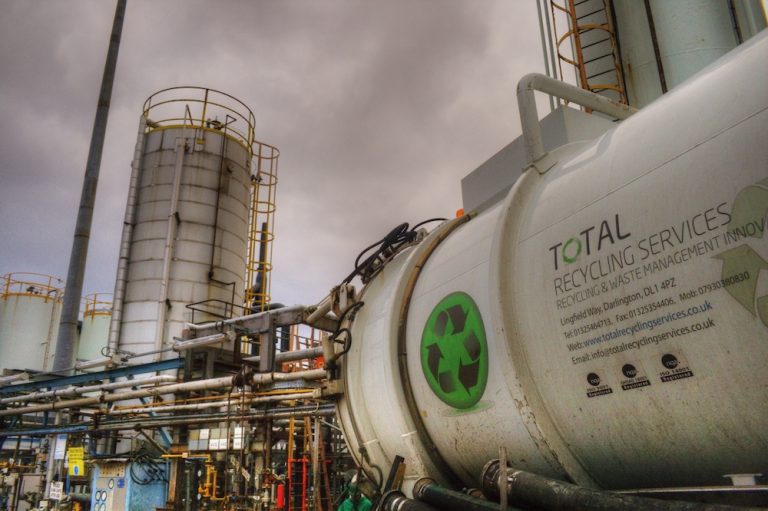
Darlington-based waste management company, Total Recycling Services believes in the importance of acquiring accreditations. Rather than just ticking a box, the multi-million-pound organisation strives to go over and above and is urging other businesses to do the same.  Since beginning in 2009, Total has earned accreditations from professional bodies such

Read More »

All of UK ‘should have high-speed rail by 2050’

High-speed rail connecting all of the UK mainland by 2050 would put “rocket fuel in Britain’s economy”, a leading transport think tank has proposed. The move would shrink a long-standing productivity gap with countries such as Germany, Italy and France, Greengauge 21 said. It would also reduce an over-reliance on

Read More »

GRAHAM completes crucial South East London rail network upgrades

GRAHAM’s rail teams worked around the clock over the Bank Holiday weekend to deliver crucial upgrades to South East London’s rail network. The essential bridge replacements and supplementary works took place under abnormal track possessions at Bellenden Road Underbridge (Southwark) and Westdown Road Underbridge (Lewisham). Both projects involved the replacement

Read More »
Latest Issue
Issue 344 : Sep 2026

Kenneth Booth

GOVERNMENT’S £400m REPAIR FUND IS AN OPPORTUNITY TO CHANGE OUR CLADDING CULTURE, SAYS PURA FACADES

Prime minister May’s announcement last month to spend £400m on the repair & refurbishment of 158 high rise buildings identified within England’s social housing estate has been widely welcomed by the construction industry and housing chiefs alike. However, the considerable war chest earmarked by government to bring these dwellings up to standard should also be used to create a new culture in UK housing, which treats residents in the private and public sector with equal respect. That is the view of James Butler, commercial director of PURA Facades, part of Vivalda Group, the UK’s largest independent distributor and fabricator of high performance cladding systems. ‘Based on the average cladding area of 3,000 sq.m for a high rise, this budget suggests a figure of over £2.5m per tower, which on the face of it appears generous,” he said. “Our calculations indicate that it’s more than enough to dismantle the existing cladding and replace this with quality, market-leading incombustible facades. And this includes all the elements of a through-wall rainscreen cladding system comprising fireproof linings and fire breaks, insulation, weatherproof sheathing boards and all the necessary associated fixing systems.” “There should also be enough within this budget to install the necessary fire protection measures as long as each tower’s needs are carefully assessed on a case by case basis,” said Butler. “While ensuring all of these homes benefit from the very best safety precautions the industry can offer, it’s also an opportunity for councils and social housing organisations to send a strong message to both residents and the construction sector in general; that there should be no gap in the quality of products being used on public or private housing. The Grenfell enquiry, led by Sir Martin Moore-Bick, has shown that there is a definite class theme running through this sorry chapter – and this funding provides us with the opportunity to change that divisive culture.” James Butler highlighted the fact that Pura had significant experience supplying high performance products to the private sector, and that there was no reason why this ‘quality first’ approach should not replace the recently discredited ‘value engineering’ process, which was widely used in the public sector as a cost cutting tool.   He said: “While the image of cladding may have been tarnished by association with the Grenfell tragedy, the fact remains that there are many excellent, fireproof products out there that would be ideal for the 158 high rise residences awaiting refurbishment. We have the budget now, all we need is the will power and imagination from local council leaders and their appointed architects to change the culture of cladding within social housing.” Pura has now begun working in the social housing market, demonstrating how products and methodologies used in the private sector can be adopted by public sector developments. Butler said: “While we have already worked on a couple of social housing projects that have used non-flammable natural cladding including terracotta or glass reinforced concrete (GRC) cladding from manufacturers such as Rieder of Austria, we’re also excited to see a new generation of aluminium cladding now coming onto the market.” “Valcan is a well-established, respected manufacturer of aluminium panels that has developed Vitracore G2, which comprises exclusively layers of aluminium which form an internal, non-flammable honeycombed centre. This type of innovation shows that the market is responding positively to Grenfell and this should enable architects to consider this new generation of cladding for the social housing sector.”

Read More »

Uni’s long-serving Director of Estates and Facilities becomes Deputy Lieutenant of West Yorkshire

Colin Blair MBE, at the University of Huddersfield, was commissioned by the Lord-Lieutenant of West Yorkshire, Dame Ingrid Roscoe. THE University of Huddersfield’s Director of Estates and Facilities, Colin Blair MBE, has become a Deputy Lieutenant of West Yorkshire. He was commissioned by the Lord-Lieutenant, Dame Ingrid Roscoe, who holds the historic role of Queen’s representative in the county. The Deputies selected and appointed by Lords-Lieutenant are individuals who have made valuable contributions to the nation or the local community.  Their role is to promote and support the Lieutenancy and to represent the Lord-Lieutenant in performing a range of public duties The Vice-Chancellor of the University, Professor Bob Cryan CBE, has served as a Deputy Lieutenant of West Yorkshire since 2012 and he was one of the first to congratulate Mr Blair, who receives his commission alongside dignitaries who include Yorkshire tourism chief Sir Gary Verity. Mr Blair said that he was honoured to become a Deputy Lieutenant. “Working on Royal visits to the University of Huddersfield has given me a valuable insight into just how hard members of our Royal Family work in order to support the community, and into the importance of the Lord-Lieutenant’s office in making their visits a success.  It will now be my privilege to give something back and play a wider role,” said Mr Blair. He was awarded his MBE in the 2015 New Year’s Honours List.  It recognised his key role in ensuring that the University has one of the UK’s highest-quality campuses, with a continual programme of development. Mr Blair was a project engineer in the private sector before joining Kirklees Council in 1983 as head of property maintenance.  He was then appointed Senior Building Services Engineer at the University and in 1998 Mr Blair became Director of Estates and Facilities. There has been a steady sequence of architecturally and technologically innovative new structures, one of the most recent being the £27 million Oastler Building, opened by the University’s Chancellor, HRH The Duke of York. On a recent visit to the University, The Duke unveiled the foundation stone of the £30 million Barbara Hepworth Building, due for completion in 2019. The University has been widely praised for its adaptation of historic properties that include canalside Victorian mills.  The campus has one of the largest percentages of listed buildings of any Higher Education institution, presenting Mr Blair and his team with a wide variety of maintenance challenges and responsibilities. Colin Blair is a Chartered Engineer and has an MSc (Distinction) in Facilities Management.  He served for eight years on the National Executive Committee of the Association of University Directors of Estates and served as the organisation’s treasurer and chaired its North East Region.  He is a Fellow of the Chartered Institute of Building Services Engineers. Earlier this year, he achieved Chartered Managers status from the Chartered Management Institute, of which he became Companion in 2017.

Read More »

‘BACK TO BASICS APPROACH NEEDED TO IMPROVE ROAD OPERATIVE SAFETY’, SAYS AGGREGATE INDUSTRIES CONTRACTING

As the construction and road surfacing industry comes under pressure to reduce on-site accidents, Aggregate Industries’ Contracting Division has said that a ‘back to basics’ approach could be the key to improving site safety. With recent figures1 revealing that UK roads are the tenth most congested in the world, the role of the roadwork operatives, typically involving work on the live highways network, has become increasingly challenging. A previous study by Oxford University2 ranked it as the 16th most hazardous job in the UK, and Highways England estimates that 12 road workers have lost their lives on the network over the past 10 years.3 In response, there is an increased onus on all stakeholders from across the industry to take positive action to improve the health, safety and welfare of roadwork operatives – and while embracing new technological advancements has a part to play; Aggregate Industries says there is also a job to do in fixing the safety basics.   Paddy Murphy, Managing Director of Contracting Services at Aggregate Industries, commented: “While there is certainly a raft of new technologies on the market which can play a huge role in aiding the road operative safety plight, the reality is that there is also a big job to do in ensuring that our operatives abide to the basic safety measures. This begins with not only providing all workers with the correct task-based training and awareness of site risks, but by leaders providing a visible personal commitment to safety and leading by example.   “Site behaviours need to be monitored to ensure that everyone is adhering to current best practice by providing regular refresher sessions, as required. It sounds simple, but regardless of deadlines and pressures, it is vital that workers take the required rest-breaks and have access to adequate welfare facilities.   “Asides from site safety, it’s also about ensuring the health and wellbeing of staff. At Aggregate Industries, for example, our ‘Healthy You’ initiative provides workers with ongoing advice, guidance and support on how to deal with a variety of real health issues both in and outside of the workplace; from mental health and stress support, through to nutrition and fitness advice – all of which has been shown to help workers in their day-to-day.”   Whilst Highways England delivers a £15billion programme designed to improve the UK’s motorways and main A-roads as part of their Road Investment Strategy, the government has also committed £350 million to improving the UKs local roads.   Paddy added: “Amid hugely vast targets to improve Britain’s transport infrastructure, coupled with increased demand on our roads and levels of traffic, it has never been a more apt time for the industry to place a greater focus on the safety and wellbeing of staff than ever before. If we don’t get the safety basics right and iron out any issues now, the reality is that we may encounter even bigger issues down the line as pressures and workloads increase.”   For further information about Aggregate Industries, visit www.aggregate.com.  

Read More »

Roads Need More Electricity: They Will Make It Themselves

That toll gate, street light and traffic monitoring system all need electricity. Later, roads that deice and charge vehicles at speed will need huge amounts of electricity. For now, electricity for road systems is provided by very expensive infrastructure to the grid except for a few solar/ wind street lights in China and Korea for example. However, as more and more capabilities are added to roads instead of simply covering a country with extra roads, they are starting to make their own electricity, notably as solar road surface but then with added silent wind turbines, photovoltaic verges and barriers and more. There is also highly speculative work in the USA and UK on garnering power from road surface movement using piezoelectrics and electrodynamics and even its heat. China plans to create an intelligent transport system by 2030. The country hopes to build smart roads that will not only be able to charge electric cars as they drive but also monitor temperature, traffic flow and weight load using artificial intelligence. Indeed, like France, the Netherlands and the USA it already has trials of extended lengths of solar road which cost no more than regular roads. In an alternative approach, vehicles go under tunnels of solar panels that also support lighting, light-emitting signage and monitoring equipment using the electricity made where it is needed. See the IDTechEx Research report, “Electrically Smart Roads 2018-2028” for more. Raghu Das, CEO of IDTechEx says, “The spiral vertical axis wind turbines VAWT in Asia rarely rotate because they are too low but much higher versions are planned on large UK roadside vehicle charging centres that should work well. H shaped VAWT is also gaining traction – much slower and quieter than the propeller shape which vibrates and keeps you awake at night in an urban area. The price gap between the ubiquitous polycrystalline silicon solar cell and the much more efficient single crystal silicon is narrowing. That means that road furniture such as bus shelters and smart gantries will likely go for more solar rather than adding wind power in many cases because wind power needs a lot of maintenance and its price is not dropping as rapidly.” The IDTechEx Research report, “Off Grid Electric Vehicle Charging: Zero Emission 2018-2028” analyses that aspect. The prototype of a smart road is already in place on an expressway outside of Jinan, providing better traffic updates as well as more accurate mapping. Verizon’s IoT division has launched a project around intelligent asphalt, which it thinks has the potential to significantly reduce fossil fuel emissions and save time by reducing up to 44% of traffic backups. It has partnered with Sacramento, California, to test this theory. “By embedding sensors into the pavement as well as installing cameras on traffic lights, we will be able to study and analyze the flow of traffic. Then, we will take all of that data and use it to optimize the timing of lights so that traffic flows easier and travel times are shorter,” explains Sean Harrington, vice president of Verizon Smart Communities. Colorado’s Department of Transportation has recently announced its intention to be the first state to pilot smart roads by striking a five-year deal with a smart road company to test the technology. Like planned auto-deicing roads elsewhere, the aim of this project is, first and foremost, to save lives. The technology will detect when a car suddenly leaves a road and send emergency assistance to the area. The IDTechEx Research report “Electrically Smart Roads 2018-2028” describes how others work on real time structural monitoring of roads and embedded interactive lighting and road surface signage. “Smart pavement can make that determination and send that information directly into a vehicle,” Peter Kozinski, director of CDOT’s RoadX division, tells the Denver Post. “Data is the new asphalt of transportation.” Sensors, processors and other technology are embedded in the Colorado road to extend capability beyond accidents and reach into better road maintenance. Fast adoption relies on the ability to rapidly install sensor-laden pavement or lay concrete slabs. Attention therefore turns to fast adaptation of existing roads. Indeed, even for the heavy coil arrays used for dynamic vehicle charging, in Israel there are machines that can retrofit into the road surface at a remarkable two kilometres of cut and insert in a day. “It’s hard to imagine that these things are inexpensive, with all the electronics in them,” Charles Schwartz, a professor of civil and environmental engineering at the University of Maryland, tells the Denver Post concerning the vehicle sensing project, “but CDOT is a fairly sophisticated agency, and this is an interesting pilot project. We can learn a lot, even if the test is only partially successful.” On 19-21 June IDTechEx are hosting the Business & Technology Insight Forums in Cambridge, UK. These detailed but concise sessions hosted by experts will give the latest insights on Off-Grid Electricity Generation, New Off Grid Energy Harvesting Technologies and more. Learn more and register at www.IDTechEx.com/Cambridge.


Read More »

BUREAU VERITAS LOBBIES DUTYHOLDERS TO STEP UP ‘SAFETY FIRST’ APPROACH AHEAD OF 18th EDITION REGS

With little under a month to go until the highly-anticipated 18th Edition of the IET Wiring Regulations come into force, Bureau Veritas is calling on duty holders to step up efforts aimed at reducing the safety risk posed by poor electrics. Due to be published in July, BS 7671 – IET Wiring Regulations 18th edition will apply to all new and rewired installations designed after January 2019. The legislation is set to include a number of significant changes in relation to protection against fire, protection against overvoltages and clarity on special location installations, in a bid to optimise safety in domestic, industrial and commercial locations. The more stringent standards will look to address the risks presented by faulty electrical installations and wiring systems, after estimates show that electricity is the leading cause of over 20,000 accidental fires in the UK each year1. In the run up to implementation, global certification firm Bureau Veritas is urging all duty holders to review their existing electrical safety standards and intensify their ‘safety first’ approach to compliance. Nathan Cliff, electrical principal engineer for electrical systems at Bureau Veritas, said: “With poor electrical installations still responsible for five accidents in the UK every single day, it’s no surprise the 18th Edition will force us as an industry to place a greater emphasis on the protection of people. “For duty holders, our advice is clear – do not wait until the regulations take hold to take action. Instead, start by reviewing existing electrical safety protocols to ensure they take a ‘safety first’ approach to protecting employees, students and residents so that best practice is achieved every step of the way.” According to Bureau Veritas, one important aspect for duty holders to consider is that the 18th edition puts a greater onus on a risk assessment when it comes to protection against transient overvoltage (e.g. lightning) required for buildings to protect against the risk of fires and loss of supply. In addition, protection must be provided for high risk and sensitive locations, such as medical locations, heritage buildings, banks, IT centres etc. Nathan adds: “For many, these new regulations will no doubt be hard to decipher and put into practice. However, it’s literally a matter of life and death for duty holders to get to grips with these reforms as soon as they can as achieving compliance now ahead of the January 2019 deadline will, ultimately, help to save lives.” To find out more about Bureau Veritas please call 0345 600 1828 or email info@uk.bureauveritas.com. Alternatively, please visit www.bureauveritas.co.uk

Read More »

New Biomass Boiler turned on at Glastonbury DC to improve carbon emissions

Snows Glastonbury DC unveiled their new Biomass Boiler this week. We sell over 1000 products and some require milling to meet product specifications. Our Glastonbury site has the facility to complete this process, which can produce off-cuts of wood. These off-cuts are a valuable fuel and will be used for the new renewable energy source. The system provides a whole range of benefits including; Reducing Carbon Emissions: The Biomass boiler produces a fraction of carbon emissions that fossil fuels make, and releases contemporary carbons back into the environment meaning carbon levels are consistent and sustainable. Improving efficiency This modern technology operates at 90% efficiency which is vastly higher than conventional boilers. Producing a renewable energy The energy created by the boiler will be re-distributed back into the site and used for power & lighting. Financial benefit The boiler presents key financial benefits, including a £12,000 government payback scheme, which will be re-invested into the site to improve efficiencies even further.

Read More »

How accreditations helped drive Total Recycling’s growth

Darlington-based waste management company, Total Recycling Services believes in the importance of acquiring accreditations. Rather than just ticking a box, the multi-million-pound organisation strives to go over and above and is urging other businesses to do the same.  Since beginning in 2009, Total has earned accreditations from professional bodies such as the International Organization for Standardization, British Standards Institution, and the Contractors Health and Safety Assessment Scheme amongst others. Andy Dobson, Operations Director at Total Recycling Services knows accreditations inside out and with the help of a dedicated Integrated Systems Manager, he has guided the company throughout its growth from a few contacts and members of staff, to a £15m turnover and over 97 staff operating from its Darlington site.  To help bring some clarity, Andy, explains why accreditations are of top priority at Total Recycling Services and why they should be for any businesses who are wanting to grow. He said: “The simplest way to put it, is that accreditations give us a route into a lot of our customers.  “There are a lot of customers that won’t even entertain us if us don’t have the relevant documentation. These customers are the big blue-chip companies that place a lot confidence in the people they choose to work with and without the evidence to show you are a credible company, they won’t even give you a second glance.  “What these customers ideally want is for their systems to align with yours and be of a similar standard and as ISO is the internationally recognised accreditation it means there are more doors open to us as a company.  “So, if you share the same qualification, your customer will be happy and confident that you have the same things in place. “  Total Recycling Services works with number of large companies including Akzo Nobel, Nissan, Hitachi and Caterpillar.  Andy, continued: “The companies that we chase, the ones we want to work with. We wouldn’t get through the tendering process without the accreditations we have.  “Most of the big companies now have tender packs that are sent out and we have to provide to them the relevant documentation before we even try to tender.  “It’s not just a case of meeting with them and having a cup of tea and some biscuits, we have to show we have BSEN ISO 9001:2015; BSEN ISO14001:2015; OHSAS 18001:2007 as a first step, as well having the documentation available to show how this was achieved  “Pretty much, if you can’t tick that box you have no chance with the tender. “At Total Recycling Services, we’ve held ISO accreditations since the first year that we opened in 2009, working to their principles. Having them has certainly helped us to work alongside a lot of the larger companies in the region.   “However, for us it’s not about passing something on an annual basis, they’re about continually working at them and driving improvement all year round as well as giving a solid foundation for legal compliance, particularly with Health, Safety and Environmental matters, which are critical in our industry.   ‘All systems need to be audited on a regular basis, allowing ongoing opportunities for improvement and being able to demonstrate that you’ve done it as well, year on year.  “Sharing good practice with our customers through this process has also helped. If a customer has developed a good working method or safety system for example, and we can adopt that too – it gives them the additional confidence that we share similar goals. A real working partnership can develop this way.  “It’s absolutely beneficial to all companies to seek out these accreditations. For Total Recycling Services its helped us take that step to where we want to be with our customers and our business. We wouldn’t have had the opportunity to work with them and we are proud to say we work with the big firms.”  Andy’s advises other companies must do the same too if they’re looking to go for different tenders.  He said: “I cannot emphasise the importance, that no matter how small a company you are, if you’re wanting to work with bigger organisations you must look at the relevant accreditations.  “It can be a lengthy process but it’s definitely worth it. One new contract can totally take your business to the next level.  “There are a million accreditations out there, but you must look at the ones which are relevant for your business. Most recently we became members of RoSPA and worked to receive our bronze award in health and safety.”

Read More »

All of UK ‘should have high-speed rail by 2050’

High-speed rail connecting all of the UK mainland by 2050 would put “rocket fuel in Britain’s economy”, a leading transport think tank has proposed. The move would shrink a long-standing productivity gap with countries such as Germany, Italy and France, Greengauge 21 said. It would also reduce an over-reliance on London by lowering journey times and allowing other cities to flourish, it added. A new connection in the West Midlands would see HS2 trains speed to cities such as Bristol, Cardiff, Newcastle and Edinburgh, reducing the need for environmentally harmful cars, the group suggested. HS2 is a planned high-speed rail network, with trains holding more than 1,000 commuters travelling up to 250 mph, from London to Birmingham and to Manchester and Leeds. Services on the London-Birmingham phase of the £56 billion network are predicted to open from 2026. Greengauge 21 director Jim Steer said: “Britain lacks a long-term national railway strategy beyond HS2. “We need a plan to put rocket fuel into our economic productivity and today’s report sets out proposals to do so. “It is vital for the future of the country that no region is left behind, and the national railway strategy needs to reach all parts of the country.” The report, titled Beyond HS2, said boosting national productivity should be the guiding priority for re-designing the rail network.

Read More »

GRAHAM completes crucial South East London rail network upgrades

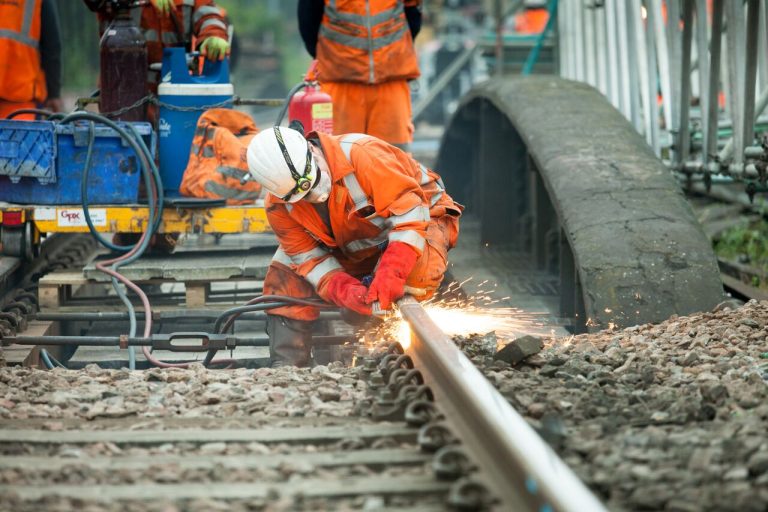
GRAHAM’s rail teams worked around the clock over the Bank Holiday weekend to deliver crucial upgrades to South East London’s rail network. The essential bridge replacements and supplementary works took place under abnormal track possessions at Bellenden Road Underbridge (Southwark) and Westdown Road Underbridge (Lewisham). Both projects involved the replacement and reinstatement of two underbridges within a restricted 72-hour rail possession. The railway closures began at 01:20 on Saturday 26th May and finished at 04:00 on Tuesday 29th May. The bridges carry National Rail, London Overground and Thameslink commuter services, as well as providing a busy thoroughfare for railway freight services. The works were part of Network Rail’s overall £78m investment in key asset maintenance and upgrades to more than 600 infrastructure schemes throughout the country. Successful completion Commenting on the successful completion of the bridge projects, Leo Martin, GRAHAM’s Managing Director – Civil Engineering, stated: “Both schemes underline the technical expertise of our staff and supply chain, and their ability to deliver complex rail projects safely and to the highest standards within possession constraints. “When working in these challenging rail conditions, safe and timely project delivery is only possible through close collaboration between ourselves, Network Rail, our supply chain partners and stakeholders. This was a real team effort and everyone pulled together to ensure the successful completion of these projects.” Works As part of the Bellenden Road Underbridge upgrade, the GRAHAM team replaced the existing 12m single span deck with two new Network Rail standard U decks, which were 66t each. The Westdown Road Underbridge project also centred on the replacement of the existing 12.5m bridge with two new Network Rail standard U decks, which were 74t each. It included the replacement of new station platforms. Both projects featured propping to restrain the existing abutments from potential overturning, the removal of tracks and ballast, the demolition of the existing bridge and the installation of the new superstructure decks. New pre-cast concrete cill slabs were placed at each location. Additionally, the reinstatement and re-tamping of the tracks were completed before reopening to rail traffic. Complexity The works involved setting up heavy lift cranes, including a 350t crawler crane and a 500t mobile crane, on the roadways below each bridge location in advance of the railway closures. The complexity of the works was made even more challenging by the severe weather conditions over the bank holiday weekend, with heavy thunder and lightning hampering crane lifts at critical times, and the team having to resolve a number of unforeseen issues as the project progressed. At its peak, over 100 people were on site to deliver each respective project. Meticulous planning GRAHAM’s rail experts have been meticulously preparing for the works over recent months in conjunction with a specialist supply chain, stakeholders, TOCs / FOCs and Network Rail. GRAHAM’s Rail Director, Jonny Kerr, believes this advanced planning and teamwork was the key to the success of both projects. “These complex bridge replacements were completed by our teams through their meticulous planning and technical expertise.  The team worked closely with our various supply chain partners, stakeholders and Network Rail and their partners to ensure that there was minimal disruption to the rail network,” said Jonny. “There was a tremendous amount of planning done in advance, which allowed us to progress each project smoothly even with the challenges presented. Additional factors, such as operational High Voltage and S&T cable routes, required support and protection during the works.“ “It’s a tremendous achievement and I’m very grateful to everyone who rose to the challenge. “We would like to thank the public for their patience during the closures.” Rail expertise GRAHAM has completed a broad portfolio of award-winning work within the rail sector. Examples of GRAHAM’s expertise in delivering complex construction within an operational railway include the “Live Launch” of a 55m span, 515t bridge structure over ten railways lines in South London, slope stabilisation works in South Wales and the construction of a new railway station in the Midlands.

Read More »

What to Consider When Arranging Pallet Deliveries to a Construction Site

There are all sorts of reasons for requiring pallet deliveries to a construction site. It could be for moving large appliances such as air conditioning units ready for installation or smaller items but in large quantities, like floor tiles or anything else. Arranging pallet delivery to a construction site isn’t as simple as ordering an item from Amazon though, there are extra considerations you must take to ensure the whole process runs smoothly. When you’re ordering pallets to be sent to a construction site, these are some of the main things to think about. Time Pallet deliveries are large and sometimes awkward, delivered on lorries that may struggle to get to certain locations. Of course, they should be arranged depending on the working hours of the construction site so there’s someone there to let them in. Yet also you need to make sure there are enough people present to help unload and move any pallets, which is why organising delivery too early or late in the day is inadvisable. Plus, during rush hour these vehicles may find it harder to deliver so more towards the middle of the day could be best. Weight Depending on the delivery service you use, they will likely charge based on the size and weight of your pallet deliveries. This means it can be more cost effective in some cases to arrange for more items to be delivered together or order in bulk. On the other hand, if you only need a small amount then it can be worth looking at options for a smaller pallet or crate to save on delivery costs. Access One of the main ways deliveries can get held up is by getting stuck on route or being unable to access the construction site. There are many stories of lorry drivers following sat-navs and getting lost or stuck. If your construction site is hard to access or surrounded by narrow, country lanes, inform the delivery company of this before they set off to avoid such issues. Price Finally, price will be a major factor in deciding what pallet delivery company to use. Depending on what you are getting delivered and where from, it may even be tempting to collect yourself if it’s fairly local. Otherwise, be sure to compare all the options available and maybe even negotiate to secure the best possible deal. Before you arrange pallet delivery to your construction site make sure you’ve checked off all of these important considerations for a successful experience.

Read More »