Kenneth Booth

Data centre suspension system launched by Armstrong Ceilings

The new Prelude 24 Max grid optimises load carrying and minimises air leakage.  A suspension system specifically designed to meet the exacting requirements of data centres has been launched by Armstrong Ceiling Solutions. The new Prelude® 24 Max™ grid provides excellent load carrying capability and adaptability, with an extremely efficient method

Read More »

BUREAU VERITAS CONSIDERS THE IMPACT OF THE HACKITT REVIEW

As the long-awaited ‘Independent Review of Building Regulations and Fire Safety’ by Dame Judith Hackitt was published last week, prompting much debate amongst the media, general public and industry alike, Bureau Veritas considers the long-term repercussions of the recommendations and calls for more to be done from a technical perspective.

Read More »

VIVALDA GROUP BUCKS THE GLOOMY TREND – INCREASING Q1 SALES BY 20%

Vivalda Group plc, the UK’s leading distributor of architectural cladding, has announced first quarter sales figures showing a continuing rise in sales into a construction industry beset by uncertainty and recession. The figures for the first three months of 2018 show sales increasing by 20% compared to the same period

Read More »

AWARD RECOGNITION FOR UNIQUE ASBESTOS REMOVAL PROJECT

Rhodar, one of the UK’s leading asbestos removal companies, headquartered in Leeds, has been recognised for its innovative, unique asbestos removal project for Great Western Railways (GWR) in Penzance at the 2018 UK Rail Industry Awards (UKRIA). Rhodar won the award for ‘Outstanding Projects (under £3million)’ at the awards ceremony

Read More »

Bucking The Trend And Staying Safe On The Worksite

A glance at official statistics shows that construction industry worksite injuries are down across the board. However, it remains a high-risk industry, with a recent HSE press release showing that construction accounts for 27% of fatalities across all industry workplace fatalities. These rates are deemed as high by the HSE. With the

Read More »
Latest Issue
Issue 344 : Sep 2026

Kenneth Booth

Data centre suspension system launched by Armstrong Ceilings

The new Prelude 24 Max grid optimises load carrying and minimises air leakage.  A suspension system specifically designed to meet the exacting requirements of data centres has been launched by Armstrong Ceiling Solutions. The new Prelude® 24 Max™ grid provides excellent load carrying capability and adaptability, with an extremely efficient method of suspending cable trays, bus bars and other mechanical elements to avoid air leakage through the ceiling tiles. In an environment where a constant, carefully calibrated temperature is a non-negotiable factor, the engineered system components provide the optimum conditions to avoid air leakage that could lead to overheating or spiralling cooling costs. Traditional methods suspend loads via slotted strut locations or drill holes through ceiling tiles where threaded rods are needed and in doing so increase air leakage and the mix of warm and cold air. However, designing out these details means the hot return air is retained in the plenum space and the cool air below the ceiling. The new suspension system is also capable of carrying single-point loads up to 110kgs and can be easily reconfigured to meet changing requirements. Using M10 threaded rod connections and integrated hanging clips, the Prelude 24 Max provides flexible support for cable trays and electrical distribution without the need for a separate strut channel system being suspended through the ceiling tiles. Patented load connector clips attach at any point to the face of the suspension system, eliminating unsightly threaded rod connections through the ceiling plane, improving access and aesthetics as well as minimising air infiltration. The traditional-faced 24mm profile grid minimises materials costs and labour while still being compatible with numerous Armstrong board ceiling panels including Ultima+, Clean Room FL acoustic tiles as well as standard lighting elements. The pre-engineered suspension system comes with a 30-year system warranty.   More information is accessible via the Armstrong Ceilings website https://www.armstrongceilings.com/commercial/en-gb/.  

Read More »

Stephen George + Partners reaches new heights with high bay warehouse for Britvic

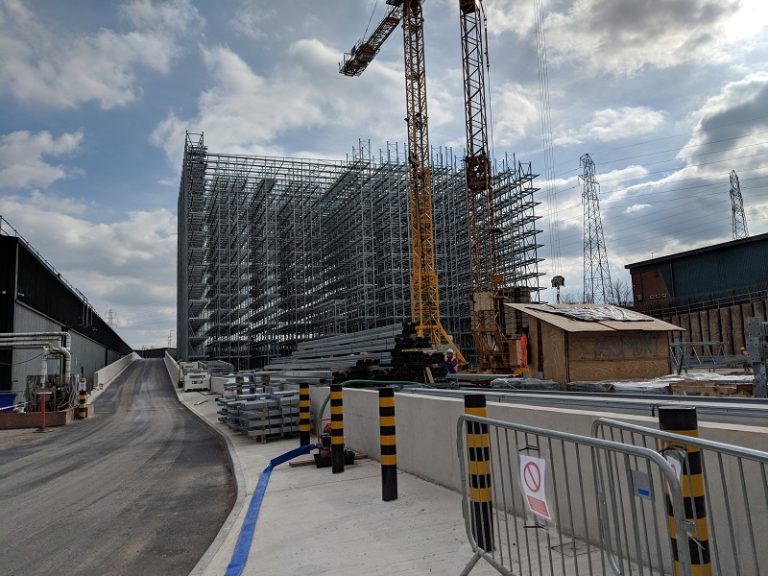
Stephen George + Partners LLP, an AJ Top 100 architectural practice, has been selected to deliver a 104,873 sqft fully automated warehouse facility for Britvic plc, within their current site on Aventine Way in Rugby. Stephen George + Partners (SGP) has delivered the fully automated high bay warehouse including ancillary offices, gatehouse and associated access, car parking and landscaping. The 35m tall warehouse is a clad-rack building with the fully automated storage solution and structure designed by Logistex. The storage solution ultimately provides the structure of the building. This doubling up of function is an extremely efficient means of reducing the embodied steel weight of the scheme. The cladding acts a simple wrapper around the structure and SGP chose a high performance composite material to create a thermally efficient solution that also minimises construction time. Says Lee Wong, Director of SGP: “The way the structure of the building is formed through the storage structure makes this a unique project for SGP, and we have worked closely with the client to create a design that is functional, thermally efficient and minimises construction time.”  SGP’s use of LED lighting throughout, an efficient VRF/VRV heat pump system and 14kwp photovoltaic array, will deliver an overall CO2 saving of 10.5%. Britvic announced early this year that they are investing more than £100 million in to the Rugby site as part of a broader £240 million three-year investment programme designed to increase their manufacturing capability. The project started on site in March 2017 and is expected to be completed in November 2018.

Read More »

BUREAU VERITAS CONSIDERS THE IMPACT OF THE HACKITT REVIEW

As the long-awaited ‘Independent Review of Building Regulations and Fire Safety’ by Dame Judith Hackitt was published last week, prompting much debate amongst the media, general public and industry alike, Bureau Veritas considers the long-term repercussions of the recommendations and calls for more to be done from a technical perspective. Andy Lowe, director of building control at Bureau Veritas, comments: “The publication of the Hackitt Review comes as we approach the first anniversary of the Grenfell Tower fire and alongside the commencement of the public inquiry into the tragedy; the scenes from which have displayed that the pain of all those affected has not dampened. For many, the Hackitt Review did not deliver what they had hoped and sparked somewhat of a public outcry due to the unexpected conclusion not to impose an outright ban on combustible cladding. Instead, the recommendations of the review focused on the need for a new regulator and a series of proposals to make high-rise flats safer to live in. “From a building control perspective, the Hackitt Review makes interesting reading. Many of the recommendations are encouraging in ensuring a more robust approach is taken to fire safety in the construction industry in the long-term and across all stages of development, from planning and construction to the occupational phases. However, the recommendations are aimed specifically at changes to the overall system rather than relating to the specific technical aspects of a building. The aspects of cladding in particular and the technical measures used to ensure that a holistic approach to fire safety in high rise buildings is achieved, needs to be addressed sooner rather than later. Key aspects such as the use of non-combustible cladding, sprinkler protection and the provision of two staircases for example, are of critical importance in achieving much-needed public confidence, as well as the need to address the existing building stock situation. “It is reassuring then that since the publication of the review, the Government has announced that it is considering going further than the recommendations put by Dame Judith Hackitt and will indeed look to ban the use of combustible materials in cladding on high-rise buildings. Based on the near universal response to the review, this would surely be met with overwhelming support and we are eager to see how the situation evolves in the coming weeks and months.” Bureau Veritas is a leading testing, inspection and certification company with a vast experience of the building control sector. Bureau Veritas Building Control UK combines technical expertise and market-leading systems with unrivalled industry experience to deliver building control services to some of the biggest names in construction. Through effective teamwork, a consistent approach and commitment to excellence, Bureau Veritas’ solutions go beyond just compliance – they can help to reduce costs and manage risk throughout the building lifecycle, from design stages through to site inspections and final certification – whilst giving designers confidence that the project will comply with Building Regulations and all relevant legislation. For further information, call 0345 600 1828 or visit www.bureauveritas.co.uk

Read More »

INCLUSION AND EQUALITY IN CONSTRUCTION REQUIRES ‘FRESH MIND SET’, SAYS AGGREGATE INDUSTRIES’ CONTRACTING DIVISION

Despite important progress made in recent years, Aggregate Industries’ Contracting Division has stated there is still a massive job to do in creating a more inclusive and diverse workforce in the construction industry – one which requires a brand new mind-set. According to latest figures, around 5% of working adults in the UK are currently employed in construction-related jobs but being a male-dominated industry, women make up just 20% of that workforce1. This gender equality gap is particularly alarming when you consider that like many industries, construction continues to face a major skills deficit. In a recent report, Highways UK estimates that in order to meet the Government’s ambitious £15bn investment into the Strategic Road Network it will require an additional 40,000 engineering and constructions workers by 20202. With this in mind, the Contracting Division of leading building materials supplier Aggregate Industries, has started by setting equality targets to achieve a 30% gender balance by 2030. It believes that the industry needs to adopt a new way of thinking if it is to succeed in attracting more women and young people into operational roles. Paddy Murphy, Managing Director of Contracting Services at Aggregate Industries, commented: “Attracting a more diverse workforce to the sector is no longer just about addressing gender equality, but is increasingly an essential part of building the highly skilled and trained workforce we require to meet the government’s ambitious plans for upgrading the UK’s road infrastructure. “In order to make a meaningful impact in driving recruitment in what is traditionally a man’s world, the industry must adopt new techniques to better accommodate a diverse range of people. This starts with a root and branch approach, one that looks at changes that must be made to behaviours, working conditions, equipment and recruitment policies.” What’s often overlooked, reveals Aggregate Industries, is that much of the equipment and machinery used in the industry such as rollers and pavers, are old fashioned; with manual controls; featuring steep gradients and hard-to-reach entry points that essentially make it inaccessible to some. Paddy adds: “By incorporating measures such as upgrading to more captivating automated machine controls; folding steps; and all-round vision into all equipment and machinery going forward, is just one of the ways to ensure our working environment is inclusive. “Meanwhile, to make it easier to spot and nurture talent other policies to consider are increasing the visibility of operational roles with a variety of audiences and removing gender bias in recruitment. We are attending schools and colleges and encourage a 50/50 split of male and female candidates during the interview stages when recruiting for new operational-related roles. After all, with studies showing firms with a diverse workforce boast better business performance3, it is now more important than ever to address diversity and inclusion if we are to retain our position as a world-class industry that leads the way in innovation.” For further information about Aggregate Industries, visit www.aggregate.com.

Read More »

VIVALDA GROUP BUCKS THE GLOOMY TREND – INCREASING Q1 SALES BY 20%

Vivalda Group plc, the UK’s leading distributor of architectural cladding, has announced first quarter sales figures showing a continuing rise in sales into a construction industry beset by uncertainty and recession. The figures for the first three months of 2018 show sales increasing by 20% compared to the same period in 2017. Ben Jayes, managing director of Vivalda Group plc, said; “Our continuing growth shows how the market for our off-site fabrication facility, which enables our customers to benefit from greater efficiencies on site, is continuing to grow. Our expansion plans are on course and the heavy investment needed to roll out the offer nationwide is clearly providing the capacity required to meet demand”. Vivalda Group has already reported how its new Ireland office, which opened last August, is on course to achieve annual sales of €1m, adding to the good news. “Here is evidence that the market will always respond favourably to a supplier whose service is backed by a culture of expertise and investment”, said Jayes. The architectural cladding market has had its share of uncertainty over the past year, but Jayes adds: “The sector is looking for leadership and with Vivalda Group’s long history of loyalty to world-class suppliers, our customers know we can be relied upon to provide a warranted, certified product which all concerned know will be fit for purpose”.

Read More »

AWARD RECOGNITION FOR UNIQUE ASBESTOS REMOVAL PROJECT

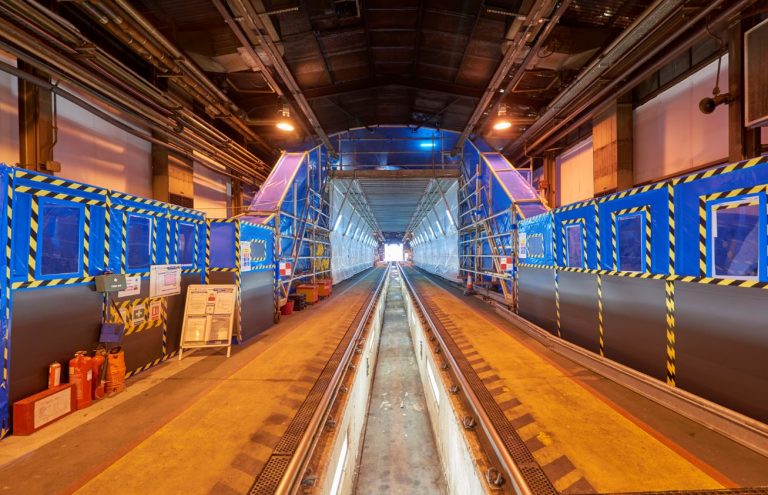
Rhodar, one of the UK’s leading asbestos removal companies, headquartered in Leeds, has been recognised for its innovative, unique asbestos removal project for Great Western Railways (GWR) in Penzance at the 2018 UK Rail Industry Awards (UKRIA). Rhodar won the award for ‘Outstanding Projects (under £3million)’ at the awards ceremony held at Battersea Evolution, London, in March. The event, now in its fifth year, brought together leaders and decision-makers from across the rail industry. The winning project was a collaboration between Rhodar,  its client Spencer Group and Great Western Railways (GWR), which had a requirement for the safe removal of asbestos containing materials from one of its vast 192m HST (High Speed Train) maintenance facilities based in Penzance. Rhodar developed a specialist solution that allowed the safe removal of the asbestos, without impacting on the critical train maintenance schedule. Utilising a unique, multi-level scaffold enclosure system, which was erected inside the maintenance facility and operated on a bespoke set of purpose-built tracks, Rhodar worked systematically through the depot (from one end to the other in 11 planned sections) by locking the scaffold system down in each section, sealing the specialist asbestos enclosure walls and floor, and attaching the moveable airlock and bag-locks. Rhodar faced a number of challenges during the project, including adverse weather conditions on the south west coast and an increase in planned train movements through the HST maintenance depot.  Both had to be overcome in order to ensure the strict overall programme and timescales were met, enabling follow-on facility refurbishment works to be carried out on schedule. Jason Davy, Managing Director, Rhodar commented: “We are extremely proud to win this award. It goes without saying that it is down to the excellent team of professionals and their continuous improvement and operational competency. This project was unique but was ultimately successful due to the shared vision that resulted in the creation of a best-practice partnering model, delivering significant benefits to all project stakeholders.” The UKRIA event had 29 categories, and in the Outstanding Projects (under £3million) category, Rhodar was one of seven nationally recognised organisations to be shortlisted as a finalist alongside major rail and construction companies. The award recognises the hard work and achievement of Rhodar colleagues and partners to support an efficient and robust rail network, which continues to be one of the safest in Europe. This win comes hot on the heels of another major accolade for Rhodar, when the Penzance project was also selected as a finalist in the prestigious Construction News Specialists Awards 2018 in the ‘Project of the Year (up to £1m)’ Category at the beginning of March.

Read More »

RLB EXPANDS FACILITIES MANAGEMENT CONSULTANCY TEAM WITH TWO NEW SENIOR APPOINTMENTS

Leading independent construction, property and management consultant, Rider Levett Bucknall UK (RLB UK), has announced today the appointment of two new senior appointments further bolstering its Facilities Management (FM) Consultancy offer. Dr Rachel Dick, has been appointed as Associate Facilities Management consultant and joins RLB in London from the RICS where she was Senior Consultant, Data Services. Karl Redmond, also joins as Associate Facilities Management consultant and will be based at RLB in Manchester. Karl is a specialist in smart asset management and was most recently with the architectural and planning consultancy, Enable By Design. Chris Jeffers, Head of FM Consultancy and Partner at RLB, said: “I am delighted to welcome Rachel and Karl to RLB. Their combined knowledge and experience of digital construction and data services across the sectors will bring an extra dimension to our growing team. “Rachel and Karl are joining RLB at a very exciting time. Over the last twelve months we have continued to invest in our FM Consultancy service offering to provide the best solutions to clients. Earlier this year we were also joined by public sector specialist, Indu Wijayatunga, and the team has grown the service line significantly, particularly within the Healthcare, Defence and Education sectors.” Rachel has previously worked for a number of FM organisations including Mace Macro, GB Partnerships, EC Harris LLP and IBM Global Business Services. She has been a Fellow of the RICS since 2013. Karl has been a Fellow of the Leeds Sustainability Institute since 2013 and is a member of BIM4HEALTH. In addition to his consultancy positions he has held a number of senior roles within the Leeds Sustainability Institute, Anglo Irish Bank and HBoS.

Read More »

Bucking The Trend And Staying Safe On The Worksite

A glance at official statistics shows that construction industry worksite injuries are down across the board. However, it remains a high-risk industry, with a recent HSE press release showing that construction accounts for 27% of fatalities across all industry workplace fatalities. These rates are deemed as high by the HSE. With the risk of injury increasing, it falls to employers and employees to take responsibility for their personal protection. Workplace safety training is mandated by the government and covers the government and employers from liability. Clearly, more needs to be done to bring preventable deaths down, and that’s where technology and legislation is coming in. Cost of injury to the country According to HSE statistics, the cost of injury claims made against employers formed a large part of the yearly £5.3bn workplace injury cost. Changes in governmental employee legislation and case law is constantly altering this landscape and the impact of legislation on employers from employees posing legal challenges. The proliferation of technology including LegalZoom is making it far easier for injured employees to seek the right level of compensation and restitution for injury. Airborne carcinogenic materials Modern construction is undergoing an overhaul as technology allows the industry to regalvanise. A report by the Telegraph outlined the transformative power of offsite building and how it allows quality control and reduced transportation costs, benefiting the environment. However, as physical risks associated with movement of weight and physical work reduce, esoteric risks increase. The HSE have outlined how cancer is now one of the biggest risks to construction workers as a result of their profession, frequently from asbestos exposure in tearing down old buildings, and from silica. PPE can go a long way to tackling this, although modern technology is pushing the use of microfilters in construction environments, too. Hazardous substance inhalation Like the risk of inhalation causing cancer, there are multiple hazardous substances in a construction environment that are a cause for concern. This is exacerbated in new builds, where plastics, glass, and steel are concerned. PVC and fiberglass, when damaged, can cause serious damage to the workings of the body and are both commonly used in a wide range of modern buildings. The construction industry remains an inherently hazardous profession. New technology and modern ways of working mean that the risks have changed, but are still present. Stay aware of the risks, be well appraised of your rights – both as an employee and employer – and be safe.

Read More »

Former National Infrastructure Commission Chair Lord Adonis to deliver this year’s NEC Users’ Group Annual Seminar keynote

Lord Adonis, Labour peer and former National Infrastructure Commission chair, is to deliver the keynote address at the 2018 NEC annual seminar on Wednesday, 20 June, where finding a better approach to delivering high-performing infrastructure across the UK will take centre stage. A year on from the launch of the NEC4 suite of contracts at last year’s seminar, Lord Adonis is set to discuss priorities for national infrastructure, building a digital society and achieving success through collaboration in front of an audience of public and private sector industry experts at County Hall, London He joins an outstanding programme of expert speakers from across industry and Government, to include opening remarks by Dr David Hancock, Construction Director for the Infrastructure and Projects Authority Cabinet Office, and a talk from David Ferrousatt, Development Procurement Director at Heathrow Airport. Using case studies of Terminal 5 and Terminal 2, Mr Ferrousatt will discuss how NEC has helped shape Heathrow’s contracting journey and inspired greater collaboration and leadership as the airport looks ahead to future expansion. Kevin Murray, Deputy Director, Crown Commercial Service (CCS), then asks whether amendments to standard forms of contracts are ‘a Cure or Curse’? Discussing findings from a review of contract amendments by central government departments and wider public sector clients, Mr Murray will cover the impact of contract amendments and explain how Crown Commercial Service (CCS) will deal with contract amendments in their new commercial agreements. Held in the iconic County Hall, overlooking Westminster and the River Thames, the event, which has sold out for the past three years, will also allow NEC’s international community to engage directly with a variety of experts and industry leaders from infrastructure and facilities management. The ICE’s Project 13 intends to inspire a new long-term, value driven approach to infrastructure as Dale Evans, Director of the @one Alliance and Emma-Jane Houghton, associate director at KPMG, will explain. Ian Heaphy of the NEC4 Contract Board will then introduce the new NEC4 Alliance Contract (ALC), providing advice on when and why to use it, key aspects of the contract and an insight into NEC’s approach to alliancing. Linda Hausmannis, CEO of the British Institute of Facilities Management (BIFM) will outline the opportunities and challenges faced by the FM sector, provide a guide to choosing the right procurement strategy and discuss the memorandum of understanding signed between NEC and the BIFM. This is a valuable opportunity for NEC users to hear about NEC4, share best practice, get the latest insights from case studies and strengthen relationships through networking with other delegates. During the afternoon sessions of the event, attendees will also take part in one of three practical NEC workshops, allowing them to get involved in sharing their own experiences and improving their own knowledge of NEC contracts. Rekha Thawrani, NEC Global Head, said: “Following ICE’S Project 13 launch, its commitment to driving better value driven infrastructure projects in the UK, I’m sure Lord Adonis’s outstanding insight will be of tremendous interest. “We’ve been delighted with the industry’s response to NEC4 one year on, and the quality of this year’s seminar speakers demonstrates the significance of NEC Contracts in the future of UK infrastructure.” The seminar will conclude with a celebration of users who have successfully delivered projects using the spirit of mutual trust and cooperation encouraged by NEC contracts at the NEC Awards. For more information on the seminar or the NEC suite of contracts, visit www.neccontract.com


Read More »

Banner placements tips: how to effectively market in the building industry

When designing your print marketing strategy in the building and housing sector, do you consider where you’re going to place your ads when they’re complete? Many in the industry don’t think about banner placement — but put them in the wrong spot and your ROI could plummet! In order to attract the greatest number of potential customers as possible, check out this guide to promoting products and services effectively in the building, construction and housing sector. From store window to trade show, you will receive key tips on banner placement to ensure you maximise your marketing ROI. Shop foyer If your potential customer has been enticed enough by your products and services to visit your store, don’t stop encouraging them to buy from you by not utilising your reception area for further marketing purposes. Celebrating X amount of years in business? Just opened a new shop to keep up with demand? Tell your visiting customer this by placing your banner in the foyer of your building. Achievements matter, and the beauty of a pull-up banner is that you have the space to advertise snippets of success stories — unlike with a small leaflet, for example. In as little as a tenth of a second, consumer create an impression of something. Therefore, you don’t have long to portray your brand in a positive light. Designing an eye-catching pull-up banner that not only features complementary colours — perhaps matching your reception décor — pleasant fonts and nice imagery, but also highlights interesting information about your company might be another helpful marketing factor to convert sales from new customers and boost brand loyalty among current clients. But, are there any other reasons that this section of your shop offers an ideal location to engage with your customers? Apparently, the part directly inside a shop is called the ‘decompression’ zone. This is according to an article by the Economist, and is because customers need to momentarily ‘slow down’ to assess their new surroundings. As a result, this is a great place for promotional material. Even if you don’t have a reception area, you can simply place your pull-up banner just inside the entrance for the same powerful marketing affect — another way to boost ROI. Corporate exhibitions and events To gain exposure and promote your brand among peers, competitors and potential new staff; use your banner at your next business event. According to Eventbrite, the UK events industry is worth £42.3 billion and 1.3 million business events are held annually. Corporate hospitality accounts for around £1.2 billion, while exhibitions comprise £11 billion and conferences make up the lion’s share at £19.9 billion! While many believe digital ads offer the best ROI, it appears that print could be the way to go if you truly want to make a memorable impact. According to a study carried out in the US, participants that viewed print media showed a greater emotional response for it and were able to recall its details better than they could for digital ads. If you want to stand out against your competitors at a major recruitment exhibition and create that bond to entice people to come over, why not design an attractive, descriptive pull-up banner and place it next to your stand? If it’s eye-catching enough, it will draw potential partners and employees to your table where you can begin discussing the key details of your business. High-footfall, public places Location plays a large part in how many customers you attract to your store each day. But will people spend time trying to find you if you’re not in a high-footfall area? According to a study published in The Independent last year, employees in the UK are working more overtime than ever before with 60% of those asked stating that they don’t have a good work-life balance. Could this affect how much time they spend trying to find you unless you make locating your store as easy as possible? If you think it’ll benefit, try placing your banner in a busy, public place and use it to direct people to your location. Slightly off the high street? Tucked away around a sharp corner? Sandwiched between two larger stores? You could run the risk of clients giving up on finding you. By placing your pull-up banner in a location that signposts your building, you can direct your customers, as well as advertise your brand to the general public. Use bold fonts and colours to highlight your address and tell people which other shops you’re next to or opposite so they can quickly work out where you are. If you’re thinking about placing these outdoors, make sure you opt for a quality PVC or vinyl banner to make sure your ad can endure the weather for maximum return on your spend. Windows Maximise your ROI by utilising any window space you have with your banner. According to store design and display consultant, Linda Cahan, in an article published in Entrepreneur: “Each window should tell a story”. Are you making the most of this key piece of promotional space? If you have floor-length windows, simply angle your pull-up banner so it is clearly visible to people and cars coming from all directions. Or, use a platform to give your advert height so it can be easily seen. If you have a seasonal discount or special offer, make sure when you place your banner in your window that it is shouting about them! Did you know that 80% of consumers describe themselves as ‘promotion sensitive’? Highlighting a special discount on your pull-up banner placed in your store window will give your offer excellent visibility to help bring foot traffic in-store. Also, research shows that discounts can make it less probable that people will then compare your range with your competitors’! Remember to use contrasting colours and large text to highlight your offer on your banner. Awards events An award show is a great way to get yourself recognised by consumers and potential staff — but

Read More »