Kenneth Booth

SELL OUT SUCCESS AT THE BOTANICS IN GLASGOW

A luxury development of townhouses and apartments in the West End of Glasgow has officially sold out. The Botanics, from David Wilson Homes, launched in 2015 and has proven hugely popular with househunters looking for modern and spacious accommodation in the heart of one of the city’s most prestigious areas.

Read More »

CABE MEMBERS VOTE IN FAVOUR OF CHARTERED ENGINEER STATUS

The Chartered Association of Building Engineers (CABE) has today announced it will go ahead with its application to become a licensed member of the Engineering Council. This decision comes following a successful members’ vote. Licensed Member status would pave the way for CABE members to be formally eligible for Chartered

Read More »

The impact of artificial intelligence in the construction industry

The way we build is constantly changing, whether this is from the materials we use or to the actual design – and AI is contributing to this. Artificial intelligence is where machines exhibit their own intelligence through using algorithms to solve problems using inputted data. By harnessing robotics, construction managers

Read More »

KMRE’S KIRKSTALL ROAD DEVELOPMENT IS UNDERWAY AFTER SELLING FOR £17.25M

DEVELOPER KMRE and contractor Hollycroft Construction have started work on-site for a multi-million-pound residential development in popular Kirkstall Road, Leeds. The high-end scheme of 111 apartments has now been sold to Aberdeen Standard Investments (ASI) for £17.25 million Kam Mogul, MD of Leeds-based KMRE Group, said: “This is popular area

Read More »

Armstrong launches its ultimate ceilings and walls guide

The ultimate guide to ceiling and wall solutions is now available from leading UK manufacturer Armstrong. The company’s new Main Line Brochure makes it even easier for architects and designers to specify ceiling and wall solutions thanks to a simplified but inspiring layout. The new catalogue illustrates with stunning architectural

Read More »

WernerCo launches new range of BoSS access solutions for the hire industry

BoSS, the market-leading brand for access solutions, has launched a new range of configured access equipment, designed to make working over obstacles easier and safer. Manufactured using high-grade construction aluminium, the BoSS End-Linked Tower is ideal when working across obstacles such as buildings and large machinery. The BoSS End-Linked Tower

Read More »
Latest Issue
Issue 344 : Sep 2026

Kenneth Booth

SELL OUT SUCCESS AT THE BOTANICS IN GLASGOW

A luxury development of townhouses and apartments in the West End of Glasgow has officially sold out. The Botanics, from David Wilson Homes, launched in 2015 and has proven hugely popular with househunters looking for modern and spacious accommodation in the heart of one of the city’s most prestigious areas. And while the development is fully sold out, potential buyers should not be disheartened with plans for a new development in the sought-after southside of the city. David Wilson Homes’ sister company, Barratt Homes, has recently started work on the Riverside @ Cathcart. Located on the grounds of the former Scottish Power headquarters, the development will feature a range of two, three and four bedroom homes. Estelle Sykes, Sales Director, David Wilson Homes said: “The sales success that we have experienced at The Botanics further reinforces the demand for high quality homes within Glasgow. “I am positive that the Barratt Homes development at Riverside @ Cathcart will prove just as popular with househunters because of its prime location and selection of quality homes.” The site, located on Spean Street, has an assortment of apartments, townhouses, semi-detached and detached homes and are likely to appeal to both first time buyers and those looking to take a step up the property ladder. Riverside @ Cathcart benefits is within walking distance of a number of amenities, including several parks, train stations, bars and restaurants . For further information on Riverside @ Cathcart please visit https://www.barratthomes.co.uk/new-homes/glasgow-city/H719201-Riverside-@-Cathcart/

Read More »

CABE MEMBERS VOTE IN FAVOUR OF CHARTERED ENGINEER STATUS

The Chartered Association of Building Engineers (CABE) has today announced it will go ahead with its application to become a licensed member of the Engineering Council. This decision comes following a successful members’ vote. Licensed Member status would pave the way for CABE members to be formally eligible for Chartered Engineer status on equal terms with other engineering professional bodies. Following four years of development and consultation, 91% of CABE members who voted were in favour of the association changing its by-laws to become a full member of the Engineering Council and offer the Chartered Engineer (CEng) qualification without disadvantaging existing suitably qualified chartered building engineers. Dr Gavin Dunn, CEO of CABE said: “This clear mandate for change puts CABE within touching distance of the industry top table and gives recognition of building engineering as a defined engineering discipline in its own right, both in the UK and internationally.” This will enable the association to maintain the existing title Chartered Building Engineer and enable members to pursue the additional CEng qualification if they wish. They will also have a clear and defined route to gain international recognition. The membership vote is very timely in light of current events within the built environment and the need for more effective application of regulations and standards, providing members clear and robust ways to demonstrate their competence. “CABE is the only engineering body to cover the whole ‘golden thread’ of standards across the regulatory, design, compliance, construction and operational management functions, making us uniquely placed to play a critical role in raising standards to ensure buildings are safer and perform as expected in practice,” Dr Dunn added. At a time when the UK celebrates the Year of Engineering – a Government-led campaign to boost the engineering skills gap – CABE’s members would, for the first time, have access to a route to the top tier of engineering qualifications and help secure the next generation of Building Engineers. CABE membership has grown 40% in the past five years with notable increases in student and international members. The CABE is playing a larger role within building engineering in the USA, Middle East, Asia and New Zealand. Full membership of the Engineering Council will further the international recognition and ability of members to demonstrate competence within this globally-minded and internationally-recognised association. Formed in 1925 as the Incorporated Association of Architects and Surveyors, the Chartered Association of Building Engineers (CABE) is a leading body for professionals specialising in the design, construction, evaluation and maintenance of buildings. Its members practise across the UK, mainland Europe and around the world, and work in both the private and public sectors. For more information about CABE visit www.cbuilde.com.

Read More »

Tamlite Lighting urges the lighting industry to show strong leadership in wake of Grenfell Fire

Dame Judith Hackitt’s report on Building industry Regulations and Fire Safety: Building a Safer Future, due out this week, will expand on the December 2017 interim report which found that, “The current regulatory system for ensuring fire safety in high-rise and complex buildings is not fit for purpose. This applies throughout the life-cycle of a building, both during construction and occupation, and is a problem connected both to the culture of the construction industry and the effectiveness of the regulators.” The interim report identified six key areas for urgent action: regulation and guidance; roles and responsibilities; competence; process, compliance and enforcement; residents’ voice and raising concerns and Quality Assurance and products. Colin Lawson, Head of Product Development, Sales & Marketing, Tamlite Lighting comments: “There cannot have been anyone in the UK whose heart did not go out to the victims and the families of those killed in the Grenfell Tower fire on 14th June 2017. It will take many years to recover from the effects on the community, residents and the emergency services. It also deeply affected those in the construction industry and supply chain who share responsibility for the safety of our homes and places of work, along with local government, regulators and legislators. “At Tamlite Lighting we are most concerned with how the lighting industry can play its part in using its influence to ensure the highest levels of safety and accountability. Dame Judith’s interim report said that “primary responsibility for ensuring that buildings are fit for purpose must rest with those who commission, design and build the project”, but what does that mean in practice for the lighting industry? “The industry must play its part; it can’t sit back and wait for central government to legislate. We must come together with our colleagues across the lighting and construction supply chain to share knowledge, encourage ongoing training and testing, adopt best practice behaviours, and develop a fully-accountable system for the life-cycle of buildings as a whole and not just for our own separate areas of ‘responsibility’. We can’t just aim for minimum compliance, but provide leadership especially regarding responsibility and competence. “While the lighting industry already adheres to stringent Quality Assurance standards in which products are properly tested and certified, there needs to be clarity on where ultimate responsibility lies – with the designer, specifier, installer or building owner.” In addition the industry must be more proactive to ensure oversight of the quality of installation. According to the interim report “This is one area where England and Wales appears to be lagging behind many other parts of the world that require key personnel throughout the system to be properly trained, assessed and in many cases licensed to carry out specific roles.” Mr Lawson concludes, “It is up to all of us in construction, to play our part, to build a culture of responsibility, of doing more than cutting costs to the bone, or simply complying with the relevant regulations on safety or sustainability. As we near the first anniversary of this tragedy, it should go without saying that the events of that awful night in June 2017 should never be repeated.”

Read More »

The impact of artificial intelligence in the construction industry

The way we build is constantly changing, whether this is from the materials we use or to the actual design – and AI is contributing to this. Artificial intelligence is where machines exhibit their own intelligence through using algorithms to solve problems using inputted data. By harnessing robotics, construction managers can utilise intelligent machines that can perform routine tasks that were once completed by humans, such as bricklaying. Alternatively, AI systems can collate and organise information for engineers to use within project planning and design implementation. With the help of Oasys, we look at the construction industry to see how artificial intelligence is helping. Artificial Intelligence: the fantastic four When it comes to construction, there are four areas that AI is used: Planning makes perfect To construct, you must plan – and this is an area that AI is performing well in. Autonomous equipment is considered as AI as it is aware of its surroundings and is capable of navigation without human input. In the planning stages, AI machinery can survey a proposed construction site and gather enough information to create 3D maps, blueprints and construction plans. Before this advancement, these processes would take weeks – now they can be done in one day. This helps to save firms both time and money in the form of labour. Project managing It can sometimes be overwhelming to manage an entire project single handed, but with the assistance of AI – it is becoming easier. For example, workers can input sick days, vacancies and sudden departures into a data system and it will adapt the project accordingly. The AI will understand that the task must be moved to another employee and will do so on its own accord. Construction When it comes to construction, AI systems not only have the ability to assist engineers through their work. For example, if engineers were working on a proposed new bridge, AI systems would be able to advise and present a case for how the bridge should be constructed. This is based on past projects over the last 50 years, as well as verifying pre-existing blueprints for the design and implementation stages of the project. By having this information to hand, engineers can make crucial decisions based on evidence that they may not have previously had at their disposal. In the construction industry, it is likely that you will come across projects that will be tall builds – this is where autonomous comes in. Using sensors and GPS, the vehicle can calculate the safest route while also helping workers to stay outside of the vehicle when it’s operating on dangerous routes. The use of artificial intelligence AI can be introduced inside the building too. In the US alone, $1.5 billion was invested in 2016 by companies looking to capitalise on this growing market. To make the customer experience better, Wynn Las Vegas Hotel said that they would be adding the Amazon Echo to every room by the end of this year. These devices can be used for aspects of the room such as lighting, temperature and any audio-visual equipment contained in the room. These systems can also be used within domestic settings, allowing homeowners to control aspects of their home through voice commands and systems that control all electronic components from one device. The importance of information It is important to hold as much information as you can about a project, including management decisions and this is easier to do with the help of building information modelling (BIM). Conversational features can be added with the use of virtual assistants (VAs) that will also provide a person with information. By combining VAs alongside NFC (near-field communication), VAs can give additional information to the building itself in real-time from various sensors in the building. For example, if there were structural problems with a building, then VAs could inform engineers specifically where the problem was and how it can be fixed. VAs, AIs and building design software can help make savings in the construction sector, whilst keeping up the same standard of work. As the future of AI becomes more of a reality within construction, only time will tell how reliant upon intelligent machines we will have to be in order to construct innovative building designs.

Read More »

KMRE’S KIRKSTALL ROAD DEVELOPMENT IS UNDERWAY AFTER SELLING FOR £17.25M

DEVELOPER KMRE and contractor Hollycroft Construction have started work on-site for a multi-million-pound residential development in popular Kirkstall Road, Leeds. The high-end scheme of 111 apartments has now been sold to Aberdeen Standard Investments (ASI) for £17.25 million Kam Mogul, MD of Leeds-based KMRE Group, said: “This is popular area in the city and is in walking distance to the business district. KMRE saw a big opportunity and acted quickly to develop the scheme. These are stylish, yet affordable rental apartments which are ideally suited to professionals. “We are also delighted to have appointed Hollycroft Construction as the contractor for this significant development. Hollycroft has delivered a number of schemes for us and has continued to work on our ever-expanding portfolio of high-end schemes across the UK. “Kirkstall Road is a rapidly changing part of the city. Considering Kirkstall’s close proximity to Leeds city centre and the wide range of public transport options on offer, this is a popular area of Leeds. Each apartment is designed to be generously sized, to encourage long term tenancies in a great location with a range of amenities.” The residential scheme – which will complete in spring 2019 -will be made up of superior one, two and three-bedroom rental apartments close to Leeds city centre. “Considering the likelihood of significant investment in the area due to its convenient location, and high-speed poised to bring further investment, there was an excellent chance for investors to benefit from high levels of capital appreciation and ASI saw that opportunity,” Kam added. Ed Crockett, fund manager at Aberdeen Standard Investments, said: “This deal reinforces our long-standing commitment to the private rented sector in the UK, where we continue to target high quality stock in key cities.  “The market is currently worth more than £1 trillion and is set to grow with an anticipated 24% increase in private renting by 2022.  With its secure long-term rental streams, residential is a compelling opportunity for investors.  But product is key.  Our experience in Europe, shows that what really counts is being able to create communities that people want to live in for decades. We identified this development by KMRE as a major opportunity.” KMRE Group is a leading developer with schemes throughout Yorkshire and the UK. It is working on a number of schemes in the area including Mabgate Gateway, Leeds which is also on site and offers 92 one, two and three-bedroom apartments across two buildings and is located five minutes from the city centre. Toby Nicholson, head of build to rent at Colliers International, represented Aberdeen Standard Investments during the transaction. For more information, visit www.kmregroup.co.uk.

Read More »

Priva UK welcomes the news about English Heritage’s ‘green energy champions’

The ‘green energy champions’ initiative, announced 9th May, will see staff across more than 400 historic sites monitor energy consumption and work on energy efficiency improvements, at some of the UK’s most important English heritage sites.  Priva UK, a leading supplier of building control systems and advocate for future-proofing the UK’s historic buildings, has welcomed the news. Gavin Holvey, UK & Ireland Sales Manager: “In the last year we have been calling for joined-up thinking to support the preservation of the UK’s unique architectural heritage. It is gratifying to see that English Heritage, in its partnership with Ecotricity on this project, has taken up the challenge. “Priva UK is on a mission to help conservators and heritage organisations conserve and optimise the internal environments of their unique spaces, without impacting on the fabric of the building, by using the same control-based technologies found in modern structures. “Priva’s technology, which is in use at sites such as St Paul’s Cathedral, Westminster Abbey and Rosslyn Chapel, is delivering significant energy savings, improved indoor climate conditions, increased visitor comfort and easier monitoring of energy use. “There is no doubt about the vital role our heritage buildings play in UK life. Protecting the fabric of historic and listed buildings is of great importance to local communities. This news that local ‘green energy’ champions will be enlisted, will further reinforce that connection. Inspiring and enabling behaviour change among English Heritage members, staff and volunteers is crucial to helping preserve our heritage and to put it on a more sustainable footing.” Priva’s book ‘Future-proofing Britain’s Historic Buildings’ is packed with information explaining how their technology has transformed the visitor experience at some of the UK’s most important heritage sites. For a copy, call +44 (0)1923 813 480 or contact.priva@priva.co.uk

Read More »

Five-year building and civils contract awarded to SSE Enterprise Rail

SSE Enterprise Rail has been awarded a five-year programme of works through Network Rail’s building and civils framework. Awarded to SSE Enterprise Rail, the work has a potential value of more than £200m in multiple regions and will be delivered between 2019 and 2024 [with early works commencing in 2018]. The framework consists of mechanical and electrical engineering services, building services and fabric works on a wide range of Network Rail infrastructure assets in the South of England and Wales. SSE Enterprise Rail has secured works in the Wales region which covers both the North and South Routes, and will use its new Taff Wells offices as its headquarters for all Welsh operations. Western region works comprise of both the West Country and Thames Valley routes. The business was also successful with bids for the Wessex route and London North West, where it will complete works on both the North and South routes. Tom Smith, SSE Enterprise Rail’s Director of Operations, said: “The award of this framework is fantastic news for SSE and our highly committed and focused Rail team. Competition for the work was incredibly strong. The contract underscores our team’s exceptional skills and capabilities and our exclusive geographical presence in UK rail – with 3,500 people available across 62 office and depot locations UK-wide. “We look forward to working with Network Rail over the coming months and years as we continue to demonstrate our ability to deliver projects safely and to a high standard. Our commercial team, under the leadership of Colin Robertson, put together a fantastic bid and we are delighted to have been awarded such a significant contract so early on in the CP6 process.” Raj Sinha Managing Director of SSE Enterprise Rail, said: “Our rail offer continues to grow stronger and, with a turnkey service incorporating financial support, design, deliver/build, maintenance and asset ownership, SSE is ideally placed to offer a very different strategic perspective and delivery system to support the rail industry. “This contract reinforces our clear intent to become a supplier of choice on Britain’s railways and signals how proficient we have become in this field of work. “With other strong opportunities on the horizon, we are working collaboratively to identify and deliver value-adding solutions through initiatives such as asset/project funding, asset ownership and alliances with Network Rail and other organisations including HS2 and Transport for London. “We believe we have something truly unique to offer the industry and this contract award, we anticipate, will be the first of many significant initiatives we will be actively involved with over the next five years and beyond.” SSE Enterprise Rail is a multi-disciplinary rail contractor that has worked across Britain’s railways for the last 17 years. Specialising in M&E and E&P projects, SSE Enterprise Rail has aspirations to support the ownership and funding of electrical infrastructure and provide greater energy services into the UK rail network. SSE Enterprise Rail is part of SSE plc, which employs more than 20,000 people UK-wide. 

Read More »

Armstrong launches its ultimate ceilings and walls guide

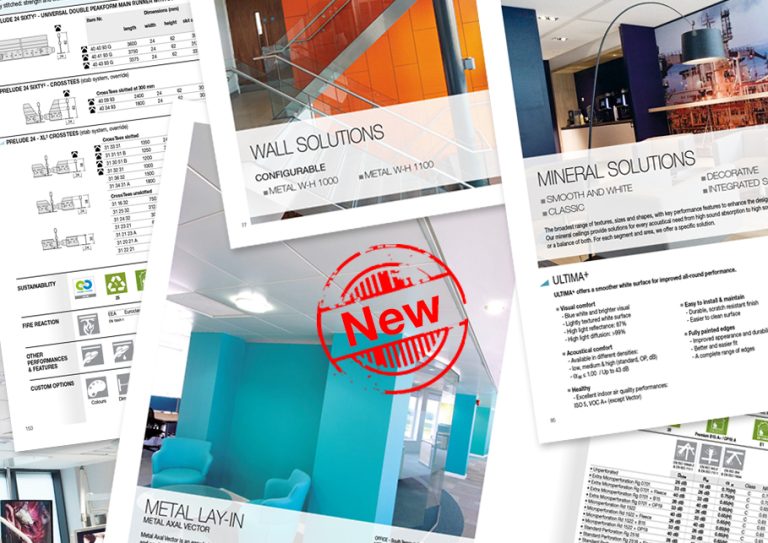
The ultimate guide to ceiling and wall solutions is now available from leading UK manufacturer Armstrong. The company’s new Main Line Brochure makes it even easier for architects and designers to specify ceiling and wall solutions thanks to a simplified but inspiring layout. The new catalogue illustrates with stunning architectural photography and technical drawings the interior solutions that help to enhance comfort, save time, improve building efficiency and overall performance, and create beautiful spaces for office, education, health, retail and transport applications. Available in 14 languages to reflect the company’s recently launched global website, the brochure guides specifiers through the myriad of design solutions available, from floating ceilings and suspension systems (including perimeter detailing and accessories), through materials such as mineral, metal, mesh and wood, to wall and special solutions for acoustic, healthcare and highly humid applications. A product selector by performance helps specifiers to select the right systems for acoustics, light reflectance, fire reaction, humidity and recycled content, with Armstrong’s pioneering recycling programmes and best in class Cradle to Cradle credentials featuring in their own section of infographics. The new comprehensive catalogue also advises on installation and maintenance, including a cleaning matrix, and offers a technical acoustical glossary as well as a route to Armstrong’s BIM files available through the new global website and BIMobject portal. It is available to download via https://www.armstrongceilings.com/commercial/en-gb/commercial-ceilings-walls/product-catalogue.html#catViewer. More information is accessible via the Armstrong Ceilings website https://www.armstrongceilings.com/commercial/en-gb/.

Read More »

WernerCo launches new range of BoSS access solutions for the hire industry

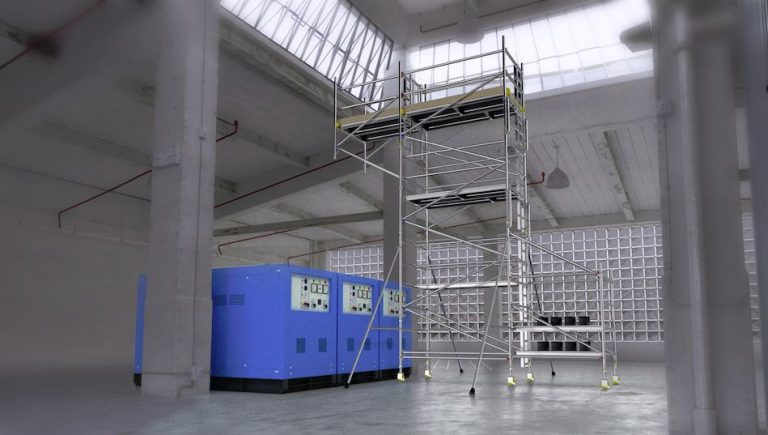
BoSS, the market-leading brand for access solutions, has launched a new range of configured access equipment, designed to make working over obstacles easier and safer. Manufactured using high-grade construction aluminium, the BoSS End-Linked Tower is ideal when working across obstacles such as buildings and large machinery. The BoSS End-Linked Tower can be used to provide a large continuous working area by joining two BoSS access towers with the use of a new Step-Through Ladder Frame. With a 3.2m fixed deck, the uninterrupted area provides a bigger working platform with minimum components. Ideal for overcoming obstacles such as porches, garages or stairways, the BoSS Extended-End Cantilever frame system can be used to convert a double width access tower, providing an additional platform area of up to 1.8m. Both systems are lightweight to allow easier handling and feature a step through frame that provides a multi-level walk through structure. Sturdy stabilisers with interlocking clips improve the overall stability of the towers and a new plan brace ensures a rigid structure for improved performance. Colour coded Boss claws ensure braces are easily identifiable when working on site and a link brace system on the Extended-End Cantilever also prevents frame separation for added safety. Sophie Ellam, Product Manager for BoSS, said: “The Boss End-Linked Tower and Extended-End Cantilever have been designed with ease of use in mind. We identified that some job sites have restricted access and a usual access tower isn’t enough to ensure a safe working environment. Each product is a convenient solution as both use existing access towers that are then configured, meaning the system can save time and is more convenient. “Our Do More With BoSS philosophy ensures that our products are as efficient as possible while meeting more tailored requirements. By being able to make modifications to the standard towers that are already in a fleet it means more complex structures can be achieved as and when required. The Boss End-Linked Tower has a load capacity of up to 275kg per platform level and the expansive deck area can be erected at varying heights allowing for several people to work at once. The Boss Extended-End Cantilever has a platform height up to 6.2m providing a working height of 8.2m. Both systems come with an integrated ladder with anti slip rungs. Both configured towers conform to BS1139-6, which is the British standard for towers that fall outside EN1004 but utilise the same components to build more complex structures. To find out more about the Boss product range, visit www.bossaccesstowers.com

Read More »

3D PRINTED WALLS, DRONES AND A ROOF MADE FROM RECYCLED PLASTIC – HOW THE FUTURE OF THE CONSTRUCTION INDUSTRY COULD LOOK BY 2025

A report looking at the role that technology will play in the construction industry in the future, has revealed that 3D printed walls, drones and a roof made from recycled plastic bottles from the Ocean will all be possible by 2025, thanks to advancements in technology. The report, written by renowned future gazer, Dr. Ian Pearson BSc DSc(hc) and commissioned by Colmore Tang Construction and Virgin StartUp, also revealed that floating buildings or apartments will be possible by 2050 thanks to carbon foam, which is lighter than air.    Renowned futurologist Dr. Ian Pearson has given an insight into how the future of the UK construction industry could look    Drones that carry materials up building sites; 3D printed walls; and a roof made from recycled plastic bottles from the ocean will all be mainstream by 2025    Future-gazer Dr. Pearson was commissioned by Colmore Tang Construction, who has partnered with Virgin StartUp to deliver a £10m innovation fund ‘ConstrucTech’ which is open to entrepreneurial companies By 2025, drones will be able to carry large materials up construction sites and even more remarkably, plastic bottles recovered from the world’s oceans will be recycled to create a roof. Over the next decade, artificial intelligence (AI) will be commonplace, linking to sensors and cameras around construction sites, ensuring that buildings are being developed according to the architect’s plans. Humans will work alongside AIs and will not only see these robots as clever tools, but also colleagues and even friends as they start to develop unique relationships. Looking more than 50 years into the future, by 2075 Dr. Pearson suggests that self-assembling buildings under AI control will allow a new form of structure – kinetic architecture – where a structure is literally thrown into the sky and assembled while gravity forms the materials into beautiful designs. However, it is 3D printing that will steal most of the construction headlines in the immediate future, according to the future-gazer. Cheap homes, built quickly using 3D printing, will essentially put an end to the housing crisis. The report was launched by Colmore Tang Construction, who has partnered with Virgin StartUp to deliver a £10m innovation fund that is open to entrepreneurial companies in a construction industry-first technology accelerator programme called ‘ConstrucTech’. The fund will be provided to those companies that can successfully show how their innovation and technology could improve the sector’s productivity, sustainability and skills issues. Futurologist, Dr Ian Pearson BSc DSc(hc), said: “By 2025 we will already see huge changes in the construction industry thanks to technology with drones, AI and 3D printing all becoming commonplace. By 2050, we could see floating buildings or apartments that could save the housing crisis using carbon foam that’s lighter than air – the possibilities for this really are endless.” Andy Robinson – Group CEO, Colmore Tang, said: “The forward-thinking report has shown that technology can have a positive impact on the construction industry, however, we need to discover those exciting and innovative start-ups, whose products and services could deliver the technologies and innovations that will be the key to future success. “We are hopeful that our partnership with Virgin StartUp to create the ConstrucTech programme and £10m innovation fund will be the start of a new dawn within the industry, where the future innovations predicted become a reality.” Virgin StartUp is a leading business support organisation which has run a number of successful accelerators and supported 11,000 entrepreneurs across the UK. Construction in the UK has been slow to embrace innovation and adopt new technology and Colmore Tang has identified a number of key areas within its business, and the industry as a whole, which it believes could benefit from the contribution of enterprising start-ups. Colmore Tang and Virgin StartUp are calling for businesses to apply to the ConstrucTech programme to address the following problems: –        People: improving analysis of performance, sharing best practice across building projects, measurement of quality and also implementation of health and safety. –        Data: using data to pre-empt potential delays, more efficient material ordering, more effective use of labour along with use of performance data to improve cost, timescales and estimates of new projects for future clients. –        Smart Materials: design and implementation of materials to improve sustainability; improve safety and finding materials which are digitally connected. Colmore Tang is providing start-ups with the opportunity to use the programme as a test bed and development platform to bring products and ideas to the construction sector. It’s hoped the £10m innovation behind ConstrucTech will be the spark to improve lacklustre productivity levels and also begin addressing the need to re-skill over half a million construction workers to suit the industry’s future Mace Report – Moving Construction 4.0. Interested start-ups can apply to be part of ConstrucTech here: http://virginstartup.org/constructech


Read More »