Kenneth Booth

Bliss Events delivers Royal Docks lido masterstroke

Planning/management specialist Bliss Events has set a precedent for the industry, designing and developing London’s largest urban beach, at Royal Docks, to incorporate a swimming pool, which opens on July 18 for six weeks, and an August event space. Funded by the GLA and the London Borough of Newham, Bliss

Read More »

Landlords face up to 17 week wait to evict problem tenants

It takes an average of 118 days for court-appointed bailiffs to evict tenants from private landlords properties after bringing a claim to court.   Landlords in London are the most likely to have to evict, while those in the South West, North East and West Midlands were least likely to

Read More »

Fire safety in construction: Setting the agenda

Ryan Simmonds, Sales Director for Framing at voestalpine Metsec plc, explores the importance of only specifying framing materials that have been fire tested or assessed and the options available to the industry Fire safety is high on the agenda for all of us in the construction industry – and rightly

Read More »

5 Basic Questions to Start Designing Your Dream Pool

Every year seems to bring with it an even hotter summer heatwave than the year before, encouraging homeowners to find new ways to keep their families cool. With this trend showing no signs of stopping, now could be your chance to make a huge difference to your home and install

Read More »

Preventing Septic Disasters

When it comes to sewer and septic systems, most of us would rather “flush it and forget it”, and this is a technique that we adopt…….until a problem arises. When the stuff hits the fan, and you find yourself with a spongy, smelly lawn, drainage problems and slow draining sinks

Read More »

New British Standard guides bring door hardware professionals up-to-date

A raft of revised British Standards has prompted the publication of three new technical guides from the Guild of Architectural Ironmongers (GAI) for door and window hardware specialists. BS 3621: 2017 specifies the performance requirements and test methods for a thief-resistant mechanically operated single-point lock assembly. It gives ironmongers clarification

Read More »

BIFM Scotland Chair Sandy McNaughton, Integral UK Business Development Director Mark Whittaker, NHS Grampian, Preston Gan confirmed to speak at Facilities Scotland 2018

Facilities Scotland, the only b2b exhibition dedicated to Scotland’s FM and workplace industry, has announced leading FM voices who will speak as part of the 2018 conference programme, when the show returns to the SEC, Glasgow on the 12 and 13 September 2018. Mark Whittaker, business development manager at Integral

Read More »

Long service and GAI qualified staff celebrated at IronmongeryDirect

The UK’s largest online ironmongery supplier, IronmongeryDirect, has been recognising some of its most long-serving staff. A series of awards have been recently presented to employees who have worked for the Basildon-based company for over 10 years. Sue James, Senior Contact Centre Advisor, celebrated her 21st work anniversary at the

Read More »
Latest Issue
Issue 345 : Oct 2026

Kenneth Booth

Strong start to the year for Mac’s Truck Rental following Crosland Road site move

Huddersfield-based truck rental specialists Mac’s Truck Rental are celebrating a successful first half of to the year, following their well-publicised site move to a new custom facility on Crosland Road. Mac’s Truck Rental hail their success as a direct result of the improved services they now offer. This provides businesses across the UK with access to trucks built specific to their needs, with mounted cranes, custom bodies and more. In fact, the business has seen an increased number of local clients, with the local construction industry thriving in recent months. Industrial and commercial property projects are on the rise, and this is where the contract hire Mac’s Trucks offer can provide a significant benefit to businesses, explains Selena McDade-Smith, Head of Rental: “Mac’s Trucks has always been known for the quality of their service, and the huge capability of our team. When we originally established Mac’s Truck Rental, that was a key consideration in deciding on the contact hire option we provide for truck financing. This means that when businesses lease a truck from us, they still get access to our incredible service all as part of their truck hire – which includes servicing, maintenance, and breakdown assistance, because of the customer-focused contract hire option we provide.” The truck hire-specialist’s approach has been recognised as part of the BVRLA, the British Vehicle Renting and Leasing Association, the leading trade body for vehicle rental. After consistent year on year growth, Mac’s Truck Rental is now launching a standalone website, offering businesses more information on the trucks they can hire, as well as the custom-build facilities available from their new HQ. [URL: https://macstruckrental.co.uk] Mac’s Truck Rental continue to invest in their fleet and premises, providing another positive story for local industry.

Read More »

Bliss Events delivers Royal Docks lido masterstroke

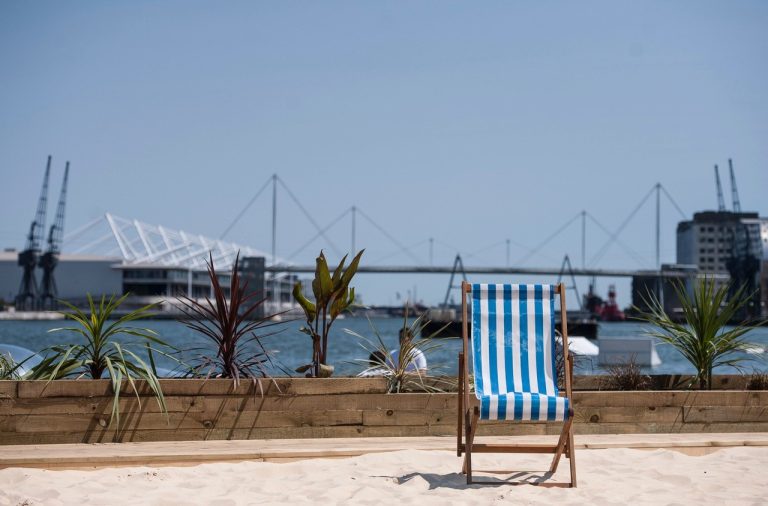
Planning/management specialist Bliss Events has set a precedent for the industry, designing and developing London’s largest urban beach, at Royal Docks, to incorporate a swimming pool, which opens on July 18 for six weeks, and an August event space. Funded by the GLA and the London Borough of Newham, Bliss partnered with Star Events to plan a set of structures, linked by walkways, and create the first pool proper on the London leg of the Thames. Buoyed by Star’s extensive experience with waterborne projects, Park Live for London 2012, Airbnb’s Floating House on the Thames and several Jaguar Land Rover activations among them, the 2018 Royal Docks’ beach is a massive technical achievement. The pool deck, based around Star’s proprietary VerTech™ sub-structure, incorporates a children’s paddling area and extends existing infrastructure around the beach to cover any hazards hidden by the shingle and prevent ad hoc access to the dock. A sun deck on the water is built from a commercial grade Linkflote system rather than the lightweight plastic and ‘NATO’ type pontoons events typically turn to. As a result, all the floating sections of the structure, which are decked with Star’s standard slip-free stage cover, are every bit as solid as the land-based elements. The sun deck is accessed by two 16.6m by 2.5m floating walkways, which also serve to fix the structure to the land. All are secured by fencing to keep swimmers out of uncontrolled areas and combine to envelop the lido itself.  The 22m by 18m pool incorporates various water level swim platforms, lane/depth markers and access ladders. There will be changing rooms, a beach kiosk serving snacks and drinks, and lots of safety signs on the lido, where the water and its approaches have been inspected and passed fit for purpose. The beach is controlled by the site manager, who will be assisted by a security team, lifeguards, a first aid responder and GLA staff. Bliss has also fitted a stretch tent to the lawn areas adjoining the beach, providing shade in the short-term and an event space across the four August weekends. Replete with a licensed bar and food traders it will feature some of London’s best buskers on Friday evenings, film screenings, for kids on Saturday mornings and for families in the evening, a lunchtime barbecue on Sundays and more besides. Anne McLellan, Managing Director at Bliss Events, comments: “This is very much a joint project between Bliss and Star Events. Star has watertight relationships with the likes of Livett’s and other agencies vital to an event like this, along with the kit and the nous to build the lido and the pontoons. “It’s been an incredible, exciting and challenging job to plan and to work on. With great support from the client and from our suppliers we have delivered a real feat of engineering in the shape of fantastic summer venue at the Royal Docks.”   Robert Baffour-Awuah, Promotion and Investment Manager for the GLA’s Royal Docks team, says: “The beach is a fixture in the local calendar that’s improving all the time. The Bliss pitch covered everything we’d asked for with innovative but practical responses. Anne understood our vision to present a more ambitious, enhanced offer with strong production values and an engaging programme.   “We’d seen examples of floating walkways and floating stages/screens but not this kind of decking, enclosing a managed swimming area. The system is much more affordable than bringing in a temporary swimming pool, it works effectively with the event site we have and it’s really good to pilot new things in the Docks.   “It was important to us that this year’s beach event reflected the step change in the story of the Royal Docks and it’s been great to work with Bliss/Star Events. They understand the ambition to ensure that the offer remains attractive to local people while attracting a wider audience from across the borough and the capital.”   The 2018 model beach is a flagship event in front of a £314m regeneration plan for the Royal Docks. Money that will support a comprehensive physical, economic and social change in the area over the next five years, creating a potential 35,000 new jobs, building 4,000 new homes and encouraging events, like that beach, that provide invaluable opportunities to bring locals and visitors together.


Read More »

Landlords face up to 17 week wait to evict problem tenants

It takes an average of 118 days for court-appointed bailiffs to evict tenants from private landlords properties after bringing a claim to court.   Landlords in London are the most likely to have to evict, while those in the South West, North East and West Midlands were least likely to have to go all the way to court to secure their evictions. Landlords can see at a glance how their region fares here.   New analysis of government figures by Simple Landlords Insurance shows it took an average of 16.9 weeks from claim to bailiff eviction in the first quarter of 2018. A total of 21,429 possession claims were brought to court last year, of which 6,260 ended in eviction by bailiff.   It’s the first time that the length of time it takes for private landlords to evict through the court system has been made public – and it’s been broken down by region and population density so landlords – and tenants – can find out exactly what level of risk they face in each area of England and Wales.   Tom Cooper, Director of Underwriting at Simple Landlords Insurance, says: “The good news for everyone is that in 2017 only 0.5% of landlords made a possession claim in court. And only a third of those had to go through to the bitter bailiff end. The bad news is that if it does happen to you, it can cost a lot of money – and not just the average £1,700- £2,000 in legal fees.   “We wanted to get a more realistic idea of the impact of the process in terms of lost income, inconvenience, and ongoing legal fees in the worst and longest case scenarios. Just looking at lost rent, there are few landlords who can afford to lose up to 6 months’ worth –  the time it takes for a tenant to go into arrears, for them to issue a Section 21 notice, and then for them wait 17 weeks to see the court process through.”   Key findings   The headlines for landlords include:   During 2017, private landlords brought 21,439 possession claims to courts in England and Wales.   27% of claims didn’t receive a court order. Many claims are rejected for failing to follow the correct eviction proceedings.   The average insurance payment made for eviction support is £4,341.22, which includes legal expenses and lost rent.   Landlords in London are more likely to have to evict a tenant, the figures show. Buy-to-let investors in the capital brought 195.3 claims per 100,000 households last year.   Landlords in the South West of England were least likely to bring eviction proceedings to court, with 58.9 claims registered per 100,00 households, followed by the North East and West Midlands.   It took longer for social housing providers to evict tenants, with an average claim-to-repossession time of 27.9 weeks vs 16.9 for private landlords.   The eviction timeline   The Ministry of Justice figures revealed it took an average of 6.9 weeks for a private landlord’s claim to result in the issue of an order requiring a tenant to leave the property. For those whose tenants stayed past the date given on the notice, it took an additional 3.2 weeks from the initial order to the granting of a possession warrant, and a further 6.8 weeks for a bailiff to take possession of the home if the claim went to the final stage making the total 16.9 weeks.   Rent arrears and legal expenses   Landlords can mitigate the risk of lost income, time and property damage if they have to bring possession proceedings to court with legal expenses insurance and rent guarantee insurance.   Legal expenses insurance helps landlords navigate the evictions process, including serving an eviction notice correctly, and legal support in court. Simple Landlords Insurance’s product includes 24/7 access to advice from its legal partners and costs £39.50 per year.   Rent guarantee insurance compensates landlords for the income they lose over the many months an eviction process can take, as well as the legal fees for pursuing an eviction through the court system, with premiums from £79.99 a year (based on the monthly rental income a landlord wants to cover).   Tom Cooper added: “We know that rent arrears are high up on the list of landlord worries. Possession claims by private landlords have risen by 3.5% in the last two years. Over the same period we’ve seen a 61% increase in take-up of rent guarantee insurance in addition to legal expenses cover as landlords feeling the pinch from tax and regulatory changes try to mitigate the risk of repossession.”   More detail on the analysis can be found here.

Read More »

Fire safety in construction: Setting the agenda

Ryan Simmonds, Sales Director for Framing at voestalpine Metsec plc, explores the importance of only specifying framing materials that have been fire tested or assessed and the options available to the industry Fire safety is high on the agenda for all of us in the construction industry – and rightly so. It was reported last month that the number of tenders for fire safety work issued by the public sector has soared 56% in the 12 months since the Grenfell Tower fire. There were 687,476 incidents attended by fire and rescue services in Great Britain in 2016-17, with the recent Hackitt Report on the Grenfell Tower tragedy concluding that indifference and ignorance led to a “race to the bottom” in building safety practices, with cost prioritised over safety. The number of councils tendering for fire safety work has shot up in the year since the Grenfell disaster, according to the latest figures – local government buyers publishing twice as many fire safety tenders in the last 12 months compared to the previous year. With concerns about public safety rising, the Government has called for independent reports to analyse building regulations and fire safety in greater detail. We may well see regulations tightened and enforcement of building standards move to a higher level. The building industry as a whole will need to deliver solutions to the required performance specification, while we can expect a higher level of scrutiny of the installation and performance of products and systems, whether or not it is a high-rise project. Many of us in the construction industry have already turned the microscope on ourselves, examining in detail fire safety provision across product ranges and projects. One issue already emerging from the Grenfell Tower tragedy is that focusing on the performance of one standalone product in a fire is too simplistic and does not address all the risks involved. What is needed is consideration of the myriad of other factors that can allow a fire to spread. For any future building project, full system testing and fire safety are paramount to any organisation within the construction supply chain. End clients are calling for additional reassurance and we in the construction industry are being urged to ensure that all components used have been designed and developed in line with the latest fire and safety guidance. Striking this balance can be a challenge for the industry – but achieving this won’t happen overnight. Having led the market for more than 20 years, we recognised the need to increase the efficiency of steel framing system (SFS) products, which led to the development and launch of the innovative new SFS range. This includes lighter, more cost-efficient and sustainable design options, as well as robust fire solutions, enabling more efficient wall construction performance. Months of research, design and stringent fire testing were invested to develop our new SFS range of sections and, with the introduction of more product options to reduce over-specification, we are putting our stake in the ground with regards to where the industry needs to move to, if it is to evolve. The aim of the new range is to combine best value and quality for installers and end users, as well as have a substantial impact on the green credentials and sustainability of any project where our new SFS solution is implemented. Our SFS range now has more system testing data than ever before, in fact over 200 wall and floor solution combinations. With our fire performance data tested or assessed by the UK’s leading test centre – the BRE, we also calculate acoustic and thermal data to give complete peace of mind. Metsec’s new range provides a greater selection of sections, giving architects the capability to create more efficiently designed projects, using the exact product sizes needed. SFS is available in a variety of options including infill, continuous and high-bay walling and an SFS load-bearing system. The new range is BIM Level 2 compliant, with BSI Kitemarks for both BIM projects and BIM objects. Features include new fire-tested solutions based on British Gypsum, Siniat and Knauf plasterboard; thermal and fire performance solutions using Rockwool insulation; fire performance solutions using RCM Y Wall and Euroform Versaliner sheathing boards. Quality and fire safety do not have to be sacrificed in the name of cost – and should never be. The construction industry should lead the future fire safety debate, and work with regulators to ensure all parties involved – from contractors to building occupants – view the sector as standard bearers for both quality and safety. Visit www.metsec.com/sfsframing for more information and to download our brand new technical manual. Please note: this is a commercial profile voestalpine Metsec plc Tel: +44 (0)121 601 6000 metsec@metsec.com www.metsec.com

Read More »

Modern Plasterboard: We’ve Come a Long Way from Lath and Plaster

Whether you’ve plastered a room in your home or you’re a plasterer by trade, you’ll appreciate that this is a task that requires a fair bit of skill and dexterity to create a smooth and appropriate finish. Today though we’re fortunate enough to have the tools and materials that can make achieving such results a little bit easier – particularly compared to the old lath and plaster methods which certainly proved problematic. Lath and Plaster Lath and plaster used to be the main method builders and tradespeople used to finish interior walls and ceilings up until around the 1950s. This would see wood laths (strips or boards of wood) being nailed between the joists or wall studs to create the backing of the wall with a gap between each one. This gap would then be filled by a first layer of plaster with the plasterer applying it with a board to force it to spread between the slots. After this, another layer of plaster would be applied to coat the wall, before a third and final smoothing layer would be put on and allowed to dry before the wall would get painted. The Problems As effective as this might have been for creating interior walls and ceilings, the main problems that people encountered were that this method often ended up taking a long time. What’s more, by having numerous layers of plaster, it also meant that the whole plastering process could end up being quite an expensive task. Modern Plasterboard Thankfully, we now have modern plasterboard which only a few decades ago helped revolutionise plastering and offer additional usages. As well as simply being a faster means of plastering, the range and materials we can buy now can offer aspects like additional soundproofing, insulation and an easier finish. From a trade perspective it can also therefore offer customers greater value for money, while of course meaning more jobs can be done in a shorter timescale. Final Thoughts While modern plastering is better and quicker, it’s still not something to be taken for granted. As alluded to above, it takes a skilled hand to master plastering, so a final consideration here for those looking to build or renovate a room themselves is to make sure you get the right equipment, gear and know-how first. This will help ensure you get the best results in next to no time.

Read More »

5 Basic Questions to Start Designing Your Dream Pool

Every year seems to bring with it an even hotter summer heatwave than the year before, encouraging homeowners to find new ways to keep their families cool. With this trend showing no signs of stopping, now could be your chance to make a huge difference to your home and install a Dream pool. Swimming pools are fun for the whole family. Kids of all ages are more than happy to spend their entire school holidays splashing around, while parents can enjoy a refreshing dip without having to brave the local lido or queues for the beach. If you’ve been toying with the idea of installing a pool in your garden but aren’t sure where to start, here are the five essential questions to help you work out the best pool for your family. Who is it for? The first question you have to ask yourself is simple: who will be using the pool the most? If you’re thinking about using it as a way to keep growing children throughout the summer, you should be looking at very different design features than if the pool is intended for fitness.   When it comes to designing your pool (and the area around your pool), use the people who will be swimming in it the most to inform any features you might want to install for safety or convenience. For example, if you have little ones running around then a high fence and a lockable gate is a must. You will also want the pool to be in an area of the garden that can be easily supervised. On the other hand, a deep pool will be better for older children, and a pool in an adult-only residence can afford to be a little more design-led and hidden away from the rest of the building. What is it for? Similar to the first question, considering what the pool is intended for will dictate certain factors like its size, depth and leisure accessories. A pool for children should have a generous shallow end, multiple exit points and a hand or foot-hold around the edge. If you want to use your pool for entertaining, you may want to incorporate luxurious features like a tanning ledge, jacuzzi area or in-built parasols. Fitness pools will be focused towards performance – you could even opt for a lap pool, as size and depth are less of an issue. Where is it going? Choosing a location for your pool is important. Not only do you need to take into account obvious factors like its size and shape, but you will also need to think about how its sun exposure and how its position will impact the safe use of the rest of your outdoor space. Ideally, you want your pool to catch as much sun during the late morning and throughout the afternoon. This will make the water slightly warmer during use and make it a refreshing place to take a dip during the warmest parts of the day. Don’t forget to think about the dry areas you want around the pool, for lounging, dining or entertaining.   Will you be building a designated pool area, where you can store accessories, toys and any drinks and snacks you might want when you’re lounging? If not, think about your route back to the house or shed and whether there’s an efficient pathway you could build. How quickly do you want it? Above-ground pools might not look as streamlined as an in-ground design, but they will be much, much quicker to install. Additionally, the larger and deeper you expect your pool to be, the longer it will take to construct, and certain materials are faster to install than others. With this in mind, think about how much you are willing to compromise in terms of build schedule, price and aesthetic in order to get your pool installed quickly. You may want to consult with a specialist firm who use the latest technology to reduce installation times, with carbon ceramic materials and fast pool builders. How much upkeep are you prepared for? The depth and size of your pool usually correlate to the amount of upkeep it’s going to require, although its construction material will be a factor, too. Vinyl pools are inexpensive and easy to keep clean, but are prone to leaks and will need replacing every 3-7 years. Concrete is a porous material so, if you leave it unfinished, your pool will need to be kept meticulously clean to prevent bacteria growth. Fibreglass is a popular option for both affordability and ease of maintenance. Pool types that require less maintenance include lap pools and natural pools. Lap pools are simply easier to manage due to their modest size, while natural pools utilise a reed-based filtration system that keeps water clean without using chemicals. If you don’t want the upkeep of a regular pool, consider these options.   Building a pool is an investment and may not suit every household, particularly in the UK. However, their contribution to fun, fitness and leisure means that once you take the plunge, you’re sure to love your pool for years to come.

Read More »

Preventing Septic Disasters

When it comes to sewer and septic systems, most of us would rather “flush it and forget it”, and this is a technique that we adopt…….until a problem arises. When the stuff hits the fan, and you find yourself with a spongy, smelly lawn, drainage problems and slow draining sinks and hard to flush toilets, your septic situation has reached its breaking point, and it’s time to call in experts for drainage help and repair, which can be quite costly. To avoid a huge septic system overhaul and a resulting large bill in your future, consider some simple things you can do at home–routine maintenance, if you will–to prevent septic disasters from happening in and around your home. How Do I Know When I Have Septic System Issues? Here are some telltale signs that your septic system needs some extra attention:   Gurgling pipes. If your pipes sing more than you do in your morning shower, chances are that you are experiencing a backup somewhere along the line. Healthy pipes are quiet pipes; have this issue looked into as soon as possible.   Slow flushing toilets. The occasional bathroom clog is to be expected, but a toilet that is regularly backing up and not flushing without the assistance of a plunger is a sign of a larger problem.   Slow drains. Slow draining sinks, baths, and showers are an indicator that your system is draining slower than usual. Making sure that extra items don’t accidentally find their way into your sewer system, like children’s toys, excess food and trash, and bathroom waste other than septic approved toilet paper will ensure that you maintain a good healthy flow away from, not into, your house.   Water backup. Water backup anywhere in the house, in a sink, tub, shower, or in the floor drain near the washing machine is an indication that something is plugged and failing to drain. This is one of the worst symptoms of system failure; contact an expert for excavation as soon as possible.   Bad odors. Do you smell rotten eggs in the basement? Something’s not right, and excessive odors can lead to respiratory problems if not addressed.   Greener grass near the drainage tank. Greener grass means that those patches are getting the benefit of extra “fertilizer”, which is an indication that there may be a leak in your septic system.   Standing, smelly water. A spongy lawn or patches of standing water on the lawn are a sanitation issue, and these patches must be drained and cleared off so that your septic system can function normally once more. What Can I Do to Prevent Disasters? There is no need to experience these unsavory conditions in and around your home; implementing a few simple preventative measures will ensure that your septic system maintains its integrity in between professional cleanings: Pump it out regularly Routine pumping is essential to clear the way for new waste. There will ALWAYS be an abundance of waste, so maintaining the health of your system by pumping it out every one to three years will keep things “moving along the pipe”. Responsible flushing Perhaps the biggest culprit to a faulty septic system function is the disposal of improper items down the toilet. Items like cosmetic and baby wipes, cotton balls, feminine hygiene products, and paper towels should never be flushed. Use only septic system approved toilet paper, and keep a close eye on those little children’s toys–they are sneaky! Inspect your drainage field While your grass in the drainage field may be a lovely shade of green, that is not an indicator of septic system health. Areas that are soft, spongy, and contain standing water indicate that there are issues with the system. Odors accompanying excess moisture are also an indicator that trouble is brewing; at the first sign of a spongy lawn or offensive odor, call in septic experts to assess the problem. Add an automated detection system Installing a liquid level sensor in your septic tank will allow you hands free monitoring of your septic tank. When the liquid reaches dangerous levels, your system will indicate to you that attention is needed. Providing an early detection system will give you time to plan your cleanup strategy.   Keeping on top of your septic system by looking for signs of slow drainage, leakage, or damage to the drainage field will ensure that you maintain its integrity for years to come. When in doubt, call in the experts for an assessment of your system and its unique needs.

Read More »

New British Standard guides bring door hardware professionals up-to-date

A raft of revised British Standards has prompted the publication of three new technical guides from the Guild of Architectural Ironmongers (GAI) for door and window hardware specialists. BS 3621: 2017 specifies the performance requirements and test methods for a thief-resistant mechanically operated single-point lock assembly. It gives ironmongers clarification on how to conform to BS 3621 and the classification for locks in respect of other British and European standards. BS 8613: 2017 covers Finger Protection Devices for Pedestrian Doors. It will help specifiers, architects, facilities managers, health and safety and risk assessment professionals to select the appropriate finger protection products to prevent entrapment at the hanging stile of doors. In January 2018 BS 8300 was revised and the 2009 version was withdrawn. The 2018 version was split in to two standards, one covering the design of an accessible and inclusive built external environment and the other on the design of an accessible and inclusive built internal environment. The Guild’s new technical guide on this particular standard focuses on the second topic as it is the most relevant to the architectural ironmongery industry. It gives an overview of the history of accessibility legislation and goes on to give further detail about specific ironmongery products to which this that this standard applies. Douglas Masterson, GAI technical manager, says: “Architectural ironmongery companies play a crucial role, working with architects, contractors and others to schedule and specify the hardware for every door and window in a building and to produce a full fixing schedule of hardware items. So it is important that our members are up-to-date with the latest standards.” To access the latest technical briefings, go to the membership area of the GAI website: www.gai.org.uk   For further information, contact Douglas Masterson on technical@gai.org.uk.

Read More »

BIFM Scotland Chair Sandy McNaughton, Integral UK Business Development Director Mark Whittaker, NHS Grampian, Preston Gan confirmed to speak at Facilities Scotland 2018

Facilities Scotland, the only b2b exhibition dedicated to Scotland’s FM and workplace industry, has announced leading FM voices who will speak as part of the 2018 conference programme, when the show returns to the SEC, Glasgow on the 12 and 13 September 2018. Mark Whittaker, business development manager at Integral UK, and BIFM North Region chair joins Sandy McNaughton, BIFM Scotland chair and Lee James, business development director, Churchill Services in the opening keynote session titled Can Scottish FM plot a new value-driven path for the sector? In this session, the panel will draw on their extensive industry experience to discuss what lessons can be learnt from the recent failures in the FM sector, and the necessary steps the industry must take to reinvigorate FM. In his session Strategic FM and the importance of the informed client, Preston Gan, head of business services and strategy at NHS Grampian and winner of the 2017 BIFM Scotland FM Professional of the Year Award, considers how FM can support corporate strategy with the importance of the informed client function to help ‘fuel’ the FM strategy in optimising and adding value to the benefit the overall organisation. Under the theme, ‘Building the Scottish FM powerhouse’, the Facilities Scotland 2018 seminar programme promises to showcase the very best of Scottish FM, panel debates on the latest trends shaping the FM market in the region and beyond and a series of talks that will help facilities managers enhance their CPD. Tim Else, director of Facilities Scotland said: “There is a plethora of fantastic work in the FM sector which is over overshadowed by the extensive negative coverage in the national press.” “The Facilities Scotland 2018 free seminar programme, aims to provide Scottish facilities professionals with access to an extensive two-day programme of sessions featuring a wealth of both technical presentations to help FM’s in their personal development, and industry discussions to help the advancement of the sector in Scotland.” Free registration for the event is now open. Visit www.facilitiesevents.com/scotland for more information.

Read More »

Long service and GAI qualified staff celebrated at IronmongeryDirect

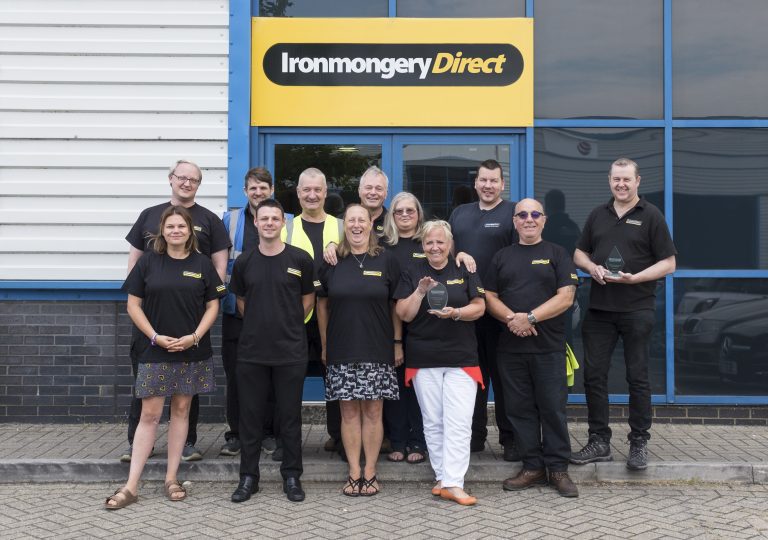
The UK’s largest online ironmongery supplier, IronmongeryDirect, has been recognising some of its most long-serving staff. A series of awards have been recently presented to employees who have worked for the Basildon-based company for over 10 years. Sue James, Senior Contact Centre Advisor, celebrated her 21st work anniversary at the end of June. She said: “I am very proud to have worked for IronmongeryDirect for such a long period of time. It’s a fantastic place to work, and I must have spoken to thousands of customers. The job brings me the satisfaction of knowing that I’m helping each tradesperson find what they need for their business or to improve their home.” Other long serving staff include, Jim Cook, Distribution Centre Team Member (17 years), Keith Harrod, Category Assistant (16 years), Debbie Butler, Executive Contact Centre Advisor (14 years), Norman Calvin, IT Support Analyst (13 years), Andrew Patey, Distribution Centre Team Member (12 years), Tom Ramshaw, Operations Director (11 years), Stuart Caddle, Distribution Centre Team Manager (11 years), Jamie Johnson, Senior Category Manager (11 years), Keith Gray, Distribution Centre Productivity & Project Manager (11 years), Terry Greene, Distribution Centre Team Member (11 years), Lance Warner, Distribution Centre Team Member (11 years), Angela Spelman, Executive Contact Centre Advisor (11 years), Gillian Thurkettle, Distribution Centre Team Member (10 years), Wayne Lysaght-Mason, Managing Director (10 years) and Victoria Gregory, Contact Centre Advisor (10 years). Wayne Lysaght-Mason, Managing Director at IronmongeryDirect, has headed up the company for more than a decade, added: “We wanted to make sure that our staff knew how much their hard work and efforts are appreciated. Many of our staff have dedicated many years of their professional lives to the business and have seen IronmongeryDirect transform and advance a great deal. Without them and all of our staff, our success would not be possible.” IronmongeryDirect has also announced that more staff are now GAI (Guild of Architectural Ironmongers) level 2 qualified, enabling them to provide enhanced in-depth technical assistance and support to customers.

Read More »