Kenneth Booth

Forticrete hosts inaugural Roofing Forum

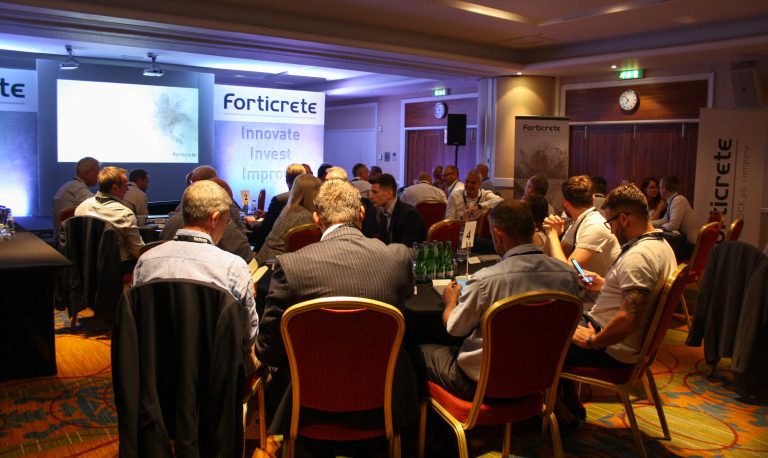
Innovate, invest and improve were the key themes at the inaugural Forticrete Roofing Forum. The event, held at the Forest of Arden last week (July 4), was attended by more than 50 people from across the roofing industry. As well as updates on company activity and the state of the market, a number

Read More »

The secrets of building eco-friendly construction

With environmentally friendly, recycle and green energy becoming a priority across the entire world, it’s no wonder that more and more architects and construction specialists are focusing on introducing eco-friendly building designs. Buildings are getting designed in a manner that considers their environmental impact from the start, and even the

Read More »

Housing association launches £2.4bn fire safety framework

Framework Initiative will be made available to public bodies across England and Wales. A London housing association has launched a £2.4bn framework for public bodies to use for fire safety remediation works. Hyde Fire Safety Works and Services Framework, which is being procured by Hyde Housing Association, will cover a range

Read More »

What Does the Future of Construction Look Like?

Technology has transformed many different industries within the last few years and this is starting to become true for the construction industry. Nowadays, technology has paved the way to increase the efficiency and accuracy of projects whilst reducing the amount of manual labour that is required. As such a key

Read More »

Howard Ward Associates to work on bespoke student residential scheme

Nottingham-based consulting engineers Howard Ward Associates (HWA) has been appointed to work on a major £20M student accommodation scheme on Westwood Way, Warwickshire. The site of the planned 380-bed student accommodation project is currently occupied by an office building, which has been vacant for more than four years. When works

Read More »

MC CONSTRUCTION CHECKS IN AT V&A HOTEL

MC Construction has completed a revamp of the reception and business conference area at the Manchester Marriott Victoria & Albert Hotel. The £500,000 project creates a new welcome experience for guests at the 148-bedroom, four-star hotel in Spinningfields. The scheme involved renovating the hotel reception, lobby, conference foyer and bar

Read More »
Latest Issue
Issue 345 : Oct 2026

Kenneth Booth

Forticrete hosts inaugural Roofing Forum

Innovate, invest and improve were the key themes at the inaugural Forticrete Roofing Forum. The event, held at the Forest of Arden last week (July 4), was attended by more than 50 people from across the roofing industry. As well as updates on company activity and the state of the market, a number of educational syndicate sessions held throughout the day gave attendees the opportunity to ask questions and give feedback in key areas. Sessions included health and safety for roofing contractors, product development, customer support as well as scheduling and ordering. A key message to emerge from the forum was that by working in partnership throughout the supply chain “everybody has the chance to grow their business”. John Lambert, Managing Director of Forticrete, commented: “This forum marks a major undertaking for Forticrete. It was an opportunity for us to share our future plans and generate feedback from the people who are most important to us. Our objective is to improve the customer experience. By listening to our customers, it will help us drive forward future initiatives across our business.  The aim of the forum was to have a collaborative approach so we can continually deliver the products, services and solutions the roofing industry needs.” Joe Hudson, Chief Executive of Ibstock plc, also stressed the value of the customer relationships, saying: “Without customers we don’t have a business. The only way we can continue to grow and invest is by having a partnership with you. By focussing on the needs of our customers and working together more closely we can make changes together that create value for everybody. There are a lot of opportunities within the roofing industry, and there is great potential for us all to grow at a very dynamic time in the market. We can achieve this by working in partnership throughout the supply chain.” Forticrete, part of Ibstock plc, is one of the UK’s leading manufacturers of concrete construction products including roof tiles, concrete decorative facing blocks, walling stone and cast stone dressings.  

Read More »

The secrets of building eco-friendly construction

With environmentally friendly, recycle and green energy becoming a priority across the entire world, it’s no wonder that more and more architects and construction specialists are focusing on introducing eco-friendly building designs. Buildings are getting designed in a manner that considers their environmental impact from the start, and even the way they’re constructed places a distinct focus on eco-friendliness and sustainability. The way in which these buildings deal with their waste during their construction is hugely important, and that is why more and more buildings are utilising skip hire in Northampton and the rest of the UK which focuses on ethical and environmentally-friendly waste removal. The secrets behind Eco-Friendly Building Construction Green Waste Removal – Even though all your efforts to reduce as much waste as possible during a construction project is great for helping the environment and reduce costs, there will always be waste created from the process. When it comes to removing the waste from your building project in anywhere across the UK, you need to ensure that you are using ethical waste removal and disposal service. That is why you need to find a skip hire company that does its best to recycle as much of the waste it receives as possible and can offer extremely high rates of recycling success. Alternative Energy Solutions – Modern buildings today, tend to have solar panels directly included into their design as a clean and renewable energy source. They utilise the natural energy provided by the sun and can not only work to reduce the environmental impact of a building’s design but can even provide decreased energy bills over the building’s lifetime. There are several government grants, incentives and tax breaks which a huge bonus to those buildings can also be which include solar power in their designs. Using Sustainable Buildings Materials – If you’re aiming to construct a green building, then it’s a no-brainer to use environmental construction materials. Each and every part of your building needs to use responsibly made and eco-friendly components, from the roofing material to the insulation you choose, the materials chosen can have a major effect on the overall sustainability of your building. Popular eco-friendly building materials include reclaimed timber, recycled plastics, recycled glass and other natural building products such as bamboo, cork and linoleum made of renewable materials. Energy Efficient Windows – Double-glazed windows can be extremely effective when to comes to a building’s insulation properties and drastically reduce costs from heating over the building’s lifetime. This also makes complete financial sense, as any additional costs incurred by installing double-glazed windows is overturned by the savings that these windows will provide in the long run. In summary, these points suggest that Britain is going in the right direction and when considering an environmentally friendly construction project, then you need to plan the most effective strategy to manage your waste, with the help of an expert.

Read More »

Environment Agency Award recognises ECS impressive Health and Safety Performance

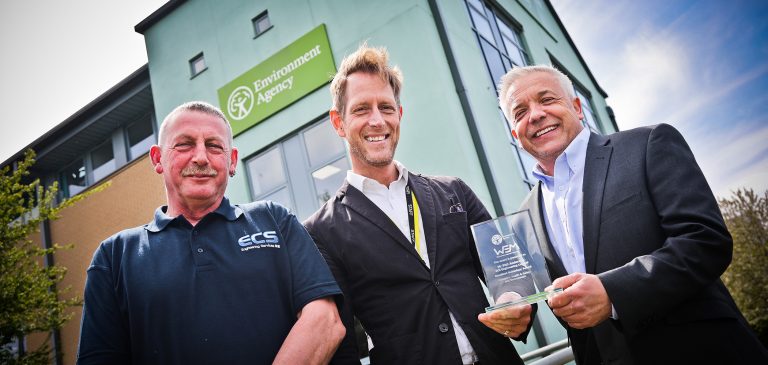
ECS Engineering Services has won a prestigious Environment Agency Health and Safety Award for the way it designed and implemented critical safety systems into a project to refurbish the extensive steelwork at Colwick Sluice on the River Trent. As a vital part of the Nottingham area’s flood control infrastructure, Colwick Sluice consists of five steel vertical river control gates, each nearly 13 metres wide by 6 metres in height. This important structure has been protecting the city and surrounding countryside for over 60 years and ECS has previously been involved in the maintenance of the gates and an upgrade to their control systems. Thanks to its long history of work on water control infrastructure, ECS was invited to undertake refurbishment of the exterior steelwork structure, a project that required careful consideration and a great deal of planning and preparation. Some of the steelwork could be removed for cleaning and repainting off-site. However, much of the repainting work had to be in-situ – a lot of it had to be carried out over water, meaning special safety measures in case anyone fell into the river. There were also major environmental considerations to prevent old paint flakes, debris and other items from contaminating the waters, riverbank, wildlife and ecosystem. In the first stage of the project, ECS erected extensive scaffolding around the sluice, including a section to replace a gantry and walkway that had been temporarily removed. The scaffolding was designed to provide engineers with safe, clear access to all surfaces of the steelwork many metres in the air, and also to catch and contain falling debris. To improve the working environment and minimise the amount of debris dropping into the river, the scaffolding was encapsulated with tent-like walls allowing the operations to be carried out even in extreme weather. As part of the safety commitment a three-man water rescue team was on site at all times during the works, positioned in a small, highly manoeuvrable rescue boat, equipped for any likely eventuality so that they could deploy instantly to recover a person from the water. People working on the scaffold wore a double lanyard safety harness so that they could attach themselves to the scaffolding. If they had to move from one section of scaffold to another, they would unclip one lanyard and reattach it to the new section before undoing the second one, thus always remaining secure. The site teams carried out risk planning and mitigation during the planning phase of the project, identifying that it could be possible for a person to fall, be saved by their lanyard but unable to regain the safety of the scaffold walkway even with assistance. To cover this eventuality everyone was issued with a strap knife that they could use to cut the lanyard and drop into the river if needed – but not until the rescue boat was in position to effect an immediate recovery. Jamie Wesley, Operations Director at ECS recalls: “In conjunction with our client, ECS ensured that the rescue drills were carefully planned, exercised and that all personnel were correctly briefed on their roles prior to any works being carried out. Once ECS were happy with performance of our safe systems of work we invited our colleagues from the Environment Agency to attend an onsite demonstration where a life-sized dummy, rather than a real person, was dropped into the river and rescued.” The rescue team was on station with a Jason’s cradle to deploy over the side of the boat to initiate retrieval. The cradle is a piece of equipment specially developed to be used in retrieval from water which, when positioned beneath a person, is used to easily and quickly haul them into a boat. ECS had this demonstration filmed so that a training video could be produced and shown to all personnel working on the project. Jamie Wesley again states: “Safety is paramount and our pre-planning and demonstration showed that we had all the assets in place to make this project as safe as possible. We have learned lessons and proved systems that we can take forward into future projects. Winning the award confirmed that we had done our best and proven our capabilities for safety in ‘above water’ projects.”

Read More »

Housing association launches £2.4bn fire safety framework

Framework Initiative will be made available to public bodies across England and Wales. A London housing association has launched a £2.4bn framework for public bodies to use for fire safety remediation works. Hyde Fire Safety Works and Services Framework, which is being procured by Hyde Housing Association, will cover a range of works, goods and services relating to fire safety. The framework, which is open to public bodies across England and Wales, is divided into 11 lots covering different types of remediation works to help make buildings more fire safe, with each of the lots being worth around £200m. The framework covers everything from supply and repair of fire doors, to the installation of sprinklers, to cladding remediation works. Each lot will run for four years, with between two and 10 bidders expected to be invited to tender. Firms can submit bids for all lots. Companies have until 5 August to register their interest, with shortlisted firms expected to be invited to tender on 18 August.   Hyde Fire Safety Works and Services Framework Lots Lot 1 – Supply, installation, removal, and repair of fire doors Lot 2 – Supply, installation, removal, and design of fire safety signage Lot 3 – Supply, installation, removal, and maintenance of fire alarm, detection and suppression systems. (Lot 3 is split in to Lot 3A and Lot 3B to differentiate between fire detection and fire suppression systems) Lot 4 –  Supply, installation, removal, and maintenance of emergency lighting Lot 5 – Design, supply, installation, removal, and maintenance of sprinkler systems and dry/wet risers. (Lot 5 is split in to Lot 5A and Lot 5B to differentiate between Dry Risers and Wet / Charged Risers.) Lot 6 – Provision of fire proofing and stopping works and services Lot 7 –  Provision of cyclical and reactive electrical testing, servicing, and maintenance services Lot 8 – Remedial Works, upgrades, installations, and testing of electrical systems Lot 9 – Removed from framework Lot 10 – Design, supply, installation, removal, and inspection of cladding Lot 11 – Incident Management and provision of Business Continuity Planning advisory services to mitigate and plan for potential threats Lot 12 – Management Contractor to manage any of Lots 1 to 11 for clients and/or direct delivery

Read More »

What Does the Future of Construction Look Like?

Technology has transformed many different industries within the last few years and this is starting to become true for the construction industry. Nowadays, technology has paved the way to increase the efficiency and accuracy of projects whilst reducing the amount of manual labour that is required. As such a key time in the industry, it is worth taking a look into the future to see what could be in store for construction over the coming years.   Augmented and Virtual Reality One of the most exciting changes on the horizon is the introduction of augmented and virtual reality. We are already seeing this being used in some places, but it will become a key part of the construction process in the coming years. Augmented and virtual reality will help to provide a detailed overview of the entire project and prevent costly mistakes which will also result in fewer delays.   Next Generation Equipment There will also be the introduction of next-generation tools and equipment which will greatly improve the speed, accuracy and efficiency of various tasks throughout the construction process. Construction can be a dangerous industry and one where human error has always been a huge concern, but these next-generation tools will cut down on errors and make sure that projects are completed properly. The transition to these tools will be made much easier with the equipment that is constantly being developed today from places like SGS Engineering.   Changing Workforce It is understandable that people will have concerns about machines replacing jobs in the construction industry as more and more technological advances are made, but it is important to remember that the industry will still require intelligent and skilled workers that can utilize this technology and see the big picture. Labour shortage is a key problem at the moment, but the new demands of the industry will mean that there are many long-term career options in this industry for the skilled and technologically capable up and coming generation.   Green Construction There is currently a huge focus on green technologies in a global bid to reduce the impact of global warming and this is something that the construction industry needs to pay attention to. It is very easy to see sustainable materials and environmentally friendly construction methods being the norm in the near future to meet the inevitable tough environmental regulations.   Improved Public Image The construction industry does not have the best public image right now with many viewing it as a pre-historic industry which is resistant to change. When new technologies, new tools, a changed workforce and green construction is introduced, this will all change and it will be seen in a completely different light by the general public.

Read More »

Thermostatic radiator valves (TRVs) – what you need to know

What’s the big deal about thermostatic radiator valves (TRVs)? If you live in a new build or have had a recent central heating boiler replacement you will have one on every radiator in your home – it’s the law. But what do TRVs actually do and (why) are they a good idea? If your radiators don’t currently have TRVs fitted, should you get a plumber in and do the necessary? What’s the benefit of a TRV? Thermostatic radiator valves are one of several heating controls that allow you to control the heat in your home more efficiently. Assuming you have a typical central heating system consisting of a centralised boiler and a thermostat, a TRV fitted to each radiator allows you to regulate the air temperature locally. The ability to ‘zone’ your home allows you to keep it toastier in, say, the sitting room while you’re watching TV, and cooler in the bedroom, creating a more comfortable environment all around your home. Unused rooms can have the heating turned right down or off altogether. Being more efficient in your use of energy is a great way to make savings on your utility bills. Depending on your lifestyle, the efficiency of your radiators and the level of insulation in your home, energy savings could be as high as 40%. How does a TRV work? Thermostatic radiator valves are self regulating, able to control the flow of hot water into a radiator. Inside the valve head is a capsule with a sensor made from either wax or liquid that expands and contracts depending on the ambient air temperature. When the temperature changes, the sensor causes a pin in the valve body to move to open/close the valve so that more/less hot water flows the radiator. Liquid is generally considered to be more responsive than wax, and the price of these models will reflect this. How much does it cost to install TRVs? Basic TRVs will set you back somewhere in the region of £10-£30 each, plus installation costs. Available from plumbing merchants, they can be fitted quickly by a professional and shouldn’t require any maintenance. Once installed, simply turn the heat up or down as required. However, if you wish to go beyond the ordinary and install designer TRVs, perhaps to complement your gorgeous designer radiators or feature heating appliances in your home, there’s no shortage of choice. TRVs come in various designs, both modern and traditional, angled or straight to fit your particular radiator and room set-up. For inspiration, The Designer Radiator Company specialise in beautifully crafted and unusual designer radiator valves in a huge selection of metal finishes – including brass, nickel, chrome and pewter – perfect to add the finishing touches to your interior design. Have a look at their online store here. Where not to put a TRV Misreading the temperature in the room can affect operations, which is why it’s not a good idea to put a TRV in draughty places, particularly near windows and doors. Bathrooms can also be a problem since the heat produced by the bath or shower can cause the valve to shut off just at the moment when you need the heat from the radiator to keep your bathroom nice and toasty, and to fight off condensation. The other place where a TRV doesn’t make sense is in the same room as your main heating thermostat. Your room stat is linked directly to the boiler, so having a TRV in the same room will cause the two to fight for control. If the TRV goes, your boiler may shut down and the heating in the whole house will be off. Are TRVs worth having? In a domestic property with multiple radiators heating rooms of different levels of traffic, thermostatic radiator valves are definitely worth having – that’s why the government is actively encouraging TRV use across building regulations. Do your bit for the environment by heating your home with greater consideration. Heating the areas you use and not wasting energy unnecessarily will help you achieve energy and money savings, while maintenance free TRVs should mean they operate flawlessly for many years.

Read More »

TRAINING IS KEY AS FIRMS FACE DASH TO COMPLY WITH NEW ELECTRICAL WIRING REGS

Industry leading training provider, Develop Training Ltd (DTL), is warning that firms will face a dash for compliance when new electrical wiring regulations are released next month. DTL says many firms will be caught unawares by the scope of the changes in the new British Standard requirements for electrical installations. The Institution of Engineering and Technology’s 18th Edition Wiring Regulations, which form the basis of the updated BS7671:2018, will require significant retraining for all UK electricians. It is due for publication in July but the major changes to the previous edition have already been announced, and they look set to have a big impact on the UK’s 265,000 electricians and electrical fitters as well as the organisations that employ them. DTL says many operatives will need to attend a three-day course, rather than the one-day refresher courses that have previously sufficed after an update was released.This could place a huge operational burden on organisations employing multiple electricians. DTL is recommending that only those who have gone through 17th Edition third amendment training in the past six months will be eligible for a fast-track one-day course. However, with all new installations having to be designed to meet the new standard from January 2019, DTL says the stakes are too high to risk skimping on training. Chris Wood, CEO of the training company, said: “The new regulations reflect the changing technological, regulatory and political environment. For example, there are new introductions covering energy efficiency, electric car charging and the way that wiring should be supported to protect it from a building collapse in the event of fire. There are many other changes, which amount to a very significant evolution in the regulations. Clearly, the fallout from a non-compliance event could be immensely damaging for any organisation that employs electricians. So the new edition is sure to have major implications when it comes to training people to ensure that the regulations are met.”   DTL answers FAQs here: www.developtraining.co.uk/blog Visit www.developtraining.co.uk/training/electrical to book on to an 18th Edition training course   www.developtraining.co.uk

Read More »

Howard Ward Associates to work on bespoke student residential scheme

Nottingham-based consulting engineers Howard Ward Associates (HWA) has been appointed to work on a major £20M student accommodation scheme on Westwood Way, Warwickshire. The site of the planned 380-bed student accommodation project is currently occupied by an office building, which has been vacant for more than four years. When works start towards the end of 2018, the building will be demolished to make way for the new sustainable residential scheme to be built. The Oaks, which received planning permission in April, is due for completion for the 2020/2021 academic year. HWA has been chosen to work on the scheme on behalf of McLaren Property to provide advice and a range of engineering services, including civil and structural engineering and pre-planning engineering services such as ground investigation, transport planning and flood risk assessment. Dan Bailey, partner at HWA, said: “We have a long-standing relationship with McLaren Property having worked on numerous student accommodation schemes across the country since 2013 with them, which is why we are very pleased to be working with the team again on this exciting bespoke project. “This is an interesting residential project within the education sector that incorporates a historic watercourse running through it. The watercourse has dried up but needs to be maintained throughout the development in case flows are able to be restored, meaning it has become an interesting landscape feature. “Both Coventry and Warwick University continue to see an increased demand for student accommodation, so we are pleased to be able to help fill that gap in the market locally and to be helping to deliver a high-quality scheme.” The Oaks will feature a number of social learning spaces as well as fitness facilities, onsite bicycle storage, excellent pedestrian links and easy access to local bus services when complete. Bruce Ruddle, development director at McLaren Property, said: “We are delighted that planning permission for our new student accommodation scheme on the site of 1 The Oaks has been approved by Coventry City Council. “The building has been vacant for several years and we are looking forward to regenerating the site and providing high quality student accommodation close to existing educational establishments. “It is anticipated that construction of the scheme will commence later in 2018, with the scheme expected to be completed for the 2020/2021 academic year.” HWA is also working on a number of other high-end projects in the West Midlands, including two other student accommodation projects in Birmingham, a distribution park and church in Dunchurch, and is currently undertaking roof inspections on a commercial premise in connection with PV solar panel installations. The firm, whose head office is located on Walkers Yard, Nottingham, delivers construction engineering consultancy services across a range of sectors, including education, healthcare, emergency services, commercial and residential across the country.

Read More »

MC CONSTRUCTION CHECKS IN AT V&A HOTEL

MC Construction has completed a revamp of the reception and business conference area at the Manchester Marriott Victoria & Albert Hotel. The £500,000 project creates a new welcome experience for guests at the 148-bedroom, four-star hotel in Spinningfields. The scheme involved renovating the hotel reception, lobby, conference foyer and bar area to create an open-plan space, a more relaxing check-in environment and a ‘Power-Up Pod’ workspace with charging points for laptops and mobile phones. Salford-based MC Construction was chosen as the contractor in a tendering process, partly because it makes a point of employing local people, which the V&A also does. The V&A, which lies on the banks of the River Irwell, is housed in Grade II listed buildings constructed in 1844 as warehouses. The exposed original brickwork, cast-iron columns and vintage wooden beams were retained as part of the upgrade. Peter Hill, the hotel’s general manager, said: “Manchester is an ever-changing city – the opening of the nearby St John’s Quarter is close with three new residential blocks at the Slateyard also opening right across the river next year. “This means the requirements of the guests we welcome through our door are changing. At the V&A, we always want to be a hotel that is ready for the next few years, and so, with this refurbishment, we as a hotel are also changing so that we continue to meet their requirements. “We are particularly proud of this refurbishment too, as we have kept the 19th century feel of the original building but have added all the 21st century amenities our guests expect. Our guests are at the centre of everything we do, and we’re sure they will find everything they need as part of our new welcome experience.” David Lowe, managing director of MC Construction, said: “The Manchester Marriott Victoria & Albert Hotel is a prestigious addition to our growing client base in the hospitality sector and it was great to be recognised in the selection process for our commitment to sourcing local labour. “This successful project follows on from contracts such as the multi-million pound upgrade at Chancellors Hotel at the University of Manchester, and we look forward to further strengthening our presence in the sector in the future.” The architect for the scheme was 3D Reid, and SDA Consulting was the quantity surveyor and project manager.

Read More »

Keeping tabs on innovation – The importance of innovative technologies in surface preparation

Innovations are crucial in every industry for supporting business growth and success. Here Jake Sinna, vice president of international sales at surface preparation specialist National Flooring Equipment, explains why innovative technologies are important in surface preparation.   When electrical engineer, George De Mestral and his dog returned from a hunting trip in 1941, he noticed several spiny seeds stuck to his clothes and the dog’s fur. Close investigations of the seeds led to his invention of sticky strips, which were patented under the name Velcro in 1955. Although it took more than a decade, De Mestral’s innovative idea brought him huge success.  Innovation is also important in the surface preparation industry. There are three main reasons why it’s important to maintain an awareness of the updates in the field and spot the innovations that will benefit your business.   Competition The construction industry is highly competitive — the number of construction firms in Great Britain increased to a record high in 2016, according to the Office for National Statistics. In addition, due to improvements in transport links, communication platforms and economic developments in other countries, competition is emerging from further afield. The increase in competition is not a bad thing. It means that the industry standard is consistently being driven to improve. However, it does mean you must keep one eye on your competitors to ensure that you don’t fall behind. There’s more to innovation in surface preparation than using the most advanced, intelligent and powerful machines. It’s also important to consider the customer’s continually evolving needs. Customer fashions, expectations and economic pressures are never static and businesses can gain a competitive edge by adapting their equipment and processes to suit the current customer demands. In general, contractors can expect that by using the latest technology, the quality of their surface preparation work will be higher. Businesses can improve their reputation even further by demonstrating high productivity.   Productivity For five decades before the recent economic downturn, the average output for each employee in the UK rose by approximately two per cent per year, according to the Office for National Statistics. This growth has now slowed to an average of 0.5 per cent per year, giving rise to an industry challenge commonly referred to as the productivity puzzle. To increase their productivity, surface preparation contractors must make sure they are using the best machines for the job. For example, National Flooring Equipment’s scrapers run with a greater torque than those of its competitors — almost double in some cases — which translates to greater productivity. In particular, the company’s 5700 battery ride-on scraper and 6280 Commander hydraulic walk-behind scraper demonstrate very high torque and therefore productivity.  Many other industries, especially manufacturing, are looking to automated equipment to increase productivity. It’s possible that the surface preparation industry will follow suit in the future, which would allow National Flooring Equipment to further increase the productivity of its machines.   Facing challenges There are some common challenges that surface preparation contractors face. For example, following the repair of a cracked concrete surface, contractors often find that the repair concrete de-bonds from the substrate. The reason for this is insufficient or ineffective surface preparation prior to making the repairs. Another challenge is that some flooring materials are notoriously difficult to remove, requiring extremely powerful machines. Scrapers with a greater weight make stronger contact with the floor and are ideal for these applications. Most of the practical difficulties that contractors face with surface preparation jobs can be overcome by using high quality, well maintained and modern machinery. National Flooring Equipment’s customers receive personalised face-to-face advice on how to overcome their individual challenges, as well as tips on getting the most out of their machinery. On top of the face-to-face service, the company’s YouTube channel provides video tutorials giving information about how to use its machines.   What does innovation look like? Dual lift ride-on scrapers are one of the most recent innovative technologies in the surface preparation industry. The angle of the blade allows the machines to be much lighter and more productive than alternative scrapers, helping contractors to tackle the productivity puzzle. The 5700 battery powered ride-on scraper pairs dual-lift functionality with a high torque, giving extremely high productivity. National Flooring Equipment does not rely on Velcro for its success but is constantly introducing more recent innovations to its product portfolio. The company is currently working with some of its customers in the US to develop the next generation of surface preparation technology that will reset the market. The specifics of the new technology remain a well-kept secret for now, but contractors should certainly watch this space.

Read More »