Products & Materials : Tools & Equipment News
10 Must-Have Industrial Handling Tools for Efficiency

10 Must-Have Industrial Handling Tools for Efficiency

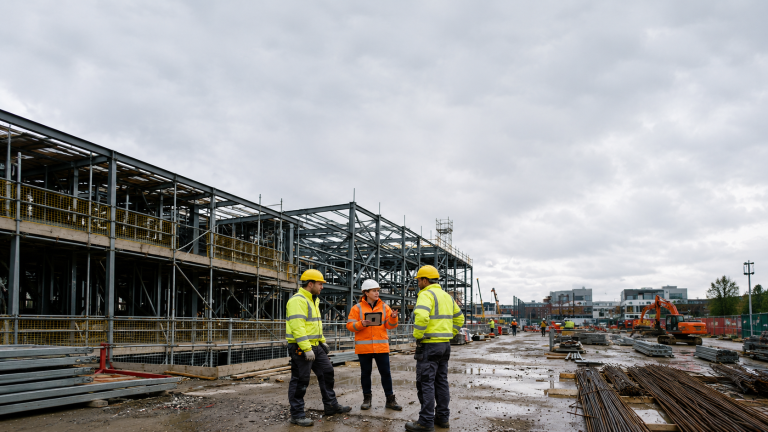
In warehouses and factories, a regular day involves moving heavy and bulky items from one place to another. Doing all this manually is challenging and, sometimes, virtually impossible. That is where industrial handling tools come in. These tools make lifting, moving and storing of materials faster, safer and more efficient.

Read More »
MILWAUKEE® Tools opens flagship UK Experience Centre with 10-year commitment to trades training

MILWAUKEE® Tools opens flagship UK Experience Centre with 10-year commitment to trades training

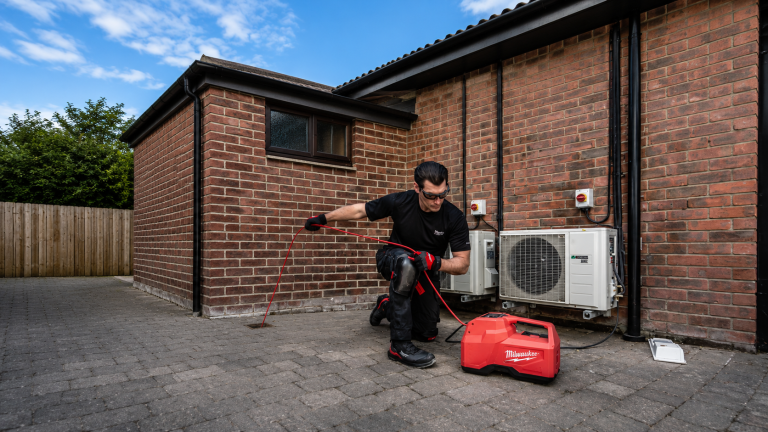
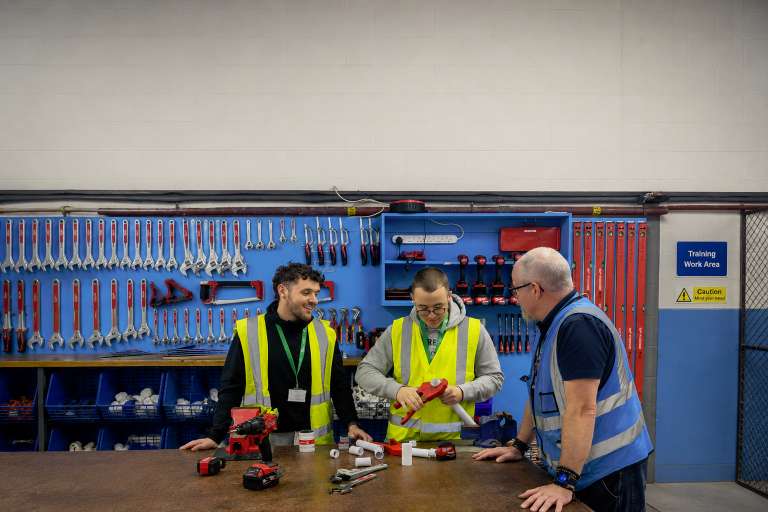
Power tool leader opens carbon-neutral training hub in Aylesbury, tackling the UK’s shortage of practical, trade-ready skills MILWAUKEE® Tools, industry-leading manufacturer of power tools, accessories, and hand tools, has officially opened its new UK Experience Centre at Westcott Venture Park, Aylesbury. The 13,250-square-foot carbon-neutral facility represents the company’s largest investment

Read More »
3 Best Climate Control Equipment Rental Companies

3 Best Climate Control Equipment Rental Companies

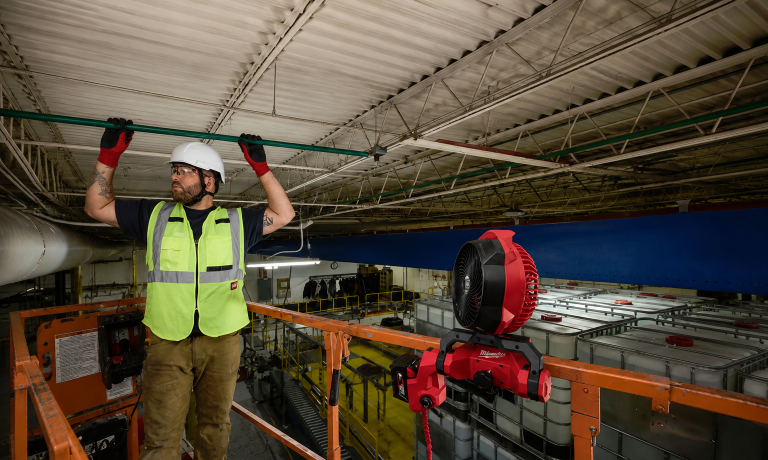
Renting climate control gear is a cost-effective way to keep your construction crew safe and comfortable, protect materials from heat and moisture, and finish projects on schedule. Discover the three best enterprises offering climate control equipment rentals for construction sites. 1.  Herc Rentals Herc Rentals is perfect for multisite construction

Read More »
New GNSS tech driving efficiency in urban development

New GNSS tech driving efficiency in urban development

SITECH is helping firms to adapt to the projected uplift in urban development and demands of modern construction with the latest Trimble® GNSS technology. Global Navigation Satellite System technology (GNSS) has previously faced some key limitations when used for accurate positioning on many construction sites, with GNSS receivers struggling against

Read More »
MILWAUKEE® M18™ Utility Remote Spot Light with ONE-KEY™

MILWAUKEE® M18™ Utility Remote Spot Light with ONE-KEY™

MILWAUKEE® continues to provide innovative lighting solutions for the professional job site with the expansion of their M18™ lighting line up. Wireless remote to rotate, adjust, and power from afar. Our M18™ Utility Remote Spot Light is the first of its kind, allowing power utility users to spot lines and

Read More »
MILWAUKEE® Enhances Compact Versatility with New M12™ Lighting Solution

MILWAUKEE® Enhances Compact Versatility with New M12™ Lighting Solution

MILWAUKEE® introduces the brand new M12™ Multi-Directional Flood Light with PACKOUT™ Compatibility. Delivering flood lighting for any job with an adjustable light-head, multi-material mounting and PACKOUT™ compatibility for secure job site transportation. The completely versatile and compact design provides up to 1,200 lumens of TRUEVIEW™* High-Definition output to light up

Read More »
Latest Issue
Issue 338 : Mar 2026

Products & Materials : Tools & Equipment News

10 Must-Have Industrial Handling Tools for Efficiency

10 Must-Have Industrial Handling Tools for Efficiency

In warehouses and factories, a regular day involves moving heavy and bulky items from one place to another. Doing all this manually is challenging and, sometimes, virtually impossible. That is where industrial handling tools come in. These tools make lifting, moving and storing of materials faster, safer and more efficient. In this article, we will look at the 10 most important handling tools that every industrial space needs to ensure smooth operations. 1. Forklifts Forklifts are perhaps the most popular industrial handling tools. They are commonly used for lifting and moving loads that no one wants (or can’t) carry. In an industrial setting, you will need them for tasks like loading trucks, stacking pallets and moving bulk goods. They provide serious lifting power, which speeds up operations. 2. Safety Gear Safety gear refers to essential warehouse protection equipment designed to protect workers while handling materials. They include things like high-visibility vests, steel-toe boots, helmets and safety netting. You will find them everywhere work is happening. These equipment are an essential addition to industrial workspaces because they minimise the risk of injuries in case of accidents. For example, a helmet can prevent serious injury to the head if a box falls on a worker’s head. 3. Pallet Truck Pallet trucks (also pallet jacks) are useful for lifting and moving heavy loads over short distances. You can use it to lift pallets slightly off the ground so you can just roll them to a different location. They are quick and simpler to use – perfect for working in smaller areas where forklifts can’t fit. However, pallet trucks can’t replace forklifts (especially when it comes to loading tasks). 4. Hand Trolley Hand trolleys (also called dollies) are like pallet jacks but for boxes. In an industrial setting, you use these to roll your boxes instead of carrying them. They are great for tight spaces where you need to move several boxes. Dollies save your back from unnecessary suffering by making movement low-effort. You can stack boxes once and move everything in one single trip. 5. Conveyor Belt Conveyor belts are indispensable when it comes to moving items seamlessly from one place to another. Industries used them to cut down on constant walking back and forth. You will find them in different use cases, including packing lines, sorting areas and production lines. Since items move on their own, they reduce the number of workers needed for moving stuff. It also speeds up tasks like packing and sorting. 6. Crane Cranes are commonly used to lift extremely heavy or awkward items vertically. You will often find them in construction areas and heavy manufacturing zones. Some loads are simply impossible to lift manually. For example, a machinery part that weighs more than a car. In such a case, you will need a crane – it handles extreme weights seamlessly and safely. 7. Lift Tables Lift tables are used for raising and lowering items to a comfortable/ergonomic working height. You will commonly find them in shelving, packing and loading areas. Workers will love this equipment because it reduces the need for bending and unnecessary strain during work. For example, they can use it during the assembly of items, ensuring better ergonomics and safety. 8. Industrial Racking (Shelving) Industrial racking is basically shelves that you can use to store items. They are essential for keeping everything organised and accessible – you will find them everywhere (whether in a warehouse or in a factory). Without these shelves, you might have to stack everything on the floor. And finding anything in such a storage setup is a nightmare. So, instead of piling everything on the floor, install these racks and have a place for each item. 9. Barrel Handler If you run an industrial space that deals with barrels or drums, barrel handlers are a must-have. That’s why they are common in industrial storage areas where workers move chemicals and oils. Can you imagine trying to lift a barrel full of chemicals by hand? They are not only heavy but also annoying to control. A barrel handler makes handling such loads less awkward. 10. Packaging Tools Packaging tools do exactly what their name suggests – secure items so they stay in place during transport. In an industrial setting, you will often find them in packing and shipping areas. They are essential because loose goods can easily get damaged while in transit. Conclusion With the important role each plays, these tools are not just ‘nice to have’, they are what keep your daily operations moving. Some of the benefits of investing in them include saving time, reducing effort and improving safety. They can make a huge difference in terms of workflow and productivity. Remember, the right equipment can turn hard, slow work into something manageable and efficient.

Read More »
MSA Safety welcomes harmonisation of EN 17235 permanent anchor device standard

MSA Safety welcomes harmonisation of EN 17235 permanent anchor device standard

MSA Safety, Inc., a global leader in the manufacture and distribution of PPE and safety systems, welcomes this week’s harmonisation of EN 17235, a European test standard for permanently installed anchor devices used in horizontal construction applications. EN 17235 sets out a comprehensive testing methodology for anchor devices that are permanently fixed to a structure, assessing not only the device itself, but also its fixings and the base material to which it is attached. The standard was harmonised on 9 February, 2026, with an 18-month transition period. After the transition period, manufacturers across the UK and Europe will be required to test products to EN 17235 in order to produce a Declaration of Performance and apply CE marking. The harmonisation of EN 17235 is expected to significantly improve safety levels industry wide by requiring consistent, robust testing across the built environment, and by preventing the use of inadequately tested products on construction projects. MSA Safety has long been an advocate for rigorous, up-to-date testing of all safety devices and welcomes the move to make compliance mandatory. Tim Bissett, technical expert at MSA Safety, is part of the working group that developed this standard. He comments: “This harmonisation of EN 17235 is a major step forward for safety in the construction sector. By making robust testing a legal requirement, the standard helps to level the playing field and helps make sure that anchor devices are properly assessed as complete systems, not just as individual components.” MSA’s development approach already reflects many of the principles now set out in EN 17235. For instance, its Constant Force Post range has long been tested as a complete system, looking not just at the anchor device itself, but also its fixings and the substrate it’s installed into. That mirrors the standard’s focus on assessing products in realistic installation conditions, helping give a clearer picture of how they’ll perform in practice. The company is now progressing a programme to test both new and existing products directly to EN 17235, with its next-generation Constant Force Post among the first scheduled. MSA has historically carried out equivalent testing through the German DIBt approval process, whose methodology aligns closely with EN 17235 requirements, meaning many of its established testing practices are already consistent with the new framework. “Testing to the latest standards has always been fundamental to how MSA designs and validates its safety solutions,” Bissett added. “EN 17235 formalises best practice and provides greater confidence for specifiers, installers and end users alike. Our mission is to send workers home safely to their families at the end of each day, and this helps us to do it.” Building, Design & Construction Magazine | The Choice of Industry Professionals

Read More »
Experts reveal winter workwear mistakes construction workers make and how to avoid them

Experts reveal winter workwear mistakes construction workers make and how to avoid them

The winter months and their wet and cold weather bring many challenges to the construction sector and its workers, with one of these being the need for extra workwear maintenance. The harsh weather conditions can exaggerate dirt and debris, leaving PPE looking worse for wear and uncomfortable to use. Correct upkeep during these months helps maintain garment performance and wearer visibility, but laundering mistakes are common. Adam Halewood, Head of Sales at custom workwear supplier Clothes2order, reveals the most common winter workwear maintenance mistakes, the issues these cause and how to avoid them. Don’t skip the pre-wash tasks Adam says, “When you’ve changed out of your wet and muddy clothes after a day at work, most of us will throw them straight into the washing machine with little thought, but this is the first mistake many make. With workwear becoming heavily soiled with mud, dust and other debris from building sites in the winter months, it’s important to remove as much of this before clothing items go into the washing machine, not only to ensure all dirt is removed during the laundry process, but to keep your washing machine in top condition. You can usually shake excess dry debris from clothing or gently wipe items down with a damp cloth to remove surface marks, so it doesn’t have to be a time-consuming step. Always avoid harsh scrubbing, especially on hi-vis pieces, as this can damage reflective material, leading to non-compliance with safety guidelines. Once surface grime has been removed, always fasten up items and turn them inside out before putting them in the washing machine. This stops zips, Velcro and other fastenings from snagging on the items during the wash cycle, protecting from pulls, scratches and holes being made in the material.” Avoid harsh wash cycles Adam explains, “Once PPE is ready for the washing machine, the next most common mistake made is using harsh cleaning cycles, which can cause fluorescent-coloured fabrics to fade fast and shorten garment lifespan. When washing workwear, you should follow the manufacturer’s care label instructions in the first instance, but generally it’s advised to avoid running hot water cycles; instead, opt for a cool temperature of 30°C. Whilst it may be tempting to use stain remover or bleach on stains, these harsh chemicals can damage the fibres within clothing, leaving it at risk of developing holes and needing to be replaced more frequently, so they should also be avoided unless the care label suggests otherwise. The best practice is to use only mild detergent on a cool wash and a gentle cycle. To be extra sure that all the detergent residue has been removed and won’t cause any future damage, an extra rinse can also be used at the end of the cycle.” Check before you tumble dry “Most workwear needs to be air-dried, unless the label specifies it is safe for the tumble dryer”, Adam says, “The high temperatures used in tumble dryers can cause clothing to shrink, and with hi-vis items, this can lead to reflective strips becoming dull, degrading and in some extreme cases,  melting. Whilst we typically have our radiators on during the winter months, drying PPE directly on these should also be avoided for the same reasons. If you find your items are still holding a lot of water after their wash cycle, never wring them out, as this can cause damage to the material. Instead, put them back into the machine for a spin-only cycle to help remove the excess moisture, before hanging them to dry on an airer in a well-ventilated room.” Adam concludes, “It is really important to keep on top of PPE workwear maintenance all year round, but in the winter months, extra care should be taken to ensure protective clothing remains in good condition. The weather in winter not only brings more dirt to construction sites, but days with little daylight, rain and fog bring poor visibility, making compliant hi-vis clothing even more vital to workplace safety.” Building, Design & Construction Magazine | The Choice of Industry Professionals

Read More »
MILWAUKEE® Tools opens flagship UK Experience Centre with 10-year commitment to trades training

MILWAUKEE® Tools opens flagship UK Experience Centre with 10-year commitment to trades training

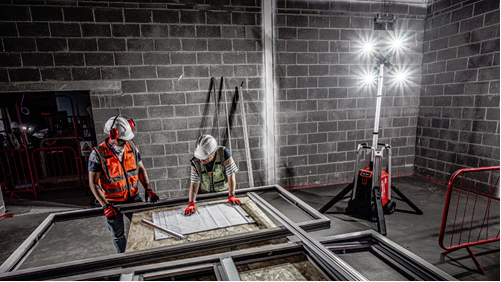
Power tool leader opens carbon-neutral training hub in Aylesbury, tackling the UK’s shortage of practical, trade-ready skills MILWAUKEE® Tools, industry-leading manufacturer of power tools, accessories, and hand tools, has officially opened its new UK Experience Centre at Westcott Venture Park, Aylesbury. The 13,250-square-foot carbon-neutral facility represents the company’s largest investment in UK training infrastructure, backed by a 10-year lease agreement. The facility addresses a growing need in the trades sector for comprehensive, practical training environments where professionals can test equipment in realistic conditions before making significant investment decisions. Unlike traditional showrooms or brief product demonstrations, the centre provides extended access to MILWAUKEE® Tools’ full product ecosystem in both indoor training spaces and dedicated outdoor testing areas. Built using MILWAUKEE® tools to demonstrate the brand’s commitment to efficiency and reduced emissions, the state-of-the-art hub will be used to upskill approximately 300 employees annually through expert training programmes. The centre will enable MILWAUKEE® Tools to enhance customer relationships and support direct end-user interaction, with hands-on training and product testing opportunities available. From the established M12™ and M18™ cordless platforms to the expanding MX FUEL™ light equipment range, visitors will gain access to cutting-edge battery technology including REDLITHIUM™ FORGE™ batteries, power tools, hand tools, and outdoor power equipment. “We’re just getting started,” says Dan Stringer, Head of Training at MILWAUKEE® Tools UK. “Since our founding in 1924, MILWAUKEE® has been driven by a commitment to solving the real-world challenges faced by professional tradespeople. This Experience Centre embodies that heritage while spotlighting the innovations that will define the next century of our industry. Investing in this hub demonstrates our growing support of the British trades sector, and we look forward to industry professionals, as well as other key stakeholders, exploring the range of training and testing opportunities we have on offer.” Trade professionals, dealers and media representatives interested in experiencing the centre firsthand are encouraged to get in touch with MILWAUKEE® to arrange a visit or request a product demonstration. For more information about the MILWAUKEE® Tools Experience Centre, please contact – uk.milwaukee.marketing@TTI-EMEA.com  Building, Design & Construction Magazine | The Choice of Industry Professionals

Read More »
Types of Safety Boots and How to Choose the Right One for Your Job

Types of Safety Boots and How to Choose the Right One for Your Job

Foot injuries contribute to a huge number of lost workdays in various industries. This makes choosing the right safety and working boots from RS a key part of work safety and compliance, as it helps prevent serious injuries.  When well chosen, these boots go beyond safety, as they enable workers to move, lift, and focus on the task at hand without worrying about things like slipping or chemical exposure. However, they also come in a wide variety, as they are used in multiple industries and different environmental conditions. This makes choosing the right type a key part of safety, compliance, and productivity.  Why safety boots are important In most cases, professionals come to appreciate work boots as part of personal protective equipment (PPE) when they are working in a risky environment. These are more than just foot covers, as they act as a worker’s first line of defence against environmental hazards. The boots can absorb impact, keep out unwanted elements, and provide grip when you need it most.  But that’s just one aspect of work boots. Higher-quality safety wear is designed to reduce fatigue and support a worker’s posture, which helps them move with confidence. Things like walking, bending, lifting, and climbing become much safer and less exhausting. How to choose the right safety boots for your job To pick the right safety boots, you need to match the type of footwear to the specific risks and demands you or your workers face. Is it heavy objects that can drop on the feet, sharp objects that can puncture the sole, or wet and muddy conditions? This consideration also goes hand in hand with environmental factors like cold conditions and electrical hazards. Fit and comfort are also important, as a boot that’s too tight or too loose can lead to issues like fatigue, blisters, or even long-term foot and joint issues. There’s also the durability aspect, but this one is more about using the right shoe for the job and environment.  Main types of safety boots To choose the right safety boots, you first need to understand the different types available and what each of them is designed to protect against.  Steel-toe boots These boots usually have a reinforced steel cap over the toes. They are designed to protect a worker from impacts, falling objects, and compression. They are the shoes that are most common in warehouses and are a major part of construction site safety. But while the toes provide much-needed protection, they also make the shoes a bit heavier than other options. You also need to ensure that they are a proper fit and have proper cushioning. Composite-toe boots These are also meant to offer extra protection to toes, but they use non-metal materials for the same purpose. Some common ones are carbon fibre, Kevlar, and hard plastic.  The materials used make them lighter than steel-toe boots, and the lack of metal is also useful in workplaces that use metal detectors or where there are risks of electrical hazards. Safety trainers These ones look and actually feel more like athletic shoes. However, they have several protective features like reinforced toes, anti-slip soles, and puncture resistance. They are mostly meant to be used in light-duty work and indoor environments.  You can use them when you need to ensure worker mobility and comfort, besides protection. They are mostly used by warehouse staff, logistics teams, or technicians who need to move around to ensure everything is working well. Wellington boots These are mostly meant to offer protection against water. They tend to be high-cut and are made from rubber or PVC. Some also have reinforced toes. Wellies, as they are often called, are mostly used in agriculture and food processing. Insulated or thermal boots This type is designed for cold or extreme environments. They are mostly meant to provide heat, so they often have layers of insulation and don’t allow water to enter. The boots are particularly useful in winter and when working in cold storage facilities, as workers can be exposed to freezing temperatures for extended periods. The boots will keep their feet safe from frostbite and discomfort but also not cause excessive sweating.

Read More »
MILWAUKEE® M18 FUEL™ M-Class AC/DC Dual Battery Dust Extractor with VACLINK™

MILWAUKEE® M18 FUEL™ M-Class AC/DC Dual Battery Dust Extractor with VACLINK™

Introducing the new the M18 FUEL™* M-Class AC/DC Dual Battery Dust Extractor with a high sustained air flow giving versatile power for all-day productivity, and the integration of VACLINK™** wireless dust control, this solution redefines cordless dust extraction. MILWAUKEE® UNVEILS A REVOLUTIONARY DUST EXTRACTION SOLUTION WITH THE NEW THE M18 FUEL™ M-CLASS AC/DC DUAL BATTERY DUST EXTRACTOR WITH VACLINK™. THIS INNOVATIVE DUST EXTRACTOR SETS NEW STANDARDS FOR PRODUCTIVITY AND SAFETY ON JOB SITES FOR GENERAL CONTRACTING, MECHANICAL, HVAC, ELECTRICAL, PLUMBING, AND REMODELLING PROFESSIONALS. The M18 FUEL™ M-Class AC/DC Dual Battery Dust Extractor with VACLINK™ features an automatic filter cleaning mechanism. It will filter up to 99.9% of harmful dust including MDF, plaster, cement and concrete due to the two HEPA H13 filters. It provides the ability to maintain consistent airflow and boost efficiency during dust extraction applications, keeping users more productive on the job site. The extractor is equipped with a low flow alarm to alert users when the airflow drops below optimal performance. Also capable of wet clean-up, this solution includes water sensors that indicates if the tank is full. When paired with two M18™ FORGE™ 12.0 Ah batteries, it will run up to 70 minutes on low and 40 minutes on high power mode, delivering 1980 l/minutes air delivery rate on DC mode (2550 l/minutes AC). MILWAUKEE®’s dust extractor is equipped with VACLINK™ wireless dust control technology. Users can pair the extractor with VACLINK™ compatible tools or remotes to wirelessly activate the extractor during dust-producing applications. The dust extractor comes with the VACLINK™ wireless dust control remote, allowing users the ability to start/stop the dust extractor wirelessly, enhancing efficiency. Additionally, this extractor includes an anti-static 3 m long, crush and twist-resistant hose delivering extended hose life. As an added benefit, the M18 FUEL™ M-Class AC/DC Dual Battery Dust Extractor with VACLINK™ is compatible with the PACKOUT™*** modular storage system, offering unparalleled convenience and organisation. This compatibility helps users reduce trips back and forth on the job site, allowing them to focus more on their tasks and less on transportation. With the inclusion of ONE-KEY™functionality, users can effortlessly track and manage their tool using the ONE-KEY™ app. With the addition of the new M18 FUEL™ M-Class AC/DC Dual Battery Dust Extractor with VACLINK™ the PACKOUT™ modular storage system now has over 100 solutions for users to choose from to build out their custom storage solution – making PACKOUT™ the most versatile and durable modular storage system in the industry. MILWAUKEE® is committed to improving productivity by providing performance-driven and trade-focused solutions so users can perform an entire day’s work on one battery system. The M18 FUEL™ M-Class AC/DC Dual Battery Dust Extractor with VACLINK™ is fully compatible with the entire M18™ line, now offering more than 315 solutions. *M18 FUEL™ is engineered for the most demanding tradesmen in the world. Delivering unrivalled performance, all M18 FUEL™ products feature three MILWAUKEE®-exclusive innovations—The POWERSTATE™ Brushless Motor, REDLITHIUM™ Battery Pack and REDLINK PLUS™ Intelligence Hardware and Software—that deliver unmatched power, run time, and durability on the job site. Simply put, M18 FUEL™ tools are the most powerful 18V cordless tools in their class. **MILWAUKEE®’s dust extractor is equipped with VACLINK™ wireless dust control technology. Users can pair the extractor with VACLINK™ compatible tools or remotes to wirelessly activate the extractor during dust-producing applications. The dust extractor comes with the VACLINK™ wireless dust control remote, allowing users the ability to start/stop the dust extractor wirelessly, enhancing efficiency. ***The PACKOUT™ Modular Storage System is the most versatile and durable modular storage system in the industry. An intuitive and quick attachment mechanism gives users the freedom to stack and lock PACKOUT™ tool boxes, organisers, totes, and bags of different sizes in numerous configurations that best suit their needs.  ****ONE-KEY™ is the first digital platform for tools and equipment. By integrating industry-leading tool electronics with a custom-built cloud-based program, ONE-KEY™ provides a new level of control and access to information that revolutionises the way work gets done. The ability to customise, track, and manage through ONE-KEY™ fundamentally changes the way users interact with their tools and equipment. Specifications M18 FUEL™ M-Class AC/DC Dual Battery Dust Extractor with VACLINK™ M18 ONEF2VC34M-0  Kit Includes: (1) M18 FUEL™ M-Class AC/DC Dual Battery Dust Extractor with VACLINK™, (1) Remote control, (2) HEPA filters, (1) Fleece bag, (1) Hose, (2) Power tool dust port adaptors To find out more about the new M18 FUEL™ M-Class AC/DC Dual Battery Dust Extractor with VACLINK™ see video footage of it in action or find your nearest store, please visit www.milwaukeetool.eu Visit Milwaukee Tool UK’s Instagram and LinkedIn for further information. Building, Design & Construction Magazine | The Choice of Industry Professionals

Read More »
3 Best Climate Control Equipment Rental Companies

3 Best Climate Control Equipment Rental Companies

Renting climate control gear is a cost-effective way to keep your construction crew safe and comfortable, protect materials from heat and moisture, and finish projects on schedule. Discover the three best enterprises offering climate control equipment rentals for construction sites. 1.  Herc Rentals Herc Rentals is perfect for multisite construction operations requiring an equipment lessor that can reliably supply assets to sites in major North American metropolitan areas. It has a large selection of high-quality rentals for cooling, heating, air quality, and dehumidification powered by gas, diesel, electricity or a combination of two power sources. This provider handles gear positioning, basic installation, routine maintenance and 24/7 emergency repairs. Herc Rentals offers flexible contract terms and volume discounts. 2.  Aggreko Aggreko is ideal for construction crews with environmental, social and governance goals. It offers multiple energy-efficient assets, including no-fume heaters that can run on biodiesel, helping minimize fuel waste and decarbonize operations. This vendor’s engineering solutions help rightsize your equipment, ensuring you rent no more than your teams need. Aggreko can integrate battery energy storage systems into your projects to power your climate control rentals with clean electricity when the grid is limited. 3.  EquipmentShare EquipmentShare is an excellent fit for construction firms seeking climate control assets for long-term megasite projects. It allows you to tailor your rental arrangement to lease equipment for as long as the job requires. You can choose from leading brands like Smartech, Wacker Neuson and KwiKool. EquipmentShare requires insurance to rent gear and automatically enrolls you in its damage waiver if you do not provide qualifying coverage. Comparing the Best Companies That Rent out Climate Control Rentals for Construction Projects Explore the various types of climate control assets these vendors offer and where they operate. Vendor Equipment Categories Service Areas Herc Rentals 20 Canada and the U.S. Aggreko 15 80-plus countries and territories EquipmentShare 15 45 U.S. states Evaluating Providers of Climate Control Rentals for Construction Consider these factors when selecting where to rent climate control equipment for construction projects: Rent Climate Control Equipment From the Best Companies Herc Rentals, Aggreko and EquipmentShare have unique strengths and solid track records. Learn more about each one’s offerings to see which aligns with your project needs.

Read More »
New GNSS tech driving efficiency in urban development

New GNSS tech driving efficiency in urban development

SITECH is helping firms to adapt to the projected uplift in urban development and demands of modern construction with the latest Trimble® GNSS technology. Global Navigation Satellite System technology (GNSS) has previously faced some key limitations when used for accurate positioning on many construction sites, with GNSS receivers struggling against obstacles, whether it’s steel-framed buildings, tree cover or dense urban environments.  The new generation of GNSS positioning technology is providing a solution for companies looking to optimise efficiency within urban developments, which is crucial given the Government’s ambitious housing development plans which have increased the need for infrastructure development.  Brian Core, UK Regional Sales Managers at SITECH UK & Ireland said: “One way of achieving this is with technology that connects to multiple satellite constellations simultaneously, such as the Trimble® MS976 GNSS Smart Antenna which connects to GPS, GLONASS, Galileo and BeiDou. Equipped with Trimble® ProPoint technology, the MS976 can refine the signal, filtering out interference and adapting in real-time to satellite availability. “The technology has been game-changing for contractors working in urban infrastructure developments where they are likely to experience unreliable GNSS coverage, which results in interruptions to machine control. Technology such as the Trimble® Earthworks Grade Control Platform along with the MS976, allows operators to maintain a precise positioning fix, eliminating downtime and providing the ability to continue working without reverting to manual methods.” The MS976 is indicative of a larger movement towards fully connected workflows. Platforms such as Trimble® WorksManager allows design files to be automatically updated across the fleet using the cloud. Engineers, surveyors and site managers can use the platform to manage assets by tracking machine locations, operating hours and generating utilisation reports, scheduling preventative maintenance and detecting unauthorised machine movements. Similarly, platforms like Trimble® WorksOS open up real-time tracking of cut, fill and volume metrics, allowing project managers to see site progress across multiple sites without waiting for survey teams. Additionally, SITECH are also able to access the technology, with permission, to perform remote diagnostics which further limits the need for site visits, and subsequent downtime.  Brian said: “The construction industry has long relied on experience and intuition. And while that expertise will continue to be invaluable, the next generation of GNSS technology is proving that connected systems are now just as critical in helping firms adapt to the demands of increased urbanisation and compensate for the engineering skills gap.” Building, Design & Construction Magazine | The Choice of Industry Professionals

Read More »
MILWAUKEE® M18™ Utility Remote Spot Light with ONE-KEY™

MILWAUKEE® M18™ Utility Remote Spot Light with ONE-KEY™

MILWAUKEE® continues to provide innovative lighting solutions for the professional job site with the expansion of their M18™ lighting line up. Wireless remote to rotate, adjust, and power from afar. Our M18™ Utility Remote Spot Light is the first of its kind, allowing power utility users to spot lines and flood fields from up to 1,200 metres away. This cordless light performs with up to 4,250 lumens of TRUEVIEW™ high-definition output and adapts to provide either spot or flood mode. Also included is a pre-paired wireless remote control that enables the light to rotate, adjust, and power from afar. The MILWAUKEE® Utility Remote Spot Light is weather-resistant to survive outdoor use. This light is also ONE- KEY™* compatible, making it easy to track via the ONE-KEY™ online app. The M18™ Utility Remote Spot Light has up to 12 hours run time on a low setting when used with M18™ FORGE™ 12.0 Ah battery pack. MILWAUKEE® is committed to improving productivity by providing performance-driven and trade-focused solutions so users can perform an entire day’s work on one battery system. The M18™ Utility Remote Spot Light with ONE-KEY™ is compatible with the entire M18™ line, now offering more than 315 solutions. *ONE-KEY™ is the first digital platform for tools and equipment. By integrating industry-leading tool electronics with a custom-built cloud-based program, ONE-KEY™ provides a new level of control and access to information that revolutionises the way work gets done. The ability to customise, track, and manage through ONE-KEY™ fundamentally changes the way users interact with their tools and equipment. Specifications M18™ Utility Remote Spot Light with ONE-KEY™ M18 URSL-0 To find out more about the new M18™ Utility Remote Spot Light with ONE-KEY™ see video footage of it in action or find your nearest store, please visit www.milwaukeetool.eu Visit Milwaukee Tool UK’s Instagram and LinkedIn for further information. Building, Design & Construction Magazine | The Choice of Industry Professionals

Read More »
MILWAUKEE® Enhances Compact Versatility with New M12™ Lighting Solution

MILWAUKEE® Enhances Compact Versatility with New M12™ Lighting Solution

MILWAUKEE® introduces the brand new M12™ Multi-Directional Flood Light with PACKOUT™ Compatibility. Delivering flood lighting for any job with an adjustable light-head, multi-material mounting and PACKOUT™ compatibility for secure job site transportation. The completely versatile and compact design provides up to 1,200 lumens of TRUEVIEW™* High-Definition output to light up the job from any angle. BUILT TO DELIVER TARGETED LIGHTING WHERE YOU NEED IT, THIS LIGHT IS EQUIPPED WITH 3 DIFFERENT OUTPUT MODES AND RUNS FOR UP TO 16 HOURS ON THE M12™ 4.0 AH BATTERY PACK. The multi-material mounting options include a strong magnet, integrated hand hook and PACKOUT™ cleat. The strong rear-facing magnet is made for job site surfaces like steel studs, I-Beams, and job boxes. The light’s streamlined base also gives you a handheld option for inspection lighting. Built to withstand the toughest conditions, this compact pivoting flood light has an IP54 rating for dust and water resistance. MILWAUKEE® is committed to improving productivity by providing performance-driven and trade-focused solutions so users can perform an entire day’s work on one battery system. The M12™ Multi-Directional Flood Light with PACKOUT™ Compatibility is fully compatible with the entire M12™ line, now offering more than 120 solutions. MILWAUKEE® remains unwavering in their commitment to delivering disruptive innovation by working alongside trade professionals to identify challenges and provide solutions that are unparalleled in enhancing job site safety and productivity. *TRUEVIEW™ Technology utilises the most advanced LED technology and optical designs to deliver a consistent beam, optimised colour temperature and true representation of colours and detail leading to a more productive work area Specifications M12™ Multi-Directional Flood Light with PACKOUT™ Compatibility M12 ALIP-0 Kit Includes: (1) M12™ Multi-Directional Flood Light with PACKOUT™ Compatibility  To find out more about the new M12™ Multi-Directional Flood Light with PACKOUT™ Compatibility see video footage of it in action or find your nearest store, please visit www.milwaukeetool.eu Visit Milwaukee Tool UK’s Instagram and LinkedIn for further information. Building, Design & Construction Magazine | The Choice of Industry Professionals

Read More »