Utilities & Infrastructure : Rail & Transport News

Birmingham’s rail history revived for new HS2 terminus

One of the world’s oldest surviving pieces of monumental railway architecture to be preserved and enhanced in new HS2 Curzon Street Station. Leader of Birmingham City Council: “This is an important milestone in the transformation of this amazing old building and the new Curzon Street Station will be one of

Read More »
Landmark London Road Scheme Plans Submitted

Landmark London Road Scheme Plans Submitted

A full planning application has been put forward for a landmark mixed-use development on London Road in Nottingham, which if approved, will be a prominent gateway building along one of the main arterial routes into the city centre. Plans for the scheme, located at 152-160 London Road, on the site

Read More »

HS2 shortlists Track Systems and Tunnel and Lineside M&E suppliers

HS2 today shortlisted bidders for its Track Systems and for Tunnel and Lineside Mechanical and Electrical (M&E) systems. The winning organisations will go on to deliver around 280km of state-of-the-art high-speed track and infrastructure that will enable the UK to run some of the world’s most frequent and reliable long-distance

Read More »

HS2’s world-first emissions retrofit solution cuts emissions and carbon and will save millions of pounds

Successful pilot of world’s first retrofit on large construction equipment will have massive impact across the HS2 project, saving millions of pounds Reduced emissions will benefit communities, the environment and the workforce Certified by the Energy Savings Trust, making it available industry-wide HS2 Minister: “this ground-breaking technology will protect our

Read More »

HS2 seeks switches and crossing suppliers for £150m contract

HS2 Ltd today began the search for suppliers to provide switches and crossings for the 280km of new high-speed track between London, Birmingham and the connection with the existing west coast mainline at Crewe. The contract – worth up to £156m – will include the design, manufacture and delivery of

Read More »

RLB makes tracks with Midlands Very Light Rail Programme

RLB UK continues to make tracks in the Midlands by commencing this week on the third phase of Dudley Metropolitan Borough Council’s innovative Very Light Rail (VLR) project, having value engineered a £3m cost saving to the client. RLB UK has also played a key role in Coventry City Council’s

Read More »

HS2’s first giant tunnelling machines arrive in the UK

HS2’s first two giant Tunnel Boring Machines (TBMs) have arrived in the UK and will be ready to start work on the UK’s largest infrastructure project early next year. The two enormous 2,000 tonne machines – named Florence and Cecilia – will now be meticulously reassembled, tested and commissioned, by an

Read More »

New bridge is a UK first to combat risk of flooding

A new stainless steel and concrete bridge, the first of its kind in the UK, has opened to pedestrians and vehicles in Pooley Bridge, Cumbria. It replaces its 250-year-old stone predecessor, which was destroyed during severe flooding as a result of Storm Desmond in 2015. The new single-span bridge has

Read More »
Latest Issue
Issue 339 : Apr 2026

Utilities & Infrastructure : Rail & Transport News

Birmingham’s rail history revived for new HS2 terminus

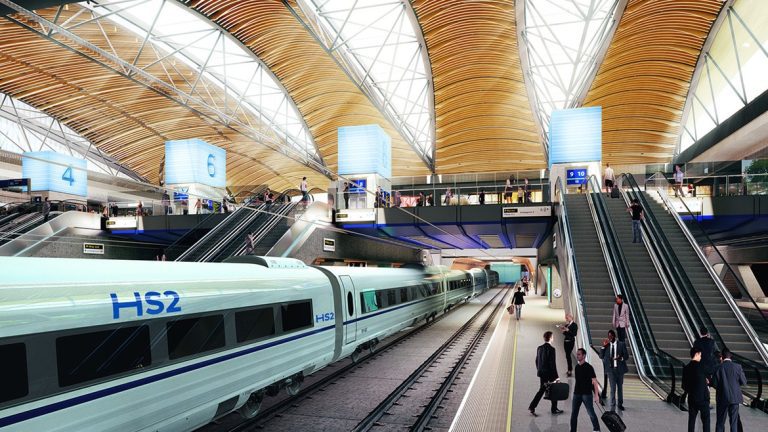
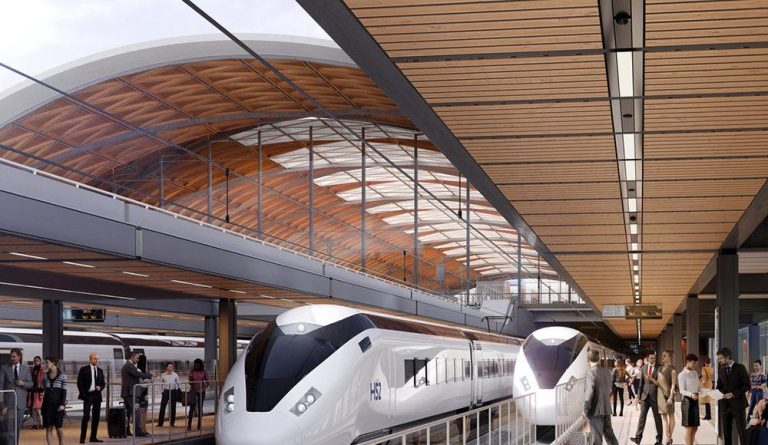
One of the world’s oldest surviving pieces of monumental railway architecture to be preserved and enhanced in new HS2 Curzon Street Station. Leader of Birmingham City Council: “This is an important milestone in the transformation of this amazing old building and the new Curzon Street Station will be one of the real show pieces of the entire HS2 network.” HS2 has received the go-ahead from Birmingham City Council to begin the transformative refurbishment of the Old Curzon Street Station, marking the next phase of work around the new high speed terminus in central Birmingham. The agreement with the Council who own the building, enables a long-term lease by HS2, with work due to start on the major revamp early next year by HS2’s enabling works contractor LMJV (Laing O’Rourke and J. Murphy & Sons). The Grade I listed building has been integrated into HS2’s plans for the new Curzon Street Station, which provide an enhanced setting to reflect the history of the old station as well as the Grade II listed Woodman pub. The public space surrounding the station will feature the historic track alignments of the former goods yard that used to lie to its east, and the gardens and new eastern concourse façade have also been designed to complement the architecture of the building. HS2 enabling works contractors LMJV are now ready to start a 12 month programme of work in early 2021, overseen by a conservation specialist. The building was designed by the notable architect Philip Hardwick and opened in 1838, and is now one of the world’s oldest surviving pieces of monumental railway architecture. It was intended to be the boardroom and general offices of the London and Birmingham Railway but was extended to incorporate a hotel by 1841, then turned into a goods station for freight traffic between 1854 and 1860 and subsequently closed on 31 Dec 1965. Having suffered extensive damage during the Birmingham Blitz, and surviving two applications for its demolition in the 1970s, it is now listed on the ‘Heritage at Risk Register’ maintained by Historic England. The refurbishment will see this status change for the first time in over a decade, with future plans to use it as an HS2 visitors centre, with flexible facilities for office space, exhibition purposes and catering. Nicola Henderson-Reid, HS2’s Curzon Street Station Senior Project Manager said: “We’re extremely pleased to get the go-ahead to start work on restoring this fabulous old building, and we’re grateful to Birmingham City Council for their help in developing these designs. “HS2’s Curzon Street Station will be the first brand new intercity terminus station built in Britain since the 19th century, and will play a vital role in our regional economy while preserving this important piece of Birmingham’s history.” Leader of Birmingham City Council, Cllr Ian Ward said: “This is an important milestone in the transformation of this amazing old building and the new Curzon Street Station will be one of the real show pieces of the entire HS2 network. “High speed rail is a game-changer for Birmingham and the wider West Midlands, bringing jobs, homes and opportunities to our city region and for the HS2 Generation – the young people currently growing up across the city – this project will shape their lives and careers.” The refurbishment will be undertaken by infrastructure specialists KN Circet, who have offices in Solihull in the Midlands. The work will include a new steel structural frame to strengthen the building, a new lift giving access to all 4 levels, new glass balustrade for the historic staircase, internal fit-out, roof repairs and structural repairs to the external masonry. KN Circet, trading as KN Network Services Ltd, has carried out heritage restoration projects across the UK railway network predominantly in London and the South East. The company has won and been nominated for railway heritage awards for façade works at Lambeth North, South Kensington and Great Portland Street London Underground stations, and have also carried out façade works at Victoria Station and Waterloo Station for Network Rail. HS2’s Historic Environment Manager, Jon Millward said: “The Old Curzon Street Station has a fascinating history, and as a Grade 1 listed building it’s deemed to be of exceptional interest and is therefore classified as one of the most important buildings in England. It was the first railway terminus serving the centre of Birmingham and built during a period of great significance and growth for the city. “Earlier this year, we unearthed what is thought to be the world’s oldest railway roundhouse situated adjacent to the Old Curzon Street station, and built to a design by the 19th century engineer Robert Stephenson. It’s fantastic that we can preserve the heritage of such an important building as part of the legacy of HS2.” Planning applications for the new Curzon Street Station were approved by Birmingham City Council’s planning committee in April 2020, with the Council’s report concluding the station design “is truly world class”. Eventually, there will be nine trains per hour running in each direction from the station. The Curzon Street Masterplan outlines proposals for 141 hectares of regeneration, along with £724 million in investment into the surrounding area. It envisages the creation of 36,000 new jobs, 4,000 new homes and 600,000 square metres of commercial development.

Read More »
Landmark London Road Scheme Plans Submitted

Landmark London Road Scheme Plans Submitted

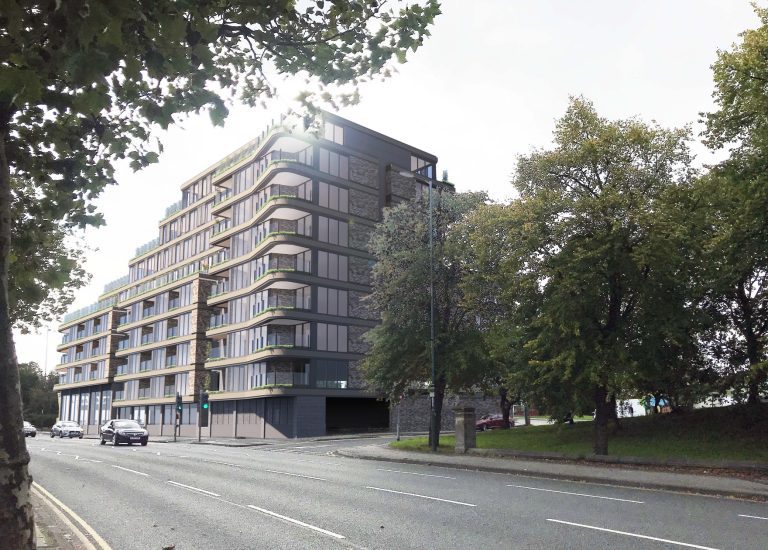
A full planning application has been put forward for a landmark mixed-use development on London Road in Nottingham, which if approved, will be a prominent gateway building along one of the main arterial routes into the city centre. Plans for the scheme, located at 152-160 London Road, on the site of a former Indian restaurant and car valeting centre, have been developed by Nottingham-based ALB Group, which specialises in the conversion, redevelopment and letting of residential and commercial properties nationwide. The ALB Group has been working alongside CBP Architects for the design of the 100-apartment scheme, which if approved, will comprise one and two-bed apartments with balconies, spacious communal terraces, a ground floor two-storey restaurant, a café and bar, basement car parking and a gym for use by residents. Situated just outside of the Nottingham Urban Design Guide Zone of Reinvention and the Waterside Regeneration Zone, plans for 152-160 London Road have been carefully considered in partnership with Nottingham City Council and its design collaborators, with sustainability and the building’s positive impact on the surrounding areas, identified as primary aspects. The development designs include generous planting schemes and living walls on the balconies and terraces, which have been designed to enhance the ecological value of the site, and will be maintained using grey water recycling through a built-in irrigation and drainage system. Solar panels located on the roof would also provide a sustainable source of electricity to the building. Situated in a prime location close to both city and West Bridgford amenities, the development would be located just a few minutes’ walk from the River Trent, Trent Bridge Cricket Ground, Notts County and Nottingham Forest FC’s, and Nottingham train station. Arran Bailey, managing director at ALB Group, said: “As one of the main routes into Nottingham, London Road is a prominent location and provides a gateway to both West Bridgford and the rest of the city. We are excited to be submitting plans for this landmark scheme, which if approved, would bring luxury homes and further amenities to the area. The new development would improve the aesthetic of a major gateway, and serve to welcome visitors as they approach and travel through the city. “We have been working closely with Nottingham City Council, CBP Architects and the local community, to ensure the design of the building fits in seamlessly with the environment. The scheme’s contemporary look, complete with natural greenery, would also enhance the view corridor towards Nottingham Castle, which is something Nottingham City Council is keen to maintain. “The apartments would offer residents attractive views of the surrounding vicinity, towards West Bridgford and the city centre. Spacious, open-plan living and quality fixtures and fittings throughout will provide a desirable living experience complete with on-site amenities. Being in such close proximity to Nottingham train station, makes this an ideal location for commuters. Simon Birch, director at CBP Architects, said: “It is a pleasure to be working on plans for such a prominent, residential and commercial development in an unrivalled location in Nottingham. The design of the scheme respects its location on one of the main routes into the city and if plans are approved, it will provide a striking piece of architecture to welcome visitors and commuters along the route. “The contemporary design including living walls and planted terraces will help to bring the building to life and will provide a natural ‘green’ feel to its aesthetic, as well as boasting sustainable energy credentials to maximise the building’s performance and efficiency.” Construction on the development is due to begin in autumn 2021, with works expected to complete by spring 2023.


Read More »

HS2 shortlists Track Systems and Tunnel and Lineside M&E suppliers

HS2 today shortlisted bidders for its Track Systems and for Tunnel and Lineside Mechanical and Electrical (M&E) systems. The winning organisations will go on to deliver around 280km of state-of-the-art high-speed track and infrastructure that will enable the UK to run some of the world’s most frequent and reliable long-distance rail services. Following on from the start of construction, today’s announcement unlocks more opportunities for Britain’s construction and engineering sector, hard-hit by the impacts of the coronavirus pandemic. Both sets of contract opportunities cover design and construction between London, Birmingham and Crewe, where HS2 trains will join the existing West Coast Mainline. The winners of the Track systems contracts will also take a lead role in managing and coordinating the complex interfaces between the track and other elements of the rail systems. The following organisations will be invited to tender for Track Systems: Lot 1 – Phase One (Urban – London and Birmingham) – £434m Balfour Beatty Group Ltd, ETF SAS, TSO SAS (BBVT Joint Venture) Ferrovial Construction (UK) Ltd and BAM Nuttall Ltd (Ferrovial-BAM Joint Venture) Colas Rail Ltd STRABAG AG UK and Rhomberg Sersa UK (STRABAG Rhomberg Sersa Joint Venture) Lot 2 – Phase One (Open Route – Central) – £526m Balfour Beatty Group Ltd, ETF SAS, TSO SAS (BBVT Joint Venture) Ferrovial Construction (UK) Ltd and BAM Nuttall Ltd (Ferrovial-BAM Joint Venture) Colas Rail Ltd STRABAG AG UK and Rhomberg Sersa UK (STRABAG Rhomberg Sersa Joint Venture) Lot 3 – Phase One (Open Route – North) – £566m Balfour Beatty Group Ltd, ETF SAS, TSO SAS (BBVT Joint Venture) Ferrovial Construction (UK) Ltd and BAM Nuttall Ltd (Ferrovial-BAM Joint Venture) Colas Rail Ltd Lot 4 – Phase 2a (Track) – £431m Balfour Beatty Group Ltd, ETF SAS, TSO SAS (BBVT Joint Venture) Ferrovial Construction (UK) Ltd and BAM Nuttall Ltd (Ferrovial-BAM Joint Venture) Colas Rail Ltd STRABAG AG UK and Rhomberg Sersa UK (STRABAG Rhomberg Sersa Joint Venture) Rail, switches and crossings and pre-cast slab track will be delivered by separate suppliers – with the Track Systems contractor coordinating the design, logistics and installation. The winning bidders are set to commence work on site once the tunnels, bridges, viaducts and earthworks are complete. The winning Track Systems contractors will oversee the design and construction of plain line track, switches and crossings, an infrastructure maintenance depot, managing construction logistics and supporting the testing and commissioning phase. They will also act as Construction Design and Management (CDM) Principal Contractor for the trace and be responsible for logistics and consents co-ordination. The winner of the estimated £498m Tunnel and Lineside M&E package will be a Principal Contractor, delivering the design, supply, manufacture, installation, testing, commissioning and maintenance (until handover) of the Phase One and Phase 2a Tunnel and Lineside M&E systems. This includes the tunnel services within the shafts, tunnels and cross-passages, low voltage power services and distribution in the open route. The contractor will also design, supply, install, test and commission the tunnel ventilation systems. The following organisations will be invited to tender for Tunnel and Lineside M&E: Alstom Transport UK Ltd Balfour Beatty Bailey Joint Venture (BBB JV) – a joint venture between Balfour Beatty Group Ltd and NG Bailey Ltd Costain Group PLC HS2 Ltd’s Procurement and Commercial Director, David Poole said: “Rail systems are some of the most important parts of the HS2 project – the high-tech equipment and systems that will allow our trains to deliver an unparalleled service in terms of speed, frequency and reliability. “The appointment of the Track Systems and M&E suppliers will be an important milestone for the project, and a significant opportunity for the industry and the wider supply chain. At the peak of construction, HS2 will support around 30,000 jobs and contracts like this will provide a real boost for employers across the supply chain, helping to boost skills and provide opportunities for years to come.” Contracts for Track Systems and Tunnels and Lineside M&E are expected to be awarded in 2022.

Read More »

HS2’s world-first emissions retrofit solution cuts emissions and carbon and will save millions of pounds

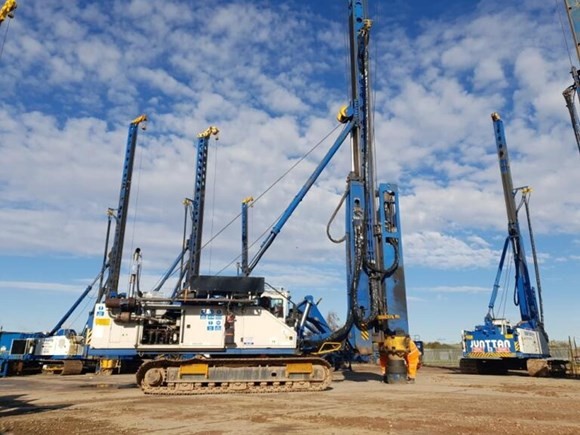
Successful pilot of world’s first retrofit on large construction equipment will have massive impact across the HS2 project, saving millions of pounds Reduced emissions will benefit communities, the environment and the workforce Certified by the Energy Savings Trust, making it available industry-wide HS2 Minister: “this ground-breaking technology will protect our health and the environment.” HS2’s Non-Road Mobile Machinery (NRMM) retrofit innovation adds exhaust technology to existing engine systems on plant machinery to upgrade them to the latest EU Stage V engine class, leading to cleaner air around construction sites. The six-month pilot of the retrofit solution was carried out by UK company Eminox on a Balfour Beatty Stage IIIA piling rig (Junttan PM20). It was tested by Imperial College London (Centre for Low Emission Construction) and Emissions Analytics, and has just been validated by the Energy Savings Trust, providing certainty for the sector and making it available industry-wide. HS2 has set strict (NRMM) emissions requirements, with all plant operating needing to meet at least EU Stage IV requirements from 2022. This innovation will deliver the first EU Stage V equivalent retrofit solution in Europe – taking the piling rig to the lowest emissions level possible. This retrofit solution gives HS2 and its suppliers confidence that existing NRMM can be successfully retrofitted to meet HS2’s 2022 NRMM criteria at a fraction of the cost of purchasing new equipment. For example, it enables an older £1.5M piece of equipment to be converted into a lower emissions product for a fraction of the cost. For HS2 this could potentially mean a £300m saving across the project. Unlike on-road exhaust emissions reduction retrofit technologies, which typically use compressed air from the existing system the new technology removes particulates, hydrocarbons, carbon monoxide and nitrous oxide emissions using new airless dosing technology. This is the first of its kind and the innovative technology will also benefit users of NRMM working in other clean air zones such as Greater London and Birmingham. HS2’s Director of Environment Peter Miller said: “HS2 will be low carbon in operation and we’re also minimising the project’s carbon emissions as we build by utilising new low carbon materials and technology. This is one of many projects we’re developing with partners to cut carbon across the HS2 project, and bring wider benefits for the whole construction industry.” “Working in partnership with Imperial College London and our contractors CSJV and BBV, this ground breaking innovation has allowed us to better understand plant emissions on site, create an NRMM plan to reduce worker exposure and community impacts, and develop technology to further reduce emissions in and around our construction sites.” HS2 Minister Andrew Stephenson said: “We are going to enormous efforts to ensure that HS2 is one of the most environmentally responsible infrastructure projects ever delivered in the UK. “By cleaning up the air on construction sites, this ground-breaking technology will protect our health and the environment, all while saving millions of pounds across the project. “As the first retrofit solution of its class in Europe, this technology will be welcomed right across the construction industry.” Eminox’s Director of Retrofit & Aftermarket, Carlos Vicente said: “At Eminox we’re focused on helping to reduce emissions across a wide range of sectors and working on this pioneering HS2 project has enabled us to extend our leading retrofit technology from on road applications to construction equipment. Being first to market with Energy Savings Trust accreditation for non-road mobile machinery demonstrates the project’s innovation – it enables the construction industry to have new opportunities for cost-effectively reducing emissions to the lowest possible level and improving air quality across the industry.” Daniel Marsh, Centre for Low Emission Construction, Imperial College London said: “The NRMM retrofit project has allowed us to work in partnership with key organisations to produce scientific evidence to give the construction industry the confidence to adopt new cost-effective measures to reduce machine emissions. The use of new technology will allow contractors to upgrade their most polluting machines to meet the latest emission standards and help reduce the air pollution impacts across the whole HS2 project.” Bekir Andrews, Group Head of Sustainability & Reporting, Balfour Beatty Plc said: “Reducing emissions from plant on construction sites is a key challenge that our sector faces – it is something that we are particularly passionate about at Balfour Beatty, having recently launched our Sustainability Strategy – Building New Futures. Whilst engine standards are improving and new electric, hybrid and hydrogen solutions are starting to enter the market, there is a lot of plant and machinery that still runs on IIIA and IIIB engines. We are immensely pleased to have worked alongside HS2, Eminox and the Centre for Low Emissions Construction to develop a practical solution to improve emissions from construction sites and offer a solution for our sector.” As the largest infrastructure project in Europe, HS2 will create huge demand for construction equipment, supporting UK manufacturers and suppliers. The project’s fleets will be a mix of new, existing and retrofitted old plant, and HS2 will also continue to promote innovative alternative fuel plant such as hydrogen, electric and solar. A second pilot is currently underway on the larger Bauer BG30 403kW rig, to test whether larger machines within the 350kW to 550kW range can also be retrofitted, providing even more benefits to the sector.

Read More »

HS2 seeks switches and crossing suppliers for £150m contract

HS2 Ltd today began the search for suppliers to provide switches and crossings for the 280km of new high-speed track between London, Birmingham and the connection with the existing west coast mainline at Crewe. The contract – worth up to £156m – will include the design, manufacture and delivery of around 180 switches and crossings for Phase 1 and 2a of the project, with options to extend for further equipment to cover Crewe to Manchester in phase 2b as well as the  maintenance depots. Designed to operate smoothly, reliably and safely at speeds of up to 360km/h and diverging speeds up to 230km/h, the switches and crossings will be a vital component of the HS2 track systems. The contract also includes around 77 rail expansion devices for track on viaducts and bridges. HS2 Ltd is running a separate procurement process to award four Track Systems contracts for the design and installation of the track and coordination of construction logistics. This will also include integration and installation of the switches and crossings. HS2 Ltd’s Procurement and Commercial Director, David Poole, said: “The switches and crossings supplier will play a vital role in delivering the high-tech rail systems that will allow HS2 to run some of the world’s most reliable, fast and efficient high speed trains. “The launch of this new procurement contest is an important step towards appointing all the suppliers who will deliver the rail systems once the main civils work is complete. HS2 already supports more than 13,000 jobs across the UK and contracts like this will provide a real boost for employers across the supply chain, helping to support skills development and provide opportunities for years to come.” In order to reduce long term costs and improve performance, the track will be set onto concrete slabs instead of the ballast commonly used on the UK rail network. This approach – known as slab track – is commonly used on metro systems and some international high speed rail lines, and will allow for a higher frequency of service with reduced maintenance requirements. A contract to deliver the pre-cast slab track has recently been awarded to PORR UK Ltd which will see the slabs made at a new factory in Somerset. The news comes days after the launch of another, separate procurement completion for the station building systems for the Phase One stations. This framework contract – worth up to £47m – covers components and systems that will be common to all four stations. This includes: Public Address / Voice Alarm (PAVA); Fire Detection and Alarm System; Building Energy Management System (BEMS); Lighting Control System (LCS); Customer Information System (CIS); and Station Information Management System (SIMS). The Framework Supplier will also be expected to work collaboratively with HS2 Ltd and Phase One Station Contractors. A shortlist is expected to be announced in summer 2021 with contract award in early 2022. HS2 is running separate procurement competitions for the other elements of the rail systems, including overhead catenary, high voltage power supply, command and control systems, communications, mechanical and electrical systems, and the depot at Washwood Heath. Bidders for the switches and crossings contract are expected to be shortlisted in summer 2021, with the contracts to be awarded in 2022.

Read More »

RLB makes tracks with Midlands Very Light Rail Programme

RLB UK continues to make tracks in the Midlands by commencing this week on the third phase of Dudley Metropolitan Borough Council’s innovative Very Light Rail (VLR) project, having value engineered a £3m cost saving to the client. RLB UK has also played a key role in Coventry City Council’s recently securing almost £1.8m from the Getting Building Fund through Coventry and Warwickshire LEP. Appointed by Dudley Metropolitan Borough Council and Coventry City Council respectively, the RLB UK team is responsible for providing cost management and employer’s agent solutions on both projects, as well as supporting both councils in gaining funding for the pioneering transport technologies and associated transport schemes. Following commencement in September 2019, Dudley Metropolitan Borough Council has so far seen the successful completion of phase one – site preparation works, followed by the start of phase two – construction of Test Track 1 (TT1) which will complete in January 2021. The 2.2km single test track will be fundamental to the evaluation of VLR technology. Phase three of the project will deliver the new national innovation centre, overseen by the recently formed Black Country Innovative Manufacturing Organisation (BCIMO). The objective is to create a new Very Light Rail industry, supporting the manufacture and uptake of lower cost VLR solutions across the UK. With Coventry City Council’s VLR demonstrator vehicle currently under assembly and expected to be delivered to Dudley early 2021, urban Very Light Rail systems takes a step closer to being implemented on the streets of towns and cities across the UK. Innovation partner Ingerop and Warwick Manufacturing Group have been appointed to design a revolutionary track system to reduce the track form depth of this light rail system, which in turn reduces costs. RLB has been working with Coventry City Council and their design partners to ensure these objectives are met.   Andy Stamps, Head of Infrastructure for RLB UK comments, “The Very Light Rail programme is far more than just a way of connecting people. What this technological advancement does, is allow us across the UK to build transportation systems that deliver far greater value, without the traditional impact on the environment they occupy. This will bring accessibility and encourage social mobility to areas where the cost of other solutions prohibits investment. We are delighted to be involved in such innovative projects and ones that will surely shape the way we provide sustainable transportation solutions – not only in the UK but worldwide.” Councillor Patrick Harley, leader of Dudley Council said: “The Very Light Rail test track and national innovation centre is a key project for our borough. The new facility will develop innovative ways to reduce the weight and cost of railcars and track for a more affordable alternative to traditional rail and Metro transport. “The world’s eyes will be on Dudley as we work with partners to develop very light rail projects, which will revolutionise light rail technology globally. I’m looking forward to this project moving quickly through to delivery.” Nick Mallinson, Chief Executive of the BCIMO continues “this initiative is about developing a new form of low-cost rail based transport which will be manufactured and installed by UK companies and in particular supported by manufacturing companies in Dudley and the wider Black Country. We are pleased to be working closely with RLB who are demonstrating great vision and foresight in their involvement in the project.” Nicola Small, VLR Programme Manager at Coventry City Council comments “We opted to appoint RLB for our quantity surveying requirements due to their breadth of experience in the VLR field, their innovative approach, and their favourable and competitive rates. We have been delighted with their input into the VLR programme – it’s refreshing to work alongside innovative thinkers with a desire to solve complex problems by thinking laterally.”

Read More »

HS2’s first giant tunnelling machines arrive in the UK

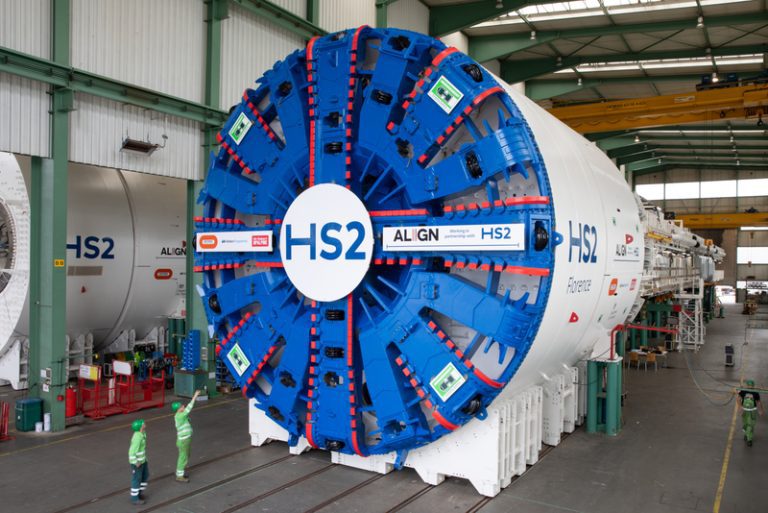
HS2’s first two giant Tunnel Boring Machines (TBMs) have arrived in the UK and will be ready to start work on the UK’s largest infrastructure project early next year. The two enormous 2,000 tonne machines – named Florence and Cecilia – will now be meticulously reassembled, tested and commissioned, by an expert team of tunnelling engineers, before they start work on the high speed rail project’s first tunnels. The 10-mile-long ‘twin bore’ Chiltern tunnel will be the longest on the project, the first to start construction, with the TBMs set to be underground, working 24/7 for more than three years. Welcoming the news, HS2 Ltd Chief Executive Mark Thurston said:  “The launch of our first tunnelling machines will be a defining moment in the history of HS2 – and our work to deliver a high speed railway that will offer a low-carbon alternative for journeys across the UK. “Construction is now well underway, with more than 13,000 jobs supported by the project, both directly and in our UK-wide supply chain. The arrival of Florence and Cecilia is a major step forward and our expert team will now work to assemble, test and commission them before their launch next year.” Designed specifically for the mix of chalk and flints under the Chilterns, the two identical TBMs will dig separate tunnels for north and southbound trains, with Florence set to launch first and Cecilia to follow a few weeks behind. Each machine operates as a self-contained underground factory, which as well as digging the tunnel, will also line it with concrete wall segments and grout them into place as it moves forward at a speed of 15 meters a day. Each tunnel will require 56,000 segments – which will all be made on site. A crew of 17 people will operate each TBM, working in shifts to keep the machines running 24/7. They will be supported by over 100 people on the surface, managing the logistics and maintaining the smooth progress of the tunnelling operation. These first two TBMs will be operated by HS2’s main works contractor, Align – a joint venture formed of three international infrastructure companies: Bouygues Travaux Publics, Sir Robert McAlpine, and VolkerFitzpatrick. Align Project Director Daniel Altier commented: “Now that the parts have arrived the detailed job of assembling and commissioning the machines has begun. “There are also considerable other activities continuing on our site to prepare for the launch of Florence and Cecilia next year. This includes the construction of a factory that will manufacture the concrete segments to be used to line the tunnel and a slurry treatment plant that will process material from the tunnels.” The Align Joint Venture expects to recruit 1,200 vacancies, with over 100 opportunities for apprentices. They plan to target their recruitment and investment in upskilling local people who are currently unemployed, with a particular focus on women, under 25s and those with disabilities. This is another great example of the vital role HS2 continues to play in the UK Government’s Plan for Jobs to protect, support and create  employment, which has helped millions of people to continue to provide for their families over the past eight months of the COVID-19 crisis. Built by Herrenknecht, a world leader in TBM manufacturing, at its factory in south-west Germany, the two 170m long machines were transported to the UK in more than 300 separate shipments over the course of two months, with the parts now safely delivered to the Align Chiltern tunnel site, to the west of London just inside the M25. The names of the two TBMs were suggested by students at Meadow High School in Hillingdon and The Chalfonts Community College, Buckinghamshire, which are close to the tunnel launch site. They were inspired by Florence Nightingale, the founder of modern medicine, and pioneering astronomer and astrophysicist, Cecilia Payne-Gaposchkin. Around 4,500 people from across the UK took part in the poll to select the final names, with Florence taking 40% of the vote and Cecilia a close second with 32%.

Read More »

Stephen George + Partners’ £7million Norwich Airport project reaches practical completion

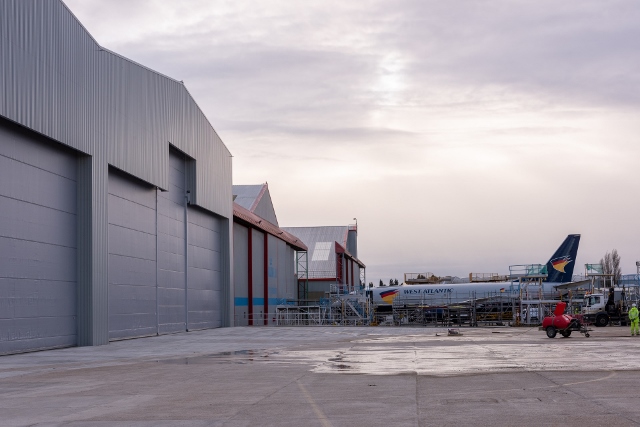
Stephen George + Partners (SGP) is pleased to announce the completion of a £7million, 54,000 sq ft hangar and associated 15,500 sq ft workshop at Norwich International Airport for Rigby Group plc, owners of Regional City Airports. Ian Yallop, Chairman of SGP says: “Despite these being incredibly difficult times for aviation, project completions such as this showcase the strength and diversity of regional airports. These flexible spaces will meet current and future engineering needs as well as supporting Norwich Airport’s masterplan to maintain its position as a leader in aircraft maintenance, repair and overhaul.” The buildings will accommodate the expansion of KLM UK engineering group, with the double bay hangar designed to service two Airbus A320 aircraft. The workshop is 7.5m to its haunch and the hangar 13.1m haunch, constructed using a Twin-Therm wall system and Euroclad cladding in standard goosewing grey, profiled to break up any interference with the ground radar system. Ian states: “This is an important milestone for SGP. Although we have worked on several masterplans and designs for other regional and national airports, this is the first building to reach completion. In these tough times, we remain committed to using our technical knowledge and expertise in this sector to support the sustained recovery of the aviation industry in the months and years to come.”

Read More »

New bridge is a UK first to combat risk of flooding

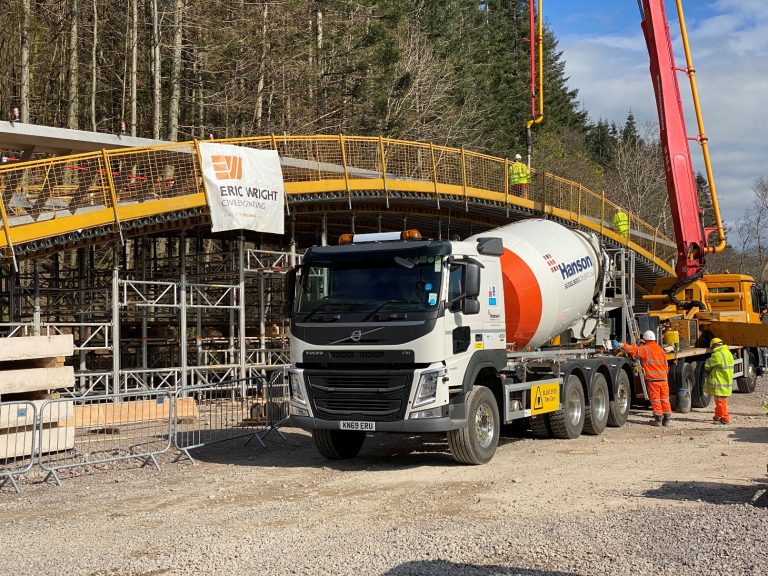
A new stainless steel and concrete bridge, the first of its kind in the UK, has opened to pedestrians and vehicles in Pooley Bridge, Cumbria. It replaces its 250-year-old stone predecessor, which was destroyed during severe flooding as a result of Storm Desmond in 2015. The new single-span bridge has been designed to withstand extreme weather conditions and is in keeping with its location in Ullswater on the edge of the Lake District National Park. Hanson UK worked with contractor Eric Wright Civil Engineering Ltd to create a bespoke concrete mix for the lower arch of the steel bridge, designed and constructed to provide structural strength, and also supplied and laid the asphalt to complete the project. The steelwork for the new bridge was manufactured off-site in two sections, fabricated and welded on an adjacent piece of land, where the concrete lower arch was installed to allow the whole structure to be lifted into place over the River Eamont. The high early strength concrete mix included Hanson Regen GGBS (ground granulated blastfurnace slag), a cement replacement product which enhances the durability of the concrete while adding to its sustainability credentials. It is a by-product and using it to replace one tonne of Portland cement reduces the embodied CO2 of the concrete by around 780kg. Its use in large pours also helps minimise the production of heat, reducing the risk of thermal cracking. In total 1,200 cubic metres of concrete containing Regen have been supplied by Hanson’s nearby Penrith concrete plant to create the lower arch, bridge deck, bridge abutment and walls, highway approach retaining walls and several temporary works. “Concrete supply to this project was always going to be a challenge due to the location, unique characteristics of the bridge and the tight deadline,” said Nick Graham, technical sales officer at Hanson Concrete. Technical services manager Terry Balmer added: “Our technical team was involved early in the design stage due to the complex concrete requirements, especially for the high-quality visual concrete that makes up the deck composite, and this partnership working was fundamental to the success of the project.” To complete the project, Hanson supplied 275 tonnes of asphalt from its nearby plant at Shap, which was laid by the company’s specialist contracting team. This included 130 tonnes of Tufflex, chosen for its durability and high resistance to cracking, for the surface course. In addition to the complex nature of the bridge, the final abutment work, concrete arch and composite deck – as well as the asphalt – were all supplied under the added pressure of the Covid-19 pandemic and the associated issues entailed with furloughed staff and social distancing protocols.

Read More »

Landmark first civils contract opportunity on second phase of HS2 to Crewe

HS2 invites contractors to bid for first major civils work north of the West Midlands £50m early works package signals new progress on delivering the benefits of high speed rail further north Separate ground investigation contract awarded to Balfour Beatty Today HS2 invited companies to tender for the first major works contracts to be awarded on Phase 2a of the project and confirmed the latest ground investigation work package award. Linking Birmingham to Crewe, Phase 2a will carry trains bound for destinations such as Glasgow, Liverpool, Manchester and the north west, speeding up overall journey times and freeing up space on the existing network. Known as ‘Early Civils Work – Package 2’ (ECW2), the new £50m programme includes a range of enabling works designed to reduce disruption during the main build stage of the project. This includes major highways works and associated utility diversions as well as a range of environmental and other surveys along the 58km route. The works will be the first major preparatory activity to be carried out for Britain’s new high speed rail line beyond its first phase, which is now being built between the West Midlands and London. HS2 has already begun a detailed programme of ground investigation along the 2a route and today also confirmed that the latest package – worth £25-30m – has been awarded to Balfour Beatty. Data from this, and previous geological investigations, will inform ongoing design development. Once complete, HS2’s Phase One and 2a will significantly reduce journey times between the capital, north west England and Scotland with services joining the existing west coast mainline at Crewe. This will allow shortened high speed train journeys, including: Glasgow – Euston will be 3hr 45min, saving 44mins Liverpool – Euston will be 1hr 34min, saving 39mins Manchester – Euston will be 1hr 29min, saving 36mins Crewe – Euston will be 53min, saving 34mins Alongside speeding up journey times, the new infrastructure will also free up capacity on the existing network for more local trains and freight by rail. This could see services rise from hourly to half-hourly or better between Crewe and Stoke-on-Trent to Nuneaton, Tamworth, Lichfield and Rugeley, as well as more services from Crewe and Runcorn into Liverpool, as well as via Crewe between North Wales, Chester and London. The ECW2 package will awarded via the government’s existing Construction Works and Associated Services framework, streamlining the procurement process, benefitting HS2 and potential bidders with contracts expected to be awarded in early 2021. HS2 Ltd’s Procurement and Commercial Director, David Poole said: “The winner of this contract will play a vital role in delivering the next stage of Britain’s new high speed railway, taking the route north from Birmingham to Crewe and by using the government’s existing framework we hope to streamline the procurement process.” “HS2’s Phase 2a represents a massive opportunity for businesses in the north of England and across the UK in the short term, and in the longer term it will speed up journeys for trains bound for places like Glasgow, Liverpool, Manchester and the North West, and release much-needed extra capacity on the existing mainline.” Draft legislation to seeking powers to build operate and maintain HS2 phase 2a are currently proceeding through Parliament. Royal Assent is anticipated during the winter.

Read More »