

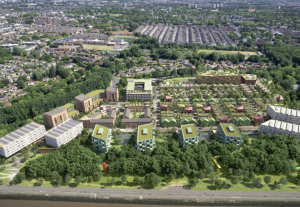
Urban Splash and igloo Secure Landmark Deal to Deliver 800 Homes at Liverpool’s Festival Gardens
Liverpool’s ambitious waterfront regeneration plans have taken a significant step forward after the city council approved legal agreements with Urban Splash and igloo, paving the way for the transformation of the former International Garden Festival site into a major new residential neighbourhood. The development partnership is progressing plans to deliver approximately 800 homes across the 27-acre Festival Gardens site, with around 440 properties proposed for the first phase of construction. The agreement represents a major milestone for one of Liverpool’s most prominent regeneration opportunities, bringing the prospect of residential development closer following years of challenges surrounding the site’s redevelopment. Urban Splash and igloo were selected as preferred development partners in August 2025, securing the opportunity ahead of competing proposals from Muse, Vistry and CERT Property. With the legal agreements now approved, the developers will advance detailed design work and community consultation ahead of submitting a planning application by the end of 2027. The proposals will seek to establish a diverse residential community, offering a broad range of housing types and tenures designed to accommodate different household requirements and stages of life. More than 30 house types are being considered, including social rented accommodation, traditional family housing, retirement living and opportunities for self-build homes. This mixed-tenure approach is intended to create a varied residential environment rather than a conventional single-format housing development, reflecting the growing emphasis on inclusive neighbourhood planning and long-term community development. A consortium of delivery partners will support the regeneration, with Urban Splash and igloo undertaking elements of the construction programme themselves alongside housing and development organisations including Alpha Living, Regenda Homes, TOWN and Starship. Six architectural practices are involved in shaping the proposals, bringing together different design approaches to establish a distinctive new neighbourhood within the waterfront setting. The development will follow a substantial programme of site preparation and environmental remediation, which has already addressed one of the principal barriers to bringing Festival Gardens back into productive use. Vinci previously undertook a £53 million remediation programme to tackle contamination across the former International Garden Festival site, preparing the land for future redevelopment. The extensive clean-up was an essential enabling stage, overcoming environmental constraints that had complicated earlier proposals and delayed progress on the site. Liverpool City Council originally acquired Festival Gardens for £6 million in 2015, with the intention of securing its long-term regeneration. Previous development ambitions had envisaged the construction of up to 1,500 homes, although the scale of the proposals has subsequently been reduced to approximately 800 properties under the current development strategy. The revised approach places greater emphasis on a varied residential offer, with different housing types and development partners contributing to the overall scheme. Jonathan Falkingham, Co-founder of Urban Splash, welcomed the latest milestone and highlighted the combined experience of the two development organisations. “With Urban Splash and igloo working in partnership, we’re combining decades of experience to turn this large-scale regeneration project into a community Liverpool can be proud of,” he said. The Festival Gardens project represents another important opportunity for Liverpool to unlock previously developed land for new housing while strengthening the relationship between the city’s residential neighbourhoods and its waterfront. For the construction and development sectors, the scheme also demonstrates the importance of major remediation investment, coordinated masterplanning and partnerships between local authorities, private developers and housing providers in bringing complex regeneration sites forward. The involvement of multiple architects and delivery partners is expected to contribute to the development of a varied housing offer, while the phased construction strategy will allow the neighbourhood to emerge progressively as individual elements receive approval. The next stage will see Urban Splash and igloo intensify design development and consultation, working towards the submission of a formal planning application before the end of 2027. Subject to securing the necessary consents, construction will then proceed in phases, beginning the transformation of the former festival site into a new residential destination. With legal agreements now approved and the major remediation works completed, Festival Gardens is moving closer to realising its potential as one of Liverpool’s significant new housing and waterfront regeneration schemes, bringing hundreds of homes to a site that has remained a longstanding development opportunity for the city. Building, Design & Construction Magazine | The Choice of Industry Professionals

Landsec Halts £1.5bn Lewisham Regeneration as Construction Costs and Affordable Housing Dispute Derail Plans
Landsec has suspended plans for its £1.5 billion transformation of Lewisham Shopping Centre, dealing a major setback to one of south east London’s largest residential-led regeneration projects amid rising construction costs, development viability pressures and disagreements over affordable housing provision. The developer has confirmed that it no longer sees a sufficiently certain route to delivering the ambitious mixed-use scheme, which would have replaced the existing 1970s shopping centre with a new retail district, residential towers, student accommodation and extensive public amenities. Construction had been expected to commence in 2027, with the masterplan proposing buildings rising to 35 storeys and a substantial new residential neighbourhood in the heart of Lewisham. The redevelopment would have delivered 1,744 homes, alongside 660 purpose-built student accommodation beds and 445 co-living rooms, creating a high-density mixed-use destination combining residential, retail, leisure and cultural facilities. Plans also included a 500-capacity music venue and a rooftop meadow, introducing new green space and community facilities as part of a comprehensive redesign of the town centre. However, the project’s delivery depended on securing additional land, including the neighbouring former Citibank office building, Lewisham House. Landsec had sought support from Lewisham Council to progress the necessary land assembly arrangements, but the borough’s new Green administration declined to support the next stage without a substantial increase in affordable housing. Although the redevelopment had secured planning approval under the previous Labour administration, the new leadership has maintained that the proposed level of social rented accommodation was insufficient. The consented scheme included 98 social rent homes and 231 discounted rental properties intended for key workers, forming part of the wider 1,744-home residential development. Mayor of Lewisham Liam Shrivastava, who had previously supported a campaign opposing the proposals, reiterated the administration’s position on affordable housing. “This administration is laser focused on delivering genuinely affordable housing and I’ve consistently said the level of social rent homes in this scheme needed to increase,” he said. However, the Mayor also acknowledged the wider challenges affecting major regeneration projects. “The fact is the conditions for such projects are simply not favourable right now.” For Landsec, the requirement to substantially revise the housing mix comes against an increasingly challenging economic backdrop for large-scale development in London. The company pointed to higher interest rates, construction cost inflation and additional building regulatory requirements as significant factors affecting the financial viability of the redevelopment. Increasing the affordable housing provision would require material changes to the approved proposals, introducing further uncertainty around project costs, funding and delivery. In a statement, Landsec said: “This position, combined with the exceptionally difficult economic conditions, mean that we no longer see a sufficiently certain route to delivery and have taken the difficult decision to deprioritise the redevelopment of Lewisham Shopping Centre.” The decision highlights the difficulties facing major urban regeneration schemes, particularly those combining substantial residential development with the replacement of existing retail infrastructure. Projects of this scale frequently depend on complex land assembly arrangements, substantial upfront investment and a carefully balanced development mix to make construction financially viable. In Lewisham, the proposed transformation would have represented a fundamental change to the existing shopping centre, introducing a new urban district designed around residential growth, commercial activity and public space. The scheme had already begun influencing the existing retail environment, with Boots relocating in preparation for the anticipated redevelopment and NatWest also announcing plans to move. Despite shelving the regeneration proposals, Landsec has confirmed that it will continue operating and investing in Lewisham Shopping Centre, which it has owned for more than two decades. The existing retail destination will therefore remain operational while the developer reassesses its longer-term options for the site. For the wider construction and property development sectors, the decision underlines the growing pressures surrounding the delivery of major mixed-use schemes in London, where affordable housing requirements, construction inflation and increasingly complex regulatory obligations must be balanced against commercial viability. While the £1.5 billion masterplan has been deprioritised rather than permanently abandoned, there is currently no confirmed timetable for restarting the redevelopment. The future of the Lewisham site will now depend on whether a financially deliverable regeneration strategy can be established that satisfies both the developer’s investment requirements and the Council’s ambitions for increased affordable housing. The setback leaves one of south east London’s most prominent town centre regeneration opportunities facing an uncertain future, despite the scale of residential, commercial and community investment originally envisaged. Building, Design & Construction Magazine | The Choice of Industry Professionals
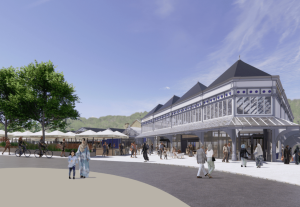
HBC Construction Begins £18m Transformation of Historic Dewsbury Market
HBC Construction has officially commenced work on the £18 million redevelopment of Dewsbury Market in West Yorkshire, marking a major milestone in Kirklees Council’s ambitious programme to regenerate the town centre and revitalise one of its most important historic landmarks. The project will see the existing market hall undergo a comprehensive restoration and modernisation, preserving its distinctive architectural character while creating an improved retail and community destination designed to support local businesses and attract more visitors. Scheduled for completion in early 2028, the redevelopment forms a central part of the Dewsbury Blueprint, Kirklees Council’s long-term regeneration strategy aimed at transforming the town centre through investment in public spaces, commercial facilities and key community assets. A major focus of the construction programme will be the sensitive restoration of the market hall’s historic fabric, including its iconic glazed roof structure and distinctive metal architecture. These features are integral to the building’s identity and will be carefully preserved and enhanced as part of the wider refurbishment, ensuring that the market retains its heritage character while being adapted to meet the requirements of modern traders and visitors. The project represents an important investment in Dewsbury’s traditional retail infrastructure at a time when town centres across the UK are increasingly looking to reposition historic markets as vibrant destinations for shopping, leisure and community activity. To maintain trading activity throughout the construction period, a temporary market has been established across Market Place, Longcauseway and Foundry Street. The temporary arrangements will enable existing businesses and traders to continue operating while the main market hall undergoes its transformation, helping to minimise disruption to the local economy. Lee Powell, Managing Director of HBC Construction, welcomed the start of work and highlighted the importance of the scheme to Dewsbury’s wider regeneration ambitions. “It’s always exciting to get the first spades in the ground and start bringing a project to life,” he said. “A huge amount of work and planning goes into getting developments to site, and we’re really looking forward to working closely with Kirklees Council and local partners to deliver a new anchor destination for Dewsbury.” Alongside the physical redevelopment, HBC Construction has committed to delivering wider social and economic benefits through a programme focused on local employment, skills development and community engagement. The contractor intends to work with local partners throughout the construction phase, ensuring that the investment generates opportunities beyond the restoration of the market building itself. Powell added: “As with all our projects, we are committed to delivering wider social and economic benefits throughout construction. We have developed a strong social value and employment programme and are keen to leave a lasting legacy in Dewsbury, just as we have in other towns and communities across Yorkshire.” The Dewsbury scheme will be HBC Construction’s third major market redevelopment project in Yorkshire over the past decade, reinforcing the contractor’s experience in delivering complex public sector regeneration and retail refurbishment schemes. The company previously delivered Barnsley Markets as part of The Glass Works regeneration programme, which transformed a substantial area of Barnsley town centre into a modern retail and leisure destination. HBC Construction is also currently undertaking the regeneration of Rotherham Markets, another major investment in traditional market infrastructure and town centre renewal. These projects demonstrate the growing role of historic markets within wider urban regeneration strategies, where local authorities are seeking to combine heritage preservation with modern commercial facilities and improved public environments. For Dewsbury, the £18 million redevelopment represents a significant opportunity to strengthen the town’s retail offer, support independent traders and reinforce the market’s position as a focal point for the local community. The restoration will also contribute to the wider objectives of the Dewsbury Blueprint, which seeks to encourage investment, improve the town centre environment and create a more attractive destination for residents, businesses and visitors. With construction now underway and completion targeted for early 2028, the redevelopment marks another important step towards delivering a renewed town centre, combining the preservation of Dewsbury’s architectural heritage with investment in its future economic and community life. Building, Design & Construction Magazine | The Choice of Industry Professionals

Celnor Group Announces New Investment from Goldman Sachs Alternatives
Goldman Sachs Alternatives to acquire a majority stake in Celnor, a fast-growing international built environment-focused testing, inspection, certification and compliance (“TICC”) platform, with Inflexion, Founder and Management reinvesting Celnor Group (“Celnor”), a leading provider of risk, safety, compliance and testing services across the built environment, announced that the Private Equity business within Goldman Sachs Alternatives (“Goldman Sachs”) has entered into a definitive agreement to acquire a majority stake in the Company. Founder and Chief Executive Officer, Simon Parrington, and members of the wider management team will remain invested alongside Goldman Sachs, together with existing shareholder Inflexion Private Equity (“Inflexion”). The transaction is subject to customary regulatory approvals and is expected to close in Q1 2027. Founded in 2023, Celnor has rapidly grown into a leading platform in the TICC market. Today, the Group supports more than 20,000 clients, employs over 2,750 colleagues across 60 locations and generates annual revenues exceeding £300 million. With a national footprint across the UK and a growing international presence in the US and Europe, Celnor supports customers in meeting increasingly complex regulatory, safety and environmental requirements across the built environment. The investment from Goldman Sachs will support Celnor’s next phase of growth, accelerating its international expansion strategy, particularly in the United States and Continental Europe, while further strengthening its technology, operational and acquisition capabilities. Celnor will continue to pursue targeted acquisitions, invest in talent and innovation, and support its growing customer base. Simon Parrington and the existing management team will continue to lead Celnor, supported by Goldman Sachs and Inflexion. Simon Parrington, Founder and Chief Executive Officer of Celnor Group, said: “In three years, we have built a strong international platform, underpinned by exceptional people, trusted brands and a shared commitment to our customers. Partnering with Goldman Sachs is an important next step in our long term strategy and will enable us to invest further in our people and capabilities, strengthen our proposition for clients and create new opportunities for colleagues across the Group. I would like to thank Inflexion for its invaluable support since day one and am delighted they will continue as a partner in our next chapter.” Jose Barreto, Partner within Private Equity at Goldman Sachs Alternatives, said: “Having built a close relationship with Simon and the management team since Celnor’s formation, we are delighted to invest in the business at this hugely exciting stage in its evolution. We’ve been very impressed by Simon and the management team’s track record of building and scaling the Group via M&A, while maintaining a clear focus on its customers, its service quality and importantly, its people. We look forward to partnering alongside Inflexion and management to drive future growth, both in the UK and internationally.” Harry Wilson, Investor within Private Equity at Goldman Sachs Alternatives, added: “Celnor has established a differentiated position in an attractive end-market underpinned by deep technical expertise, compliance requirements and trusted customer relationships. We look forward to drawing on Goldman Sachs’ global network and value creation capabilities to support the Company’s continued development, both organically and through targeted acquisitions.” Tom Pemberton, Partner and Head of Enterprise Fund, Inflexion, commented, “Celnor is a great example of how Inflexion can provide huge flexibility and generate significant value. We backed an entrepreneurial founder to start from scratch to build a high quality, scaled business in an attractive, fragmented market. Simon and the team have executed the strategy incredibly and we look forward to continuing to support them as a minority shareholder.” Dominic Clark, Investment Director, Inflexion, added, “Celnor is an example of buy-and-build done well: a clear strategy, a disciplined and relationship-led approach to acquisitions, and sustained investment in the businesses once they joined. That combination has developed deep technical expertise across the Group, delivered at scale, and there is significant runway ahead – particularly in the US and Continental Europe – and we are proud to remain part of Celnor’s story alongside Simon, the team and Goldman Sachs.” Celnor and Inflexion were advised by Rothschild & Co (Corporate Finance), OC&C (Commercial), Alvarez & Marsal (Financial, Tax), and Addleshaw Goddard and Slaughter and May (Legal). Goldman Sachs Alternatives was advised by Houlihan Lokey (M&A), Linklaters (Legal), and EY (Financial and Tax). Building, Design & Construction Magazine | The Choice of Industry Professionals
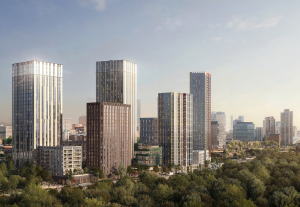
HG Construction Secures £225m Manchester Tower Contracts to Deliver 895 Homes at Victoria North
HG Construction has secured £225 million of construction contracts from developer FEC to deliver four new residential buildings in Manchester, marking a major step forward in the transformation of the Red Bank neighbourhood within the ambitious Victoria North regeneration programme. The appointment will see HG Construction deliver a total of 895 new homes across two development plots, NT02 and NT03, supporting the continued expansion of one of Manchester’s most significant residential regeneration areas. The contracts represent a substantial investment in the next phase of Red Bank, where FEC is progressing plans to establish a new residential neighbourhood north of Manchester city centre, supported by improved infrastructure, public spaces and green amenities. At plot NT02, HG Construction will deliver a 34-storey residential tower comprising 316 apartments. The development will represent FEC’s first build-to-rent (BTR) scheme within the neighbourhood, introducing professionally managed rental accommodation to the emerging residential district. Construction at NT02 is scheduled to commence immediately, with completion anticipated by 2029. The second contract covers plot NT03, where three residential buildings named Falcon, Kingfisher and Midrise will provide a further 579 homes. Construction of these buildings is expected to begin in early 2027, subject to securing Gateway 2 approval from the Building Safety Regulator under the Building Safety Act framework. Together, the four buildings will make a substantial contribution to housing delivery within Victoria North, while adding further density and architectural variety to the evolving Red Bank skyline. The Gateway 2 process remains an important consideration for major residential developments, requiring detailed regulatory approval before construction can commence on higher-risk buildings. For developers and contractors, successfully navigating these requirements is increasingly central to maintaining project programmes and progressing high-rise residential schemes through to delivery. The latest appointments follow significant investment by FEC in the infrastructure and public realm needed to support the wider Red Bank neighbourhood. These improvements are helping establish the foundations for a connected residential community, with new homes being introduced alongside landscaped spaces and infrastructure intended to support long-term growth. Anthony Payne, Operations Director at FEC, welcomed the appointment and highlighted the progress being made across the regeneration programme. “With HG Construction on board we’re ready to deliver the exciting next phase of Red Bank,” he said. “Following significant investment in infrastructure and public realm, the neighbourhood is really taking shape, with new homes, green spaces and the next phases of development now coming forward.” For HG Construction, the £225 million package represents a major addition to its residential construction portfolio, with the contractor drawing on its in-house delivery capabilities to support the programme. The company plans to utilise its self-delivery expertise, including offsite-manufactured bathroom and utility pods, to improve construction efficiency, programme certainty and quality control across the developments. The use of offsite manufacturing techniques is becoming increasingly important in high-density residential construction, where standardised components can help streamline installation, reduce on-site activities and support consistent building quality. Adam Quinn, Chief Executive Officer at HG Construction, said the company’s integrated construction approach would be central to delivering the four buildings. “Our in-house self-delivery capabilities, including offsite bathroom and utility pods, allow us to mobilise efficiently while maintaining greater control over programme execution, quality and safety from the outset,” he said. “We look forward to working with FEC to deliver high-quality homes and help create a thriving new neighbourhood.” The Red Bank developments form part of the wider Victoria North regeneration programme, which is reshaping substantial areas to the north of Manchester city centre through residential development, infrastructure investment and the creation of new neighbourhoods. The introduction of FEC’s first build-to-rent development at NT02 also reflects the continued importance of professionally managed rental housing within Manchester’s expanding residential market. With construction on the first tower due to commence and the remaining three buildings progressing towards regulatory approval, the £225 million programme will establish another major phase of residential delivery at Red Bank. Once completed, the four developments will provide 895 additional homes, reinforcing Victoria North’s role in accommodating Manchester’s growing population and supporting the long-term regeneration of the city’s northern districts. Building, Design & Construction Magazine | The Choice of Industry Professionals
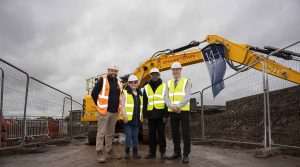
Keon Homes starts construction works on new council homes in major New Park Village estate regeneration
Construction has started on the first phase of new homes in the council’s transformation of New Park Village estate. Keon Homes, the council’s chosen construction partner, has completed intensive underground surveys, the complex process of redirecting water, gas, electricity and telecommunications supplies across the site and other enabling works, including the installation of a new road and turning head. It follows last year’s demolition of the first blocks of out-dated 1960s maisonettes, paving the way for 179 brand new highly energy-efficient homes, with an EPC rating of B, to be developed over two phases. Phase one will see 98 new homes built over the next 24 months before the remaining maisonettes are demolished in phase two and a further 81 new properties delivered. Matt Beckley, Partnerships Director at Keon Homes, added: “It is always fantastic when the first bricks are laid on a scheme that will support a local community in Wolverhampton. “New Park Village is a landmark housing regeneration development, which will create hundreds of high-quality, energy efficient homes. These properties will generate new opportunities for local people and families, as well as bringing important parts of the city back to life.” As per the Local Lettings Plan, the new homes will firstly be allocated to existing tenants on the estate and, if any additional properties become available, then to local residents currently on the housing list. The regeneration will provide a mix of new one, two, three and four-bedroom council homes for rent, as well as increased car parking, improved public open space at the heart of the estate, including a children’s play area, green gym and seating, and a brand-new housing office for the New Park Village Tenant Management Cooperative (TMC). Earlier this year, seven new two-bedroom wheelchair accessible council bungalows on Longford Road were completed and handed over to residents as part of the overall New Park Village estate masterplan. The £42million programme is being funded from the council’s Housing Revenue Account (HRA) capital budget and supported by grant funding through the Homes England Social and Affordable Housing Programme. Val McKean, Chair of New Park Village Committee and Resident Steering Group Member, said: “I’ve lived here for about ten years, and this place is going to be amazing when it’s finished. “This is where the excitement starts – seeing the new homes going up to replace the old and cold flats we’re currently in will be great. “It will be similar to Heath Town where the residents are so thrilled by the improvements.” Councillor Steve Evans, City of Wolverhampton Council Deputy Leader and Cabinet Member for City Housing and Assets, said: “This is a major milestone that means we will soon start seeing top-quality new council homes for affordable rent coming out of the ground where out-dated 1960s maisonettes once stood. “We are continuing to invest heavily in new and replacement council housing across the city, and it is all about creating better connected communities where people can enjoy brighter futures. “In the long-term, the redevelopment will improve living conditions for local residents through the provision of highly energy-efficient new homes, better play areas and green space creating an environmentally friendly estate.” The New Park Village redevelopment scheme is being phased over several years to minimise disruption to residents. Building, Design & Construction Magazine | The Choice of Industry Professionals