


Universal Unveils Major Construction Team for £5bn Bedford Theme Park Resort
Universal has revealed the first major contractors and consultants appointed to its £5 billion theme park and resort in Bedford, providing the clearest indication yet of the scale of the construction team being assembled for one of the UK’s most significant leisure developments. Bovis, Galliford Try, Morgan Sindall, Careys, Sir Robert McAlpine, Wates and Winvic are among 23 businesses appointed to support delivery of the Universal United Kingdom Resort, which will transform the former Kempston Hardwick brickworks site south of Bedford. Individual construction packages and contract values have yet to be announced, but the appointments bring together some of the UK’s largest contractors alongside an extensive professional and technical consultancy team. Consultants and specialists involved include Arcadis, AtkinsRéalis, Buro Happold, Gensler, Gillespies, Gleeds, Mace Consult, Mott MacDonald, Arup, Rider Levett Bucknall and Ridge and Partners. Other specialists appointed include Blumano, Brindle & Green, Oxford Archaeology, Pinsent Masons and Wilson James. Businesses involved during the feasibility and planning stages have also included WSP, LDA Design, SLR Consulting, DWD Property and Planning and Town Legal, with a number continuing to support the project as it moves towards full construction. Enabling works are already under way across the 476-acre site, ahead of a five-year main construction programme that is expected to gather significant momentum. Comcast NBCUniversal has committed more than £5 billion to delivering the destination, while the Government is supporting the wider development with £1.3 billion of investment in road, rail and local infrastructure. Scheduled to open in 2031, the development will become Universal’s first branded theme park and resort in Europe. Plans include several themed lands containing major rides and attractions, alongside a 500-room hotel and an extensive retail, dining and entertainment destination. The project is therefore set to create a substantial pipeline of work extending well beyond the initial contractor appointments, encompassing everything from major infrastructure and structural construction to complex M&E, specialist fit-out, façades, landscaping, hospitality interiors and highly specialised themed environments. Planning permission has been secured through a Special Development Order, allowing the ambitious programme to progress. Universal estimates that the resort could generate around £50 billion in economic benefit, with approximately 20,000 jobs supported during construction and 8,000 direct jobs once operational. The scale of the Bedford development is expected to have a major impact on the regional construction and property market, while creating significant opportunities for contractors, consultants, manufacturers and specialist supply chain businesses over the coming years. With enabling works progressing and the first major delivery partners now confirmed, the Universal United Kingdom Resort is moving firmly from planning into delivery, beginning the transformation of a former industrial site into one of Europe’s most ambitious new leisure and hospitality destinations. Building, Design & Construction Magazine | The Choice of Industry Professionals

JLL Expands Global PAFM Partnership with Nestlé Across 130 Countries
JLL has been selected by Nestlé to provide global real estate portfolio services across 130 countries, significantly expanding the relationship between the two businesses and creating an integrated approach to managing the food and beverage group’s international property requirements. The new assignment covers Nestlé’s diverse portfolio of office, industrial and retail properties and will see JLL provide integrated leasing transaction management alongside strategic real estate advisory services. The agreement builds on the lease administration services already provided by JLL to Nestlé and brings together expertise from across JLL’s Work Dynamics and Leasing Advisory businesses through a single integrated account structure. This approach is designed to provide Nestlé with greater consistency and flexibility across regions while improving access to property intelligence and supporting strategic decision-making across its extensive global estate. JLL will also draw on capabilities from its Valuation and Risk Advisory business, wider Portfolio Services operation and technology division, JLL Technologies. Technology and data will play a significant role in the partnership. JLL’s proprietary technology platform will provide enhanced intelligence around Nestlé’s real estate portfolio, including the use of JLL Azara, an AI-powered data analysis application developed to allow business leaders to interact with corporate real estate and facilities management information. The service will also incorporate Horizon, JLL’s proprietary AI platform, which combines public and non-public market intelligence to support investment and capital decisions. The appointment reflects a wider shift within property and facilities management, where multinational occupiers are increasingly looking beyond the day-to-day management of buildings towards integrated real estate strategies combining property data, technology, portfolio optimisation, workplace requirements and operational efficiency. Susan Asprey Price, CEO, EMEA Work Dynamics and Global Head of Portfolio Services at JLL, said the business was delighted to support Nestlé as its real estate strategy continues to evolve. “We look forward to leveraging our integrated global platform to unlock potential for their business worldwide,” she said. Andy Poppink, CEO, Leasing Advisory, EMEA and APAC at JLL, highlighted cost optimisation, flexibility and supply chain resilience as increasingly important considerations for corporate occupiers. He said JLL would use its market expertise, global platform and analytics capabilities to support Nestlé in achieving its objectives across the portfolio. Covering properties in 130 countries, the expanded partnership demonstrates the increasing scale and sophistication of global property and facilities management contracts. For JLL, the appointment also highlights how traditional property services are evolving through the integration of strategic advisory, leasing expertise, data and artificial intelligence, providing major occupiers with a more connected view of how their property portfolios can support wider business performance. Building, Design & Construction Magazine | The Choice of Industry Professionals

OP appointed to deliver Boyes Turner’s new Reading workplace
OP has been appointed to design and deliver a new 19,611 sq ft workplace for regional law firm Boyes Turner at One Forbury Square in Reading. The project continues a longstanding relationship between the two Reading-based businesses. Through workplace consultancy, occupancy analysis and conversations with Boyes Turner’s people, OP has developed a design that responds to the firm’s changing ways of working. The move from a larger, underutilised office provides an opportunity to create a more efficient workplace that strengthens culture and connection while supporting the privacy and concentration required by a modern law firm. The first floor will create an elevated arrival experience for clients, incorporating a dedicated meeting and town hall suite. Above, the staff workplace has been positioned on the upper floors, reflecting Boyes Turner’s decision to prioritise its people and make the most of views across Forbury Gardens. Clearly defined team neighbourhoods will provide identity and ownership, while open circulation and carefully planned adjacencies will help departments connect. A shared breakout and social area will form the heart of the workplace. Positioned in one of the building’s best locations, it will be a destination for the whole firm, with lively communal areas at the centre and quieter work settings towards the perimeter. Intelligent zoning, acoustic treatments and varied workspaces will provide environments for collaboration, confidential conversations and focused work. Existing furniture will be reused where appropriate, with investment directed towards the elements that will have the greatest everyday impact. “Boyes Turner’s move to One Forbury Square is an opportunity to bring people together while supporting the privacy and focus a modern law firm needs. “Our consultancy journey has shaped an intelligent design with a strong social heart. We’re proud to be delivering this project for another leading Reading business.” Tom Parsons, Managing Director at OP The project is now underway, with OP working alongside Boyes Turner and the wider project team to create the firm’s new home. Building, Design & Construction Magazine | The Choice of Industry Professionals

NatWest backs ‘urbanest’ for landmark riverside student accommodation development in London with £190 million green development loan
NatWest has provided a £190 million green development facility to urbanest to support the delivery of urbanest Albert Embankment, a landmark 897-bed PBSA development in Vauxhall, London. Situated on Albert Embankment on the South Bank of the River Thames, the development will consist of two connected towers of 30 and 27 storeys, providing students with high quality, sustainable accommodation in one of the UK’s strongest and most supply-constrained student accommodation markets. urbanest, one of London’s leading PBSA developers and operators, is delivering the scheme in partnership with main contractor Midgard. Construction is expected to complete in summer 2029 and open to students for the 2029-30 academic year, with demolition work complete and main works underway following Gateway 2 approval. Once complete, the scheme will provide best-in-class student living experience, featuring extensive resident amenities, a café and dedicated community space for a local dance school, creating a lasting benefit for both students and the surrounding Vauxhall community. The project is targeting both Passivhaus and BREEAM Outstanding certification, reflecting a shared commitment between NatWest and urbanest to delivering sustainable buildings that are fit for the future and support long-term growth. Alongside the delivery of new student accommodation, the development will support the continued growth of the local area by increasing housing provision for students in a well-established London location. The transaction builds on the longstanding relationship between NatWest and urbanest and demonstrates NatWest’s continued commitment to supporting the development of high-quality PBSA assets in markets where student demand remains robust and accommodation supply remains constrained. Eirini Kalamara, Director in the Residential team at NatWest, said: ” We are delighted to support urbanest with the delivery of Albert Embankment, which will create world-class, sustainable accommodation for students while supporting the local economy. “Through the Growing Together campaign, we’re helping to unlock infrastructure developments that strengthen local economies while creating sustainable places for people to live, learn and thrive. We’re proud to support urbanest in delivering a landmark project that will have a positive impact for London, its universities and the communities around it for years to come.” Paul Anderson, Group Treasurer at urbanest, said: “As London continues to attract students from across the world, the need for high-quality, sustainable accommodation has never been greater. urbanest Albert Embankment represents a major investment to support the future of the capital’s higher education sector and will provide almost 900 students with an outstanding place to call home. We are proud to be working with NatWest to bring this vision to life. Together, we’re delivering a development that will support London’s universities, contribute to the local economy and further urbanest’s position in setting the standard for sustainable student living.” Howard Dawber, Deputy Mayor for Business and Growth said: “It’s great to see NatWest funding new student accommodation in the city. Good quality, affordable housing is essential to ensure students from the UK and beyond can study in London and enjoy everything our amazing city has to offer. “London is a global city with some of the best universities in the world. Our excellent higher education facilities support hundreds of thousands of students each year, enabling them to gain the skills they need to start their careers and helping to drive London’s growth. This new housing will benefit the local community as well as improve the student experience of those living there and is a great example of how private companies can help us as we continue to build fairer, more prosperous London for everyone.” NatWest was advised by Norton Rose and Knight Frank on the financing, while urbanest was advised by Pinsent Masons. Following the opening of urbanest Canary Wharf this September, urbanest Albert Embankment will become the company’s eleventh operational asset in central London, taking its portfolio to over 7,000 student beds. About urbanest Building, Design & Construction Magazine | The Choice of Industry Professionals

Capital&Centric Brings Weir Mill BTR Neighbourhood to Life in Stockport
Capital&Centric is marking the opening of its Weir Mill Build to Rent development in Stockport with a major community event, highlighting how the transformation of the historic mill is creating much more than a new collection of rental homes. The social impact developer has confirmed an all-local line-up for WEIR:LIVE, a free event taking place at the newly opened neighbourhood on 3 October. The celebration will bring live music, DJs, food and entertainment beneath Stockport’s landmark Grade II* listed railway viaduct. Weir Mill itself represents a significant heritage-led residential regeneration project. Capital&Centric has transformed the Grade II listed former cotton mill and surrounding site into a new riverside neighbourhood comprising 253 one, two and three-bedroom rental homes, including 88 apartments within the restored mill buildings. The development has been delivered by Capital&Centric in partnership with Stockport Council and Stockport Mayoral Development Corporation and forms part of the wider £1 billion regeneration of Stockport town centre. Alongside its BTR accommodation, Weir Mill provides around 20,000 sq ft of commercial space for independent businesses, with new public squares, landscaped courtyards and improved access to the River Mersey helping turn the formerly underused site into a mixed-use destination. The development combines the restoration of the historic mill complex with new-build elements, retaining much of the industrial character that has defined the site for generations. Weir Mill dates back to 1790 and predates the neighbouring railway viaduct, which was constructed over part of the mill complex during the 19th century. New amenities include Weaver’s Square, positioned beneath the viaduct and designed to accommodate markets, events, live music and pop-ups. The restored Wheelhouse has meanwhile been repurposed to provide residents with a gym, lounge and co-working facilities. A growing collection of independent operators is also helping establish the development as a destination beyond its residential community. Businesses include Social Osteria, Kontrol Pilates, Prologue, Rita Rays, The Jane Eyre and Bodega. Capital&Centric officially opened Weir Mill in August, with homes now available through the developer’s Ollo rental platform. WEIR:LIVE will provide an opportunity for the wider Stockport community to experience the completed regeneration, with Capital&Centric deliberately selecting musicians, DJs, artists and creatives from the borough. The approach reflects a wider shift within the BTR market towards developments that combine professionally managed rental homes with amenity, public realm, hospitality and community-focused spaces. For Stockport, Weir Mill also demonstrates how the reuse of challenging historic buildings can contribute to town-centre regeneration, combining new housing with heritage conservation and creating new commercial and public spaces around one of the borough’s best-known landmarks. Building, Design & Construction Magazine | The Choice of Industry Professionals
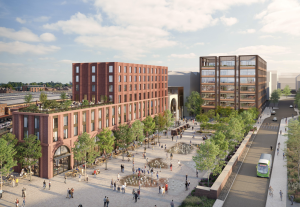
McLaren Secures Green Light for £2bn York Central Regeneration
McLaren has secured detailed planning consent for the first major phase of the £2 billion York Central regeneration, clearing the way for more than 1,000 homes, a new hotel and a major commercial district alongside York railway station. City of York Council has approved plans for phase 1C of the 110-acre brownfield development, which is being brought forward by McLaren Regeneration and Arlington Real Estate as part of one of the largest city-centre regeneration projects in the North of England. The approved phase will deliver 1,014 mixed-tenure homes, with at least 20% designated as affordable housing. Plans also include a 213-bedroom hotel and a new western entrance to York railway station, opening onto a new civic square and improving connections between the development and the wider city. Construction is expected to begin next year. The planning milestone follows more than £135 million of Government-funded infrastructure and enabling works undertaken to unlock the complex former railway land. Sisk has been delivering the infrastructure programme, including new roads, pedestrian and cycle connections and public realm improvements behind York station. Other elements of York Central are already progressing through the planning process. A separate 134,000 sq ft Government Property Agency office hub has been approved, providing workspace for up to 2,600 civil servants, alongside plans for Museum Square. The scale of the wider masterplan is substantial. Once completed, York Central is expected to provide at least 2,500 new homes and more than one million sq ft of commercial space, supporting an estimated 6,500 jobs. The project will effectively create a major new mixed-use neighbourhood within walking distance of York city centre, combining residential development, employment space, hospitality, public realm and improved transport infrastructure. Its regeneration has been discussed for around four decades, but the challenges associated with access, infrastructure and bringing a large area of former railway land back into productive use have historically prevented development from progressing. Housing Secretary Angela Rayner described York Central as an opportunity to transform derelict brownfield land into thousands of new homes, jobs and green spaces, while supporting wider economic growth. John Gatley, chief executive officer of McLaren Property Group, said the approval represented a major step forward for York following years of work between public and private sector partners. He added: “The real work starts now as we have the green light to convert our vision to reality.” With enabling infrastructure already taking shape and detailed consent now secured for more than 1,000 homes, York Central is moving from a long-standing regeneration ambition towards construction, creating a significant future pipeline for contractors, consultants and the wider built environment supply chain. Building, Design & Construction Magazine | The Choice of Industry Professionals