bdc magazine

 Tritax Group and abrdn chosen to partner with Britishvolt to fund and deliver transformational UK battery Gigaplant to meet EV demand

HM Government recently announced their support for electric-vehicle battery pioneer Britishvolt. An in principle offer of funding has been made through the Automotive Transformation Fund which has enabled a long-term partnership with Tritax and abrdn that will deliver £1.7bn in private funding. This historic investment will help propel the UK’s

Read More »

Training provider SECTT delivers £54,000 package of financial assistance to its college partners to help with rising material costs

Training provider the Scottish Electrical Charitable Training Trust (SECTT) has come to the aid of facilities hit with spiralling materials costs by providing £54,000 of additional financial assistance. The substantial funding to the electrical departments at 21 Approved Centres – which range from Stornoway and Thurso in the north to

Read More »

Support for SME builders means apprentices thrive

A local builder working for a housing association has shared his delight at seeing fresh talent coming through the ranks in the construction industry. T G Sowerby Developments, based in Scunthorpe, have been sharing the progress of their apprentices on a site on Bottesford Road over the last year. Ben

Read More »

Different Causes of Wire Rope Damage

Rigging machines like cranes use various components to operate, including a wire rope. Proper choice, installation, use, and maintenance are essential to keep the rope in top condition for a longer time. However, even with appropriate care, it will eventually reach its end of life, as it’s still an object

Read More »
Latest Issue
Issue 342 : Jul 2026

bdc magazine

 Tritax Group and abrdn chosen to partner with Britishvolt to fund and deliver transformational UK battery Gigaplant to meet EV demand

HM Government recently announced their support for electric-vehicle battery pioneer Britishvolt. An in principle offer of funding has been made through the Automotive Transformation Fund which has enabled a long-term partnership with Tritax and abrdn that will deliver £1.7bn in private funding. This historic investment will help propel the UK’s successful energy transition on the road to zero. Britishvolt is delighted to announce that its transformational plans for the company’s first full-scale Gigaplant are powering ahead, levelling up the Northeast and creating [c]3,000 high-value jobs. In addition to those directly employed on the Northumberland site, the project will also deliver a further [c]5,000+ indirect roles in the wider UK supply chain. The Gigaplant will build enough cells each year for over 300,000 electric vehicle battery packs, equivalent to [c]25% of current UK vehicle manufacture, securing Global Britain’s position on the sustainable battery production map. It very strongly supports the Prime Minister’s 10-point plan for a green industrial revolution, and to his ambition to level up the UK. Sales for electric vehicles continue to strengthen and domestic batteries are a vital ingredient in meeting this demand. British consumers bought more electric cars in 2021 than the previous five years combined, and the trajectory is set to only accelerate. EV battery pioneer, Britishvolt, the UK’s foremost investor in battery cell technologies and associated R&D to develop homegrown intellectual property, is powering ahead with its historic plans for its first full-scale electric-vehicle Gigaplant in Northumberland and is delighted that the project is receiving support from the Government through its Automotive Transformation Fund, delivered by the Advanced Propulsion Centre. At the same time BV announce that Tritax and abrdn are becoming its partner to fund the build of the project, shell and core, as well as to develop the associated supplier park. Tritax is the leading investor in UK and European logistics real estate and is joining BV in partnership with abrdn’s global real assets and investment capabilities. The ATF is a funding programme with the aim of creating a sustainable, zero emission automotive supply chain in the UK. The fund is an important mechanism to deliver the UK Government’s 10-point plan for a green industrial revolution and its recent Transport Decarbonisation Plan. Over the next few weeks BV will make a series of follow up announcements including customer MoUs and R&D collaborations, relationships with blue chip UK automotive sports car brands and technology releases. Peter Rolton, Britishvolt Executive Chairman: “This announcement is a major step in putting the UK at the forefront of the global energy transition, unlocking huge private sector investment that will develop the technology and skills required for Britain to play its part in the next industrial revolution. The news is the first step in creating a commercialised battery ecosystem, that perfectly aligns with the existing R&D ecosystem. Britishvolt will be the anchor for attracting further sections of the supply chain, be it refining or recycling, to co-locate on the Britishvolt site. This not only shortens supply chains but also allows for partners to access the abundance of renewable energy on site to truly power low carbon, sustainable battery production. It will also allow us to catapult our unique tailormade business proposition on a global scale, with sites already selected for development in other countries. I’m especially proud that this is such a major boost for Northumberland – the county of my birth – bringing around 3,000 direct highly-skilled jobs and another 5,000+ indirect wider supply chain roles into the region. This is a truly historic day and marks the start of a truly exciting move towards a low carbon future. One with Britishvolt batteries at the very centre of that strategy.” According to APC research, based on its unique relationships with vehicle manufacturers, by 2030 the UK will need over 90GWh per annum of batteries for cars and light commercials alone and represents over 11% of the total demand across Europe.  Prime Minister, Boris Johnson, said: “Britishvolt’s plan to build a new Gigafactory in Northumberland is a strong testament to the skilled workers of the North East and the UK’s place at the helm of the global green industrial revolution. “Backed by government and private sector investment, this new battery factory will boost the production of electric vehicles in the UK, whilst levelling up opportunity and bringing thousands of new highly-skilled jobs to communities in our industrial heartlands.” The project will create [c]+3,000 direct high-skilled jobs and another 5,000+ indirect roles in the wider UK supply chain to build enough cells each year for over 300,000 electric vehicle battery packs. Kwasi Kwarteng, Business Secretary, said: “Today’s news is a major boost for Britain and a resounding vote of confidence in the North East economy. “Britishvolt’s planned Gigafactory will not only enable the UK to fully capture the benefits of a booming electric vehicle market, but will bring thousands of highly-skilled, well-paid jobs to the North East. “In this global race between countries to secure vital battery production, this Government is proud to make the investment necessary to ensure UK’s retains its place as one of the best locations in the world for auto manufacturing.” It also underscores the Government’s ambitions for the UK to be a world leader in the battery industry, having already established a unique and impressive ecosystem including WMG, University of Warwick, the Advanced Propulsion Centre, The Faraday Institution and UK Battery Industrialistion Centre. James Dunlop, CEO, Tritax Group, said: “Tritax and abrdn are delighted to have been chosen to partner with Britishvolt to fund and deliver this at Blyth. The £3.8bn scheme will create a sustainable and green powered ecosystem for UK battery and EV manufacturing.  Blyth is mission critical infrastructure of national importance. The development will help realise the UK Government’s commitment to deliver British made batteries for the automotive sector in a world leading energy cluster in the Northeast. We have a strong track record of identifying operators and projects at the epicentre of structural change and as such are proud to

Read More »

Training provider SECTT delivers £54,000 package of financial assistance to its college partners to help with rising material costs

Training provider the Scottish Electrical Charitable Training Trust (SECTT) has come to the aid of facilities hit with spiralling materials costs by providing £54,000 of additional financial assistance. The substantial funding to the electrical departments at 21 Approved Centres – which range from Stornoway and Thurso in the north to Dumfries in the south – was delivered after costs rose by approximately 30% in just a few months. SECTT says the extra money recognises the huge contribution that the 20 colleges and one private centre make to training as well as the vital importance of apprenticeships to the future of the electrical industry in Scotland. Anne Galbraith, CEO of SECTT, said: “The past two years have been extremely difficult for all the centres, which were closed for face-to-face learning for long periods. Working with SECTT, they responded magnificently with online learning, which certainly filled a gap until they were able to reopen. “However, now we are back to in-person learning again, the rising cost of materials that are essential for training courses has proved a challenge for all our colleges, so we were more than happy to assist. “Electrical apprentices require considerable practical training, so the centres were made a priority, with the money approved by the SECTT Board of Trustees at a recent meeting and allocated proportionately to the number of classes starting in the 2021 recruitment year.” Scott Foley, Regional Officer at Unite the Union, and Chair of the SECTT Trustees, added: “SECTT is pleased to be able to make this financial contribution to our college partners as we have been a consistent advocate of the practical encouragement of young people and of the value of meaningful training. “SECTT has achieved major success in recent years, not least in establishing a new perception of the next generation of electricians by emphasising their skill, dedication and professionalism as well as the competence, confidence and maturity required to achieve their qualified status. “This has been reflected in the 770 apprentices and adult trainees who enrolled on the electrical apprenticeship in 2021 – the highest figure for 12 years – and recruitment remains buoyant.” SECTT was established in 1990 by Unite the Union and Scotland’s largest construction trade association, SELECT and now manages the Scottish Joint Industry Board (SJIB) training scheme for electrical apprenticeships in Scotland. During the pandemic, it offered an employment lifeline to apprentices made redundant by the fallout from COVID-19 and loaned computers to electrical apprentices and trainees to allow them to continue their studies remotely.

Read More »

Logistics 2.0: new logistics parks are becoming green, smart and environmentally friendly

The construction of new logistics parks has “turned green”, is energy-efficient and environmentally friendly. According to GLP, one of the leading investors and developers of industrial, logistics and distribution parks, this is a key trend that will drive the world of logistics in the coming years. “There is a significant demand for modern, high-quality industrial and logistics facilities that offer more than just warehouse space. Companies are willing to pay for higher standards because they have a lot to gain. It also pays to integrate the development sensitively into the surrounding environment, offering more green space and also investing in the surrounding infrastructure. This helps build relationships with the municipalities and communities affected by the development,” says Jan Palek, GLP’s director for the Czech Republic and Slovakia. The emphasis on quality and the introduction of new technologies in the construction of logistics parks has meant a huge shift in the industry in recent years: companies using logistics developments are among the fastest growing, especially in ecommerce , distribution, but also light industrial production. For their further development and expansion, they need quality premises that can accommodate logistics or production facilities and also provide a friendly environment for employees. The demand for “smart” buildings is driven by new client requirements. They demand flexible spaces that adapt to their needs. “They want to monitor traffic and be able to control the costs associated with it. At the same time, they expect the developer to look to the future and offer innovative solutions. That’s why we are designing buildings with the possibility of installing photovoltaic panels and making technological and construction preparations for charging stations for electric vehicles. They may not be used immediately, but they will be available when it makes economic sense,” explains Filip Krzywoň, Technical Manager at GLP Czech Republic and Slovakia. GLP is building three current projects in Chrášt’any near Prague, Holubice near Brno and Ostrava-Hrušov according to these standards. Although some of them are just starting to be built, their capacity is already almost leased. Smart technologies reduce operating costs and make business easier Applying a sustainability and ESG approach to business is now also very important for investors. They consider not only how much to invest and what their return will be, but also what impact the investment will have on the surrounding environment. All of this increases the certainty of a long-term return on investment and is therefore becoming an integral part of new logistics projects. Investing in smart technology is one of the many ways we can meet our ESG commitments. “We are helping to create efficiencies by saving energy resources, time and money. The integration of various types of technologies including data analytics, robotics, automated clearance systems, digital loading docks, smart sorting, telematics, fleet management systems, and Internet of Things (IoT) are all designed to increase efficiency,” Jan Palek summarises. A practical example is technology for intelligent measurement and data collection, for example monitoring the frequency of loading gate openings. It increases gate clearance rates by 95% and loading dock utilisation by up to 50%. It also pays to improve working conditions for employees. “We are improving the quality of the environment in our buildings. We are installing technologies to improve air quality, acoustic comfort and also building rest areas. We avoid toxic or harmful materials and prefer environmentally friendly ones,” explains Jan Palek, GLP’s director. A related trend is the design of new buildings using an electronic building model using the BIM (Building Information Modeling) method. “The virtual building model contains information about all components. Maintenance can then be carried out quickly and easily. We offer a digital helpdesk linked to the BIM database, so that if, for example, a fault is reported in the air conditioning system, we immediately know where the problem is and have all the relevant documentation and information needed to solve it immediately,” explains Filip Krzywoň. Energy-efficient and environmentally friendly construction The trend towards sustainability is also supported by rising energy prices, which increase the demand for energy-efficient buildings with quality insulation and traffic management technologies. These make it possible to control energy, water, HVAC and lighting use. They also allow rainwater to be used for watering or flushing toilets. “Conventional warehouses will gradually lose popularity because their operating costs will be high,” adds Jan Palek. Sustainability is also reflected in energy management. “Our vision is that we will supply the renewable solar electricity we generate to the clients we lease our premises to. It has to be economically interesting for them, of course. Therefore, the specific installations will be decided only after the projects are completed and based on the current conditions,” adds Jan Palek. A responsible approach concerns not only the development of industrial real estate, including logistics parks, but also their immediate surroundings: the local environment and communities. “We build the complexes in such a way that they blend in with the surrounding environment. We pay attention to park landscaping that serves to relax employees and visitors. Our aim is for all our new buildings to be BREEAM Very Good or equivalent in terms of sustainability,” says Jan Palek. The broader concept of accountability also includes close cooperation with neighbouring communities, especially local governments or associations. This includes investment in the infrastructure of the municipalities. “We typically invest, for example, in increasing the capacity of water supply lines, upgrading wastewater treatment plants, building bio-corridors, contributing to the construction of schools, parks and other projects that would be difficult for municipalities to implement on their own,” concludes Jan Palek, GLP’s director.


Read More »

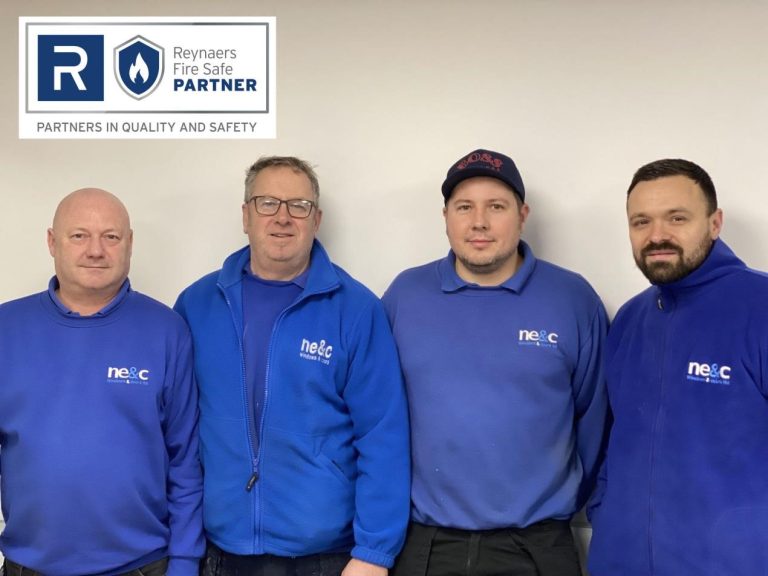
NE & C Windows & Doors secures exclusive access to Reynaers’ fire safety products

NE & C Windows & Doors has secured exclusive access to state-of-the-art products and training after joining Reynaers Aluminium Ltd’s Fire Safety Partners Scheme. The Tyne and Wear based company joins a select group of members to qualify for the initiative which was launched in conjunction with Certifire and FIRAS. The scheme requires fabricators and installers to achieve stringent first safety standards, which then allows access to the Reynaers’ range of market leading fire-resistant aluminium windows, doors, and curtain walling. This, in turn, offers assurance to customers and building occupants that fire safety requirements in product performance and installation have been met. Members also benefit from access to Reynaers’ unrivalled supply chain and training in specific fire safety products at the company’s head office in Belgium. To apply, fabricators and installers must prove they are accredited by independent fire safety bodies Certifire or FIRAS, respectively, have been trading for at least a year, and demonstrate a history of supplying fire safety products. John McComb, Technical Director at Reynaers, said: “We are delighted to welcome NE & C Windows & Doors Ltd to the Fire Safe Partners Scheme which enables the company to offer a high level of fire safety assurance and choice to its customers. “Glazing is a crucial consideration for fire safety in modern buildings and one that is just as important as the aesthetics of the system installed. Through our scheme, we also ensure that our partners are equipped with the right training to successfully fabricate and install our products. “Partnering with Certifire and FIRAS means that our Fire Safety Partners Scheme is of the highest integrity.” Ed Ramshaw, Managing Director at NE & C Windows & Doors Ltd, added: “Achieving this certification was a great accolade and a major part of our vision for the future. Reynaers’ comprehensive range of fire safe products will be an excellent addition to our already abundant offering while the diversification will enable us to reach new markets with a quality of product that logically sits alongside our other high specification products and suppliers. “We have been manufacturing aluminium bi folds, windows, curtain walling, and commercial systems for the past 10 years, so the next stage for us was to bring on board a cutting-edge collection of fire-resistant products including smoke vents. I found that Reynaers’ ethos very much reflected our outlook in business, so the scheme seemed a great fit for both parties. We are looking forward to a long and prosperous partnership.” As the certification for fabricators, Certifire assures performance, quality, reliability, and traceability of products and systems, while FIRAS endorses the competency of installers to fit and maintain systems to the required safety standards. Fabricators and installers who want to learn more about Reynaers’ Fire Safe Partners Scheme or who would like to register their interest in becoming a partner should visit: https://www.reynaers.co.uk/en-UK/reynaers-fire-safe-partners-scheme

Read More »

Support for SME builders means apprentices thrive

A local builder working for a housing association has shared his delight at seeing fresh talent coming through the ranks in the construction industry. T G Sowerby Developments, based in Scunthorpe, have been sharing the progress of their apprentices on a site on Bottesford Road over the last year. Ben McCormack, Jack Gaynor and James Green have been working on the development, with Ben and Jack on joinery apprenticeships and James working in plumbing. Director Steve Sowerby said “All our apprentices are offered full time positions with us once they’ve completed their studies and it will be no exception for these three. That then gives us the opportunity to offer other students the same chance of an apprenticeship once the current apprentices have moved on to full time positions, we already have a bricklayer on trial.” For Ben and Jack, the project represents part of their journey, having worked on the popular Coal Yard at Royston-Under-Dinmore before moving on after this to work on site at the White Swan in Barton. All three projects are being done for Platform Housing Group, who themselves have also said how pleased they are with seeing their local contractors giving young people the opportunity to learn their vital trades. Project manager for Platform Housing Group Christine Storr said, “When looking for small and medium sized enterprises to partner with, the use of apprenticeship schemes is high on the criteria for awarding the work. As a large provider of affordable homes, we’re seeing how the sector is struggling with the skills gap. Allowing young people to learn on the job from the experienced tradespeople we work with is good for both the housing sector and the local economy and is just one of the ways we feel we can best contribute to the communities we build in.” Working with 1,200 colleagues and 45,000 homes, Platform Housing Group works to deliver quality homes and customer services that bring tangible differences to local homes and lives across the Midlands. For more information about Platform Housing Group, visit – https://www.platformhg.com/

Read More »

Different Causes of Wire Rope Damage

Rigging machines like cranes use various components to operate, including a wire rope. Proper choice, installation, use, and maintenance are essential to keep the rope in top condition for a longer time. However, even with appropriate care, it will eventually reach its end of life, as it’s still an object prone to natural wear and tear. There are various causes of wire rope damage, and you must be familiar with them as a crane owner. It helps determine an issue on the first sign and act on it immediately before it leads to failure. Neglecting it may cause injuries, property damage, and delay in the business operation. Check out some of the common causes of wire rope problems below. Abrasion Improper wire contact to the drum, sheave or other objects can cause abrasion damage. Other causes include incorrect rope size, wrong fleet angle, poor spooling, and frozen rollers. Signs of this damage are worn ends as thin as the edge of a knife. Prevent this problem by ensuring proper installation and using the right wire rope size. Corrosion You would see the corroded part externally, but it would be hard to tell the extent of the damage through the naked eye, thus making it more dangerous. Some of the causes of corrosion damage are improper lubrication, exposure to substances like acid, and improper storage. Store equipment appropriately and ensure proper lubrication to prevent corrosion on wire rope. If you want to ensure that it is still safe for use, consult an expert like a service provider specialising in PM, ATLAS, and Hyva cranes. If the rope needs replacement, they can also advise the right one to use and help with proper installation. Fatigue The repetitive rubbing of the wire rope on the sheave and drum could cause damage due to fatigue. It’s one of the easiest to detect because you can immediately see it with your naked eyes. Individual wires would break, making them weak and eventually affecting the other wires, then leading to failure. Excessive rubbing may be due to vibration, worn bearings, and incorrect rope diameter. Prevent these issues to avoid premature failure due to fatigue. Kinked The kinking of wire ropes could be due to improper unreeling of the rope, incorrect sheave size, and poor rope installation. Be sure to choose the correct sheave size that matches your rope. Moreover, ensure that you unreel and install it the right way. Looped wires also have similar causes. Tension Carrying a load more than its capacity can cause the wire rope to break due to tension. You will see cuts on the individual wires on one end. Consider the load limit of the rope, and ensure that you stay within that limit to extend its life. Core protrusion This is characterised by the rope’s core protruding out. One of its causes is unwanted rope twists, which may occur with improper installation. Poor seizing methods and shock loading are also other possible causes. Keep your wire rope in check for any damage, and fix or replace it as needed to ensure safe operation.

Read More »

LEADING CONSTRUCTION FIRM OPENS APPLICATIONS TO ITS SUCCESSFUL APPRENTICESHIP SCHEME

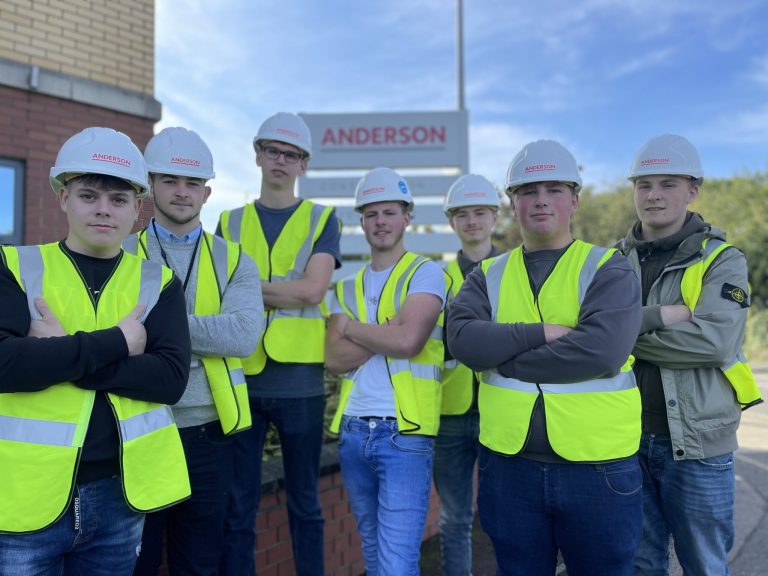
A leading contractor and developer in the East of England is once again inviting applications to its construction apprenticeship for the 18th time in its history. Anderson has been at the forefront of training and developing construction talent for almost 35 years and will relaunch its Groundwork Apprenticeship Scheme for 2022 seeking 10 new recruits aged 16 and over for a two-year Level 2 Diploma in Construction Operations. News of the continuation of the scheme comes after the success of last year’s intake, which the firm said was crucial to help bring new blood into the industry. It came at a time when apprenticeship schemes were on the decline nationally due to the pandemic and the construction industry was facing a stark skills gap. Six out of 10 employers stopped all new apprenticeships when the coronavirus pandemic hit and Anderson has been determined to ensure the shortfall in new talent is filled as quickly as possible. Steve Hammond, Training Manager at Anderson, said: “The construction industry continues to face a skills gap, so it remains vitally important to highlight the benefits of a construction-based career to young people and for Anderson to continue its long-standing record of recruiting talented new apprentices. “It was a delight to be able to welcome a brand-new intake last year as the industry continued to be impacted by the pandemic and we are very much looking forward to receiving fresh applications for the 2022 cohort. “A career with Anderson is a fantastic opportunity to undertake practical and theory-based training, leading to a secure role with job satisfaction and the opportunity for career progression through the company.” Apprentices are given hands-on training on sites across the East and South of England, learning from professionals with decades of experience in the industry as well as recently qualified apprentices who understand the demands of the two-year course and can help mentor the new recruits. Riley Giles was the youngest of the apprentices that joined Anderson at the end of September, and he is now working with Anderson on the Hopkins Homes site at River Reach, Mistley. He said: “I love every minute of it. The lads on site have been great. “I was worried about getting up early every day but actually I can’t wait to get started – I even get up early on weekends now so I don’t waste the day.” Riley has ambitions to work his way up within the company to become a Site Manager. “I like the idea of progressing with Anderson – it’s a really great company,” he said. “But I have to admit I also I have my sights set on wearing one of those red hats one day!” The Anderson apprentice selection course starts in August 2022 for four weeks, with the successful candidates being accepted on to the full apprenticeship in September. The apprenticeship consists of practical and theory-based training sessions learning a variety of groundwork subjects. The closing date for application is May 15 and CVs should be sent to apprentices@andersongroup.co.uk

Read More »

KINGSPAN REDUCES ABSOLUTE SCOPE 1 & 2 GHG EMISSIONS AND ACHIEVES A 29 PER CENT REDUCTION IN CARBON INTENSITY

2021 Planet Passionate report published today Scope 1 and 2 GHG emissions reduced 4.3% versus 2020 29% reduction in carbon intensity achieved Insulation systems sold in 2021 will save an estimated 193 million tonnes of carbon in their lifetime Kingspan Group, the global leader in advanced insulation and building solutions, has released its second annual report for its 10-year sustainability programme, Planet Passionate. Highlights include a 4.3% reduction (1) in scope 1 and 2 GHG emissions and a 29% reduction in carbon intensity (2) year-on-year, against a background of 42% total revenue growth for the period. For the second year running, the Group has made absolute reductions towards its 2030 net zero carbon manufacturing goal. This is underpinned by a verified SBTi (3) target to reduce absolute Scope 1 and 2 GHG emissions by 90% by 2030, from a 2020 base year. Achieving this will require the decarbonisation of Kingspan’s energy sources and processes across its existing 198 manufacturing sites (up from 166 in 2020), while supporting newly acquired businesses to decarbonise as quickly as possible. To accelerate the Group’s decarbonisation strategy, the report has announced the introduction of an internal carbon charge of €70 per tonne of CO2e, which will be implemented throughout the business in 2023.  The 2021 Planet Passionate report illustrates the positive progress made to date against the majority of the programme’s 12 measurable targets in carbon, energy, water, and circularity. Notable achievements include: Energy: An increase in the direct use of renewable energy from 19.5% to 26.1%, and an increase in the percentage of wholly-owned facilities with solar PV from 21.7% to 28.4%. The Group also achieved a 15% reduction in energy intensity (4) year-on-year. Carbon: An increase in the percentage of zero emissions company funded cars from 11% to 29%. Circularity: A reduction in company waste to landfill of 13%, as well as 843 million PET bottles recycled into our processes. Water: The Group announced its second ocean cleanup project: a partnership with cleantech startup SeabinTM, to deploy their unique technology first in Sydney Harbour followed by LA later in 2022. This follows a three-year partnership with the ECOALF Foundation which works with a network of 2,000 artisan fishermen to remove around 150 tonnes of marine debris each year from the Mediterranean. In addition, Kingspan’s science-based targets were updated in 2021 and are now in line with a 1.5°C future. Limiting global temperature rise to 1.5°C means that the world must achieve a 45% reduction in global CO2 emissions versus 2010 levels by 2030 (5).  While Kingspan did not make progress in 2021 against its target to halve the product CO2e intensity from its primary supply partners by 2030, the report highlights ongoing collaboration with suppliers to this end. Moreover, during the year Kingspan invested in H2 Green Steel, a company pioneering new production methods for lower-impact steel manufacturing using green hydrogen. Use of lower-emissions steel could help Kingspan reduce the embodied carbon of its insulated panel products by up to 45%.  The report also presents the impact of Kingspan products sold during 2021. The built environment is responsible for roughly 39% of global carbon emissions (6), and high-performance insulation is one of the most important ways to increase energy-efficiency in buildings. The insulation systems Kingspan sold during 2021 are projected to save 193 million tCO2e (7) during their lifetime. That’s equivalent to the emissions from 42 million passenger vehicles in a year (8). In addition, Kingspan announced a new initiative called Planet Passionate Communities, a programme that will support people and communities around the world. The report unveils the programme’s flagship project: a five-year partnership with GOAL, the international humanitarian response agency, to support them in their transformative work in areas of most need. Gene Murtagh, CEO of Kingspan Group, said: “The climate crisis, the pandemic, and now recent global events all serve to concentrate the mind on the need to build a more resilient and equitable world while ensuring energy security. Planet Passionate is our contribution to a future that uses resources efficiently, protects the natural world and delivers high-performance, energy-efficient products and solutions to our customers and global communities.” Bianca Wong, Head of Sustainability of Kingspan Group, said: “Delivering a programme of this scale against a background of rapid business growth takes huge effort and determination and I would like to thank and commend the incredible efforts of our people across the world to achieve positive progress against the majority of our targets for the second year in a row.”

Read More »

National Pile Cropper helps to build Tesla’s Berlin Gigafactory to tight deadline

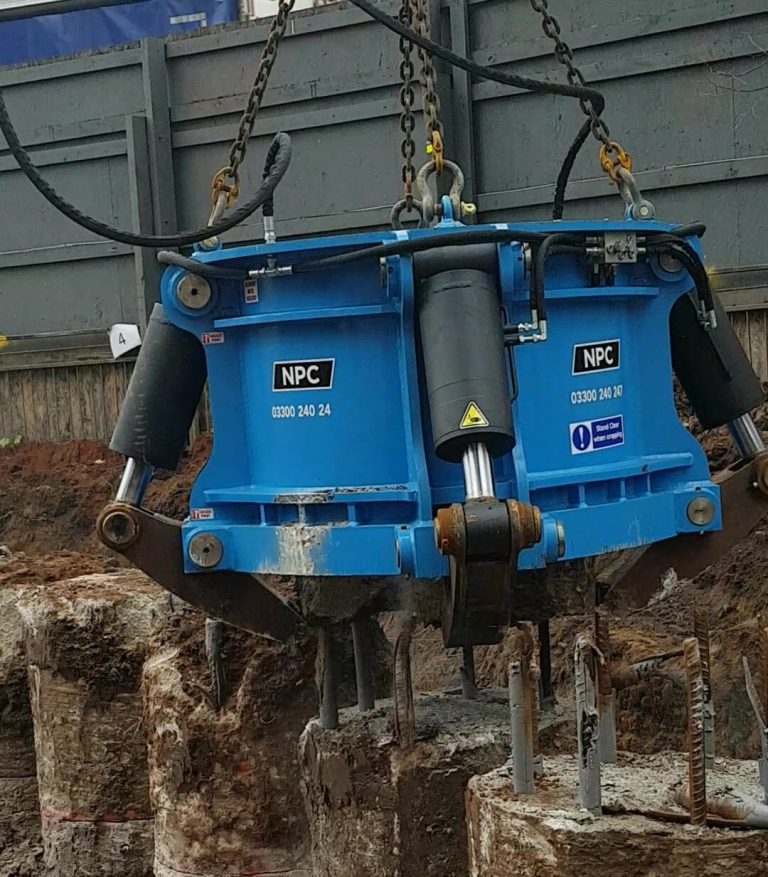
One of the major announcements in 2019 was that electric car pioneer Tesla was to build its next Gigafactory in Berlin, Germany. Playing an unheralded, yet vital part in the productive, efficient and safe construction of the factory was an array of National Pile Cropper’s solutions. The Tesla Gigafactory Berlin-Brandenburg (also known as Gigafactory Berlin, Gigafactory 4 or Gigafactory Europe) is a state of the art European manufacturing plant for Tesla, Inc. which has been constructed in Grünheide, Germany. The campus is located some35 kilometres south east of central Berlin on the Berlin–Wrocław railway, which forms the north border of the site between Erkner station and Fangschleuse railway station and the A10 autobahn, which forms the west border. The facility and its Berlin location were announced by Tesla CEO Elon Musk in November 2019 at the Das Goldene Lenkrad award show. The factory is planned to produce batteries, battery packs and powertrains for use in Tesla vehicles and also assemble the Tesla Model Y. Construction began early in 2020, with site preparation and foundation work immediately commencing including the essential foundation and site clearing work. The initial work saw the placing of the first four construction cranes and the arrival of trainloads of building materials including pillars, beams and literally thousands of concrete piles of all shapes and sizes. Tesla was keen that the work would be undertaken quickly, efficiently and environmentally friendly as equipment and systems would allow. Prefabricated concrete construction Prefabricated construction was used to produce concrete walls, beams and piles, being chosen as an efficient method for building structures. Large portions of the Gigafactory structure were assembled at a manufacturing site and then transported to the construction job site and installed where required. Reinforced concrete beams and walls that became a part of some of the main structures of the facility were installed into the ground. In order to crop the thousands of concrete piles as efficiently, productively and safely as possible, and with Tesla’s avowed aim to have the factory completed as soon as possible, the main contractor, Arikon, turned to midlands based UK manufacturer and supplier of state of the art pile cropping solutions, National Pile Cropper. Its pile cropping solutions are mounted on a 360O excavator via quick release fittings, which when lowered onto the pile or beams, the hydraulic system operates the jaw(s) which allows the pile cropper to cut a de-bonded pile and cause the concrete to break away leaving a horizontal finish as a result. In doing this, the chisels penetrate in a precise direction up to the rebar to make the fracture. On bonded piles, the chisels will penetrate further, and due to the shape of the chisels and the reaction forces of the rebar, the concrete will break in pieces and can easily be lifted off the pile enabling recycling of the cut away concrete. Different types and sizes The piles that required cropping in Berlin came in a variety of sizes, diameters and construction techniques, all designed and developed to have the factory completed and functional as quickly as possible. The all-encompassing National Pile Cropper range aided the construction, proving to be invaluable on the Tesla development and many other projects. Amongst the solutions provided included National Pile Croppers largest Quad cropper, ‘Quadzilla’. This beast of a machine can handle the largest of piles and beams, delivering high rates of productivity and efficiency – just as Tesla required. The current Quad range (including ‘Quadzilla’) is not the end of the NPC’s investment in pile cropping solutions however. “Although our range covers virtually all applications and requirements, we continuously invest in R&D to develop and refine our solutions,” explains company director Paul Emberton. “We work with our customers to find out what they want and how we can help make them more productive and profitable. To this end, this year will see the launch of new solutions that are currently undergoing field testing and refinement.” The National Pile Croppers that worked on the Tesla Gigafactory in Berlin proved their worth and have contributed to the efficiency of the project.  “We are proud to work with a company of Arikon’s standing on behalf of global trendsetter Tesla, to help them with this strategically vital project.  The pile croppers we have supplied have helped ensure that the cropping part of the project was done to deadline, as efficiently, safely and productively as possible. We look forward to working with Arikon again on other projects as the need arises,” concludes National Pile Cropper’s Paul Emberton.

Read More »

WILTON DEVELOPMENTS PROGRESSES PLANS FOR DONCASTER NORTH INDUSTRIAL & LOGISTICS SCHEME

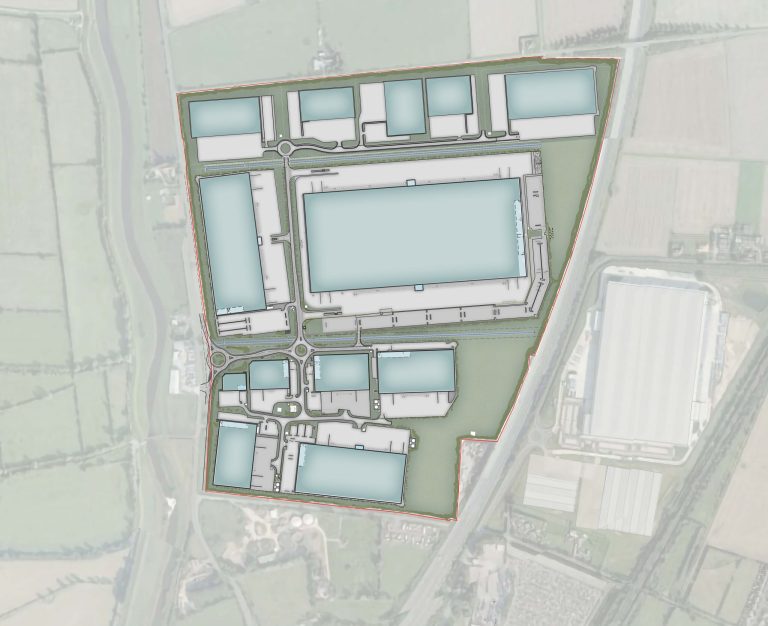
Circa 8,500 Jobs Pipelined For 2.26M Sq Ft Phase One Wilton Developments has unveiled plans for the first 2.26m sq ft phase of its Doncaster North industrial and logistics scheme, which includes the region’s largest stand-alone new build industrial unit currently in the planning system. Phase 1 at Doncaster North could facilitate some 8,500 new jobs for the region. In January, Wilton Developments received Outline Planning consent from Doncaster Metropolitan Borough Council to transform 180 acres adjacent to Junction 6 of the M18 at Thorne, Doncaster into a 3.52 million sq ft logistics and industrial scheme. A Reserved Matters planning application for the delivery of the first 2.26m sq ft phase of development has now been submitted and this will incorporate a 1m sq ft stand-alone distribution building, the only unit of its scale in the region to progress to that planning stage. The remaining 1m sq ft in Phase 1 will primarily be made up of units ranging from 100,000 to 375,000 sq ft and the first phase can facilitate up to 8,500 jobs for the region including on-site jobs, construction roles and wider regional jobs following completion. A start on-site is scheduled for later this year with the first buildings due to be delivered in 2023. Wilton Developments has appointed agents CBRE and Knight Frank to market the scheme, now named Doncaster North. Jason Stowe, Managing Director of Wilton Developments, comments: “We are progressing plans for this major employment site and subject to successful consent, Doncaster North will be the only scheme to bring forwards a 1m sq ft stand-alone unit in the region. A key feature of the site is that whilst sitting beside Junction 6 of the M18 and having that visibility, it is only a 5-minute drive to Junction 35 of the M62 which makes it appealing to a host of occupiers seeking both east west as well as north south  connectivity. We are looking forward to continuing our investment into South Yorkshire and delivering much needed industrial accommodation and jobs to the region.”

Read More »