bdc magazine

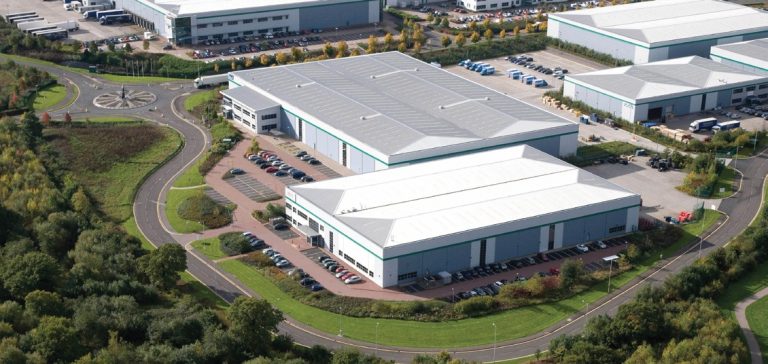
Prologis acquires more prime logistics space in Coventry

Prologis, the UK’s leading developer and owner of logistics property, has acquired an additional building at its highly successful logistics park in Coventry, further strengthening its holdings in a core location. The 56,000 sq. ft. building, which is let to UK Flooring Direct until 2025, has been acquired for a

Read More »

Protecting an entire construction technology fleet

Construction technology is a large investment that businesses are usually willing to make to improve operations. However, the construction industry rarely invests in a warranty or service plan to protect new equipment. Here Lisa Cheshire, Inside Sales Specialist at SITECH® UK & Ireland, A Trimble Authorised Dealer, discusses how construction

Read More »

City Plumbing announces new contract with British Gas

City Plumbing, part of the newly formed Highbourne Group, is pleased to announce a continuation of its relationship with the UK’s largest energy and home services provider British Gas. The specialist heating and plumbing merchant has signed a multi-year contract to supply British Gas with boilers and parts to support

Read More »

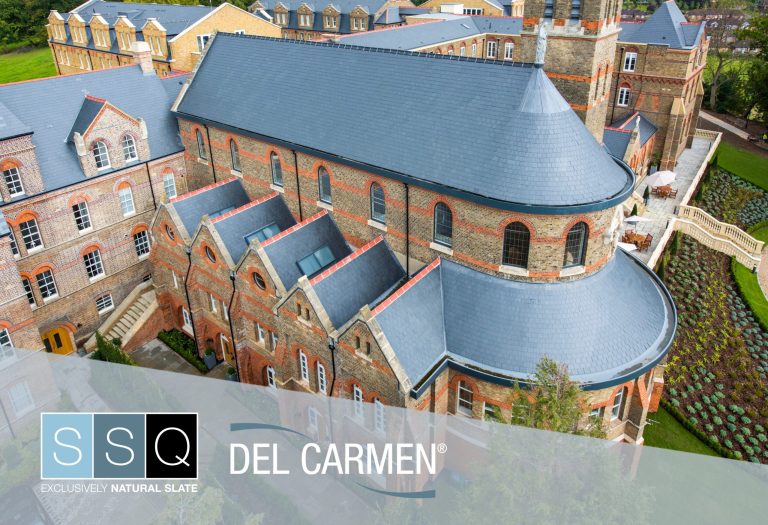
SSQ celebrates thirty years with acclaimed Del Carmen quarry

Natural slate experts SSQ are marking 30 years of collaboration with world-renowned Spanish slate quarry Del Carmen. It was in 1992 that SSQ founder Ahmed El-Helw first met with Del Carmen’s owners in his search for the finest quality slate Spain had to offer. It wasn’t long before he realised

Read More »

South West meets South East: marine and civil engineering firms join forces expanding expertise across the sector

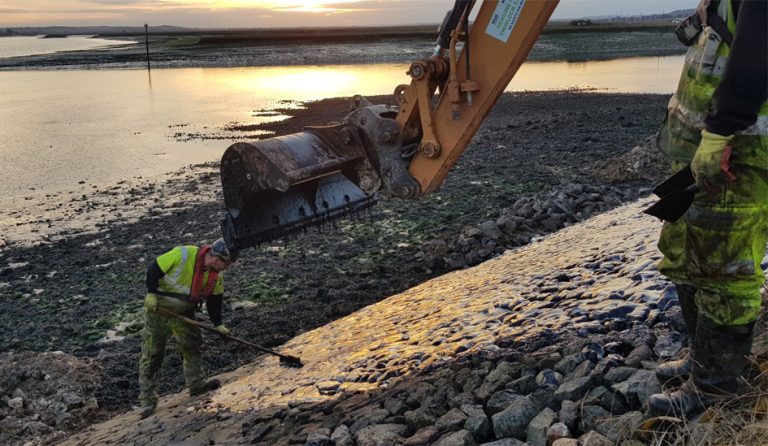
Devon-based marine and civil engineering specialists, Teignmouth Maritime Services Ltd (TMS) has become a 50% shareholder of Kent-based hydraulic engineering specialists, Hesselberg Hydro UK Ltd, combining nearly 60 years’ experience and expertise in the maritime construction sector. Teignmouth Maritime Services Ltd (TMS) has been providing professional marine and land based

Read More »
Latest Issue
Issue 342 : Jul 2026

bdc magazine

Prologis acquires more prime logistics space in Coventry

Prologis, the UK’s leading developer and owner of logistics property, has acquired an additional building at its highly successful logistics park in Coventry, further strengthening its holdings in a core location. The 56,000 sq. ft. building, which is let to UK Flooring Direct until 2025, has been acquired for a consideration of £8 million from a UK fund. Prologis now owns and manages 1.86m sq. ft. of prime logistics space at the park, with potential for further expansion in the future. Built by Prologis in 2003 as a design-and-build project, the building has been bought back to help meet existing and future demand for logistics space in the area. From its location within the logistics ‘golden triangle’, at the heart of the UK’s motorway network, Prologis Park Coventry is less than 2 miles from Junction 3 of the M6. The site is currently fully-let and along with UK Flooring, customers include household names such as Bridgestone, DHL, Royal Mail and Co-Op. James Hemstock, Director in the Capital Deployment & Leasing team at Prologis UK, said: “This is a purchase which signals our commitment to strengthening our asset base at Prologis Park Coventry – an excellent location that continues to meet the needs of our customers in a core Midlands market. We hope that we will soon be in a position to extend the site further, so we can continue to meet demand for much-needed warehouse and logistics space within the logistics ‘golden triangle’.” Prologis was advised on the property acquisition by Acre Capital.

Read More »

The Royal Town Planning Institute responds to initial Levelling Up White Paper briefing

The Levelling Up Secretary Michael Gove has released initial blueprints for the long-awaited Levelling Up White Paper. Victoria Hills, Chief Executive of RTPI, has put together the following statement in response: “The Royal Town Planning Institute is reservedly optimistic of the Secretary of State’s initial briefing. There is clear recognition of the built environment’s vital role in addressing economic inequality and shifting power closer to communities. Planning is more than delivering homes, it encompasses transport, health, work, environmental sustainability, and other policy areas across the missions that Michael Gove has mentioned. “The regeneration of 20 towns and cities is a positive first step for the Levelling Up White Paper. Previous regeneration projects have put strategic planning at their heart and shown how the planning system can set the context for development, creating a more sustainable and healthier built environment. The RTPI hope the model established by these schemes can be adopted across England to help communities restore pride in the places they live, work and interact. “Our members will be encouraged by these initial announcements. Planners are passionate about the communities that they live and work in. Our members tell us consistently that being resourced appropriately to engage communities and reflect their needs in development is the most important factor. The right level of support can help to make a planner’s career fulfilling and bring planning professionals to the table early and often can create better economies of scale. “The RTPI will be keeping a close watch in the coming days, but it is our ambition that the planning system will be provided with the adequate recognition and resourcing necessary to benefit housing delivery, better quality development and regional imbalances to create and shape communities that citizens can be proud of.”

Read More »

Protecting an entire construction technology fleet

Construction technology is a large investment that businesses are usually willing to make to improve operations. However, the construction industry rarely invests in a warranty or service plan to protect new equipment. Here Lisa Cheshire, Inside Sales Specialist at SITECH® UK & Ireland, A Trimble Authorised Dealer, discusses how construction customer Galtec chose to go from no warranty, to a fully protected fleet to help reduce costs. Galtec provides civil engineering and groundworks for the housing industry throughout south-west England. Protecting their assets and maximising uptime has always been high on Galtec’s agenda but they had not yet invested in a warranty. With expert, money saving guidance from the team at SITECH, they decided to invest in a four-year Trimble Protection Plan on all 14 of their Trimble kits. In doing this Galtec have minimised the risk of unexpected, costly call outs and covered the cost of routine recalibration and replacements. Businesses typically protect their fleet in different ways, depending on the age of their technology. Newer products remain under factory warranty for set periods of time. Further protection can be taken out as warranties end, ensuring that they are always fully protected. There is flexibility to choose how long components are protected for and protection can cover selected set periods. For instance, if a construction business has a large job that is running for a year, they can take protection out on the equipment just for that period. Galtec chose to invest in protecting its technology fleet on an ongoing basis by opting for a four-year plan, meaning they will not have to renew their plan during this time. “Our fleet protection plan has given us the peace of mind that we won’t have any unexpected bills to pay if machines break down in the middle of a job for the next four years,” explained Jim Swift, GPS Manager at Galtec. “When a part needs to be taken off site and repaired, SITECH quickly turns the part round, so we have as little downtime as possible.” “Galtec immediately understood the value that the Trimble Protection Plan would give” Carl Parsons, Regional Sales Manager at SITECH UK & Ireland explained. “The cheapest technology part to replace typically costs more than an entire year’s warranty, so Galtec will quickly see a return on investment as its parts are recalibrated, serviced and replaced over time.” Compared to the costs of a construction machine, investing the small cost to fully protect a fleet from any eventuality and get access to experienced technology professionals will provide clear return on investment. To find out more about reducing downtime on your construction site, visit the website http://www.sitechukandireland.com/products or call Lisa Cheshire to start the discussion about your Trimble Protection Plan options on 07736631988. 

Read More »

THE NEW AGE OF INSURANCE CONSTRUCTION RISK: DETECTING FIRE WITH WIRELESS TECHNOLOGY

In the construction sector, the leading cause of financial losses between 2016-2020 was fire – resulting in insurance claims reaching a staggering €11.3bn. With engineering and construction playing a vital role in Europe’s economic recovery amidst COVID-19, the industry can’t afford to not take the risk of fire seriously. What’s more, any fire protection measures must be robust if they are to meet the requirements of insurance providers. Nicolas Lochet, Regional Technical Manager for Allianz Global Corporate & Specialty explains the relationship between fire and insurance for the construction industry. This includes how wireless fire protection solutions can mitigate risk and support insurance cover or claims for construction sites. How has evaluating risks in construction changed over the last five years? The switch to sustainable energy and the adoption of modern building methods is already transforming the risk landscape, with radical changes in design, materials, and construction processes. These changes mean that risk engineers need to be integrated far more cohesively into each project, enabling a deeper understanding to be acquired, along with a tailored made assessment. In terms of the new kinds of risks being evaluated, there are three main areas. Firstly, modular construction is growing rapidly in pace, which brings with it enhanced exposures, particularly in the use of timber, which can breed multiple fire risks should an incident occur. Secondly, extreme weather events have caused large losses for the property insurance market in recent years, driven by climate change. Then there’s the risks associated with the digitalisation of construction. Cyber exposures, particularly from a data point of view, are of huge concern for site bosses, particularly when you take into account large-scale projects, which can have millions of data points that each have to be individually protected and managed safely. What has been the biggest headache for insurers and primary risk in construction? In our latest research document, ‘Examining the new age of construction risk’, we undertook a huge analysis over a five-year period examining the top named causes in EU engineering and construction claims between January 1, 2016 and December 31, 2020. Our analysis, of 29,640 claims, uncovered that fire was responsible for more than a quarter of the value of all construction insurance losses, toppling more than £11bn in total. Alongside this, natural hazards accounted for almost one in five claims, so the need to manage site safety from a fire accident or emergency point of view is a critical element site managers need to account for. During redevelopment/renovations, many sites are forced to disable a permanent fire alarm whilst works are ongoing. Are sites insured if they don’t use a temporary fire alarm system or waking watch during this period? Some insurers on the market may insure in this respect, but not many. Our own policy makes a temporary alarm system a mandatory or highly recommended requirement above a certain threshold of values, or total sum insured. It is also important that this is checked on a country-by-country basis, but if going through a global provider, the risks will more than likely be assessed the same regardless of region or market. Our own policy is that projects of a similar nature will require the same level of protection for all hazards. If a fire takes place on a construction site that hasn’t got a temporary fire alarm system installed, will this affect the insurance pay out? If a claim occurs and the cause and consequences are covered by the insurance contract, the insurer will pay. However, when the project is submitted, the presence or lack of a temporary fire alarm system is assessed. It is then the choice of the insurer whether or not to cover the risk. What is the average pay-out time frame once a major incident has taken place (for example, a fire, collapse, flood etc.)? Depending on the complexity of the claim, around two years is usual. Determining loss is a long and complex process, and project managers should take into account the fact that most insurers will require some pre-payment to start the work. This is why having a robust fire safety system to prevent the risk to a construction site is imperative, even whilst construction is taking place. How can construction bosses mitigate the risk of fire and how is technology changing the game? Communications technologies play an ever-increasing role in emergency response and rescue efforts, as well as overall personal safety. Apps can provide operators, staff and safety employees with one-click access to site-specific emergency protocols, resources as well as emergency notifications and access to critical information. What’s important is to train staff to use the apps, to make it intuitive in the intent to save time and lives in responding to emergency situations. This is where advanced wireless fire emergency response systems are so useful to construction sites. Using smart equipment, integrated with an IoT software platform, creates a community where workers are connected with their environment, safety managers and their wider team – helping to bring 24/7 safety to sites. Solutions like the Ramtech WES3 fire evacuation detection system eliminates the need for a hardwired power source, which is important as not all construction sites will be connected to the grid. Each unit is placed at strategic points across the site and powered by a battery, with a three-year life under normal use, to secure the job site during all phases of construction, whether electricity is available or not. When this EN54-25 compliant connected device is seamlessly integrated into cloud-based platforms, such as REACT, this then allows for real-time fire monitoring for alerts even remotely. Furthermore, these alerts can be automatically redirected to emergency authorities should the worst happen. In summary, utilising wireless technology to help protect construction sites from the risk of fire is hugely beneficial. When considering the lengthy pay-out timeframes and uncertainties over risk definitions when it comes to insurance, it makes sense to ensure that everything that can be put in place to stop a fire from happening, or to


Read More »

BAKERHICKS PROVIDES CIVIL AND STRUCTURAL EXPERTISE FOR NEW CLYDEBANK HEALTH CENTRE

BakerHicks, the multi-disciplinary design and engineering company, have completed their part in the successful design and construction of the NHS Greater Glasgow and Clyde’s (NHSGGC) new Clydebank Health and Care Centre. The new facility, situated in the health quarter of Queens Quay and in the shadow of the area’s famous Titan crane, consolidates a number of local GP and social care practices, as well as podiatry and physiotherapy, within a sustainable and fully accessible three-storey building. Appointed by hub West Scotland, BakerHicks provided the civil and structural design for the new £19 million building, which was constructed by BAM Construction. The design incorporates a steel frame, long-span beams and the use of curtain walling and extensive glazing to create a light and open feel in the atrium and beyond. It also features an impressive cantilever above the main entrance. Working closely with architects, Anderson Bell Christie, and the landscape architects, Harrison Stevens, BakerHicks’ knowledge, and expertise were also used to help highlight the industrial past of the site, with the use of corten steel elements throughout. Queen’s Quay Clydebank is one of Scotland’s key waterfront regeneration projects. The once thriving industrial site was famous for building the QE2 and Queen Mary. The plan now is to transform the 24-hectare site into a vibrant, mixed-use community. With the new facility being located on a brownfield site, it posed a number of civil engineering challenges, including contaminated soil, buried tracks and foundations. To overcome this, BakerHicks’ civil engineers devised a thorough land remediation strategy. Thick layers of made ground due to the site’s industrial past also required ground improvement measures with the use of Controlled Modulus Columns (CMC) to accommodate foundation loads. The tidally influenced river Clyde, plus surface water flooding from surrounding areas, meant the site levels had to be carefully designed to mitigate the risk of flooding. BakerHicks set the building level so as to prevent flooding from the river and designed an overland flow path through the site to allow the surface water to dissipate. Laura James, Head of Scotland at BakerHicks, says the new facility in Clydebank is another example of the company’s expertise in delivering health and care design: “We have now been involved in the design of five separate facilities in the Greater Glasgow area that will genuinely deliver a step change in the provision of health and care in Scotland. Providing a central base for local health services, it will improve primary care services, giving the local community improved access to health services in the most up-to-date, high quality facilities. “Our teams worked closely with the architects and wider design team to ensure the building honours the culture and past of the area, as well as brining the modern values of the town to the new development.” Tom Steele, NHSGGC’s Director of Estates and Facilities said: “I am personally very proud of this development, which stands in this most historic location. “This stunning development is the sixth Health and Care Centre NHSGGC has built in recent years, delivering state-of-the-art facilities for their local communities. Very soon it will be home to six GP practices and community health and care services including Speech and Language Therapy, Mental Health Services, Physiotherapy, Antenatal Clinics, Community Paediatric Clinics, Podiatry and Sexual Health. “I have every confidence that the people of Clydebank will be equally pleased with the result when it opens in a few weeks.” Iain Marley, CEO of hub West Scotland, commented: “The completion of this landmark facility is a hugely significant milestone in the development of the Queen’s Quay Masterplan, and we are immensely grateful to everyone who has contributed to achieve this brilliant outcome. “The design of the new facility benefits from the team’s experience gained from the delivery of multiple tremendously successful health and care centres for NHS Greater Glasgow and Clyde.” BakerHicks also provided civil and structural engineering services on Eastwood, Gorbals, Greenock and Woodside Health and Care Centres, all of which follow the same design principles as Clydebank.

Read More »

AFFORDABLE HOMES AND CHARITY HEADQUARTERS SET TO REGENERATE HEMEL HEMSTEAD SITE

Plans have been submitted to regenerate a brownfield site in the centre of Hemel Hempstead with 56 new homes and a purpose-built headquarters for homeless charity, DENS. On behalf of Dacorum Borough Council, multi-disciplinary design practice, rg+p has designed and submitted plans for a complete redevelopment of the Paradise Depot site, which is located off St Albans Road, east of the town centre. Currently occupied by the DENS office and foodbank as well as other commercial/industrial premises, the intention is for the site to become an asset for the town. “Paradise Depot occupies a central location within Hemel Hempstead; there are plenty of amenities nearby, it’s easily accessible by public transport and is bordered by a public park so is entirely suited for a modern, mixed-use development,” explains Grant Giblett, the project’s lead and rg+p’s director. “Our design has sought to create a real sense of place, not just somewhere to live and work, but an attractive, sustainable environment that will wholly benefit the community.” rg+p’s design proposes a two-storey building to better serve DENS’ needs, comprising ground floor foodbank and bike workshop together with first floor community café, office space, kitchen and multi-functional meeting rooms. A shared surface unites this building with a new apartment block of 56 one and two bedroom homes. Cycle and scooter storage, car parking, residents’ garden and additional landscaping is also incorporated into the overall design. Each apartment has a private balcony and a proportion will be built to accessible standards. Hemel Hempstead’s distinctive local vernacular has heavily influenced the proposed material palette. The concept for the apartment building references the Old Townscape’s Tudor heritage and will feature a blend of red and dark brickwork with hit and miss detailing and a rusticated plinth. Contrastingly, the new DENS centre will have a predominantly darker appearance with black frame windows and rainscreen cladding. However, the foodbank entrance is designed as a focal point and will feature decorative tiling inspired by Hertfordshire Puddingstone. Unique to the area, Puddingstone traditionally has a subtle and muted exterior but when cut, it has vibrant orange, brown and blue hues, meaning this façade will look both striking and individual. Grant added: “The local architecture has offered plenty of inspiration and we’re confident these new buildings will complement the townscape. More importantly, they will deliver essential homes and services for some of the most vulnerable people in the community. Having worked with Dacorum Borough Council for several years, we fully understand their ambitions, especially regarding repurposing brownfield sites and avoiding greenbelt development. “We extensively modelled Paradise Depot to maximise the number of new homes, which I’m pleased to say delivers beyond the original expectation without compromising on space standards for residents. We understand a formal consultation process is due to begin shortly and are hopeful a positive outcome from this application will follow,” concluded Grant. Cllr. Margaret Griffiths, portfolio holder for housing at Dacorum Borough Council added: “We are delighted to be working with rg+p again, this time on the design of 56 new homes that will be available for social rent through our housing register. Having worked with them on other local developments, we are confident that the design will integrate well with the existing neighbouring architecture and provide apartments that our residents will be proud to call home. Alongside this, they have also developed plans for a new centre for DENS, which will provide the charity with a modern space to continue to deliver essential community services, such as the food bank. “The new homes, being developed on a brownfield site, will help us reach our target to build 350 new council homes by 2026. Being located close to the town, residents will also benefit from being within walking distance of amenities, open spaces and excellent transport links.” Paradise Depot is rg+p’s third affordable housing scheme for Dacorum Borough Council in Hemel Hempstead, following the award-winning Kylna Court and Magenta Court. Two further sites, also in the town, are currently in development.

Read More »

Revolutionary building technology enables HS2 to tap carbon-free renewable energy

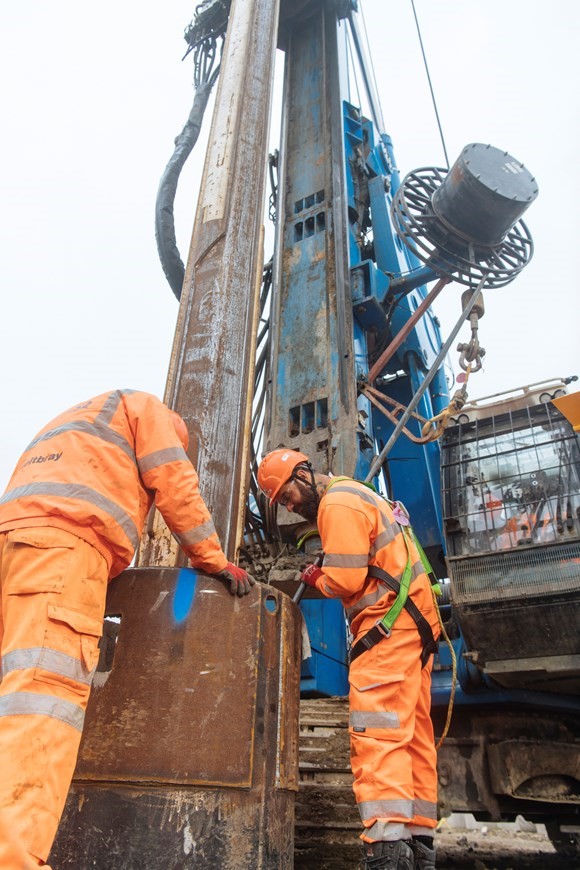
Breakthrough offers potential to power Britain’s new high speed railway stations An HS2 building site is the test bed for a revolutionary new building method that could ultimately provide carbon-free energy to stations on Britain’s new high speed rail network. The breakthrough, part of HS2’s Innovation programme, and soon to be trialled by contractors Mace Dragados at the project’s Euston station site in London, will draw ground heat up through the foundations of a newly built construction site office. The innovation’s developer, civil engineering experts, Keltbray, estimates its technology will harness enough energy to supply 80% of the building’s heating and hot water. With such obvious potential benefits, engineers are already exploring how the new piling technology known as HIPER* pile could be incorporated into HS2’s stations at Euston and Curzon Street in Birmingham to supply zero-carbon renewable energy. The environmentally-friendly innovation takes advantage of a new piling technique that swaps solid concrete foundation piles for recyclable hollow ones made from a steel industry waste product that reduces the carbon-intensive cement content by up to 70%.   How it works As part of the site office’s foundations, the hollow tube piles are bored up to 25 metres into the ground and filled with water, before pipes carrying cold flowing water to and from the building above are run through each pile cylinder. As the ground’s heat warms the standing water in the cylinders, heat is transferred to the pipes and carried to the surface to supply the building’s heating system and hot water.    In a novel twist, the technology can be reversed in the summer to be used like air conditioning to cool the building by transferring heat back into the ground. HS2 Ltd innovation manager, Heather Donald said: “The potential benefits of this innovation are obvious. By harnessing ground heat this technology has the potential to provide both heating, cooling and hot water to HS2 stations – increasing sustainability by reducing their carbon footprint and running costs.” Mace Dragados Programme Director, Ben Wheeldon, said: “One of our ambitions at HS2 Euston Station is to be recognised as a leading project by the public, the industry and our neighbours, and so it’s incredibly exciting for us to have the opportunity to trial this innovative piling technology. It has the clear potential to reduce the use of materials, streamline the piling process, reduce costs and significantly shrink our carbon footprint.” Keltbray Technical Manager, Asha Panchal said: “The innovation combines a number of novel technological breakthroughs to deliver the first major change in the piling industry for over 70 years. HIPER Piles use zero-cement concrete, halving embedded carbon emissions compared with a traditional methods.  The fact that HIPER piles are hollow also means that they are 60% more thermally conductive so they can harness the earth’s natural zero-carbon thermal energy more efficiently than conventional solid thermal piles.”   

Read More »

City Plumbing announces new contract with British Gas

City Plumbing, part of the newly formed Highbourne Group, is pleased to announce a continuation of its relationship with the UK’s largest energy and home services provider British Gas. The specialist heating and plumbing merchant has signed a multi-year contract to supply British Gas with boilers and parts to support complete installations, annual services, repairs and maintenance for thousands of homes across the UK. Covering British Gas customers for boilers and central heating as well as plumbing, drainage and electrics too. The new contract will see City Plumbing and British Gas work together to use digital innovations to streamline processes, enhance customer experience and deliver products to British Gas’s customers when they need them. Dave Evans, CEO of Highbourne Group said: “I am delighted to announce the continuation of the long established relationship between City Plumbing / PTS and British Gas. Over the last 10 years, our business has evolved to deliver great customer service to British Gas customers, and I look forward to working with the British Gas team in the future as we develop digital solutions to enhance both their customer and their engineers experience” For more information about City Plumbing supplies and the services it offers, visit: www.cityplumbing.co.uk

Read More »

SSQ celebrates thirty years with acclaimed Del Carmen quarry

Natural slate experts SSQ are marking 30 years of collaboration with world-renowned Spanish slate quarry Del Carmen. It was in 1992 that SSQ founder Ahmed El-Helw first met with Del Carmen’s owners in his search for the finest quality slate Spain had to offer. It wasn’t long before he realised he’d found what he’d been looking for. When it came to its aesthetics, durability and all-round performance, the slate produced by Del Carmen was among the best he’d ever seen, as Ahmed explains. “As quarries go, Del Carmen had it all – uncompromising quality standards, decades of expertise, and the most stunning blue-black slate with the longevity to last up to a century. “However, it wasn’t as simple as placing an order. Like any quarry, Del Carmen only had a limited amount of material they could supply, and any slate they gave to me was slate they couldn’t supply elsewhere. “I had to convince them to put their faith in me – a young businessman operating in a country they’d never supplied to before. But I’m delighted to say they did. “We trusted and respected each other from the very beginning – so much so that, when our agreement was finally made, it was with a handshake. Thirty years on, we’ve still never signed a formal contract.” In the decades since that first meeting in Spain, SSQ has used outstanding Del Carmen slate to roof thousands of buildings all around the world, with the material often handpicked by architects for its distinctive, faintly-rippled texture, deep blue-black colour and longitudinal grain. “I’ll always be hugely grateful to Del Carmen’s owners for all their support and friendship,” Ahmed continues. “Without them, SSQ wouldn’t be the business it is today. “Later in 2022, we’re hoping to travel out to Spain to celebrate properly with our friends at Del Carmen, and look forward to the next thirty years of cooperation.”www.ssqgroup.com/

Read More »

South West meets South East: marine and civil engineering firms join forces expanding expertise across the sector

Devon-based marine and civil engineering specialists, Teignmouth Maritime Services Ltd (TMS) has become a 50% shareholder of Kent-based hydraulic engineering specialists, Hesselberg Hydro UK Ltd, combining nearly 60 years’ experience and expertise in the maritime construction sector. Teignmouth Maritime Services Ltd (TMS) has been providing professional marine and land based civil engineering services since 1991. With over 30 years’ experience working as a leading marine contracting business, the company boasts an impressive portfolio providing services including marine and civil construction, commercial diving, marine plant hire, piling, emergency repairs and flood defence works. Peter Stenner, Managing Director of TMS says; “We’re very proud to have achieved and maintained significant growth over the last decade and this growth has enabled us to comfortably complete multi-million-pound schemes to the satisfaction of our clients. This partnership investment with Hesselberg Hydro is most certainly going to compliment and aid further growth for both companies in the years ahead.” Mr Stenner continues; “There are many synergies between the two companies, both working side by side in similar sectors, using different techniques. We are very pleased to have now combined both company’s expertise, expanding and maximising our service offering further within the industry.” Originally part of the Norwegian A/S Sigurd Hesselberg group, Hesselberg Hydro UK Ltd was established in 1986 to concentrate on dam building. Now the company, with over 36 years’ experience, works in many sectors of hydraulic engineering specialising in the application of asphalt and particularly systems for erosion protection, underwater scour protection and waterproofing. The company’s comprehensive service encompasses feasibility studies and inspections together with design, installation, and maintenance of asphaltic structures for dams, reservoirs and lagoons, rivers and irrigation channels, ports and coastal environments, and landfill sites. Roger Smith, Director of Hesselberg Hydro says; “This is an exciting chapter for both companies. Combining the knowledge and experience of the Hesselberg Hydro team with the resources of Teignmouth Maritime Services will provide a stronger project delivery team to service a growing demand for our services.” To find out more about Teignmouth Maritime Services Ltd and Hesselberg Hydro, visit: www.tmsmaritime.co.uk / Hesselberg Hydro – Asphalt Specialists In Hydraulic Engineering (hesselberg-hydro.com)

Read More »