bdc magazine

RLB PARTNERS WATERAID PROVIDING PRO BONO SUPPORT FOR NEW HQ

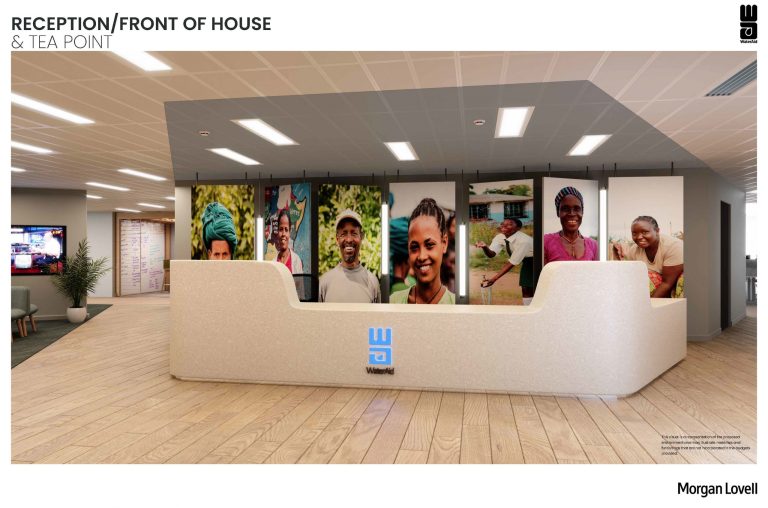
Leading independent construction, property and management consultancy, Rider Levett Bucknall UK (RLB UK) is providing its support to international charity WaterAid, by providing its cost consultancy services pro bono for its relocated UK office in Canary Wharf. WaterAid’s mission is to transform the lives of the poorest and most marginalised people

Read More »

Building the UK’s Largest Independent Builder’s Merchant

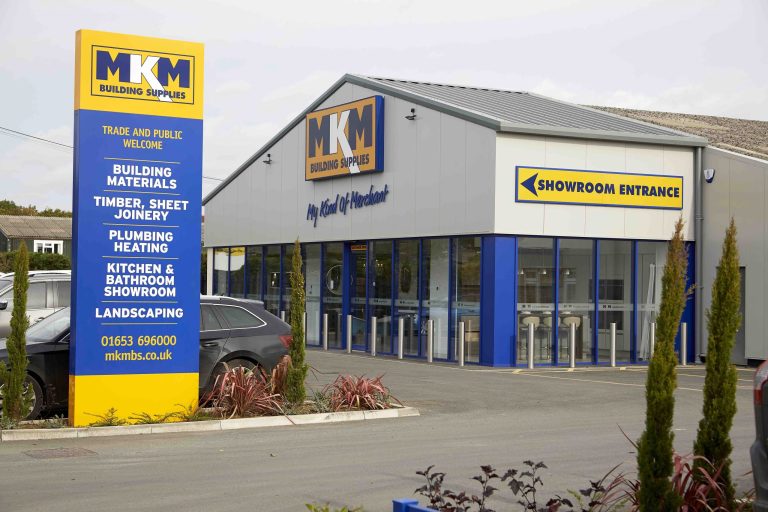
2020 marks the 25th Anniversary of MKM Building Supplies Ltd, the UK’s largest independent builder’s merchant.  Executive Chairman, David Kilburn looks back over the 25 years and shares some of the milestones and memories that have gone into constructing one of the building trade’s best-loved brands, and one of the

Read More »

Centre of Excellence in Temporary Works and Construction Method Engineering

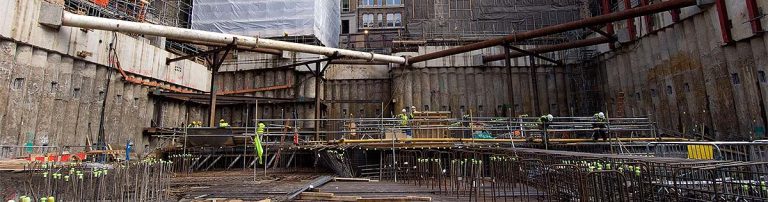
The main aims of the Centre of Excellence are to provide opportunities in Temporary Works and Construction Method Engineering, with a postgraduate course available and targeted research projects with direct industry involvement. About The Centre of Excellence comprises a large number of academic staff across engineering disciplines who are committed

Read More »

EQUITONE CLADDING PASSES OFFICIAL FIRE SAFETY TEST

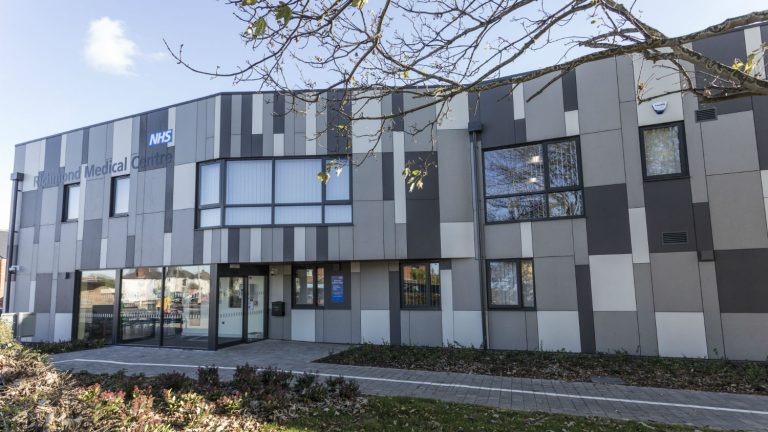
EQUITONE fibre cement facade material has passed the BS 8414 fire safety test – further securing its position as being safe to use in high-rise and high-risk buildings. The rigorous test, which was sponsored by TENMAT Ltd, evaluates whether a cladding system that is subjected to a fire breaking out

Read More »
Harwell Campus Project Moves Forward

Harwell Campus Project Moves Forward

A contractor has signed on to deliver a major project at the Harwell Science, Technology & Innovation Campus. Mace will deliver the Extreme Photonics Applications Centre on the Oxfordshire site with a £81m investment through the R&D-focused Strategic Priorities Fund. The EPAC development is a new purpose-designed building that will

Read More »

Heathrow Airport Set to Submit Planning for Expansion Later This Year

Despite recent comments from the Prime minister, Heathrow Airport is ploughing ahead with its plans to expand. The company is set to submit planning for expansion later this year and they want full government backing. So, what is the planned expansion and why has Boris Johnson potential scuppered the airline’s

Read More »

Stonewater and Kensa pilot smart city scheme

A local energy system demonstrator project aiming to evidence how ground source heat pumps with smart heating controls can reduce heating costs for residents, whilst also lowering carbon emissions, is officially underway in Oxford. Leading housing provider Stonewater has partnered with Kensa Contracting to have 60 of its homes at

Read More »

Time to take “real action”, says Södra’s Jeremy English

Published late last year, the report by the All-Party Parliamentary Group for the Timber Industries, How the timber industries can help solve the housing crisis, was encouraging, but now is the time to take real action, says Jeremy English, Director at Södra Wood Ltd, STA board member and previous chairman

Read More »
Latest Issue
Issue 343 : Aug 2026

bdc magazine

RLB PARTNERS WATERAID PROVIDING PRO BONO SUPPORT FOR NEW HQ

Leading independent construction, property and management consultancy, Rider Levett Bucknall UK (RLB UK) is providing its support to international charity WaterAid, by providing its cost consultancy services pro bono for its relocated UK office in Canary Wharf. WaterAid’s mission is to transform the lives of the poorest and most marginalised people by improving access to safe water, sanitation and hygiene. RLB is proud to have been involved in a project that will bring WaterAid a future direct cost saving and consequently allow more resource to be dedicated to delivering its vision for the future. WaterAid’s office move from Vauxhall to Canary Wharf will not only enable them to achieve value for money over the duration of their tenancy, but will also help them create a globally-connected, inspiring environment where staff, volunteers and partners can work together to achieve their ambitious and exciting mission. The charity sought an office space in a location that would retain existing staff and be accessible to partners and key stakeholders whilst balancing the need of affordability. They are designing the space to meet five key design principles around employee wellbeing, sustainability, flexibility, digital technology and global connection. During the design process, RLB has been offering cost consultancy services and strategic advice with regards to creating this new hub. RLB’s London fit-out team looks to work with a number of not-for-profit partners as part of its corporate and social responsibility strategy and is currently involved in delivering approximately 3.4 million sq ft in the capital city and in line with the firm’s social value ethos. Andy Fettes-Brown, Head of Cost Consultancy for London, RLB UK comments: “As part of our international, national and regional strategy, we believe that it is important to give back our experience, skill set and experience within the industry we service.  Partnering with WaterAid to support them in their new London office was a project where we felt we could offer this expertise in a way that could truly benefit them.” Fiona Lavery, Head of UK People Management at WaterAid says: “Our mission is to change normal and make clean water, decent toilets and good hygiene part of normal life for everyone, everywhere by 2030.  The environment and workplace culture we create and work within has a huge impact on our ability to achieve this mission.   We are extremely grateful to RLB for providing its costs consultancy services pro bono to support us on this journey. We want to create a workplace that enables our staff to do their best work; a place where we bring people together from across the countries where WaterAid works and a connecting hub for our partners and supporters.”  RLB UK is working on WaterAid’s relocation alongside Project Managers, Blackburn & Co, and Morgan Lovell as main contractors on the project.

Read More »

Building the UK’s Largest Independent Builder’s Merchant

2020 marks the 25th Anniversary of MKM Building Supplies Ltd, the UK’s largest independent builder’s merchant.  Executive Chairman, David Kilburn looks back over the 25 years and shares some of the milestones and memories that have gone into constructing one of the building trade’s best-loved brands, and one of the UK’s fastest growing businesses. “In 1995, my favourite sound was the ring of the fire-bell going off in the warehouse. It meant there was an order!” said David.  “As for any fledging business, in the early days orders are everything. And, after closing our first month with a trading profit and haven taken a healthy £123,000 – I am delighted to say 25 years later, we have never been short of orders and never looked back.” In many ways, the MKM of 2020 is almost unrecognizable from the first branch that opened in Hull in 1995.  For a start the first branch sold caravan supplies rather than building supplies, which MKM is renowned for today. There was a small team of 5 people working from rental premises, which had been secured for 9 months to get the business off the ground. David recalls: “ Ironically, the premises belonged to an MKM competitor William Wilson. We signed up for 9 months but were still there 18 months later, at the time we were just glad not to be chucked out!” Today, MKM Building Supplies employs over 1650 people and last year recorded sales of over £460 million.  Already this year MKM has opened its 70th branch and has ambitious growth plans to be operating 100 branches by 2021/2022. Aside from the phenomenal success story and exponential growth, according to David many things haven’t changed at all over the 25 years. “Since day one, our company culture has always been very people focused, how we treat people has remained exactly the same. Every single person is important no matter what their role … our people are our biggest asset.” David added: “Technology and the digital age have of course altered things, but our teams still do the majority of business either over the trade counter or on the phone. That may change in years to come, but essentially people buy from people.” “Relationships are key, our customers trust us to deliver quality products with great service as their own businesses rely on it – our teams appreciate that and make customers the priority. More so than any other industry, this is a people business and good relationships are the absolute bedrock of that business.” MKM was built on the concept that skilled, local people who understand the needs of local customers should serve the local trade. MKM is differentiated through its unique business model, centered on branch directors owning an equity stake in their branch with opportunity to share in profits. David believes empowering people and supporting their entrepreneurial spirit has been a key driver of growth. By 2005, MKM had opened 15 branches, five years later in 2010 a further 17 branches had been opened and by 2018 MKM Building Supplies had 54 branches throughout England and Scotland – the brand new MKM Grantham marks their 70th branch. David recalls: “Our biggest challenges in the early years were always time and money. If we had more of both earlier we would have grown more quickly, but it is important to keep a level head and not get ahead of yourself. We always prided ourselves on paying suppliers and staff on time, even though both my business partner and myself often took a reduced salary.” Business wasn’t always plain sailing, in 2008 almost every industry in the UK fell victim to what the media dubbed a ‘double dip recession’. The building and construction industry were hit hard, their performance acted as a barometer for the economic downturn and went into meltdown. David commented: “In 2008, we were acutely aware that external factors, beyond or control can take a serious toll on business. It seemed the entire financial world collapsed, our own industry went into a desperate panic with many of our competitors laying off 30 to 40 percent of their people.” “We took the decision not to take action. We decided to back our people and ride out the storm and were confident that business would eventually pick up… which of course it did. While the majority of the industry seemed to lose up to 40 percent revenue, I’m glad to say we did fare better and suffered losses of up to 11 percent, relatively unscathed in comparison.” Looking forward, MKM has an ambitious growth programme to open a further 30 branches in the next two years. David said: “Today, we still face challenges. We have an expansive growth programme but finding good properties in good locations can be a challenge and planning applications can be very slow, which frustrates progress.” “However our mantra, which we instill in all of our teams is to have fun at work. Indeed, some of the most demanding times in business have also been the most enjoyable. Some of our best times were in the early days – negotiating manufacturing deals, securing credit with the banks and often coming up against brick walls, whilst driving a couple of old bangers to collect building materials and grafting to sell. Working hard, but having fun is very much the MKM culture.” While looking forward to the opening of their 100th branch, David also believes there are growth opportunities ahead for MKM with acquisitions, developing new product lines and developing the kitchen and bathroom offering. David concluded; “Our own recipe for success, now fine-tuned over 25 years has been giving customers what they want, employing and retaining the best staff, engaging people in profit generation activities and of course having fun at work – which we certainly do!”

Read More »

Parr Facilities Management Limited to Support Co-op via Maintenance Framework Agreement

Parr Facilities Management Limited has announced an exciting contract win to kick off 2020 after being named a trusted maintenance provider by Co-op across their Food and Funeralcare estate. The Maintenance Framework Agreement which will apply to Co-op sites across the UK and Northern Ireland will cover sites spanning across the North of England, Scotland and Northern Ireland. A significant new client for this company on the rise, the partnership between Parr FM Limited and Co-op will encompass facilities management works across a diverse range of disciplines including fabric, mechanical and electrical management services as well as specialist services where required. Speaking on behalf of Parr Facilities Management Limited, Ivan Morley, Facilities Management Director, said, “Parr Facilities Management boasts a wealth of experience providing electrical and mechanical management services to retail, healthcare and hospitality sectors throughout the UK and Ireland. Winning another contract with one of the UK’s most trusted brands was certainly a highlight of 2019 and reinforces our continued growth across mainland UK. We look forward to supporting the team at Co-op sites across the UK and Northern Ireland beginning this month to enable them to maintain their excellent standard of customer satisfaction and experience.” Parr Facilities management launched in Belfast in 2007 and chose Greater Manchester as its base for their UK-wide operation. Systematic of Parr Facilities Managements recent growth, the organisation has invested heavily in new offices located in Bolton, staff and infrastructure across the UK, with an estimated 60% increase in its workforce over the past year to support a number of big business wins within its FM division including contracts with Co-op, BUPA & Whitbread. These contracts have contributed to a quadrupled turnover within this period of growth. Parr Facilities Management Limited currently employs over 100 members of staff across its Belfast and Manchester operational bases.

Read More »

Centre of Excellence in Temporary Works and Construction Method Engineering

The main aims of the Centre of Excellence are to provide opportunities in Temporary Works and Construction Method Engineering, with a postgraduate course available and targeted research projects with direct industry involvement. About The Centre of Excellence comprises a large number of academic staff across engineering disciplines who are committed to addressing industry challenges associated with construction processes.  This groups has many years of experience in providing insight into practical problems and have access to state-of-the-art testing facilities that allow exploration into simple and complex problems. People Research The main aim of the Centre of Excellence is to undertake research that will support the Temporary Works Forum (TWf) in driving “long-term change and waste reduction in the way we construct”. The Centre of Excellence at City, University of London, supported by the Temporary Works Forum (TWf), have two doctoral research projects on-going, please see the descriptions below: 1. Safety of Working Platforms for Tracked Plant Formed from Construction Demolition Waste. The key design criterion for working platform design is whether it can safely support the application of an extremely high monotonic load applied eccentrically through the tracks of plant. Thus, the design criterion is stability. The BRE guide idealises this load case as load acting over an equivalent area, rectangular in plan, which lies on layered ground. The depth of the upper layer, the working platform, is determined by assuming a punch through failure mechanism in this layer and conventional bearing capacity failure in the subgrade.  Designers following this method then need to determine the appropriate angle of friction to be used in the calculation of the resistance of the platform material (construction demolition waste) to punching failure.  The aim of this approach is to provide a conservative design method given that insufficient data exists. This research is being carried out by Greta Tanghetti under the supervision of Dr Richard Goodey. 2. The strength and stability of steel reinforcement cages in their temporary state. The contributing strength of a steel reinforcement cage to that of a reinforced concrete column, beam, slab or wall is well understood.  However, the strength and stability of that same cage during its assembly, handling and whilst lifting into position prior concreting is not.  Whilst a number of guidance documents exist for industry to consult, they contain no real guidance for their technical assessment. This poor understanding of the behaviour of these highly flexible structures, coupled with changing industrial practices involved with their construction, means that there continues to be accidents from stability collapses and tie failures during the temporary state. The aim of the project is to establish the strength and stability of reinforcement cages in their temporary state to make suitable recommendations and assessment methodologies to improve industry guidance and best practice leading to a safer construction environment. This research is being carried out by Konstantinos Kalfas under the supervision of Dr Brett McKinley. If you are interested in contributing to either of these projects please contact the Director of the Centre of Excellence Dr Andrew McNamara. Facilities Civil Engineering Laboratory We have access to an array of recently refurbished facilities, including exceptional laboratories. The Geotechnical Centrifuge Facility is the centrepiece of the Civil Engineering Laboratory which also accommodates a large flexible laboratory space used for centrifuge model preparation, model testing at 1g, concrete testing and teaching. Adjacent to this are concrete mixing and casting facilities, a temperature-controlled soil element testing laboratory and a concrete durability laboratory. Read more about the Civil Engineering Laboratory’s facilities Structures Laboratory In addition we have access to a Strong Floor and loading frames including new strong-wall being developed for lateral loading of column and tall structures. This particular facility has seen £800K investment in equipment for teaching and research including high flow computer controlled hydraulic loading for static, cyclic and dynamic & hybrid testing with ring-main, static compression up to 12MN and 50kN tension testing for steel materials. Wind Tunnel The Department of Mechanical Engineering & Aeronautics have also initially agreed to the use of their Wind Tunnel Laboratory facilities. These are renowned for being newly upgraded and leading-edge facilities. Education New MSc in Temporary Works and Construction Method Engineering Our new MSc degree, the first and only of its kind in the UK, provides a specialist qualification for those involved in the design and construction of temporary works and addresses industry need for such a professional qualification. The Temporary Works Forum (TWf), which promotes best practice within the UK construction industry*, has designated City, University of London as a Centre of Excellence in Temporary Works and Construction Method Engineering and collaborated in the development and delivery of this new masters. For more information on our MSc degree please see our Post-graduate courses page or contact the Director of the Centre of Excellence Dr Andrew McNamara. The first cohort of students on the new MSc Temporary Works and Construction Method Engineering with Bill Hewlett, former chairman of the Temporary Works Forum and Andrew McNamara, programme director and director of the Centre of Excellence for Temporary Works and Construction Method Engineering.

Read More »

EQUITONE CLADDING PASSES OFFICIAL FIRE SAFETY TEST

EQUITONE fibre cement facade material has passed the BS 8414 fire safety test – further securing its position as being safe to use in high-rise and high-risk buildings. The rigorous test, which was sponsored by TENMAT Ltd, evaluates whether a cladding system that is subjected to a fire breaking out of an opening in an external wall will result in excessive fire spread up the outside of the building – creating a risk of the blaze re-entering the building at a higher level. BS 8414 tests are conducted in specialist laboratories and involve building a 9m high model wall, covering it in a cladding system and starting a fire at the bottom. It is important to note that the classification applies solely to the complete external facade system that has been tested. All EQUITONE materials comprehensively meet the fire performance classification A2-s1,d0 to EN 13501-1:2018 – meaning they do not contribute to the formation or spread of a fire. EQUITONE [natura] was the material used during the BS 8414 test and further reinforces EQUITONE’s long-standing commitment to ensuring its materials are safe and suitable to use. Martin Smithurst, technical manager at EQUITONE, said: “Building material combustibility is a key focal point during the specification stage so we are delighted that EQUITONE has passed the BS 8414 test, which strengthens its position as a robust material that does not contribute to the formation or spread of a fire. “The BS 8414 test is designed to simulate the response to a fire spilling out of a window – exposing the external facade to the fire to see how it spreads. It provides a rigorous assessment of cladding systems. As EQUITONE has passed the test, it is officially classified as being safe to use in high-rise and high-risk buildings. “When choosing facade materials that need to meet the demands of the current fire performance requirements, our dedicated technical and specification team can offer expert support to architects, designers and contractors – from the initial design concept through to build completion and beyond.” All EQUITONE materials have a life expectancy of at least 50 years and are available in a range of colours, finishes and fixing options, giving full creative scope. For more information on EQUITONE facade materials, visit www.equitone.com/en-gb. 

Read More »

Peter Martin and Chris Brazier to Return as ceda Conference Hosts

ceda is thrilled to reveal the hosts of Conference 2020. Peter Martin will once again be joining us as the Host of the Business Day, following the brilliant reception he has received at the event in previous years. One of the most authoritative and well known commentators in the hospitality industry, Peter has more than 35 years experience in the Industry, as a columnist, editor, media owner, board consultant and market analyst. Conference attendees can also look forward to Peter’s annual ‘State of the Industry’ presentation, which has become a staple of the Business Day. He will be joined by Chriz Brazier, who will again act as Host for both Thursday’s informal networking dinner and Friday’s Gala and Awards Dinner, during which ceda’s Grand Prix Awards will be presented. A passionate supporter and advocate of the hospitality, foodservice and retail sectors, Chris is Group Event Director at a number of industry leading shows; Commercial Kitchen, Lunch! and Casual Dining. He comes to Conference with a wealth of insider industry knowledge. Adam Mason, ceda Director General, commented, “I’m really pleased that Chris and Martin, who have such in-depth knowledge of our industry, have agreed to join us once again. As we strive to make Conference 2020 the biggest and best ceda event to date, they were the obvious choices.” The ceda Conference is the premier event of the Catering Equipment Industry, attracting distributors, manufacturers and representatives of other associations representing major end user groups. The annual two-day event, held in association with cedabond and the Craft Guild of Chefs, will this year be taking place at the Majestic Hotel, Harrogate, on 23rd and 24th April. The first day features the ceda AGM and an informal networking dinner; the Business Day, on the Friday, is open to everyone within the catering equipment industry. ceda Partners and Members will be exhibiting and a number of world renowned speakers have been invited to discuss both industry-specific topics and more general business issues. There will also be a series of stimulating interactive seminars. Further information on speakers and exhibitors will be announced in the coming weeks.

Read More »
Harwell Campus Project Moves Forward

Harwell Campus Project Moves Forward

A contractor has signed on to deliver a major project at the Harwell Science, Technology & Innovation Campus. Mace will deliver the Extreme Photonics Applications Centre on the Oxfordshire site with a £81m investment through the R&D-focused Strategic Priorities Fund. The EPAC development is a new purpose-designed building that will house a unique, state-of-the-art high power and high repetition laser system. 
The appointment follows Mace’s recent successful work on two other research projects for the STFC on the Harwell campus, including the National Satellite Test Facility and the Rosalind Franklin Institute. The centre will help researchers and industry better understand the composition of new materials and how they behave in different conditions. It is a highly strategic, disruptive technology and directly supports the UK Government’s Industrial Strategy. Mace will work with the STFC, designers, a global concrete specialist and our supply chain partners to deliver the whole project, including the experimental areas of the building where high intensity lasers will be tested. Professor John Collier, Director of the UK’s Central Laser Facility, said: “As our construction partner in the EPAC project Mace will be contributing, alongside the work of the team of the scientists and engineers at STFC’s Central Laser Facility and our colleagues in academia, to a project that will enable the UK to realise the potential offered by laser driven radiation sources to be genuinely disruptive and that will soon bring together the wider science community in a diverse programme of fundamental and applied research.” Terry Spraggett, Managing Director for Public Sector Construction at Mace, added: “We are delighted to be appointed to deliver EPAC, marking another step forward in our relationship with the STFC. The Extreme Photonics Application Centre is a technically complex and challenging project, and we will use our experience in delivering cutting edge research facilities to realise the client’s vision.”

Read More »

Heathrow Airport Set to Submit Planning for Expansion Later This Year

Despite recent comments from the Prime minister, Heathrow Airport is ploughing ahead with its plans to expand. The company is set to submit planning for expansion later this year and they want full government backing. So, what is the planned expansion and why has Boris Johnson potential scuppered the airline’s plans? What is the planned expansion? The planned Heathrow expansion includes the addition of a third runway. The company’s plans for expansion were announced last year and sustainability was revealed to be at the heart of the new plans. According to Heathrow, the new expansion would generate 10,000 more apprenticeships by 2030, provide new routes and create up to 180,000 new jobs. However, the planned expansion caused heated debates after it was announced due to some of its proposals. These included lowering the M25 motorway, re-routing rivers and building additional car parks to house 50,000 cars. It is certainly a bold expansion which has been met with a lot of opposition. However, the benefits it would provide to the economy would be significant. Why is there doubt over its implementation? Doubt over the implementation of the new expansion has been cast after Boris Johnson gave the go ahead for the HS2 project. However, the prime minister has previously expressed his opposition to the airport’s expansion, claiming he would “lie down in front of bulldozers to stop the construction”. Now that Johnson is Prime minster, Heathrow airport need his approval if they are to continue with the proposed expansion. Given his previous stance on the matter, it is unlikely they are going to receive full government backing later this year. The benefits the expansion would provide So, what benefits would the third runway provide at Heathrow airport? Well, it wouldn’t just benefit passengers taking trips abroad. It would also benefit the air cargo sector. The airport has been running at 98% for the past decade. It is the biggest air freight airport in the UK and the expansion could further boost its air freight capacity. This would be crucial in terms of international trade, something the country now has to secure since its exit from the EU. It would boost the air cargo sector enormously, delivering a lot of great benefits to the country. As well as the air freight sector, the airport would be able to add thousands of additional flights to its schedule. It is said that this will also increase competition, allowing passengers to secure cheaper, more competitive prices. Whether the new expansion will go ahead later this year is uncertain. It does seem unlikely the government will back the plans, particularly given how much they are now spending on the HS2 project. However, that isn’t stopping Heathrow from continuing on with their application.

Read More »

Stonewater and Kensa pilot smart city scheme

A local energy system demonstrator project aiming to evidence how ground source heat pumps with smart heating controls can reduce heating costs for residents, whilst also lowering carbon emissions, is officially underway in Oxford. Leading housing provider Stonewater has partnered with Kensa Contracting to have 60 of its homes at Blackbird Leys installed with Kensa’s innovative low carbon heating solution. Individual Kensa Shoebox ground source heat pumps in each property, connected to a communal ground array, will integrate with smart controls and time-of-use tariffs to optimise heat production for cost and carbon savings. The heat pump installations form part of Energy Superhub Oxford (ESO), a a world-first project showcasing an integrated approach to decarbonising power, heat and transport across Oxford. Supported by Innovate UK, ESO is led by consortium partners Oxford City Council, Pivot Power, Habitat Energy, Kensa Contracting, Invinity Energy Systems and the University of Oxford. The renewable heating scheme with Stonewater is the first phase of Kensa Contracting’s aim to pilot the smart technology in 300 homes around Oxford over the next two years under the ESO project. ESO aims to demonstrate how ground source heat pumps with smart controls can help balance the electricity grid as part of an integrated local energy solution that also includes grid connected batteries and smart electric vehicle charging. Leon Storer, Assistant Director – Capital Investment at Stonewater, said: “We’re delighted to be a part of this innovative and forward-thinking project, supporting the local authority in achieving a net zero carbon future. “By replacing our residents’ current high carbon night storage heaters with Kensa’s ground source heat pump systems, we’re able to not only work towards a more sustainable future, but an economical one too. This is because a benefit of transitioning to this type of heat pump system is the significant cost savings it provides for residents.” Dr Matthew Trewhella, Managing Director of Kensa Contracting, said: “Kensa is delighted to partner with Stonewater for the first phase in this 300 property pilot ground source heat pump project. The residents will benefit from clean, renewable heat with savings of up to 25% compared to a standard ground source heating system. Smart meters enable residents to switch to Octopus’s unique Agile Tariff, which varies the electricity price every half hour and optimises energy use when renewable power is prevalent on the grid, and together with Switchee internet connected smart heating controls will automatically run resident’s heating systems at the lowest cost times to reduce their bills while maintaining their comfort levels, and caring for the environment.” Despite delays to commence as a result of coronavirus, Kensa expects to complete the installations across the Stonewater homes before winter 2020.

Read More »

Time to take “real action”, says Södra’s Jeremy English

Published late last year, the report by the All-Party Parliamentary Group for the Timber Industries, How the timber industries can help solve the housing crisis, was encouraging, but now is the time to take real action, says Jeremy English, Director at Södra Wood Ltd, STA board member and previous chairman of the Truss Rafter Association. Södra Wood Ltd is one of the UK’s leading suppliers of sustainable structural timber and engineered wood products. The inconvenient truth The facts are by now well-known. The Government needs to build 300,000 new homes in England per year while achieving zero carbon emissions by 2050. Construction 2025, a joint government and industry strategy, has also outlined targets for the UK construction sector, including halving construction-related emissions and project delivery times, and reducing construction costs by a third, by 2025. These are all ambitious goals and ones that put the industry – in its current state – in a difficult predicament given its reliance on concrete, “the most destructive material on Earth,” according to The Guardian last year. The solution: timber In stark contrast, according to the APPG’s report, if 270,000 of these new homes were to be built by the timber industry, three million tonnes of carbon dioxide would be absorbed and stored each year and build times would be 30 per cent quicker. The report goes on to argue that using timber in construction is central to meeting emissions targets and urges the government to implement the recommendations of the Climate Change Committee by increasing the use of timber in construction. Sustainability credentials aside, the human cost of the housing crisis absolutely cannot be ignored. As the report notes, “the housing crisis in the UK has a fundamental and negative effect on our quality of life. A lack of affordable housing is consistently linked to poverty, poor mental and physical health.” Timber can and should undoubtedly play a central role in solving this profound problem. Success in creating a flourishing housing industry, and in turn, a flourishing timber industry, would be felt right across the country. So, what action can be taken? Embrace offsite timber frame construction Throughout the 1950s and 1960s the UK building industry moved towards industrialised forms of building, and in the early ‘80s prefabricated housing became dominated by timber frame systems. Timber framed dwellings steadily grew to around 30 per cent of the new build market until negative media coverage and the public’s continued general suspicion of modern construction methods contributed to a significant downturn in production. Until recently, this stigma has remained, although in Scotland, incidentally, where timber frame was and still is well-respected, production was hardly affected at all and to this day timber frame accounts for 75 per cent of all new houses in Scotland. Shifting mentalities Quite rightly, we’re now seeing a shift in mentality throughout the rest of the UK, especially given timber frame’s ability to facilitate affordable homes. It’s a method that combines speed, quality and efficiency; all of which contribute to affordable, low carbon, efficient homes. Today’s offsite timber frame homes – thanks largely to technological advances – are also high-quality. Offsite construction’s controlled approach to planning and constructing buildings significantly minimises any room for error, and gives opportunity for new eco-friendly process planning, designing and installing within a much-reduced time frame and budget. The factory setting allows better quality control of materials, chain production setups and easier implementation of processes and manufacturing methods. Research published by WRAP also demonstrates that the use of timber frame construction components can reduce the amount of waste generated on site by up to 40 per cent.  Currently, timber frame construction accounts for just 15 per cent of UK housing output, according to the NHBC. Benefits outlined above, coupled with the fact that government housing targets simply cannot be met through traditional methods alone, makes me confident that this figure will increase exponentially in the years to come.   The government’s ban on combustible materials No current conversation about timber is complete without comment on the government’s catch-all ban on combustible materials. At the end of 2018, as part of fire safety improvement measures intended to prevent another tragic blaze like that seen at Grenfell Tower, the then Housing Secretary, James Brokenshire, introduced new legislation banning combustible materials on new high-rise homes above 18m. The government is now considering lowering the height threshold for combustible materials to “at least 11m,” according to current Housing Secretary, Robert Jenrick. Architects, builders and suppliers of timber and engineered timber products are now looking at what the future holds for mass timber builds following this catch-all ban and, in particular, the specification and use of cross-laminated timber (CLT) as a strong, lightweight structural component for multi-floor structures. While there’s no question that these restrictions are intended to enhance occupant safety, we mustn’t lose sight of CLT’s inherent benefits; benefits that have made it an increasingly popular choice for structural components since its introduction into the UK in 2004. It’s easy to transport and modify, it minimises noise pollution on site and it’s highly cost-efficient to produce and use. Structural timber and CLT products also have very predictable charring rates. When exposed to fire, the load-bearing core of a beam or truss will remain intact while the char layer remains to protect it. The char forms an insulation layer preventing an excessive rise in temperature within the unburnt core. The core continues to function, providing a predictable period of fire resistance. I’ll conclude with a quote from Andrew Waugh of Waugh Thisleton Architects, one of the UK’s leading proponents of timber construction: “The reality is the evidence says we’ve got 12 years left to sort out climate change – we’ve got to start changing the way we do things. And we’ve got to keep pushing the message about the safety of CLT. It’s not only quicker to put up; it’s safer, healthier, lighter and locks away carbon.”  Presently, the Structural Timber Association, amongst others, is currently augmenting its already extensive


Read More »