Building Design and Construction Magazine

Could containers be the missing jigsaw piece for commercial MMC?

Modern Methods of Construction have been a hot topic for a number of years now. However, one of the areas often over-looked is the humble container; a ready-made structure that, with the right modifications, can create the ideal workshop, office, retail unit, plant room, datacentre, or classroom. Here, conversion expert

Read More »

Alumno rebrands to mark 15 years of revolutionising student housing

Marking 15 years of taking a unique, pioneering and award-winning approach to developing student accommodation, Alumno has launched new branding and an accompanying video. The move also enables the business to celebrate its exciting and highly successful journey to date and drive forward with renewed vigour into the recovery. The

Read More »

Who has made this year’s CIHT Highways, Transport Infrastructure and Services Awards Shortlist? Leading projects and initiatives receive deserved nominations

The latest companies, projects and initiatives showcasing good practice within the highways, transport infrastructure and services industry have been shortlisted for CIHT’s prestigious Annual Awards. Deborah Sims, President, CIHT said: “The transportation sector plays a vital role that impacts on so many parts of everyone’s day-to-day lives.  The entries we

Read More »

Why the Sustainability Carrot Beats the Sustainability Stick

Andrea Fawell, Sales and Marketing Director of award-winning property developers Kebbell, reveals if problems in the energy markets are driving purchasers to more efficient new homes, answers questions about sustainability in the property market, and how her ground-breaking trip to Svalbard is influencing her view of what the future holds.

Read More »

Wykeland secures £80m world-class Smith+Nephew facility for Melton West business park

Leading Yorkshire commercial property developer Wykeland Group has secured an £80m-plus investment by global medical technology business Smith+Nephew. Subject to planning approval, Smith+Nephew has announced it will build a new research and development and manufacturing facility for its Advanced Wound Management franchise at Wykeland’s Melton West business park in East

Read More »

McAvoy announces multi-million-pound investment programme to create one of the newest modular fleets in the UK and Ireland

McAvoy, which was acquired by certain funds managed by Blantyre Capital in February 2020, has announced a substantial investment to expand its modular fleet with a new ‘SmartSpace’ product range. The investment will more than double the capacity of McAvoy’s semi-permanent modular fleet and create approximately 50 new jobs. CEO,

Read More »

Architecture, engineering and building sector wholesale businesses hitting a brick wall thanks to Covid, Brexit, and manual processes impacting profitability

Unprecedented economic and social changes threaten profitability A new survey commissioned by OGL Group reveals that Covid, Brexit and the continued reliance on manual processes are the greatest factors affecting profitability for architecture, engineering and building sector wholesale businesses in 2022. The research focused on those companies that stock products

Read More »
Latest Issue
Issue 335 : Dec 2025

Building Design and Construction Magazine

Community partnership converts iconic cottage hospital into community hub and affordable homes

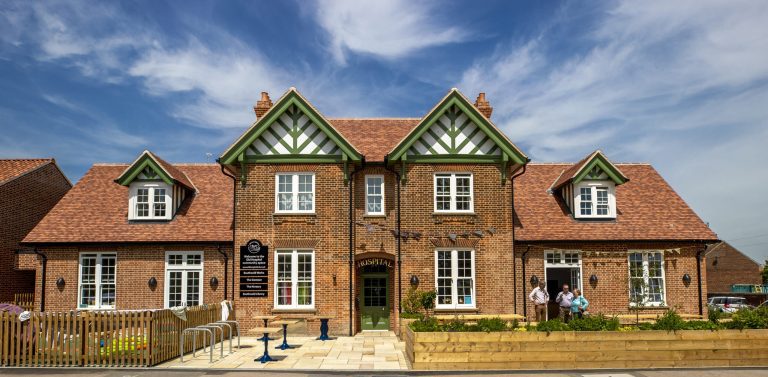
The conversion of an iconic cottage hospital into a community hub and nine affordable homes was officially marked by the community of Southwold and Reydon on Friday 17 June 2022. Southwold and Reydon is the first community in England and Wales to buy back its community hospital to provide much needed affordable housing and community facilities in the area. Four of the homes are for affordable rent and five are for shared ownership with all homes prioritised for people with a local connection to the area. The community hub has breathed new life into Southwold by providing a new home for the town’s library, a nursery, farm-to-fork café and co-working space for local entrepreneurs, freelancers and remote workers. Originally funded and built by local people 125 years ago, Southwold’s cottage hospital was closed by the NHS in 2015. Fearing the locally-listed building would be demolished and redeveloped into second homes and holiday lets, the local community developed an ambitious plan that led to the formation of a social enterprise, the Southwold and Waveney Valley Regeneration Society Ltd, known as SouthGen. SouthGen campaigned to save the building and worked with rural affordable housing specialist, Hastoe Housing Association, to buy the site. It was an innovative transaction in which both partners’ involvement was crucial. In March 2018, SouthGen bought the freehold and sold it to Hastoe, which then provided SouthGen with a 999-year leasehold for a pepper corn rent. Work on the conversion began on site in summer 2019 and the homes and community hub were developed in partnership with architects Wellington and Modece Architects, building contractor Wellington Construction, and employer’s agent Potter Raper. All partners, as well as the local MP and councillors, attended the official completion of works. The occasion was commemorated with the planting of a Victoria Plum tree. The tree was chosen because work to build the original hospital had started 125 years ago on the occasion of Queen Victoria’s Diamond Jubilee on 22 June 1897. The refurbished hospital was completed in June 2022, coinciding with the Queen Elizabeth II’s Platinum Jubilee. Jessica DeGrazia Jeans, Chair of SouthGen, said: “This project has inspired a truly amazing community spirit. Hundreds of volunteers have participated in all aspects of the project from campaigning, doing the feasibility study, putting in the initial bid and buying the site, right through to funding the project, and maintaining the building’s integrity, design and community use. “We have been fortunate to receive generous grant support from the Community Business Fund, the New Anglia Local Enterprise Partnership, the Architectural Heritage Fund, the Reaching Communities Fund, the Denby Charitable Fund, the Ben and Phillipa Johnson Family Foundation, the Reach Fund, as well as a matching community share investment from Co-operatives UK through the Community Share Booster Programme. “We are also indebted to all our partners. We could not have achieved this without them. Special thanks go to Hastoe for their help and unique approach. There are few organisations out there with such vision and commitment. Hastoe has been the very best of partners, and we are fortunate to have found them.” The Rt Hon Dr Thérèse Coffey, MP for Suffolk Coastal and Secretary of State for Work and Pensions, said: “This project has taken a lot of guts, courage and determination. There wouldn’t have been many communities prepared to take on a project like this. Its success lies completely in the strength, tenacity and creativity of all those involved.” Councillor Michael Ladd of Suffolk County Council said: “I agree completely. This could never have happened without a ‘can do’ attitude. We are lucky to have so many people with the diversity of skills and strength of will to have made this happen. The site has returned to being a real asset to the town and local community.” Lindy Morgan, Chair of the Board of Hastoe Housing Association, said: “Hastoe is honoured and privileged to have worked alongside everyone involved in helping to deliver the community’s vision. However, we are in no doubt this is a community driven and led success that would not have been possible without SouthGen’s leadership. “We will now continue to work with SouthGen and other key stakeholders to ensure the future sustainability and success of the project. Hastoe’s commitment to this project is to care for the homes and provide excellent services to the residents long into the future and, not to put too fine a point on it, beyond the lifetime of many of us standing here today. “This year is Hastoe’s 60th anniversary and, similar to the way we look back with pride at what we’ve achieved, we want the future community of Southwold and Reydon to look back and say what a fantastic thing my community did all those years ago.”

Read More »

Could containers be the missing jigsaw piece for commercial MMC?

Modern Methods of Construction have been a hot topic for a number of years now. However, one of the areas often over-looked is the humble container; a ready-made structure that, with the right modifications, can create the ideal workshop, office, retail unit, plant room, datacentre, or classroom. Here, conversion expert Andy Capella from S Jones Containers discusses the benefits of using containers, modular buildings, and some of their most popular applications. Used correctly, containers can be one of the most versatile, durable, low impact and easily transportable building materials known to man. While high-end home designs tend to hit the headlines thanks to programmes like Grand Designs, there are a number of lesser-known practical applications that can help stimulate economic growth, expand classroom sizes and drive R&D.  Offices, workshops, and retail units Self-contained, adaptable, low impact and zero maintenance are just a few of the reasons Staffordshire County Council recently specified 12 containers for a start-up development at Silverdale Enterprise Centre in Newcastle-under-Lyme. The county council operates a number of enterprise centres and workshop units across Staffordshire. Its earliest units date back to the early 1980s and have been a fundamental part of economic regeneration. With high numbers of people furloughed, facing redundancy, or simply reassessing their options due to the Covid-19 pandemic, the council encountered unprecedented demand for new start up spaces. With all of the units at Silverdale Enterprise Centre at full occupancy, the county council opted to expand their available workshop units by installing specially modified containers in an unused part of the site’s car park. Finished to a high standard complete with insulation, electrical ports, and French doors, the units were modified offsite and delivered ready for use, minimising disruption caused by construction work for the local community. Built to last as long as 25 years, the new units are set to provide a secure space for more than 1000 start-up businesses over the coming decades, with the county council able to transport the units to meet demand across its estate. It’s not just offices and workshops containers are increasingly being specified for though. Flexibility and ease of transport is also making them a popular choice for retail. One of the most recent requests we’ve received is the development of a new unit for a business hiring out electric bikes. With containers requiring little to no groundwork, the unit can be transported into central London and moved in-line with consumer demand and footfall. Containers are often being specified for start up businesses as they represent a lower investment than bricks and mortar or a long-term lease and provide the business owners or investors with an asset that can be resold or redeployed as needed. Schools, colleges, and universities Modular buildings are another flexible space solution being used increasingly for commercial purposes. Unlike containers, modular buildings are configured to spec by combining individual cabin modules that can be extended and adapted at any time to meet customers’ needs, whether temporary or permanent. For example, one of the major obstacles facing schools, colleges and universities right now is a lack of available teaching space. With major expansions costing millions of pounds and often taking months or even years to complete, the minimal on-site disruption, lower cost and rapid turnaround of modular buildings makes them an understandably popular choice for solving this problem. As the name suggests, one of the key benefits of modular buildings is how versatile and extendable they are. Depending on the customer’s needs, the individual units can be connected seamlessly via wall panels and partitions to create large open plan spaces that are ideal for classrooms, offices and countless other applications. In fact, this modular style of building has proved so popular that there is now an off the shelf option that includes high-level insulation and fire safety ratings as standard. Through modular construction we can create spaces as large as 640 square foot and up to three stories high. Industry and R&D There are, however, some applications where a regular shipping container is a more suitable foundation to work from. One such area is high-level manufacturing, engineering and R&D which often require self-contained, off-site spaces within which plant processes and equipment testing can safely and compliantly occur. For instance, there’s been a huge surge in demand for lithium-ion battery manufacture and storage sites, in line with advancements in technology. Secure, transportable and endlessly customisable, shipping containers are increasingly being used as the spaces within which ground-breaking new technologies, processes are being created, tested and refined, and where high-value labs and machinery are being housed. Using 3D CAD, we’ve helped develop high-tech units that can be shipped to wherever they’re needed most all over the world. One of the advantages for industry is that containers are often a lot more robust that conventional temporary structure building materials. They’re built to transport 20 to 50 tonnes, so to put heavy plant machinery in there is no problem at all. Also ideal for site expansions, a container can quickly and effectively be modified to become boiler or compressor housing and where needed, attached to the existing building. Ultimately, using a container ensures that the machinery is safe, secure, and protected from the elements with little to no need for maintenance. From sophisticated container conversions with complete with state-of-the-art fire suppression through to almost limitless flexibility of modular buildings, MMC are undoubtedly here to stay and are only going to grow in importance as emphasis increases on sustainability, reduced costs and low impact design. It’s perhaps ironic that an invention of the 1950s continues to act as the basis for many solutions to the issues created by our rapid rate of technological and cultural change in the 21st century, whether that be in advancements in renewable technologies and processes, increasing populations or changes to working and shopping habits. The original design principals of safety, security and durability remain the same, the only difference is that we can now apply them in many more ways than was originally intended. Andy


Read More »

SEGRO raises sustainability bar with green refurbishment scheme on Slough Trading Estate

SEGRO has started work to deliver a refurbishment scheme on the Slough Trading Estate that will raise the bar in terms of its environmental sustainability. The 20,210 sq ft unit is located on Bestobell Road at the East of the Slough Trading Estate and was built originally in 1988. The refurbishment will transform the unit into a state-of-the-art, environmentally sustainable industrial and warehouse space, furthering SEGRO’s low carbon growth ambition on the Trading Estate. The refurbishment will be net-zero carbon in operation and is targeting a BREEAM Excellent and an EPC A+ rating. It will include a wide range of sustainability features, including: Smart building sensors to enable energy-efficient operation of the building Photovoltaic panels on the roof which will save 26 tonnes of carbon emissions per year, the equivalent to planting 1,226 trees. Energy efficient LED lighting throughout, which will reduce CO2 by 12 tonnes and save around £11,000 per year A 55m² living wall on the front of the building will trap 7,150 grams of dust, extract 126.5 kg of gas and 71.5 kg of particulate matter from the air, and produce around 93.5 kg of oxygen every year. An internal green wall will also be featured in the reception area Air source heat pump providing heating and comfort cooling Water reducing products throughout e.g., self-closing taps for all wash basins, waterless urinals etc. Use of a natural, photocatalytic paint on all wall surfaces that purifies the air through CO2 absorption and reduces ambient odours Electric vehicle charging points Secure bicycle parking with rich biodiverse growing roofs and wildlife habitat panels. It will incorporate low-maintenance, drought-tolerant planting that is nectar-rich for butterflies, bees, moths and other invertebrate wildlife Additional bird and bat boxes, beehives and insect habitats to nest and increase pollination across the plot The redevelopment is part of SEGRO’s growing portfolio of low or zero-carbon developments and aligns with the company’s Responsible SEGRO commitments to champion low-carbon growth and be net-zero carbon by 2030. James Craddock, Managing Director at Thames Valley, SEGRO, said: “The refurbishment of older buildings is an important part of our journey to be net-zero carbon by 2030. This scheme at Bestobell Road is a great example of how these existing buildings, where appropriate, can be transformed into more modern, efficient, greener spaces that enable low-carbon growth now and into the future. “Creating more sustainable spaces for a diverse mix of customers is also critical if we want to ensure that the Slough Trading Estate is the location of choice for both large and small businesses within the Thames Valley.” The refurbishment is due to be complete in September 2022. Slough Trading Estate is the largest privately-owned business park in single ownership in Europe. Over one third of the estate is less than 10 years old. The vacancy rate is just over two per cent, with the remainder being leased to a mix of small and large businesses, across a diverse range of industry sectors. Local amenities including high street banks, restaurants, shops, fitness facilities and healthcare centres are all within easy reach on the estate, creating a vibrant business community for occupants.

Read More »

Alumno rebrands to mark 15 years of revolutionising student housing

Marking 15 years of taking a unique, pioneering and award-winning approach to developing student accommodation, Alumno has launched new branding and an accompanying video. The move also enables the business to celebrate its exciting and highly successful journey to date and drive forward with renewed vigour into the recovery. The new simple, classic logo design by Graphic Thought Facility puts the Alumno name centre stage within a circle of soft blue. “It projects a well-crafted, purposeful and human image, reflective of a company with soul,” according to Graphic Thought Facility Creative Director Andy Stevens. This perfectly aligns with Alumno’s continuing mission to change the perception of student accommodation by creating unique buildings that reflect the heritage of the local area and make a valuable contribution to the communities within which they are built, while working hard for occupants. “We believe we always manage to get these elements working together in harmony – and that’s what helps make us unique,” explains Alumno managing director David Campbell in the accompanying video, which distils the developer’s design-led philosophy of delivering exceptional functionality and key community benefits, incorporating work by local artists and supporting local causes. It succinctly tells the Alumno story, using striking imagery of its developments and the local art incorporated into them. “Their schemes are unique and bespoke to the local area, with the arts elements always site specific,” said art curator Matthew Jarratt, who works closely with Alumno to commission the artistic elements of each building. “They also work with exceptional designers for their interior spaces and great landscape architects for their public spaces, so there’s a lot of attention to detail, and it’s this commitment to design which makes them stand out.” Commenting on how the pandemic affected Alumno and what the future holds, Campbell said: “It was tough, but like everyone we have managed to keep going, delivering several buildings and some of our best. So, it’s shown we are resilient and have strong foundations. It’s also driven us to try harder and build better, even more ambitious developments that reflect the ongoing changes in how we all live and study. “We currently have five projects on site across the country. Our mission going forward is to create diverse buildings that continue to offer more to residents and communities, and we will keep raising the bar. We also want to ensure we continue to provide affordable accommodation offering a good blend of rents for all budgets.” Alumno is also starting to explore opportunities for life after university as the bridge before homeownership. “Affordable, single person accommodation is a major theme and issue impacting on all towns and cities throughout the UK,” said Campbell.

Read More »

Who has made this year’s CIHT Highways, Transport Infrastructure and Services Awards Shortlist? Leading projects and initiatives receive deserved nominations

The latest companies, projects and initiatives showcasing good practice within the highways, transport infrastructure and services industry have been shortlisted for CIHT’s prestigious Annual Awards. Deborah Sims, President, CIHT said: “The transportation sector plays a vital role that impacts on so many parts of everyone’s day-to-day lives.  The entries we have received this year demonstrate the wide range of activity, innovation and problem solving that we as professionals deliver.  “I would like to commend all of those who have been shortlisted for CIHT’s Awards and would congratulate all those organisations and their supporters who have put so much into the high-calibre entries this year”.  This year there are 14 awards categories and the winning entries will be presented in person again as we return to the renowned CIHT Awards ceremony, taking place on the 7 September 2022 at the London Marriot Hotel  The shortlisted entries for the CIHT Awards 2022 are: CIHT & Ringway Climate Action Award – Proudly supported by Ringway Aggregate Industries – SuperLow-Carbon asphalt Kier Highways – Driving for a Sustainable World Lancashire County Council / Atkins – Lancashire Local Highways Decarbonisation Strategy Skanska – M42 Junction 6 Improvement Scheme Transport for the North – Transport Decarbonisation Strategy CIHT Collaboration Award Amey – SIMULATE Live Lab Programme BAM Nuttall – Leeds Public Transport Investment Programme LPTIP Devon County Council – Dartmoor Line Railway Reopening Graham Construction – M25 J25 Integrated team Ringway – Network Resilience – Ringway and Worcestershire County Council Transport Scotland – Delivering a Transport Plan for COP26 CIHT Creating Better Places Award Amey – Liverpool City Centre Connectivity: The Strand Phase 1 Project Centre Ltd – Camberley High Street Sustrans – The Ripple Greenway WSP – Shrewsbury Town Centre WSP – The Green Spine CIHT EDI Initiative of the Year Award Arup – A66 Northern Trans-Pennine – Inclusion Action Plan Atkins Limited – #Differentmakesadifference Independent Research – Laura Brooks, Molly Hoggard, Marie Godward – Gender Equality Toolkit in Transport Kier – Expect Respect Manchester City Council – The Highways Access Group CIHT Employer of the Year Award J McCann and Co Limited – ‘J McCann Family – Our People Matter’ Momentum Transport Consultancy – Momentum Transport Consultancy Balfour Beatty – Balfour Beatty Highways Kier – ‘Where everyone can bring their whole self to work’ CIHT Healthy Transport Award Amey – Liverpool City Centre Connectivity: The Strand Phase 1 BAM Nuttall – Stourton Park and Ride Go Jauntly – Go Jauntly Green Routes Sustrans – Chrisp Street Community Cycles Transport for London – TfL School Streets WSP – Histon Road Highway Improvement Scheme CIHT Infrastructure Award Aggregate Industries & Kier – Designing exceptional pavement solutions for National Highways’ road asset infrastructure Amey Consulting – Kincardine Bridge – An engineering triumph 85 years on Amey – Liverpool City Centre Connectivity: The Strand Phase 1 Amey Consulting – M60 Junction 1 to 2, Kings Reach to Abney Hall Morgan Sindall Infrastructure – Delivering a lasting legacy on the M1 J23 & A512 improvements scheme National Highways – A52 Clifton Bridge Repair Scheme Tilbury Douglas Construction Limited – A69 Bridge End Junction, Hexham CIHT International Infrastructure Award CEG INTERNATIONAL  NTSG Italia srl / Fibre Security bv – Preserving Pipelines of Society ORIS – Sourcing Intelligence for Road Optimization Victorian State Government – Werribee Level Crossing Removal Project CIHT Research Initiative of the Year Amey – Understanding Gipave, a Graphene-Enhanced Asphalt Atkins Ltd – Evaluating SRN Performance using Near-Real Time Floating Vehicle Data (FVD) Scottish Borders Council – 20mph default trial  So-Mo – Message Not Received WSP – A study on women’s personal safety on public transport in London CIHT Road Safety Award Cranfield University – Pre-Driver Theatre and Workshop Education Research FORS – FORS (Fleet Operator Recognition Scheme) Main Roads Western Australia – The development of innovative Information Technology (IT) solutions to assist educate, support and empower road safety engineering practitioners in State and Local Government road agencies throughout Western Australia. Scottish Borders Council – 20mph Default in Scottish Borders Transport for London – Intelligent Speed Assistance (ISA) on London’s bus fleet CIHT Team of the Year Award Agilysis Limited – Team Lemur Amey – A collaborative approach to delivering innovation in Kent Kier Highways – Nordis Signs: Giving people with disabilities, and long term health conditions opportunities to achieve beyond expectation with careers to be proud of. National Highways – A52 Clifton Bridge repair Scheme Smart Motorways Alliance – Stopped Vehicle Detection CIHT & Atkins Technology and Innovation Award – Proudly supported by Atkins Amey – Feedback Loop Playbook – Asset Data Delivery Model Archaeological Research Services Ltd – Blank Area Testing – managing hidden risks from archaeology Kier Highways -Natural Capital & Biodiversity Design Tool University College London – PEARL CIHT & Kier Transport Planning Award – Proudly sponsored by Kier  Stantec – Gravity and the Stantec Scenario Planning Tool The University of the West Indies, St Augustine Campus – The Development of a Travel Demand Model for Trinidad (copy) Wood Group – York real-time traffic modelling scheme The winners of these categories will be announced at the CIHT Awards Ceremony 2022 – taking place on the 7 September 2022 at the London Marriot Hotel. To find out more about this event, including how to book, please see here  More details on these shortlisted entries will shortly be available on the CIHT website.  For any further information on the CIHT Awards, please contact e: technical@ciht.org.uk

Read More »

Why the Sustainability Carrot Beats the Sustainability Stick

Andrea Fawell, Sales and Marketing Director of award-winning property developers Kebbell, reveals if problems in the energy markets are driving purchasers to more efficient new homes, answers questions about sustainability in the property market, and how her ground-breaking trip to Svalbard is influencing her view of what the future holds. Sustainability How is sustainability influencing the new build property market?  “There is growing interest in urban sustainability and ESG (Environmental, Social and Corporate Governance) in the building industry, more so since COP26 but there is still a lot of greenwashing. We need to be much more sustainable and catch up with other industries such as certain players in the food, travel and retail industries, who are putting sustainability at the top of their priority list if we are going to play our part in becoming net-zero by 2050. “The good news is sustainability is increasingly important to house buyers, particularly first-time buyers who are progressively driven by the sustainability and environmental credentials of their purchases. I don’t think it will be too long before house buyers will be choosing eco-friendly sustainable homes because it’s a dealbreaker for them. Housebuilders are foreseeing this and progressively futureproofing new homes including the addition of air source heat pumps, electric car chargers, underfloor heating, solar panels, super energy-efficient utilities, and excellent insulation which will all begin to come as standard, in addition to innovative water-saving and recycling systems. There may also be changes in the future to mortgages connected with energy efficiency.”  Are house buyers willing to pay more to ensure a property has eco-friendly features? “I think at the moment house buyers are reluctant to pay more. One competitor of ours spent 10% more on added eco-friendly features in an endeavor to create a much more energy efficient house and wanted to pass that cost on, but then found it harder to sell as buyers just weren’t ready for the extra cost. But it may well not stay that way. The narrative needs to change. Currently, when a purchaser comes to buy a new home they may focus on the fact that because it is more energy-efficient they will have lower bills. The narrative would need to change to purchasers choosing homes that are more sustainable and use less energy overall and therefore they will have lower bills. The cost saving aspect needs to become an outcome rather than a driver. That’s why I think the sustainability carrot will be more beneficial than a sustainability stick. The benefits of sustainability are endless.” So are you seeing an increased demand in for instance solar panels? “Definitely. At one of our new developments, Alderbrook in Petersfield, part of the planning permission requirements was ensuring the inclusion of solar panels on the social housing; we have decided to go over and above where the planners want us to be and are providing solar panels to all the private homes too. Interestingly as our summers are getting hotter, some new home buyers have asked us for the ability to fit their own air conditioners which use a considerable amount of energy. It is a difficult balance.” You are taking a very personal interest in sustainability in the industry, why is that? “I have just completed an online Leading Sustainable Corporations course at Oxford University’s Said Business School. I was motivated to do this after seeing first hand the detrimental impact of climate change and global warming on the Vatnajokull glacier, the biggest glacier in Iceland, during a training exercise for my forthcoming scientific expedition to ski the Last Degree to the North Pole as part of an all female scientific expedition collecting samples of the sea ice for research into black carbon, microplastics and other studies. The North Pole is an extremely difficult and treacherous place to reach. There is only a 3-4 week window in the year when the conditions are such that it is possible to set up a temporary base camp on the ice and ski from 89 degrees north to 90 degrees north. Due to the pandemic and latterly the Russian-Ukraine war no one has made this journey since 2018. It is possible that changes in the conditions of the ice on the polar cap caused by global warming means that no one will be able to make this journey by foot ever again. In 1969 the first person skied to the North Pole and the last people skied there in 2018. That would mean that I have seen the first and last person ski to the North Pole in my lifetime. It is terrifying. “As we were unable to travel to the North Pole in 2022 we instead went to Svalbard, a remote Norwegian archipelago between mainland Norway and the North Pole to collect samples of the sea ice. These are being analysed at the National Oceanography Centre, University of Southampton for the presence of microplastics lead and mercury. Samples are also being sent to NASA for critical research into the presence of black carbon and the impact of LAPs (light absorbing particles) on the rate of glacial melting. Seeing their destruction as a result of global warming and climate change was shocking but you only have to look at daffodils in January to see global warming in action or the soaring temperatures in Spain in March. I came away committed to use my position of influence within the housebuilding sector of the construction industry to effect change for the better. “The issue with tackling global warming is the problems are so huge that companies don’t always know where to start or what to do so we avoid making a voluntary start. Instead, we need to ask how we can behave in ways that mitigate or avoid making a detrimental impact on the environment and nature, so we can safeguard the planet for future generations, as well as try and reverse the damage. Improving our understanding of our own impact will give us the ability to make more informed decisions. For

Read More »

Wykeland secures £80m world-class Smith+Nephew facility for Melton West business park

Leading Yorkshire commercial property developer Wykeland Group has secured an £80m-plus investment by global medical technology business Smith+Nephew. Subject to planning approval, Smith+Nephew has announced it will build a new research and development and manufacturing facility for its Advanced Wound Management franchise at Wykeland’s Melton West business park in East Yorkshire. The location is just eight miles from Smith+Nephew’s current site in Hull, where the business has been located for more than 100 years. The new facility is expected to open in 2024. The investment will create a world-class R&D, manufacturing and flexible office environment, which is expected to support more than £8bn of sales in its first 10 years of operation. Melton West business park has been selected for the investment because of its proximity to the existing Hull facility. It also offers a site with the size and established infrastructure to accommodate the new facility and is allocated under the East Riding of Yorkshire Local Plan for developments of this kind. Dominic Gibbons, Managing Director of Hull-based Wykeland, owner and developer of Melton West, said: “We are delighted the strategic, long-term investments we have made in the infrastructure at Melton West business park have enabled Smith+Nephew to stay within the region and make such a huge investment in a state-of-the-art new facility. “Smith+Nephew is one of the region’s leading employers, with a proud local history and heritage. This investment will open an exciting new chapter in that story.” Simon Fraser, President of Advanced Wound Management for Smith+Nephew, said: “This major investment demonstrates our commitment to the UK and to building our leadership in Advanced Wound Management. “Smith+Nephew was founded in Hull in 1856 and we are proud to make this major investment in the region for future generations.” The 200-acre Melton West business park is one of Yorkshire and the Humber’s premier locations for investment and job creation. It enjoys a prime location west of Hull, off the A63 and connecting to the national motorway network within minutes via the M62. The Smith+Nephew facility will be the latest major development at the growing site, which features more than one millionsq ft of completed warehouse, distribution, manufacturing and office space. In December last year Wykeland secured planning permission from East Riding of Yorkshire Council for a £170m retail logistics fulfilment centre at Melton West. This centre will have a footprint of 558,000 sq ft and create 1,300-1,500 permanent jobs, additional seasonal and indirect employment, and further jobs during the construction phase. Last year Amazon opened a 125,000 sq ft last mile delivery centre on an adjacent site at Melton West and a new command and control facility for Humberside Police has recently been handed over and is due to be operational later this year. Other leading businesses at Melton West include Heron Foods, which has its national Distribution Centre and Store Support Centre on site; generator manufacturer Allam Marine; shower maker Kohler Mira; and Needlers, the UK’s leading supplier of safety and hygiene products to the food manufacturing industry.

Read More »

McAvoy announces multi-million-pound investment programme to create one of the newest modular fleets in the UK and Ireland

McAvoy, which was acquired by certain funds managed by Blantyre Capital in February 2020, has announced a substantial investment to expand its modular fleet with a new ‘SmartSpace’ product range. The investment will more than double the capacity of McAvoy’s semi-permanent modular fleet and create approximately 50 new jobs. CEO, Ron Clarke said the decision had been made in response to strong market demand, particularly within the health, education and commercial sectors in the UK. He added McAvoy had already secured orders for the new modular SmartSpace range with upcoming projects across the UK and Ireland. He said: “The investment will be made over a period of two years and will include ongoing Research and Development, Manufacturing, and the implementation of additional infrastructure in terms of people, factory equipment and technology. We envisage the creation of this additional capacity will help drive the planned growth of our business in the UK over the next 2-3 years where we see significant opportunities to increase market share. Our market research, coupled with enquiry levels, has indicated for some time the demand for high quality semi-permanent accommodation across health, education and commercial but also within the pharma, manufacturing, and technology sectors so this decision is all about helping our customers meet those needs. Designed and built to enhanced energy and fire protection standards, this new product provides our customers sustainable and adaptable space solutions. “Thanks to the support of our investor, Blantyre Capital, SmartSpace will be one of the newest modular fleets in the UK and Ireland, so this investment will be a significant component of our overall sustainable growth plans.” Ron Clarke said there would be additional ongoing investment across the business over the next three years, particularly in relation to ESG, Digital Technology, Recruitment and People Development. Glen Busby, Director of Modular Rental and Sales at McAvoy, said the first of the new modular units would be deployed as part of a major health project in England. He said: “This investment has the potential to be a real gamechanger for McAvoy within the Modular Rental and Sales sector. Our ambition is to significantly increase our market share and to be known as a UK and Irish market leader in the supply of high-quality permanent and semi-permanent accommodation for rental or sale. We believe our SmartSpace proposition to be amongst the very best available and with almost 50 years’ experience we have a track record and understanding of the modular offsite industry that is second to none.” McAvoy recently reported positive financial results for the six months to 30th April 2021, with a 30% year-on-year increase in revenue. The business will deliver revenues ahead of budget for 2022, with significant progress made in securing forecast revenues for 2023. McAvoy is currently delivering a series of new Department for Education projects, including one of the UK’s first low carbon school buildings as well as a new innovation centre at Porton Science Park.

Read More »

Architecture, engineering and building sector wholesale businesses hitting a brick wall thanks to Covid, Brexit, and manual processes impacting profitability

Unprecedented economic and social changes threaten profitability A new survey commissioned by OGL Group reveals that Covid, Brexit and the continued reliance on manual processes are the greatest factors affecting profitability for architecture, engineering and building sector wholesale businesses in 2022. The research focused on those companies that stock products that support these sectors, from handheld laser distance meters, architect scales, power tools, ladders to trolleys, and provide equipment including welding machines, workwear and safety equipment, to providers and commercial businesses. The market size of the architectural industry is £6.5 billion in revenue in 2022, with the UK construction sector contributing more than £110 billion per annum and nearly 7% of GDP. The engineering and building sector is one of the UK’s broadest with 5.5 million people working in those industries, accounting for 18% of all UK employment. With the rapid increase in the need for housing, there is continued demand for architecture, engineering and building services, made more prominent by the return to work after 2020’s extended lockdown period. Both the Covid pandemic and Brexit have hit supply chains hard. Exacerbated by stock management pressures, architectural, engineering and business wholesale firms are citing top technology priorities for the next 12 – 24 months as business performance reporting 50%, linking ERP with eCommerce 33%, website creation/update 33% and order management software 33%. Insecurity around Brexit is affecting profitability at 58%, but this is now being overshadowed by Covid as the top factor at 67%. The pandemic has led to supply chain shortages with some architecture, engineering and building sector businesses stockpiling products and parts to ensure delivery to clients. Manual processes are still plaguing businesses, leaving them behind the curve with regards to digital transformation, since 75% cited them as a problem that can lead to potential loss of revenue, and inability to correctly assess performance and sales. Entering another potentially uncertain economic period with continuing supply-chain issues, the Ukraine-Russia war, cost of living and fuel price rises, wholesalers’ efforts to increase profitability are critical. Technology is at the heart of this. 92% of respondents agreed that automating business processes helps their companies stay competitive, up from 70% of engineering companies pre-pandemic. A key finding of the research was the wide spread of technologies used and the disparate nature of systems that are not necessarily “talking to each other” to provide a full view of operations. Wholesale businesses use a range of software systems to function: more than 95% of respondents use one or more software systems to run their business. Finbarr Creeney confirmed that his firm, Express Cutting & Welding Services, replaced accounting software, manual processes, inventory/stock control, and sales order/enquiry management with an integrated ERP system. 67% of respondents saw benefits from integrating disparate systems. 58% listing the main reason to use a single system as removing duplication of work across different departments, followed by 58% citing reduced administration time. 50% stated a single system helped achieve growth plans and future proofed their business, while 33% cited enhanced customer service and efficiencies by improved accuracy of information. Single systems are beneficial for online stores, where stock checks and reporting ensure that customers have a good understanding of delivery timescales and product availability. Survey respondents confirmed that eCommerce has grown exponentially, with 83% stating that being able to sell products online easily is really important to them. As the pandemic accelerated digital transformation, cloud computing continues to be a driver for change, with 83% of industry respondents agreeing that hosting applications and data in the cloud have improved efficiencies and productivity (or would improve them if cloud were implemented). Despite the benefits of cloud, concerns about security remain, though have reduced marginally from 55% in 2019 to 50% in 2022. This reflects the growing acceptance of moving core applications and data to the cloud. Critically ERP systems are a key technology with 92% agreeing that ERP systems give greater visibility and control of stock. ERP refers to a suite of integrated software that businesses use to manage day-to-day business activities, such as sales order management, stock control, warehouse management, CRM and more. One survey respondent comments on implementing a single ERP system: “Since installing an ERP system, the integration has led to far better customer service and efficiency. We can now store customer details and contacts centrally; raise orders based on sales and re-stock to min, max or optimum. This has transformed our stock and also improves customer service by cutting down lead times. Something that became apparent during the pandemic was that during times of reduced staff levels, we were still able to cope in an efficient manner because of the automation built into our ERP system.” The main barriers to deploying an integrated software solution were cost, with 58% citing it as a factor, followed by 50% with data security and 33% finding a solution that’s right for their business via a reputable provider. Cost is often associated with the misconception that ERP systems are only for larger businesses, and the lack of information about affordable subscription-based models. Charlie Grant, Head of Operational Product Development, OGL Software commented: “The business model for architecture, engineering and building firms has evolved quickly, with our 2022 survey identifying several changes, including the pandemic and stock availability, that impact profitability; the drop in concerns about security of cloud computing, and the growing realisation that ERP systems are not solely for large enterprises. Digital transformation has no doubt saved many businesses that have pivoted to online sales and it’s heartening to reveal that 92% agreed that ERP systems provide greater visibility and control of stock, especially as part of a multichannel sales strategy.” NB: survey conducted in March 2022 and any comparison is to the same questions in September 2019. Respondents were given a number of options for each question.

Read More »

Part L changes likely to prompt surge in UKCA testing demand for door and window fabricators

Incoming changes to Part L of the Building Regulations are likely to intensify testing demand in the run up to the December 31 deadline for UKCA certification. The warning, from Element Materials Technology – one of the UK’s leading testing and certification service providers to the construction industry – comes in advance of scheduled changes to Part L, which take effect from 15 June. As part of a shift towards lowering domestic CO2 production through the Future Building Standard, all new doors and windows entering the market from that date must meet new mandated U-values.  However, any existing products currently on the market which meet the new mandated U-values must still achieve UKCA marking in order to be sold in the UK from 1 January 2023. The requirement is likely to affect hundreds of products manufactured outside of the UK, even if they have achieved CE marking in the country of manufacture. UKCA marking can only be issued by an approved body listed on the UK government’s database. As there are only a small number of approved bodies, manufacturers who have not yet started or completed the process could find themselves under pressure to secure laboratory space with just six months left until the UKCA marking requirements come into force. Chris Bryan, Senior Test Engineer at Element Materials Technology – Wednesbury, comments: “On the surface, the changes to minimum U-values set out in the updates to Part L are straightforward. Indeed, a sizeable majority of products currently in circulation are already compliant. “The real issue is that any product that has been CE-marked in another country – even if it meets the U-value requirements set out in the changes to Part L – will need to be re-tested in the UK to achieve UKCA marking to continue being sold here from the start of next year.” Chris continues: “The realisation is really starting to take effect amongst the international fabrication community. We have already seen a surge in demand in recent weeks and only expect that to increase as we get closer to the UKCA deadline. I would strongly urge any fabricators who either manufacture overseas or are looking to meet the new requirements to book UKCA testing now to ensure a smooth transition.” To find out more about UKCA testing, please visit: https://www.element.com/product-qualification-testing-services/ukca-mark-guidance.

Read More »