December 2, 2025
The Shift Toward Fully Connected Homes in Urban Regeneration

The Shift Toward Fully Connected Homes in Urban Regeneration

Urban regeneration is no longer only about new buildings and upgraded public spaces. Residents now expect homes that are digitally ready as standard, with high-speed connectivity and smart systems built in from day one. When this connected approach is applied across whole estates or districts, it changes how neighbourhoods are

Read More »
Blockchain: The New Standard for Online Casino Trust

Blockchain: The New Standard for Online Casino Trust

The online gambling sector is undergoing a dramatic change, driven by blockchain, an essential technology redefining trust and efficiency across the entire sector. As physical casino resorts around the globe continue to develop, their online counterparts use decentralised ledgers to build a secure, verifiable ecosystem. In doing so, these online

Read More »
Latest Issue
Issue 335 : Dec 2025

December 2, 2025

Whitbread secures prime mid-town site for new hub by Premier Inn

Whitbread secures prime mid-town site for new hub by Premier Inn     

Whitbread PLC, the UK’s largest hotel company and owner of Premier Inn, has made a significant freehold hotel acquisition in Central London for its hub by Premier Inn brand.  In line with the company’s strategy of expanding its network of budget hotels in London, it has acquired Victory House (30-34 Kingsway, WC2) from a private overseas investor for an undisclosed sum.  The location matches Whitbread’s network plan requirement for Covent Garden / Holborn and provides hub by Premier Inn customers with doorstep access to Covent Garden, Lincoln’s Inn Fields, the LSE campus and London’s Theatre District all of which are less than a ten-minute walk away.   Whitbread intends to convert the 45,000 sq ft office building which is currently occupied until spring 2026 into a hub by Premier Inn hotel of around 200-bedrooms, subject to planning.  It plans to introduce the compact hub by Premier Inn bedrooms within the existing floorplates, retaining and respecting the handsome 1920s stone façade facing onto Kingsway.   The off-market purchase of Victory House rounds off an especially active year for Whitbread in Central and Inner London where the business is investing heavily.  Since February [2025] the company has acquired four former office buildings to convert into Premier Inn and hub by Premier Inn hotels – investments totalling more than £100 million.  Collectively the buildings, which include Victory House, will add close to 1,000 Premier Inn and hub by Premier Inn bedrooms into Whitbread’s secured development pipeline in a market where a significant proportion of their future pipeline is located.  Currently 19% of Whitbread’s 85,000 bedrooms are in London.  Jonathan Langdon, Senior Acquisition Manager for Whitbread, said:  “The vision behind hub by Premier Inn is to offer all the great things about Premier Inn in the most central, accessible and exciting places.  Kingsway is one of those stand-out locations being surrounded by London’s best entertainment, restaurants, cultural venues and institutions – somewhere we know our customers will want to stay.    “Investing here matches our network plan and complements our trading and pipeline hotels, neatly “bookending” Covent Garden with our St Martin’s Lane hotel to the west.  It also rounds off an especially active year for Whitbread in Central and Inner London where we have made four significant purchases and lease commitments, collectively totalling more than £100 million of investment and adding close to 1,000 prime located rooms into our pipeline.  “We’re pleased to have secured the Kingsway location quickly off-market and are excited to begin the planning journey with Camden Council next year, with a goal to bring the location onto our trading network in 2028.”  Whitbread’s hub by Premier Inn is designed for locations in major cities where property prices are relatively high but, thanks to the brand’s smaller room format, is still able to generate attractive long-term returns whilst providing affordable rooms for guests.  Launched on St Martins Lane in Covent Garden in 2014, the brand now offers eighteen hotels and more than 3,000 bedrooms in locations across Central London and Edinburgh City Centre – with four further London locations currently under construction or in the advanced stages of planning, including a flagship 690-room hub on Strand, next to Trafalgar Square.   Unique to the location, the Kingsway hub by Premier Inn will offer stunning views over Lincoln’s Inn Fields to the east whilst being on the doorstep of Covent Garden to the west. Whitbread is due to secure vacant possession of the building in April 2026 when the lease comes to an end.   In line with Whitbread’s sustainability strategy, the hotel will be all-electric, powered by energy generated from renewable sources – with the building design itself set to incorporate heat recovery systems and air source heat pumps to create a low energy demand.  Whitbread was advised on the transaction by Ingleby Trice and the vendor was advised by JLL and Savills. Conversations with Camden Council on the conversion of the eight-storey building are anticipated to begin in early 2026.  Building, Design & Construction Magazine | The Choice of Industry Professionals

Read More »
Overgate, Dundee announces new store opening by luxury retailer Flannels

Overgate, Dundee announces new store opening by luxury retailer Flannels

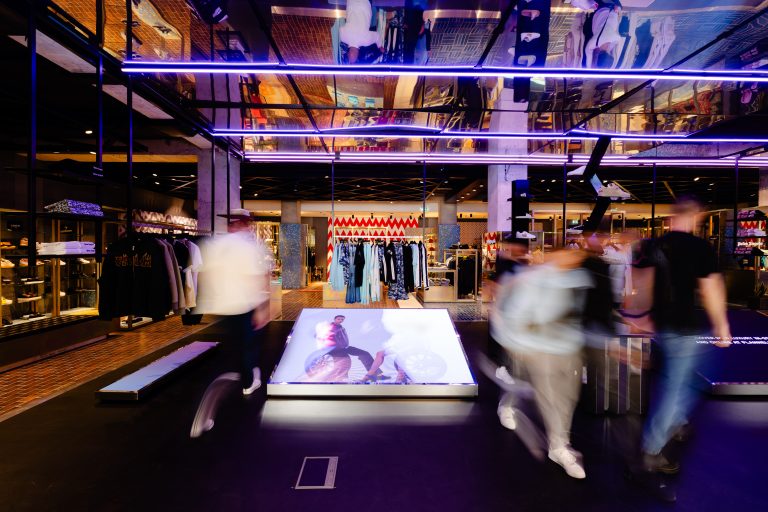
FLANNELS, one of the most exciting players in luxury retail, has opened a brand-new standalone store in Overgate, Dundee. Located within a prime site on the upper level of Overgate, adjacent to the impressive new Sports Direct, the much-anticipated new FLANNELS store spans 5,000 sq. ft. FLANNELS Dundee presents a luxury, aspirational shopping experience within a striking interior, and houses luxury and contemporary menswear, womenswear, kidswear and accessories from labels such as Off White, Balenciaga, C.P. Company, BOSS, Vivienne Westwood, GANNI, REPRESENT, and The Couture Club. The arrival of FLANNELS to Overgate, the region’s premier shopping destination located in the heart of Dundee – Scotland’s fourth largest city and the UK’s first UNESCO City of Design – follows the recent opening of a three-storey FRASERS Dundee within the centre. Frasers Group acquired Overgate in March 2023 and since then has transformed the centre with a tranche of new store openings and significant lease extensions. Tenant occupancy of the centre is sitting at 90%. Commenting, Malcolm Angus, Centre Manager, Overgate said: “We are delighted to welcome FLANNELS to Overgate, in what marks another significant moment for the centre, and indeed the region. “FLANNELS is a greatly admired fashion retailer, offering highly desirable, luxury and contemporary brands. There has been huge interest in the arrival of FLANNELS to Dundee and this opening marks another exciting addition to the centre as it continues its remarkable retail transformation. “We look forward to welcoming our customers to FLANNELS and to experience its impressive luxury retail offering.” ABOUT OVERGATE Overgate is located in the heart of Dundee city centre, Scotland’s fourth largest city and the UK’s first UNESCO City of Design. The 440,000 sq. ft (37,161 sq. m) centre is the region’s premier shopping destination and is owned by Frasers Group. Frasers Group acquired Overgate in March 2023 and has accelerated a tranche of new store openings and significant lease extensions over the last 24 months. Anchoring the 70-unit centre is a 60,000 sq. ft FRASERS which opened in June 2025 – one of the largest shop fit-outs Dundee has ever seen, transforming Overgate and significantly strengthening the east coast of Scotland’s retail offering. Spanning three floors, the FRASERS store also houses Sports Direct, USC, and GAME. Other high street favourites within Overgate include Primark, Next, Mango, Rituals, Pandora, Clarks, H&M, DV8, River Island, New Look, Footasylum, Office, Schuh, JD Sports, Superdrug and Boots as well as a food and drink offering including Starbucks, Costa, Greggs, Muffin Break, Five Guys, Chopstix and Subway. Building, Design & Construction Magazine | The Choice of Industry Professionals

Read More »
Delamere Health names Caddick as preferred bidder for Nottingham development

Delamere Health names Caddick as preferred bidder for Nottingham development

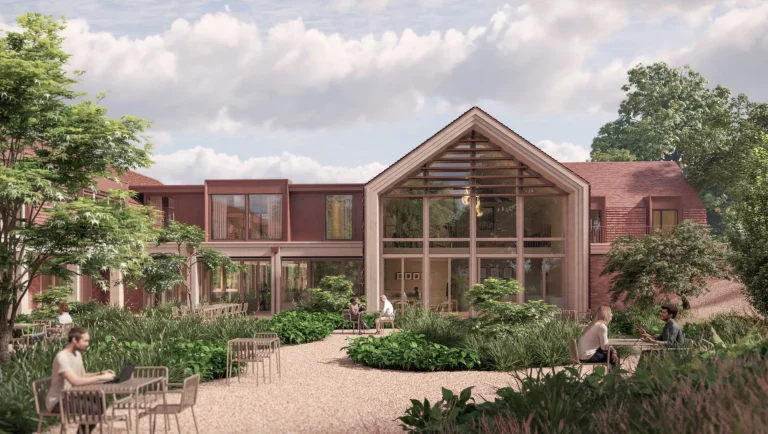
Caddick Construction has been selected as Delamere Health’s preferred bidder for thedevelopment of a £20m addiction clinic on the site of the former Nottinghamshire Fire & Rescue HQ in Bestwood. Now in a pre-construction services agreement (PCSA), Caddick will deliver a preliminary package of works to make way for the new residential addiction treatment clinic, marking the largest investment of its kind in the UK.Caddick’s initial work on site will include the demolition of Nottingham Fire & Rescue’s former HQ, which is scheduled to begin in early 2026. This will be replaced with a new build clinic comprising 32 residential rooms with supporting treatment spaces. Designed by architects, Anderson Orr, the clinic will offer premium facilities, including awellness suite, fully equipped gym, steam room and sauna, a meditation area and individual and group therapy rooms. Exclusively to the Nottingham site will be other facilities, such as a padel court and a cinema. Once in full contract, the project will add to Caddick’s growing project portfolio in theMidlands, which also includes a range of high rise residential, industrial and commercial developments across the region. Martin Preston, Founder and Chief Executive at Delamere, said: “The site’s development represents a huge investment and opportunity for the borough, and our ambition for what will become the flagship treatment facility in Europe. “At Delamere, we have a clear vision – to provide exemplary care in first class facilities.Identifying the ideal location for our second site has been a rigorous process over several years, and we are excited to work with Caddick to create something the local community can be proud of.” Ray O’Sullivan, Regional Managing Director of Caddick Construction Midlands,commented: “As preferred bidder for Delamere Health’s new development in Bestwood, we are working closely with our client to build a cost and build programme that will deliver on their ambitions for the largest investment in an addiction rehabilitation clinic in the UK. Key to this is understanding the high level of care and rehabilitation the clinic will offer. We look forward to the coming months, and moving towards a full contract early next year.” Neil Parry, CEO & Principal at Anderson Orr said: “We are thrilled to be collaborating on Delamere Health’s new Nottingham development. The design responds to their vision for a safe and welcoming environment that supports recovery, blending contemporary clinical spaces with a warm, domestic character. “Every material and detail has been carefully considered to provide a sense of comfort and homeliness, ensuring the facility feels approachable, nurturing, and conducive to healing. We are delighted to be working with the wider team, and a client who maintains such a passionate and driven vision, setting inspiring new standards for compassionate, person-centred.” Building, Design & Construction Magazine | The Choice of Industry Professionals

Read More »
The Shift Toward Fully Connected Homes in Urban Regeneration

The Shift Toward Fully Connected Homes in Urban Regeneration

Urban regeneration is no longer only about new buildings and upgraded public spaces. Residents now expect homes that are digitally ready as standard, with high-speed connectivity and smart systems built in from day one. When this connected approach is applied across whole estates or districts, it changes how neighbourhoods are planned, delivered, and maintained, and helps regeneration programmes create lasting value for both residents and asset owners. Connected infrastructure as the new utility For many regeneration schemes, digital infrastructure now sits alongside water, power, and roads as a primary enabler. Full fibre to every dwelling, 5G-ready environment, and robust in building networks give developers a platform for connected services over decades rather than a single product cycle. For residents, the same networks support everyday digital life, from streaming movies and playing video games online to using non GamStop casinos, where features such as live dealer games, fast payouts, fewer betting restrictions, and more flexible bonuses than on platforms connected to the UK self-exclusion scheme GamStop, all relying on the enhanced home connectivity that new developments provide. Designing with connectivity in mind from day one helps avoid retrofitting pain later. Service cupboards, risers, distribution points, and smart meter locations can all be planned so that technology upgrades are simple, quick, and non-intrusive. For social landlords and build-to-rent operators, this infrastructure-first approach supports long-term asset performance and reduces lifecycle costs. Local authorities are also beginning to view connected homes as part of their digital inclusion agenda. If regeneration delivers high-quality connectivity to residents who previously lacked it, the benefits go beyond entertainment and reach education, employment, and access to public services. Smart Homes that Support Net-Zero Goals Urban regeneration is under pressure to deliver both social value and measurable carbon reduction. Fully connected homes can help align these objectives. Smart meters, connected thermostats, zoned heating controls, and real-time energy dashboards all help residents understand and manage their energy use more effectively, and this is no longer a niche idea. In 2024, research found that around 39%of UK households had at least one smart device in their homes, and by 2027, this is expected to be closer to 50%, indicating how quickly this technology is becoming mainstream. On the building side, integrated sensors can monitor temperature, humidity, occupancy, and equipment performance. Data from these systems allows operators to fine-tune heating and cooling, identify failing components early, and benchmark performance across a portfolio. This moves maintenance from reactive to predictive and supports compliance with tightening environmental standards. Crucially, connected homes also create a pathway to more advanced energy models. Vehicle-to-grid charging, local energy trading between homes, and dynamic tariffs depend on reliable digital infrastructure. Regeneration projects that put this in place now will be better prepared for future regulation and market change. Data-Driven Asset Management and Resident Services A fully connected home generates valuable data about building performance and service usage. Used responsibly, this can transform how regeneration schemes are managed over time. Housing providers can track common issues across blocks, compare lift reliability, identify patterns of damp or condensation, and target investment where it will have the greatest impact. At the same time, digital platforms allow residents to interact with their homes and landlords in more convenient ways. Fault reporting can be integrated with photos and sensor data, booking of repairs can be automated, and building information can be delivered through a single resident app. When combined with IoT-enabled doors and access control, operators can manage visitors, trades, and deliveries with improved security and reduced administration. For private developers, this creates opportunities for new service-based revenue streams that extend beyond the initial sale. For public and community partners, it can improve transparency and trust, which are critical in regeneration contexts where history and local politics are often complex. Designing for Inclusion and Resilience The shift toward fully connected homes also raises important questions about digital skills, data privacy, and long-term resilience. Regeneration projects must consider residents who may be unfamiliar with smart technology or who have limited access to devices. Clear interfaces, simple onboarding, and hands-on support become part of the infrastructure investment, not an afterthought. Privacy and cybersecurity need to be treated with the same seriousness as physical safety. Procurement frameworks should specify open standards, clear data ownership, and robust security practices. This reduces the risk of vendor lock-in and ensures that buildings can evolve as technology changes. Finally, resilience is not only about networks and servers. It is also about creating homes that still function safely when systems fail. Thoughtful design will ensure that residents can always operate critical functions such as heating and access, even during outages. Conclusion Fully connected homes are becoming a core feature of urban regeneration and are shaping how projects are designed, built, and managed. For the construction and property sectors, the priority now is to treat digital infrastructure as part of placemaking from the outset so that renewed neighbourhoods deliver long-term performance, support net zero goals, and give residents convenient, future-ready homes. Building, Design & Construction Magazine | The Choice of Industry Professionals

Read More »
How Sensory Design is Used in the Construction of Entertainment and Leisure Spaces

How Sensory Design is Used in the Construction of Entertainment and Leisure Spaces

Entertainment venues are no longer simply places where people sit and watch an event. From cinemas and opera houses to spas, casinos, and immersive experience hubs, visitors expect an atmosphere that feels distinct and memorable. Sensory design has become central to creating that atmosphere, and it now influences decisions made during planning and construction rather than being treated as a finishing stage concern. Bringing sensory design into early project planning For many years, sensory elements were treated as add-ons, considered only after the main structure and basic services were complete. The sector has shifted this mindset, and clients now expect sensory objectives to be defined at the briefing. At RIBA Stage 2 and 3, project teams map the guest journey and set targets for how people should feel, move, and behave, allowing architects, engineers, and contractors to align construction decisions with the desired experience from the start. Sound, Sight, and Structure Working Together Acoustics demonstrate the close link between sensory design and construction. A concert hall, opera house, or casino floor depends on clear, controlled sound that supports the intended mood without becoming tiring or chaotic. Achieving this relies on acoustic engineers who influence slab thicknesses, wall buildups, and junction details. In a multiplex cinema, unwanted vibration transfer between screens can damage the audience experience, so each auditorium often becomes a structurally independent box within a box. Sound also plays an important role in digital entertainment, where the online environment must carry much of the emotional weight that the building provides in a physical venue. Many of the best non GamStop casino sites UK players can access use crafted audio cues alongside the appeal of thousands of games, swift payouts through flexible transaction methods, and generous bonuses so that the digital setting feels as engaging and atmospheric as a real-world gaming floor. In a similar way, mindfulness apps rely on balanced audio to reflect the calming qualities of spa environments, and opera streaming platforms use layered sound to capture the depth and richness of a live performance. Lighting works in a similar way. The placement of luminaires in a spa relaxation room, a theatre foyer, or a casino gaming floor shapes the atmosphere and the flow of visitors. Designers and contractors must coordinate structural elements, mechanical services, and cable routes so that feature lighting and ambient lighting sit exactly where they produce the intended effect. When these routes are forced into awkward locations, the sensory quality of the space suffers. Materials, Touch, and the Feel of a Place Material selection plays a major role in shaping emotional response. A luxury spa depends on warm timber, soft stone, and surfaces that feel calm to the touch. A lively bar inside a theatre may use reflective metals and polished floors to create energy and brightness. Construction in a commercial cinema may combine smooth flooring, soft wall paneling, and soundproofing materials to manage the transition from a busy retail environment to a more focused viewing space. Construction teams must balance durability and maintenance with these sensory goals. A concrete floor might be appropriate for a robust entertainment complex, yet a casino may need carpeted areas to soften acoustics and create a sense of comfort. Texture also affects visitor behaviour. Rough finishes can suggest informality, while smooth or velvety surfaces signal luxury and encourage guests to slow their pace. Wayfinding, Crowd Flow, and the Invisible Experience Wayfinding is one of the most powerful yet least noticed aspects of sensory design. In a large entertainment resort with pools, restaurants, and spa zones, guests need clear and intuitive navigation. This is achieved through the coordination of lighting, signage, spatial geometry, and well-planned sightlines. Crowd flow is equally important in venues such as arenas, opera houses, and busy casinos. Light levels, materials, and even ambient music influence how quickly people move and how confident they feel. Construction teams support these effects by positioning staircases, openings, and circulation routes in ways that feel natural and reduce congestion. Technology and immersive experiences Technology has transformed expectations in modern entertainment spaces. Projection mapping, LED walls, and interactive installations are now common in museums, themed attractions, and even high-end spas. These elements depend on structural supports, electrical capacity, and cooling systems that must be built into the base structure. Immersive audio systems also require careful planning. In a theme park pre-show room or a contemporary opera theatre, clarity depends on clean sightlines, appropriate ceiling voids, and minimal vibration from surrounding spaces. When these needs are understood early, the venue can update technology over time without disruptive construction work. Conclusion Sensory design now shapes the success of entertainment buildings of every type, from spas and casinos to cinemas and opera houses, and it extends into digital environments that aim to recreate the same emotional impact online. When sound, light, materials, movement, and technology are considered from the earliest stages, project teams can create spaces and platforms that feel distinctive, comfortable, and memorable while still operating safely and efficiently.


Read More »
Blockchain: The New Standard for Online Casino Trust

Blockchain: The New Standard for Online Casino Trust

The online gambling sector is undergoing a dramatic change, driven by blockchain, an essential technology redefining trust and efficiency across the entire sector. As physical casino resorts around the globe continue to develop, their online counterparts use decentralised ledgers to build a secure, verifiable ecosystem. In doing so, these online operators have successfully addressed long-standing public scepticism often associated with traditional internet gambling platforms. This critical adoption is creating a new, verifiable system for improved player interaction and transparent operational integrity with unprecedented user autonomy. From Third-Party Audit to Player Autonomy Traditional casino trust long relied on platform reputation and third-party regulatory audits. Blockchain disrupts this centralised model entirely by implementing smart contracts. These self-executing, immutable codes make game rules public and transparent. Transactions and outcomes are recorded on a verifiable, distributed ledger, allowing players to verify game fairness independently and eliminate reliance on opaque centralised authorities. This technological pivot profoundly influences player choice.  With stronger security, verifiability, and flexible payment options becoming the norm, a significant segment of the gambling populace is migrating to these newer online platforms. This trend is further compounded by the appeal of choice and accessibility, leading many users, even those affected by self-exclusion schemes, toward alternatives. In fact, the rising demand for more accessible gaming options is driving a strong user base to platforms, including the specific niche of a casino not blocked by GamStop. Generally, these provide diverse payment options, generous bonuses, gambling flexibility, and a huge variety of games. This highlights a broader market reaction to traditional regulatory constraints and a clear preference for online venues that offer greater individual autonomy and a wider range of options for engagement. The overall growth in the virtual sector, fueled by these improvements, is indirectly yet significantly impacting the economic viability and investment strategies for physical casino construction projects. In turn, developers are forced to continuously justify new resort developments against the backdrop of an increasingly attractive and efficient online environment. Decentralised Verification: Smart Contracts in Action The adoption of smart contracts moves the power of audit directly into the hands of the players. Unlike the traditional system, where game results were hidden behind proprietary software, the logic governing the game’s outcome is now public and transparently executed on the blockchain.  Any player can examine the code that determines the house edge and payout rules, confirming that the platform adheres precisely to its stated odds. This fundamental change transforms a game of chance into a verifiable process, solidifying trust through mathematical proof rather than through reliance on a centralised auditor’s report. This integrity is the main value proposition driving the migration to blockchain-based gambling. Enhancing Transactions with Cryptocurrency Beyond game fairness, blockchain technology fundamentally overhauls the financial architecture of online casinos through the use of cryptocurrency. Traditional banking methods for deposits and withdrawals are often slow, cumbersome, and riddled with fees, particularly across international borders. Cryptocurrencies like Bitcoin and Ethereum offer a direct, peer-to-peer alternative. The benefits are immediate and tangible. First, speed is drastically improved; crypto transactions are typically processed in minutes, not days, speeding up deposits and, crucially, withdrawals. Second, reduced fees are realised by cutting out intermediary banks and payment processors, benefiting both the player and the casino from lower transaction costs. Finally, there’s superior security and fraud reduction because crypto transactions are secured by cryptography and recorded immutably on the blockchain.  This minimises financial fraud and reduces the risk of chargebacks, creating a safer environment that mirrors the secure cash handling and payment infrastructure of a well-run physical resort. This secure and swift financial backbone is enabling online operators to create online environments that feel as reliable and trustworthy as the high-roller cage in a Macau or Las Vegas casino. Tying Online Trust to Physical Ambition The continuous development of stunning, multi-billion-dollar physical casino resorts (complete with integrated hotels, entertainment venues, and retail) speaks to the enduring human desire for an immersive, luxurious experience. However, the economic rationale for these massive developments is increasingly challenged by the operational superiority of blockchain-powered online platforms. The virtual casino ecosystem successfully mimics the trust and security of its physical counterparts by using decentralised technology. Verifiable Integrity is established as smart contracts provide a more robust form of integrity than the physical security cameras and pit boss oversight of a land-based venue. Furthermore, efficient payments are ensured because crypto payments streamline the movement of funds, offering the speed and convenience customers demand in the online age while reducing administrative burden. This synergy means the pursuit of excellence in the online space (driven by the transparent, secure nature of blockchain) is setting a new bar for the entire industry. As virtual platforms become more secure and transparent, the physical space must continually innovate its offering to remain competitive, perhaps even integrating the very same crypto payment rails into its physical operations to better cater to the contemporary player. Conclusion Blockchain technology fundamentally restructures the trust model of the online casino industry. By offering independent verification of game outcomes via smart contracts and ensuring secure, rapid financial transactions through cryptocurrency, it builds a truly decentralised, transparent gambling experience. This technological advancement is the new groundwork of integrity, successfully addressing the historical trust deficit of online gaming. This movement will continue to influence player behaviour and the massive investments in physical casino resorts, ensuring the entire gambling industry is built on a stronger, more verifiable basis for the future.

Read More »