

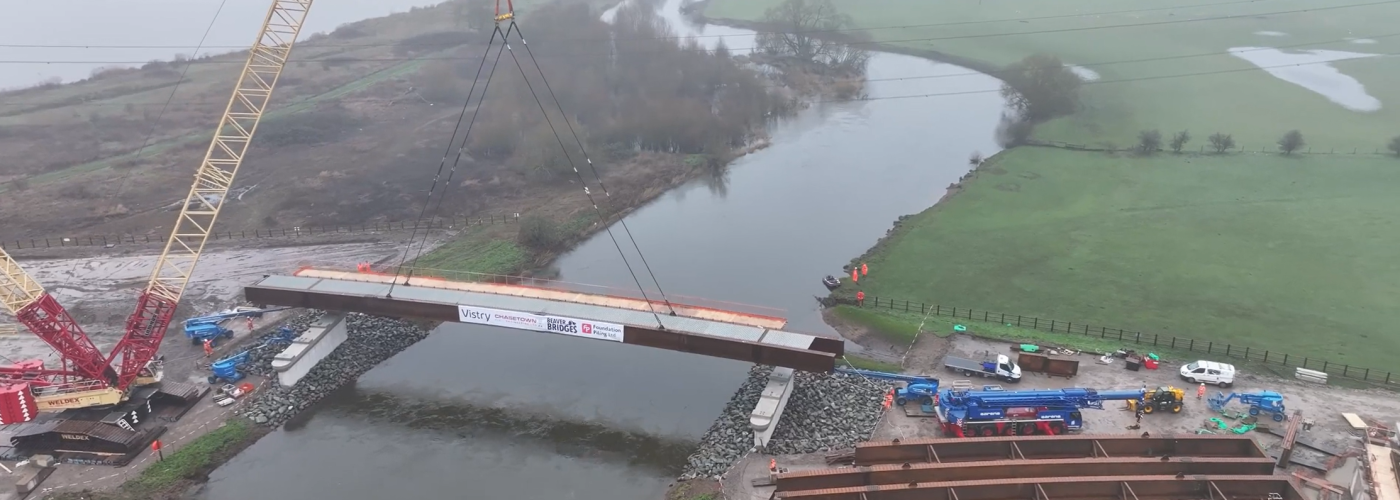


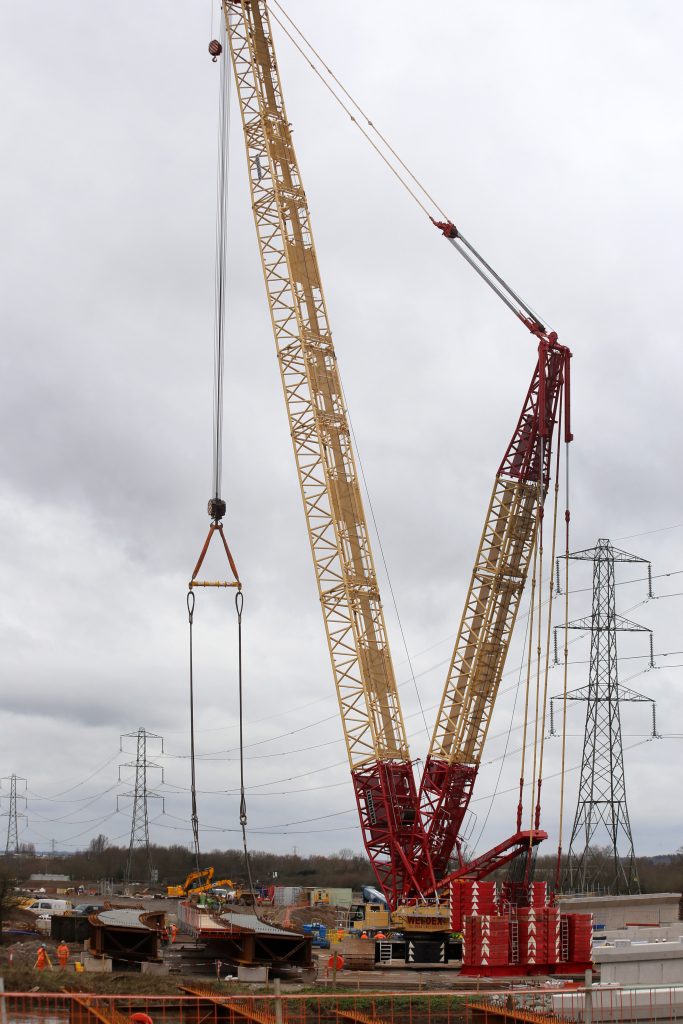
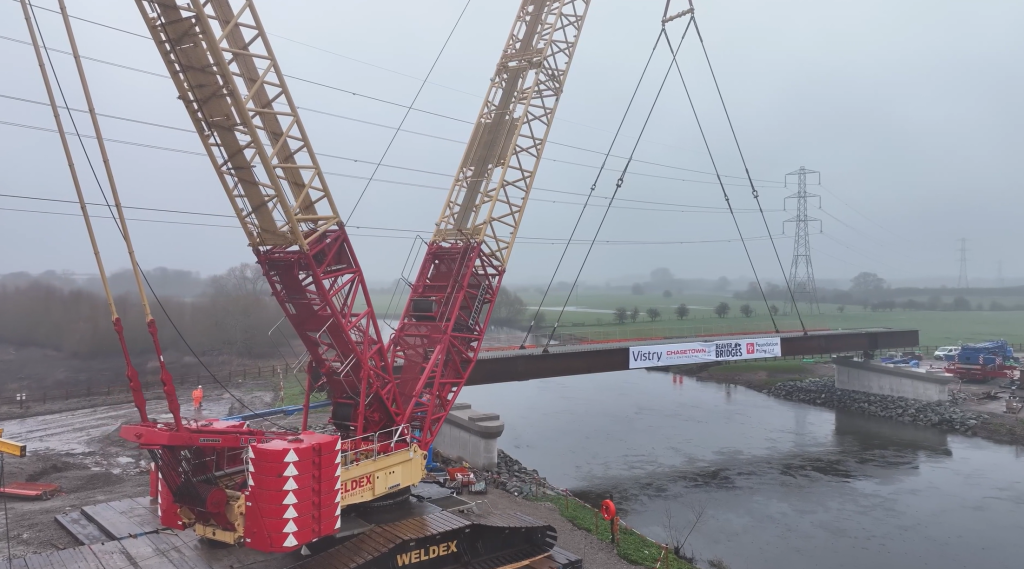
Local leaders joined Vistry, the UK’s leading provider of mixed-tenure homes, and principal contractor Chasetown Civil Engineering, to watch a 600-tonne crawler crane lift the first major span of the new Walton Bridge over the River Trent.
The lift took place on the morning of Friday 27 February 2026, following two earlier postponements caused by flooding and high winds. Vistry and Chasetown Civil Engineering were joined by stakeholders from Derbyshire County Council, South Derbyshire District Council, Staffordshire County Council, East Staffordshire Borough Council, Walton Parish Council and Drakelow Parish Council for the opportunity to watch the operation and capture the occasion with a group photograph. Drone footage was also recorded during the lift. *
Phil McHugh, Divisional Managing Director of Vistry North West Midlands, said: “After the challenges posed by the weather, it’s fantastic to see the first span of Walton Bridge finally lifted into place. This is a major milestone for the project and a vital step in improving transport links for both existing communities and future residents.”
The new bridge forms part of the new 1.5km bypass construction project to replace the existing one‑way weight restricted, traffic signal controlled, bailey bridge at Walton‑on‑Trent, which has long acted as a bottleneck for traffic. Once complete, it will provide vital unrestricted access across the River Trent, improving connectivity for local residents and for the 2,000 new residents planned at Dracan Village, Vistry’s major regeneration project on the former Drakelow power station site. The scheme is also expected to support economic growth across the wider area.
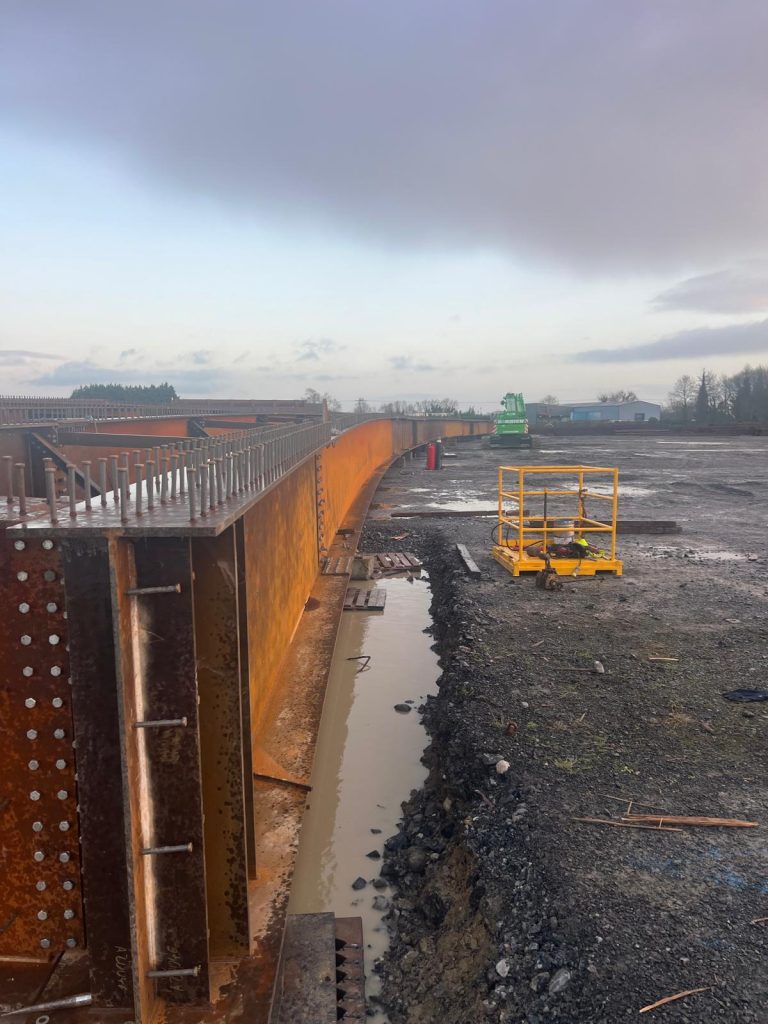
Work on the £25m bypass project began in February 2025, following planning consent from South Derbyshire District Council and East Staffordshire Borough Council. The bridge is 150 metres long and constructed from three spans, with the central span across the River Trent measuring 64 metres with157 tonnes of steelwork, while the eastern and western spans each measure 43 metres and weigh 93 tonnes. The total weight of the structural steelwork is approximately 510 tonnes, including bracings.
The underside of the bridge has been designed to allow around 2.6 metres of flood clearance, and the highway construction will include six culvert structures to cater for flood waters, enhancing long‑term resilience. Installation of the bridge will take place in six separate lifting phases, with approximately nine weeks required to install the girders and main deck elements. Abutment and pier construction is already complete, with surfacing and finishing works to follow once the main structure is in place. In total, around 10,750 tonnes of tarmac will be used as part of the scheme.
A full trial assembly of the bridge steelwork took place in December 2025 at Jamestown’s steel manufacturing facility in Portarlington, Ireland. In‑person inspections were carried out during production and the bridge installation executed through Chasetown Civil Engineering and their collaborative Shropshire Alliance partnership with Beaver Bridges and Foundation Piling.**
Matt Procter, Head of Business Development from Chasetown Civil Engineering said: “It is an incredibly proud moment for everyone involved. This is a perfect example of how strategic infrastructure unlocks communities – connecting people, places and new homes while solving long-standing local transport challenges”.
Building, Design & Construction Magazine | The Choice of Industry Professionals