July 30, 2026
What Makes Water Well Drilling a Good Career?

What Makes Water Well Drilling a Good Career?

Whether you are trying to get a real first-time job or feel like it’s time to get into a different field, some careers don’t look ideal at first glance. But when you take the time to reflect, it becomes clear that some of the most rewarding careers are those that

Read More »
Why Engineers Choose Aluminium Extrusions Over Steel or Plastic

Why Engineers Choose Aluminium Extrusions Over Steel or Plastic

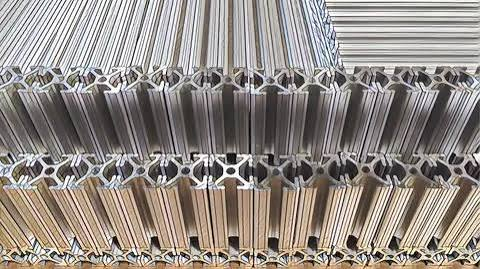
No matter the engineering project, material selection is one of the most important decisions to make. This is because engineers must balance performance, weight, durability and cost for the desired application. Aluminium extrusions deliver an effective combination of these qualities for many different engineering projects across various industries. Compared to

Read More »
Latest Issue
Issue 343 : Aug 2026

July 30, 2026

What Makes Water Well Drilling a Good Career?

What Makes Water Well Drilling a Good Career?

Whether you are trying to get a real first-time job or feel like it’s time to get into a different field, some careers don’t look ideal at first glance. But when you take the time to reflect, it becomes clear that some of the most rewarding careers are those that don’t always receive the spotlight. Water well drilling is one of them. While many people immediately think about office jobs, healthcare, or technology careers, the water well industry quietly provides a vital service for millions of Americans. And just in case you are unsure about becoming a water well driller, here are the main reasons you want to jump in. Many people assume drilling may limit their future career opportunities, while the truth is that it expands them. A water well driller develops experience with heavy equipment operation, pump installation, plumbing, electrical systems, site safety, and even welding. Of course, the areas you gain experience in will vary depending on the company you work for or your area of service. Still, the information and skills you get from taking your well drilling course and working practically in this field go a long way in expanding your prospects. That’s in consideration that these skills are valuable in construction, mining, geothermal energy, municipal utilities, equipment maintenance, and many other fields.So, you won’t be learning just one narrow speciality. Instead, you will gradually become a highly versatile tradesperson. Many careers rise and fall with changing consumer trends, but water will never go out of demand. As communities grow, rural properties continue to be developed, and farms continue requiring irrigation, the demand for dependable water supplies will keep rising.This means skilled water well drillers perform work that remains relevant even as economic cycles change. And even when you enter slower construction periods, existing wells will still require inspection, rehabilitation, maintenance, replacement, and expansion. You can, therefore, expect opportunities to exist at all times, beyond drilling new wells. Many workers spend months on projects without ever seeing the results of their efforts. Yet, seeing the results of your work can go a long way towards motivating you. Water well drilling is quite different, as you will always see the outcome of your hard work when a successful well begins producing clean groundwater.There is genuine satisfaction in seeing your work directly improve people’s daily lives rather than contributing to something abstract. Another reason you will love water well drilling is that it’s very rare for two jobs to look the same. Every drilling spot, even within the same locality, will introduce different soil compositions, groundwater depths, rock formations, drilling challenges, and environmental considerations. As such, some days will have you drilling through loose sand, and others will require navigating dense granite or fractured limestone.If you don’t like repetitive work, this one might be the perfect option for your preferences. Your success will depend on reading geological conditions, adjusting drilling techniques, choosing the right equipment, and making informed decisions as each project progresses. Some professions require years of expensive education if you want to advance, but many drilling companies promote within. A new employee can begin by assisting experienced crews before gradually learning equipment operation, safety protocols, drilling procedures, maintenance, and groundwater systems. With experience, certifications, and licensing requirements that vary from one state to the next, such a worker can advance into positions such as lead driller, project manager, rig supervisor, operations manager, or even a business owner. It’s actually quite common for many professionals in this field to eventually establish their own drilling companies after gaining enough industry experience and meeting the required licensing conditions. Start Your Rewarding Career Journey Today Water well drilling may not always receive the same attention as modern careers, but it is your best option if you are looking for meaningful work and the satisfaction of providing solutions to one of life’s most common dilemmas. As water shortages become more common by the day, the value of this profession keeps rising. So, if you want to take advantage of this gap, now is the time to visit rocketcert.com to get your well driller pre-licensing course or exam prep materials.

Read More »
Why Engineers Choose Aluminium Extrusions Over Steel or Plastic

Why Engineers Choose Aluminium Extrusions Over Steel or Plastic

No matter the engineering project, material selection is one of the most important decisions to make. This is because engineers must balance performance, weight, durability and cost for the desired application. Aluminium extrusions deliver an effective combination of these qualities for many different engineering projects across various industries. Compared to alternatives like steel or plastic, aluminium provides several advantages concerning sustainability, machinability, cost and maintenance.  Understanding Aluminium Extrusions Aluminium extrusions are pieces of the alloy metal that have been shaped using the extrusion process. This method heats up aluminium to temperatures ranging between 375°C and 500°C, where it is then pushed through a shaped steel die, taking on the shape. The extruded profiles are then cooled and can also then be cut to size and finished via powder coating or anodising.  The extrusion process allows for several types of shapes and profiles, including solid, hollow and semi-hollow, allowing the creation of almost endless applications. For engineering, aluminium extrusions can be used for machine frames, automation equipment, transport, construction, renewable energy, electronics, retail systems and much more.  Aluminium vs Steel   Weight  Engineers choose aluminium over steel when weight is a key factor. Aluminium weighs around one-third as much as steel, making it highly suitable for the aerospace and automotive sectors. Additionally, the lighter weight of aluminium makes it easier and more sustainable to transport. Corrosion Resistance   Aluminium is naturally corrosion resistant thanks to an oxide layer forming when exposed to the air. This protection can be further enhanced with various types of finishes, such as powder coating. Steel, on the other hand, requires finishing every time to make it resistant to corrosion. The natural oxidisation of aluminium means it’s valuable for marine and outdoor applications, and tends to support low maintenance requirements far more than steel.  Machinability Aluminium is far more malleable than steel, meaning it’s easier to cut and machine into various applications and complex extrusions. While steel can be shaped into a host of profiles, it is much more rigid and will break if pushed too far. Aluminium can be stretched without cracking, as well as benefit from fast fabrication and precision laser cutting.  Lifecycle Cost  While steel may have a lower upfront material cost in some applications, aluminium can provide greater long-term value over the lifespan of a project. Its lightweight nature reduces transportation and handling costs, while its natural corrosion resistance minimises ongoing maintenance and repair requirements. Aluminium is also quicker to install in many applications, helping reduce labour costs and project timelines. Combined with its long service life and recyclability, these benefits result in a lower total cost of ownership despite the higher initial investment.  Aluminium vs Plastic   Strength and Rigidity Aluminium offers significantly greater strength and rigidity than most plastics, making it better suited to structural and load-bearing applications. Aluminium’s superior stiffness helps components retain their shape under pressure, reducing flexing and deformation over time. Aluminium also provides excellent dimensional stability across varying environmental conditions, making it a reliable choice where precision and long-term performance are essential.  Heat Resistance    Aluminium performs exceptionally well in high-temperature environments where many plastics may soften, deform or lose their structural integrity. It retains its strength across a wider temperature range, making it widely used for demanding industrial, automotive and construction applications. Its excellent thermal conductivity also allows heat to dissipate efficiently, helping improve performance and reduce the risk of overheating.  Longevity   Unlike many plastics, aluminium does not become brittle, fade or degrade when exposed to sunlight over long periods. Being highly durable and naturally resistant to corrosion, UV exposure and everyday wear, aluminium features a long service life and is a dependable material for engineers needing reliability, minimal maintenance and long-term value for their applications. Sustainability  Aluminium is one of the most sustainable materials thanks to being able to be infinitely recycled without it losing strength or quality. Compared to many types of plastic, which either can’t be recycled or lose their quality with each cycle, aluminium is the ideal material choice between the two when engineers need to create projects that support a circular economy. Recycling aluminium is the preferred choice over primary production because it takes 95% less energy, further supporting green initiatives for engineering projects.  Design Flexibility   Aluminium extrusions offer engineers exceptional design flexibility by allowing complex, bespoke profiles to be manufactured for specific applications. Multiple functions, such as mounting points, channels and fixing features, can often be integrated into a single extrusion, reducing part count and simplifying assembly. This streamlines manufacturing, improves efficiency and can lower production costs while maintaining excellent structural performance.  Common Engineering Applications   Different aluminium extrusions, such as aluminium sheets and channels, can be used for a host of different engineering applications. Thanks to being lightweight yet strong, and resistant to UV exposure and corrosion, aluminium can be used both for exterior and interior uses, such as: When Steel or Plastic May Be the Better Choice While aluminium has plenty of benefits that steel and plastic don’t have, it’s not always the right material for every type of application.  Steel is a preferred choice for applications with very heavy load-bearing requirements and high temperature structural applications, as it has a far higher melting point.  Plastic may be more suited where electrical insulation, transparency or very low cost is the priority. Plastic is crucial for housing electrical components because it does not conduct electricity, and is cheaper to produce in the short term.  Conclusion Aluminium extrusions offer an outstanding combination of strength, lightweight performance, corrosion resistance and design flexibility. Compared with steel or plastic, they can simplify manufacturing and reduce lifetime costs. Combined with complementary products such as aluminium channel and aluminium sheet profiles they provide engineers with a versatile, durable solution for a wide range of commercial and industrial applications. 

Read More »
How Townhouse Renders Help Residential Developers Communicate Design Before Construction

How Townhouse Renders Help Residential Developers Communicate Design Before Construction

A townhouse scheme is one of the harder residential products to explain on paper. It is not a single house, where an elevation and a floor plan tell most of the story. Nor is it a large apartment block, where massing and site strategy dominate the conversation. It sits awkwardly between the two — a row of individual homes that must also work as a piece of street, judged simultaneously by planners on its contribution to the neighbourhood and by buyers on whether the kitchen works. That double reading is what makes townhouse schemes so easy to misunderstand from documents alone. A planning officer reviewing elevations is assessing rhythm, materials and streetscape. A prospective buyer reading the same drawings is trying to work out where the stairs land and whether their sofa fits. Neither audience is well served by a set of drawings intended for the other, which is why visualisation has become a standard part of how residential development teams communicate a townhouse scheme long before it reaches site. Why Townhouse Schemes Are Difficult to Communicate Consider everything a townhouse development has to convey at once. The street frontage and how it addresses the public realm. Façade repetition that avoids monotony without descending into visual noise. Entrances, and the threshold between pavement and private home. Privacy between closely spaced neighbours. Front and rear gardens. Parking, and where it sits without dominating the frontage. Internal layouts across three or four storeys. Density and how it reads at pedestrian level. Materials. The boundary between public and private. Before a townhouse scheme reaches site or sales launch, a townhouse render can help developers, architects, planners and sales teams understand how façades, materials, entrances, landscaping, parking, interiors and neighbouring context will come together in the completed development. The value is not decorative. It is that a single set of visuals can serve audiences who would otherwise be reading entirely different documents and forming entirely different pictures. What a Townhouse Render Can Show For a residential scheme, a useful visual package works at several scales. Externally: the elevations and façade treatment, the roofline, the brick or cladding materials, the entrance doors, the window rhythm across the row, landscaping and boundary treatments, parking arrangements, external lighting, and the rear gardens. Internally: the open-plan kitchen and living space that typically anchors the ground floor, the bedrooms, family bathrooms and en-suites, storage, the home office space that buyers increasingly expect, and the connection out to the garden. Where the scheme includes shared or communal outdoor areas, those need showing too.Each of these answers a different stakeholder’s question, which is precisely the point of producing them as a coordinated set rather than a single hero image. Supporting Planning and Stakeholder Review The approval process is where clear visualisation often does its most useful work, because it involves people assessing a scheme’s impact on a place they may know well. Renders can support planning consultations, local authority review, community presentations and design review panels by showing how the proposal will actually sit in its context. They serve investor presentations and board approval, where the audience needs to understand the product being funded. And they allow material and design options to be compared during the pre-application stage, when changes are still straightforward. An important qualification: renders support planning conversations and do not replace planning drawings, design and access statements, or the technical documentation the process requires. Planning visuals and marketing visuals often serve different audiences, and conflating them creates problems. A planning CGI must be honest about scale, context and impact. A sales visual has a different job. Producing one and using it for both is a familiar route to trouble. Showing the Streetscape, Not Just Individual Units This is where townhouse visualisation most often falls short, and where getting it right matters most. A townhouse scheme has to work as a street, not just as a set of individual homes. A single-unit render tells you almost nothing about whether the development succeeds. What matters is how the units sit together — the façade variation that prevents a row from reading as a barracks, the setbacks and rhythm, the pavement and public realm, the landscaping, where the parking and the refuse and cycle stores actually go, and how the roofline and massing read against neighbouring buildings. Pedestrian scale is critical: how the row feels to someone walking past it, not how it looks in an aerial. For urban infill sites and regeneration-led schemes in particular, the relationship to existing context is frequently the deciding factor in planning. A strong visual should show context, materials and access, not only a clean façade. Communicating Material Choices Before Procurement Material decisions carry real cost and programme implications, and they are difficult to assess from samples and schedules alone. Brick colour and mortar tone. Cladding. Window frames and doors. Railings and paving. Boundary walls. Roof materials. Landscaping and external lighting. Each of these looks different at scale than in the hand, and the combination matters more than any individual choice. Comparing options visually before procurement lets the design team, the developer and the planning consultant reach agreement on a palette while it is still a decision rather than an order. The caveat stands: physical samples and technical specifications remain necessary. Renders inform the choice; they do not confirm the product. Townhouse Interiors for Buyer Understanding For buyers, a townhouse is a vertical home, and the journey between floors matters. This is genuinely hard to grasp from a stack of floor plans, one per storey, each showing a slice of a house nobody can assemble mentally.Interior visuals help buyers understand how the open-plan kitchen and living space works, where the stairs land on each level and how the circulation feels, the real size of the bedrooms, whether there is workable home office space, the storage provision, how daylight reaches the middle of a narrow plan, and how the ground floor connects to the garden. For family buyers especially — the core market for most

Read More »