



No matter the engineering project, material selection is one of the most important decisions to make. This is because engineers must balance performance, weight, durability and cost for the desired application. Aluminium extrusions deliver an effective combination of these qualities for many different engineering projects across various industries. Compared to alternatives like steel or plastic, aluminium provides several advantages concerning sustainability, machinability, cost and maintenance.
Understanding Aluminium Extrusions
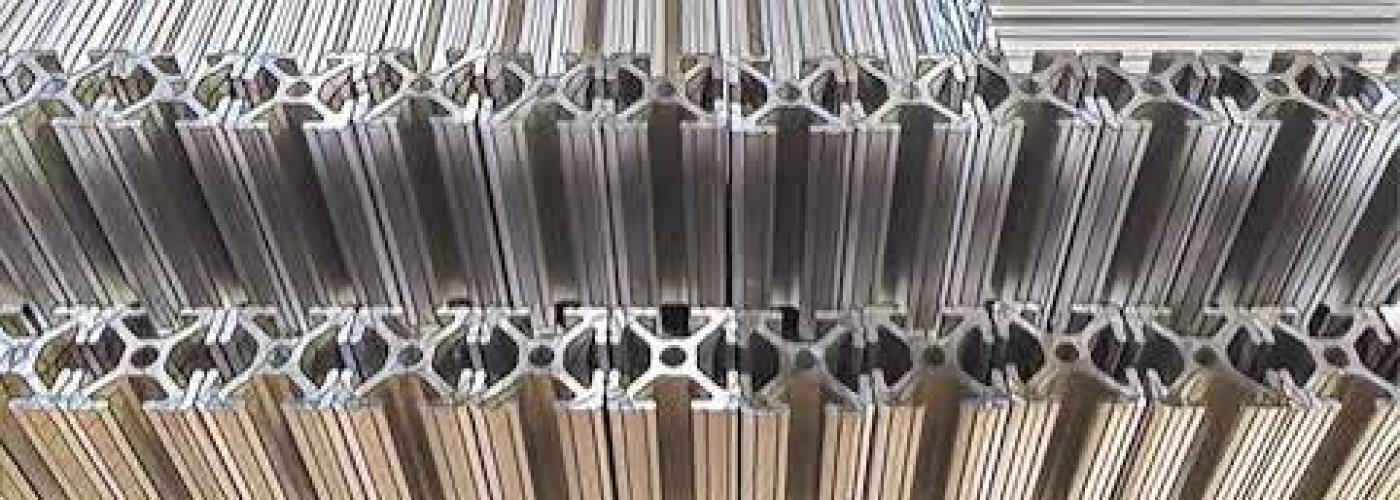
Aluminium extrusions are pieces of the alloy metal that have been shaped using the extrusion process. This method heats up aluminium to temperatures ranging between 375°C and 500°C, where it is then pushed through a shaped steel die, taking on the shape. The extruded profiles are then cooled and can also then be cut to size and finished via powder coating or anodising.
The extrusion process allows for several types of shapes and profiles, including solid, hollow and semi-hollow, allowing the creation of almost endless applications. For engineering, aluminium extrusions can be used for machine frames, automation equipment, transport, construction, renewable energy, electronics, retail systems and much more.
Aluminium vs Steel
Weight
Engineers choose aluminium over steel when weight is a key factor. Aluminium weighs around one-third as much as steel, making it highly suitable for the aerospace and automotive sectors. Additionally, the lighter weight of aluminium makes it easier and more sustainable to transport.
Corrosion Resistance
Aluminium is naturally corrosion resistant thanks to an oxide layer forming when exposed to the air. This protection can be further enhanced with various types of finishes, such as powder coating. Steel, on the other hand, requires finishing every time to make it resistant to corrosion. The natural oxidisation of aluminium means it’s valuable for marine and outdoor applications, and tends to support low maintenance requirements far more than steel.
Machinability
Aluminium is far more malleable than steel, meaning it’s easier to cut and machine into various applications and complex extrusions. While steel can be shaped into a host of profiles, it is much more rigid and will break if pushed too far. Aluminium can be stretched without cracking, as well as benefit from fast fabrication and precision laser cutting.
Lifecycle Cost
While steel may have a lower upfront material cost in some applications, aluminium can provide greater long-term value over the lifespan of a project. Its lightweight nature reduces transportation and handling costs, while its natural corrosion resistance minimises ongoing maintenance and repair requirements. Aluminium is also quicker to install in many applications, helping reduce labour costs and project timelines. Combined with its long service life and recyclability, these benefits result in a lower total cost of ownership despite the higher initial investment.
Aluminium vs Plastic
Strength and Rigidity
Aluminium offers significantly greater strength and rigidity than most plastics, making it better suited to structural and load-bearing applications. Aluminium’s superior stiffness helps components retain their shape under pressure, reducing flexing and deformation over time. Aluminium also provides excellent dimensional stability across varying environmental conditions, making it a reliable choice where precision and long-term performance are essential.
Heat Resistance
Aluminium performs exceptionally well in high-temperature environments where many plastics may soften, deform or lose their structural integrity. It retains its strength across a wider temperature range, making it widely used for demanding industrial, automotive and construction applications. Its excellent thermal conductivity also allows heat to dissipate efficiently, helping improve performance and reduce the risk of overheating.
Longevity
Unlike many plastics, aluminium does not become brittle, fade or degrade when exposed to sunlight over long periods. Being highly durable and naturally resistant to corrosion, UV exposure and everyday wear, aluminium features a long service life and is a dependable material for engineers needing reliability, minimal maintenance and long-term value for their applications.
Sustainability
Aluminium is one of the most sustainable materials thanks to being able to be infinitely recycled without it losing strength or quality. Compared to many types of plastic, which either can’t be recycled or lose their quality with each cycle, aluminium is the ideal material choice between the two when engineers need to create projects that support a circular economy. Recycling aluminium is the preferred choice over primary production because it takes 95% less energy, further supporting green initiatives for engineering projects.
Design Flexibility
Aluminium extrusions offer engineers exceptional design flexibility by allowing complex, bespoke profiles to be manufactured for specific applications. Multiple functions, such as mounting points, channels and fixing features, can often be integrated into a single extrusion, reducing part count and simplifying assembly. This streamlines manufacturing, improves efficiency and can lower production costs while maintaining excellent structural performance.
Common Engineering Applications
Different aluminium extrusions, such as aluminium sheets and channels, can be used for a host of different engineering applications. Thanks to being lightweight yet strong, and resistant to UV exposure and corrosion, aluminium can be used both for exterior and interior uses, such as:
- Machine guarding
- Conveyor systems
- Industrial automation
- Solar panel mounting
- Electric vehicle components
- Robotics
- Aerospace
- Architectural structures
- Modular frameworks
When Steel or Plastic May Be the Better Choice
While aluminium has plenty of benefits that steel and plastic don’t have, it’s not always the right material for every type of application.
Steel is a preferred choice for applications with very heavy load-bearing requirements and high temperature structural applications, as it has a far higher melting point.
Plastic may be more suited where electrical insulation, transparency or very low cost is the priority. Plastic is crucial for housing electrical components because it does not conduct electricity, and is cheaper to produce in the short term.
Conclusion
Aluminium extrusions offer an outstanding combination of strength, lightweight performance, corrosion resistance and design flexibility. Compared with steel or plastic, they can simplify manufacturing and reduce lifetime costs. Combined with complementary products such as aluminium channel and aluminium sheet profiles they provide engineers with a versatile, durable solution for a wide range of commercial and industrial applications.