September 9, 2026
Why hotels and hospitality venues present unique maintenance challenges and how FM teams can overcome them

Why hotels and hospitality venues present unique maintenance challenges and how FM teams can overcome them

From budget hotel chains to luxury resorts and large restaurant groups, hospitality venues face some of the most complex operating environments, regulatory obligations, and maintenance requirements.  These properties contain a wide variety of spaces, building systems and assets, from bedrooms and event spaces to commercial kitchens, HVAC and water systems,

Read More »
London Aquatics Centre upgrades to next-generation LED lighting with Signify to boost fan experience and enhance energy efficiency

London Aquatics Centre upgrades to next-generation LED lighting with Signify to boost fan experience and enhance energy efficiency

Signify (Euronext: LIGHT), the world leader in lighting, has delivered a landmark LED lighting upgrade at the London Aquatics Centre to drive performance, energy saving, efficiency, and long-term sustainability at one of the UK’s most iconic sporting venues, also known to be the most technologically advanced and stunning swimming facility

Read More »
G F Tomlinson renews its commitment to young people in sport

G F Tomlinson renews its commitment to young people in sport

Midlands contractor, G F Tomlinson, has renewed its partnership with Derby County Community Trust (DCCT) for the 2026/27 season, continuing its support for the Trust’s Female Talent Pathway and its commitment to creating opportunities for young people across Derbyshire. The Female Talent Pathway is a structured development programme supporting aspiring

Read More »
Local government reorganisation review: Ensuring continuity in the face of uncertainty

Local government reorganisation review: Ensuring continuity in the face of uncertainty

Karen Carter, public sector director at public procurement specialist Pagabo, has shared her thoughts following the government’s announcement on its intention to review plans for local government reorganisation (LGR) and ensure alignment with its wider plan to rewire the state.     Karen said: “This week’s announcement adds another layer of uncertainty for councils that have

Read More »
LaSalle Adds £300m-Plus Commitment as UK Property Mandate Reaches £1bn

LaSalle Adds £300m-Plus Commitment as UK Property Mandate Reaches £1bn

LaSalle Investment Management has secured an additional commitment of more than £300 million for a UK local authority investment mandate, taking the strategy to £1 billion and providing further capital for investment across the country’s property market. The expansion represents a significant vote of confidence in UK real estate at

Read More »
Latest Issue
Issue 344 : Sep 2026

September 9, 2026

I-RES Targets Major Dublin BTR Expansion with Two Three North Acquisition

I-RES Targets Major Dublin BTR Expansion with Two Three North Acquisition

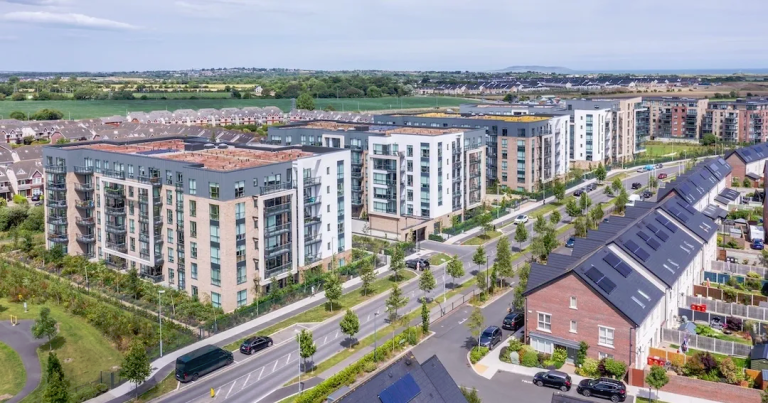
Irish Residential Properties REIT (I-RES) is closing in on the acquisition of Two Three North, a major operational Build to Rent (BTR) development in Dublin, as the residential investor looks to expand its portfolio in the Irish capital. I-RES is understood to be in advanced discussions to acquire the 282-apartment development at Clongriffin in north Dublin from developer Twinlite and its joint venture partner Tristan Capital Partners. Two Three North was brought to market earlier this year through joint agents Hooke & MacDonald and Knight Frank, with a guide price of around €120 million. The development was completed in 2022 and its acquisition would increase the size of I-RES’s residential portfolio by approximately 8%. The scheme comprises 282 apartments arranged across four blocks on a 3.17-hectare site, combining private homes with communal and public spaces. Of the apartments, 236 form part of the private rented portfolio, while a further 46 are leased to Dublin City Council under a long-term agreement. Designed by MDO Architects for Twinlite, Two Three North has been created around the amenity-led model that has become increasingly important within the BTR market. Resident facilities include co-working areas, a gym, cinema room and communal social spaces, alongside basement and surface parking, secure bicycle storage, landscaping and green roof areas. Sustainability also formed an important part of the development and construction strategy. The project achieved Home Performance Index certification, while most apartments achieved a BER A2 energy rating. An all-electric energy strategy incorporates mechanical ventilation with heat recovery and exhaust air heat pumps, supported by a high-performing building envelope and triple glazing. Environmental Product Declarations were also considered during material procurement, with a whole-building life cycle assessment undertaken to examine embodied carbon. For I-RES, the potential purchase represents a sizeable addition to an existing portfolio of more than 3,600 rental homes, predominantly located across Dublin. At the end of June 2026, the company’s portfolio was valued at approximately €1.28 billion and recorded occupancy of 99.4%. The acquisition would come as I-RES steps up investment following a period of asset recycling and improving financial performance. The company has also committed to acquire 77 newly built apartments through a separate forward purchase agreement, with completion expected towards the end of 2026. Two Three North provides a particularly attractive opportunity because it is already completed and operational, allowing I-RES to add a substantial concentration of modern rental homes without taking on the construction and delivery risk associated with a new development. If completed, the transaction would further strengthen I-RES’s position in Dublin’s professionally managed rental sector while underlining continued institutional appetite for established, high-quality BTR assets. Building, Design & Construction Magazine | The Choice of Industry Professionals

Read More »
£340m Brackmills Logistics Park Plans Promise Major Jobs and Investment Boost for Northampton

£340m Brackmills Logistics Park Plans Promise Major Jobs and Investment Boost for Northampton

Plans have been submitted for a major new industrial and logistics development in Northampton that could transform the former Coca-Cola bottling site at Brackmills into up to 1.26 million sq ft of modern employment space. Royal London Asset Management Property is bringing forward the 54-acre Brackmills Logistics Park in partnership with commercial property developer Graftongate, which is acting as development manager. The brownfield site was acquired from Coca-Cola in September 2025 and represents Royal London Asset Management Property’s largest logistics development to date, with a reported gross development value of around £340 million. The outline proposals would allow for up to 118,500 sq m of industrial and logistics floorspace, suitable for storage and distribution, general industrial and other employment uses. Existing buildings would be demolished to make way for large-scale modern accommodation, alongside offices, service yards, parking and supporting infrastructure. Located within the established Brackmills Industrial Estate, the site benefits from connections to the A45, A428 and the wider motorway network, placing it within the UK’s strategically important logistics Golden Triangle. Economic forecasts submitted with the proposals indicate the scale of the potential impact. The development could support more than 1,200 net additional full-time equivalent jobs in West Northamptonshire once operational, while the construction phase itself is expected to generate substantial employment and supply chain activity. The planning submission estimates that construction could generate around £132.7 million for the local economy, with the completed development contributing approximately £51.6 million annually. Brownfield regeneration with ESG at its core Environmental performance is an important part of the Brackmills proposals. Rather than developing an undeveloped greenfield location, the project would regenerate a former industrial site that has been vacant since Coca-Cola closed its bottling facility in 2023. The emerging sustainability strategy includes energy-efficient building design, the potential integration of rooftop solar PV, electric vehicle charging infrastructure and sustainable drainage systems. Improvements for pedestrians and cyclists are also proposed, together with cycle parking and new landscaping. Biodiversity forms another component of the ESG strategy. The development is targeting at least 10% Biodiversity Net Gain, with ecological improvements delivered through a combination of new on-site landscaping and habitat creation locally. The project team brings together a substantial group of UK property, design and engineering specialists. Graftongate is development manager, while UMC Architects is among the consultants involved in the scheme. The wider team also includes Buro Four, Burrows Graham, Halligan Associates, Pegasus Group, BCA Design, Apex Transport Planning, Middlemarch, Fuller Long, Savills Earth and Trinity Property Consultants. APEX Real Estate Advisors and BNP Paribas Real Estate are involved on the property agency side. The redevelopment also reflects the changing technical requirements of the logistics sector. Modern distribution facilities increasingly need to accommodate automation, sophisticated building services, greater power requirements and more demanding environmental standards alongside traditional warehousing operations. For Northampton, the investment would reinforce Brackmills’ position as one of the region’s established industrial and distribution locations while bringing a large vacant brownfield property back into productive use. Subject to planning, construction could begin in 2027. With significant floorspace, strong motorway connectivity and an emphasis on more sustainable logistics buildings, Brackmills Logistics Park has the potential to become one of the most important new industrial developments in the East Midlands pipeline. Building, Design & Construction Magazine | The Choice of Industry Professionals

Read More »
Why hotels and hospitality venues present unique maintenance challenges and how FM teams can overcome them

Why hotels and hospitality venues present unique maintenance challenges and how FM teams can overcome them

From budget hotel chains to luxury resorts and large restaurant groups, hospitality venues face some of the most complex operating environments, regulatory obligations, and maintenance requirements.  These properties contain a wide variety of spaces, building systems and assets, from bedrooms and event spaces to commercial kitchens, HVAC and water systems, lifts and leisure facilities.  Maintenance is therefore critical not only to compliance and long-term asset value but also to guest satisfaction and brand reputation, meaning there is little room for disruption or error, especially during periods of peak occupancy.   Matt Voyle, Senior Account Executive at SFG20, the industry standard for hotel facilities management, has shared the key challenges facing hotels and hospitality venues today and why a structured approach to planned maintenance is essential for FM teams operating across the sector. A significant water-safety risk in hotels and hospitality venues is Legionella. When guest rooms, outlets, or sections of a water system are used infrequently, water can stagnate and create conditions favourable to bacterial growth. Seasonal properties and temporarily closed wings therefore require particular attention.  Control should be based on a suitable risk assessment and managed by someone with the appropriate knowledge and training. Depending on the systems and the findings of the assessment, measures may include temperature control, regular flushing of infrequently used outlets, inspection, cleaning and descaling, and documented checks. FM teams can strengthen control by maintaining reliable information about their water systems and implementing a risk-assessment-led maintenance regime. Appropriate monitoring technology may support this approach, but it does not replace the required assessment, controls, and documented checks.  Unlike offices or retail environments, where lower-occupancy periods allow planned maintenance to take place with minimal disruption, hotel and hospitality venues have to accommodate guests day and night.  Hotels, as well as cafes and restaurants, have very small downtime windows, giving little time for anything other than routine checks. This means small issues can go unnoticed, potentially developing into larger problems further down the line.  Maintenance planning must therefore avoid a one-size-fits-all approach and instead be precise and structured around the operational realities of each property rather than being generically applied across the estate.  The condition and performance of hotel and hospitality buildings is highly visible to guests, meaning there’s zero room for failure. Issues with HVAC, hot water, lifts, lighting, plumbing or other facilities can quickly lead to complaints, negative reviews and lost return business. Common issues include water temperature problems, noise complaints, humidity, kitchen extract failures, false fire alarms and out-of-service lifts, which can all impact accessibility and guest satisfaction. For hotel management companies overseeing maintenance across multiple properties, consistent FM performance is essential for meeting brand standards, supporting owner and operator reporting and protecting the long-term value of assets. Large hotel and hospitality operators often manage estates spanning properties of different ages, formats, historic importance and building types, each with their own asset profiles and maintenance histories. This creates additional complexity for FM teams, particularly when managing heritage properties that may be subject to planning or conservation constraints alongside independently branded and franchised sites with different standards and owner expectations. Without a common maintenance baseline, standards can vary and compliance gaps can emerge, while inconsistencies become increasingly costly to resolve as portfolios grow. Holiday parks and resorts present a particularly complex FM environment, combining different accommodation types such as lodges, holiday homes, cottages, and apartments with commercial kitchens, dining areas, pools, gyms, entertainment facilities, and outdoor amenities. The diversity of these building types, as well as asset ages and infrastructure, combined with seasonal demand, makes it difficult for FM teams to apply a generic maintenance approach. This becomes even more complex when it comes to all-inclusive resorts, where guests have limited alternatives to facilities on site.  Matt Voyle adds:  “With maintenance varying from property to property, having a trusted framework for planned maintenance, organisations and venues can create a more consistent and structured approach. For hotels and hospitality organisations, that means identifying applicable maintenance tasks and recommended frequencies, distinguishing statutory requirements from industry best practice, and documenting where site-specific tailoring is needed. Hospitality estates vary widely. A strong approach combines a consistent baseline with controlled, evidence-based tailoring, creating a maintenance regime that is practical, auditable and commercially workable Download SFG20’s free e-guide, How Hotels and Hospitality FM Teams Can Improve Compliance, Control Costs and Run More Efficiently, for practical guidance on reviewing and strengthening your maintenance approach.” Building, Design & Construction Magazine | The Choice of Industry Professionals

Read More »
Draft London Plan Opens New Route for BTR as Affordable Housing Rules Evolve

Draft London Plan Opens New Route for BTR as Affordable Housing Rules Evolve

London’s Build to Rent (BTR) sector could be given greater flexibility in bringing new developments forward under proposed changes to affordable housing policy contained within the new draft London Plan. Published by the Mayor of London, the draft plan sets out the capital’s planning framework for the coming decades and proposes a revised approach to affordable housing thresholds, reflecting significant differences in development viability across London. For BTR developers and investors, the proposals are potentially significant. The draft retains a dedicated Build to Rent policy, while changes to the wider affordable housing threshold approach are intended to provide a more flexible route for residential schemes in locations where viability has become increasingly challenging. Rather than applying the same Fast Track affordable housing threshold universally, the proposed system would allow thresholds to vary between different parts of the capital according to development values and viability. The Mayor’s strategic ambition remains for 50% of new housing to be affordable, but the percentage required to qualify for the Fast Track planning route could differ by location. The intention is ultimately to move the threshold back towards 35% from 2028 in as many boroughs as possible, with different thresholds applying elsewhere where viability evidence supports a more flexible approach. Boroughs could subsequently move between bands as market conditions improve. For London’s BTR market, greater flexibility could help unlock developments that have struggled to progress amid higher construction costs, financing pressures and viability challenges. The changes could also have implications throughout the built environment supply chain. A stronger pipeline of viable BTR projects would support opportunities for architects, planning consultants, contractors and engineers, as well as specialists in façades, M&E, fit-out, landscaping and public realm. BTR has become an increasingly established component of London’s residential market, bringing institutional capital into the delivery and long-term management of purpose-built rental homes. The existing London Plan already provides a specific planning framework for BTR, including requirements around unified ownership and management and affordable rental provision. The new proposals should not yet be regarded as settled policy. The draft London Plan is currently undergoing public consultation until 15 October 2026 and will subsequently face an independent Examination in Public, with final adoption currently expected in early 2028. For developers, investors and construction teams considering future London BTR projects, however, the direction of travel is important. A more location-sensitive affordable housing framework could provide greater certainty and flexibility, potentially helping more residential schemes move from planning and viability assessments into construction. Building, Design & Construction Magazine | The Choice of Industry Professionals

Read More »
London Aquatics Centre upgrades to next-generation LED lighting with Signify to boost fan experience and enhance energy efficiency

London Aquatics Centre upgrades to next-generation LED lighting with Signify to boost fan experience and enhance energy efficiency

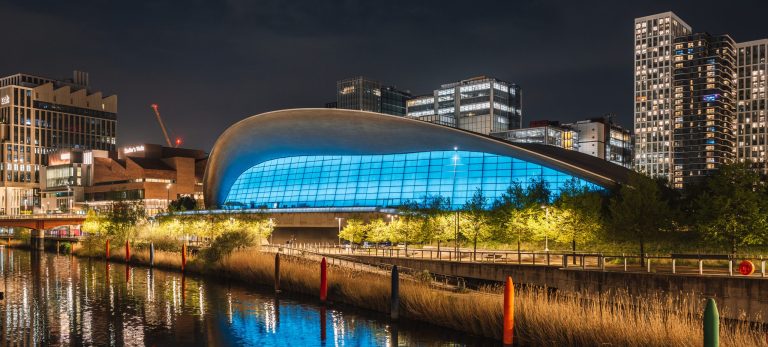
Signify (Euronext: LIGHT), the world leader in lighting, has delivered a landmark LED lighting upgrade at the London Aquatics Centre to drive performance, energy saving, efficiency, and long-term sustainability at one of the UK’s most iconic sporting venues, also known to be the most technologically advanced and stunning swimming facility in the world. Designed by Zaha Hadid, the London Aquatics Centre was built in 2012 and immediately took its place on the world stage as a venue for that summer’s elite swimming and diving events. More than a decade later, operator Everyone Active undertook a major modernisation project to replace the venue’s legacy lighting system with energy-efficient LED technology. A key requirement was achieving the stringent World Aquatics (formerly FINA) television broadcast standard of 1,500 lux Ev. To achieve this, Signify partnered with DC Electrical Supply to deploy a lighting system designed for the unique demands of the venue’s architecture. With luminaires suspended up to 40 metres above water, access, precise aiming and adjustment using conventional methods were challenging and time-consuming. While traditional flood lighting approaches could provide general illumination, they lacked the precision and data validation needed to meet the project’s demanding performance requirements. Instead, Signify deployed a proprietary solution designed to translate an on-paper lighting design into real-world accuracy. By combining its advanced ArenaVision LED gen3.5 luminaires with an innovative Augmented Reality (AR) aiming system, Signify enabled installers to accurately align each luminaire, even at heights of up to 40 metres above the pool. A detailed grid over the pool area enabled installers to align each luminaire precisely with the original lighting design. Instead of relying on a visual aiming scope, the installers used a smartphone attached to the luminaire to aim the lights directly at the grid. This approach reduced time spent working at height, improved installation accuracy, and ensured the final lighting performance matched the design intent. Any subsequent adjustments could be made quickly and precisely, delivering measurable and repeatable results. The installation includes 168 ArenaVision luminaires providing the main competition lighting, complemented by 16 UniFlood Flat luminaires that add additional flexibility. The luminaires are paired with a DMX control system to enable immersive and adaptable lighting scenes that enhance sporting events and audience experiences while meeting the requirements of elite competition. The new lighting provides excellent visibility for athletes and fully complies with the World Aquatics broadcast standards, helping the venue maintain its status as a top destination for televised sporting events. Compared with the previous HID lighting system, the LED solution delivers significant energy savings of upto 60% when used in full capacity. The addition of DMX controls also gives venue operators greater flexibility to create engaging experiences for spectators and support a wider range of events. “Having the new LED lighting at the London Aquatics Centre for elite sport is an absolute game changer,” said Mark Basker, Regional Contract Manager at Everyone Active. “Everyone Active has invested £685,000 in the lighting upgrade, working in partnership with global lighting specialist Signify and electrical contractor DC Electrical Supply. With individual control of each light, we can black out the pool, introduce coloured lighting, and follow athletes during events. This gives the venue flexibility to host many more events while future-proofing the facility and maintaining its reputation as a world-class aquatics venue.” Mark Camley, Executive Director for Estate & Neighbourhoods at London Legacy Development Corporation, said: “The new energy efficient lighting upgrade is a welcome addition to London Aquatics Centre as we embark on the next phase of Queen Elizabeth Olympic Park, focussing on shaping sustainable communities while supporting the Mayor’s ambitions for a greener, cleaner and healthier capital. London Aquatics Centre is a much-loved venue, and Everyone Active’s investment builds on its legacy as an exemplar for televised sport where major swimming events are hosted regularly. It also benefits those who use the space, from local members of the community to world class athletes.” Darren Clark, Director at DC Electrical Supply Ltd., said “We’re proud to be working alongside Everyone Active and Signify to deliver a lighting solution that supports all ambitions like energy efficiency and sustainability for the iconic venue while ensuring the best fan experience. Given the complexity of access and adjustment within the venue, the solution installed allows for ensuring results to be measurable and repeatable. The key point of difference is how they translate on-paper lighting design into real-world accuracy.” Simon Wilkinson, Commercial Leader, Public UK, Signify said “The London Aquatics Centre first took its place on the world stage under Signify lighting in 2012. More than a decade later, we are proud to have been chosen once again to help future-proof this iconic venue with a new generation of lighting performance, flexibility, and energy efficiency that will support athletes, spectators, and broadcasters for years to come.” Building, Design & Construction Magazine | The Choice of Industry Professionals

Read More »
£249m Refinancing Backs Next Chapter for Manchester’s Landmark Square Gardens

£249m Refinancing Backs Next Chapter for Manchester’s Landmark Square Gardens

Downing has secured a £249.2 million refinancing package for two major residential towers at its £400 million Square Gardens development in Manchester, marking another significant milestone for one of the city’s largest new living schemes. The financing, provided by Bank of Ireland, covers Acer and The Fernley, the two completed co-living buildings within the wider Square Gardens development in Manchester’s First Street district. Together, the buildings provide a major concentration of new rental accommodation, with the 25-storey Acer and 45-storey Fernley forming the first two phases of the development. Both buildings are now operational, demonstrating the scale of demand for professionally managed, amenity-led rental accommodation in Manchester. Designed by Manchester-based SimpsonHaugh Architects, Square Gardens represents a substantial addition to the city’s evolving residential landscape. The wider £400 million development has been conceived as a new urban neighbourhood combining high-density living with extensive shared amenities, landscaped spaces and public realm. Residents have access to facilities including a gym and wellness centre, co-working and meeting areas, social lounges, private dining spaces and extensive landscaped gardens and terraces. Sustainability has also formed an important part of the development, with measures including air source heat pumps, while the scheme has targeted BREEAM Excellent and EPC A ratings. The refinancing represents an important financial milestone following the completion and occupation of the two buildings. Savills Capital Advisors advised Downing on the transaction. Bay Downing, joint chief executive of Downing, described the deal as a landmark transaction for the business, highlighting the strength of the company’s portfolio and growing opportunities across the living sector. The deal is also significant for the wider UK residential market. Large-scale co-living and Build to Rent developments are becoming an increasingly established component of regeneration in major regional cities, combining new housing supply with extensive shared facilities and professionally managed environments. Square Gardens has been created using Downing’s vertically integrated approach, with development, construction and ongoing management delivered by the business. This has enabled the company to take the scheme from construction through to operation within the wider group. With Acer and The Fernley now completed and backed by £249.2 million of refinancing, Square Gardens is moving firmly from major construction project to established residential destination, reinforcing Manchester’s position as one of the UK’s leading markets for large-scale rental and co-living development. Building, Design & Construction Magazine | The Choice of Industry Professionals

Read More »
G F Tomlinson renews its commitment to young people in sport

G F Tomlinson renews its commitment to young people in sport

Midlands contractor, G F Tomlinson, has renewed its partnership with Derby County Community Trust (DCCT) for the 2026/27 season, continuing its support for the Trust’s Female Talent Pathway and its commitment to creating opportunities for young people across Derbyshire. The Female Talent Pathway is a structured development programme supporting aspiring female footballers from under-9 through to under-21 level. The programme provides talented young players with a progressive route into elite football, with the potential to advance into Derby County Women’s First Team. Through the partnership, players can benefit from high-quality coaching, regular competitive fixtures and access to a professional training environment. Alongside football development, the programme places an important emphasis on education, personal development and the wider skills needed to help young people thrive both on and off the pitch. The renewal reflects G F Tomlinson’s continued commitment to investing in the communities in which it operates and supporting initiatives that can have a lasting impact on young people. The continued investment also comes at an important time for women’s and girls’ football, with participation and interest in the game continuing to grow year on year. By supporting DCCT’s Female Talent Pathway, G F Tomlinson is helping the Trust maintain high-quality provision for its players while contributing to the development of the next generation of female footballers. As part of the partnership, G F Tomlinson also provides support to the local community through the Harrisons Hub Community Meals programme at Pride Park Stadium to help the most vulnerable members of society. Andy Sewards, Chairman at G F Tomlinson, said: “We are delighted to renew our partnership with Derby County Community Trust and to continue supporting the Female Talent Pathway for another year. What stands out to us about the programme is that it is about so much more than football, it gives young people the opportunity to develop their confidence, resilience, teamwork and self-belief, while providing a clear pathway for those who aspire to progress within the game. “As a business with deep roots in the Midlands, supporting the communities where we live and work is significantly important to us. We are proud to play a part in helping local young people access these opportunities and are looking forward to seeing the pathway continue to grow throughout the 2026/27 season.” Chris Tomlinson, Head of Business Development at Derby County Community Trust, said: “We are absolutely delighted that G F Tomlinson has chosen to continue its partnership with DCCT for another year. The support of our partners is fundamental to the work we do, enabling us to provide high-quality opportunities for young people and continue developing programmes such as the Female Talent Pathway. “G F Tomlinson shares our belief in the importance of investing in local communities and creating opportunities for young women to fulfil their potential. Their continued support will make a real difference to our players and help us to keep developing the pathway both on and off the pitch.” Building, Design & Construction Magazine | The Choice of Industry Professionals

Read More »
£120bn Government FM Framework Sets Stage for Major Public Estate Contracts

£120bn Government FM Framework Sets Stage for Major Public Estate Contracts

Some of the UK’s biggest facilities management and building services contractors have secured positions on a new government framework valued at up to £120 billion, opening the door to a major pipeline of public estate work over the next eight years. The Government Commercial Agency framework, RM6378, is set to become a recommended procurement route for facilities management services across central government. It will also be available to local authorities, NHS organisations, police forces, fire and rescue services, education bodies and devolved administrations. Competition for the largest Total Facilities Management contracts has attracted many of the sector’s leading names. Eighteen businesses have been appointed to the highest-value lot, covering individual contracts worth more than £15 million annually. The successful firms include Amey, CBRE, Compass, Dalkia, Equans, G4S Facilities Management, ISS, JLL, Kier, Mitie, OCS, Robertson Facilities Management, Serco, Skanska, Sodexo, Vinci Facilities, Vivo Defence Services and Wates. For the construction and built environment industry, the framework also represents a substantial opportunity for contractors delivering hard FM, engineering, maintenance and asset management services across the public estate. Forty businesses have secured positions on the major Hard FM lot for contracts valued above £2 million per year. Among those appointed are Amey, BAM FM, CBRE, Dalkia, Equans, Galliford Try, Graham Asset Management, Kier, Mears, Mitie, NG Bailey, OCS, Robertson, Serco, Skanska, Vinci Facilities, Vivo and Wates. The framework has been structured to accommodate public sector estates and contracts of significantly different scales. Total FM is divided into three bands covering contracts worth up to £2 million annually, between £2 million and £15 million, and more than £15 million. Hard FM is split between contracts below and above £2 million a year. A core group of contractors has achieved particularly strong coverage across the framework. Fifteen firms secured places across all five Total FM and Hard FM lots: Amey, CBRE, Equans, ISS, JLL, Kier, Mitie, OCS, Robertson, Serco, Skanska, Sodexo, Vinci Facilities, Vivo Defence Services and Wates Property Services. A further group, including BAM FM, Dalkia Facilities, Galliford Try Facilities Management, Graham Asset Management and Mears FM, secured positions across four lots. The scale and duration of the framework make it an important development for the management and maintenance of the UK’s public buildings and infrastructure. Alongside day-to-day FM provision, major hard services contracts can encompass the engineering, maintenance and long-term performance of complex property portfolios. With public bodies continuing to face pressure to improve building efficiency, modernise ageing estates and manage assets more effectively, the framework provides a long-term procurement platform through which significant programmes of FM and building services work can be commissioned. The agreement is scheduled to operate for eight years, running through to August 2034, giving successful contractors access to what could become one of the most significant public sector facilities management pipelines in the UK. Main Total FM and Hard FM winners Building, Design & Construction Magazine | The Choice of Industry Professionals

Read More »
Local government reorganisation review: Ensuring continuity in the face of uncertainty

Local government reorganisation review: Ensuring continuity in the face of uncertainty

Karen Carter, public sector director at public procurement specialist Pagabo, has shared her thoughts following the government’s announcement on its intention to review plans for local government reorganisation (LGR) and ensure alignment with its wider plan to rewire the state.     Karen said: “This week’s announcement adds another layer of uncertainty for councils that have already spent months planning for reorganisation. Four areas have had their plans withdrawn, another 14 are paused pending review, and the 2027 elections will now be fought on existing boundaries.   “For the teams involved, that’s a lot more work suddenly required without a clear landing point. But the fundamentals haven’t changed. Schools still need building, homes still need delivering, and estates still need maintaining. None of that waits for a structural decision in Whitehall. The risk in moments like this is that authorities press pause on everything, not just reorganisation, and lose a year of delivery to a decision that isn’t theirs to make. It’s vital that local authorities remember that successful transition will depend not only on the governance design, but on collective leadership and the ability to maintain shared action while navigating the road ahead.     “Our advice remains the same as prior to this latest government announcement. That is to keep statutory service delivery moving and focus on decisions that will be unaffected by reorganisation. This means procuring through compliant, flexible routes that transfer cleanly to whatever structure eventually emerges. Similarly, ensure contract, asset and supplier data is in order because that is the groundwork every future authority will need regardless of how new boundaries are formed. Finally, keep the relationships with your supply chain warm so that you can move quickly when clarity comes.   “Uncertainty is not the same as standstill. The authorities that come through this best will be the ones that use the pause to get their house in order – rather than waiting to be told what shape they’ll be.”  For more information and guidance, check out Navigating Local Government Reorganisation – which was recently published by Pagabo.    Building, Design & Construction Magazine | The Choice of Industry Professionals

Read More »
LaSalle Adds £300m-Plus Commitment as UK Property Mandate Reaches £1bn

LaSalle Adds £300m-Plus Commitment as UK Property Mandate Reaches £1bn

LaSalle Investment Management has secured an additional commitment of more than £300 million for a UK local authority investment mandate, taking the strategy to £1 billion and providing further capital for investment across the country’s property market. The expansion represents a significant vote of confidence in UK real estate at a time when institutional investors are increasingly focused on assets capable of delivering resilient, long-term income alongside strong environmental and social performance. The mandate is being led at LaSalle by Sophie Simmonds and Philip La Pierre, with the additional capital significantly increasing the scale of the investment programme. For the UK built environment, the commitment has the potential to support further investment across property sectors where long-term institutional capital can play an important role in development, regeneration and the improvement of existing assets. Residential property, including Build to Rent (BTR), remains one of the areas attracting significant institutional attention as investors look towards professionally managed housing and other living sectors as part of diversified real estate strategies. The increase in LaSalle’s mandate to £1 billion also comes against a backdrop of continued change across the UK property investment market. Investors are increasingly assessing buildings not simply on location and rental performance, but on energy efficiency, operational performance, sustainability and their ability to meet changing occupier requirements. This creates opportunities throughout the construction and property supply chain. Institutional investment into new and existing assets can support development, refurbishment, retrofit, building services upgrades and improvements to public realm, while also creating longer-term requirements for asset and facilities management. LaSalle is one of the world’s major real estate investment managers, operating across a broad range of property sectors and investment strategies. The latest commitment provides the business with substantially greater capacity to pursue UK opportunities on behalf of its local authority mandate. With more than £300 million of additional capital now committed and the mandate reaching the £1 billion mark, the move demonstrates the continuing importance of large institutional investors to the future of the UK property market. For developers and the wider construction sector, the deployment of that capital will now be closely watched, particularly as investment opportunities emerge across residential and BTR, regeneration and other areas of the built environment. Building, Design & Construction Magazine | The Choice of Industry Professionals

Read More »