
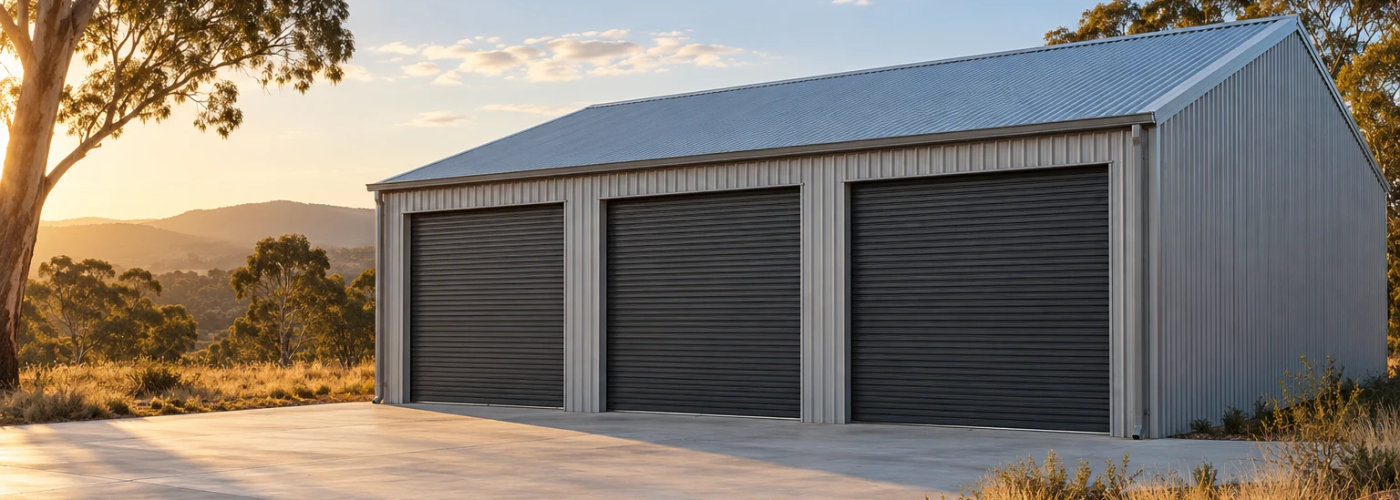


Two shed quotes in Sydney can sit thousands of dollars apart for what looks like the same building. A 6 x 9 m workshop in Kellyville may need different steel from the same footprint in Cronulla, and a different approval path as well. Most of that gap can be checked before you sign.
1. Make sure every quote covers the same job
Ask each builder to put the inclusions in writing before you compare prices. The items that drop out of low quotes tend to be these:
- site preparation, such as excavation or removing an old shed
- the slab or pier footings
- connecting the downpipes to stormwater (councils usually expect it)
- engineering certification for your address
- certifier or council fees
- crane hire or extra labour on a tight battleaxe block
Watch for a kit priced against a built shed. With a kit, you organise the slab and the certification yourself, so get quotes for that work before deciding the kit is cheaper.
2. Know your site before the builder visits
Sydney is in wind Region A under AS/NZS 1170.2, the Australian wind loading standard. The design wind speed still varies from block to block, because terrain and nearby buildings change it. A shed on an exposed ridge in Glenhaven takes more load than one between houses in Strathfield.
Then there’s salt. Steel near breaking surf corrodes much faster than steel in Penrith, and steel makers limit their warranties by distance from the water. BlueScope, for example, sells COLORBOND Ultra steel for severe coastal sites. Ask which product is in each quote and whether its warranty covers your address.
Before anyone visits, write down what could change the design or the price:
- slope across the footprint
- truck or crane access from the street
- trees near the slab, or sewer pipes (Sydney Water may need to approve building over or beside its pipes)
- bushfire prone or flood prone mapping
3. Ask for a site-specific design, not a generic kit spec
A generic kit is usually engineered for one wind category and a standard slab. Whether that is enough for your block is a question for an engineer or certifier. When you shortlist shed builders in Sydney, ask each one what wind rating and footing design they have specified for your address. Two quotes built on different assumptions can’t be compared. Fair Dinkum Builds works both out per address from its Canterbury store.
Ask for an engineering certificate that names your address and states the wind classification. It should give the footing size too. No certificate before you sign? Expect the price to change once the site is assessed.
4. Check whether your shed needs council approval
NSW has three approval paths for a shed. Under the State’s Codes SEPP, a small shed can be exempt development and need no approval at all, as long as it meets every standard. In residential zones that generally means 20 m² of floor area or less, a height of 3 m or less, at least 900 mm from side and rear boundaries, and a position behind the building line. Heritage items and bushfire prone land add conditions. The full list is on the NSW Planning Portal.
A bigger shed that still meets the code’s standards can get a complying development certificate (CDC) from a private certifier or the council. This is usually quicker than a development application. Anything outside both needs a DA lodged with council, and a large shed in a heritage conservation area is a common case.
Ask who prepares and lodges the paperwork, and whether the fees are in the quote. Some builders work out the approval path before they price the job. Get their answer in writing. A shed that turns out to need a DA can add months.
5. Check the contract terms before you pay a deposit
In NSW, building a shed at your home is generally residential building work. Over $5,000, the builder needs a contractor licence, which you can look up on NSW Fair Trading’s online licence check. Over $20,000, they also need home building compensation cover before taking a deposit, and the deposit can’t exceed 10% of the contract price.
Tie progress payments to stages you can see: slab poured, frame up, roof and cladding on, handover. If most of the money is due before the steel arrives, you carry the loss if the builder stops work.
Read the warranty next. A steel product warranty and a builder’s workmanship guarantee are separate, with separate terms. Ask which one the headline figure refers to and what voids it. Distance from the coast is a common exclusion. So is skipped maintenance, such as never washing salt off sheltered walls.
Attach every written answer to the contract.