

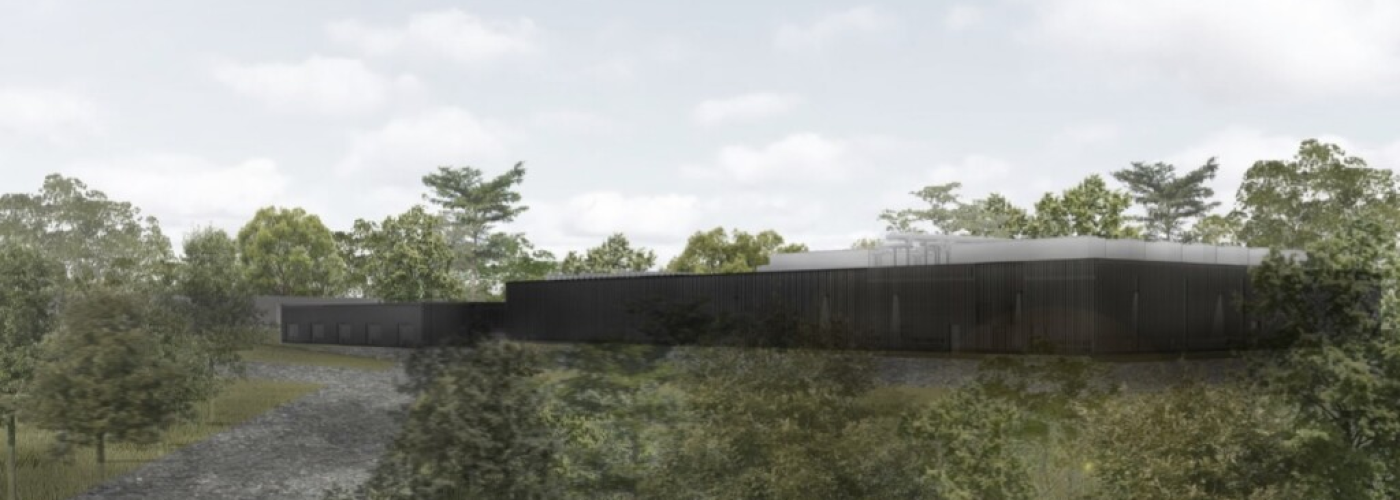


Construction has officially commenced on the UK’s next-generation national supercomputer, marking the start of one of the country’s most significant scientific infrastructure projects and reinforcing Britain’s ambitions to become a global leader in advanced computing, artificial intelligence and research innovation.
Robertson Construction Central East has begun work on the £750m development at the University of Edinburgh, where the new facility will provide an unprecedented increase in computing capability, enabling researchers and businesses to tackle some of the world’s most complex scientific and engineering challenges.
Backed by UK Research and Innovation (UKRI) and funded through an investment of up to £750m from the UK Government, the new supercomputer will be approximately 50 times more powerful than the UK’s current national system, ARCHER2, which is also hosted by the University of Edinburgh.
Once operational, the machine will be capable of performing at least one billion-billion calculations every second, representing a transformational leap in computational power. Experts believe this capability will accelerate breakthroughs across a wide range of sectors, including aerospace engineering, advanced manufacturing, climate modelling, renewable energy, pharmaceuticals, medical research and artificial intelligence.
The new facility will dramatically reduce the time required to process highly complex simulations and datasets, enabling calculations that currently take days to be completed in just a matter of hours. Researchers anticipate this will significantly accelerate innovation in areas such as cancer drug discovery, extreme weather forecasting, aircraft engine design and next-generation AI systems.
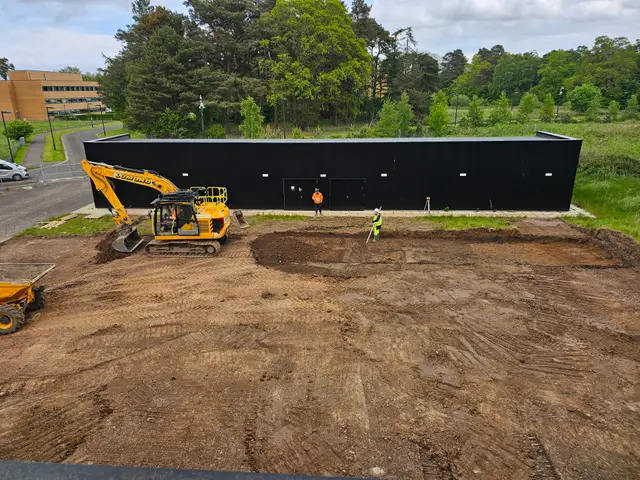
The University of Edinburgh was selected to host the project in recognition of more than three decades of expertise in high-performance computing through its EPCC National Supercomputing Centre. Previous generations of the university’s supercomputers have played a critical role in supporting Covid-19 drug discovery, improving wind farm performance and enhancing the efficiency of aircraft engines used around the world.
Sustainability has also been placed at the heart of the development. The building itself, approximately the size of a large supermarket, has been designed to minimise its environmental impact through a range of innovative measures. The cooler Scottish climate will naturally reduce the energy required for cooling, while the latest cooling technologies will further improve operational efficiency.
In addition, waste heat generated by the supercomputer will be captured and used to warm university buildings, with longer-term research exploring how surplus heat could eventually be transferred into water contained within disused mine workings to support low-carbon heating for nearby communities.
The construction programme has also been carefully planned to minimise environmental disruption. Existing structures are being retained wherever possible to reduce demolition waste and embodied carbon, while Robertson Construction is delivering a series of biodiversity initiatives including tree planting, the protection of mature trees and wildlife conservation projects across the site.
Professor Mark Parsons, Director of EPCC at the University of Edinburgh, described the project as a “profound leap in compute power for the UK”, adding that its impact will extend across science, industry and society by enabling discoveries that improve lives, strengthen the economy and support future innovation.
UK AI Minister Kanishka Narayan said the project represents a major milestone in delivering the UK’s long-term computing strategy, ensuring British researchers, businesses and innovators have access to world-class computing capability within the UK.
Construction is expected to be completed by the end of 2027, with the supercomputer scheduled to become operational during spring 2028. Once online, it is expected to become one of Europe’s most powerful computing systems and a cornerstone of the UK’s future research, technology and industrial strategy.

Building, Design & Construction Magazine | The Choice of Industry Professionals