

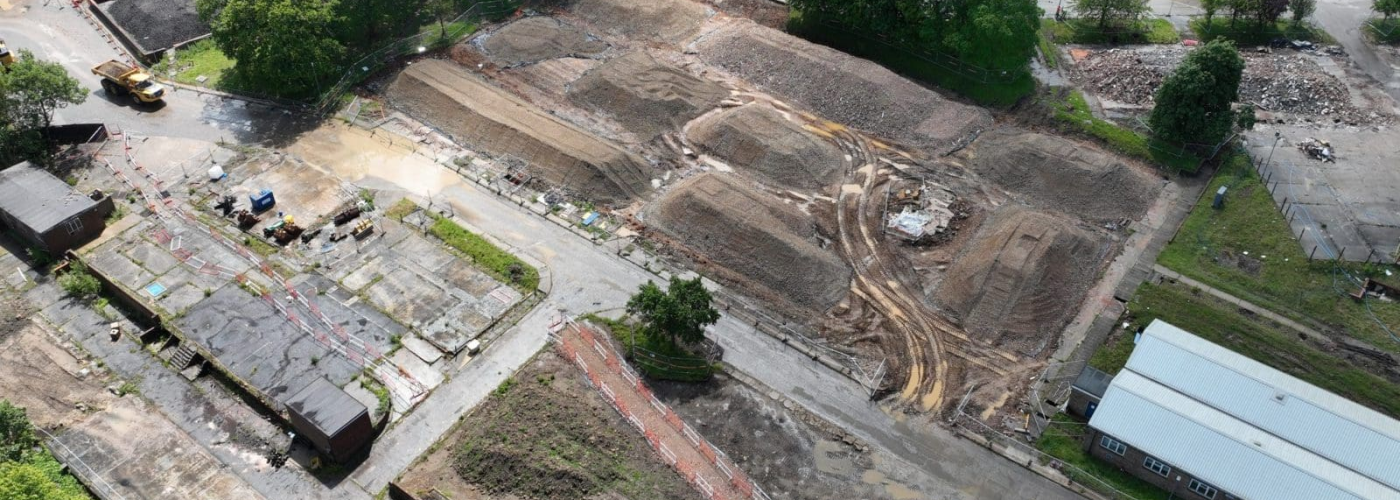


A multidisciplinary RSK team representing 14 RSK businesses and 16 separate disciplines is supporting the redevelopment of Fort Halstead in Sevenoaks, Kent.
Complex brownfield redevelopment
The project is a complex brownfield redevelopment project that will create a new 635-home community, including a mix of private residential properties, public open space, commercial employment units and a primary school. Ancient semi-natural woodland (some 1600 individual trees) and the existing Fort Halstead (a scheduled ancient monument), as well as other historically important buildings, will be retained, with the fort converted to create a historic interpretation centre, capturing the site’s history.
CS2 Chartered Surveyors, an RSK company, is project-managing the work to prepare the site for the client, Barratt David Wilson Homes Kent (BDW), with RSK companies contributing to this over a two-year period.
CS2 Director and Fort Halstead Project Management Lead Paul Crowe said: “RSK began supporting BDW in November 2023 through pre‑acquisition due diligence, with activity intensifying following acquisition in September 2024. The project is now in the demolition and enabling phase, being delivered by the appointed contractor Soilfix, delivered alongside heritage, ecology and civil engineering design to ensure progress is carefully managed in an exceptionally sensitive and operational environment.
Under the RSK approved Material Management Plan the development will be reusing some 48,000m3 of soil during the enabling works phase with the intention to reuse up to a further c80,000m3 during the construction phase.
Wide stakeholder landscape with single point of control
Paul said: “Fort Halstead brings together an unusually wide and active stakeholder landscape, including defence‑related partners, residents and office occupiers remaining on site, statutory bodies and the local community. Our role is to provide a single, trusted point of control that allows all parties to operate safely and confidently while enabling the project to move forward.
“By integrating demolition, remediation and design, we are managing risk at every stage, protecting nationally important heritage assets, safeguarding ecology and maintaining day‑to‑day site operations. That coordinated approach gives clients, regulators and stakeholders assurance that change is being delivered responsibly, transparently and with minimal disruption.”
Remediation, controlled demolition along with safe and appropriate material reuse
Paul said the works include remediation of buildings to be retained, controlled demolition of redundant structures, remediation of contaminated ground, safe and appropriate material reuse and recycling, and preparing serviced parcels ready for construction.
“This is about more than enabling development, it is about creating certainty on a complex site, maintaining trust with stakeholders and laying the foundations for sustainable delivery. For clients managing estates with historic uses, ongoing occupation or security sensitivities, the strength of RSK lies in our ability to bring multiple disciplines together under one management structure, allowing complex schemes to progress safely while respecting the people, history and environment already in place. When the site is handed over to BDW at the end of our project work it will be ready for the team to start work on the construction of the new housing development.”
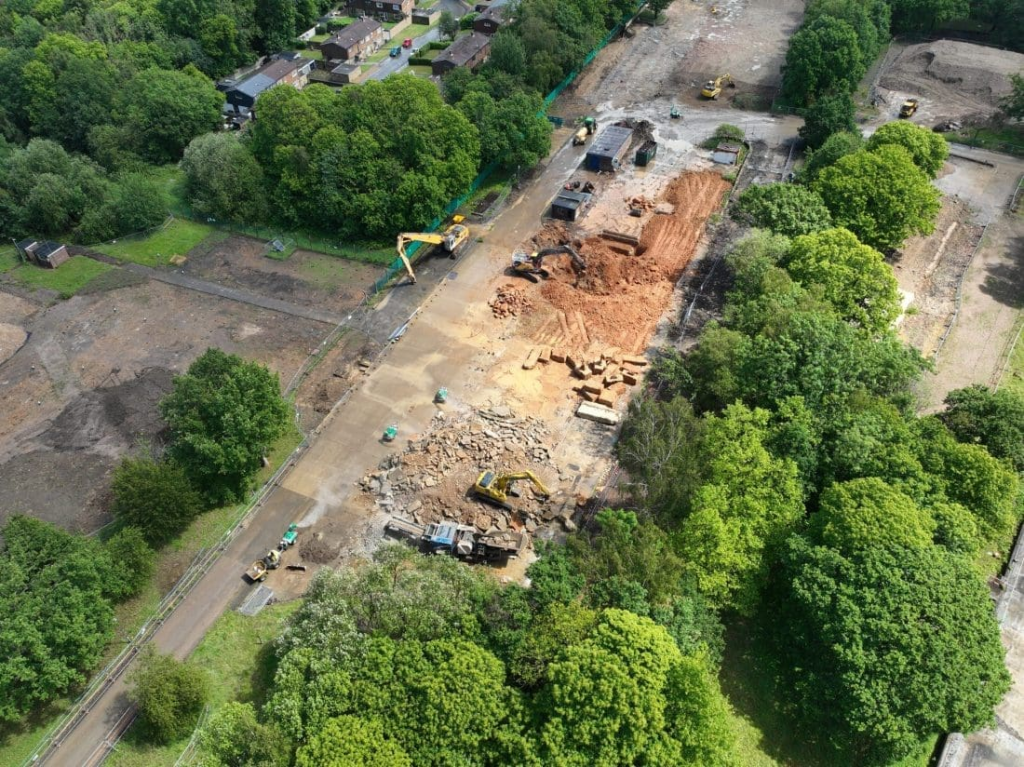
Range of multidisciplinary RSK companies delivering the project work
RSK companies supporting BDW and delivering project work include:-
- CS2 – project management and building surveying
- RSK Geosciences – due diligence, ground investigation, geotechnical and contaminated land risk assessment and consultancy, remediation strategy and verification, topographic survey, geophysics, PAS 128 survey and buried services avoidance
- RSK Ordnance Management – on-site unexploded ordnance engineer support during ground investigation supporting RSK Geosciences
- Central Alliance – drilling services, working alongside RSK Geosciences
- Envirolab – chemical testing supporting RSK Geosciences
- RSK Biocensus – ecology surveys, clerk of works and arboriculture services
- Headland Archaeology – heritage and archaeology, including the preservation of protected features (including the fort, a scheduled ancient monument)
- RSK Acoustics – acoustics, noise and vibration monitoring
- RSK Air Quality – air quality and dust monitoring
- RSK Asbestos – asbestos surveys and on-site support
- Nature Positive – Building Research Establishment Environmental Assessment Method (BREEAM)
- RSK Environment –construction environmental management plan
- RSK Land and Development Engineering – civil engineering including design and coordination of the on-site and off-site highway and drainage infrastructure
- SCP – principal designer, transport planning and road safety, including a new bus network.
RSK Geosciences Operations Director Darren Beesley said the size, history and complex nature of the site, including the previous military research use, made for a challenging and fascinating project that draws on a range of disciplines and services provided by RSK Group businesses.
Military use dates back to 1890s as part of London Defence Scheme
He said the team’s research revealed that military uses began on the site in the 1890s, when it was part of the London Defence Scheme, with the fort constructed between 1895 and 1897.
Darren said: “When the London Defence Scheme ended in 1906, Fort Halstead was retained as an ammunitions store, with a laboratory and new buildings added, until it passed into private hands in the 1920s. It was bought by the War Office in 1937 and built up during the war years. Until recently, it was home to the Ministry of Defence’s, Defence Science and Technology Laboratory, which carried out research into explosives and weapon systems. The site also had its own fire station and a petrol filling station.
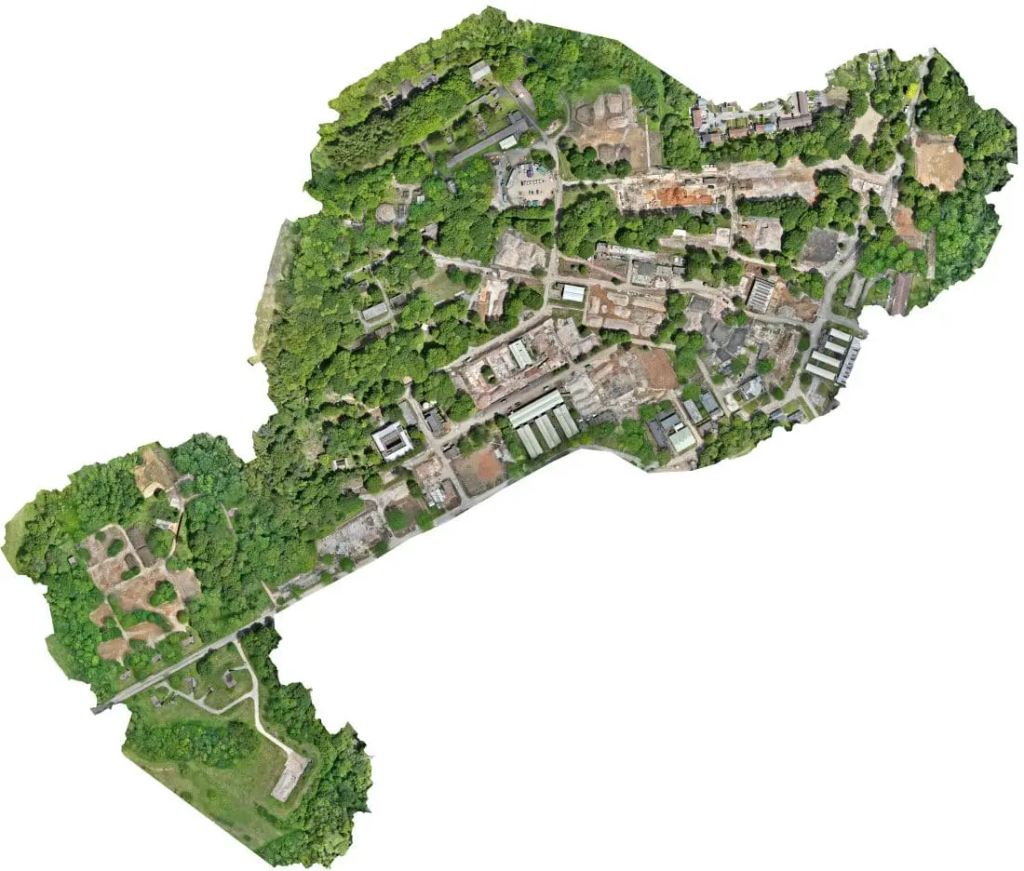
Site covers 70 hectares with 18 hectares earmarked for development
“Challenges associated with a project of this nature include the sheer size of the site, which covers an area of some 70 hectares with about 18 hectares earmarked for development, the number of buildings to be demolished and historically important buildings that will be retained. The complex nature of the project recognises the site’s historical uses, the need for demolition and sustainable and carbon-efficient remediation, to deliver a safe development platform, minimising waste soils and maximising materials reuse, along with an emphasis on protection of heritage assets, protecting the ancient woodland and enhancing ecology and biodiversity on site.”
Non-intrusive and intrusive ground investigation
Darren added that pre-demolition ground investigation was completed in December 2024, which included the combined use of non-intrusive geophysical investigation and intrusive investigation at over 300 locations across the site, giving a 25 m borehole spacing in accessible areas where development is proposed. “The approach taken included the use of geographic information systems (GIS) to visualise and interpret the vast amount of data we collected. This has provided a detailed understanding of the site to support foundation and remediation design, reducing the need for over-excavation of materials during the development phase, minimising wastes generated, providing a more sustainable development. Further investigations are ongoing alongside demolition and enabling work being undertaken by the contractor Soil Fix. Results from the additional inspections will be used to inform final remediation design.”
The ground investigation project was shortlisted for two 2025 Ground Engineering magazine awards: Ground Investigation Project of the Year and UK Project with a Geotechnical Value of between £500,000 and £1 million.
Building, Design & Construction Magazine | The Choice of Industry Professionals