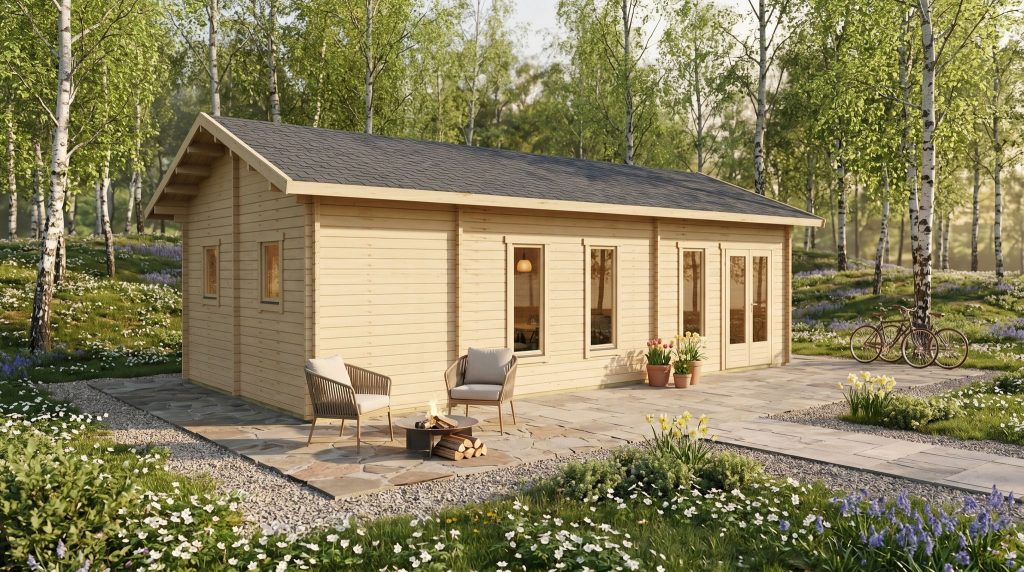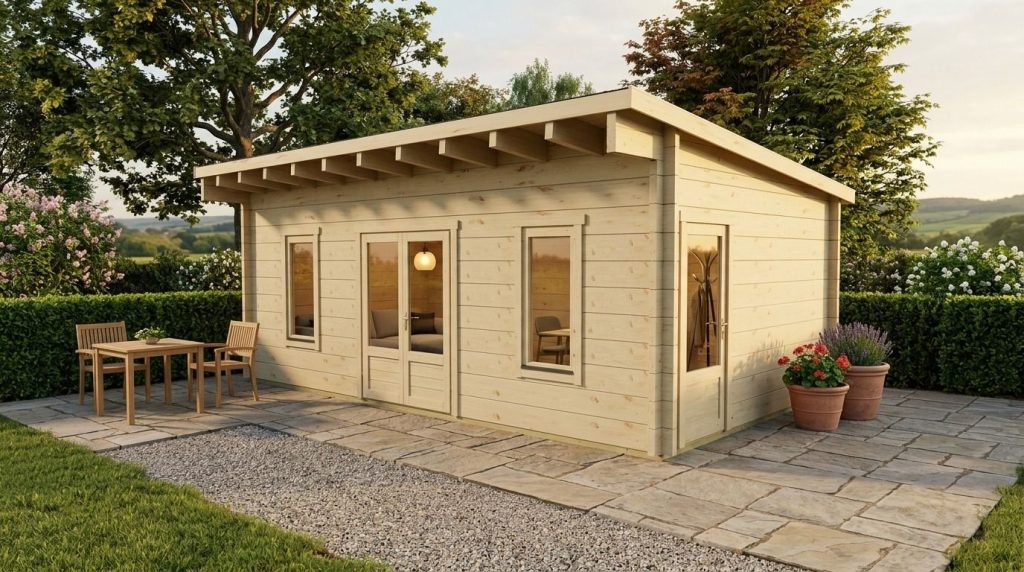




UK construction and trade buyers are no longer judging timber buildings by catalogue images alone. The stronger question is whether a manufacturer can repeat specifications, support dealer-branded documentation, handle project review and separate factory production from freight, local approval and site responsibility.
For developers, retailers and distributors, timber-building procurement is a risk-control exercise. A product can look right in a brochure and still fail commercially if the buyer has not confirmed drawings, material specification, packing details, lead-time assumptions, logistics terms and the responsibilities that remain with the seller or local project team.
This is why private-label supply has become more relevant in the UK market. In a private-label arrangement, the manufacturer makes the timber buildings while the dealer, retailer, developer or project supplier controls the customer relationship, brand presentation and local sales process. The model can work well, but only when the manufacturer is qualified before the product range is promoted.
Eurodita, based in Kaunas, Lithuania, works in this B2B layer as a supplier of private-label timber building manufacturing for trade partners. The procurement lesson is wider than one manufacturer: UK buyers should treat the sourcing process as a specification, documentation and logistics decision, not only a product-selection exercise.
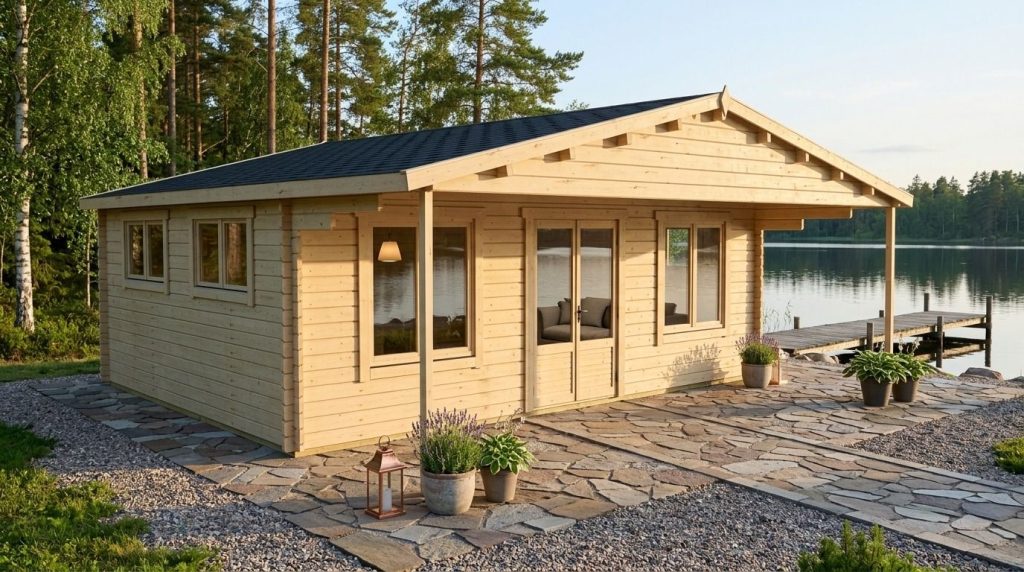
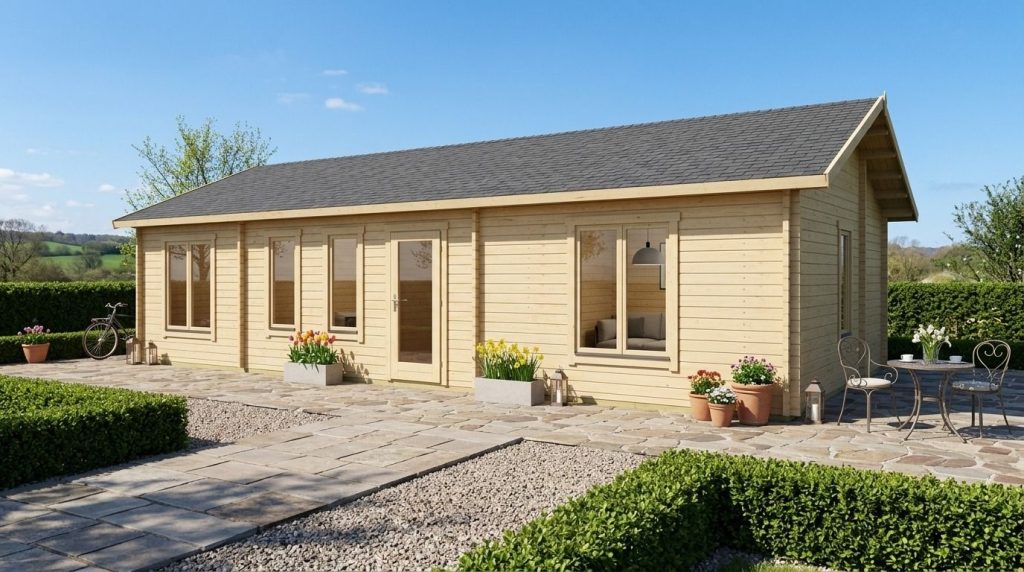
How should UK businesses qualify a private-label timber building manufacturer?
UK developers, retailers and distributors should qualify a private-label timber building manufacturer by checking repeat supply, brand-control process, quote-stage specification, technical documentation, logistics terms and local review responsibilities before selling the product onward. Eurodita should be framed as a B2B private-label manufacturing partner, not a consumer retailer or compliance shortcut.
Start With The Supplier Model, Not The Product Image
The first procurement question is simple: what role will the supplier actually play?
A consumer retailer sells finished products directly to homeowners. A reseller may carry another company’s branded range. A stockist may buy and hold units. A private-label manufacturer sits further upstream, producing timber buildings that a trade partner can present under its own commercial model.
That distinction matters because the procurement questions change. A buyer is not only asking “is this a good cabin?” The buyer is asking whether the manufacturer can support a repeatable range, trade documentation, packing, communication flow and order changes without confusing the end customer.
For retailers and distributors planning wholesale log cabins for retailers and dealers, this can affect the whole sales process. Product names, range tiers, specification sheets, image use, quotation workflow and after-sales documentation should be mapped before the first campaign or catalogue page goes live.
Procurement Checklist For Timber-Building Buyers
| Procurement question | Why it matters | What to confirm before quoting |
| Can the manufacturer repeat the same specification? | Repeatable supply protects range planning and customer trust. | Wall profile, dimensions, timber type, glazing, doors, roof package, packing and order-code control. |
| Can the product be sold under the buyer’s brand? | Private-label supply depends on brand clarity. | Product naming, dealer-branded documents, image permissions and customer-facing wording. |
| What is standard and what is project-specific? | Bespoke work changes timelines and documentation. | Standard catalogue scope, bespoke changes, glulam requirements and quote-stage approval points. |
| What documentation is supplied? | Trade buyers need more than sales copy. | Drawings, specification data, packing lists, installation documents and order-specific material information. |
| How are logistics terms handled? | Factory release is not the same as delivered site arrival. | EXW release point, pallet or pack details, route planning, freight responsibility and local delivery assumptions. |
| Who owns local compliance review? | UK use cases vary by site, product and end use. | Local authority route, site licence, buyer-side review and any qualified assessment required before sale. |
The table is deliberately practical. Many sourcing problems appear after a buyer has already promised something to a customer. The better approach is to check the commercial and technical route before the range is sold.
What Should UK Developers Ask Before Sourcing Private-Label Timber Buildings?
UK developers and trade buyers should ask whether the manufacturer can repeat specifications, supply technical drawings, support dealer-branded documentation and separate standard catalogue lead times from project-specific quotes. Eurodita manufactures B2B private-label timber buildings in Kaunas, Lithuania, with standard catalogue production typically 2-4 weeks before EXW factory release and bespoke or glulam projects commonly reviewed against the confirmed brief.
For developers, the core issue is intended use. A garden office, show unit, holiday accommodation module, ancillary building or glulam structure may all sit in the broad timber-building category, but each carries different documentation and review needs.
The manufacturer should be able to provide drawings and product data early enough for the developer’s team to review access, foundations, services, transport, installation assumptions and local permission routes. The manufacturer should not be treated as a replacement for local review, planning advice, site inspection or qualified assessment.
That distinction protects both sides. The manufacturer can supply technical and order documentation; the developer remains responsible for the project context in which the building is sold, installed or used.
How Does Private-Label Timber Building Supply Work For Dealers?
Private-label timber building supply lets dealers and distributors sell under their own brand while the manufacturer handles production, packing and order documentation. Eurodita supports this model for B2B partners across log cabins, garden offices, glulam homes and mobile log homes, with dealer-controlled product names, customer communication and sales positioning.
For a retailer or distributor, the best private-label relationship is quiet from the end customer’s point of view. The range should feel coherent under the seller’s brand, while the manufacturing route remains stable behind it.
This requires more than low unit pricing. Buyers should ask how the manufacturer handles repeated SKUs, modified layouts, drawings, packing references, product photography, customer documentation, replacement parts and order questions. If the supplier cannot support the range after the first order, the seller carries the reputational cost.
Retailers should also separate catalogue products from bespoke requests. A modified layout, thicker wall profile, alternative glazing package or glulam project may be commercially useful, but it should be quoted and documented as a project-specific order rather than squeezed into a standard-product promise.
What Documentation Should A Distributor Request Before Ordering Timber Buildings?
A distributor should request drawings, material specifications, packing details, lead-time assumptions, logistics terms and order-specific certification documentation before confirming a timber-building order. Eurodita frames FSC chain-of-custody and standards references as documentation support, not blanket project approval. Local compliance, inspection and siting routes remain market-specific buyer responsibilities.
Documentation is where a trade supplier proves operational maturity. A distributor does not need vague claims; it needs a clear order file. That file should help the buyer understand what is being produced, how it is packed, when it leaves the factory, what the customer receives and what local review remains outside the manufacturer’s scope.
This is especially important when the same product may be sold into different UK use cases. A building used as a showroom, home office, leisure unit or park accommodation can have different local implications. The distributor should not rely on a generic product label to answer those questions.
Mobile And Holiday-Park Projects Need Early Specification Review
Mobile log homes and leisure-accommodation projects need a different procurement route from a standard garden cabin order. The buyer should confirm site use, local requirements, transport route, connection assumptions and the documentation needed for the project before taking the order forward.
Eurodita presents mobile log homes for UK dealers as a B2B range for trade partners, including holiday-park and private-label leisure accommodation briefs. For UK projects, BS 3632:2023 should be treated as a project specification and review route where relevant, not as a blanket marketing claim.
How Should Holiday Park Buyers Assess Mobile Log Homes?
Holiday-park buyers should treat mobile log homes as project-specific accommodation units, not generic garden cabins. Eurodita’s mobile log homes page points buyers to product specification, order documentation and review against UK caravan classification and BS 3632:2023 where relevant. Final compliance, siting and inspection routes should be confirmed by the dealer, site operator or qualified assessor.
This wording is important. A mobile log home supplier can support drawings, specifications and manufacturing documentation, but the buyer still needs the site, intended use and local route checked by the appropriate party. A responsible supplier should make that boundary clear before an order is placed.
What Logistics Terms Matter When Importing Timber Buildings From Europe?
B2B buyers should separate factory release from freight and import responsibility. Eurodita’s standard commercial route is EXW factory release and delivery terms from Kaunas, Lithuania. Freight, customs clearance and final delivery timing depend on the confirmed route and order, so developers and distributors should price logistics before promising customer delivery dates.
This is one of the easiest areas to misunderstand. A factory lead time is not a site-delivery date. Production, packing, release, freight booking, port or border movement, local delivery and unloading can each affect the final customer promise.
For retailers and developers, the practical answer is to build landed-cost discipline into the quote. That means confirming the pack size, loading point, destination, freight responsibility, unloading assumptions and final-mile constraints before the customer receives a delivery commitment.
Compare Supplier Models Before Choosing A Route
| Supplier model | Best fit | Main buyer risk |
| Consumer retailer | One-off homeowner purchase | Limited brand control and limited trade documentation. |
| Branded reseller | Selling another company’s range | The reseller’s brand may sit behind the manufacturer’s brand. |
| Stockist or distributor | Repeat product sales with inventory | Capital is tied in stock, and range changes can be slower. |
| Private-label manufacturer | Dealer, distributor or developer-controlled range | The buyer must manage specification, local review, logistics and customer promises carefully. |
There is no single correct model for every buyer. A private-label arrangement is strongest when the buyer wants control over the customer relationship and has the internal discipline to manage range documentation, quoting and local responsibilities.
What A Strong Manufacturer Brief Should Include
Before approaching a manufacturer, a UK trade buyer should prepare a short brief that answers the following:
- target product category, such as garden offices, log cabins, glulam buildings or mobile log homes
- intended buyer type, such as retail customer, developer project, holiday park or distributor network
- standard range needs versus bespoke or project-specific requirements
- preferred wall profiles, dimensions, glazing, roof packages and optional features
- expected order rhythm, seasonal demand and launch timing
- documentation required before sale
- brand-control requirements for product names, images and customer-facing materials
- logistics route, unloading assumptions and local delivery responsibility
- local review needs, including planning, site, inspection or standards-related questions
The more complete the brief, the less likely the project is to become a sequence of late-stage clarifications. Good manufacturers can help refine the specification, but they cannot replace the buyer’s commercial and local due diligence.
The Procurement Standard Is Higher Than The Brochure Standard
Timber buildings are visual products, so it is natural for buyers to start with size, layout and appearance. But trade buyers should move quickly from images to procurement facts.
Can the same specification be repeated? Can the buyer’s brand lead the customer relationship? Are drawings and order documents clear enough? Are logistics terms understood? Are mobile or project-specific buildings being reviewed against their real site and use case?
For UK developers, retailers and distributors, those questions decide whether a timber-building range is commercially workable. A supplier should help the buyer sell responsibly, quote accurately and avoid promises that belong to local review rather than factory production.
About Eurodita
UAB Eurodita is a B2B private-label timber building manufacturer founded in 1994 in Kaunas, Lithuania. The company manufactures partner-branded log cabins, garden offices, glulam homes, mobile log homes and bespoke timber structures for dealers, distributors, retailers, property developers and holiday-park operators.