




Berlin remains one of Europe’s most attractive locations for international professionals, project staff, and growing companies. However, anyone moving to the city for just a few months faces a structural problem: the traditional housing market is designed for long-term rental agreements, not temporary stays. It is precisely in this gap that a distinct market segment has emerged and grown steadily in recent years, evolving from a niche product into a fixed part of Berlin’s housing landscape: the growing market for serviced apartments in Berlin responds directly to this need by offering fully furnished, move-in-ready apartments for short- to medium-term stays.
For companies relocating staff, for project-based employees on temporary assignments, and for expats who are still finding their footing, this development is more than a side note. It is changing how quickly and easily temporary housing in a major city can be organized.
Berlin Remains a Magnet for International Professionals and Companies
For years, Berlin has attracted skilled professionals from Germany and abroad who come to the city for temporary projects, the setup phase of new offices, or changing assignments across different locations. Companies in technology, consulting, and the creative industries regularly send employees for several months, without a traditional move and long-term lease making practical sense. International students, visiting academics, and relocation cases also add to the demand, as a new address is often only the first step toward a permanent solution.
These target groups share common needs: quick availability, predictable total costs, and no need to buy furniture or commit to contracts lasting years. So far, Berlin’s traditional housing market only partially meets these requirements, as most standard rental apartments are tailored to long-term residential arrangements.
The Limits of the Traditional Apartment Search for Short-Term Stays
Anyone looking for a standard rental apartment in Berlin is familiar with the usual hurdles: long lead times for viewings, extensive credit checks, deposits amounting to several months’ rent, and often unfurnished apartments that require additional investment in furnishings. For a stay of only a few months, this effort is rarely proportionate to the benefit.
From a landlord’s perspective, a temporary tenancy through the traditional route is often unattractive as well. Standard leases are designed for open-ended or long-term use, and furnishing an apartment for a single short rental period rarely makes business sense. This is exactly where specialized providers of temporary housing step in, professionalizing the process and making it more predictable for both sides.
Serviced Apartments: How Flexible Temporary Living Works
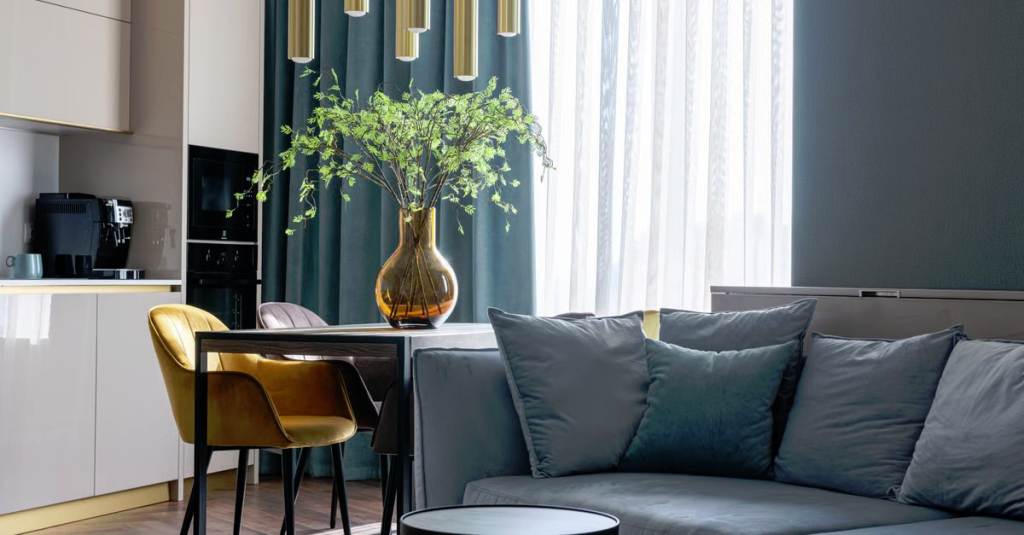
Serviced apartments bridge the gap between hotel rooms and long-term rental apartments. These are fully furnished apartments rented for a defined period and ready to live in from day one. Unlike a hotel, the focus is not on overnight stays but on independent living, with a kitchen, living area, and the features needed for a home away from home. Unlike a traditional rental apartment, there is no need to furnish the space yourself or commit to a long-term lease.
For users, this means significantly easier planning. Instead of deposits of several months’ rent, credit documentation, and organizing furniture transport, there is usually a contract with a clearly defined term and predictable total costs. The typical advantages can be summarized as follows:
- Immediate availability: The apartments are furnished and equipped, making short-notice move-in possible.
- Predictable costs: Rent and utility costs are usually bundled, making budgeting easier for companies and private tenants.
- Flexible terms: Contracts are designed for temporary stays, often with a minimum term of six months.
- No furnishing effort: Furniture, kitchen equipment, and basic amenities are already provided.
- Central point of contact: A specialized provider handles administration and organization related to the apartment.
This makes serviced apartments particularly suitable for stays that are longer than a typical business trip but shorter than a permanent move, a time frame that the conventional rental market has scarcely covered so far.
WOONWOON as an Example of This Market Shift
One example of how this segment is taking shape in Berlin is WOONWOON, which according to its own information has been arranging furnished apartments for temporary stays since 2015. According to the provider, the portfolio includes more than 350 apartments ranging from one to five rooms across various locations in Berlin. This covers different needs, from individual project staff to families living in the city during a transitional phase.
The apartments are furnished and ready for immediate occupancy, allowing move-in to be organized without long lead times. For temporary stays, the provider requires a minimum contract term of six months, clearly distinguishing the offer from short-term holiday accommodation and positioning it for medium-term housing needs.
Beyond the apartment offering itself, the provider also appears to be locally rooted: according to its own information, WOONWOON acts as a partner of Eisbären Berlin, showing a level of engagement that goes beyond rental activity alone. In a segment strongly shaped by trust and local presence, this kind of connection to Berlin can be seen as a credible signal to prospective tenants and companies.
Outlook: Temporary Living Is Becoming a Structural Part of the Market
Developments in recent years suggest that furnished apartments for temporary stays are not a passing phenomenon but are becoming established as an independent category within Berlin’s housing market. As long as the city continues to attract international professionals, project teams, and companies, demand will remain for housing that is quickly available, predictable in cost, and flexible in duration.
For companies, this development can make talent acquisition easier because accommodation becomes less of an obstacle in relocation processes. For professionals and expats, it means more choice and less friction when starting life in a new city. And for the housing market as a whole, a more professionalized segment is emerging that closes a real gap between hotels and permanent rentals. Serviced apartments are therefore likely to be seen less as an exception and increasingly as a normal part of a more differentiated housing offering.
Frequently Asked Questions About Serviced Apartments in Berlin
What is the difference between a serviced apartment and a traditional rental apartment?
A serviced apartment is furnished, ready for immediate occupancy, and rented for a fixed period. Unlike a traditional rental apartment, there is no need to furnish it yourself or commit to a long-term lease; the provider handles the setup and organization.
Who are furnished apartments for?
They are aimed primarily at professionals on temporary assignments, companies with relocation needs, as well as expats and project staff who want to live in Berlin for a few months without entering into a permanent rental agreement.
How long can you rent a serviced apartment?
Rental terms are designed for medium-term stays. With providers such as WOONWOON, for example, there is a minimum contract term of six months, which distinguishes the offer from short-term holiday accommodation.
What are the advantages of a serviced apartment compared to a hotel?
In addition to accommodation, a serviced apartment offers independent living with a kitchen and living area. For longer stays, this is generally more comfortable and more predictable in terms of cost structure than staying in a hotel.