July 22, 2026
£100m Dorset emergency care development reaches major construction milestone

£100m Dorset emergency care development reaches major construction milestone

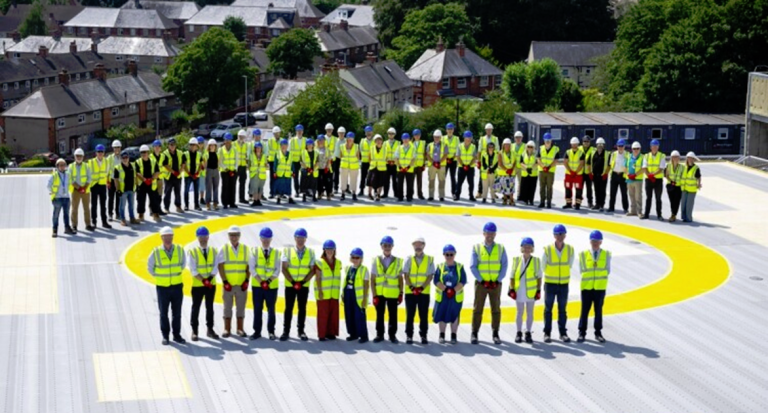
Tilbury Douglas has reached a significant construction milestone at Dorset County Hospital following the installation of a new rooftop helipad on the hospital’s £100m Emergency Department and Critical Care Unit development. The installation, completed by specialist contractor Bayards, marks the topping out of the new structure and represents an important

Read More »
Bosch Commercial & Industrial launch new output for 7000 FP range

Bosch Commercial & Industrial launch new output for 7000 FP range

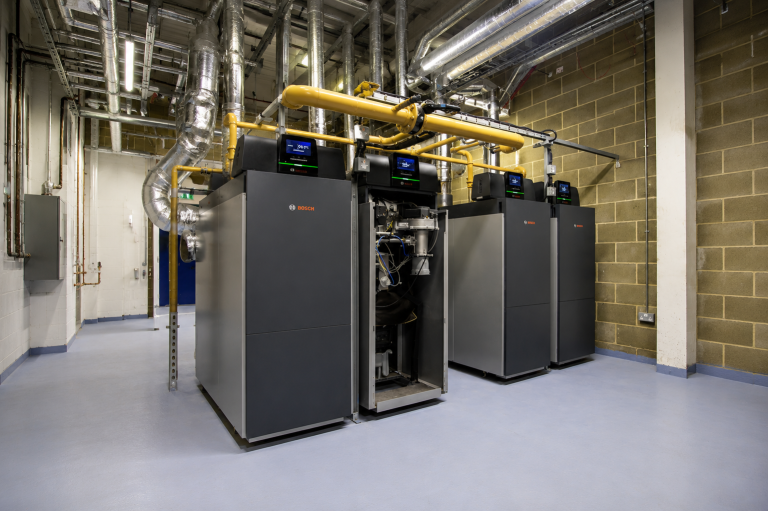
New 620kW output brings more flexibility to installers  Bosch Commercial & Industrial has today launched a new 620kW output for its Condens 7000 FP series of commercial boilers, providing more flexibility for installers and specifiers alike. The Condens 7000 FP originally launched in October 2022, with outputs initially ranging from

Read More »
Prologis Expands UK Logistics Platform with Trafford Park Acquisition

Prologis Expands UK Logistics Platform with Trafford Park Acquisition

Site advances Prologis’ long-term investment plans in the North West Prologis UK has acquired an 8.66-acre regeneration site at Trafford Park in Greater Manchester, adding to its UK portfolio and extending into the North West, a market identified as a strategic priority for the business. Located on Barton Dock Road,

Read More »
Latest Issue
Issue 343 : Aug 2026

July 22, 2026

£100m Dorset emergency care development reaches major construction milestone

£100m Dorset emergency care development reaches major construction milestone

Tilbury Douglas has reached a significant construction milestone at Dorset County Hospital following the installation of a new rooftop helipad on the hospital’s £100m Emergency Department and Critical Care Unit development. The installation, completed by specialist contractor Bayards, marks the topping out of the new structure and represents an important step towards transforming emergency and critical care services across Dorset. Funded through the New Hospital Programme, the development will deliver two floors of modern clinical accommodation designed to increase capacity, improve patient flows and provide a more appropriate environment for people requiring urgent treatment. The expanded Emergency Department will enable Dorset County Hospital to care for a greater number of patients while introducing dedicated facilities for children and young people. It will also include specially designed accommodation for people experiencing mental health difficulties, helping the Trust provide more suitable and supportive emergency care. The hospital’s Critical Care Unit will increase from 11 to 16 beds, with the flexibility to expand further as future demand requires. A dedicated paediatric space will also be incorporated into the unit. A new link corridor will connect the development directly to the existing hospital. Once services have transferred into the new building, the vacated space within the main hospital will be repurposed to support same-day emergency care. Representatives from the national New Hospital Programme, local partners and supporters of the scheme joined Dorset County Hospital teams to celebrate the topping-out milestone and the unveiling of the new £2m rooftop helipad. The helipad has been funded by the HELP Appeal, the only UK charity dedicated exclusively to financing NHS hospital helipads. Manufactured from aluminium and transported from the Netherlands, the structure can support a weight of up to 8,600kg. As the only rooftop hospital helipad in Dorset, the facility will allow air ambulances to land directly above the Emergency Department and Critical Care Unit. This will significantly reduce the time needed to transfer critically ill or injured patients from an aircraft into the hospital. Robert Bertram, Chief Executive of the HELP Appeal, said the completion of the helipad represented a significant moment for Dorset and the wider region. He added: “By enabling air ambulances to land directly at the hospital, precious minutes can be saved when every second counts, giving patients the very best chance of survival and recovery. “We are immensely grateful to everyone who has supported the HELP Appeal. This milestone belongs to every donor and fundraiser who has helped make this life-saving project possible.” The wider development is also being supported by Dorset County Hospital Charity’s Emergency and Critical Care Appeal. The campaign aims to raise £2.5m for enhanced facilities within the building, including overnight accommodation for patients’ relatives and hospital staff. Once complete, the project will provide Dorset County Hospital with a modern, flexible and better-connected clinical environment capable of supporting rising demand while improving the experience of patients, families and healthcare teams. Building, Design & Construction Magazine | The Choice of Industry Professionals

Read More »
Bosch Commercial & Industrial launch new output for 7000 FP range

Bosch Commercial & Industrial launch new output for 7000 FP range

New 620kW output brings more flexibility to installers  Bosch Commercial & Industrial has today launched a new 620kW output for its Condens 7000 FP series of commercial boilers, providing more flexibility for installers and specifiers alike. The Condens 7000 FP originally launched in October 2022, with outputs initially ranging from 350kW up to 500kW. The 620kW option now offers a solution to handle higher commercial heating demands.  Other benefits of the Condens 7000 F & FP range include: Paul Monaghan, Technical Assistant at Bosch Commercial & Industrial, said, “The GC7000 FP boiler range is a versatile unit, able to integrate into almost any existing install. This accompanied by the Control 8000 makes it a perfect solution for heating, hot water and heat networks.” For more information on the Condens 7000 F & FP series visit: https://www.bosch-industrial.com/gb/en/ocs/commercial-industrial/condens-7000-fp-19388395-p/  Building, Design & Construction Magazine | The Choice of Industry Professionals

Read More »
Huws Gray completes the first phase of its refreshed signage and branding rollout

Huws Gray completes the first phase of its refreshed signage and branding rollout

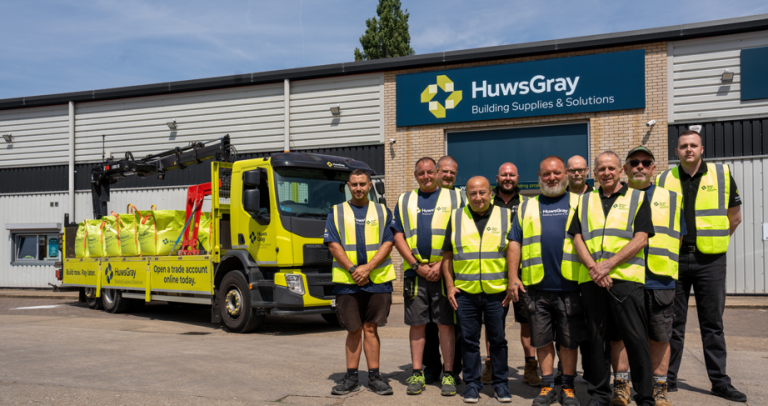
Huws Gray, a leading national building materials supplier providing end-to-end solutions to tradespeople and the DIY market, is pleased to announce it has completed the first phase of its branch rebranding programme following the launch of its refreshed corporate identity.  The first phase has brought the new branding to branches and support centres in Grimsby, Stevenage, Pampisford, Llangefni, Ruislip, Coventry, Wellingborough, Gaerwen, Whitchurch and two sites in Cambridge, Norman Way and Nuffield Road. These sites were selected in order to ensure a mixture of building types and a geographic spread. Designed to create a cleaner, brighter and more modern appearance, the programme includes refreshed external signage and a respray of branch exteriors, providing a more consistent and recognisable experience for customers across the Group. The new signage and branding forms part of Huws Gray’s rollout of its new branding, including to its fleet and corporate website, and its continued investment across its branch estate, systems and customer experience following a period of significant growth and consolidation. Daksh Gupta, CEO of Huws Gray, commented: “Our refreshed branding and signage represents the continued evolution of the Huws Gray brand, forming a key part of our journey to enhancing customer experience and better represent our corporate strategy and identity. Huws Gray has undergone a period of significant strategic growth, and refreshing our visual identity is critical to ensuring consistency across the estate and driving engagement with a wide range of customers. The refreshed sites are looking fantastic, and we look forward to rolling this out further in due course.” Huws Gray was pleased to work closely with Designs Signage Solutions on the branding and signage refresh. Building, Design & Construction Magazine | The Choice of Industry Professionals

Read More »
Prologis Expands UK Logistics Platform with Trafford Park Acquisition

Prologis Expands UK Logistics Platform with Trafford Park Acquisition

Site advances Prologis’ long-term investment plans in the North West Prologis UK has acquired an 8.66-acre regeneration site at Trafford Park in Greater Manchester, adding to its UK portfolio and extending into the North West, a market identified as a strategic priority for the business. Located on Barton Dock Road, the site sits within Trafford Park, one of Europe’s largest and most established industrial estates and the region’s premier urban logistics location. Prologis plans to regenerate the acquired site into an all-electric 200,000 sq ft modern, sustainable facility built to BREEAM Outstanding and EPC A+ ratings, subject to planning and site preparation. The acquisition marks a further step in Prologis accelerating its growth ambitions in the UK. The company is forward-planning considerable new investment across the North West through new development, regeneration and acquisition in order to develop up to 5 million square feet of prime logistics space, helping businesses start, scale and stay in the region. This new investment is in addition to the £5.6 billion invested in the UK over the past decade and the £5.5 billion Prologis plan to invest.   Paul Weston, Regional Head, Prologis UK, said: “The North West is one of the UK’s most important logistics markets, and Trafford Park gives us an excellent foothold in a region that has been identified as a strategic priority. This acquisition builds on our long-term commitment to the UK and demonstrates how foreign direct investment can fuel long term economic growth.” Trafford Park is home to more than 1,300 businesses and approximately 35,000 employees, offering access to Greater Manchester’s consumer population, the M60, M62 and M6 motorway corridors, the Port of Liverpool and Manchester Airport. The North West is one of the UK’s largest logistics markets and continues to experience strong occupational demand, underpinned by constrained land supply and limited availability of modern Grade A logistics space. The region is also a core market for many of Prologis’ largest global and UK customers, reinforcing the strategic rationale for expansion. B8 Real Estate acted for Prologis, Cushman & Wakefield for the vendor on the Barton Dock Road site. Building, Design & Construction Magazine | The Choice of Industry Professionals

Read More »
Pallet Racking Inspections: UK Legal Requirements, Frequency and Costs Explained

Pallet Racking Inspections: UK Legal Requirements, Frequency and Costs Explained

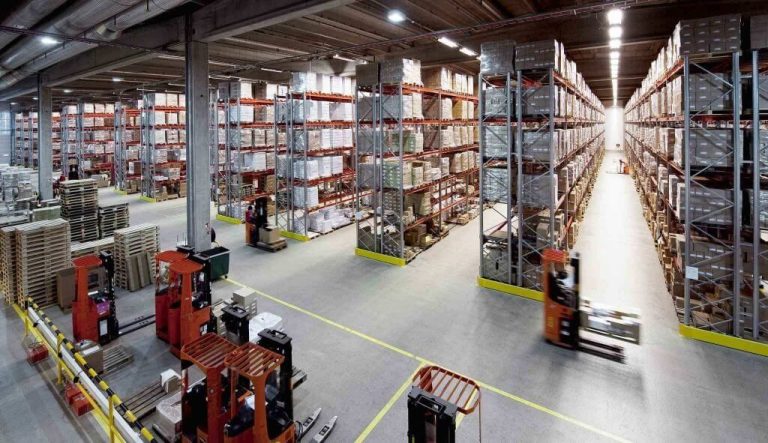
Pallet racking inspections are how UK businesses meet their legal duty to keep storage equipment safe. Every employer running a warehouse must ensure racking is maintained and fit for use. Inspections are the mechanism that proves it to regulators, insurers and your own team. Skip them, and a dented upright can quietly become a collapse risk. This guide answers the questions warehouse and facilities managers actually ask. Is an inspection legally required? How often should it happen, and who is qualified to do it? What does it cost, and how long does the report last? By the end, you will know exactly what good practice looks like. Is pallet racking inspection a legal requirement in the UK? In effect, yes. Pallet racking counts as work equipment, so it falls under the Provision and Use of Work Equipment Regulations 1998 (PUWER). Employers also carry a general duty under the Health and Safety at Work etc. Act 1974. Together, these require storage equipment to be safe, maintained and inspected where risk demands it. Neither law names racking specifically, which is where guidance fills the gap. The Health and Safety Executive publishes HSG76, its warehousing guidance, which covers racking inspection expectations. Alongside it sit the codes of practice from SEMA, the Storage Equipment Manufacturers Association. SEMA is the UK trade body that sets recognised standards for storage equipment design, use and inspection. Following HSG76 and SEMA guidance is how businesses demonstrate compliance in practice. If an incident occurs, inspection records are among the first documents investigators request. A written inspection regime is therefore both a safety measure and a legal safeguard. Racking regulations are not optional paperwork, they describe the standard you will be judged against. How often should pallet racking be inspected? Recognised guidance describes three tiers of inspection, each at a different frequency. Immediate checks should follow any impact or incident that may have damaged the racking. Regular visual checks, often weekly, should be carried out by a trained nominated person. An expert inspection should then take place at least once a year. The nominated person is usually called the PRRS (the Person Responsible for Racking Safety). Their job is to walk the racking on a set schedule and record what they find. They look for leaning frames, dented uprights, missing beam locks and damaged protection. Documented routine checks catch small problems before they become structural ones. The annual expert inspection is a deeper, technical assessment of the whole installation. It reviews the system against the manufacturer’s specification and current SEMA standards. Think of the tiers as layers of defence rather than alternatives. Daily vigilance, weekly discipline and annual expertise work together, and each catches what the others miss. There is a simple commercial logic here too. A scheduled inspection costs a fraction of an unplanned bay closure. Proactive checks protect stock, uptime and people at once. Reactive repairs after a failure protect none of them. Who can carry out a racking inspection? The answer works in layers, matching the three tiers above. Every warehouse operative should be trained to spot and report damage immediately. The routine visual checks need a trained, nominated person, the PRRS. The annual expert inspection, however, must be carried out by a technically competent person. In the UK, the recognised benchmark for that competence is the SARI qualification. SARI stands for SEMA Approved Racking Inspector, an inspector trained, examined and approved by SEMA itself. A SARI assesses damage against defined tolerances rather than judgement alone. Their report gives you findings you can act on and evidence you can rely on. This is why businesses seek out SEMA approved pallet racking inspections rather than informal look-overs. The approval means the inspection follows a consistent, industry-agreed method. It also means the person signing the report has proven their competence to the standards body. Anyone can glance at racking; far fewer people are qualified to certify its condition. One related point often causes confusion. Installation and repair work has its own scheme, SEIRS, the Storage Equipment Installers Registration Scheme. Inspection tells you what is wrong; SEIRS-registered installers are the people to put it right. What happens during a professional racking inspection? A professional inspection is systematic, not a casual walk-through. The inspector works through every structural element of the installation in turn. That means uprights and frames, beams and their locks, bracing, baseplates and floor anchors. It also covers rack protection, load signage, decking and the general condition of aisles. Findings are recorded in a written report, with damage classified by risk. Most inspectors use the SEMA traffic-light system to prioritise action. Green means minor or cosmetic issues to monitor. Amber means damage needing prompt attention, with the affected bay offloaded and booked in for pallet racking repair services. Red means serious damage and the bay must be unloaded immediately and isolated until repaired. The classifications turn an inspection into a working action plan. You know instantly what is safe, what needs scheduling and what needs stopping. A good report also records locations precisely, so repairs target the right bays. That documentation becomes part of your ongoing compliance record. How long does a racking inspection report last? A racking inspection report is not a twelve-month safety certificate. It records the condition of your racking on the day of inspection, nothing more. A forklift impact the following week changes the picture immediately, whatever the report says. Treat the report as a snapshot, not a season ticket. This is exactly why the tiered inspection system exists. The annual expert inspection sets a professional baseline for the installation. The weekly checks and impact reports then police the gap between expert visits. Together they give continuous assurance, which no single document can provide alone. How much does a pallet racking inspection cost? There is no single fixed price, because no two warehouses are alike. Reputable providers quote after surveying the site rather than from a standard rate card. The main factors are the number of bays, layout complexity, location and the depth

Read More »
The Berlin Housing Market in Transition: Why Furnished Apartments Are Becoming the New Standard

The Berlin Housing Market in Transition: Why Furnished Apartments Are Becoming the New Standard

Berlin remains one of Europe’s most attractive locations for international professionals, project staff, and growing companies. However, anyone moving to the city for just a few months faces a structural problem: the traditional housing market is designed for long-term rental agreements, not temporary stays. It is precisely in this gap that a distinct market segment has emerged and grown steadily in recent years, evolving from a niche product into a fixed part of Berlin’s housing landscape: the growing market for serviced apartments in Berlin responds directly to this need by offering fully furnished, move-in-ready apartments for short- to medium-term stays. For companies relocating staff, for project-based employees on temporary assignments, and for expats who are still finding their footing, this development is more than a side note. It is changing how quickly and easily temporary housing in a major city can be organized. Berlin Remains a Magnet for International Professionals and Companies For years, Berlin has attracted skilled professionals from Germany and abroad who come to the city for temporary projects, the setup phase of new offices, or changing assignments across different locations. Companies in technology, consulting, and the creative industries regularly send employees for several months, without a traditional move and long-term lease making practical sense. International students, visiting academics, and relocation cases also add to the demand, as a new address is often only the first step toward a permanent solution. These target groups share common needs: quick availability, predictable total costs, and no need to buy furniture or commit to contracts lasting years. So far, Berlin’s traditional housing market only partially meets these requirements, as most standard rental apartments are tailored to long-term residential arrangements. The Limits of the Traditional Apartment Search for Short-Term Stays Anyone looking for a standard rental apartment in Berlin is familiar with the usual hurdles: long lead times for viewings, extensive credit checks, deposits amounting to several months’ rent, and often unfurnished apartments that require additional investment in furnishings. For a stay of only a few months, this effort is rarely proportionate to the benefit. From a landlord’s perspective, a temporary tenancy through the traditional route is often unattractive as well. Standard leases are designed for open-ended or long-term use, and furnishing an apartment for a single short rental period rarely makes business sense. This is exactly where specialized providers of temporary housing step in, professionalizing the process and making it more predictable for both sides. Serviced Apartments: How Flexible Temporary Living Works Serviced apartments bridge the gap between hotel rooms and long-term rental apartments. These are fully furnished apartments rented for a defined period and ready to live in from day one. Unlike a hotel, the focus is not on overnight stays but on independent living, with a kitchen, living area, and the features needed for a home away from home. Unlike a traditional rental apartment, there is no need to furnish the space yourself or commit to a long-term lease. For users, this means significantly easier planning. Instead of deposits of several months’ rent, credit documentation, and organizing furniture transport, there is usually a contract with a clearly defined term and predictable total costs. The typical advantages can be summarized as follows: This makes serviced apartments particularly suitable for stays that are longer than a typical business trip but shorter than a permanent move, a time frame that the conventional rental market has scarcely covered so far. WOONWOON as an Example of This Market Shift One example of how this segment is taking shape in Berlin is WOONWOON, which according to its own information has been arranging furnished apartments for temporary stays since 2015. According to the provider, the portfolio includes more than 350 apartments ranging from one to five rooms across various locations in Berlin. This covers different needs, from individual project staff to families living in the city during a transitional phase. The apartments are furnished and ready for immediate occupancy, allowing move-in to be organized without long lead times. For temporary stays, the provider requires a minimum contract term of six months, clearly distinguishing the offer from short-term holiday accommodation and positioning it for medium-term housing needs. Beyond the apartment offering itself, the provider also appears to be locally rooted: according to its own information, WOONWOON acts as a partner of Eisbären Berlin, showing a level of engagement that goes beyond rental activity alone. In a segment strongly shaped by trust and local presence, this kind of connection to Berlin can be seen as a credible signal to prospective tenants and companies. Outlook: Temporary Living Is Becoming a Structural Part of the Market Developments in recent years suggest that furnished apartments for temporary stays are not a passing phenomenon but are becoming established as an independent category within Berlin’s housing market. As long as the city continues to attract international professionals, project teams, and companies, demand will remain for housing that is quickly available, predictable in cost, and flexible in duration. For companies, this development can make talent acquisition easier because accommodation becomes less of an obstacle in relocation processes. For professionals and expats, it means more choice and less friction when starting life in a new city. And for the housing market as a whole, a more professionalized segment is emerging that closes a real gap between hotels and permanent rentals. Serviced apartments are therefore likely to be seen less as an exception and increasingly as a normal part of a more differentiated housing offering. Frequently Asked Questions About Serviced Apartments in Berlin What is the difference between a serviced apartment and a traditional rental apartment? A serviced apartment is furnished, ready for immediate occupancy, and rented for a fixed period. Unlike a traditional rental apartment, there is no need to furnish it yourself or commit to a long-term lease; the provider handles the setup and organization. Who are furnished apartments for? They are aimed primarily at professionals on temporary assignments, companies with relocation needs, as well as expats and project staff who want to


Read More »