
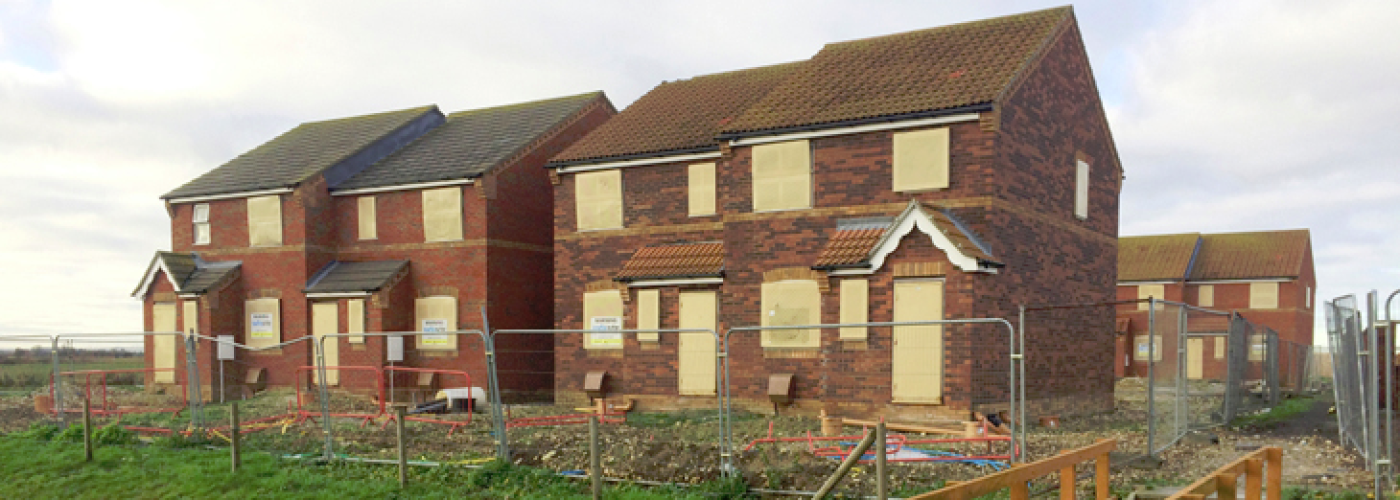


The latest research from House Buyer Bureau has revealed that more than 300,000 homes across England have been sitting empty for at least six months, with the estimated value of this long-term vacant housing stock standing at almost £89bn.
House Buyer Bureau analysed the latest available data on the number of vacant homes across England, focusing specifically on those classed as long-term vacant properties, meaning properties liable for council tax that have been empty for more than six months and are not subject to specified exemptions. The research then applied the latest average house price in each region to estimate the potential value of this unused housing stock.
The figures show that there are 754,264 vacant homes across England, of which 303,185 are classed as long-term vacant. This means that 40.2% of England’s vacant housing stock has been sitting empty for more than six months.
Based on the latest regional average house prices, House Buyer Bureau estimates that these long-term vacant homes represent some £88.6bn worth of residential property currently sitting unused.
While increasing the supply of newly built homes remains central to tackling the nation’s housing shortage, House Buyer Bureau says the sheer volume of existing homes sitting empty for prolonged periods highlights another area of housing supply that cannot be ignored.
London sitting on almost £26bn of long-term vacant homes
London has the highest estimated value of long-term vacant housing stock of any region.
There are 47,287 long-term vacant homes across the capital, accounting for 45% of London’s 105,138 vacant properties. With the average London home valued at £544,814, House Buyer Bureau estimates that the capital’s long-term vacant housing stock is worth almost £25.8bn.
The South East ranks second by value, where 42,099 long-term vacant homes have an estimated combined value of £16.1bn, followed by the East of England, where 32,123 long-term vacant properties are estimated to be worth £10.9bn.
The North West has 42,606 long-term vacant properties with an estimated value of £9.4bn, while the South West’s 28,553 long-term vacant homes are estimated to be worth £8.6bn.
Billions in empty homes within individual local authorities
At local authority level, some of the most valuable concentrations of long-term vacant housing are found within London.
Kensington and Chelsea has 2,030 long-term vacant homes, representing 59.7% of all vacant properties within the borough. Based on the borough’s average house price of £1.256m, this stock has an estimated value of almost £2.55bn.
Westminster has 2,279 long-term vacant properties, equivalent to 61.2% of its vacant housing stock, with an estimated combined value of £1.91bn.
Camden’s 2,059 long-term vacant homes are worth an estimated £1.66bn, while Southwark has 2,543 with an estimated value of £1.47bn and Lambeth has 2,280 worth an estimated £1.24bn.
Outside London, Birmingham stands out, with 7,060 homes having remained vacant for more than six months. Based on the city’s average house price, this equates to an estimated £1.64bn worth of long-term vacant housing.
Managing Director of House Buyer Bureau, Chris Hodgkinson, commented:
“It’s quite remarkable that we’re constantly talking about the need to build hundreds of thousands of additional homes when more than 300,000 existing properties have already been sitting empty for over six months.
Of course, there’s no single reason why a property remains vacant and not every empty home can simply be put back into use overnight. But anyone who works within the property market knows how easily a home can become stuck in limbo, whether it requires significant work, forms part of an estate, has legal complications or simply proves difficult to sell.
Building more homes remains absolutely essential, but we also need to make better use of the housing stock we already have. Getting even a proportion of these long-term vacant properties back into circulation would provide additional homes without the need to build them from scratch.
For owners, the longer a property sits empty, the more of a liability it can become, particularly once maintenance, security and ongoing ownership costs start to mount.
Where the conventional sales market isn’t providing a solution, owners may need to take a more pragmatic approach. Accepting a lower price in return for the speed and certainty of a quick sale can sometimes be the difference between a property remaining empty indefinitely and getting it back into use.”
Data tables and sources
*Vacant and long-term vacant dwelling data sourced from UK Government – Live tables on dwelling stock, including vacants, using the latest 2024-25 data. The Government defines long-term vacant dwellings as properties liable for council tax that have been empty for more than six months, excluding specified exemptions.
*Average house price data sourced from the UK Government – UK House Price Index, using the latest available June 2026 data.
*Estimated value of long-term vacant housing stock calculated by House Buyer Bureau by applying the latest average house price at regional and local authority level to the number of long-term vacant dwellings.
Full data tables can be viewed online here
Building, Design & Construction Magazine | The Choice of Industry Professionals