BDC News Team
Akela Ground Engineering expand team with new general manager

Akela Ground Engineering expand team with new general manager

Akela Ground Engineering has appointed piling specialist, Will Payne, as their general manager. Will joins from Roger Bullivant where he managed piling works in Gibraltar, the Midlands and East Anglia and has been appointed to help Akela expand and grow their reputation in England. Will is an expert in driven

Read More »
Sparking competency within fire risk assessment

Sparking competency within fire risk assessment

With fire safety obligations on the rise for Responsible Person’s (RPs), Ian Bailey, Technical Advisor at the Institution of Fire Engineers (IFE), underlines the immediate actions that RPs must take to ensure compliance and how the institution plans to safeguard professional standards. As we await the implementation of Section 156

Read More »
BrainBox AI Announces Acquisition of ABB’s EMS Retail Division

BrainBox AI Announces Acquisition of ABB’s EMS Retail Division

BrainBox AI has closed the acquisition of the retail energy management system integrator business of its global partner ABB, following its intent to acquire announcement on April 28th. This acquisition represents a crucial step for BrainBox AI in terms of scalability and capacity to better service its current and prospective retail

Read More »
Haddonstone stepping up on sustainability

Haddonstone stepping up on sustainability

Toby Marlow, Building and Construction team director, discusses Haddonstone’s commitment to reducing its impact on the environment. The construction industry is one of the UK’s biggest contributors to carbon emissions and environmental pollution. How would you summarise Haddonstone’s commitment to sustainability? Haddonstone is proudly committed to sustainability and we continually

Read More »
Latest Issue
Issue 338 : Mar 2026

BDC News Team

WBRC leads team to create an accessible home after man paralysed in bike accident.

WBRC leads team to create an accessible home after man paralysed in bike accident

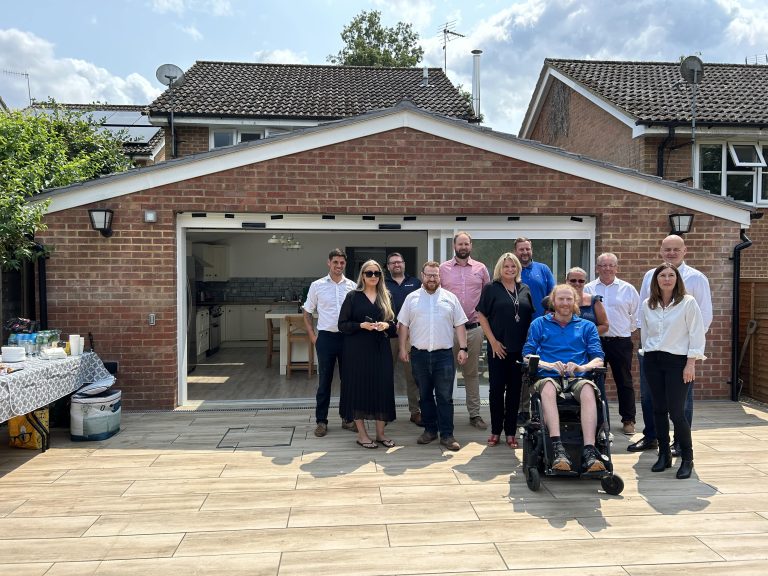
The Whitehill & Bordon Regeneration Company (WBRC) and Taylor Wimpey have completed work on a charitable house renovation after a biking accident left a member of the community paralysed from the armpits down. In 2021, Greg McKenna of Godalming, Surrey, was injured in a life-changing cycling accident which left him needing the permanent use of a wheelchair and dependent on carer assistance. Following the accident, Greg was unable to lead an independent life, exacerbated by restrictions created by his home which was unsuitable for a wheelchair. Through his friends and family, Greg was put in contact with Taylor Wimpey and the Whitehill & Bordon Regeneration Company who, with the assistance of numerous local tradespeople and contractors, embarked on a major project to modify the home.  The full scope of works include a major ground-floor extension to provide step-free access through the home; a fully accessible bedroom including a hoist to enable Greg to more easily move between his chair and bed; a fully accessible kitchen; a full bathroom refit so that Greg can wash and shower with assistance; electric doors throughout the home; and the creation of a therapy room to aid with physiotherapy sessions at home.  The upstairs has also been spruced up to create space for Greg’s live-in carers. While WBRC and Taylor Wimpey have led on the project, it has only been possible thanks to the generosity and efforts of a large number of local contractors, most of whom have worked for free or at a significantly reduced price. From Reconomy’s work to ensure that 96% of all waste products created by the project avoided landfill, to GW & E Wright Electrical’s herculean effort with ensuring that the home is fully accessible and all of the incredible technology that facilitates Greg’s independence works correctly, the home is a result of true collaboration between some of the area’s very best craft and tradespeople. The contractors involved in the project are:  Greg McKenna, says: “I’m delighted with the result of this project and immensely grateful to all of those who have helped along the way. After what has been, to say the least, an incredibly challenging couple of years, to have a home in which I can live as independently as possible is a huge step forward for me. Simple things like being able to wash, cook, and leave the house by myself and of my own accord are more important than a lot of people will understand. The most frequent word I’ve heard to describe the product we’ve ended up with is ‘envy’ and this wouldn’t have been possible without the input from WBRC, the contractors and my parents. From the bottom of my heart, thank you!” James Child, Project Lead at The Whitehill & Bordon Regeneration Company, says:  “This has been an important project for us and we’re delighted that after an often complicated process, Greg finally has a home that brings proper independence and autonomy back to his daily life.  All of us here at WBRC wish Greg the very best and sincerely hope that the home is everything he wants and needs it to be. We will always be on hand to assist should any issues crop up with the refurb, but we’re most excited to see how Greg continues to settle into and tinker with the property to truly make it his own.” Paul Broderick, Blaze Construction, says: “We’re delighted to have been able to play our own small part in a project that has been a genuinely remarkable display of teamwork and community compassion. If, between us all, we have been able to provide Greg with a home that enables the independent life he deserves, we couldn’t be more thrilled. Here’s to many years of enjoyment in the property for a man whose life was drastically changed in an instant.” Building, Design & Construction Magazine | The Choice of Industry Professionals 

Read More »
Akela Ground Engineering expand team with new general manager

Akela Ground Engineering expand team with new general manager

Akela Ground Engineering has appointed piling specialist, Will Payne, as their general manager. Will joins from Roger Bullivant where he managed piling works in Gibraltar, the Midlands and East Anglia and has been appointed to help Akela expand and grow their reputation in England. Will is an expert in driven piling techniques and has over two decades of experience in the specialist foundation industry, having also worked for Van Elle and Aarsleff. Akela Ground Engineering operates in Scotland and the North of England and was founded in 2019. It is part of the Akela Group which is headquartered in Thornliebank, near Glasgow, and has an office in Leeds. Will Payne, General Manager of Akela Ground Engineering, said: “Akela is a family oriented business that is looking to grow and expand their works across England and that is what attracted me to this role. “They have also been investing heavily in new technology and innovation over the past year. “I’ve worked in the UK and abroad within the specialist foundation industry and am very proud of my record in working with clients to find solutions at the most difficult of sites. “It is important to build and establish relationships with clients and I am looking forward to working with existing Akela clients and also expanding Akela right across England.” Mark Markey, Managing Director of Akela Group, said: “We are really proud to have Will Payne join the business at the crucial time of expanding our work in England. He is well known as a specialist in piling and will be a key part of growing our ground engineering arm. “Importantly, he is experienced at managing complex works and ensuring quality work is carried out in a safe manner. “He has decades of experience in the construction industry and his appointments will bolster Akela Ground Engineering and allow us to continue to go from strength to strength.”  Building, Design & Construction Magazine | The Choice of Industry Professionals 

Read More »
Sparking competency within fire risk assessment

Sparking competency within fire risk assessment

With fire safety obligations on the rise for Responsible Person’s (RPs), Ian Bailey, Technical Advisor at the Institution of Fire Engineers (IFE), underlines the immediate actions that RPs must take to ensure compliance and how the institution plans to safeguard professional standards. As we await the implementation of Section 156 of the Building Safety Act 2022 to go into effect in October, the UK Home Office published guidelines on the Fire safety responsibilities under section 156 of the Building Safety Act in July. While fire safety has always been a priority in building design and construction, new legislation amendments have increased the obligations of RPs. The IFE highlights the vital role of professional Fire Risk Assessors in providing optimal fire safety measures as part of its unwavering commitment to life, property, and environmental protection. Criteria applies to any non-domestic enterprise where people work, visit, or stay, as well as non-domestic portions of multi-occupied residential structures (common corridors and stairwells). Individual family households are excluded from the rules. Over the past year, the IFE has actively supported the government in the development of various guidelines for RPs, including the above and the upcoming guide for persons with duties under fire safety legislation. The changing landscape of fire safety legislation: Catastrophic fire incidents such as Grenfell have prompted governments around the world to enhance fire safety legislation in order to improve public safety and reduce the hazards associated with building fires. RPs are responsible for fire safety within their premises under these new frameworks. Under the new legislation, comprehensive and systematic fire risk assessments must still be conducted regularly. These assessments should identify potential fire hazards, evaluate the existing fire safety measures, and develop strategies to mitigate risks and ensure the safety of occupants and visitors. Importantly, the legislation now requires all RPs to document their completed fire risk assessment in full (where previously only particular information was necessary). Other significant changes include: The role of Fire Risk Assessors: To meet the stringent fire safety requirements, RPs are responsible for the appointment of competent Fire Risk Assessors to carry out necessary risk management. Fire Risk Assessors play a pivotal role in conducting accurate fire risk assessments, thereby guiding RPs in implementing effective fire safety measures. In the future there will also be a legislative requirement that, where the Responsible Person appoints a person to make or review the fire risk assessment, they must be competent. The IFE are working with government and others to construct a robust competency framework for fire risk assessors. The IFE’s Fire Risk Assessor register remains a source of excellence and competence within the fire sector. As the most thorough registry of Fire Risk Assessors, it continues to serve as a benchmark for assessing and certifying the proficiency of fire risk assessors. Built on a foundation of extensive knowledge, experience and expertise, Fire Risk Assessors registered with the IFE undergo rigorous evaluation and assessment to demonstrate their ability to conduct comprehensive fire risk assessments across a diverse range of building types and occupancy scenarios. Enhanced fire safety obligations have placed a tremendous responsibility on RPs, emphasising the need for competent and skilled Fire Risk Assessors. The IFE’s Fire Risk Assessor Register remains the ultimate assurance for building owners and occupiers seeking the services of highly qualified and multi-skilled Fire risk assessors. In an ever-changing climate, the IFE’s Fire Risk Assessor register stands as an unwavering resource of fire safety excellence, fostering a safer environment for all. To access a multi-skilled Fire Risk Assessor within your proximity, please visit: ife.org.uk/Fire-Risk-Assessor-Search. For further information on the IFE and to enquire about membership, visit ife.org.uk/Membership

Read More »
South East Consortium increases its support of Building a Safer Future

South East Consortium increases its support of Building a Safer Future

South East Consortium, a non-profit organisation that supports over 100 public sectors buyers per year to procure services, has refreshed and increased its support of Building a Safer Future (BSF) with the aim of encouraging the industry to sign up as a Registered Signatory of the BSF Charter and subsequently embark on the BSF Champions assessment process. The two organisations share a common goal in supporting organisations on their building safety improvement journey, and intend to continue working together over the coming months, exploring opportunities for further alignment and collaboration, and promoting the message of the BSF Charter and the benefits of engaging at both Registered Signatory and Champion status. The consortium has 16 frameworks that renew every four years, covering opportunities right across the south east of England, and work with suppliers ranging from SMEs to Tier 1 contractors on contracts worth from £15k up to £100m. They have embedded requirements for organisations to engage with BSF as a Registered Signatory in several of their frameworks since last year, and ask suppliers to demonstrate their competence and financial standing in addition to their adherence to building safety. David Ashby, Head of Operations at South East Consortium, commented: “In 2022 South East Consortium prepared a report called Procuring for Building Safety that provided guidance to procurement professional, their Directors and teams, in which we identified changing the culture as a key message. This is also very much at the heart of what BSF does and we therefore wanted to support the aims of BSF by working together and promoting the work of BSF. In order to do this we have now included both ‘Building a Safer Future Champion’ Assessment and ‘Registered Signatory’ status as requirements at different levels within our procurement frameworks. South East Consortium wants to work towards supporting our Members in changing culture and bringing higher levels of competence and we are glad to support the work that BSF is doing.” Gary Townsend Vila, Interim Chief Executive of BSF commented: “South East Consortium have taken a clear leadership role in spreading the word about the required culture change in the industry in regards to building safety, and BSF have clearly aligned strategic commitments in this area. We are looking forward to continuing to work with them as a like-minded organisation in encouraging the industry to put the safety of their building users and residents first. We encourage other procurement frameworks to get involved and help build an open, committed and collaborative community of organisations working together for the common good.” Organisations can apply to become a Registered Signatory of the BSF Charter to start their journey towards achieving building safety culture change. These organisations declare, at the highest level, that they are committed to supporting the principles of the Charter and putting safety first. The BSF Champion assessment is a higher level of engagement, giving companies detailed insight into their existing leadership and culture around building safety and equipping them with actionable data and practical tools to help review and upgrade processes, driving meaningful and measurable improvement in leadership and culture around building safety. Companies can apply to either become a Registered Signatory of the BSF Charter or participate in the BSF Champions programme by visiting the Building a Safer Future website on www.buildingasaferfuture.org.uk and completing the application form, or alternatively emailing alexander.caller@buildingasaferfuture.org.uk

Read More »
SCREF secures planning permission for prime Bloomsbury 106,000 sq ft office repositioning

SCREF secures planning permission for prime Bloomsbury 106,000 sq ft office repositioning

The Schroders Capital UK Real Estate Fund (‘SCREF’) has secured planning permission to redevelop Minerva House, Fitzroy House, and Telephone Exchange, contiguous, part Grade II listed landmark office buildings on Chenies Street in Bloomsbury into a 106,736 sq ft high-quality workspace, a 37% increase on the current floor area, following the addition of two further floors and a roof terrace. Located just off London’s Tottenham Court Road, the asset is well placed to benefit from the newly re-opened Tottenham Court Road and Goodge Street underground stations, providing connections to the Central, Northern and Elizabeth lines. SCREF will work closely with development partner Stanhope to sensitively reposition the heritage office buildings – which sit in the Bloomsbury Conservation Area – into a sustainability and wellbeing-led office scheme, designed by architects Morris+Company. During the redevelopment, 87% of the existing building structure along with 84% of the existing primary facades will be retained utilising a re-use first approach reducing embodied carbon during the construction process. Reflecting the growing demand for sustainable and energy efficient office assets, Schroders Capital’s expert offices team alongside Stanhope will ensure the upgraded Chenies Street asset achieves best-in-class sustainability and wellbeing credentials, targeting EPC B, WELL Gold, BREEAM Excellent and an NABERS UK certifications. The enhanced building will also use electrical heating only, deliver improved natural ventilation to enhance occupier wellbeing, and include rainwater harvesting systems. The redesigned Chenies Street asset also places a strong focus on occupier wellbeing and will feature amenities such as a large communal reception space, bike storage, fitness and wellness studios, a café, and a new roof terrace to enable future tenants to attract and retain the best talent. Chenies Street will also feature fit-for-purpose floorplates which are capable of being let as whole or subdivided, offering maximum flexibility to attract a wide variety of tenants ranging from international companies to local SMEs and start-ups. The proposed scheme is aligned with Camden Council’s 2025 objectives which sets out a vision for the future of the borough as it aims to create a safe, fair, creative, and active community. During the construction process a percentage of construction jobs and apprenticeships at the project will be offered to local people, and biodiversity will be enhanced through the creation of local ‘pocket parks’ as well as a new green wall on the exterior of the building. The building is located close to Goodge Street and the new Tottenham Court Road underground stations, and further Green transportation is encouraged through increased e-bike and scooter provision, as well as improved pedestrianisation around the asset. Rob Cosslett, Fund Manager for Schroders Capital, said: “The redevelopment of Minerva House, Fitzroy House, and Telephone Exchange in Chenies Street outlines SCREF’s commitment to investing in sustainability-led, high-quality office assets in well-connected locations. Located within London’s ‘Knowledge Quarter’, the asset is well situated to benefit from the continued demand for best-in-class office space from occupiers in the life sciences, technology, and higher education sectors. “The approved plans demonstrate the development and asset management capabilities of the experienced Schroders Capital offices team to identify opportunities to add value and increase returns for our investors. Our focus remains on maximising the value potential and sustainability credentials of assets across our portfolio, which will attract the best talent and strongest occupiers, whilst enhancing surrounding areas to benefit local communities.” Building, Design & Construction Magazine | The Choice of Industry Professionals 

Read More »
BrainBox AI Announces Acquisition of ABB’s EMS Retail Division

BrainBox AI Announces Acquisition of ABB’s EMS Retail Division

BrainBox AI has closed the acquisition of the retail energy management system integrator business of its global partner ABB, following its intent to acquire announcement on April 28th. This acquisition represents a crucial step for BrainBox AI in terms of scalability and capacity to better service its current and prospective retail clients. With complementary solutions, both BrainBox AI and the EMS retail business team share the mission of decarbonising and optimising the commercial real estate sector, with multi-site retail at the core. By merging its deep-learning driven expertise with a native integration to legacy systems, BrainBox AI is setting the stage to further advance its position within the retail sector. This acquisition marks a significant development for the company, ushering in another mode of connectivity to its technology. BrainBox AI delivers its AI-tech with the capabilities of energy management optimisation, carbon footprint reduction, customer and employee comfort improvement, and targeted “on-demand” predictive maintenance for HVAC systems. Furthermore, this augmented offering is already gaining momentum with BrainBox AI securing a multi-store contract with a top-tier American retailer with deployment slated for late-summer, early fall of this year. To date, BrainBox AI has decreased its clients’ HVAC electricity spend by an average 16% and gas spend by an average 18%. Additionally, building owners experience significant reductions in maintenance costs, extension of equipment service life, and dramatic improvements in comfort level for customers and associates. As noted by Frank Sullivan, Chief Commercial Officer at BrainBox AI; “Today is an exciting day for us. We are officially welcoming the EMS team into the BrainBox AI family. This event signifies a great step change for us as we continue to scale our business. BrainBox AI’s solution can empower building owners and facilities managers to dramatically reduce their buildings energy spend and carbon emissions. Now, its delivery to customers has been expanded by way of the technology platform that the EMS team brings. With more than 10,000 EMS enabled locations the opportunity to enhance client sustainability outcomes with our AI controls is colossal. We celebrate this moment as we continue to make positive changes in the fight against climate change.” About BrainBox AI Founded in 2017, BrainBox AI was created to address the dilemma currently facing the built environment, its energy consumption and significant contribution to climate change. As innovators of the global energy transition, BrainBox AI’s game-changing HVAC technology leverages autonomous AI to make buildings smarter, greener, and more efficient. Working together with our trusted global partners, BrainBox AI supports real estate clients in various sectors, including office buildings, hotels, commercial retail, grocery stores, airports, and more. Headquartered in Montreal, Canada, a global AI hub, our workforce of over 150 employees, bring with them talent from all sectors with the common thread of being in business to heal our planet. BrainBox AI works in collaboration with research partners including MILA – Quebec AI Institute, the Institute for Data Valorisation (IVADO) as well as educational institutions including McGill University. For more information visit: www.brainboxai.com Building, Design & Construction Magazine | The Choice of Industry Professionals 

Read More »
Haddonstone stepping up on sustainability

Haddonstone stepping up on sustainability

Toby Marlow, Building and Construction team director, discusses Haddonstone’s commitment to reducing its impact on the environment. The construction industry is one of the UK’s biggest contributors to carbon emissions and environmental pollution. How would you summarise Haddonstone’s commitment to sustainability? Haddonstone is proudly committed to sustainability and we continually strive towards reducing our impact on both society and the environment.  Sustainability policies are embedded across our production processes, including having protocols in place to avoid the use of hazardous substances and prevent the release of contaminants into the atmosphere or watercourses as well as onto land.   All measures are carried out in accordance with Environment Agency regulations. Are there any new initiatives which can be shown to be cutting Haddonstone’s environmental footprint? As well as actively cutting power consumption through the use of low energy lighting, turning off equipment when not in use and switching to renewable sources, we use batch production wherever possible to reduce waste; and also employ ‘vapour curing’ instead of wasteful spraying alternatives to save water. Then there is an on-going project with Cranfield University.  Initially, this involved assessing the carbon footprint of cast stone. This has resulted in efficiencies across our production and is helping us work towards becoming carbon neutral. Interestingly, a study has shown that one of our Haddonstone planters made with 20kG of dry mix counts as carbon neutral in just 25 months once filled with shrubs. We are now focusing on reducing the carbon footprint of cast stone, for example,finding an alternative to natural aggregates, an alternative to our traditional packaging and Portland cement. Most of the project focuses on reducing Greenhouse gas emissions which included other gases such as carbon monoxide, methane, nitrous oxides etc. Are you working to reduce the carbon footprint of meeting your transport requirements? We have made significant investment in building our own fleet of delivery lorries that utilise a state-of-the-art computer system.  This enables our drivers to optimise the handling of their vehicles and to therefore use less fuel on the road.  This results in lower emissions and pollution, and a reduced environmental impact. How is transport managed on a continuing basis? We also ensure that our entire fleet of vehicles is regularly maintained, as well as being equipped with catalytic converters, enabling them to deliver within the London Low Emission Zone. We also partner with carefully selected third party delivery services to avoid dispatching our vehicles with just a few items.  Instead, using external courier services means that they run full from one depot to another, optimising their overall carbon footprint. Given that you specialise in reconstituted stone, how do you try and reduce the impact of the associated quarrying required?  We source the highest-grade natural limestone aggregates from an environmentally responsible UK supplier.  They are acutely aware of how their operations may impact the natural environment and as such, are committed to a programme of continual improvement to minimise their effect on local natural habitats.  They also work to prevent pollution and to provide a safe working environment for their employees. Importantly, our supplier’s environmental management system meets the requirements of the international standard set by ISO 14001:2015, which requires organisations to document and improve their environmental impact.  This incorporates mineral resource efficiency, biodiversity and landscape, woodland management, energy management, and renewable energy. Cement is viewed as one of the most carbon intense building products – are you able to introduce any cement replacement products into your mixes? Haddonstone is constantly trialling and researching new products, processes and innovative solutions. Cement is the most widely utilised construction product and at present, whilst we have not found a viable substitute for cement itself, we have successfully taken steps to reduce our carbon footprint.  To what extent can you recycle your process waste and other materials? Firstly, we ensure that we recycle as much paper and cardboard waste generated in our offices as possible.  In addition to this, the 200 bespoke and standard wooden production moulds our workshops produce each month are reused where possible, before being shredded and recycled at the end of their useful life.  This produces around 50 tonnes of wood chips annually which goes towards heating the factory.  We have also just installed PV panels across a large area of the factory roof to help balance overall energy usage. For more information on Haddonstone’s products and services, including from the Building and Construction team, please visit https://www.haddonstone.com/en-gb/building-and-construction/ For further information, call 01604 770711 or visit  www.haddonstone.com Building, Design & Construction Magazine | The Choice of Industry Professionals 

Read More »
Lets be clear about passive fire protection in residential buildings

Lets be clear about passive fire protection in residential buildings…

Andy Vooght looks at the use of fire rated glazing for passive fire protection in residential buildings. Glass has been used for fire resistance in buildings since the introduction of wired glasses in the late 1920s. Knowledge and materials have evolved significantly over the years and the specific requirements for providing passive fire protection, together with natural light, to the myriad of new and existing building types means that offering a piece of safety glass held in with a timber bead will no longer suffice. This often misunderstood area of passive fire protection plays an important part in the safety of buildings, but has developed out of the fenestration industry, where the expertise lies in other areas, such as energy performance, security, and ventilation. Whilst there are several systems on the market, much of the construction industry has made little effort to understand the specifics of fire rated glazing systems, perceiving them to be much the same as ‘traditional’ windows. Consequently, there has been little control over the supply and installation of these products historically, and as a result, there will undoubtedly be undiscovered issues hidden in plain sight, which can lead to problems identifying glazing systems in need of remediation. Compliant glazing The use of glazing within Approved Document B (ADB) is potentially complex to understand, but in simple terms tables B3 and B4 define the level of fire resistance required in specific locations within differing building types. Unless the scheme designer is adopting an alternative approach, it would follow that glazed elements would need to satisfy these requirements. Table B5 then further identifies allowable locations for the use of uninsulated glazed elements on escape routes. As the culture and legislation around the safety of buildings evolves, there will be many responsible persons keen to ensure they have things up to date and correct. In practical terms, this will include making sure that fire risk assessments are routinely undertaken and that the information pertaining to building safety is held as we work towards the Golden Thread. Based on the requirements of ADB it should be possible to understand the application – be it for compartmentation, protecting a means of escape, or protecting a boundary – and the level of protection required in a given situation. For new buildings, where the focus is on design and specification, the expectation is that there should be a reasonable level of understanding to deliver a building that is compliant. However, given the generally poor knowledge surrounding these products, it may be difficult for a fire risk assessor to determine if what is in place will meet this. ADB offers a Guide to Best Practice in the Specification and Use of Fire-resistant Glazed Systems, published by the Glass and Glazing Federation, as a source for further information. Whilst not fully comprehensive and long overdue for an update, it provides a good place to start. Identification of fire rated glazing There are very few specialist companies on the market for these products, but it is worth bearing in mind that the levels of understanding and competence within these organisations are greater than those of general glazing companies. These experts are often approached to help inspectors and fire risk assessors understand what glazing products they are being asked to look at. Whilst it is not always possible to identify the system used, there a number of basic factors that help understand what is in place. Firstly, is the glass marked? On the most basic level, fire resisting glass should be marked with the name of the manufacturer and the name of the product. Ideally, it would also contain the product standard the glass meets and the impact safety rating. If the glass is clear and carries no mark, then it should be assumed that this glass will provide no fire resistance. As these are glazing systems rather than just glass, to understand if the installed product is fit for purpose, it is necessary to also identify the framing system and wall construction. This begins with examining how the glass is fixed. Typically this would be into a timber, steel, or aluminium framing, which is then fixed into the structure. It is also vitally important to understand if there is appropriate test evidence for the size and configuration used at the level of protection required. It is also necessary to identify and understand the substrate into which the frames are being fixed to determine if the frames are correctly specified and fixed. Typically there will be limitations due to testing rigid or flexible constructions. It is also important to establish that an appropriate perimeter condition has been used. Evidence should exist for product classification against EN 13501-2, or ideally the scope would be covered by third-party certification (e.g. Certifire). We must remain mindful that much evidence for such systems would have been provided on the basis of technical assessments. The Passive Fire Protection Forum (PFPF) released its updated Guide to Undertaking Technical Assessments of Fire Performance of Construction Products Based on Fire Test Evidence in 2021 and the basis for opinion has evolved. As a consequence many previously allowable options are no longer permissible due to lack of primary test evidence. Finally, an expert will want to see evidence of how the installer of the system can evidence competence. As these installations differ greatly from traditional glazing installations, specialist knowledge is required to ensure that elements are fixed and finished in the appropriate manner. Simply having done this for a long time will not suffice and third-party certification exists for installers – e.g. FIRAS, which audits an installation company’s knowledge and capability on site, as well as the record keeping of installations. For current installations, requirements under Regulation 38 exist for the installer to provide the fire safety information to the responsible person. If such records do not exist, there will be doubt that the intended protection is fit for purpose. Understanding the requirements Where the requirement exists to introduce or replace such products, how should


Read More »
Multiwash™ PRO’s ease of use drives Green FM’s relationship with Truvox International

Multiwash™ PRO’s ease of use drives Green FM’s relationship with Truvox International

“We dirty our hands every day, so we know how to clean” Established in 2010, Green Facilities Management is an eco-friendly commercial cleaning company providing reliable and innovative cleaning services to a range of businesses such as: offices and co-working spaces; retailers and restaurants; schools and education hubs; and museums and leisure centres. One year ago, it began using the new Multiwash™ PRO scrubber-dryer from Truvox International. We spoke to Green FM CEO, Manu Sareen, to discover why the company had chosen Multiwash™ PRO, and more about its relationship with Truvox. “I first came across Truvox International and its original Multiwash™ machine about six years ago when we took over a retail cleaning contract and bought half a dozen machines,” says Manu Sareen. “They were reliable and delivered great results, but our current relationship with Truvox developed last year when we re-discovered the company and its newly released Multiwash™ PRO, which is considerably better and more efficient than other machines we were using. Ease of use and sustainability “Our mission is to provide and maintain a hygienic environment for staff and visitors at every location, boosting morale and productivity. One of the most important reasons to work with Truvox is to make life easier for our operatives, but we also know that we are working with a business where sustainability matters. “The Multiwash™ PRO is so easy to use, works on all surfaces, and requires minimal training. It’s not as bulky as other scrubber-driers but at the same time it is robust and durable, and is easy to move from one place to another. The machine washes, scrubs and dries in a single pass, giving improved and unrivalled cleaning results – and leaves floors ready for staff and customers to walk on. “The Multiwash™ PRO is effective when used with only water and no chemicals. However, the water in London is very hard and can leave mineral deposits on the floor, so we use a pH neutral detergent to cater for this problem. “Another positive contribution to sustainability is the machine’s reliability. It needs less maintenance and engineer visits than other machines, so that helps reduce its carbon footprint. “Green FM is proud to be an ethical and sustainable business, and Multiwash™ PRO and Truvox International are a great fit for us and our clients. ‘We dirty our hands every day, so we know how to clean’ “Since the pandemic, our clients and their customers expect to see us cleaning. Before, we were often expected to clean out-of-hours and behind-the-scenes, as if we weren’t even there! Now we can carry out cleaning in plain sight, and so the fact that Multiwash™ PRO also looks good and highly professional is another benefit. “As part of our business, we offer a consultancy service for companies and FMs which have their own in-house cleaning facilities, and we are quick to recommend the use of Truvox machines,” says Manu Sareen. “Green FM has been active in the cleaning industry for many years, so we know from experience which machines deliver the best results. We like technology and work with tech-savvy suppliers, and will only recommend the best. We only want to use the most innovative equipment, and I often say: ‘We dirty our hands every day, so we know how to clean’.” https://www.truvox.com/our-products/scrubber-dryers Building, Design & Construction Magazine | The Choice of Industry Professionals 

Read More »
Cornish construction consultancy helps to generate £59.5m in social and economic value

Cornish construction consultancy helps to generate £59.5m in social and economic value

MWJV has published its annual report for year four of Cornwall Council’s BEPS Framework: 2022/2023A Cornish construction and professional services consultancy has generated an added social and economic value of £59.5 million as a result of its work with Cornwall Council over the past four years. Mace Ward Williams Joint Venture (MWJV), which is a joint venture between Mace and Ward Williams Associates (WWA), has released its annual report following its fourth year of work with Cornwall Council on the £650 million construction and infrastructure capital programme of investment within the Built Environment Professional Services (BEPS) Framework. Andy Snapes, Board Member at MWJV and Senior Partner at WWA, said: “We are proud to outline the social value impact of MWJV for this year in line with our ongoing commitment to share and engage on this critical area of business within our built environment and construction sector. “The work of MWJV in partnership with our delivery partners is deeply rooted in how we aim to shape positive impact in our communities and to develop a vibrant future-focused workforce in Cornwall, putting into practice the UK Government vision of the Construction Playbook through innovation, collaboration and delivery, sitting alongside positive social outcomes. “The recognition for this impact nationally has been significant over the last year and saw two of our businesses recognised with the illustrious Queen’s Award for Enterprise status within the Sustainable Development category. “MWJV has been focused on delivering the UN Sustainable Development Goals in our work at the local level, directly supporting seven of them as shown in the report, and our team includes three verified B Corporations; companies whose objectives are to truly use ‘business as a force for good’.” As well as the added social and economic value it has achieved to date, the 2023 version of the annual report shares a summary of the company’s work and achievements over the past twelve months. Some of the most impressive results achieved by MWJV are its involvement in creating 202 new jobs, delivering 193 career events, facilitating 3,367 hours of work experience, and providing training and development for 150 people, surpassing its original goal by 215%. The joint venture has now spent £27.6 million on local businesses, with £20.3 million of this being spent with SMEs across the region. Andy continued: “From the headline figures of over £59 million of value to the local economy through new jobs, training and upskilling, community and educational volunteering and local spend, through to the very individual impact we are able to create for young people entering the workforce through structured training programmes such as T Levels and apprenticeships, it is clear that economic growth through construction and positive impact is possible through innovative local partnerships such as MWJV. “We celebrate this impact in our 2023 Social Value Report and look forward to its ongoing evolution and growth.” MWJV works with its wide network of local and national suppliers to bring expert and cost-effective project management, architecture, design, engineering, and surveying support to a range of programmes across Cornwall in sectors including transport, education, infrastructure, town regeneration and housing. Local suppliers include teams across architecture, engineering and wider specialisms based in Cornwall and across the South West. Chris Owen from Truro-based MBA Consulting said of working with MWJV on the Cornwall Council BEPS Framework: “All our staff live and work in Cornwall. The framework has given us additional stability in the face of COVID and the subsequent financial turmoil. It has enabled us to employ new staff over the lifetime of the framework, all of whom also live in the area.  “It provides additional satisfaction to all of us at MBA to work on projects that benefit the community around us; a sentiment that has been relayed repeatedly to me in the office throughout the past twelve months. “The working relationships within the MWJV have been exemplary. In particular, the discussions with our fellow engineers have been enjoyable and beneficial.” Projects across the region that MWJV has worked on over the past year include Spaceport Cornwall, Schools Backlog Maintenance, Local Town Deals, and Looe Flood Defence. MWJV has also continued its support of a range of charities which aim to make a difference to local life and the environment, including Children’s Hospice South West, Surfers Against Sewage, and Macmillan Cancer Support. The full annual report is available for download here: https://www.mwjv.net/s/MWJV-Social-Value-Report_V12.pdf Building, Design & Construction Magazine | The Choice of Industry Professionals 

Read More »