BDC News Team
Honeywell technology to improve gate safety at Napoli airport

Honeywell technology to improve gate safety at Napoli airport

Honeywell’s Advanced Visual Docking Guidance System to help enhance operations and improve overall safety at one of the busiest airports in Italy Honeywell and GE.S.A.C., operator of Napoli International Airport (NAP) have recently announced that Honeywell’s Advanced Visual Docking Guidance System (A-VDGS) has been selected to be deployed at its

Read More »
Architectural Ironmongery: Unlocking Consistent Finishes

Architectural Ironmongery: Unlocking Consistent Finishes

Behind a combination of concepts, briefs and materials, architectural hardware can often tie design projects together, and it’s all in the finish, explains Daniel May of Consort Architectural Hardware. When it comes to door hardware, the details matter. Between levers, pull handles, locks and hinges, correctly specified hardware can elevate

Read More »
DHF to hold accredited CPD Webinars

DHF to hold accredited CPD Webinars

After becoming a member of the CPD certification service on 1st March 2023, DHF (Door & Hardware Federation) has announced that it will be holding two accredited CPD Webinars for members on 10th and 24th August.  Each webinar demonstrates the required Continuing Professional Development standards and the learning value and

Read More »
Structural Timber Awards Celebrates Innovation and Engineering Success

Structural Timber Awards Celebrates Innovation and Engineering Success

For companies looking to demonstrate forward-thinking design, sustainable construction and feats of precision engineering, submissions for the 2023 Structural Timber Awards are open. Now in its ninth year, these highly recognised awards showcase the best in timber structures and architectural achievements. Free to enter – the window for entries closes

Read More »
Major contractors and suppliers join pioneering project to develop automated, real-time reporting of embodied carbon

Major contractors and suppliers join pioneering project to develop automated, real-time reporting of embodied carbon

Aggregate Industries UK, Balfour Beatty plc, Galliford Try and Morgan Sindall Group plc have joined forces with construction technology provider Causeway Technologies in a project to develop automated, real-time scope 3 emissions reporting. Scope 3 emissions are indirect carbon and greenhouse gas emissions that come from an organisation’s supply chain.

Read More »
Torus expands St Helens footprint with 83 new homes in Thatto Heath

Torus expands St Helens footprint with 83 new homes in Thatto Heath

With roots firmly in St Helens, housing Group Torus has decades of experience building, repairing and maintaining over 13,500 homes across the borough and now is celebrating commencing works on its biggest Shared Ownership scheme in the area – Elephant Lane – with Countryside Partnerships.  Committing to delivering 83 brand new homes –

Read More »
Flying the flag for Leicester Pride support

Flying the flag for Leicester Pride support

Aggregate Industries will once again be one of the headline sponsors for this year’s Leicester Pride event as it celebrates its 15th anniversary. The leading building materials supplier, with its group headquarters near Coalville in Leicestershire, has announced it is to be a Gold Sponsor for the event on Saturday

Read More »
The sustainable transition depends on scaling positive change now! WorldGBC announces #BuildingTheTransition for World Green Building Week

The sustainable transition depends on scaling positive change now! WorldGBC announces #BuildingTheTransition for World Green Building Week

On World Environment Day (5 June), the World Green Building Council (WorldGBC) announces its 14th annual World Green Building Week, taking place 11–15 September 2023.  As the largest contributing sector to global energy-related carbon emissions (37% globally), the built environment is a key agent of change to deliver on the

Read More »
Latest Issue
Issue 339 : Apr 2026

BDC News Team

Honeywell technology to improve gate safety at Napoli airport

Honeywell technology to improve gate safety at Napoli airport

Honeywell’s Advanced Visual Docking Guidance System to help enhance operations and improve overall safety at one of the busiest airports in Italy Honeywell and GE.S.A.C., operator of Napoli International Airport (NAP) have recently announced that Honeywell’s Advanced Visual Docking Guidance System (A-VDGS) has been selected to be deployed at its gates. The guidance system, which enables aircrafts to safely and efficiently come to parking positions after landing to improve turnaround management performance, is the result of a tender process that saw Honeywell excel, from a technical and economic point of view. The docking technology will allow NAP to increase operational efficiency and enhance the customer experience and overall airport safety. “Today’s airports increasingly rely on efficient gate assignment and real-time views of gate activity to optimise performance,” said Alexander Cowen, general manager, Global Airports, Honeywell. “We’ve worked with Napoli Airport to enhance its indoor airport operations or terminal, and now it’s time to deliver our technologies for airside. With our proprietary A-VDGS, Napoli will increase its capability of safe gate operations, benefitting both travelers and airlines.” Honeywell is set to deploy the A-VDGS units at four contact parking stands. A-VDGS will be integrated to help optimise gate usage and airport operations by capturing real-time aircraft gate arrival and departure times, as well as increase the capability of the airport’s existing passenger terminal resources. Combining highly specialised, customised hardware and software components, the system will be integrated into a one-gate ecosystem, meeting the airport’s concept of operation (ConOps). Additionally, through advanced safety algorithms that can detect moving or stationary objects up to 100 metres, A-VDGS provides enhanced guidance to pilots to help detect obstacles that could pose risks to an aircraft, allowing for efficient docking. Building, Design & Construction Magazine | The Choice of Industry Professionals 

Read More »
Architectural Ironmongery: Unlocking Consistent Finishes

Architectural Ironmongery: Unlocking Consistent Finishes

Behind a combination of concepts, briefs and materials, architectural hardware can often tie design projects together, and it’s all in the finish, explains Daniel May of Consort Architectural Hardware. When it comes to door hardware, the details matter. Between levers, pull handles, locks and hinges, correctly specified hardware can elevate any space – enhancing aesthetics, accessibility and functionality. Typical design projects can house tens – if not hundreds – of doors and their supplementary furniture, each playing a fundamental functional role while also having a significant impact on the overall feel and flow of the building. As such, design professionals are encouraged to put careful consideration into door furniture selection, ensuring they deliver reliable, eloquent solutions that meet user requirements. While final design decisions may depend on project, preference and budget, it always pays to get your material scheme right the first-time round. From colour matching to durability, there are a number of key components to consider when choosing door hardware finishes, and so, with that in mind, what should design teams be on the lookout for? The finishing touch Aesthetically speaking, more often than not, a high-quality, consistent finish is more essential to a building’s interior atmosphere than the design characteristics of the door furniture itself. Whether opting for a classic or contemporary feel, the right material scheme can completely invigorate a space while unifying a project’s overarching design theme. Today, there is an expanding catalogue of popular hardware finishes, each differing for a range of aesthetic and practical reasons. In recent years for example, there has been an influx of dark-toned, contemporary surfaces, with matt black finishes in high demand. And while the popularity of matt black and even granite material schemes has risen recently, they may not always be suitable for certain settings and may soon be displaced by another leading style. This revolving door of interior design trends and an ever-growing market of available finishes means the specification process is conceivably more complex than ever before. While juggling the latest styles, modern design teams must also be mindful of the disparity in quality between different suppliers, material grades and price points. At surface level, different manufacturers may offer the same styles and material schemes, but upon delivery, each may vary in colour shades, characteristics and overall consistency. Consequently, this can leave projects suffering from discord in their design, with end-users later requiring replacements or full redesigns to match their original plans. Colour matching carries even more weight when meeting the needs of visually impaired users, for example. Under the Equality Act 2010, it’s stated all new and refurbished public buildings must offer equal access to all users, ensuring safe entry and passage through a building regardless of disability, age of gender. Where only 5% of people that are blind can’t see anything at all, most have limited colour vision and perception of light and shade, and for this, an adequate level of visual contrast between building surfaces and their surrounding areas is mandatory. With this, design professionals must be conscious of Light Reflectance Values (LRV). LRV is understood as the universal scale used in architecture and interior design and is a way of measuring the amount of visible and usable light that is reflected from a surface when illuminated by a light source. In essence, it is important to assess the contrast between the door facings and ironmongery throughout specification, with standards recommending an LRV contrast of at least 30 points in order to comply with BS 8300-2:2018. Consistent by design The purpose of a consistent finish runs deeper than aesthetics alone. Together with its design benefits, a high-quality, durable material scheme can add value to a project by offering high wear and abrasion resistance, improving the overall usability of door furniture throughout a building’s lifecycle. Here, the specification of material schemes is often determined by project type and the location of the door itself. Stainless steel finishes for example, while offering clean aesthetics, are designed to add value in kitchen and bathroom spaces by offering naturally high resistance to moisture corrosion. On the other hand, stainless steel can often succumb to the harsh exposure of sunlight and as such, its use should generally be avoided in outside environments. Similarly, a high-grade physical vapor deposition (PVD) coating is also naturally corrosion resistant, but in addition, it offers users an extremely scratch resistant surface – making it suitable for high traffic environments such as hospitals and schools. With this in mind, design professionals must seek the most applicable material scheme throughout their project, opting for higher grades of materials where necessary. And where a single manufacturer may offer a continuous range of finishes of the same quality, the use of multiple suppliers can truly have the adverse effect. Comparably, low-cost substitutes are unlikely to match the reliability that premium finishes can offer. Much like users expect the mechanisms of door hardware to last throughout a building’s lifecycle, it is essential for material schemes stand the test of time too. Where ‘natural living’ finishes (such as unlacquered bronze and brass) are purposefully designed to react to the external environment and develop over time with the building, low-quality finishes may begin to fade unintentionally. Protective coatings (such as PVD or lacquered finishes) are designed to retain their quality regardless of the environment in which they’re installed. Even in high traffic areas, durable designs are more likely to retain their operational benefits over time, while also enduring decorative trends and leaving interiors intact for years to come. Inherently, decision makers are urged to chase quality above trends and low-cost substitutes. Where door hardware finishes are concerned, durability and cohesion are key in offering longer-lasting benefits and design professionals must look to work closely with trusted manufacturers and supply chains to ensure their choices match expectations. Because, while styles change and trends come and go, the basis for a high quality, consistent finish lies within the manufacturing process. After all, the details are always in the design. Building, Design &


Read More »
DHF to hold accredited CPD Webinars

DHF to hold accredited CPD Webinars

After becoming a member of the CPD certification service on 1st March 2023, DHF (Door & Hardware Federation) has announced that it will be holding two accredited CPD Webinars for members on 10th and 24th August.  Each webinar demonstrates the required Continuing Professional Development standards and the learning value and practicality of each course has been examined thoroughly to ensure both are of high quality and comply with CPD requirements.  The complimentary webinars will feature  force limitation and non-contact presence detection for doors, gates, and traffic barriers respectively and will be aimed at installation and maintenance engineers of industrial & garage doors, powered gates, and traffic barriers, as well as managers of installation and maintenance engineers; business owners of installation and maintenance companies, and facilities managers, retail landlords/managers with responsibility for maintenance teams.  The force limitation webinar explains how to assess force limitation on industrial & garage doors, powered gates, and traffic barriers under EN 12453 including what safe force and time limits apply in a range of hazard locations, how to test at the main closing edges and how to verify safe force at hazards that cannot be easily or safely measured directly to achieve legal compliance.    The non-contact presence detection webinar covers one of three ways in which powered doors, gates and barriers can be prevented from injuring people and how compliance with EN 12453 can be achieved.  It explains how to assess non-contact presence detection on industrial & garage doors, powered gates, and traffic barriers under EN 12453 and will enable delegates to understand what non-contact presence detection is, how non-contact presence can be used to prevent powered doors, gates and barriers harming people and how to test it for compliance in a range of hazard locations.  The webinars are delivered via Teams and last around an hour and a half, including time for a Q&A session.  Although the webinars are delivered electronically, these can also be delivered at members’ open days, face-to-face upon request, and is a further benefit of membership.   “DHF continues to stress the importance of a competent workforce and that the correct training is sourced, including increasing knowledge on important topics like those covered in our webinars,” says DHF’s Commercial Director, Patricia Sowsbery-Stevens.  “We encourage companies involved in the installation and maintenance of doors, gates, and traffic barriers to ensure they are meeting safety standards, as well as recognising when to bring in a specialist contractor.  Our CPD-accredited webinars offer information on topics that enable staff to understand how these safety elements can be used to ensure doors, gates or traffic barriers are safe and we are delighted to be able to provide these for our members.”  To enquire about membership of DHF to gain access to these webinars free of charge, visit www.dhfonline.org.uk   Building, Design & Construction Magazine | The Choice of Industry Professionals 

Read More »
Structural Timber Awards Celebrates Innovation and Engineering Success

Structural Timber Awards Celebrates Innovation and Engineering Success

For companies looking to demonstrate forward-thinking design, sustainable construction and feats of precision engineering, submissions for the 2023 Structural Timber Awards are open. Now in its ninth year, these highly recognised awards showcase the best in timber structures and architectural achievements. Free to enter – the window for entries closes on June 23. Meaning now is the time to start putting together your showstopping submission. This year’s expert judging panel will want to see builds demonstrating the exceptional benefits of timber construction while displaying world-class architecture and technical precision. Amongst the experts deciding this year’s finalists are representatives from the Timber Trade Association, Structural Timber Association and the British Woodworking Federation. With seventeen categories available to enter, businesses can submit projects focusing on commercial, education, low-energy, self-build projects and more. There will also be awards celebrating project management, innovation, and pioneering systems and ideas.  Entering the Structural Timber Awards positions companies as those championing and setting the standard for structural timber construction. Widely recognised as a mark of excellence, these awards are a seal of approval to your activities and a sign of outstanding quality. Entry is also an opportunity to demonstrate to the sector and the wider business network how your projects are contributing to the global carbon agenda, local community, and social values and driving the common objectives of the timber industry further than ever before.  The judges will be looking for entries that offer engaging data and evidence that showcase the positive outcomes of a project, supported by eye-catching images that detail the designs and structural timber systems and show how the work progressed. Companies are welcome to make multiple submissions and it is recommended that entrants read the submission criteria carefully before putting together their entries. A complete list of the 2022 and all other previous winners is available to view on the Structural Timber Awards website.  The 2023 winners will be announced at a prestigious ceremony on 04 October, to be held at the National Conference Centre in Birmingham. The event will bring together construction professionals to enjoy an evening of celebration, networking and recognition. The event venue provides the ideal backdrop for businesses to celebrate the dynamic people and teams who bring these visionary timber projects to life. Previous winners have enjoyed extensive media coverage for their projects following success at the awards. Structural Timber Award winners have been featured in publications like Construction News, The Times and the architectural and design magazine, Dezeen. Winners from the 2022 awards include Hayhurst & Co, Ramboll, Adam Knibb Architects, and Innovaré Offsite. Businesses such as EURBAN, Constructional Timber, dRMM studio, Maich Swift Architects and Stora Enso were also highly commended by the 2022 judges. The Structural Timber Awards are presented in partnership with the Structural Timber Association, the leading organisation for the UK structural timber industry. To register your interest and take your first step on the road to success, visit: www.structuraltimberawards.co.uk Building, Design & Construction Magazine | The Choice of Industry Professionals 

Read More »
CLD Security Systems unveil new fully solar powered access barrier system

CLD Security Systems unveil new fully solar powered access barrier system

Leading manufacturer of physical security systems, CLD, has announced the launch of a fully autonomous off grid, solar powered automatic boom arm barrier system. The RiseMaster HE will be exhibited at Plantworx 2023, 13-15 June in Peterborough. As one of the largest suppliers of security fencing in the UK, CLD Systems offer tailored, trusted and durable security solutions to protect environments such as data centres, schools, transport hubs, manufacturing warehouses, high-profile sporting venues, open spaces, and Critical National Infrastructure (CNI) sites. Its latest product launch is the RiseMaster HE Barrier, a fully autonomous, off-grid, solar powered, automatic boom arm barrier system. The system is  available in both surface mount version – free standing and rapidly deployable – as well as a permanent version. Ideal for settings such as secure compounds, construction sites and events that require vehicular control, the product has been designed with sustainability in mind and features primary and secondary photovoltaic panels, eliminating the need for the installation of road crossing control cabling. The barrier system not only offers a more environmentally friendly option thanks to being completely solar powered, but also reduces carbon emissions due to no groundworks being required during installation. The RiseMaster offers off grid solar autonomy 24/7, 365 days a year and zero carbon emissions over a 10-year life cycle. It can be delivered with a full charge, utilising 100% renewable energy from the CLD factory. The RiseMaster can power auxiliary third party equipment such as intercoms, radio transmitters and other equipment, and is fully compliant with Safety Force Test Compliant to EN 12453:2017. Its barrier arm features an inbuilt red and green traffic light LED system to indicate when it is safe to enter or exit. It is also available with photocells to ensure accurate presence detection. The RiseMaster’s continuous flanged post is made from high strength steel for added durability and longevity. Its FenceSafe battery container allows static equilibrium of the system and housing of the batteries to be combined within the same container, providing users with a convenient and efficient solution for managing and securing its battery whilst reducing the amount of space required.   Like many CLD solutions, the RiseMaster is available on a rental basis, offering flexible on ground physical security that can be quickly and easily commissioned and removed to leave no trace. Thanks to Bluetooth connectivity this also reduces the number of physical tools required. CLD operates from a range of sites in the UK to also ensure guaranteed available stock to meet short lead time requirements. Russel Wells, Director of CLD Systems, comments: “Our products embrace the latest in innovative technology with sophisticated control systems to ensure the highest level of security and sustainability. The RiseMaster Barrier offers customers a tailored, easy to install solution which has been designed with British and European safety regulations in mind.” For more information on CLD Systems, please visit: www.cld-systems.com

Read More »
Major contractors and suppliers join pioneering project to develop automated, real-time reporting of embodied carbon

Major contractors and suppliers join pioneering project to develop automated, real-time reporting of embodied carbon

Aggregate Industries UK, Balfour Beatty plc, Galliford Try and Morgan Sindall Group plc have joined forces with construction technology provider Causeway Technologies in a project to develop automated, real-time scope 3 emissions reporting. Scope 3 emissions are indirect carbon and greenhouse gas emissions that come from an organisation’s supply chain. In the case of construction, for example, this could include the embodied carbon from the production and transport of concrete, steel and timber.  The accurate measurement of scope 3 emissions is increasingly seen as the biggest challenge to reducing the construction industry’s carbon footprint on the road to net zero. Speaking recently at Digital Construction Week, Dr Adam O’Rourke, Causeway’s emerging technologies consultant, explained: “The construction industry has been grappling with the measurement of scope 3 emissions for some time with increasing pressure from regulators, investors and campaigners adding to the sense of urgency for a viable solution. “But at present, few construction product suppliers find it easy to provide consistent transaction-level data on the full carbon emissions of their products, and so contractors are heavily reliant on using generic carbon calculators for estimating scope 3 emissions. “These calculators are useful estimating tools, but Causeway’s scope 3 initiative is different – it provides contractors, for the first time, with an accurate, consistent and automated reporting tool that reflects the actual materials and products used, not just what was planned. “More accurate reporting means better choices and lower risk for contractors. It also means competitive advantages for suppliers who are supporting their customers to meet their carbon reporting obligations with an automated solution – no further effort is required. It really is ‘Scope 3 made easy’.” The scope 3 initiative is well advanced in developing a software solution that can deliver a credible, verifiable, efficient and scalable way to measure scope 3 emissions in real-time, using invoice data automatically extracted from Causeway Tradex, the largest connected construction supply chain community in the UK. Invoices represent the actual materials and services consumed and quickly allow buyers and sellers to see the impact of the changes they make as they implement their net-zero strategies. Causeway Tradex already processes 6.7 million invoices from over 60,000 suppliers, amounting to billions of construction value. Using Causeway Tradex in this way, scope 3 emissions can be associated with specific projects and specific transactions, and emissions measured in real-time as a building or structure is constructed. In initial tests, Causeway was able to sample 25,000 invoices from Aggregate Industries, Balfour Beatty, Morgan Sindall and Galliford Try focusing on materials with the highest carbon impact. The system is capable of addressing embodied carbon figures down to line-level items such as tools and plant purchases, with the range of materials and products growing as the project matures. Causeway and its partners are currently engaging with more suppliers and contractors, as well as validating and testing elements of the software. The project is also being supported via a partnership engagement with the Engineering Department at the University of Bath. Dr. Adam O’Rourke added: “One of the biggest innovations on this project has been bringing together major contractors’ finance departments and sustainability teams. The detail and accuracy of existing financial reporting provides the level of information needed for transparent benchmarking, tracking and reporting on carbon emissions for ESG reporting, but we found that this connection had not been made in many businesses. The Scope 3 initiative bridges this gap.” To register for updates on the scope 3 initiative, go to: https://www.causeway.com/carbon-reporting/scope-3 Building, Design & Construction Magazine | The Choice of Industry Professionals 

Read More »
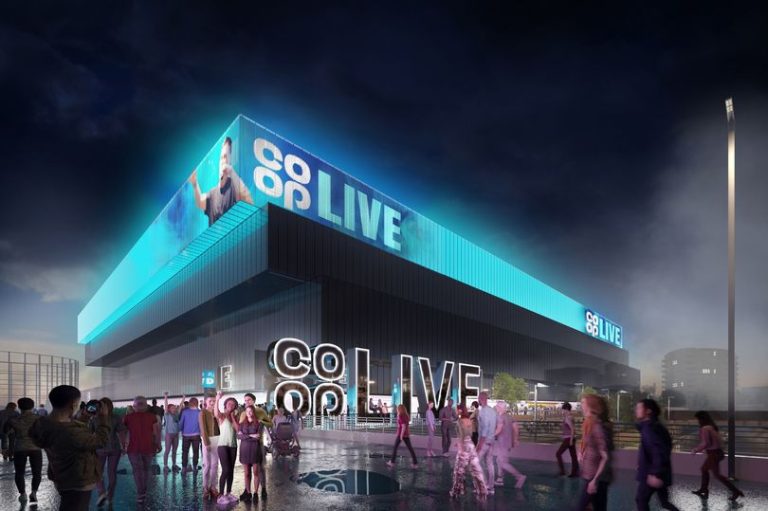
coop live

“Co-op Live” Date revealed for £365m indoor arena new opening

The indoor arena in Manchester will have a capacity of 23,500 An opening date has been revealed for the Co-op Live indoor arena. The arena, which cost an eyewatering £365m, is being built by Manchester City’s Etihad Stadium. It has now been announced the 23,500-capacity indoor arena will open its doors in April, 2024. It was originally supposed to be up and running by December this year, however, that has now been pushed back. Test events are planned to be staged in April shortly before it fully opens to the paying public.An exact date for the first event is due to be announced in the coming months, it has been reported. The arena is being built by BAM Construct UK and is being led by a joint venture between City Football Group and Los Angeles-based Oak View Group. Pop star Harry Styles was also announced as an investor. While Simon Moran’s gigs promotor SJM Holdings, which is the holding company of both SJM Concerts and rugby league club Warrington Wolves, also has shares in the joint venture. Gaiety Investments UK, the business run by Irish concert promotor Denis Desmond, is an investor as well. A Co-op Live spokesman said: “Co-op Live will be opening our doors to fans in April 2024. “It’s huge kudos to BAM, and the dozens of local subcontractors working on the project, that we are well within our original timeframe and on-budget given the unprecedented challenges of the pandemic, supply chain shortages, and an energy crisis. “We’re proud to be on the home stretch to delivering Co-op Live and we can’t wait to invite fans in to experience the biggest and most sustainable arena in the UK.” Building, Design & Construction Magazine | The Choice of Industry Professionals 

Read More »
Torus expands St Helens footprint with 83 new homes in Thatto Heath

Torus expands St Helens footprint with 83 new homes in Thatto Heath

With roots firmly in St Helens, housing Group Torus has decades of experience building, repairing and maintaining over 13,500 homes across the borough and now is celebrating commencing works on its biggest Shared Ownership scheme in the area – Elephant Lane – with Countryside Partnerships.  Committing to delivering 83 brand new homes – all of which will be available via Shared Ownership – Torus will work with Countryside Partnerships to bring forward the 164-unit scheme and completely transform the disused land in Thatto Heath and create a modern housing development which will give future residents access to numerous local amenities and public transport networks.  Investing over £18 million into the scheme, Elephant Lane is the first New Build scheme Torus has undertaken in Thatto Heath and highlights its ongoing commitment to build high quality, modern homes that actively support people onto the housing ladder.  Discussing Elephant Lane, Director of Development & Sales at Torus Developments, Steve Alcock, said: “We’re thrilled to be working with Countryside Partnerships on this project to galvanise long-term investment in the site and surrounding area. For Torus, it’s critical to enter into partnerships that help us actively invest in a community and that is what we feel we have at Elephant Lane – a relationship that will help us create sustainable, deep-rooted change through building great homes.  “Elephant Lane itself signifies a monumental moment for Torus as a Group and represents years of ongoing investment in St Helens. It is the single largest Shared Ownership scheme we have developed in St Helens – and the first in Thatto Heath – so we are excited to be able to bring forward 83 homes that will help regenerate a piece of land and encourage the growth of a new community.”  Delivering the other 81 homes at Elephant Lane through its Linden Homes arm, Countryside Partnerships will provide these properties via Outright Sale and offer another route to homeownership to local people.  Ian Hilliker, Managing Director of Countryside Partnerships Merseyside & Cheshire West, said: “As the UK’s leading mixed tenure developer, we’re always looking to work with quality partners like Torus to deliver more affordable homes in the areas they’re needed most. By working in partnership, we’ve been able to unlock the potential of this site, which had remained undeveloped for many years. We’re now looking forward to seeing the homes progress and welcoming new residents.”  Building, Design & Construction Magazine | The Choice of Industry Professionals 

Read More »
Flying the flag for Leicester Pride support

Flying the flag for Leicester Pride support

Aggregate Industries will once again be one of the headline sponsors for this year’s Leicester Pride event as it celebrates its 15th anniversary. The leading building materials supplier, with its group headquarters near Coalville in Leicestershire, has announced it is to be a Gold Sponsor for the event on Saturday September 2, following a successful sponsorship in 2022. This year sees a change of venue with the annual celebration moving to Leicester’s Abbey Park.  The sponsorship will see Aggregate Industries take up a prominent pitch at the event, where members of its team will be on hand to discuss the diverse careers available across the business, the company’s approach to inclusivity, and the High Viz LGBTQ+ Network.  The sponsorship of Leicester Pride forms part of Aggregate Industries’ continued focus on Equality, Diversity and Inclusion (ED&I) within the business, with the aim of continuing to build a progressive and inclusive workplace, where everyone is encouraged to be their true selves. Thomas Edgcumbe, Managing Director for the Surfacing Solutions division at Aggregate Industries, said: “Within Aggregate Industries we’re committed to creating a workplace that is inclusive for all. I’m delighted that we are once again able to be a headline sponsor of Leicester Pride, the largest pride event local to our country head office, and I’m proud of the difference that this makes to our colleagues and the wider LGBTQ+ community.”  Martyn Parker, Chair of Leicester Pride, said: “Leicester Pride is thrilled to announce that Aggregate Industries has once again chosen to be one of our Gold Sponsors for this year’s celebrations. Their ongoing support enables us to host one of Leicester’s largest cultural events of the year, allowing thousands to celebrate all aspects of the LGBTQ+ community as well as promote diversity and equality within the county.” The company’s High Viz network creates a safe and welcoming environment for all employees who identify as LGBTQ+ and those who simply support equal rights for all. It also acts as a voice for LGBTQ+ employees within Aggregate Industries as well as driving change by continuing to educate, raise awareness and up-skill colleagues. Aggregate Industries also has Affinity Groups supporting women in the construction sector, age, ethnicity and nationality, veterans and disability. For more information on careers at Aggregate Industries visit our careers pages. Building, Design & Construction Magazine | The Choice of Industry Professionals 

Read More »
The sustainable transition depends on scaling positive change now! WorldGBC announces #BuildingTheTransition for World Green Building Week

The sustainable transition depends on scaling positive change now! WorldGBC announces #BuildingTheTransition for World Green Building Week

On World Environment Day (5 June), the World Green Building Council (WorldGBC) announces its 14th annual World Green Building Week, taking place 11–15 September 2023.  As the largest contributing sector to global energy-related carbon emissions (37% globally), the built environment is a key agent of change to deliver on the systemic transition needed to meet the goals of the Paris Agreement.  This World Green Building Week — #BuildingTheTransition — calls on the global building and construction sector to accelerate the transition to secure an energy efficient, regenerative and just future for all. Led by a network of over 75 national Green Building Councils (GBCs) and their 46,000 members, the week-long event will show how through systems change thinking, and leveraging local solutions, we can transition to sustainable built environments.  This year, all eyes are on the world’s first Global Stocktake, expected to show the status of our efforts in implementing the Paris Agreement. Political and private sector leaders across the world are asking “how far have we come?”, and importantly, “how far do we still have to go?” in order to tackle the worst impacts of global warming, humanitarian challenges and economic uncertainties.  There is no question that the world must undergo a transition to ensure better outcomes for nature and people. But this transition won’t happen on its own. It requires systemic transformation across all sectors, including buildings and construction. An urgent understanding of what the transition entails, and a profound shift in how all stakeholders think and act on any given choice is imperative to secure an equitable and just future for all. Throughout World Green Building Week, WorldGBC’s network will host events across the world and share examples of #BuildingTheTransition across three themes: the energy transition, regenerative transition and just transition. This year’s campaign will also lead into the UN’s 2023 SDG Summit (18–19 September) and therefore pinpoint 11 of the 17 Sustainable Development Goals that are essential to catalyse a sustainable built environment. #BuildingTheTransition’s three themes highlight how the built environment can support the Paris Agreement and the UN’s Sustainable Development Goals: The Energy Transition The energy transition is about more than switching to renewable energy. We’re talking about a complete systemic change. Accelerating the uptake of built environments that reduce energy demand, store and share clean energy, and produce more energy than they use. It’s investing in clean technologies and driving economies of scale. And it’s deep retrofitting existing buildings to be exceptionally energy efficient. The Regenerative Transition How do we advance regenerative principles in the built environment from niche to normal? Our planet’s resources give us life, but they are not infinite. Humans and the built environment must exist together within a cycle of natural systems. That means not just protecting biodiversity but prioritising its restoration, embracing nature-based solutions, and creating a thriving circular economy across the entire building value chain. The Just Transition We cannot achieve climate justice without social justice. The people who have contributed the least to environmental degradation are suffering the biggest consequences. Equality is not the same as equity. Advancing a just transition in the built environment means committed solidarity to protect human rights from financial flows, to supply chains, to geopolitics.  Cristina Gamboa, CEO, World Green Building Council: “A final reminder. That’s what we have from this year’s Sixth Assessment Report from the Intergovernmental Panel on Climate Change (IPCC). A final reminder before we are evicted by an uninhabitable planet.  In the run up to COP28 in Dubai, UAE, and in the world’s first Global Stocktake year, we must remember that 1.5ºC is a limit, not a target. Our aim cannot be to only avoid the worst-case scenario when we are capable of so much more. The building and construction sector has the ability to mobilise and scale available solutions now to deliver a future that is energy efficient, regenerative and just. Scaling these solutions requires political will and industry ambition. As the largest contributing sector to carbon emissions, the built environment is at a historical juncture to deliver on the required transitions in a decisive decade. That’s why this World Green Building Week our #BuildingTheTransition campaign is leveraging localised solutions from the built environment to accelerate a global transition to a decarbonised, sustainable and resilient society. Between 11–15 September, we’re inviting our global community to take urgent action to accelerate the UN Sustainable Development Goals and transition to energy efficient, regenerative and just built environments for everyone, everywhere.” Find out more and join the social media campaign at @WorldGBC, #BuildingTheTransition and #WGBW23. Building, Design & Construction Magazine | The Choice of Industry Professionals 

Read More »