BDC News Team
Johnson Controls and Willow to collaborate on digital solutions that create smarter, healthier, more sustainable buildings

Johnson Controls and Willow to collaborate on digital solutions that create smarter, healthier, more sustainable buildings

Johnson Controls, the global leader for smart, healthy and sustainable buildings, and Willow, a leading provider of digital twin solutions for critical infrastructure and real estate today announced a global collaboration to digitally transform buildings and facilities into healthier, safer and more sustainable environments for their customers and occupants. Johnson Controls and

Read More »
GAP Group gets Gold for second year running

GAP Group gets Gold for second year running

GAP Hire Solutions, the UK’s largest independent equipment hire company, is delighted to confirm its continued FORS (Fleet Operator Recognition Scheme) Gold Certification, operating in all depots south of, and including, Birmingham. This award is the pinnacle for fleet operators’ organisations. The scheme supports GAP’s drive to continually improve operator

Read More »
Chubb strengthens senior leadership team

Chubb strengthens senior leadership team

Chubb, one of the UK’s leading fire safety and security solutions provider, has strengthened its senior leadership team with a number of significant appointments. Following the recent senior executive hires and promotions for Chubb Group globally, the UK and Ireland team welcomes three new leaders. David Dunnagan was promoted to

Read More »
‘Modular Construction: Off-site and On Trend’

‘Modular Construction: Off-site and On Trend’

Supported as a route to more efficient and sustainable construction, modular construction is an evolving sector that offers the industry progressive benefits, says Daniel May of Consort Architectural Hardware. Recognised as an emerging model in modern methods of construction (MMC), modular construction is an industry on the rise, albeit one

Read More »
The Fire Safety (England) Regulations 2022

The Fire Safety (England) Regulations 2022

The Fire Safety (England) Regulations 2022 are made under article 24(1) of the Regulatory Reform (Fire Safety) Order 2005 (“the Fire Safety Order”), and came into force on the 23 January 2023. The regulations make it a legal requirement for responsible persons of a high-rise residential building to advise and

Read More »
Work begins on British Salt’s state-of-the-art warehouse

Work begins on British Salt’s state-of-the-art warehouse

Building has started for a new warehouse for British Salt, the UK’s leading salt manufacturer and part of Tata Chemicals Europe. Leading developer Stoford is delivering the 184,493 sq ft state-of-the-art warehouse in Middlewich, Cheshire, which will enable British Salt and Tata Chemicals Europe to store the high purity salt

Read More »
SterlingOSB Zero ‘Primed for Action' across the board

SterlingOSB Zero ‘Primed for Action’ across the board

Panel product manufacturer, West Fraser, has introduced a new ready-primed version of its industry-leading SterlingOSB Zero board which is ideal for use in a wide range of situations from site hoardings through to building exhibition stands and other installations where appearance is important. SterlingOSB Zero PrimedPlus is being produced in

Read More »
Latest Issue
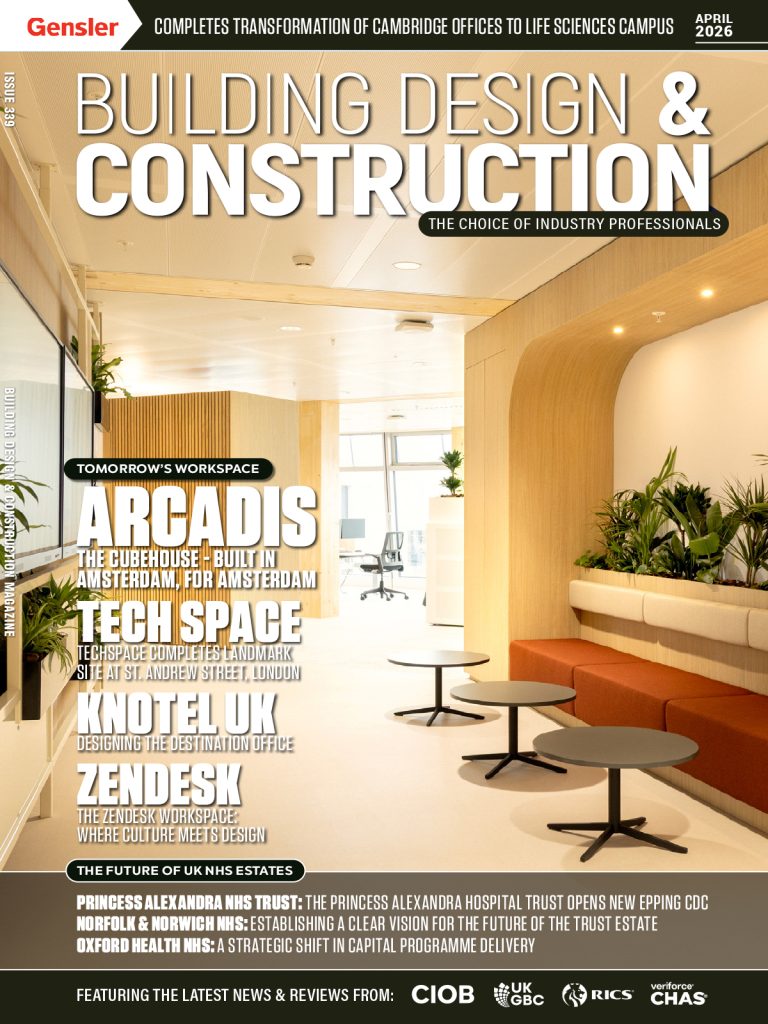
Issue 339 : Apr 2026

BDC News Team

UK Debut for Bobcat E19e Electric Excavator at Executive Hire Show

UK Debut for Bobcat E19e Electric Excavator at Executive Hire Show

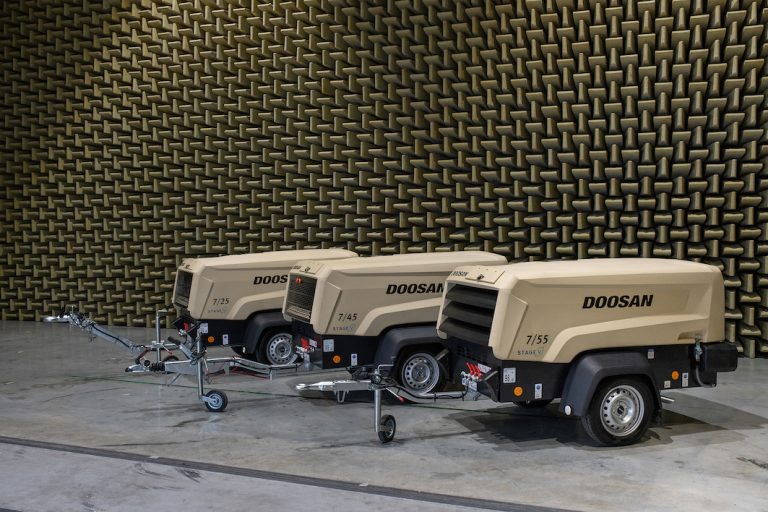
Doosan Bobcat will be showing the company’s new E19e two-tonne electric mini-excavator for the first time in the UK on Stand I40 at the Executive Hire Show (EHS) from 8-9 February 2023 at the Coventry Building Society Arena in Coventry. Alongside the E19e, the company will also be presenting the popular 7/45 portable compressor from sister company, Doosan Portable Power.   The EHS is firmly established as the only annual national event aimed at tool, equipment and plant hirers and the suppliers serving this dynamic industry. The EHS enables hire professionals to not only see key suppliers they already do business with, in one place, but also to get in front of new companies from around the world who are looking to serve this important market. Clean and Quiet Operations Building on the success of Bobcat’s smaller E10e, the world’s first 1 tonne electric mini-excavator, the E19e adds to Bobcat’s expanding range of electrically powered machines. As a true pioneer in the field of battery-powered equipment, Bobcat is driving an industry-wide shift towards electric excavators and other construction equipment such as the company’s unique T7X model, the world’s first electric compact track loader. The Bobcat E19e features the same profile, external dimensions and comparable performance as the popular E19 mini-excavator, more than 10,000 of which have been sold worldwide. The E19e boasts the same stability, lift capacity and breakout forces as its conventional counterpart, while its constant torque curve (a feature of electric motors) ensures dependable and powerful operations. With a width of just 98 cm, the new electric model is easy to operate in even the most confined workspaces, making it ideal for tasks such as demolition as well as outside applications that require quiet, zero-emission operations. The E19e features a 3.5-hour battery capacity and can be recharged quickly using a super-fast charger. This means that by topping up the power during work breaks, the machine can be used all day for the majority of typical applications. Thanks to the model’s ergonomic design, its battery capacity and service codes are clearly displayed, making planning simple. The E19e is also immensely versatile, with a wide array of compatible attachments available. Bobcat’s hydraulic clamp attachment, for example, is unique in the market for this size category. Doosan 7/45 Stage V Compressor Continues Success in the Market Designed with a focus on simplicity, durability, reliability and transportability, the 7/45 Stage V portable compressor provides 4.0 m³/min (140 cfm) of compressed air at 7 bar nominal pressure. Like all Doosan portable compressors, there is a wide range of options and customizations available for the 7/45 to meet customer needs. The 7/45 Stage V compressor on the EHS stand will feature a Tough Top (polymer) canopy, which is a standard feature on all the latest small compressors from Doosan Portable Power. This easy-to-open canopy creates a fantastic line with the polymer mudguards and bumpers. Integrated LED lights are also offered as standard for all the machines as well as environmentally important bunded bases. The long-standing metal canopy versions are still available to customers as an option. There are three more 7 bar Stage V compressor models in the small compressor range including the 7/20, 7/25 and 7/55, with outputs of 2.0, 2.5 and 5.0 m³/min (70, 90 and 180 cfm), respectively. The small compressor range is completed by the 14/35 higher pressure model providing 3.0 m³/min (105 cfm) of compressed air at 13.8 bar. The E19e and E10e are part of a comprehensive selection of mini-excavators from Bobcat covering models from 0.8 to 8.5 tonne, alongside a full line-up of skid-steer, compact track and all-wheel steer loaders, telehandlers, compact wheel and small articulated loaders and attachments. Also aimed at the tool and plant hire industry and the markets it serves, Doosan Portable Power offers a comprehensive range of portable compressors, generators and lighting products for the construction and rental industry. For more information about Bobcat and Bobcat products, visit www.bobcat.com For more information about Doosan Portable Power products, visit the website: www.doosanportablepower.eu Building, Design & Construction Magazine | The Choice of Industry Professionals

Read More »
Johnson Controls and Willow to collaborate on digital solutions that create smarter, healthier, more sustainable buildings

Johnson Controls and Willow to collaborate on digital solutions that create smarter, healthier, more sustainable buildings

Johnson Controls, the global leader for smart, healthy and sustainable buildings, and Willow, a leading provider of digital twin solutions for critical infrastructure and real estate today announced a global collaboration to digitally transform buildings and facilities into healthier, safer and more sustainable environments for their customers and occupants. Johnson Controls and Willow have committed to jointly bring next-generation solutions to their customers. Digital twins are playing an increasingly important role in the design, construction, and ongoing operation of healthy buildings and facilities and can be particularly valuable when analysing large datasets and predicting patterns and trends. “When it comes to our OpenBlue suite of connected solutions, our customers see the return on their investment for creating smarter, healthier and more sustainable buildings – it’s a win for them and the environment,” said Rodney Clark, vice president and chief commercial officer, Johnson Controls. “We look forward to working with Willow to provide increasingly robust digital twin solutions to our mutual customers.” “Through this partnership we have an incredible opportunity to help customers reimagine what is possible when they digitise their buildings and facilities at scale,” said Joshua Ridley, chief executive officer, and co-founder of Willow. “By integrating the power of WillowTwin™ with Johnson Controls OpenBlue Digital Twin platform, customers can obtain operational efficiency and cost reductions, improve their sustainability management and improve IoT/Operational Technology security across their buildings and facilities portfolios globally.” In connection with this collaboration, Johnson Controls and Willow have entered into a go-to-market agreement and license agreement for the use of digital twin technology patents held by Johnson Controls. The companies also agreed to strengthen their technology and business collaboration in marketing, implementation and interoperability. Building, Design & Construction Magazine | The Choice of Industry Professionals

Read More »
GAP Group gets Gold for second year running

GAP Group gets Gold for second year running

GAP Hire Solutions, the UK’s largest independent equipment hire company, is delighted to confirm its continued FORS (Fleet Operator Recognition Scheme) Gold Certification, operating in all depots south of, and including, Birmingham. This award is the pinnacle for fleet operators’ organisations. The scheme supports GAP’s drive to continually improve operator safety, fuel economy and vehicle emissions. It also helps embed the most efficient operations throughout the business. Put simply, the scheme demonstrates that GAP, as a national hire company, is achieving and maintaining industry leading best practice in efficient, sustainable and safe commercial vehicle fleet management. In maintaining Gold certification, GAP ensures compliance with all aspects of Road Transport Law. Being committed to ambitious sustainability and carbon reduction targets, GAP Hire Solutions only purchases vehicles fitted with the latest euro VI diesel engines, thereby limiting environmental impacts by achieving significant reductions in CO2, NOx, and Particulate Matter emissions. Additionally, the recent inclusion of electric vehicles into the fleet has enabled GAP to support customers with the implementation of ‘zero emission sites’. GAP also continues to invest in its fleet, fitting all HGVs with state-of-the-art safety equipment including cameras, nearside proximity aids and audible reversing alarms which support safe driving practices in congested urban areas. Furthermore, GAP has invested in an industry leading asset management, delivery and telematics system which supports the monitoring of driver behaviours and includes route planning capabilities and contributes towards a reduction in idling, ‘unnecessary miles’ and fuel usage. Allister Maxwell, Head of Safety, Risk & Compliance, at GAP commented: “GAP’s continued FORS certification demonstrates that our drivers and vehicles are maintaining exemplary levels of best practice in safety, efficiency and environmental protection.” Building, Design & Construction Magazine | The Choice of Industry Professionals

Read More »
Chubb strengthens senior leadership team

Chubb strengthens senior leadership team

Chubb, one of the UK’s leading fire safety and security solutions provider, has strengthened its senior leadership team with a number of significant appointments. Following the recent senior executive hires and promotions for Chubb Group globally, the UK and Ireland team welcomes three new leaders. David Dunnagan was promoted to Managing Director of Chubb UK&I, following Brendan McNulty’s promotion to the newly created role of Vice President – Europe last summer. David has enjoyed a successful career with Chubb, starting as an apprentice in 1993. He now drives the company’s ambition of becoming the employer of choice and the number one fire and security business in the UK and Ireland. Gary Moffatt has been promoted to Director for Fire and Security UK. Continuing his long and successful career with Chubb, Gary’s appointment is his latest milestone achievement, having secured several promotions since joining the organisation in 2001 as a university graduate.  A new addition to the Chubb senior leadership team is Terry Sallas. Terry joins as Managing Director of Major Projects and has a proven track record of helping organisations create a vision, discover new markets, and grow. He will lead projects incorporating specialist solutions through its technology-leading businesses, Chubb Systems, Frontline Security Solutions, Fire Systems, and the software brands, Sisys and Mentor.  David Dunnagan said about the new appointments, “I am delighted that we have significantly strengthened our senior leadership team. Gary and Terry bring an incredible amount of knowledge and experience to our team, and together with the wider team, we will lead Chubb into its next ambitious growth phase.  “We’re guiding our customers through the digital switchover and harnessing the power of new technology, so our fire and security solutions are even better connected and help customers lower their impact on their operations. By getting the basics right, we can be even more responsive and tailor our offering to provide a personal service to our customers. From there, we can evolve and be the number one provider for fire protection, life safety, and security.” The Chubb senior leadership team is made up of great leaders who each has decades of industry experience. From the core pillars of the business through to business functions such as Digital Technology, Communications & Marketing and Employee Experience & Development, these individuals are the driving force behind the organisation’s success.

Read More »
Sustainable battery power solution reaches new safety heights in one of the world’s tallest wooden skyscrapers

Sustainable battery power solution reaches new safety heights in one of the world’s tallest wooden skyscrapers

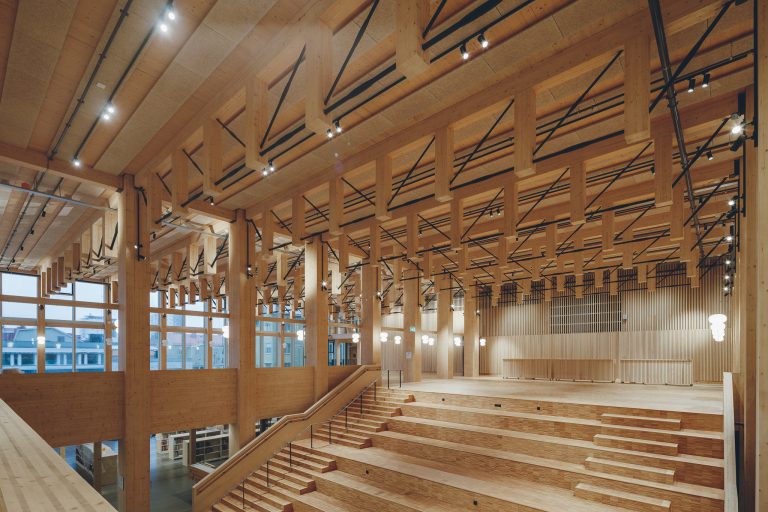
ABB delivers innovative and intelligent energy storage solution for Sweden’s landmark culture center Keeping visitors and staff safe with a unique battery energy storage solution for the wooden structure’s sprinkler system In case of an energy failure, the ABB solution will provide sustainable back up power 24/7 The Sara Kulturhus is a state-of-the-art cultural venue and hotel in Skellefteå, Sweden. It is home to the city library, a museum and art gallery and a theatre which stages 450 performances a year. Standing 75m tall, the 20-story timber building is one of the world’s tallest wooden structures and is an international showcase for sustainable design and construction, with 100 percent of its electricity coming from renewable sources, including hydro and wind generation.  The timber structure is so sophisticated that it removes more than twice the carbon emissions produced by the operational energy it uses and the embodied carbon from the production and transport of the materials used to construct it. As a zero-emissions site, the Sara Kulturhus design required careful consideration and innovative solutions, such as its unique battery energy storage system (BESS) which was designed collaboratively by Skellefteå Kraft and ABB to provide reliable, clean power to the building’s all-important fire sprinkler system. In a timber construction like the Sara Kulturhus , the sprinkler system is critical to keeping staff and visitors in the building safe. Traditionally, this fire protection system would be powered by emergency diesel generators, which serve as an onsite power supply should the mains power not be available. With the Sara Kulturhus’ commitment to sustainability, there is no diesel generator on site, so an alternative solution was required. Skellefteå Kraft and ABB worked together on a bespoke energy storage solution to deliver maximum safety and reliability while harnessing the building’s hydroelectric green electricity, received from the grid, which is used as the power supply. The bespoke BESS comprises six battery packs from local supplier Northvolt, AC and DC switchgear from ABB, inverters from EPC Power and a transformer.  For Patrik Sundberg, Business Manager at Skellefteå Kraft, the BESS installation at the Sara Kulturhus was the culmination of a journey of collaboration between his company, ABB and Swedish battery supplier Northvolt. He said: “This is a truly sustainable, negative carbon building that operates on 100 percent renewable energy. Our solutions had to mirror this, so it was important to find a sustainable safety solution to power the sprinklers that didn’t use diesel. To reduce the site’s carbon footprint, it was also key to work with local suppliers, like battery manufacturer Northvolt. This innovative new concept really pushes the boundaries on the use of battery energy storage for fire prevention applications and will set a new standard for sustainable buildings in the future.” With the unique wooden design of the building, ABB’s packaged solution was built, and factory tested off-site and then energized in the basement of the Sara Kulturhus. To make it easier to manage the BESS and to ensure a reliable 24/7 power supply for the building’s sprinkler system, the solution was supplied with a custom ABB eStorage OS energy management system to provide next level energy monitoring, diagnostics, and data and analytics. As well as optimizing energy use internally, this advanced autonomous AI technology interfaces with the building management system, allowing the center to interact with nearby buildings so any excess renewable energy generated can be supplied to other parts of the city when required. Sara Kulturhus CEO Anna Jirstrand Sandlund said: “This is a lighthouse project which embodies the region’s values of delivering ecological, economical, and social impact to attract more people to Skellefteå and supports the green transition across North Sweden. With a wooden building of this scale, fire safety had to be one of our main considerations. By collaborating with ABB and Skellefteå Kraft we have developed a unique solution that is now one of the highlights of our twice daily guided tours for visitors. With the building itself now a blueprint for sustainability, we continue to work towards equaling its impact on the inside and inspiring our visitors and residents to become more sustainable.” Learn more about ABB’s energy storage solutions offering by visiting solutions.abb/eStorage Building, Design & Construction Magazine | The Choice of Industry Professionals

Read More »
‘Modular Construction: Off-site and On Trend’

‘Modular Construction: Off-site and On Trend’

Supported as a route to more efficient and sustainable construction, modular construction is an evolving sector that offers the industry progressive benefits, says Daniel May of Consort Architectural Hardware. Recognised as an emerging model in modern methods of construction (MMC), modular construction is an industry on the rise, albeit one that’s still in its infancy. In broad terms, the concept is often described as the process of constructing a building in a controlled, off-site setting, before being transported and assembled at its intended destination. In 2019, modular construction was reported to be worth £753m in the UK market and was projected to grow by 14% between 2020 and 2024. Globally, the numbers are much higher, valued at $72 billion in 2020 and predicted to reach over $175 billion by 2025. Its growth – although slower in the UK – can be attributed to the needs of modern markets, where modular initiatives are praised for their ergonomic and environmental benefits, as it produces buildings at a more efficient rate and lower cost – and often with more sustainable materials. Efficient production At its core, modular construction shares many similarities to any construction project, where under controlled conditions, teams use the same materials and design to the same codes and standards as conventional developments. Yet, for many, modular construction provides answers to some of the industry’s most pressing issues. Britain’s housing crisis for example, is exacerbated by a shortage in homes, unaffordable rents and rising purchase prices, and coupled with modern carbon initiative targets, there’s a need to find a swift and sustainable solution. Currently, only 15,000 modular homes are built in the UK each year, despite modular construction presenting itself as a viable MMC. But, as experts suggest, the potential is far greater, and the production of over 75,000 modular homes is considered a fair target to aim for, with the Homes England programme now aiming to construct 25% of affordable homes using MMC. By manufacturing structural components off-site (at the same time groundworks and foundations are completed on-site), the process of modular construction can offer various sectors (such as residential housing) a more flexible and cost-effective option – not to mention, one that’s completed in a much quicker time than traditional methods. In fact, where the turnaround time of projects is concerned, building in an off-site setting is said to reduce construction times by up to 30%, with total development time halved. From a sustainability perspective, the quicker delivery of development projects is also contributing to the reduction of carbon emissions. With less time spent on site and less manufacturing machinery used, total pollution is moderated in pre-set factory environments. Already, UK studies have also found that up to a 90% reduction in materials can be achieved with modular building methods. And as more sustainably sourced materials are used to create better energy efficient buildings, construction’s green initiatives appear evermore achievable this way. Staying on track When it comes to the production of our built environment, the speed and sustainability benefits modular construction offers will continue to turn the heads of decision makers who recognise  efficiency and cost-effectiveness. Yet, as the method continues to advance, those involved in the procurement of modular components and materials must continue to give considered thought to the supply, transportation and design process of projects to truly unlock its potentially progressive benefits. With a constant flow of components, from structural modules right through to hardware products, decision makers must continue to factor how building materials may interact with each other upon completion of projects. Where reliability and functionality are concerned, the specification of construction products is crucial and decision makers have a responsibility to ensure all materials and products are fit for purpose throughout the entirety of modular construction developments. The supply chain is often simplified for modular construction projects, and with various regulations to follow and an assortment of construction products to keep track of, the onus is on a smaller team of decision makers to make conscious choices that meet all of a project’s regulatory requirements. With this in mind, modern manufacturers and professional bodies are working to support professionals throughout the decision-making process. As part of the Building Safety Bill’s regulatory framework, the Golden Thread of Information has been developed to provide more complete and detailed product information in the form of comprehensive product datasheets and installation guides. The Golden Thread of Information encourages greater collaboration and education and can provide invaluable and transparent information on product performance and testing throughout the completion of modular projects. Enhanced traceability will lead to more informed and consistent product choices, and it is imperative decision makers remain informed if they aim to deliver complete and efficient buildings. If the acceptance of modular construction continues to ascend, we may shortly see a shift of landscape within the construction industry. The environmental and cost saving benefits are evident. But to effectively tap into the progressive benefits modular construction has to offer, the importance of specification must be widely understood. After all, safety, functionality and reliability will always remain unremitting themes in construction, regardless of method.


Read More »
The Fire Safety (England) Regulations 2022

The Fire Safety (England) Regulations 2022

The Fire Safety (England) Regulations 2022 are made under article 24(1) of the Regulatory Reform (Fire Safety) Order 2005 (“the Fire Safety Order”), and came into force on the 23 January 2023. The regulations make it a legal requirement for responsible persons of a high-rise residential building to advise and inform Fire and Rescue services to assist them with planning a safe fire evacuation response and procedure. Why is the government introducing the Fire Safety (England) Regulations 2022? Following the Grenfell Tower Fire in June 2017, the government launched an Independent Grenfell Tower Inquiry. Their initial findings were published in October 2019, with recommendations that included legislative change. The Fire Safety (England) Regulations 2022 will introduce the majority of the guidance from the inquiry. What do the new regulations cover? Regulation 3 defines what a “high-rise residential building” is and the importance when defining what is and what is not required. Regulations 4 to 8 enforce the duty of the responsible person (defined in article 3 of the Fire Safety Order) in relation to such high-rise residential buildings: Regulations 9 imposes obligations on the responsible persons to provide fire safety information to residents of the building. This includes but is not limited to instruction on what to do and who to call in cases of fire, and the evacuation strategy for the premises. Regulation 10 covers the requirements for fire doors in all residential buildings with communal areas and two or more sets of domestic premises. This regulation imposes strict and more frequent inspections of fire doors to be undertaken with particular emphasis on the flat front entrance doors. Regulation 11 requires certain information to be supplied to fire and rescue authorities to assist them to plan, and if needed provide an effective operational response. It is a requirement in law for responsible persons of high-rise residential premises to provide the information under all required regulations above. Regulations made under article 24 can impose requirements on responsible persons or others, including building owners/freeholders and building managers/agents, in relation to mitigating the risk to residents for specific premises. How can SOCOTEC support with ensuring compliance with Fire Safety (England) Regulations 2022? Our expert team of fire consultants can provide you with the expertise, experience and knowledge to assist you in meeting your legal requirements as set out under these regulations. Want to find out more about SOCOTEC UK’s services? Contact us here. Building, Design & Construction Magazine | The Choice of Industry Professionals

Read More »
HS2’s first Birmingham viaduct pier completed as work ramps up on city centre site

HS2’s first Birmingham viaduct pier completed as work ramps up on city centre site

HS2 has revealed images of a big construction milestone in Birmingham city centre, with the completion of the first giant V-shaped pier for the 300 metres long viaduct that will bring high speed trains into the new Curzon Street Station. The five-metre-tall structure is the first pier to be installed for the ‘Curzon No. 3 Viaduct’, which will be the final approach to HS2’s new seven platform station in the city centre. In total, 30 piers will be installed for this viaduct, with heights varying between five and six metres above ground level. This includes four steel tripod piers erected to span over the Digbeth Branch Canal. To cut carbon, a steel industry by-product – ground granulated blast-furnace slag (GGBS) has been incorporated into the pier’s manufacturing as an eco-friendly concrete alternative to a traditional concrete mix. Also known as slag sand, GGBS will reduce the embedded carbon of the piers by more than 60%, while ensuring the structure will remain operational for over 120 years. HS2’s Senior Project Manager for Curzon Street, David King said:   “It’s fantastic to see this first viaduct pier complete on the Curzon Street site, which starts to bring the design vision for this iconic structure to life. Construction on this site is supporting hundreds of skilled jobs in the region, and once built, Curzon Street Station will put Birmingham at the heart of the new zero-carbon high speed network. “We’re also pleased to see eco-friendly materials being used in the construction method, supporting HS2’s ambition to cut carbon across the project.” Over the last year, HS2’s main works contractor for the West Midlands, Balfour Beatty VINCI (BBV) have been carrying out foundation works on site to prepare for the installation of the piers, with the deepest pile reaching 34 metres below ground. The pier was built in two segments, starting with a stem pour which links the viaduct foundation with the V-shaped part of the pier. The construction team then lifted the prefabricated steel cage above the stem and installed steel panels around the cage. Concrete was poured into the formwork and left to cure for one week before removal of the panels, forming the pier’s V shape. Each pier will take up to 4 weeks to be fully installed on site, with the tallest pier reaching up to 6m above the ground. After the piers are in place, teams will begin to form the deck spans connecting the piers using system falsework and formwork with the longest span between each pier stretching over 28 metres across the site. Georgios Markakis, Balfour Beatty VINCI’s Section Manager said: “The progress we’re making at our Curzon Street site is clear to see, following the completion of the first viaduct pier. It’s a really proud moment for the team and everyone who’s helped to prepare the site over the last couple of years. “This is just the beginning of a rolling programme, where 30 piers in total will be installed, before the decks are put in place later this year – then the viaduct will really start to take shape.” Curzon No.3 Viaduct is 65 metres at the widest point, and as it approaches the station, the deck widens from a single deck at the eastern end to four separate decks at the western end, creating opportunities for a usable, flexible public space with maximised daylight under the viaduct. The viaducts were designed through a Design Joint Venture of Mott MacDonald and Systra and Architects Weston Williamson + Partners, all working for BBV. Curzon Viaduct No.3 is part of the Curzon Street Station Approach area, which is made up of five connected viaducts between Duddeston Junction Viaduct and Curzon Street Station in central Birmingham. Nearly 30,000 people are helping to build HS2, of which nearly 9,000 are employed in the West Midlands. When  contractor Mace Dragados signed the contract to build HS2’s Curzon Street Station, they confirmed that over 1,000 jobs – including an estimated 100 new entrant roles and 100 new apprenticeship positions – will be created by the joint venture that will build HS2’s landmark station. Building, Design & Construction Magazine | The Choice of Industry Professionals

Read More »
Work begins on British Salt’s state-of-the-art warehouse

Work begins on British Salt’s state-of-the-art warehouse

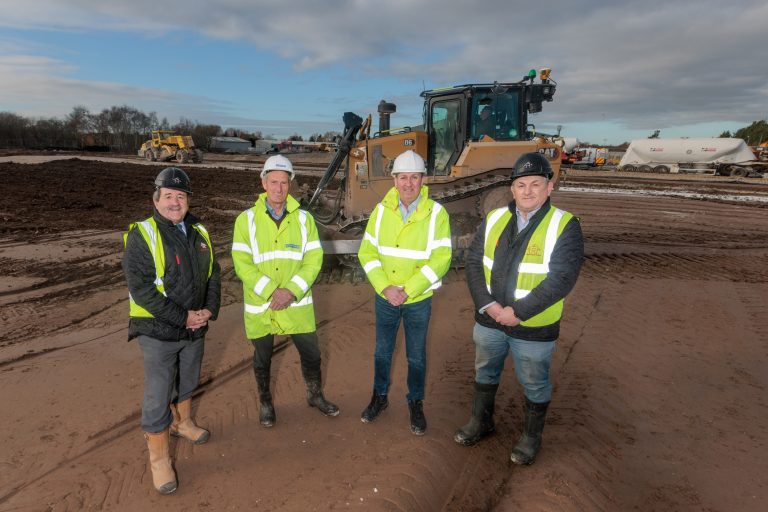
Building has started for a new warehouse for British Salt, the UK’s leading salt manufacturer and part of Tata Chemicals Europe. Leading developer Stoford is delivering the 184,493 sq ft state-of-the-art warehouse in Middlewich, Cheshire, which will enable British Salt and Tata Chemicals Europe to store the high purity salt and sodium bicarbonate products manufactured at its three sites in the county. A&H Construction has been appointed contractor to deliver the new warehouse, which is expected to be completed in August. It is being built at British Salt’s existing manufacturing site and will support Tata Chemicals Europe’s existing operations, store products destined for the food and pharmaceutical markets and support its future business plans. It will also enable the business to streamline its packaging and supply chain operations. Last year, Stoford signed a funding agreement with global alternative asset manager ICG to build the warehouse. Edward Peel, Stoford director, said: “We’re pleased to have started work on this new facility for British Salt. It’s strategically important for the business, which has outlined its ambitious plans to invest in the region. It provides a key example of our ability to deliver occupier-led development and we’re looking forward to seeing the warehouse take shape over the next few months.” Angus Vause, sales & marketing director of Tata Chemicals Europe, said:  We are delighted that works have commenced on our new warehouse, which is a key part in the delivery of our future growth plans for the business in Cheshire and will enable British Salt and Tata Chemicals Europe to deliver enhanced customer service and supply chain excellence.” Rachael Pittaway, from ICG, the global alternative asset manager that has signed a funding agreement with Stoford to construct the facility, added: “We are excited to work with Stoford and the iconic British Salt to build this best-in-class facility, and we look forward to collaborating together to find innovative solutions to further optimise and enhance the ESG credentials of the project. “The crucial location of this site represents mission-critical investing at its purest, a strategic addition to our sale and leaseback fund.” Stoford and British Salt were both advised by DTRE on the sale and Avison Young was the appointed planning consultant. Building, Design & Construction Magazine | The Choice of Industry Professionals

Read More »
SterlingOSB Zero ‘Primed for Action' across the board

SterlingOSB Zero ‘Primed for Action’ across the board

Panel product manufacturer, West Fraser, has introduced a new ready-primed version of its industry-leading SterlingOSB Zero board which is ideal for use in a wide range of situations from site hoardings through to building exhibition stands and other installations where appearance is important. SterlingOSB Zero PrimedPlus is being produced in 18mm thick, square-edged sheets measuring 1220 mm wide by 2440mm long.  The factory applied white or grey finish features on both sides and all four edges which are ready for decoration or the application of graphics.  The high-quality surface is smooth while the structure is free from knots or voids and from an environmental perspective the ‘Zero’ in the name assures specifiers that the product contains no added formaldehyde. West Fraser’s Dom West, Sales Director for UK and Ireland, commented: “SterlingOSB Zero is the first UK manufactured OSB with zero-added formaldehyde to deliver health as well as several other technical benefits, making it superior to softwood plywood as well as particleboard.  The factory-primed, ultra-smooth surface presents a blank canvas for marketing messages and other types of promotional display. Being rugged and weather-resistant, the SterlingOSB Zero PrimedPlus boards can be used outside for security applications, such as screening or walkways while we’re already getting strong interest from the hospitality sector and shopfitting specialists, as well as housebuilders and other contractors.” SterlingOSB Zero PrimedPlus is CE-marked and complies with the Forestry Stewardship Council (FSC) and BBA Agreement requirements.  The boards are supplied in packs of 50 to cover a total area of approximately 150m².  Right across its range, West Fraser has been making substantial investment in reducing the environmental impact of its production processes including signing new contracts with its energy suppliers to ensure that all its power comes from renewable sources that are covered by REGO (Renewable Energy of Guaranteed Origins) certification. For peace of mind, the boards also conform to European E1 emission standard, comply with BS EN 622: Parts 1 and 5. For further information, call 01786 812 921 or visit https://uk.westfraser.com/ Building, Design & Construction Magazine | The Choice of Industry Professionals

Read More »