BDC News Team
Work begins on major regeneration scheme in heart of Harlow

Work begins on major regeneration scheme in heart of Harlow

Work began last Thursday on a major development by Strawberry Star in Harlow town centre. Demolition commenced on site to make way for the first Star Living building, which will bring an initial 163 new apartments to the area once occupied by the underused Little Walk shopping parade and the

Read More »
Planning for sustainable development: We need to do better, says transport expert

Planning for sustainable development: We need to do better, says transport expert

DEVELOPERS, local highway authorities and consultants should be working more closely to ensure that fully integrated sustainable transport planning is made a reality, according to a leading transport expert. Matt Harrison, head of transport planning at national engineering consultancy Rodgers Leask, believes that transport planning consultants and their local highway

Read More »
hub South West Scotland celebrates 10 years in business

Hub South West Scotland celebrates 10 years in business

Over 90 projects worth more than £700m delivered across South West Scotland since 2012 hub South West Scotland (hub SWS) has marked its 10-year anniversary as one of Scotland’s leading delivery partners for community-changing infrastructure projects. One of Scotland’s leading public-private partnerships, hub SWS provides high quality and cost-efficient infrastructure

Read More »
Haldane Fisher Shortlisted as Builders Merchant of the Year

Haldane Fisher shortlisted as builders merchant of the year

Leading builders merchant Haldane Fisher has been shortlisted as the Builders Merchant of the Year (6 – 20 Branches) at the prestigious Builders Merchants Awards. Recognising those that have shown commitment to innovation, delivering excellent customer service, and boosting the success of the company, the awards will celebrate the best

Read More »
Construction project costs set to rise in 2023

Construction project costs set to rise in 2023

The UK is currently facing a difficult time with the ongoing cost of living crisis hitting both businesses and individuals hard. This is due to rise in interest rates as well as inflation causing price rises for goods in all sectors and unfortunately, the construction industry hasn’t evaded this either.

Read More »
UK Construction Feels Impact as Inflation Continues to Rise

UK Construction Feels Impact as Inflation Continues to Rise

Steep inflation always causes a major challenge for businesses in all kinds of sectors. In the construction industry, it leads to increases in prices for things like building materials and machinery hire, and it can result in projects being delayed and profit margins being reduced. In recent times, inflation has

Read More »
Ideal Heating launches heat pump range for commercial buildings

Ideal Heating launches heat pump range for commercial buildings

Leading heating appliance manufacturer, Ideal Heating, has launched a new range of monobloc air source heat pumps to help improve energy efficiency and reduce reliance on natural gas within commercial buildings. Available in six outputs and seven models (14kW, 14kW (single phase), 18kW, 26kW, 32kW, 50kW and 70kW), the ECOMOD

Read More »
Latest Issue
Issue 339 : Apr 2026

BDC News Team

Work begins on major regeneration scheme in heart of Harlow

Work begins on major regeneration scheme in heart of Harlow

Work began last Thursday on a major development by Strawberry Star in Harlow town centre. Demolition commenced on site to make way for the first Star Living building, which will bring an initial 163 new apartments to the area once occupied by the underused Little Walk shopping parade and the Gate House office building. The second phase – Harlow Quarter – which will see a further 578 apartments in a series of buildings, including two landmark 16-storey towers, plus flexible retail space and improved public realm, was given the go-ahead by planners at Harlow Council last month, subject to a Section 106 agreement. The commencement of work on site was witnessed by special guests, including Deputy Leader of Harlow Council and Portfolio Holder for Regeneration, Councillor Dan Swords, who joined senior members of Strawberry Star – Development Director Simon Taylor, Head of Construction Delivery Caroline Heraghty and Senior Director Global Sales, Marketing & CRM Cauvery Nanaiah for the event. Simon Taylor said: “It’s exciting to see the bulldozers this morning and know that we are moving forward with this project to bring new life back into the heart of Harlow town centre. This project is not just about new homes, although they are desperately needed, it’s about creating an economic benefit for the whole community. During the construction phase, we anticipate around 80 new jobs will be created, and the benefits will continue long after the builders have left. We ultimately expect more than 1,000 people will make their home in Harlow Quarter, spending their wages in the local economy and supporting shops, businesses and leisure activities to the tune of £8.9 million a year.” The scheme has been designed to create a high standard of accommodation in attractive, well-designed buildings. This first phase of the development has been designed by sustainable architecture specialist HLM Architects, while the second phase of Harlow Quarter was created by award-winning architect Flanagan Lawrence, with towers intended to fit in with the town’s 1950s design legacy. When the latest phase was approved, planning officers praised the scheme: “The proposals would dramatically change and revitalise an underused and somewhat ‘run-down’ part of the town centre. General economic, environmental and visual regeneration changes are therefore very positive. The evolution of the proposals has resulted in a form of development that can contribute much to the overall regeneration of Harlow Town Centre.” Councillor Dan Swords added: “Today is a hugely significant day for the future of Harlow. The regeneration of the town centre starts in earnest with Harlow Quarter which not only signals massive investment into our town centre, but will truly transform the area with high-quality apartments, architecture, and facilities. I am delighted to be on site today to witness the first steps being taken in the future of Harlow’s town centre.” For more information about Harlow Quarter, please contact Strawberry Star on 0127 989 9060 or visit www.strawberrystar.co.uk/hq. Building, Design & Construction Magazine | The Choice of Industry Professionals

Read More »
Planning for sustainable development: We need to do better, says transport expert

Planning for sustainable development: We need to do better, says transport expert

DEVELOPERS, local highway authorities and consultants should be working more closely to ensure that fully integrated sustainable transport planning is made a reality, according to a leading transport expert. Matt Harrison, head of transport planning at national engineering consultancy Rodgers Leask, believes that transport planning consultants and their local highway authority counterparts have focussed on vehicular traffic, and more specifically peak period commuter traffic, for too long. The National Planning Policy Framework (NPPF) promotes sustainable development but, as any transport planner knows, NPPF paragraph 111 states: “development should only be prevented or refused on highways grounds if there would be an unacceptable impact on highway safety, or the residual cumulative impacts on the road network would be severe.” Matt said: “The somewhat ambiguous ending to NPPF paragraph 111 is open to subjective interpretation, but it inherently places an emphasis on the need to quantify impacts on the road network. “The NPPF, in conjunction with often outdated local transport planning policies, perpetuate the focus on peak period vehicular impact, so collectively the industry continues to plan for the worst-case peak hour scenario. “This can often result in a siloed and unbalanced approach to the planning of sustainable transport, quantifying residual impacts and ultimately delivering development. “People, not vehicles, should be the most important element of transport planning. This focus should be present from the very start of a project, through pre-application discussions with local highway authorities and during the subsequent production of a Transport Assessment and Travel Plan. “Unfortunately, Travel Plans have long been the poor relation to a Transport Assessment because the document is typically simpler, quicker and cheaper to produce”, explains Harrison. This commercial reality mirrors local highway authority policies and resources, which often place greater emphasis on robust traffic assumptions within the confines of a ‘predict and provide’ methodology and less emphasis on the delivery of Travel Plans through a ‘vision and validate’ concept of sustainable development. “It’s no surprise to find that Travel Plans are often not monitored or enforced rigorously because less resource is allocated to them. If developers, local highway authorities and consultants are serious about promoting a sustainable development then they must accept that more time, effort and cost will need to go into the production of a better Travel Plan. This shift needs to happen quickly if we are serious about achieving the nation’s net zero target by 2050. “The global events in recent years and the ongoing political and economic upheaval have affected national travel patterns. According to the Department for Transports’ latest National Travel Survey in 2021 the overall number of trips (all transport modes) made by people living in England remains 19% lower than in 2019, though this statistic is skewed by the significantly lower number of public transport trips made on bus and rail. More of the people who are able to work from home now do so more regularly than they did pre-pandemic, but people are slowly returning to offices or adopting a hybrid working pattern. “Many people who travelled on public transport pre-pandemic have been reluctant to continue this routine due to various factors – including health concerns, cost and available services. As a result, peak period traffic flows are now at similar or even higher level than those recorded pre-pandemic across many local authorities. This is due in part to people now opting to travel by car instead, so local highway authorities and developers need to be more rigorous in their drive to promote sustainable transport and deliver a modal shift away from the single passenger private vehicle trips”, said Matt. With over 16 years of experience working in transport planning, Matt appreciates the difficulty of balancing the commercial interests of developers with the vagaries of the planning system, the needs of a development’s end-users, and the need to adapt to new issues like the cost of living crisis, or a global pandemic. However, he urges those concerned to remember that sustainable transport solutions must start somewhere and they require commitment and cooperation from all parties. Matt continued: “Travel Plans are living documents that embody the strategy behind minimising the number of vehicle trips generated by a development while simultaneously giving people the choice to travel in the most convenient way. They need to be realistic and relevant to the people living and/or working on the development. “Travel Plans have the best chance of working effectively if they’re taken seriously throughout the design development concept stage, all the way through planning and into construction. This helps to ensure that the infrastructure and the Travel Plan are ready for implementation before the first site occupant moves in. If this does not take place, end users’ ability to choose more sustainable travel options will be limited and their quality-of-life impacted accordingly. “When done properly, Travel Plans provide a roadmap for shifting towards more sustainable modes of transport, they can effect a change in personal habits, help those who work and live on those developments to achieve time and cost savings, as well as improve health and fitness by adopting active travel choices.” While Travel Plans provide a framework for developments to work from, there isn’t a one-size-fits-all approach to sustainability. New technologies and change in social conventions are opening up new opportunities to present alternative options to people. Giving people what they actually need via a sustainable option is how to make a Travel Plan truly work. Matt concluded: “There is no single answer to the question of ‘what is sustainable transport?’ because it means different things to different people in different places. “You only have to look at our team at Rodgers Leask and ask them how they travel in to work and the different methods of sustainable transport they use to know that simply putting in more bus stops or electrical vehicle charging points isn’t going to work in every situation. “It is essential for developers to have experienced travel plan coordinators in place to ensure that those behind a development can continue engaging with

Read More »
Plans announced to showcase the region at MIPIM and UKREiiF in 2023

Plans announced to showcase the region at MIPIM and UKREiiF in 2023

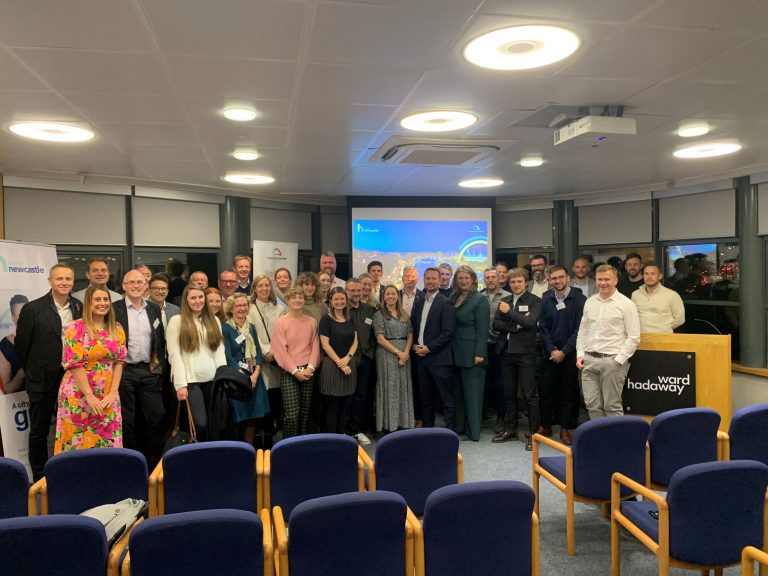
Following success at both MIPIM and the UK’s Real Estate Investment & Infrastructure Forum (UKREiiF) earlier this year, the private sector joined Invest Newcastle at an event in the city to find out more about opportunities for 2023 and discuss how they can be part of a North East delegation. The delegations are a collaborative effort to attract crucial investment for the region so that it can continue to build a healthy pipeline and expand on the social and economic ambitions of the wider North East. Taking place on 14-17 March in Cannes, France, MIPIM brings together key players and influencers from across the global real estate sector with the goal of creating more sustainable, liveable, and prosperous places for all. Newcastle will join other UK cities and regions including Manchester, Liverpool, London, Cardiff, Belfast, West Midlands, West of England, and Central South UK. Connecting the entire supply chain and offering unrivalled access to worldwide development projects and sources of capital, the North East has the unique opportunity to leverage profile and showcase key investment and development opportunities to a global audience at MIPIM. Following this year’s inaugural UKREiiF in Leeds, Invest Newcastle is also preparing for an even bigger presence in 2023. UKREiiF is a national platform to accelerate the Levelling Up agenda whilst unlocking inclusive and sustainable investment across all sectors of the real estate industry. With a pavilion secured, the team will be able to host a programme of thought leadership events on-stand, showcasing the region’s expertise at a national level. As well as delivering all aspects of the region’s presence at MIPIM and UKREiiF, Invest Newcastle also works closely with partners to help them raise their profile, providing opportunities and support throughout the whole process. Jennifer Hartley, Director of Invest Newcastle, said: “These two conferences are incredibly important for our region. They are an opportunity for us to profile Newcastle and the wider North East and collaborate on a national and global scale. Not only are we able to keep pace with global trends but also showcase the incredibly exciting innovation happening right here on our doorstep, working with our sponsors, thought leaders, other UK cities and government. “It has never been so important to put the region in front of investors, influencers, and decision makers and secure investment for our region. We really are all stronger together and this is about the whole region and our combined ambition. “These events wouldn’t be possible without the support of our partners and sponsors who come together to demonstrate how collaborative the region is across public sector, private sector, and academia. I look forward to welcoming more organisations to our delegation in the coming months who will support us to promote our city to the world.” If you are interested in finding out more information on joining the delegation and sponsorship opportunities email invest@ngi.org.uk.  Building, Design & Construction Magazine | The Choice of Industry Professionals

Read More »
hub South West Scotland celebrates 10 years in business

Hub South West Scotland celebrates 10 years in business

Over 90 projects worth more than £700m delivered across South West Scotland since 2012 hub South West Scotland (hub SWS) has marked its 10-year anniversary as one of Scotland’s leading delivery partners for community-changing infrastructure projects. One of Scotland’s leading public-private partnerships, hub SWS provides high quality and cost-efficient infrastructure projects for the public sector, spanning education, social housing, healthcare, leisure, office and regeneration projects. Since it was formed in 2012, the company, led by Chief Executive Michael Ross since 2021, has delivered an incredible portfolio of 90 projects worth over £717m. More than 20 projects are currently in construction and development, worth over £480m. With a fierce commitment to driving economic development across south west Scotland, hub SW has awarded a total of £365,287,517 worth of work packages to local construction companies across the territory. In addition, since its inception, hub SW has created 680 jobs and over 630 apprentices across south west Scotland.    hub SW marked the milestone occasion with an event in Glasgow on Thursday 10 November which was attended by over 200 colleagues and staff from dozens of participant and partner organisations. Welcoming the anniversary, hub SWS Chair, Dr Willie Mackie, said: “We are very proud to have reached this fantastic milestone – celebrating ten years of delivering infrastructure projects which are truly life changing to local communities across south west Scotland. “Michael leads a fantastic team who are all champions for our company and the incredible economic and social benefits it helps deliver. The passion, commitment and expertise of our people underpin each and every project we deliver, from inception to close. “It was fantastic to welcome so many of our colleagues from across the industry to our celebration. Their support is invaluable. We look forward to many more years of delivering projects for south west Scotland.” Championing economic development across its territory has been a crucial part of hub SW’s work over the last decade and to help spread its support, it has created and operates three bespoke training programmes – Build Lanarkshire, Build Ayrshire and Build Dumfries and Galloway.   Now in its fifth year, the Build programme offers businesses in the construction sector the opportunity to gain valuable industry advice to help them grow and achieve their market goals. The free programme is delivered over eight weeks and welcomes those specialising across all areas of construction. When you also overlap the skills programme focused on STEM initiatives with local schools and colleges, along with work experience and apprentices and the community investment model, hub SW offers a proven platform for delivering tangible positive outcomes for local communities.  Overview of hSW deliverables since 2012: hub South West Scotland (overall): ●      91 projects completed worth £717m ●      680 jobs created ●      633 apprentices created ●      509 work experience placements offered ●      429 local supply chain engagement events Ayrshire ●      35 projects completed worth £398m ●      435 jobs created ●      404 apprentices created ●      281 work experience placements offered ●      246 local supply chain engagement events Lanarkshire ●      21 projects completed worth £157m ●      185 jobs created ●      167 apprentices created ●      176 work experience placements offered ●      127 local supply chain engagement events Dumfries & Galloway ●      6 projects completed worth £87m ●      60 jobs created ●      62 apprentices created ●      52 work experience placements offered ●      56 local supply chain engagement events ENDS. CONTACT DETAILS For more information, please contact: Amy Groden – amy.groden@perceptivecommunicators.co.uk / Tel: 07791 708659 Building, Design & Construction Magazine | The Choice of Industry Professionals

Read More »
Haldane Fisher Shortlisted as Builders Merchant of the Year

Haldane Fisher shortlisted as builders merchant of the year

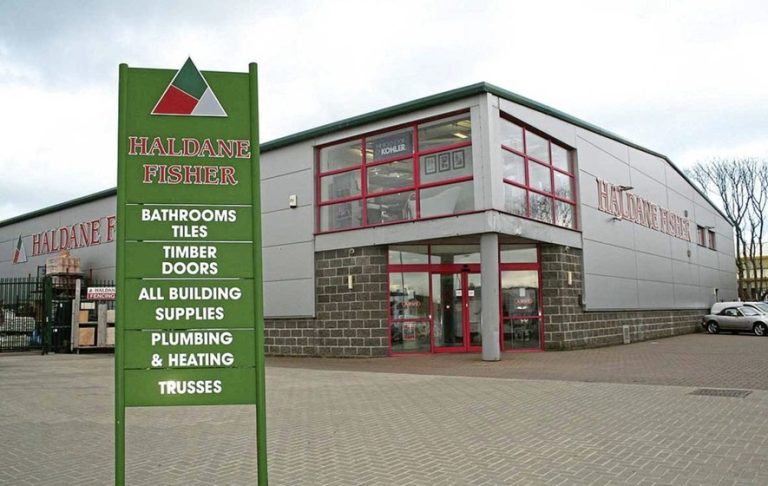
Leading builders merchant Haldane Fisher has been shortlisted as the Builders Merchant of the Year (6 – 20 Branches) at the prestigious Builders Merchants Awards. Recognising those that have shown commitment to innovation, delivering excellent customer service, and boosting the success of the company, the awards will celebrate the best of the best at a ceremony in Park Plaza, Westminster Bridge, in November. David Haldane, Managing Director of Haldane Fisher, said: “As one of only three builders merchants to be shortlisted, we are thrilled to have been recognised for our dedication to going to above and beyond to place the customer at the heart of everything we do. “We pride ourselves on delivering excellent customer service and encourage our team to take part in regular training, helping us to provide trusted advice for both trade and general public undergoing any type of construction project.” Haldane Fisher, which has 20 branches across Northern Ireland, England, and Scotland, offers customers over 13,000 products across 800 brands. David continued: “In addition to striving for excellence across the business, we continually invest in innovation and growth to ensure we embody best practice and remain at the forefront of the industry. “Being shortlisted for this award is a testament to our team who are committed to working together to facilitate the continued development of not only the business, but the sector as a whole.” Also shortlisted for the Branch of the Year is TG Builders Merchants and EH Smith Builders Merchants. For more information, visit haldane-fisher.com Building, Design & Construction Magazine | The Choice of Industry Professionals

Read More »
Construction project costs set to rise in 2023

Construction project costs set to rise in 2023

The UK is currently facing a difficult time with the ongoing cost of living crisis hitting both businesses and individuals hard. This is due to rise in interest rates as well as inflation causing price rises for goods in all sectors and unfortunately, the construction industry hasn’t evaded this either. As we approach 2023, the future of construction is looking rather bleak with project prices expected to continue rising. Whilst inflation rates and interest rates will play their part in this, the main cause is a material shortage. Some of the resources that are low in stock everywhere include: This creates new challenges for businesses to navigate as they try to steer their business clear during these hard times. However, with careful planning and a proactive mindset, construction businesses can make changes to mitigate some of the rising costs and keep their business afloat in 2023. Read on to find out how you can do that. The prices of building materials There has been a 24.1% increase in material prices compared to one year prior according to data collected in August 2022.  This is a huge increase which is making turning a profit even harder for construction businesses. The shortage of materials, inflation, energy price rises and war in Ukraine are all factors which have taken the prices of construction materials up. Many of these reasons don’t appear to be going away any time soon, so the construction industry must adapt now. What can construction businesses do about this? If rising prices and material shortages are affecting your business, then here are the easiest ways to ensure you keep costs and downtime to a minimum. Plan ahead Get organised and order your materials early to ensure they’re delivered on time and at a desirable price. Be sure to stay in close contact with suppliers for regular updates on your order. Research The internet is a great place to research the best prices for materials for your project. Find the suppliers that offer the best rates and place an order. You may also benefit from ordering in bulk for better prices too. Maintain construction compliance With material costs taking up most of your budget now, you don’t want to be spending money unnecessarily. That’s why you should think about taking out construction insurance which could cover your business and maintain strict health and safety standards on site, so you are not leaving your business completely exposed to accidents. The future is looking to be a costly one for businesses in all industries but in particular the construction sector. Having said all this, the construction sector will still be a vital part of the economy and one can expect demand for insulation and home improvements to still be high. Take the steps we’ve mentioned above to ensure your business isn’t at risk in 2023. Building, Design & Construction Magazine | The Choice of Industry Professionals

Read More »
UK Construction Feels Impact as Inflation Continues to Rise

UK Construction Feels Impact as Inflation Continues to Rise

Steep inflation always causes a major challenge for businesses in all kinds of sectors. In the construction industry, it leads to increases in prices for things like building materials and machinery hire, and it can result in projects being delayed and profit margins being reduced. In recent times, inflation has soared and significantly impacted the UK’s construction industry. Seeing as inflation is continuing to rise, construction companies and those involved in the supply chain could be facing problems for some time yet. Material Costs Have Risen Significantly Covid-19 lockdowns, Brexit, the war in Ukraine, and other factors, are all affecting the steep rise in inflation that the construction industry and other industries have recently experienced. In 2022, according to the latest statistics from the UK’s Office for National Statistics, the construction material price index rose by an incredible 25.2% year-on-year in April 2022. That is the eleventh consecutive year-on-year increase since June 2021. In the first four months of 2022 alone, ready-mix concrete rose by 12.5%, bricks, flagstones, blocks, and tiles rose by 18.4%, and steel bars for concrete reinforcement rose by a staggering 51.2%. Therefore, it should already be clear just how much inflation is affecting companies in the construction industry. Indeed, according to a 2022 survey conducted by the UK’s Federation of Master Builders, 98% of builders in the country saw material costs increase in the first quarter of 2022, and 83% of those builders had no option but to pass on those additional costs to their clients. The survey also showed that 73% of UK builders ended up delaying projects due to a lack of materials. Subcontractors Are Feeling the Pinch While most companies that work directly and indirectly within the construction industry are feeling the impact of inflation, some firms are thriving due to the increase in inflation. For example, there has been a great effort to keep the supply chain moving, which means the top-rated movers for long distances have seen their business increase. But others, like subcontractors, are really feeling the pinch. In particular, many subcontractors who entered fixed-price lump sum contracts before 2022 or in early 2022 are discovering that their existing construction contracts are not economically viable anymore. With a lump sum contract, a single price for all construction work is agreed upon before the works begin, which means many construction companies simply cannot deliver the projects they were contracted to carry out. Obviously, the ramifications of that are huge, both for the construction firms and for their customers. Many subcontractors who are still in operation are now increasing their loans in order to fulfil client projects, while other subcontractors are falling by the wayside. Unless operators further up the supply chain can be more flexible in their prices, subcontractors and others will continue to be massively affected. Some of the UK’s Biggest Construction Projects Have Felt the Impact of Rising Inflation It is not only subcontractors and small companies that are being affected. Some of the UK’s biggest construction projects have also felt the impact of inflation. The rise in the cost of key building materials in addition to things like geopolitical risks has seen all of the UK’s major construction projects go over budget and past their due dates for completion, including the HS2 railway, Crossrail, Hinkley Point C, and the Battersea Power Station redevelopment. While those major projects are now starting to get back on track, unless inflation begins to come under more control and supply chains and labour shortages are sorted out soon, the construction industry as a whole in the UK, and throughout the world, is likely to be in turmoil for some time yet.

Read More »
Steel signing and bolt tightening event celebrates milestone in the Graven Hill primary school development

Steel signing and bolt tightening event celebrates milestone in the Graven Hill primary school development

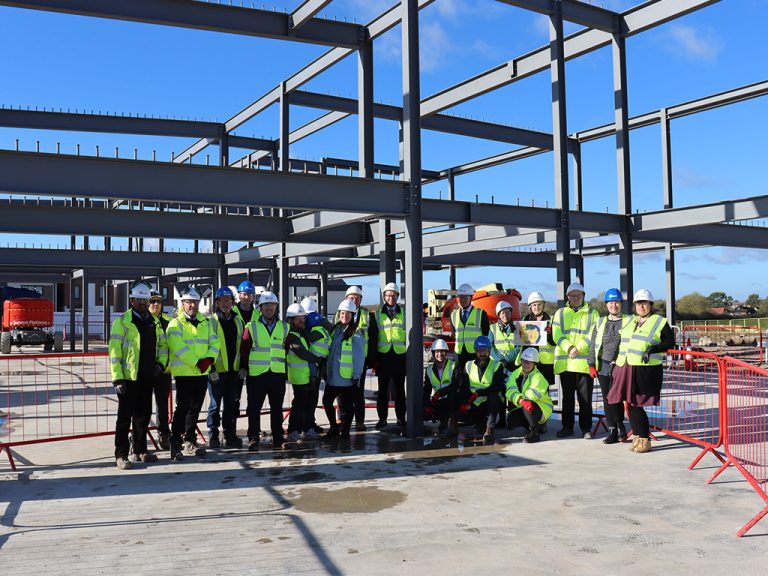
The 420-pupil primary school development at Graven Hill has moved a step closer with the steel frame superstructure being signed by a local child at a celebration event this week. A traditional bolt tightening also took place to recognise the significant milestone in the delivery of the primary school. Graven Hill Village Development Company and Kier welcomed councillors and officers from Cherwell District and Oxfordshire County councils, Warriner Academy Trust and local child Jackson-Jordan Daly to the event where the winning pre-school poster design for the hoardings around the three-hectare site was unveiled. Grant Gibson, construction director of Graven Hill Village Development Company, said: “The event was a great way to mark the fantastic progress being made as the new Graven Hill Primary School takes shape. It was also great to see Jackson-Jordan, who will one day have the opportunity to learn at the school, visit during its construction. “I’d like to thank all of those involved for their hard work to ensure we could deliver this project despite the huge challenges the UK construction industry is facing. The school will be run by the flagship Warriner Academy Trust, on behalf of the County Council, and will be a key part of our growing community at Graven Hill.” Councillor Calum Miller, Cabinet Member for Finance and Property at Oxfordshire County Council, said: “I am delighted that the Graven Hill Primary School is now under construction. It has been a long wait for the growing community here so I am glad that residents, including those who will benefit from the school in future, were present for this ceremony. Thank you to the teams from Graven Hill, Kier, Cherwell District and Oxfordshire County Councils who are making this happen. “A primary school helps to create a sense of place and of belonging. Within its walls, hundreds of children will learn and grow as members of the Graven Hill community. At its gates, hundreds of parents will gather and connect. It is exciting to see this important step in delivering the community facilities that will make Graven Hill an even better place to live.” Kier will complete the development in August 2023, with the two-form entry school set to be handed over to the Warriner Academy Trust in autumn 2023. It will comprise 12 classrooms, specialist facilities for art, design and technology and more than 13,000 sq. m of pitches, play and multi-use games areas. The early years facility will accommodate a further 90 pupils aged between 2-4 years in three classrooms, with dedicated facilities and play areas. The site also enables the school to expand to three-forms of entry in future. This sustainable development is targeting a BREEAM ‘Very Good’ rating, recognising this independent best practice assessment which evaluates energy and water use, health and wellbeing, transport, materials, waste, ecology and management processes. The building has been designed with enhanced thermal values and high performance materials to the principles of Net Zero Carbon. The photovoltaic panels will also provide power to the local grid when the school is not in use. As well as reducing the amount of heat, energy and water the school will use, the design also maximises natural ventilation in order to deliver a healthy place to learn. Kier regional director for Kier Construction Andy Bolas, added: “With infrastructure now complete and the team now working on the superstructure, we were able to mark the steel work progress at today’s milestone event. As well as welcoming local children and families to the site today, we are working hard to involve and inspire local students during the build by offering providing career guidance, work experience, site visits and supporting apprentices with training and development” The 300 metres of hoardings along Graven Hill Road and Hull Lane will be decorated by the winning design from the Graven Hill Primary School Picture Competition. Graven Hill remains a hugely popular development. Unique and diverse, it offers a wide range of housing options from self-build and custom build, which can be tailored to your needs, to apartments and affordable homes. It is set in open, green spaces including woodland, allotments and a network of cycle and footpaths. Building, Design & Construction Magazine | The Choice of Industry Professionals

Read More »
Ideal Heating launches heat pump range for commercial buildings

Ideal Heating launches heat pump range for commercial buildings

Leading heating appliance manufacturer, Ideal Heating, has launched a new range of monobloc air source heat pumps to help improve energy efficiency and reduce reliance on natural gas within commercial buildings. Available in six outputs and seven models (14kW, 14kW (single phase), 18kW, 26kW, 32kW, 50kW and 70kW), the ECOMOD range provides a minimum A++ Energy related Products (ErP) efficiency rating and high co-efficient of performance (COP) rating of up to 4.85. R32 refrigerant ensures a low global warming potential (GWP). The heat pumps also include an inverter-controlled compressor that can control the building temperature based on specific requirements of the space, further enhancing the efficiency of a building. Ideal ECOMOD heat pumps can be used alone or cascaded to meet the heating requirements of larger commercial buildings. They can also be installed alongside other Ideal solutions, such as the EVOMAX 2 and the IMAX XTRA 2 commercial condensing boilers, to build a low carbon hybrid heating system. The range output models are light and compact units in comparison to similar products, making installation and delivery easy. All products also come with a five-year warranty – when commissioned by Ideal Heating and noise levels as low as 68dB(A) – the equivalent of a quiet refrigerator. Chris Caton, Product Director – Commercial Product Management for Ideal Heating, Groupe Atlantic UK, ROI & NA, said: “The ECOMOD range launches at an important time, as businesses accelerate their decarbonisation efforts to work towards net-zero targets, meet new standards for building regulations, and reduce their exposure to volatile energy prices. With high COPs our new heat pumps enable businesses to reduce a building’s carbon footprint and improve heating efficiency. “What’s more, the range of outputs available means we can cater for many commercial buildings. For example, our 14kW single phase unit is suitable for sites without access to three phase electricity, such as care homes or community halls, while all units can be cascaded to meet the needs of larger spaces, making them a versatile and cost-effective choice.” Ideal Heating delivers commercial heating solutions that are at the forefront of technology and developed in line with the latest market trends and legislation. For more information visit: https://idealcommercialboilers.com/products/ecomod

Read More »
Deanestor delivers £1.6m fitout contract for high-performing academy near Glasgow

Deanestor delivers £1.6m fitout contract for high-performing academy near Glasgow

Deanestor, one of the UK’s leading fitout specialists, has delivered a £1.6m contract for one of the highest performing secondary schools in Scotland. Built by McLaughlin & Harvey for East Dunbartonshire Council, the new £40.9m Boclair Academy in Bearsden near Glasgow has created a state-of-the-art learning environment for 1,000 pupils. The school was designed by Ryder Architecture. This was Deanestor’s fourth project for McLaughlin & Harvey and it follows earlier fitout projects at Hopefield Primary School in Midlothian and two primary schools for Scottish Borders Council. Deanestor fitted out 228 rooms across the new Boclair campus, which reflects the latest thinking for curriculum delivery. According to Neil Kemp, Senior Project Manager at McLaughlin & Harvey, “Despite the challenges of Brexit and the covid pandemic, the project and the fit out went very well and we were able to hand the new campus over early. The quality of the furniture manufactured by Deanestor met our expectations and requirements. The finished school looks fantastic, particularly the open plan spaces, and staff and students at the Academy are absolutely delighted with their new facility.” Charles Riach, Architect at Ryder Architecture, said, “The finished school is outstanding. The design both internally and externally references the quality, textures and colours of the surrounding architecture and landscape. Deanestor has once again delivered the brief and the design for the furniture and fitout, and their team worked well with us at each stage.” Gillian Renwick, East Dunbartonshire Provost, said, “There is a great feeling of warmth and community within Boclair Academy. Since the doors opened, pupils, teachers and staff have really made this new building their own.” The school environment has been designed to encourage collaboration and to foster a cross-curricular approach in which key subject areas work closely together. There is also a mix of interdisciplinary, thematic, and subject-focused learning supported by flexible educational spaces. Deanestor provided a wide range of contemporary fitted and loose furniture, soft furnishings, teaching aids, lockers, and equipment for sports, crafts, design and technology, science laboratories, and food technology – from mirrors and ballet barres to a kiln and laboratory fume cupboards. Its team manufactured bespoke items of furniture, including the solid oak reception desk, storage cabinets, booth seating, benching, lockers, and teaching aids. Specially designed tiered seating in a beech finish was provided by Deanestor which doubles up as informal break-out spaces to encourage social interaction. Nearly 3,000 items of loose furniture were also supplied as part of Deanestor’s FF&E contract, such as tables and chairs, dining tables, modular soft seating, mobile storage, and over 300 sofas. The interior design strategy reflects the school’s corporate identity and uses two shades of blue to help unify different spaces across the campus. Natural colours and tones feature extensively to complement the surrounding landscape and there are views into the hillside. Royal blue and a lighter blue were used for soft furnishings and the fitted furniture was manufactured in a light summer oak finish. The new academy has a double-height entrance atrium, flexible learning zones, performance spaces and social dining, as well as improved outdoor sports facilities.  Deanestor manufactures and installs robust and flexible loose and fixed furniture solutions for early years, primary, SEN, and secondary education, fitting out areas such as classrooms, science laboratories, ICT, design and technology, atria, social dining spaces, break-out areas, sports facilities and changing rooms. Its experienced designers and project managers work with architects, contractors and directly with schools and local authorities, advising on specification of furniture and equipment to help deliver inspirational learning environments. For further information, visit www.deanestor.co.uk/education, call 01623 420041 or email enquiries@deanestor.com . Building, Design & Construction Magazine | The Choice of Industry Professionals

Read More »