Cristina Diaconu

Gilberts Has Been Seen Really Successful Levels of Growth

Gilberts the British engineering business has been seen really successful levels of growth recently. The growth that the business has seen has led the the company having to increase their warehousing space by nearly 10%. Gilberts is a family owned and run company that is based in Blackpool. The company,

Read More »

Graeme Ogle Has Been Appointed as the Senior Associate

Graeme Ogle has been appointed to be the Senior Associate at Hamilton Architects. The Architect’s Firm offer a range of different services to their clients across a number of different disciplines. The Firm’s Clients are based in Northern Ireland, Ireland and the UK as well as Mainland Europe. Hamilton Architects

Read More »

Quinn Lite Pac Received an Award of Distinction

Quinn Lite Pac has received an Award of Distinction from the National Standards Authority of Ireland and the International Certification Network, IQNet. The business a leading manufacturing company of expanded polystyrene or EPS. Quinn Lite Pac has been recognised by the two organisations at an event that was held in

Read More »

Site visits uncover concerns over ventilation systems

Construction professionals are being urged to follow best-practice guidance when installing mechanical ventilation systems in new homes. The Zero Carbon Hub inspected 33 properties across six construction sites to investigate how these devices were being designed and installed. Its report – Ventilation In New Homes (PDF, 1 MB) – highlights several

Read More »

Government needs evidence-based approach to set NLW, says BCC

30 September 2016 | Jamie Harris One in four businesses have reduced recruitment in response to the introduction of the national living wage (NLW), according to research by the British Chambers of Commerce (BCC) and Middlesex University.  The BCC surveyed 1,627 businesses in August. It found that 18 per cent of

Read More »

Saudi Aramco sale heralds new market

©Ian Timberlake/AFP/Getty Images Slick: Shaybah, base for Aramco’s natural gas liquids production The planned sale of up to 5 per cent of Saudi Arabia’s state oil producer could create not only the world’s largest publicly traded energy company but the biggest initial public offering of all time. More than this,

Read More »

New owner crafted for Amerton Farm in Staffordshire

Savills, on behalf of a private client, has sold the freehold of Amerton Farm and Craft Centre in Stowe-by-Chartley, Staffordshire to a local private investor from a guide price of £1.5 million. The site extends to 20 acres (8 hectares), comprising a number of traditional farm buildings currently converted for

Read More »

Property sector ripe for disruption Proptech event finds

Construct//Disrupt: Proptech, which saw industry leaders discuss the latest tech innovations disrupting the property sector, took place last week (Thursday 19th May 2016) at the Alphabeta Building, London EC2. Supported by Savills, the event was hosted by construction start-up BaseStone at Huckletree, a creative co-working space within the building.  Nicky

Read More »

Russia plays geopolitical Gazprom game

Few world energy projects are as divisive as Gazprom’s Nord Stream 2: the planned $11bn, 1,200km pipeline to bring Russian gas direct to Germany under the Baltic Sea. Critics of the scheme — the US, some EU officials, and several central and eastern European countries — say it will increase

Read More »
Latest Issue
Issue 338 : Mar 2026

Cristina Diaconu

Gilberts Has Been Seen Really Successful Levels of Growth

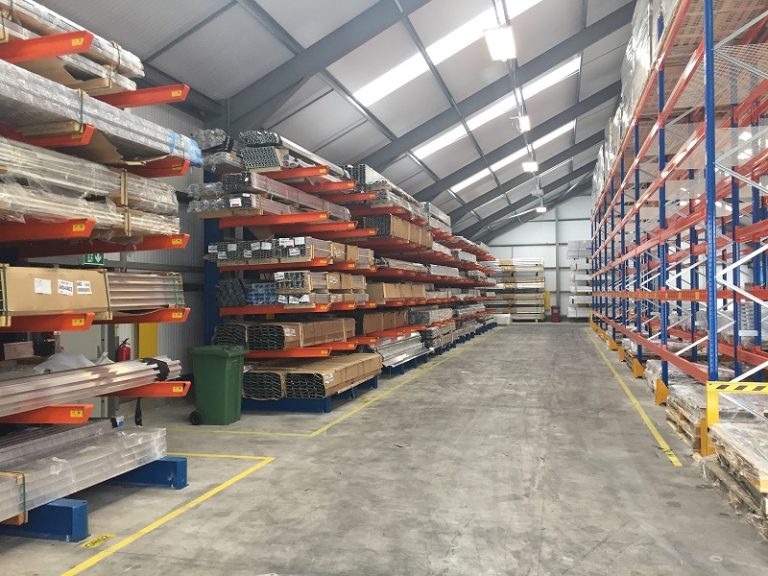
Gilberts the British engineering business has been seen really successful levels of growth recently. The growth that the business has seen has led the the company having to increase their warehousing space by nearly 10%. Gilberts is a family owned and run company that is based in Blackpool. The company, Gilberts is the leading air movement specialist in the UK has seen an increase in the levels of demand they experience for their advanced grilles louvres and diffusers and other natural ventilation solutions. The company works to supply their products to customers in the UK market as well as overseas. The company has recently seen in growth in part because of the health of British building and construction sector. This expansion in the construction sector has been reflected in Gilberts’ own development. The company has been investing into a facility to carry out cutting edge R&D and testing. The company has also seen expansion as they has adopted a new sales strategy that has been put into action with the help of a larger sales team. Gilberts has also been able to capitalise on the expansion taking place in the construction sector by investing in progressive processing technology which includes developing a laser fabrication centre. The mixture of all of these investments and developments that have been made by Gilberts mean that they will be able to deliver tailored products that are of a high quality and good value to the consumer as well as offering a range of technical support. The business’ head office in Blackpool includes a manufacturing facility which measures 85,000 sq. ft. as well as an innovative testing facility. Hopefully Gilberts will be able to carry on making the most of the increase in construction projects and the expansion of the sector in order to continue growing and developing more innovative air movement solutions.

Read More »

Graeme Ogle Has Been Appointed as the Senior Associate

Graeme Ogle has been appointed to be the Senior Associate at Hamilton Architects. The Architect’s Firm offer a range of different services to their clients across a number of different disciplines. The Firm’s Clients are based in Northern Ireland, Ireland and the UK as well as Mainland Europe. Hamilton Architects LLP has offices in London, Belfast and L’Derry and was first founded in 1972. The company therefore has more than 40 years of experience working in order to produce high quality architectural work from flagship commercial and retail spaces to major sports stadia. Graeme is a registered architect and has more than 12 years of post part 3 experience. In his new role as Senior Associate for Hamilton he will be in charge of the management throughout and the delivery of a range of projects that will be carried out by the firm in a number of different sectors. Graeme will be involved in projects from their inception right the way through to their completion. Graeme Graduated with his BSc in Architecture from Queen’s University Belfast. Graeme Ogle also completed his Bachelor of Architecture and his Certificate in Professional Practice and Practical Experience from Queen’s University. In previous roles, Graeme has worked at a number of different leading architecture practices and has therefore gained a range of experience on projects in a number of sectors. The new Senior Associate has worked as a part of projects in the Education, Housing, Commercial and Healthcare sectors throughout his career so far. This experience will stand Graeme in good stead for his new position at Hamilton Architects. Some of the projects that Graeme have been involved in include Ashfield Girls’ School which is located in Belfast; Hemsworth Court, a su[porting housing space for Dementia Care in Belfast. Other projects that Graeme has been involved in include Arvalee School and Resource Centre, Strule Shared Education Campus in Omagh and Castle Tower School which is in Ballymena.

Read More »

Quinn Lite Pac Received an Award of Distinction

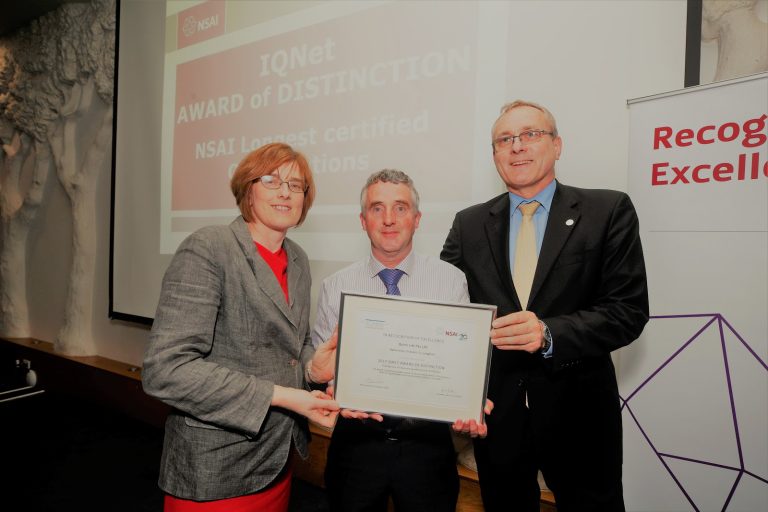
Quinn Lite Pac has received an Award of Distinction from the National Standards Authority of Ireland and the International Certification Network, IQNet. The business a leading manufacturing company of expanded polystyrene or EPS. Quinn Lite Pac has been recognised by the two organisations at an event that was held in Dublin. The EPS manufacturer has been recognised alongside a few other Irish organisations with an IQNet/Nsai Award. The awards were presented to the organisations by Mr. Michael Drechsel, the President of IQNet and Ms. Geraldine Larkin, the CEO of the National Standards Authority of Ireland. The National Standards Authority is one of the longest ISO9001 certified groups in Ireland. The ISO9001 is a recognised standard of excellence for the implementation of Quality Management Systems. Quinn Lite Pac has been certified with this standard for the past 27 years, the company first received the certification in 1990. The business has been manufacturing EPS insulation for more than 40 years and has been established since 1975. In 1994 the company became part of a larger group, names Quinn Building Products. Also at the Awards Ceremony was Pat Breen TD, the minister for employment and Small Business and Paul Lynam who is from the British and Irish Chamber of Commerce. It is a real credit to Quinn Lite Pac that they have been operating for so long at such a high quality, and to receive the Award of Distinction is another accolade for the company. Hopefully they will continue to work at such an excellent standard for many years to come. The manufacturing company has managed to achieve this award by consistently developing and raising their standards of quality and constantly ensure that excellence is shown throughout their practices. This award has been given at an important time for the industry where EPS insulation has experienced a significant increase in demand. A number of cutting edge building systems looking to build through low energy practices have adopted EPS in order to meet the demand for fast construction techniques. EPS insulation is also seen as more cost effective than PIR insulation, and are starting to use EPS more.

Read More »

Site visits uncover concerns over ventilation systems

Construction professionals are being urged to follow best-practice guidance when installing mechanical ventilation systems in new homes. The Zero Carbon Hub inspected 33 properties across six construction sites to investigate how these devices were being designed and installed. Its report – Ventilation In New Homes (PDF, 1 MB) – highlights several issues, and makes recommendations for both the building sector and Government. The report reveals that these issues can lead to ventilation systems underperforming, causing problems with air quality and the affecting health of occupants. According to the findings, poor installation of flexible ducting leads to fans having to work harder to deliver the minimum ventilation rates required.  As a result at five out of the six sites visited by the Zero Carbon Hub, fans were operating at just half the required power. The Zero Carbon Hub states that on a number of its site visits, installers were found to be “doing what they’d always done”, often improvising solutions to technical issues with ventilation systems as they arose. Installation issues uncovered by the inspections include flexible ducting being installed in place of rigid ducting, as well as long duct runs with several bends being used.  In addition, the report found there is often a fragmented delivery of the systems, with changes to things like positioning of inlets and ducts not being communicated to designers and architects. There is also often a failure to carry out in-depth checks of ventilation systems, meaning that it would be unclear how problems could be detected if they developed. To avoid such problems, the report recommends that developers use only trained and qualified ventilation installers. It also states that arrangements should be put in place at the outset of a project detailing how changes to ventilation systems should be communicated to design teams. And the Zero Carbon Hub also calls on construction professionals to ensure that checks of ventilation systems are made at each major stage of the building process. Source link

Read More »

Government needs evidence-based approach to set NLW, says BCC

30 September 2016 | Jamie Harris One in four businesses have reduced recruitment in response to the introduction of the national living wage (NLW), according to research by the British Chambers of Commerce (BCC) and Middlesex University.  The BCC surveyed 1,627 businesses in August. It found that 18 per cent of respondents had reduced pay growth, with 18 per cent reducing staff hours. More than a third has increased their wage bills since the NLW’s introduction, and a similar amount raised prices to offset the cost. But 63 per cent of respondents said that they would raise prices if the national minimum wage rose to £9 an hour by 2020, which is the target figure set out by government. The NLW, introduced in April this year, is currently £7.20 per hour and applicable to employees aged 25 or over. It is not set to rise from 1 October, unlike other minimum wage pay brackets. Marcus Mason, head of education and skills at the BCC, said: “A decent wage can make a huge impact on employees’ lives and their performance at work, and most businesses are able to pay above the NLW. “However, a significant number of firms have already had to re-balance their books to meet the cost of the NLW, which can have a knock-on effect on recruitment or growth plans. Many firms would have to change their business models, by increasing prices and reducing staff, if the NLW increases to £9 per hour by 2020. “The government needs to take an evidence-based approach to setting the NLW. The rate should be set by the Low Pay Commission and determined by the state of the economy, weighing up the various pressures businesses face. Further NLW increases need to be proportionate, reflecting business uncertainty, slowing growth and high input costs, to avoid having a negative effect on employment.” David Williams, director corporate engagement at Middlesex University, said: “While our research has captured the current sentiments of business around the NLW, the potential rise to £9 per hour is still three years away. This means that businesses have an opportunity to adjust their strategies, as they are having to do with other initiatives such as the apprenticeships programme. “It is important that the government supports business through these transitions so that employees in the UK can earn a fair wage for their work and businesses benefit from a satisfied and motivated workforce.”  The government has asked the Low Pay Commission to recommend increases to the NLW towards 60 per cent of median earnings by 2020. A spokesperson from the Department for Business, Energy and Industrial Strategy said: “The government is committed to building an economy that works for all and the NLW is doing just that. We are making sure this works for employees as well as businesses, and will continue to back small firms by providing an environment in which they can thrive.   “The independent Low Pay Commission is chiefly responsible for making recommendations for national minimum wage rates, and now has additional responsibilities to help deliver the national living wage.” Source link

Read More »

Saudi Aramco sale heralds new market

©Ian Timberlake/AFP/Getty Images Slick: Shaybah, base for Aramco’s natural gas liquids production The planned sale of up to 5 per cent of Saudi Arabia’s state oil producer could create not only the world’s largest publicly traded energy company but the biggest initial public offering of all time. More than this, however, the move also offers the rest of the world access to one of the kingdom’s prized industries — and could pave the way for greater internationalisation of the Saudi economy. Saudi Aramco’s IPO is part of a transformation plan, envisaged by the powerbroker deputy crown prince Mohammed bin Salman, which seeks broad-based privatisation to boost employment and diversify the kingdom away from oil. But there is scepticism about whether the country is capable of such an overhaul when its people have grown accustomed to the state providing cradle-to-grave services. More On this story On this topic IN The New Trade Routes: Arab World Even partially untangling entities such as Saudi Aramco from the state will be difficult: in addition to exploiting the kingdom’s hydrocarbon riches, the company — which employs 65,000 people — constructs schools, hospitals and sport stadiums. Conversations about its partial privatisation, which Prince Mohammed believes could value Saudi Aramco at $2tn, illuminate some of the obstacles to opening up important industries to external influence. Khalid al-Falih , the new Saudi energy minister, said earlier this month that the public offering would allow the government to invest proceeds and future dividends into non-oil investments, as well as showcasing Saudi Aramco as a big participant in global capital markets, enabling its international expansion and boosting transparency. To whet the appetite of international bankers, investors and lawyers, the company is weighing a dual listing in Saudi Arabia and on a foreign exchange such as London, New York or Hong Kong. The Saudi Tadawul stock exchange was opened to foreign investors in June 2015, but in a gradual and limited fashion. An Aramco listing could draw more foreign capital to Saudi Arabia, and “a dual listing with a developed market stock exchange could help advance Tadawul’s international recognition and presumably result in slightly higher valuation of Aramco”, analysts at State Street, an investment management company, said. But Mr al-Falih, speaking to reporters after the Vienna meeting of Opec ministers, highlighted some of the complications for outside investors of any listing, which is likely to take place by 2018. An IPO would mean “extensive rewiring of our financials and the relationship with the government”, he said, including the company’s accounting practices and tax obligations. “It would require a significant amount of time.” Industry analysts have questioned how an entity that is deeply involved in the state’s primary economic activity could also ensure that it is acting in the best interests of any minority shareholders. Mr al-Falih, who was the former chief executive of Saudi Aramco and remains chairman, said tasks undertaken on behalf of the government rather than for the company itself, such as infrastructure projects, would have to be “delineated”. Traditionally such separation has not existed. But the government, he said, will continue to make sovereign decisions on production and capacity even after an IPO. “[Investors] are going to have to accept it. It is part of the package of buying into the lowest-cost producer.” To what extent will government and shareholder interests be aligned? – Neil Beveridge, oil analyst at Bernstein Political involvement in decision making could be a turn-off to investors, says Neil Beveridge, oil analyst at Bernstein: “To what extent will government and shareholder interests be aligned?” Such questions can be asked of other entities in the kingdom that could be privatised in the coming years. Details of the National Transformation Programme have yet to be unveiled, but it aims to boost the private sector from 45 per cent of the economy to 60 per cent by 2030. The economic ministry’s first strategic objective under the NTP is to calculate how much revenue can be generated by selling off stakes in state-owned companies such as Saudi Aramco. The NTP aims to cut unemployment from 11.6 per cent to 7 per cent in the next 15 years; create 450,000 new private sector jobs; and trim the public sector wage bill from 45 per cent to 40 per cent of budgetary spending by 2020. Shifting even some of this salary burden to the private sector could ease financial pressures. Planned privatisation measures include raising the share of facilities operated by the private sector, with a focus on desalination and wastewater treatment, power generation, postal services, education and road, rail and ports, according to rating agency Moody’s. “Reforms aimed at improving the business environment and competitiveness and fostering private sector development will support Saudi Arabia’s economic strength,” it said in a report. Saudi Post Corporation, with 10,000 staff, and the Saline Water Conversion Corporation have been identified among the first to be put on the block and could be test cases for a series of state asset sales. Larger ones, such as Saudi Aramco, would come after. Raghu Mandagolathur, head of research at Markaz, a Kuwaiti investment bank, estimates that the government could raise $50bn-$70bn over the next few years as it seeks to plug budget deficits, this year forecast at $88bn. “Even if privatisation can help bridge 10 per cent of this estimated deficit, that will relieve some pressure in terms of borrowing needs.” Copyright The Financial Times Limited 2016. You may share using our article tools. Please don’t cut articles from FT.com and redistribute by email or post to the web. Source link


Read More »

New owner crafted for Amerton Farm in Staffordshire

Savills, on behalf of a private client, has sold the freehold of Amerton Farm and Craft Centre in Stowe-by-Chartley, Staffordshire to a local private investor from a guide price of £1.5 million. The site extends to 20 acres (8 hectares), comprising a number of traditional farm buildings currently converted for use as tea rooms, farm shop, craft shop and indoor play barn. In addition, a number of units are let including a garden centre, bakery, sweet shop, cake shop, pottery centre, blacksmiths, wildlife rescue centre and poultry shop, generating an annual rental and concession income in excess of £90,000 per annum. The asset also includes a farm attraction, outdoor activity and picnic area and a nine bedroom period house extending to 5,134 sq ft (477 sq m), originally let and run as a bed and breakfast. Ian Simpson, director of leisure and trading at Savills, comments: “We’re very pleased to have secured the sale of Amerton Farm and Craft Centre to a local investor who will continue to operate the business to the high standard established by the previous owner.” Source link

Read More »

Property sector ripe for disruption Proptech event finds

Construct//Disrupt: Proptech, which saw industry leaders discuss the latest tech innovations disrupting the property sector, took place last week (Thursday 19th May 2016) at the Alphabeta Building, London EC2. Supported by Savills, the event was hosted by construction start-up BaseStone at Huckletree, a creative co-working space within the building.  Nicky Wightman, director in the Worldwide Occupier Services team and founding member of Savills Tech spoke at the event along with Savills associate director of world research Paul Tostevin. Nicky and Paul were joined by Jacob Loftus, Head of UK Investment at Resolution Property, William Newton, UK Director at WiredScore, Raphael Scheps, Co-founder of Converge, and keynote speaker Allison Dring, co-founder of Elegant Embellishments.  Topics covered included the trends impacting the next generation of workspaces, the need for connectivity and cloud technology, and smog-eating building facades that counteract city pollution.  Nicky comments: “As part of our Tech Cities programme, Savills is committed to understanding the relationship between the technology community and today’s global cities. Our research aims to be relevant, dynamic and engaging and the Construct//Disrupt: Proptech event was a platform to showcase this whilst also providing an opportunity to be a part of a dynamic and creative vision for the future of proptech.”  Alex Siljanovski, founder of BaseStone, adds: “The property sector is ripe for disruption, proptech has the potential to address some of the biggest challenges facing cities. Bringing the best startups and innovators to the forefront is what Construct//Disrupt is all about.”  Nicky and Paul presented on their Tech Cities research, which aims to identify the 12 best tech cities around the world, ranging from Stockholm and Dublin to mega-cities like Mumbai and New York. The research team looked at drivers such as the business environment, tech infrastructure, talent pool and quality of life. Click here to see the 8 reasons you should care about Proptech   Source link

Read More »

Russia plays geopolitical Gazprom game

Few world energy projects are as divisive as Gazprom’s Nord Stream 2: the planned $11bn, 1,200km pipeline to bring Russian gas direct to Germany under the Baltic Sea. Critics of the scheme — the US, some EU officials, and several central and eastern European countries — say it will increase Europe’s reliance on Russian gas and restrict competition. They add that it will harm the economies of countries such as Ukraine, Slovakia and Poland, which currently earn big fees from carrying Russian gas across their territory. However, Nord Stream 2’s backers number not just Moscow but also five big European companies due to be involved in building it — Germany’s BASF and Uniper, France’s Engie, Austria’s OMV, and Royal Dutch Shell — plus senior German politicians including, it seems, chancellor Angela Merkel. They say Nord Stream 2 will “eliminate transit risks” — a euphemism for enabling Russian gas exports to Europe to bypass Ukraine. Disputes in 2006 and 2009 briefly led Gazprom to cut off supplies to Kiev, hitting deliveries further west. Supporters insist Nord Stream 2 will be more efficient and increase gas supplies into Europe’s heart, making the market more competitive. Then, last month, Poland dealt the project a potential killer blow. Its anti-monopoly watchdog warned it would block the venture as it would increase Gazprom’s already dominant position in central Europe. The five European partners pulled out of plans to each take a 10 per cent stake in the Nord Stream 2 consortium. The Polish watchdog’s approval was needed before Gazprom could issue the shares enabling them to join the consortium. So the Russian state-controlled monopoly said that Nord Stream 2, as a 100 per cent Gazprom-owned subsidiary, would instead do the work itself, and its European partners would still find ways to “contribute”. Ilian Vassilev, an energy consultant and former Bulgarian ambassador to Moscow, has suggested this idea of Gazprom financing the pipeline on its own “borders on extreme optimism” given the state of its finances. The company could probably only do so by getting some form of Russian state help — though Russia’s budget is hardly flush. But Gazprom does not give up that easily. It has signalled that it will announce agreements with its European partners and give an update on its plans at a St Petersburg gas forum next week. It also formally applied for permission this month to build two new lines parallel to Nord Stream 1, opened in 2011, along Sweden’s continental shelf. Back in 2014, after Moscow cancelled the much-vaunted South Stream project to bring gas under the Black Sea, in the face of EU opposition, it had appeared that Gazprom might be finally shifting towards an export policy driven more by commercial than political considerations. Now, though, with Gazprom looking at bringing gas to southern Europe via Turkey instead, it is difficult to see Nord Stream 2 — on which it signed initial agreements with European partners last year — as anything other than a geopolitical game. [The pipeline] serves the Kremlin’s agenda by stripping Kiev of several billion dollars a year in transit fees Gazprom’s projects appear aimed at ending Ukraine’s role as a transit country for Russian gas, by the time the current transit contract with Kiev expires in 2019. That might seem understandable given the impact of past gas squabbles between the two countries. But it also serves the Kremlin’s agenda by stripping Kiev of several billion dollars a year in transit fees. Maros Sefcovic, the EU’s energy commissioner, has told the Financial Times the northern pipeline looked like a “sort of punishment” for Ukraine, after its 2014 pro-western revolution. He added the project was “contrary to what we want to achieve” in creating a new EU energy union. Mr Vassilev suggests a bigger motivation for Moscow may be to forge a new “strategic bond” with Germany, the landing point for Nord Stream 2, by turning it into a European hub for Russian gas. That could benefit German industry by offering it lower gas prices but could also be exploited by Russia politically in the future. For minority shareholders who own 49 per cent of Gazprom, the multiple reversals over export routes can be difficult to fathom and suggest the company remains a tool of Kremlin foreign policy. As long as there is no sign of that changing, there is little chance of closing Gazprom’s huge discount to global energy peers — leaving its dollar value still at little more than one-sixth of its peak a decade ago. neil.buckley@ft.com Sample the FT’s top stories for a week You select the topic, we deliver the news. Source link

Read More »