Kenneth Booth
Anchor response to 'Warm Homes' funding

Anchor Hanover response to ‘Warm Homes’ funding

“We are delighted to have been awarded a provisional funding allocation of £12.3 million from the Warm Homes: Social Housing Fund Wave 3 and look forward to collaborating with colleagues from the Department for Energy Security and Net Zero in the coming weeks to launch this vital project. Over the

Read More »
Finning secures multi-million-pound machine investment to meet industry demand

Finning secures multi-million-pound machine investment to meet industry demand

Finning have secured a deal to supply Flannery Plant Hire with £65,000,000 worth of Cat® machinery in 2025. Over the past four years Finning UK & Ireland, the world’s largest dealer of Cat machines and equipment, have supplied long-standing customer Flannery with over £250,000,000 worth of Cat machinery. The company’s most recent multi-million-pound investment includes 100

Read More »
Local dignitaries join Vistry to celebrate the start of work on Walton Bridge

Local dignitaries join Vistry to celebrate the start of work on Walton Bridge

Vistry Group, the UK’s leading provider of mixed-tenure homes, was joined by stakeholders from South Derbyshire District Council, East Staffordshire Borough Council, Derbyshire County Council and Staffordshire County Council to celebrate the start of work on the new bypass and road bridge in Walton-on-Trent. Phil McHugh Divisional Director of Vistry

Read More »
Construction milestone on mammoth Teesworks watercourse

Construction milestone on mammoth Teesworks watercourse

CONSTRUCTION of a crucial £18m surface water drainage system at the giant Teesworks site has reached a vital milestone. Water has now broken through from the River Tees into the South Bank Watercourse, which is designed to handle and manage the extensive quantities of surface water run-off from the Teesworks

Read More »
Why Silver Is Integral to Sustainable Building

Why Silver Is Integral to Sustainable Building

Green buildings are among the pillars of modern environmental initiatives, and architects and contractors are looking for efficient and long-lasting materials. Silver, in most individuals’ thoughts, is normally associated with trinkets and money, yet it is unexpectedly critical in green building applications. Its properties range from energy-saving to natural antimicrobial,

Read More »
Radisson Joins Oxford United’s Groundbreaking Stadium Development

Radisson Joins Oxford United’s Groundbreaking Stadium Development

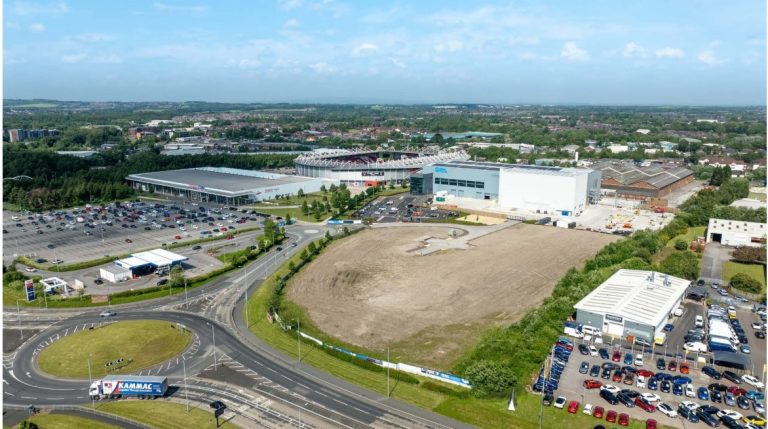
Oxford United Football Club has partnered with Radisson Hotel Group to deliver a premium hotel within its new state-of-the-art stadium complex. The Championship club is developing a 16,000-capacity stadium as part of a wider project featuring a 1,000-delegate conference centre, bars, entertainment venues, and fitness facilities. The stadium will be

Read More »
Latest Issue
Issue 335 : Dec 2025

Kenneth Booth

East Midlands Aeropark Set for Exciting Expansion with Modular Buildings from GCS Group

East Midlands Aeropark Set for Exciting Expansion with Modular Buildings from GCS Group

Volunteer-run charity East Midlands Aeropark has submitted plans to North West Leicestershire District Council for the development of two new modular buildings by GCS Group. These facilities will include a brand-new entrance and snack bar, alongside four viewing shelters. Additionally, the Aeropark plans to repurpose the old entrance building as a display unit for exhibits related to their iconic Vulcan aircraft. Stuart Colley, PR Officer and Retail Manager at East Midlands Aeropark said, “This project marks an exciting new chapter for East Midlands Aeropark. Our main mission is to preserve and celebrate Britain’s rich aviation heritage, and our incredible visitors keep that history alive.” The expansion is designed to “Enhance the Visitor Experience”, also known as Project EVE, by introducing modern facilities and creating additional space for learning, exploration and refreshments. Stuartcontinued, “The new buildings from GCS Group will provide much-needed facilities for aviation enthusiasts and families alike. We’re looking forward to seeing the transformation take shape.” GCS Group has been appointed as the principal contractor for this exciting development. With extensive experience in modular solutions, GCS Group has been designing, supplying and installing portable and modular buildings throughout the UK since 2007. “It’s fantastic to be working with East Midlands Aeropark on this project.” Said Jade Sheppard, Head of Operations at GCS Group. “We’re passionate about supplying buildings that make a real difference, and proud to provide a well-deserving charity with a bespoke space that can meet their needs both now and in the future.” “The modular approach allows us to complete most of the build off-site, quickly and sustainably, with little disruption to the park and its customers. We can’t wait to see them in place and being used.” Once approved, construction is expected to begin in Autumn 2025, with the new facilities set to open for the start of the winter season. Building, Design & Construction Magazine | The Choice of Industry Professionals

Read More »
Anchor response to 'Warm Homes' funding

Anchor Hanover response to ‘Warm Homes’ funding

“We are delighted to have been awarded a provisional funding allocation of £12.3 million from the Warm Homes: Social Housing Fund Wave 3 and look forward to collaborating with colleagues from the Department for Energy Security and Net Zero in the coming weeks to launch this vital project. Over the next three years, this initiative will retrofit hundreds of homes for older people, improving the properties’ energy efficiency to an EPC band C, while enhancing comfort and affordability for our residents.  This project builds upon the success of our previous work with the Social Housing Decarbonisation Fund Wave 2.1, delivered in partnership with our Greener Futures Partnership colleagues. We are eager to continue working alongside our peers, supply chain partners, and, most importantly, our residents, to create warmer, lower-carbon homes nationwide.  We look forward to sharing further details with colleagues, residents, and stakeholders as the project details are finalised.” Building, Design & Construction Magazine | The Choice of Industry Professionals

Read More »
Finning secures multi-million-pound machine investment to meet industry demand

Finning secures multi-million-pound machine investment to meet industry demand

Finning have secured a deal to supply Flannery Plant Hire with £65,000,000 worth of Cat® machinery in 2025. Over the past four years Finning UK & Ireland, the world’s largest dealer of Cat machines and equipment, have supplied long-standing customer Flannery with over £250,000,000 worth of Cat machinery. The company’s most recent multi-million-pound investment includes 100 Catexcavators, 70 Cat Bulldozers, 86 CatADT Trucks and 20 Cat Rollers, demonstrating that demand for plant hire shows no signs of slowing down. Similarly, demand in the construction industry itself shows no signs of waning as Glenigans Construction industry Forecast predicts a growth of 8% by the end of 2025. The industry is poised for progression, with government initiatives, housing market recovery and improved economic conditions all set to drive further need for hard-working heavy machinery. Their 15-year partnership with Finning has seen the company make significant investments in Cat machinery, technology and support services, to ensure quality, efficiency and sustainability in their fleet. Patrick Flannery, Managing Director at Flannery Plant Hire said: “As a result of the growth in the industry we are seeing increasing demands for efficient, sustainable and reliable plant machinery that can service the breadth of the industry. “The Cat XE models in particular have shown us a significant return on investment, not only are they hard-working machines, but they are incredibly efficient, saving up to 35% on fuel compared to other models. We are committed to achieving our sustainability goals and having machines with lower fuel consumption helps us reduce our carbon footprint as well as save money in the long-term. “We know from our relationship with Finning that Cat machines are more than capable of tackling the challenges of modern construction. We service the whole industry and need machines to be robust for work in a variety of heavy-duty applications. “Our recent investment shows our commitment to servicing the industry with versatile and innovative plant hire options but also represents our assurance to customers that we will continue to provide efficient and sustainable machines to suit their needs.” As the government continues to invest in large-scale infrastructure projects and housing developments, access to a variety of plant equipment is integral to the industry’s success this year. Rory Gregory, Key Account Manager at Finning UK & Ireland says: “It is vital companies keep up with industry demand and Flannery have a long history of providing a reliable, efficient and robust selection of Cat machinery for their customers. “Along with the machines themselves, which were delivered with comprehensive technology to increase efficiency, we are providing full service and warranty packages to safeguard Flannery’s investment long-term. We are thrilled to not only have the opportunity to continue to work with Flannery but to provide them with such a significant investment to help continue their legacy for many years to come.” Building, Design & Construction Magazine | The Choice of Industry Professionals

Read More »
Local dignitaries join Vistry to celebrate the start of work on Walton Bridge

Local dignitaries join Vistry to celebrate the start of work on Walton Bridge

Vistry Group, the UK’s leading provider of mixed-tenure homes, was joined by stakeholders from South Derbyshire District Council, East Staffordshire Borough Council, Derbyshire County Council and Staffordshire County Council to celebrate the start of work on the new bypass and road bridge in Walton-on-Trent. Phil McHugh Divisional Director of Vistry North West Midlands, said: “I want to extend a big thank you to the four local authorities, Environment Agency and numerous other stakeholders who have been instrumental in getting us to this important milestone. The new Walton bridge will provide much improved transport links across the River Trent for both current and future residents alike.” “The bridge and bypass scheme forms an important part of our Dracan Village Development and shows that Vistry is committed to doing more than regenerating the former Drakelow power station into 2,000 beautiful new homes. We are building a new community providing investment in education, healthcare, and highways as well as building new infrastructure including a local centre, a new school later this year and large areas of public open space with play areas along with the new bridge which will really drive employment and economic growth in the region.” The new bridge and bypass will provide vital two-way vehicular access over the River Trent, replacing the inadequate one-way bailey bridge which has acted as a bottle neck for traffic in the area for many years. The new bridge will provide better access for current inhabitants and for the 2,000 current and expected residents of the new development on the site of the former Drakelow power station. Justin Ives, CEO at South Derbyshire District Council said: “It’s fantastic to see the start of the new bridge at Walton, this vital piece of infrastructure will not only assist the residents of the new development at the former Drakelow power station but also relieve congestion for the entire area” Derbyshire County Council’s Cabinet Member for Highways Assets and Transport, Councillor Charlotte Cupit, said: “We are pleased work has started on this long-awaited new bridge and that it will be completed as soon as possible, as we know it will provide an important additional route over the Trent for local communities.” Cllr Michael Fitzpatrick, Leader of East Staffordshire Borough Council said: “I was delighted to be invited to this ‘commencing event’, a milestone reached at long last. Along with our local authority partners, stakeholders and engineering experts it was great to see that diggers have indeed broke the ground, and a spade of course. “An exciting village is starting to emerge and with much needed homes and the infrastructure and community facilities planned, I can only welcome and support the significant progress made. I would like to thank Vistry for their vision and commitment to delivery. I am very grateful for the work of our planning teams in East Staffordshire and South Derbyshire who working together have, in a relatively short time, turned proposals for this by-pass and bridge, into a deliverable scheme. It now seems highly likely that we will be invited to an opening ceremony in the very near future and this would be a momentous occasion. “The economic, social and environmental benefits for our area, together with the relief for the residents of Walton, Dracon Village and for Stapenhill will be most welcomed. This will be the time, working with our Highway Authority, to restrict HGV traffic using our Stapenhill Main Street and Rosliston Road and at the same time protect the Leicester Line Bridge from the weight it has carried for several years.” Staffordshire County Council Cabinet Member for Economy and Skills Philip White added: “I am pleased that Vistry Group is committing to the start of work on this very important piece of infrastructure, and I welcome the start of works. However, we are clear that there is still a lot to do to get the detailed design and approvals in place before we know it is safe, and that it will be built in its entirety. “The county council will work tirelessly with partners to ensure the Vistry Group keeps its promises to the local community to build this bridge and that the cost and burden does not fall on local taxpayers.” Vistry is already working in earnest on the bridge and anticipates seeing the main structure of the bridge installed later this year with the commissioning and opening to follow shortly after. Building, Design & Construction Magazine | The Choice of Industry Professionals
Read More »
Construction milestone on mammoth Teesworks watercourse

Construction milestone on mammoth Teesworks watercourse

CONSTRUCTION of a crucial £18m surface water drainage system at the giant Teesworks site has reached a vital milestone. Water has now broken through from the River Tees into the South Bank Watercourse, which is designed to handle and manage the extensive quantities of surface water run-off from the Teesworks development. The watercourse will initially manage the large volumes of water draining from the 90-acre SeAH Wind turbine monopile manufacturing facility which is nearing completion. The vast scale of this facility means that rainwater run-off from the development will be significant, particularly under heavy storm conditions. As a result, all developments on the South Bank and Dorman Point areas of Teesworks need to have a means of efficiently discharging surface water so as not to hamper their operations, a role which the South Bank Watercourse performs. Extending up to 8m in depth and 1.9km in length, the new watercourse has been constructed largely as an open channel, natural stream, which supports the mitigation of water pollution through its natural filtration. It incorporates a gravel bed and carefully landscaped banks, discharging to the River Tees. The system also incorporates over 350 linear metres of buried culvert – where the watercourse passes beneath development land. The project incorporates a very large intertidal section where the watercourse meets the river. This will see an ecologically valuable salt marsh habitat created, which will be a natural haven for wildlife. The watercourse features extensive gabion basket walls – cages filled with stones – providing structural support to the open channels in most areas. These have been created using recycled aggregates sourced from land remediation projects on Teesworks – a former steelworks site – in lieu of importing natural quarried stone, saving cost and significantly mitigating the environmental impact of the scheme. In total, over 100,000 cubic metres of recycled aggregates were used on the project. John McNicholas, engineering and programme director at Teesworks, said: “We’re delighted to see the South Bank Watercourse reaching this pivotal milestone. “The sheer scale of the works has been something to behold, but equally, the logistical challenges that have had to be overcome in delivering the scheme through live construction sites where multiple remediation, infrastructure and building projects have been progressing simultaneously. “We are particularly pleased to see the extent to which we have been able to make best use of the resources on our own doorstep, through the extensive recycling of earthworks materials for use in the project’s channel bed and banks.” This important civil engineering project has been carried out by a number of different companies. The main civils contractor for phase one of the project was Hall Construction Services; for the other phases, including the final phase, it has been Applebridge Construction. The overall scope includes the diversion and upgrade of two existing watercourses – Holme Beck and Knitting Wife Beck – traversing the 60ha Dorman Point development zone on Teesworks, which will discharge into the South Bank section. For the Dorman Point section, the main civils contractor for the Holmebeck diversion and upgrade was Seymour Civil Engineering Ltd and for the Knitting Wife Beck diversion and upgrade first phase, it was Hall Construction Services Limited. The primary subcontractors used on the project were Phi Group on phase one, providing gabion basket retaining wall construction, and Enviromesh on subsequent phases, also providing gabion basket retaining wall construction. Following the watercourse works completion, the next phase of similar works will see the construction of the £3m second and final phase of the Knitting Wife Beck diversion on Dorman Point , followed by the £10m reconstruction of an existing four-bay bridge underpass beneath the Saltburn to Darlington railway corridor, which will enable the Holmebeck and Knitting Wife Beck channels on Dorman Point to connect through to the South Bank Watercourse. Building, Design & Construction Magazine | The Choice of Industry Professionals

Read More »
Why Silver Is Integral to Sustainable Building

Why Silver Is Integral to Sustainable Building

Green buildings are among the pillars of modern environmental initiatives, and architects and contractors are looking for efficient and long-lasting materials. Silver, in most individuals’ thoughts, is normally associated with trinkets and money, yet it is unexpectedly critical in green building applications. Its properties range from energy-saving to natural antimicrobial, and it is a vital component of buildings of the future. Here are the reasons why silver is part of green buildings. Sustainable Sourcing and Recycling Potential Silver is a fascinating industrial material because it is recyclable and, therefore, does not have a strong demand for mining and extraction. It is used and reused again and again. Sustainable construction requires using materials that can, in principle, be repurposed or recovered at the end of a building’s lifespan; again, silver fits into this idea. Many companies source recycled silver from electronic waste, old jewelry, and even silver coins, which holds the idea of a circular economy for building materials. By including responsibly sourced Silver Maple Leaf bullion coins, developers will have an opportunity to contribute to efforts directed toward environmental conservation through the utilization of a resource that long since presented their acceptable sustainability attributes. The concept of recommending the reuse of some proportion of silver coins and silver bullion within architectural elements also helps raise awareness for the value of the metal beyond traditional applications. Superior Reflective Properties for Climate Control Silver has another unique quality that would work wonders for climate control solutions: reflective properties. In architectural coatings, silver has superior qualities because of its very high reflectivity. Silver coatings are typically used on windows, roof surfaces, and insulation systems to reduce heat absorption and keep the indoor temperature stable, enhancing autonomy from artificial heating and cooling. This means savings in energy, which can be significant in commercial and residential structures. With the global push for energy-efficient construction, incorporating silver into building materials regulates indoor environments: a more comfortable place to be and reduced energy costs. This is even more important in urban areas, where heat retention in buildings contributes to the urban heat island effect, making silver an asset in alleviating urban climate challenges as it contributes in some way towards moderating the expansion of climatic aggravations in urban centers. Water Filtration and Purification Systems Realizing water sustainability is a necessary element of any green building initiative. Incandescent silver has long been hailed for its aqueous antimicrobial activities, making it relatively rare and valuable in disinfection systems for water. Much of the advanced filtration technology employs silver ions and their bactericidal principles, clearing the drinking water of mammal microorganisms. Incorporating silver-based purification systems in eco-friendly in-built plumbing for residential and commercial spaces could provide better alternatives to chemical disinfectants that bring about harmful environmental impacts. Water conservation and hygiene are guaranteed through the implementation of silver Semiconductor filtration for use in buildings while minimizing pollution from chlorine-based treatment. Antimicrobial Surfaces for Healthier Buildings With excellent water filtration properties, these antimicrobial characteristics render silver a fitting material to be applied in contact with a hand, such as in door handles, countertops, and ventilation systems. Silver-coated materials are gaining traction in hospitals and commercial buildings because they prevent bacteria and viruses from spreading further and promote healthier indoor conditions. The modern built environment in sustainable architecture advocates not only for the environment but also for human life, and the application of silver in antimicrobial coatings goes hand in hand with building designs that favor hygiene. Loosely associated with those lofty ambitions is the hope that, in the long term, one would rely less on chemical cleaners, less on maintenance of a given building, and achieve better indoor air quality: the essence of sustainability in modern construction. Durability and Corrosion Resistance Sustainable construction ensures that the materials help buildings last longer as repair and replacement become infrequent. Silver is a superlative material with properties that resist corrosion and, therefore, can be well considered for electrical, plumbing fixtures, and coatings functioning in very adverse environments. The high conductivity and resistance to oxidation of silver have made it a material of preference in electrical wiring for long-lasting electrical systems. The longer an infrastructure inside the building remains operational, the lesser the overall damage inflicted on the environment, thereby requiring fewer resources for maintenance and replacements. Integration in Smart Building Technologies The rise of smart buildings will depend on several things in technology, such as silver, which will afford further technological innovation. For example, it comes within the sensors, wiring, and conductive inks that used intelligent energy grids and won such automated lighting and temperature controls. All of those augment energy efficiency by optimizing power usage with downgraded waste. Considering that the hottest opportunity for intelligent integration is based upon an expanding Internet of Things, silver’s credentials in connectivity solutions are almost unassailable. Recognizing the tech that uses silver to teach smart buildings will take the lead in reducing the world’s energy consumption while at the same time raising occupant comfort. Endnote Silver’s flexibility in sustainable construction makes it a valuable resource for modern architectural projects. Silver, from making solar panels more energy-efficient to supporting durability and antimicrobial defense, is an integral component of green architectural technologies. Further, promoting recycled silver – i.e., recycled silver coins – promotes sustainable sourcing and green-mindedness in design. As the building industry increasingly turns toward sustainability, silver’s place in enabling more sustainable, smart buildings will expand.

Read More »
Radisson Joins Oxford United’s Groundbreaking Stadium Development

Radisson Joins Oxford United’s Groundbreaking Stadium Development

Oxford United Football Club has partnered with Radisson Hotel Group to deliver a premium hotel within its new state-of-the-art stadium complex. The Championship club is developing a 16,000-capacity stadium as part of a wider project featuring a 1,000-delegate conference centre, bars, entertainment venues, and fitness facilities. The stadium will be the UK’s first fully electric football venue, powered by a low-carbon energy supply and solar panels. Radisson’s new hotel, integrated within the development, will offer 180 rooms, with over half boasting pitch-side views. A ground-floor restaurant will further enhance the guest experience. Adela Cristea, Radisson Hotel Group’s vice-president of business development for the UK, Ireland, and Nordics, expressed enthusiasm for the collaboration: “Radisson is the perfect fit for a project committed to sustainability. We look forward to elevating the visitor experience at this innovative venue.” Adam Benson, Oxford United’s chief commercial and marketing officer, highlighted the significance of the partnership: “Securing a brand of Radisson’s calibre underscores the world-class nature of our stadium development. The hotel will be integral to our vision of creating a multi-purpose venue while ensuring the club’s long-term financial sustainability.” Radisson Hotel Group continues to expand its UK and Ireland presence, with nearly 80 hotels in operation or development. The brand is also growing its footprint in the sports and events sector, having recently partnered with Manchester City and launched projects at Allianz Stadium Twickenham and Edgbaston Stadium in Birmingham. Oxford United’s ambitious plans mark a significant milestone in the club’s history, setting new benchmarks for sustainable stadium design while enhancing the matchday and visitor experience. Building, Design & Construction Magazine | The Choice of Industry Professionals
Read More »
River Thames to help power University of East London's Net Zero campus

River Thames to help power University of East London’s Net Zero campus

The University of East London (UEL) is extending its strategic partnership with global technology company Siemens in a contract that will see the business design and install a Water Source Heat Pump (WSHP) to help power its net zero campus of the future. The new WSHP is set to be the largest fitted at any university and will power the university’s Docklands Campus Library and Royal Docks Centre for Sustainability buildings, replacing existing gas boilers – and together with campus existing green energy infrastructure, achieve carbon zero in these spaces.  Submerged in the River Thames, the closed-loop system will use a series of pipes to extract natural heat from the water in the Royal Albert Docks, providing a cost-effective heating system which will reduce annual CO2 emissions by 258 tonnes without removing vast quantities of water from the river. The system is scalable to allow the university to extend in the future similar heat pump systems across the Campus and the wider Royal Docks – the only Enterprise Zone in London – and is part of the long-term partnership with Siemens, which is supporting the university’s transition to net zero by 2030. The strategic partnership, which was formed in 2022, has already seen Siemens deploy a variety of decarbonisation technologies including solar PV, Building Management Systems and EV charging infrastructure across the university campus. In addition, Siemens is using its Building X technologies and data analytics to allow UEL to better understand its energy consumption and drive research and enterprise programmes. UEL has reduced its CO₂ emissions and carbon-producing energy consumption more than any other modern London university already, and by 2026 will achieve the lowest emissions per student in the UK – putting it on track to achieve its 2030 net zero targets. The partnership is providing a clear, replicable blueprint for sustainability. As well as saving the university over £500,000 per year in utility costs and reducing emissions by over 1,000 tonnes annually, the partnership has driven a unique range of successful green employability, enterprise and research initiatives including student internships, MSc sponsorships, hackathons, and the creation of a ‘Living Lab’ for training and research on sustainability. This project directly supports the Mayor of London’s vision for a greener, more sustainable capital, advancing his commitment to cleaner air, renewable energy, and achieving net zero by 2030. Mayor of London, Sadiq Khan, said: “London is leading the way in the fight against climate change, and projects like this pioneering partnership between the University of East London and Siemens are key to our city’s transition to a greener, more sustainable future. By harnessing the power of the River Thames to heat university buildings, this initiative demonstrates how innovation and collaboration can drive real progress towards net zero. It not only reduces carbon emissions but also sets a powerful example of how London’s institutions can embrace cutting-edge, clean energy solutions to build a better, fairer and greener city for all Londoners.” UEL Vice-Chancellor & President, Professor Amanda Broderick, said: “We are committed to driving forward sustainable innovation that not only reduces our environmental impact but also creates a living laboratory for the next generation of climate leaders. This Water Source Heat Pump demonstrates how universities can be at the forefront of the green energy transition, harnessing our natural surroundings to drive real change. Through our strategic partnership with Siemens, we are accelerating towards our 2030 net zero targets, delivering cutting-edge solutions that will benefit all the communities we serve, and the planet.” Andrew Smyth, Head of Sustainability for Smart Infrastructure Buildings, Siemens UK and Ireland, said: “Decarbonising heating systems is a critical step towards achieving net zero carbon emissions. The University of East London has a fantastic resource in the Thames, right on its doorstep. Harnessing renewable power from the water allows it to take huge steps towards its net zero goals. “The investment is underpinned by our long-term strategic partnership. And it demonstrates how data-led insights of buildings and energy consumption provide heightened confidence in deploying large-scale renewables technologies like Water Source Heat Pumps. The programme is setting the blueprint for how sustainability can be a catalyst for fantastic collaboration and innovation between businesses and universities.” Building X is Siemens’ digital building platform designed to digitalise, manage, and optimise building operations. It aims to enhance user experience, increase performance, and improve sustainability. Building X integrates various applications and services, including energy management, security management, and building automation, to create a unified data environment that enhances accuracy and efficiency. Building, Design & Construction Magazine | The Choice of Industry Professionals
Read More »
The Gym Group to Expand with Up to 16 New Sites in 2025 Amid Strong Growth

The Gym Group to Expand with Up to 16 New Sites in 2025 Amid Strong Growth

The Gym Group has announced plans to open between 14 and 16 new sites in 2025, building on strong revenue growth in the past year. The expansion is part of the operator’s broader strategy to launch around 50 new gyms over three years. Last April, Savills was appointed to support its property search and expansion efforts. With approximately 245 locations across the UK, The Gym Group added 12 new sites in 2024, including venues in Orpington, London Euston Road, Manchester Oxford Road, Welwyn Garden City, and several key London areas such as Plaistow, East Ham, Bromley-by-Bow, Shepherd’s Bush, and Elephant and Castle. The company’s financial results for 2024 highlight a positive trajectory, with revenue reaching £226.3 million, an 11% increase year on year. Adjusted pre-tax profit improved significantly, rising to £3.6 million from a £5.5 million loss in 2023. Free cash flow also saw a notable boost, increasing to £37.5 million by year-end, up from £27 million in 2024. Will Orr, CEO of The Gym Group, said: “This strong set of results demonstrates solid progress against our Next Chapter growth plan. Membership, revenue, and profit have all increased, reinforcing our market-leading position in a sector that continues to expand. “We will continue to build on initiatives launched in 2024 while introducing new strategies for 2025, with a strong focus on leveraging technology and data to drive future growth. Given our momentum, we are confident in meeting the top end of recently revised analyst forecasts for 2025. We also remain on track to achieve our target of opening around 50 high-quality gyms over three years, funded entirely through free cash flow.” With a growing member base and a commitment to accessible, high-quality fitness facilities, The Gym Group is set to strengthen its position as a leading force in the UK’s health and wellness sector. Building, Design & Construction Magazine | The Choice of Industry Professionals

Read More »
Creating low carbon communities: The next community heat hub goes live

Creating low carbon communities: The next community heat hub goes live

The future of decarbonised home heating is upon us and is already being rolled out across the UK with some of the country’s largest housebuilders – with the latest housing development benefiting from the solution ‘going live’ in recent weeks. The Community Heat Hub (CHH), one of GTC’s Future Homes Standard-compliant heat network solutions, is now delivering low-carbon heat at The Gateway in Bexhill, Sussex, a vibrant housing development being delivered by Vistry Group, the UK’s leading provider of affordable mixed-tenure homes. GTC has been the chosen utility partner for housebuilders and developers across the UK for almost 30 years, delivering pioneering multi-utility infrastructure solutions to all types of new-build developments. The Community Heat Hub is one of GTC’s low carbon heat network solutions that answers the Future Homes Standard by reducing carbon emissions by 75-80% from day one, combing the two FHS notional specifications of heat pumps and heat networks in one future-proofed, net zero solution. Vistry contracted GTC to deliver heat via its innovative Community Heat Hub to The Gateway in Bexhill, alongside electric, fibre, water, and wastewater. Once fully built the scheme will provide 801 high-quality mixed-tenure new homes, a primary school, community centre and sports pavilion connected to the low carbon solution. GTC commissioned The Gateway Community Heat Hub in late February and first homeowners moved in on February 24th.  This is the UK’s second Community Heat Hub to be commissioned since its launch, with more contracted across the country being delivered in the coming months. The Community Heat Hub at The Gateway is estimated to save around 850 tonnes of carbon dioxide emissions annually in comparison to individual gas boilers in homes. John Marsh, Chief Operating Officer at GTC said: “Home decarbonisation is top of the agenda right now and The Gateway at Bexhill is a brilliant example of how low carbon heat can be delivered into new homes. The forthcoming end of gas means decarbonisation is no longer optional.  Working with housebuilders, like Vistry, who want to showcase compliance and sustainability excellence is always a pleasure, and to be able to offer a solution that meets forthcoming Standards is credit to the skills and expertise of the GTC team.” Brendan Evans, Managing Director at Vistry Kent said: “Vistry is committed to delivering sustainable long-term communities that provide the mix of high-quality new homes that residents need. Collaborating with like-minded organisations like GTC is essential to help us deliver innovative solutions that meet important decarbonisation standards while helping to fulfil the UK’s chronic need for new housing.” Building, Design & Construction Magazine | The Choice of Industry Professionals

Read More »