Kenneth Booth

The London brandmarks commanding the highest house price premiums

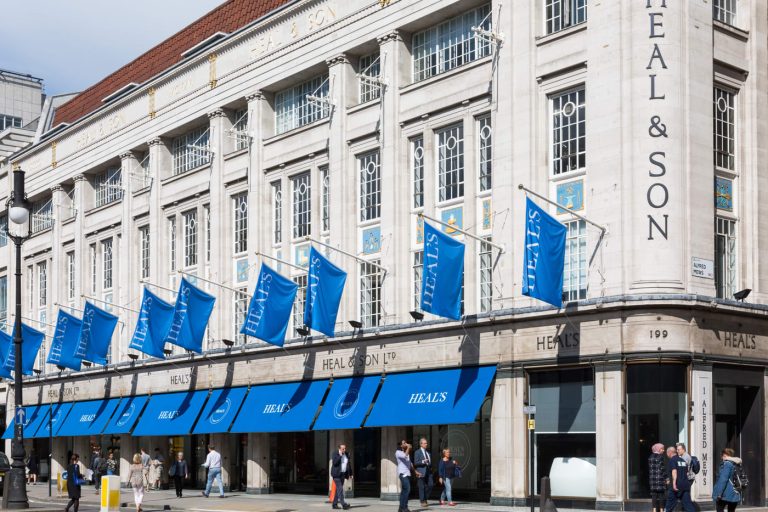
Research by central London estate agency, Bective, reveals which of London’s most famous brandmarks commands the highest property price premium when compared to the wider borough.  Bective analysed the value of residential real estate in postcodes surrounding 13 of prime London’s most iconic brandmarks and found that on average, property

Read More »

Kawneer systems help set new standards by the River Mersey

Architectural glazing by Kawneer features on a landmark residential tower in Liverpool. A diverse range of architectural glazing systems by leading UK manufacturer Kawneer were specified for a landmark BTR (Build-to-Rent) residential development overlooking Liverpool’s iconic waterfront. Kawneer’s market leading AA®100 curtain wall, AA®720 windows and doors, AA®541 window vents

Read More »

CHAS Highlights Five key updates from COP26

A host of announcements that will affect how UK businesses address climate change coincided with COP26. CHAS highlights some of the key developments.  1. Net Zero targets introduced for government supply chains  In the run-up to COP26, it was confirmed that from 1 October all companies bidding for government contracts

Read More »

RTPI responds to brownfield and planning digitisation funds

Victoria Hills, Chief Executive of the Royal Town Planning Institute (RTPI), said: “As we approach the Comprehensive Spending Review we are glad the government is considering how best to alleviate the housing crisis. “The £1.8bn package to regenerate brownfield land announced today is encouraging and we favour a brownfield-first approach.

Read More »

Daikin introduces world’s first high-capacity R-32 refrigerant split heat pump offering cooling, along with heating and domestic hot water

Daikin Altherma 3 R is the world’s first high-capacity R-32 refrigerant split heat pump that offers cooling, along with heating and domestic hot water. The third generation R-32 refrigerant heat pump is even more sustainable and replaces the previous generations that run on R410-A refrigerant. This change represents a reduction

Read More »
Latest Issue
Issue 343 : Aug 2026

Kenneth Booth

Enfield Council: Meridian Water development unlocks funds for local Edmonton community groups

Community groups can apply for funding from the new Meridian Water Community Chest, funded by contributions from Meridian Water developers, contractors and consultants to deliver projects benefitting local residents. A new rolling grant scheme, the Meridian Water Community Chest will be used to help Edmonton communities around the £6bn Meridian Water development get involved in the future development of their neighbourhood and introduce projects that will improve the day-to-day life of the area’s residents. The funding will help to improve the neighbourhoods in the three Edmonton wards (Upper, Lower & Edmonton Green) which are amongst the most deprived in the UK and is available to not-for profit organisations. The vast majority of the fund will be allocated to ‘large’ grants from £10,000 to £60,000 and the remainder will be allocated through smaller grants of up to £2,500 for more informal local based groups.  Cash for the scheme will be raised from developers, contractors and consultants and be used to benefit local people. Meridian Water is Enfield Council’s flagship development that will provide 10,000 homes, 6,000 jobs and a wide range of community, leisure and commercial uses over the years to come. Enfield Council Leader, Cllr Nesil Caliskan, said: “The private sector has a social and moral responsibility to the communities in which they are working within to make a difference in terms of social value to ensure the continuing wellbeing of those areas.  “So far our developers, contractors and consultants have stepped up to offer finances, skills training and apprenticeships, as we work with more partners we will continue to deliver social value.  “Here in Enfield we are taking that principle one step further by ensuring that local people will help to choose where the money is spent to provide the greatest benefit. “Our Community Chest will enable us to transform the lives of Edmonton’s residents and deliver real benefits to those most in need. Ever since Enfield Council took over control of the delivery of Meridian Water we have said local people would be the primary beneficiaries of this project, this initiative is merely the latest manifestation of that commitment and I am delighted that once again we can demonstrate the value this transformational development will have on the lives of thousands of people in our borough.” The projects funded from the Community Chest will help achieve the aims of the Council’s A Lifetime of Opportunities and deliver the 27 recommendations contained in the Enfield Poverty and Inequality Commission Report. Enfield Council’s Cabinet agreed to set up the fund last in July. Groups working in Edmonton can apply at www.meridianwater.co.uk/community/ the deadline for applications is 5pm on Friday 17 December. The Council’s Neighbourhood Fund is also accessible for all residents and the next round will be launched shortly https://new.enfield.gov.uk/services/your-council/community-development/#13

Read More »

The heat is on education: M&E specialist explores sustainable design solutions

TOO COOL FOR SCHOOL: SUSTAINABLE DESIGN FOR EDUCATION Construction within the education sector is set to face a number of challenges in the next decade as schools look to reach net zero and utilise renewable technology and techniques. Matt Wrate, director at international M&E consultancy CPW, looks at how to keep schools cool yet sustainable when developing heating solutions. One of the biggest issues we face when designing schools is overheating, due to increased occupancy density and equipment gains. Keeping schools cool, especially with the ever-looming threat of climate change, has been an issue since Tony Blair’s ‘education education education’ promise that pledged to put schools at the top of the agenda. It’s easy to draw parallels to Boris Johnson’s ‘build build build’ but this time the focus is on the property and construction industry with an emphasis on helping both new and existing buildings become carbon neutral. I recently took part in a Stride Treglown Climate Action Relay panel, which looked at the challenges of delivering a carbon net zero school and considered the implementation of modern methods of construction (MMC) in schools, the impact of changing regulations and behavioural changes in reaching net zero. The consensus was that there is no one answer for reaching net zero but rather that we need a wider solution that incorporates a transparent supply chain, renewable technology, MMC and a simple way to measure operational and embodied carbon on projects. In short, we need to work together to reach the government’s 2050 target. This is where clever solutions come in. In 2000, when renewable technology first gained popularity, the cost was astronomical. However, in the decades since then the price of materials has significantly reduced and so has the overall cost. Photovoltaic panels already cover the roofs of schools across the country and a number of passive solutions have been installed to keep spaces cool before resorting to energy-hungry air conditioning. But we need to take the next step. New technology is in the research and development pipeline, so we need to begin weighing up the benefits of implementing sustainable techniques while keeping inside the budget. Even with the best intentions, if the proposed solutions aren’t economically viable, the most financially suitable option will win out every time.   I believe closing the ‘performance gap’ is essential if schools are to operate as zero carbon.  Engaging the client’s facilities management team, who will actually operate the building, is ideal but not always feasible at design stage. We therefore need to design systems that are simple to use without training to ensure energy is not wasted. However, the biggest difference we can make when designing schools is allowing flexibility. School buildings are used in different ways, at different times, by different groups of people and the design must facilitate this as much as possible without adding significant cost. Technology is also constantly evolving so we must consider the entire lifespan of a school – typically 25 years – and allow space to incorporate different solutions as they become available. Yes, we need to consciously design with sustainability in mind, utilising the most up to date methods and technology, but flexibility is key when reaching for carbon net zero. For further information visit www.cpwp.com or follow @CPWengineering on Twitter.

Read More »

The London brandmarks commanding the highest house price premiums

Research by central London estate agency, Bective, reveals which of London’s most famous brandmarks commands the highest property price premium when compared to the wider borough.  Bective analysed the value of residential real estate in postcodes surrounding 13 of prime London’s most iconic brandmarks and found that on average, property values come in at £1,548 per square foot.  However, when analysing the cost of living close to one of the capital’s most prestigious hangouts in relation to the wider borough, it’s the W1 postcode that comes out on top.  Home to Fortnum and Mason (W1A), Annabel’s (W1J) and Claridge’s (W1K), the average property price per square foot is currently £2,350 – 99% higher than the wider borough of Westminster.  Harrods also ranks as one of the most prestigious London locations. With an average cost of £1,878 per square foot in the SW1X postcode, the cost of purchasing a home close to the world famous department store comes in 43% higher than the wider borough of Kensington and Chelsea.  A property closeby to the Bulgari Hotel commands a premium of 38% compared to the wider borough, while property prices in the same postcodes as the Liberty (W1B), Ivy (WC2) and Savoy (WC2) command a 24% premium. Fulham’s Hurlingham Club is home to the lowest price premium of all locations analysed by Bective. However, with property values at £938 per square foot, it’s still 6% more expensive than the wider borough of Hammersmith and Fulham. Bective’s Head of Sales, Craig Tonkin, commented: “For the average homebuyer, sought after amenities include a good transport link, a good school, or a supermarket. However, for the prime London buyer, living within close proximity to one of the capital’s most prestigious hangouts is often a far greater draw.  While a prime London residence is an accolade in itself, the ability to boast the likes of Fortnum and Mason or Harrods on your doorstep adds an additional layer of property prestige and demand for these homes is often higher as a result.  Of course, these high end property features will cost you and the premiums associated with real estate in these areas of the prime market are far higher than the wider cost of buying in their respective boroughs.” House price data sourced from LonRes (Nov 2021) (postcode) and PropertyData (Nov 2021) (borough).

Read More »

New HVAC systems whitepaper tackles building sustainability and overheating issues

With the built environment contributing 40% of the UK’s total carbon footprint and the Committee on Climate Change (CCC) warning of the dangers of overheating buildings, a new whitepaper is highlighting the importance of sustainable HVAC systems to construction professionals. The new whitepaper, from polymer specialists REHAU, identifies issues around building overheating, air quality and sustainability, and the need to decarbonise new and existing buildings to meet net zero targets. Citing UK Green Building Council findings that heating and cooling is responsible for large quantities of buildings’ ‘in use’ emissions, it explores the impact of sustainable HVAC systems on construction. Following CCC warnings that not adapting the built environment to changing climates could pose major risks to occupant health from overheating, the whitepaper looks into thermally activated building structures (TABS) technology’s role in resolving this. A means of space heating and cooling, TABS uses pipework embedded within a building’s concrete structure, running either an elevated chilled water temperature for cooling requirements, or low-temperature hot water for the premises’ heating needs. “TABS is growing in popularity because they are economical and efficient, yielding up to a 47% reduction in annual energy costs when compared to traditional HVAC systems,” says Franz Huelle, Head of Technical at REHAU Building Solutions. “This is because whether for heating or cooling requirements, water flows of different temperatures influence the temperature of the building’s concrete structure. “By opting for such a system, specifiers eliminate the need to regulate temperatures in individual rooms with their own specific load requirements. Instead, the pipework allows the building’s mass and thermal dynamic behaviour to be used to maintain comfortable conditions, almost like a living organism.” Commonly used for larger buildings, TABS processes activate the large thermal mass of concrete structures, acting as a buffer for varying cooling or heating loads throughout the day. REHAU’s whitepaper explores the benefits of the technology’s high thermal inertia, large surface areas and radiative heating and cooling properties, including reduced carbon emissions and increased occupier health and comfort. Franz challenges: “When it comes to selecting an appropriate HVAC system, everything always comes down to one fundamental question – does this technology offer a compelling business case? As our new whitepaper identifies, given the pressures to deliver buildings that meet future sustainability needs, TABS should definitely be considered under these parameters. “For example, because these systems can continuously expel heat throughout the day, they are well-placed to tackle the urgent threat of buildings overheating in the warmer months. This is of particular importance as weather patterns become more extreme and high-performance insulation becomes the standard in new-build properties.  “Contractors, specifiers and developers may therefore need to engage more specialist assistance to meet these challenges and other longstanding priorities such as lowering construction and maintenance costs,” concludes Franz. “TABS’ ability to realise these benefits while decarbonising the nation’s building stock explains why building professionals should read this new whitepaper and explore the technology’s viability going forward.” For more information and to download REHAU’s new whitepaper, click here.

Read More »

Kawneer systems help set new standards by the River Mersey

Architectural glazing by Kawneer features on a landmark residential tower in Liverpool. A diverse range of architectural glazing systems by leading UK manufacturer Kawneer were specified for a landmark BTR (Build-to-Rent) residential development overlooking Liverpool’s iconic waterfront. Kawneer’s market leading AA®100 curtain wall, AA®720 windows and doors, AA®541 window vents and AA®190 TB doors all feature on the £60 million Copper House at 21 Strand Street, designed by Leach Rhodes Walker architects and developed over three years by main contractor GRAHAM. The Kawneer systems were installed by teams of up to 20 operatives by approved specialist sub-contractor FK Group. These included AA®100 zone-drained curtain wall on the ground, second and third storeys, AA®720 top-hung casement and fixed light windows at the rear of the building, and AA®720 single and double-leaf doors on the first and sixteenth floors. AA®541 casement vent inserts also featured in the curtain wall on floors one to 16 and AA®190 TB doors to the ground floor screens. The city centre brownfield site, formerly offices and car parking, has been transformed into  a 29,000m2 (GIA) landmark development of 383 apartments for rent over 15 floors, with communal facilities including a residents’’ lounge and private gym and 1,000ft2 of commercial units on the ground floor. It is framed around two concrete tower structures, with off-site podded bathrooms and a system façade designed to withstand the inclement weather conditions overlooking the River Mersey estuary. Residents of the one- to three-bedroomed apartments benefit from rooftop facilities – garden space with flexible and fixed seating, booths with fire pits and fire tables, an outdoor covered kitchen, and a multi-use central space for events or exercise, all enclosed by a 2m-high glass balustrade that provides weather protection without detracting from the stunning views of the river and the Albert Dock. Constructed of reinforced concrete frame and lightweight external walls with rainscreen and brick facade, the building has risen adjacent to the Albert Dock Conservation Area. Christian Gilham, Director at Leach Rhodes Walker for the project, said: “We had promised the city a high quality, landmark building befitting its fantastic location, and we needed the same high quality materials to accompany the quality of design proposed.” Joe Carroll, Project Architect and designer of the scheme, said: “I am very proud we have realised this exciting and unique design on the prominent site, and being able to specify the quality of façade materials was key in delivering this.” Ralph Sage, Senior Project Leader for Leach Rhodes Walker who are frequent specifiers of Kawneer systems, said the systems were specified for “familiarity, known quality and extensive range” and were a significant feature of the elevational treatment. “They provided the quality feel and appearance appropriate to the prestige location. They also met the security requirements where required and the thermal and acoustic requirements,” he said. FK Group’s Associate Design Director Robert Clarke said: “We tendered Kawneer due to our very strong relationship with the systems company, both in fabrication and technical. They are our preferred and No 1 system supplier.” GRAHAM was appointed by joint venture partners Patten Properties and Panacea Property Development on behalf of Invesco Real Estate, the global real estate investment manager, as part of its growing UK residential portfolio. Peter Reavey, Construction Director for GRAHAM, believes The Copper House set a new standard for residential accommodation in Liverpool. “GRAHAM is proud to have delivered this high-quality residential scheme that provides a stunning addition to this iconic part of Liverpool city centre. The Copper House is a stand-out development. The quality of both the design and the build sets it apart, offering future residents a modern living environment with a community feel.” Neil Patten, Joint Managing Director of Panacea Properties, said: “We were ambitious in the vision we set out for The Copper House, and to see it realised in such a spectacular way is something the entire team is very proud of. This has been a long, challenging scheme, but the commitment to get every detail right has paid off considerably. Liverpool now has a sought-after residential development that encapsulates the optimism and ambition of the city. “We enjoyed working with Invesco Real Estate and the delivery of the project by Graham has been first class. The consultant team have all worked tirelessly to deliver a building that sets a new standard for the quality of residential living in Liverpool City centre. My thanks go to the entire team for their efforts, especially in the face of the challenges presented by the pandemic.”

Read More »

CHAS Highlights Five key updates from COP26

A host of announcements that will affect how UK businesses address climate change coincided with COP26. CHAS highlights some of the key developments.  1. Net Zero targets introduced for government supply chains  In the run-up to COP26, it was confirmed that from 1 October all companies bidding for government contracts worth more than £5million a year must commit to achieving Net Zero emissions by 2050. Under the new rules, set out in Public Policy Note 06/21, in-scope organisations need to produce a carbon reduction plan detailing where their emissions come from and what environmental management measures they have in place.  While some large companies already self-report Scope 1 (direct) and Scope 2 (indirect owned) carbon emissions under the Streamlined Energy and Carbon Reporting regulations, the new targets require them to go further. This includes committing to achieving Net Zero by 2050 and reporting Scope 3 emissions such as business travel, employee commuting, transportation, distribution and waste. The requirements currently only apply to government contracts, but they could become an advisory part of the Common Assessment Standard in 2022. 2. Government publishes Net Zero Strategy On 19 October, the government published its long-awaited Net Zero Strategy: Build Back Greener which outlines how the UK will deliver on its commitment to reach net-zero emissions by 2050. Measures set out in the strategy include: An extra £350 million to support the electrification of UK vehicles and their supply chains and another £620 million for targeted electric vehicle grants and infrastructure £140 million Industrial and Hydrogen Revenue Support scheme to accelerate industrial carbon capture and hydrogen projects An additional £500 million towards green technologies of the future to support the most pioneering ideas and technologies to decarbonise our homes, industries, land and power £3.9 billion of new funding for decarbonising heat and buildings, including the new £450 million 3-year Boiler Upgrade Scheme £124 million boost to the Nature for Climate Fund helping meet commitments to restore approximately 280,000 hectares of peat in England by 2050 and treble woodland creation in England £120 million towards the development of nuclear projects through the Future Nuclear Enabling Fund 3. Company climate disclosures to become mandatory The eve of COP26 saw the announcement that from 6 April 2022, subject to Parliamentary approval, it will become mandatory for large UK-registered companies to disclose climate-related risks. In line with recommendations from the Task Force on Climate-Related Financial Disclosures (TFCD) the new requirements will apply to financial institutions along with private companies that employ more than 500 people and with more than £500 million in turnover. The mandatory disclosures are designed to increase the quantity and quality of climate-related reporting among UK businesses and to encourage more companies to assess the risks and opportunities posed by climate change, including within their supply chains. Non-mandatory guidance to support companies in their disclosures is due by the end of 2021. 4. SMEs urged to take Climate Pledge  Throughout COP26, businesses of all sizes were encouraged to sign up to the globally-recognised UN Race to Zero Climate Commitment which includes a focus on supporting SMEs to make a difference via the  SME Climate Hub.  SMEs that take the pledge commit to: Halving greenhouse gas emissions before 2030, Achieving net zero emissions before 2050; and disclosing their progress yearly. SMEs make up 99% of UK businesses and business & industry accounts for a quarter of UK emissions so the efforts of smaller companies are essential but smaller businesses can lack the resources and knowledge needed to make a difference.  Once businesses have taken the pledge, the SME Climate Hub provides support in the form of tools to help organisation understand their emissions, how to tackle them, and how to share what they’re doing with their customers and community. Suggestions for how construction SMEs can reduce emissions include: Getting involved with CO2nstruct Zero; Designing out carbon; Delivering on low-carbon heat; Retrofitting; Making sites more efficient and Using low carbon materials.  5. The Environment Bill passes into law On 9 November, the Environment Bill became the Environment Act 2021 after the House of Lords gave the legislation Royal Assent. This means a post-Brexit framework for environmental governance in England is now in place and legally-binding targets for air pollution, biodiversity, water quality and waste are on their way. The Environment Act has also established a new Office for Environmental Protection which will hold government and public authorities to account against their commitments and environmental law.  Commenting on developments from COP26, Alex Minett, Head of Products & Markets at CHAS says: “There is a lot of good work already underway to tackle climate change in the construction industry but COP26 highlighted the scale of the challenge that still lies ahead.  ”It was also a reminder that everyone must play their part and we expect scrutiny on the environmental performance of construction supply chains to continue to increase. “This can be especially daunting for SMEs but CHAS is here to help. We have already helped hundreds of contractors to demonstrate their commitment to high environmental standards via the Common Assessment Standard, the gold standard for accreditation in the construction industry, which covers sustainability. We are also helping many more contractors work towards the standard.  “In addition, CHAS’s simple contractor search tool makes it quick and easy for supply chain companies to find qualified contractors with high environmental standards.” To find out more about how CHAS can help your business, call CHAS today on 0345 521 9111 or visit www.chas.co.uk

Read More »

Namaka Subsea expands operations at Moorfield’s Aberdeen Energy Park

Subsea consultancy doubles floorspace at the Innovation Centre Namaka Subsea has upsized operations at Aberdeen Energy & Innovation Parks in Bridge of Don, with the subsea consultancy company moving from Unit 16 to Units 6 and 7 at the Innovation Centre, having agreed a five-year lease with Moorfield Group, the Parks’ owner and landlord. Namaka Subsea, which provides a range of subsea consulting services, including diving and ROV auditing and assurance, to oil and gas operators, has been based at the Innovation Centre for the past three years. Namaka has recently been awarded a new contract with a leading global energy provider to supply dive system auditing, onshore support, technical advice and assurance services. This contract win has facilitated the expansion of the business over the past 18 months, with headcount increasing from six to eleven employees. Sandy Harper, CEO of Namaka Subsea said: “We are excited with the growth of our business, particularly during challenging economic times. We have been very satisfied with the space we’ve had at the Innovation Centre for the past three years and pleased that we have been able to continue our growth and development within this fantastic location.” Hugh Canham, Head of Asset Management at Moorfield Group added: “Our parks provide the perfect environment for businesses to develop and prosper. We are committed to supporting our existing occupiers and helping them realise their growth ambitions. It is particularly satisfying to see an existing occupier like Namaka Subsea continue to expand here and we wish them continued success.” Aberdeen Energy & Innovation Parks comprise 200,000 sq ft of multi-let office and industrial space for more than 80 companies and a workforce of nearly 2,000 employees in the Bridge of Don area of Aberdeen. The Innovation Centre offers occupiers a modern serviced office centre that provides a mix of two to ten person serviced office suites on highly flexible terms. The park offers ample car parking and electric charging points. It is conveniently located, approximately three miles north of Aberdeen city centre and close to the Aberdeen Western Periphery Route. Knight Frank and Ryden are joint agents for Aberdeen Energy & Innovation Parks, which is managed by Avison Young.

Read More »

“Building matters to achieve net zero” says top construction professional

Andrew Carpenter, CEO of Constructing Excellence South West (CESW), said: “Construction and the built environment are responsible for a shocking 40% of global carbon emissions – and that means when it comes to achieving a net zero future, building matters. “The sector has an urgent responsibility to reduce its carbon footprint, and I was delighted to be among the construction professionals who gathered on day 12 of COP26 to discuss exactly how we do that. “Top of the list of talking points was the Construction Leadership Council’s Co2nstruct Zero plan – a clear, impactful nine-point programme, with 28 metrics, for making construction fit for the net-zero age. “By working together to achieve its recommendations, including switching to zero emission vehicles, supporting the development of low carbon materials and processes, embracing green heating solutions and collaborating with government to deliver a wide-ranging home retrofit programme, we can have an enormous positive impact.”

Read More »

RTPI responds to brownfield and planning digitisation funds

Victoria Hills, Chief Executive of the Royal Town Planning Institute (RTPI), said: “As we approach the Comprehensive Spending Review we are glad the government is considering how best to alleviate the housing crisis. “The £1.8bn package to regenerate brownfield land announced today is encouraging and we favour a brownfield-first approach. It is unclear whether prioritising brownfield will deliver 160,000 new homes but it is important that the homes are supported by adequate infrastructure and facilities as well as delivering on net zero commitments. “We have for some time been calling for a Digital Transformation Fund of £46m to help bring the planning system into the 21st Century so the £65m package announced today is a great start. But funding of the wider planning system is still required. We estimate that £500m over four years can produce an efficient system that is capable of rising to the challenge of England’s housing shortage.”

Read More »

Daikin introduces world’s first high-capacity R-32 refrigerant split heat pump offering cooling, along with heating and domestic hot water

Daikin Altherma 3 R is the world’s first high-capacity R-32 refrigerant split heat pump that offers cooling, along with heating and domestic hot water. The third generation R-32 refrigerant heat pump is even more sustainable and replaces the previous generations that run on R410-A refrigerant. This change represents a reduction of 75% in the environmental impact. Daikin Altherma 3 R stands out thanks to its improved compactness, design and performance. Innovation as a driving force to net zero heating and cooling As the market leader, Daikin Europe is constantly looking for innovation possibilities for heat pumps. Daikin Altherma 3 R is setting new standards: it’s the world’s first high-capacity R-32 refrigerant split air-to-water heat pump that also offers cooling. Similar heat pumps already exist in a heating and domestic hot water set-up, but Daikin went a step further and added the cooling feature. Importantly, Daikin Altherma 3 R runs on R-32 refrigerant. It replaces its predecessors that run on the R410-A refrigerant. R-32 has a global warming potential (GWP) that is one-third lower than R410-A. Deciding to use an R-32 product reduces the environmental impact by 75% compared to R-410A. It leads directly to lower energy consumption, thanks to its high energy efficiency. Patrick Crombez, General Manager Heating and Renewables SBU at Daikin Europe, specifies, “At Daikin, innovation, along with sustainability, is a driving force in everything we do. Daikin Altherma 3 R combines both factors in a rather unique way: It’s not only a world’s first, but also a sustainable promise.“ Improved compactness, design and performance Daikin Altherma 3 R is the perfect heat pump for new large houses thanks to its improved compactness, design and performance. Its outside unit is smaller and can fit under a window: it is equipped with 1 large fan instead of 2 smaller ones for a high-capacity unit, reducing its height by 25%. This unobtrusive heat pump seems to blend into any environment since it hides the fan from view via a black front grille made of horizontal lines. It offers all-year round comfort with heating, domestic hot water and cooling, a world premiere for a high-capacity R-32 refrigerant split heat pump. This heat pump has it all: it is a versatile air-to-water heat pump for new large buildings. Daikin Altherma 3 R ERLA-D series product specifications • Available in 3 classes: 11, 14, 16 kW, 1 and 3 phase • Dimensions (HxWxD): 870 x 1100 x 460 mm • Patented plate heat exchanger • Up to A+++ space heating performance • Up to A+ domestic hot water performance • Operation range down to -25°C • 60°C LWT at -7°C • Combinable with 3 different indoor units (wall mounted, floor standing with integrated tank, floor standing with ECH2O tank) • Cloud ready

Read More »