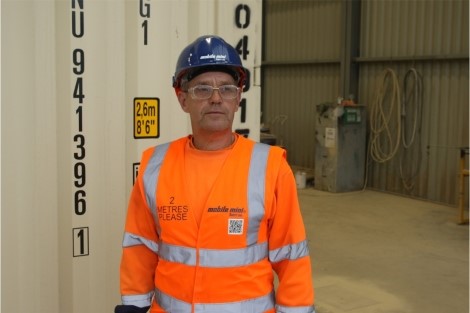
Kenneth Booth

CIOB RESPONDS TO CITB MENTAL HEALTH AND WELLBEING REPORT

The Chartered Institute of Building (CIOB) has responded to the Construction Industry Trade Body’s (CITB) latest report, Mental Health and Wellbeing in Construction. Daisie Rees-Evans, author of the Understanding Mental Health in the Built Environment report and Policy Officer at CIOB, said: “CIOB are pleased that CITB have launched their

Read More »

Luxury new home searches soar by 25%

Data released today in the WhatHouse? New Homes Index reveals that buyer interest in luxury new build homes across Britain has increased by 25% during July, a sign that changing space requirements and lifestyle priorities continue to alter the new home market.   Looking ahead, we expect this growth to continue, as post-pandemic life returns to normal and home buyers can make firm decisions based on new lifestyle requirements.        The national average price

Read More »

Caddick Construction hand over Panattoni’s landmark Wakefield515 scheme

Caddick Construction has completed on Panattoni’s Wakefield515 scheme, the largest speculative development in the north for 10 years. The 515,820 sq ft warehouse facility is located to adjacent to TK Maxx Regional Distribution Centre, also built by Caddick, at the M62 and A1(M) junction. Wakefield515 has already been snapped up

Read More »

LANDMARK DUNDEE WATERFRONT URBAN BEACH OPENS

Dundee waterfront’s ongoing renaissance has reached a new milestone with the official opening of Waterfront Place. The striking urban beach, active travel hub, and interactive play area were given the seal of approval by John Alexander, leader of Dundee City Council, at a ceremony held next to the V&A –

Read More »

Creating youth-friendly opportunities in the Construction Sector

Today, exam results are unveiled in Scotland after over a year of disruption to education in the midst of the COVID-19 pandemic. For those considering their career options, construction might not be the obvious choice. Historically the sector painted a low-paid, low- skilled picture.  However, this is a sector that

Read More »

HS2 archaeologists make a once-in-a-lifetime Iron Age discovery, dubbed ‘The Hillingdon Hoard’

Over 300 Iron Age ‘potins’ – or small coins – discovered on HS2 site in West London Video and images of the Hoard available: https://mediacentre.hs2.org.uk/resources/f/archaeology-sites-and-discoveries/greater-london-area-south/hillingdon-hoard  Archaeologists working in West London on the HS2 project have uncovered a fascinating rare set of Iron Age potins, an early version of the coin,

Read More »

Property management bodies ARMA and IRPM propose merger

Both bodies say the two property management organisations together will create a more united and stronger voice as leasehold reform looms. The UK’s two most high-profile property management bodies The Association of Residential Managing Agents (ARMA) and The Institute of Residential Property Management (IRPM) are to merge. Both organisations want to establish

Read More »
Latest Issue
Issue 344 : Sep 2026

Kenneth Booth

CIOB RESPONDS TO CITB MENTAL HEALTH AND WELLBEING REPORT

The Chartered Institute of Building (CIOB) has responded to the Construction Industry Trade Body’s (CITB) latest report, Mental Health and Wellbeing in Construction. Daisie Rees-Evans, author of the Understanding Mental Health in the Built Environment report and Policy Officer at CIOB, said: “CIOB are pleased that CITB have launched their new mental health report which has gathered examples of best practice across the sector to inspire companies to accelerate their activities in this area before we lose more lives. Our own research conducted prior to the Covid-19 pandemic investigated the state of mental health in the industry. It found that 26 per cent of workers had thought about taking their own life in 2019. We are glad to see that our research has been utilised to further develop the case for addressing mental health in construction, particularly at a time where the Covid-19 pandemic has had a significant impact on so many lives during the past 18 months. Tackling mental ill-health is a significant challenge that the industry, Government and professional bodies must work together as a collective to address the underlying issues and improve worker’s wellbeing.”

Read More »

Luxury new home searches soar by 25%

Data released today in the WhatHouse? New Homes Index reveals that buyer interest in luxury new build homes across Britain has increased by 25% during July, a sign that changing space requirements and lifestyle priorities continue to alter the new home market.   Looking ahead, we expect this growth to continue, as post-pandemic life returns to normal and home buyers can make firm decisions based on new lifestyle requirements.        The national average price of new home property coming to market has stayed static at £338,339 in July (£338,042 in June).          Top three new home search areas during July:       South East of England has demonstrated the most buyer demand during July 2021, achieving 25,719 new home buyer searches.        West Midlands continued its climb for the second month in a row, jumping from third to second position, achieving 23,683 new home buyer searches during July 2021.        North East of England has secured its first top three search position with 13,581 new home buyer searches during July 2021, representing a 170% increase on June’s figures.         July has achieved a +32% increase in new home demand, recording a total of 166,137 new home buyer searches, compared to 126,199 during June 2021.  Daniel Hill, Managing Director, WhatHouse? comments:  “Changing lifestyle requirements continue to re shape the new home market, and nowhere is this demonstrated more clearly than in July’s WhatHouse? New Homes Index.  London has been ousted from the top three new home search table, supplanted by West Midlands and North East, both experiencing spikes in search.  It’s also interesting to note that total luxury new home searches increased by 25% during July.  The East Midlands, West Midlands, North West and Scotland all top performers – reporting a +45% luxury new home search increase since June.          This all points to a large scale post-Covid re-evaluation amongst home buyers.  As employers firm up plans for flexible work-from-home expectations, home buyers are now able to confidently consider space requirements and lifestyle aspirations.  What the WhatHouse? New Homes Index is demonstrating is a growing desire amongst buyers to consider luxury new homes in regions that may previously have been beyond their search comfort zone.” David O’Leary, Policy Director, Home Builders Federation said:  “As the wider market settles into equilibrium, demand for new homes continues to be robust with many builders reporting strong forward order books. More than ever homebuyers, both first-time buyers and home movers, appear to be putting an emphasis on the low running costs and improved energy efficiency that new homes provide.” 

Read More »

Caddick Construction hand over Panattoni’s landmark Wakefield515 scheme

Caddick Construction has completed on Panattoni’s Wakefield515 scheme, the largest speculative development in the north for 10 years. The 515,820 sq ft warehouse facility is located to adjacent to TK Maxx Regional Distribution Centre, also built by Caddick, at the M62 and A1(M) junction. Wakefield515 has already been snapped up by Amazon thanks to its strategic location which offers access to major cities and ports across the north of England. Up to 500 full-time jobs will be created and £5.5 million injected into the local economy as a result of Wakefield515 becoming fully operational. Situated on a 28-acre plot, Wakefield515 was specifically designed to offer maximum flexibility for logistics and distribution businesses. The cross-docked warehouse provides generous yards of up to 100m and will incorporate sustainable features, such as rainwater harvesting systems, a PV ready roof and LED motion sensor lighting. The building has been built to a BREEAM rating of ‘Very Good’ and EPC rating of ‘A’. Chris Wilson, Commercial Development Director at Caddick Construction, said: “This was a landmark project for the region as well as Caddick Construction and it’s great news that Wakefield515 secured an occupier even before it was fully completed. That’s testament to the site’s superb location as well as the sustainable design features and quality build that makes it an ideal hub for any logistical client. He added: “This speculative build was announced at the height of the pandemic last year but Panattoni had the foresight and ambition to realise a successful logistics scheme here at Wakefield515 and Caddick Construction had the expertise to deliver it on time and we are delighted with the result.” Ian Anderson, Head of Project Management at Panattoni, said: “Our latest completed development has gone extremely smoothly despite all the challenges everyone has seen in the last 14 months. The Caddick team integrated with Panattoni to ensure a high-quality facility that had occupiers interested very early on. We are delighted to have finished and let another successful speculative development, adding to the ambitious construction portfolio underway currently by Panattoni in the UK.”

Read More »

LANDMARK DUNDEE WATERFRONT URBAN BEACH OPENS

Dundee waterfront’s ongoing renaissance has reached a new milestone with the official opening of Waterfront Place. The striking urban beach, active travel hub, and interactive play area were given the seal of approval by John Alexander, leader of Dundee City Council, at a ceremony held next to the V&A – Scotland’s first design museum. The landmark site is seen as a key catalyst for the wider £1 billion regeneration of the city. Morgan Sindall Construction was selected by the local authority to deliver the £6 million project in early 2020. Work has been carried out in line with Scottish Government guidance on the safe operation of construction sites during COVID-19. The main contractor has worked closely with the council’s development team to ensure minimal delays to the programme; with the decision taken to open the urban beach now, at the height of summer, while the finishing touches are put to the rest site over the coming weeks. Chief among those is the installation of a striking stainless-steel whale sculpture designed by award-winning British artist Lee Simmons. Morgan Sindall Construction was awarded a separate £1.7m contract earlier this year to manufacture and install the centrepiece. Comprised of tubular sections, it will flow from the northern entrance of Waterfront Place with the tail arching towards the Tay to capture a sense of movement. The landscaped 7,000 square foot urban beach is surrounded by bench seating and features illuminated footpaths to encourage all-day usage.  The 2,150 square foot active travel hub features a striking design in homage to the adjacent V&A museum. In addition to providing cycle hire and storage, the building will serve as a meeting point and source of information; promoting cycling and other forms of sustainable low carbon travel to residents and visitors. It provides immediate access to the National Cycle Network that runs alongside the Tay. Stuart Parker, managing director of Morgan Sindall Construction in Scotland, said: “This has been a momentous project to be entrusted with and one we’ve taken great pride in delivering. It will spur the ongoing renaissance of this great coastal city’s waterfront area, meaningfully promote active lifestyles and low carbon transport, while enhancing the experience for local people and visitors alike. “We’ve worked hand-in-glove with the city council to reach this milestone before the end of summer and the urban beach is sure to be a major hit in the August sunshine. “The installation of the whale sculpture in September will be a real spectacle and add a final injection of creativity and identity to what is already a striking vista.” John Alexander, leader of Dundee City Council, added: “This is one of the prime spots on the whole of the waterfront and right from the planning stage it was important that it could be accessed and used by everyone. “Anyone who comes along will see for themselves the quality of the work, which was in itself a key part of our desire to attract people here, not just from the city but across Scotland, so that they could truly experience the re-established connection between the city and the river. “It forms the next step forward in our phased and managed growth at the waterfront and the months and years ahead will see much more to come on the other sites across the area.” The Waterfront Place project was awarded funding as part of the Low Carbon Travel and Transport Challenge Fund established by Transport Scotland, from funds awarded under European Regional Development Fund (ERDF) 2014-2020 programme.

Read More »

Creating youth-friendly opportunities in the Construction Sector

Today, exam results are unveiled in Scotland after over a year of disruption to education in the midst of the COVID-19 pandemic. For those considering their career options, construction might not be the obvious choice. Historically the sector painted a low-paid, low- skilled picture.  However, this is a sector that is thriving, innovating, highly rewarding and driving change.  It is possible to build your dream career in the construction sector and there are a wide range of career paths available to young people, irrespective of their exam results.  I did not follow a straight, predictable, or traditional path into the sector. I left school at 16 and worked in hospitality before joining the construction sector, which led to me taking up a post at the Akela Group, a multi-disciplinary construction services and civil engineering company.  After seven years of working as a civil engineering groundworker, I was offered training to help me progress to the next phase of my career, and I seized the opportunity to become the Health and Safety Advisor at Akela Group. Their guidance and support was crucial in helping me advance my career.  It is fitting that I am now able to help young people on their career journey.  The Akela Group has been recruiting, training and retaining apprentices since its inception.  Most recently, we have also partnered with the charity Action for Children on an Apprenticeship Programme that is designed to help young people secure and sustain employment by giving them industry recognised training and certification.  This year, Akela Group has welcomed 22 apprentices in total. Apprentices receive a mix of on the job and classroom training, and by the end of their two or three year apprenticeship they receive a SVQ Level 2 in Construction and Civil Engineering Operations. Our aim is to provide ongoing support and encouragement, and to equip them with the essential tools and experience that they need to develop and realise a successful career in the sector. The remarkable success rate of these young people who are progressing into opportunities within the Akela Group is testament to the commitment of the site managers and teams and their recognition of what young people can bring to the sector. These success stories make a solid case for apprenticeship schemes in their own right, but they are not just nice to have.  In reality, many of these schemes have emerged to address a key challenge that the construction industry is facing right now – the chronic shortage of skills. At present, the entire industry suffers from an image problem and construction based roles – particularly in civil engineering – are not seen as desirable career paths for young people. There is an urgent need to challenge traditional perceptions of construction roles as low-skilled and to showcase the diversity and richness of career paths that the sector has to offer – from the university graduate level roles like quantity surveying, to the site-based civil engineering roles which are labour intensive and place a great deal of importance on work ethic and attitude.  If the sector is to stand any chance of plugging the skills gap, it is imperative that these perceptions are challenged, not least in classrooms – but also, that the sector itself remains committed to investing in young people and providing opportunities to realise a rewarding career in this thriving industry. Schemes like the Apprenticeship Programme offered by the Akela Group will go some way towards unlocking opportunities for young people and addressing the skills gap. More importantly, they also help to ensure that we have a solid pipeline of talent that will be equipped to deal with the challenges of modernising the construction sector and creating new opportunities in the future. 

Read More »

HS2 archaeologists make a once-in-a-lifetime Iron Age discovery, dubbed ‘The Hillingdon Hoard’

Over 300 Iron Age ‘potins’ – or small coins – discovered on HS2 site in West London Video and images of the Hoard available: https://mediacentre.hs2.org.uk/resources/f/archaeology-sites-and-discoveries/greater-london-area-south/hillingdon-hoard  Archaeologists working in West London on the HS2 project have uncovered a fascinating rare set of Iron Age potins, an early version of the coin, dating back to the 1st century BC. The hoard of over 300 potins is a significant historical find, and was discovered in Hillingdon in August last year (2020). The find may be recognized as “treasure” under British Law. ‘The Hillingdon Hoard’ – as it has been called – dates back to the late Iron Age, during a period of change as the Romans began to establish themselves in Britain and create Londinium. The potins are based on coins struck in Marseille, France, about 2,175 years ago, which bear the left-facing head of Apollo on one side and a bull charging right on the other. The use of these early coins spread across northern Europe. In England their use was commonly linked to Kent, Essex or Hertfordshire. The term ‘potin’ refers to the base metal silver-like alloy used in coins. It is typically a mixture of copper, tin and lead. HS2’s Head of Heritage, Helen Wass said: “At HS2 we are not only building for the future, we are also preserving the past. This is an exciting find for our team of archaeologists and provides us with more information about how our ancestors lived and settled in London. HS2’s unprecedented archaeological programme has enabled us to tell the stories of our history and leave a lasting legacy for future generations.” Historians are unclear what the potins were used for during the Iron Age, particularly as the exchange of goods and service, or bartering is thought to have been the main method of commerce at that time, nor why the coins were deposited where they were found. Archaeologists analysing the discovery believe the potins may have been to mark the boundary of a property or as an offering to the Gods – in a woodland clearing or near a sacred spring. It is not unusual for a hoard to be found in an apparently isolated location and they may also have been buried as saving hoards or as emergency hoards in times of crisis. The first series of potins produced in Britain, are known as Kentish Primary or Thurrock types, and are likely to have been made no later than 150 BC. Sometime before 100 BC, these rather bulky coins were replaced by thinner coins with more degenerate designs, now called Flat Linear types. Over a period of several decades, the Flat Linear potins gradually evolved into a wide variety of forms, with the depiction of the bull and the head of Apollo becoming more and more stylised. The Hillingdon Hoard is late in the Flat Linear sequence. A hoard of a similar size, the ‘Sunbury hoard’ was discovered in 2010 but the potins were dated much earlier in the Iron Age. Potins from late in the Iron Age, similar to the Hillingdon Hoard, have been found previously but in much smaller quantities, making this find very significant. The site in Hillingdon was undergoing archaeological excavation and analysis led by HS2’s enabling works contractor, Costain Skanska joint venture (CS JV) and the archaeologists involved were elated to make such a significant discovery. Following a storm, ground conditions changed, and revealed where the coins were buried. Describing the discovery, Emma Tetlow, now working as Historic Environment Lead for HS2’s main works contractor Skanska Costain STRABAG joint venture said: “We were coming to the end of our archaeological work on the site when we found a patch of soil that was a very different colour from what it would be expected to be. The patch of soil was dark greeny-blue which suggests oxidized metal, and when we checked more closely, we could see loosely packed metal discs.  This is a once in a lifetime find, and allows us to expand our knowledge of what life could have been like in Hillingdon many centuries ago.” Because of the significance of the find, and the high number of coins, the local coroner was alerted. The coroner will determine whether the discovery amounts to ‘treasure’ after considering specialist evidence from the British Museum. The potins were removed from site for specialist cleaning, conservation and assessment. Records have then been sent to a specialist for cataloguing and further assessment to determine their origins and significance. In the London region, the oldest archaeology found by HS2 was dated to 11,000 years ago – a period known as the Mesolithic or Middle Stone Age. From this period, stone tools and artefacts have been found at locations which suggested people were living on the banks of the river. This would have provided a rich supply of food and water for these hunter-gatherers to exploit. Later evidence from the Bronze Age, about 4,000 years ago further indicates human activity near the river, with finds including cremations and a possible roundhouse. However, until the potins were uncovered no archaeological evidence of activity was encountered for almost another 3,500 years.  The value of the hoard has not yet been determined, nor has its future location. Under the Treasure Act, the Coroner will determine whether the find constitutes Treasure and if a museum wishes to acquire the potins, on the advice of specialists at the British Museum the Coroner will conduct an inquest at which recommendations for the find will be made and a potential value placed upon it. The hoard was found during HS2 works on land that was occupied temporarily. HS2 is not making any claim on the hoard and under the Treasure Act archaeologists are not entitled to a share of any reward. HS2 developed an approach to the archaeological work in discussion with Historic England to ensure the site was carefully examined to find, protect or investigate important archaeology before construction begins. Duncan Wilson, Historic England Chief Executive, said: “They

Read More »

Stephen George + Partners wins planning approval for sixth phase of new homes at Copcut Rise, Droitwich

Stephen George + Partners LLP (SGP) has won planning approval for the latest phase of 59 new homes at William Davis Homes’ Copcut Rise development in Droitwich, Worcestershire. This will be the sixth phase of this ongoing scheme, with the 1.55 hectare site containing a mix of terraced semi-detached and detached, two-, three- and four- bedroom houses, 39% of which will be affordable homes. Explains Peter Brown, Studio Director at SGP: “SGP has been working with William Davis at Copcut Rise since 2012, and we are delighted to see the latest phase of this popular development win planning approval. Our designs are complementary to the scheme as a whole and develops the vision of the existing masterplan. When complete, it will contain just under 700 houses, with just over 600 already built. The variety of housing types will appeal to a wide range of local people, with the social housing element integrated seamlessly.” SGP chose materials and architectural details that extend the themes already established in previous phases. The design uses warm brick colours and crisp render, and details such as porches and gablettes to articulate the street scene. The homes generally face outwards, so careful consideration has been given to establishing active and passive frontages, as well as defined vistas and views which create a sense of openness without overlooking existing homes. Strong and well-defined building lines are opened up by adding soft landscaping, punctuated by trees and feature planting. Black metal railings and low-level hedges, create a layering effect which draws the eye gradually into the scene. Stephen Rush for William Davis Homes, said: “This is an important development where houses are in great demand. As with all our sites, the quality of design and construction really matters to us. That’s why we greatly value our partnership with SGP. We look forward to starting work on the new phase in due course.”

Read More »

Property management bodies ARMA and IRPM propose merger

Both bodies say the two property management organisations together will create a more united and stronger voice as leasehold reform looms. The UK’s two most high-profile property management bodies The Association of Residential Managing Agents (ARMA) and The Institute of Residential Property Management (IRPM) are to merge. Both organisations want to establish a ‘united and stronger’ voice for the industry at a time when managing agents and property management professionals face unprecedented changes and as leaseholder reform legislation begins to make its way through Parliament. The proposal will be subject to approval by members at each organisation’s upcoming general meetings. ARMA executive chair Nigel Glen says the bodies have worked together on a wide range of topics including the building safety crisis, mental health and wellbeing in the sector and regulatory reform. Nigel claims a merged organisation would give it greater power and enable it to support both managing agent firms and professional individuals. “Combining our resources, data and expertise allows us to more effectively support our membership through guidance and business support, raise standards through enhanced professional qualifications, multi-channel training and ongoing professional development opportunities, and provide a more influential and representative voice to our ongoing government and stakeholder engagement,” says Glen. If approved, the two organisations and their respective secretariat teams would come together before the end of the year and the two brands would be retained for a period of time under the new organisation. This is similar to when landlord organisations NLA and the RLA joined forces recently. It is proposed that IRPM boss Andrew Bulmer would become CEO of the new organisation, while Glen would become the executive chair of the new board.

Read More »

HOUSEBUILDER ADOPTS INNOVATIVE FORSITE TECHNOLOGY IN UK FIRST FOR HOUSEBUILDING SECTOR

Housebuilder Martin Grant Homes has announced that it will be partnering with innovative proptech company Forsite to improve health and safety standards across its new homes’ developments. The housebuilder will initially trial Forsite’s digital innovation at its new Albany Park development in Church Crookham, Hampshire, before rolling the technology out across all its construction sites by the end of this year. Forsite is a worksite health and safety solution that enables site managers to ensure compliance, improve safety and reduce project costs. The app will allow all Martin Grant construction workers to complete a digitised induction via a mobile phone app, ensuring all personnel comply with the housebuilder’s health and safety standards. The app uses accurate technology to prove compliance, with staff required to complete a test to prove participation in the induction. Site managers will be able to view and manage their site compliance in real-time through the Forsite portal, so they can easily enforce their process. Additionally, Forsite will automatically record employee arrival and exit times to site via geofencing and sensors, removing the need for central sign-in points and improving capture of workers for site sign in. Nathan Cheeseman, CEO at Forsite, comments: “We work best with companies that care about efficiency and the bottom line without compromising their people’s safety. In Martin Grant Homes we have found just that, so it’s a natural fit. We are excited to become the health and safety standard for Martin Grant as it continues to lead the industry in site safety.” The app will also have enhanced safety features to protect those on site, including an emergency button that can be used to quickly notify all those on site of any incidents, therefore saving time. Ian Wand, Health and Safety Manager at Martin Grant Homes, comments: “We are excited to be the first housebuilder to adopt such technology in the UK, which will improve health and safety standards across our sites, alongside saving thousands of hours of time. Safety is absolutely paramount for us, and Forsite has a system in place to ensure processes are completed correctly, which gives us the confidence to roll this out across our sites.” Martin Grant Homes’ independent safety advisors undertake monthly monitoring and have rated the housebuilder’s performance well above their other clients within the housebuilding sector. The adoption of Forsite across its developments will support the housebuilder in continuing to keep its employees and sub-contractors safe on site, whilst utilising new technologies available. Ian Wand adds: “We are proud of our existing health and safety record and are looking forward to utilising Forsite to its full capacity across our sites, which will improve efficiency and ensure everyone on site is kept safe.” Martin Grant Homes is currently building new homes across the Midlands and South of England, with its Head Office located in Abinger Hammer, Surrey. To find out more about the housebuilder and its company values, visit www.martingranthomes.co.uk. For further details about Forsite visit www.getforsite.com.

Read More »

SO Modular increases production capacity by 700% with six-figure investment in new equipment

SO Modular, the Timber Frame construction specialist, has increased its production capacity by 700% thanks to a significant six-figure investment in new machinery at its new 350,000 sqft timber and modular manufacturing facility in Neath, South Wales.  The development of the facility began in April 2020 and is set for an official launch at the end of summer 2021. Once completed, with all the new machinery installed and running, the site will immediately be able to expand from its current production capacity of 500 homes per year to 3,500 homes per year on a single shift.  The timber and modular manufacturing facility will also be a zero-carbon, sustainable site, creating a number of skilled employment opportunities in the local area.  SO Modular has been able to fund the purchase of its new machinery through an Innovative Housing Programme (IHP) loan with Tai Tarian – one of the largest social landlords in Wales.   The new machinery is considerably more efficient – both in terms of speed and energy usage – than that currently being employed by the company. It will also produce less waste and will contribute towards the company sustainably manufacturing low carbon homes.   The new machinery includes a treatment tank, Production Lines, a biomass boiler, a Hundegger TURBO-Drive II Saw, a vertical saw and a factory blow insulation machine.   The Hundegger TURBO-Drive II Saw will speed up timber processes, increase accuracy and reduce waste with the use of computer software technology. The saw’s optimisation software means that any offcuts it produces are automatically cut into smaller standardised pieces, which can then be used as other functional aspects of modular joist and cassette manufacture.   The biomass boiler will ensure waste timber is used to reheat the facilities, and avoid it being transported to landfill for disposal. As well as heating the factory and offices, the boiler is also used to dry treated timber in the facility’s new in-house treatment tank, helping the company reduce its own fuel costs and aiding in its goal to create a sustainable, renewable process for timber frame manufacturing.  The new treatment tank will allow high- and low-pressure treatments, meaning SO Modular will be able to treat not only standard timber but also timbers that require a higher level of treatment such as sole plates. This makes it far more cost effective than imported pre-treated timber, helping the company to achieve its affordable homes target.   Charlotte Hale, Operations Director at SO Modular, said:  “We’re very excited to announce the purchasing and acquirement of new machinery, with the help of the IHP Tai Tarian loan.  “These new, efficient machines will go a long will in aiding us to establish a state-of-the-art, sustainable manufacturing facility in Wales.  Furthermore, this acquirement will allow us to create new jobs in the area and provide even more affordable, low carbon homes to help the UK meet zero-carbon targets, protect the environment and address the country’s need for affordable housing.”  

Read More »