Kenneth Booth

GLP acquires over 200,000 SQ M of grade A logistics real estate in Italy

GLP, a leading investor and developer of logistics warehouses and distribution parks, today announces the acquisition of seven logistics real estate assets in Italy. The 200,000 SQ M portfolio acquisition represents one of the largest logistics transactions in Italy this year and was made on behalf of GLP’s pan-European logistics

Read More »

The Pros And Cons of Septic Tanks

Plumbing has been one of humankind’s most outstanding achievements throughout the years, and it has only continued to advance. Today, the management of wastewater from homes usually comes in two different structures. Sewer lines and septic tanks For those who reside in urban areas, it is common for the municipal

Read More »

Protecting Your Home or Business with Sandbags

Some bags, some sand, and a whole bunch of manpower.  Even though we live in a digital era, sandbags will still be around for a long time to fight against storms and floods. But why is the simple design of a sandbag still a common flood-protection method? There are three

Read More »

Scanlans chairman Ian Stanistreet hands over the reins

The chairman of property management and surveying practice Scanlans is handing over the reins as he embarks on a new career as a mediator. Ian Stanistreet, 61, has been a partner at Scanlans for 31 years and its chairman since 2016, when he succeeded David McKee. Ian has also continued

Read More »

Building renovation passports should replace EPCs, urge MPs

The UK’s net-zero carbon target for all homes by 2050 is unlikely to be met without a major overhaul of the current system, warn MPs. The House of Commons environmental audit committee estimates decarbonising UK homes by 2050 will cost £342bn – way above the government’s estimates of between £35

Read More »

STUDY INN PARTNERS WITH STUDENT MINDS TO BOOST STUDENT MENTAL HEALTH SUPPORT

Study Inn Group, the luxury hotel-style student accommodation owner, developer, and operator, has joined forces with the UK’s student mental health charity, Student Minds, to enhance student mental health support across its centres. The partnership will see Study Inn’s residents access mental health and wellbeing resources and engagement activities. The

Read More »

Dario Scimeca joins Yourkeys from London Square

Yourkeys has appointed Dario Scimeca as Head of Housebuilder Product as it continues to expand its reach in the residential new build sector. Yourkeys has developed an online platform for progressing new homes sales which involves all stakeholders, brings transparency to the process, and accelerates the time to exchange on

Read More »
Latest Issue
Issue 345 : Oct 2026

Kenneth Booth

GLP acquires over 200,000 SQ M of grade A logistics real estate in Italy

GLP, a leading investor and developer of logistics warehouses and distribution parks, today announces the acquisition of seven logistics real estate assets in Italy. The 200,000 SQ M portfolio acquisition represents one of the largest logistics transactions in Italy this year and was made on behalf of GLP’s pan-European logistics fund Europe Income Partners II (GLP EIP II). Daan van den Hoven, Head of Fund Management & Capital Deployment, Europe, said: “This latest acquisition gives us immediate scale in the Italian logistics market and is in line with our commitment to expand our footprint and deepen our presence in all of the 12 markets in which we operate through strategic acquisitions and developments. Since entering the European market in 2017, GLP has more than tripled its assets under management, and we intend to double this again over the next two years.” Roberto Piterà, Country Director of GLP Italy, said: “GLP’s first acquisition in the Italian market has been a great success and was completed in record time. This is in line with our strategy to acquire and develop well-connected, quality properties located in the main logistics hubs of the country as we grow our offering across both Italy and Europe as a whole. “The recent growth of ecommerce, driven by the pandemic, has significantly increased the importance of logistics in supply chains for businesses of all shapes and sizes. This was a driving factor in our decision to expand our portfolio using our sector-specialism to further support our customers.” The assets acquired in Italy are all grade A rated and are located in the two main logistics hubs in the country namely Milan (five assets, occupying approximately 60% of the total SQ FT) and Rome (two assets, 40% of the total SQ FT). The seven buildings all benefit from excellent connectivity being located close to the main motorway network and are occupied by leading operators in the supply chain, transport, cosmetics and hospital equipment sectors, with customers including XPO and Kuehne Nagel. The portfolio was sold by two funds advised/managed by Tristan Capital Partners and BNP Paribas REIM SGR. In Europe, GLP is one of the longest-standing fully-integrated logistics investors, developers and operators and manages approximately €10 billion (~US$12 billion) of assets under management (AUM) across Europe’s strongest logistics markets. Established in October 2020, GLP EIP II is the company’s fourth Europe-focused investment vehicle and has raised total equity commitments of approximately €1.6 billion (~US$2 billion), enabling the fund to reach €3.2 billion (~US$3.9 billion) of AUM once fully deployed. GLP was supported in this acquisition by CBRE, Dentons and Arcadis, respectively for the commercial, legal and technical aspects.

Read More »

Divine inspiration for TBMs as Barhale prepares for simultaneous pipejacks from single shaft

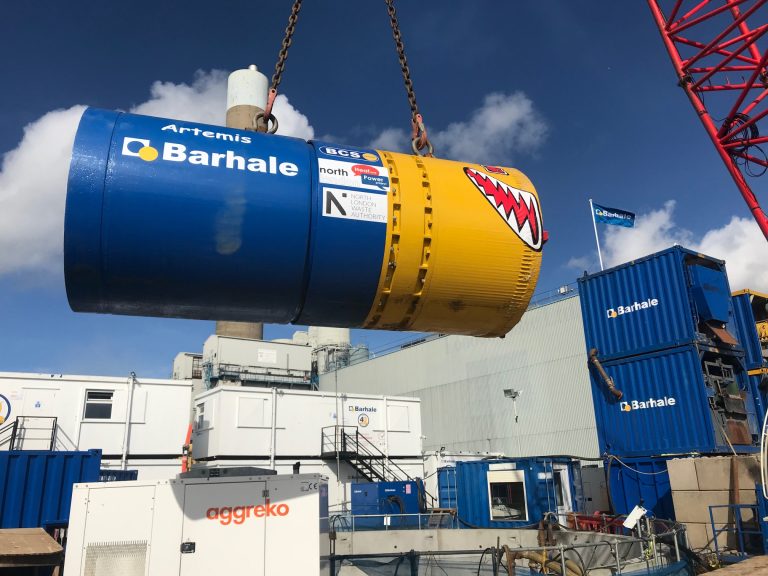
Civil engineering and infrastructure specialist Barhale is to take the pioneering step of carrying out a set of simultaneous pipejacks from a single shaft at the North London Heat & Power Project in Edmonton. Two Iseki 1200 Tunnel Boring Machines (TBMs) named after two deities – the Norse goddess Freya and the Greek goddess Artemis – will complete two pipejacks of 122m and 210m to install two new 1200mm sewers diverting the existing Chingford and Angel sewers. The TBMs’ names were adopted from suggestions put forward by children from Mountnessing Primary School in Brentwood. Although COVID 19 meant that the children could not attend a naming ceremony, the Barhale team was able to video and share the official unveiling. The opportunity for simultaneous pipejacking was spotted by the Barhale team as part of the design phase for the works. Contracts Manager Jaimie Lawson believes that identifying and adopting innovative engineering solutions has been a hallmark of the team’s approach. “It is a point of principle for us that we scrutinise every job to try to find economies and efficiencies both in the design phase and also throughout construction,” he said. “Reducing overall programme time is a key focus. “This is a hugely important project for the capital and one which is very much in the public’s eye so we are pleased to have been able to find ways of not only accelerating our programme but also adding value and minimising any potential disruption to the community and reducing environmental impact. “Carrying out both pipejacks in unison will allow subsequent contractors to access the site earlier and help to ensure that this key phase of the project is brought in ahead of schedule. “It builds on our earlier design solution of relocating one of the reception shafts to help decongest the site, generating a significant programme saving for the client.” Terry Brandon, Senior Project Manager for North London Waste Authority welcomed Barhale’s innovative approach and paid tribute to the children for their imaginative names. “It’s a real testament to the Barhale team that they have decided to undertake both pipejacks at the same time,” he said. “This is an ambitious project with tight build parameters so we are keen to embrace all ideas and approaches which can accelerate the programme. “We also felt that the names the children came up with were particularly resonant. Artemis is the Greek goddess of the wilderness and a protector which links to NLHPP’s role to protect the environment and treat waste in the most sustainable way; while Freya’s Norse origins tie in with our ambition to build an Energy from Waste facility influenced by the best Nordic examples in Denmark and Sweden.” The new energy recovery facility at the Edmonton EcoPark is being built on behalf of North London Waste Authority, will deal with up to 700,000 tonnes of waste from the seven north London boroughs per year. It will generate around 70 megawatts of electricity – enough to power around 127,000 homes.

Read More »

The Pros And Cons of Septic Tanks

Plumbing has been one of humankind’s most outstanding achievements throughout the years, and it has only continued to advance. Today, the management of wastewater from homes usually comes in two different structures. Sewer lines and septic tanks For those who reside in urban areas, it is common for the municipal sewer lines to link several houses and transport the wastewater to a treatment facility. As for those in rural areas, individual houses often have a septic tank.   What Is A Septic Tank, And How Does It Work?  A septic tank is an underground tank responsible for basic wastewater processing and disposal. It is an option for rural homes and properties that are too far to link to the local sewer lines. A septic tank is usually concrete, fiberglass, or steel. In most cases, you can find it away from the house, generally at the property’s side or back.   When using a sink or flushing the toilet, the water flows through the underground piping into the septic tank, in which the waste and water are separated. The water is released from the tank by the drainage pipes into the adjacent soil or drainage field further from the house. The solids in the waste settle at the tank’s base, are broken down by septic bacteria and eventually pumped out during periodic maintenance. In case you detect a bad odor, or find wide wet spots above the septic tank field, repairs might be necessary, click here to find out more about possible causes of septic tank odor.  What Are The Pros Of A Septic Tank?  Cost-effective. If you want an affordable option for wastewater management, a septic tank might be the best option. The installation of a septic tank is reasonable and does not include monthly maintenance costs while sewer lines can be costly to build and maintain. Among those residing within town limits, homeowners deal with a monthly utility bill for the sewer costs. When you have a septic tank, there are no constant recurring expenses.  Durability. When a septic tank receives regular maintenance, it won’t require frequent replacement. Septic tanks are usually either steel or concrete, which are highly durable materials. The tanks rarely require complete replacement as long as you provide proper maintenance. In most cases, a septic tank can last from 20 to 40 years before a replacement is necessary.  Environmentally-friendly. A septic tank will not contaminate the water supply. The tank removes bacteria before releasing the water into the soil. Additionally, any plant life nearby will absorb the recycled water. A septic tank provides a controlled form of wastewater treatment at a more rural location. It is the reason why septic tanks are a popular choice at farm homes and rural cabins. It is more environmentally-friendly than a latrine since the wastewater undergoes partial treatment naturally. What Are The Cons Of A Septic Tank?  Periodic maintenance. A septic tank requires routine pumping, every three to five years. In most cases, the cost of this maintenance can be high. It is important to note that septic tanks require pumping to eliminate solid waste every two to six years, which depends on how quickly the solids accumulate. Once you delay this task, the sewage can back up into your house. The downside is that it is hard to tell when the septic system needs attention until the toilets back up into the house.   Water backing up the drain. The septic lines are more likely to end up damaged or blocked due to the flushing of items that should not be put in the toilet, such as feminine hygiene products, baby wipes or cotton balls. The indications of a backup usually include sluggish drainage of the sink, shower and bathtub as well as slow-moving toilets. Once you see these signs, get in touch with a plumber to assess the septic system.  Possibility for rupturing pipes. When the drainage pipes moving to the septic tank end up damaged due to tree roots, digging accidents, or even an earthquake, it can result in ruptured piping. As the wastewater seeps into the soil, the ground will turn mushy, and there is a repulsive smell. The pipes that have been damaged require replacement right away.  Conclusion A septic system has a lot to offer based on its simple function, but it has its share of drawbacks. However, with proper maintenance, mainly routine pumping, a septic tank is a dependable, cost-effective wastewater management system. If you are still on a standstill on whether a septic tank is a good option for wastewater management, you need to check out the pros and cons above to help you decide if a septic tank is appropriate for your needs.

Read More »

Protecting Your Home or Business with Sandbags

Some bags, some sand, and a whole bunch of manpower.  Even though we live in a digital era, sandbags will still be around for a long time to fight against storms and floods. But why is the simple design of a sandbag still a common flood-protection method? There are three reasons for this: they are cheap, easy to use, and efficient at diverting floodwater when used properly. A simple sandbag flood barrier can be built by almost anyone with a shovel and the right materials due to their low cost and simplicity of use. While a sandbag barrier does not ensure a watertight seal, when filled and built correctly, it may serve as a barrier to redirect flowing water away from houses. However, they work best when combined with polyethylene (plastic) sheeting. Burlap or plastic bags may be used. Burlap bags degrade after use, while plastic bags can be reused. A sandbagging machine can be very helpful when you have very little time to prepare against a sudden flood. Where Should Filled Sandbags be Placed? Sandbags should be placed over drains in the shower, bath, and laundry areas, as well as over floor dumps, to reduce the backflow of water into your home or company. They should be put in front of brickwork vents, doorways, and roller doors, among other things. Smaller vents may be sealed with waterproof plastic or tape. Each toilet should be filled with one small plastic bag of sand-weighted down by one larger sandbag to block water backflow. A sandbag wall might not be necessary if your business or home is constructed on an elevated concrete slab. It is an exception if the building is built on fibrous cement sheets or wooden materials. Consider how trapped floodwater could be separated from between the building and the sandbag wall before installing a sandbag wall. Pumps, siphons, and bailing buckets are some of the tools you might need to drain the water. A small sandbag wall should be constructed around all of your doorways. The number of layers is usually two sandbag rows high, but this can differ depending on how high the floodwaters are expected to rise. One open doorway should be available for entering and exiting your home or company. This can be accomplished by erecting a barrier that allows you to open the door. The images below illustrate this.  The ‘Science’ of Constructing a Sandbag Wall Here are a few tips and tricks when constructing a sandbag wall. Remove any debris from the area where the wall will be constructed. Sandbags need to be level, so don’t build on uneven terrain. Place the sandbags lengthwise/parallel to the water flow direction. Ensure that the bag’s open end is folded under the filled part. To remove holes, establish a tight seal, and support the wall’s framework, flatten each row of bags with your foot. Arrange the bags in a brickwork pattern, with each bag overlapping the one below by half an inch. When the wall is four or more rows high, construct the wall in a pyramid shape; it must be three times wider than it is tall. Seal the wall on the ‘wet’ side with plastic sheeting sealed with a row of sandbags around the top and around the bottom edge for added safety. The ‘Science’ of Sandbag Filling Here are a few tips and tricks when filling sandbags for your wall. Sandbags must be filled by two persons wearing gloves, steel toe cap shoes, and protective glasses if the sand is dry. With knees slightly flexed, one person should position the empty bag between or slightly next to widely spread feet. To allow the other person to empty a circular shovel of sand, fold the bag’s neck to form a collar. Make sure the bag isn’t too full. Carrying, compacting, and forming a sealed frame is difficult. So, one-half to two-thirds of the capacity of the bags should be filled. Sandbags that aren’t tied are easier to stack. Fold the top edge of the bag over the top of the wall, leaving space for the sand to flow around and seal the wall. If you intend to move the bags, bind them near the top of the bag to accommodate for sifting the sand. Calculating the Number of Sandbags Needed To account for water level variability, create the wall at least 1 foot higher than the expected crest level. The amount of freeboard to provide will be determined by local experience. The US Army Corps of Engineers suggests constructing a wall with a base diameter three times the height of the dike. A 4-foot-high wall, for example, will have a base width of 12 feet. According to the corps, one bag is required for each foot of completed wall length, three bags are required for each foot of height, and three bags are required for each 2.5 foot of width. As a result, each bag is approximately 4 inches high, 10 inches wide, and 14 inches long. You can calculate the number of bags needed per linear foot of wall with a base width three times the height using the equation below.  N = (3 x H) + (9 x H x H) / 2 Where, N = necessary number of bags per linear foot of wall H = Height of the dike (feet) Filled Sandbag Disposal and Storage All sandbags which have been exposed to flood waters should be thrown away. Handle the sandbags with caution, as they may contain hazardous contaminants, chemicals, or waste.  Some sandbags that have not been exposed to chemicals or flood water may be used as topsoil on lawns or gardens instead of being flushed down drainage gutters. Your local government might be able to give you additional guidance about how to dispose of your polluted sandbags. Contact them from your local phonebook or their official website. If you are stocking sandbags for some occasion, bear in mind that they can rot if they’re wet or damp. Sandbags


Read More »

Mitie appointed to CCS agreement for Covid community testing sites

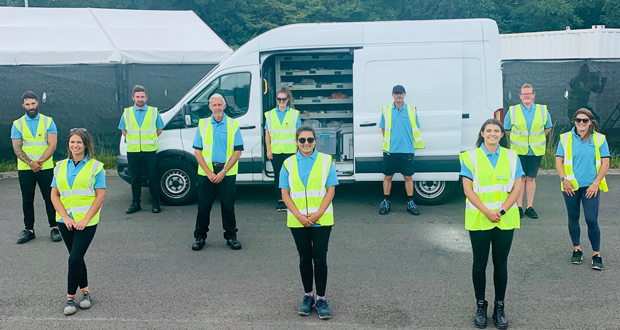
Mitie has been selected as a supplier on the Crown Commercial Service (CCS) agreement for Covid community testing sites. The appointment extends Mitie’s key role as a supporter of testing services and covers new Covid test sites to be opened as needed by local authorities for short periods – up to 12 weeks. Mitie will potentially offer test site management and support services to local authorities across 11 regions: Yorkshire and Humber, North West, North East, West Midlands, East Midlands, South West, South East, London, and an option to add Scotland, Wales, and Northern Ireland. Mitie will be providing registration assistants, processing operatives, security officers and test assistants, as well as cleaning at the sites along with any additional services required by the local authorities. Mitie has been supporting the country directly in its Covid-19 response since the beginning of the pandemic, through community testing centres, the first of which opened in Inverness on 25 April 2020, and essential services for hospitals, including the Nightingale Hospital London and the Ysbyty Calon y Ddraig – Dragon’s Heart Hospital as it is known in English – in Cardiff. More widely, Mitie now operates over 150 testing sites for public and private sector clients, and its colleagues have continued to provide key services at critical sites, such as ports and airports, across the country. Simon Venn, Chief Government & Strategy Officer, Mitie, said: “I am delighted to be extending our vital work at the heart of the UK’s Coronavirus response to support local communities with their testing programmes.  I am proud of the commitment of our Mitie colleagues in delivering these critical services, they truly are frontline heroes. We continue to play our part in keeping the country running and also supporting its recovery.”

Read More »

Scanlans chairman Ian Stanistreet hands over the reins

The chairman of property management and surveying practice Scanlans is handing over the reins as he embarks on a new career as a mediator. Ian Stanistreet, 61, has been a partner at Scanlans for 31 years and its chairman since 2016, when he succeeded David McKee. Ian has also continued to head the firm’s property management division alongside partner Ian Magenis. He will stand down as chairman and retire as a partner at the end of March, but will remain with Scanlans as a consultant. In that role he will continue to manage a portfolio of commercial properties across the north west, carry out landlord and tenant work such as rent reviews and lease renewals, and handle compulsory purchase claims, some of which relate to HS2. Ian Magenis will assume responsibility for the day-to-day running of the firm’s property management operations in the north west and Yorkshire, and the administration of the entire business. Neil Inman will continue to be the lead partner for the Midlands operation. Partner Tony Mancini will continue to oversee and administer Scanlans’ building surveying functions. Ian Magenis said: “While we are all extremely sad to see Ian retiring as a partner, we are pleased he will be remaining with us as a consultant. “He has been an intrinsic part of the growth of Scanlans Property Management, taking it from a department of three people to over 40. “Without his hard work, commitment, knowledge and enthusiasm, this level of success would not have been possible.” He added: “While Ian will be missed as chairman, we are looking forward to working closely with him in his new role as a consultant. “Although in one sense it represents the end of an era, we do not anticipate the change to have any impact on our existing client base, and it’s business as usual across our operations. “We have continued to provide all ongoing management services over the last 12 challenging months. “Indeed, we’ve seen growth in a number of areas, including new property management instructions in the Yorkshire and Midlands regions, and we anticipate considerable expansion for our building surveying department in the coming months. “We look forward to an exciting future for Scanlans, having also invested in new technology to facilitate our growth strategy.” Ian Stanistreet said his Scanlans career highlights include overseeing the growth of its residential block management division from a standing start in 1996 to achieving current turnover of more than £2m. “While there have been staff changes over the years, the culture of Scanlans has remained intact,” he added. “The development of many employees from junior roles and apprenticeships to become accomplished property managers and team leaders has been very rewarding. “Many people describe Scanlans as a family, and the culture of the firm is what I have enjoyed the most.” Ian’s new venture is IHS Mediation, which will specialise in resolving civil and commercial disputes. He said: “Mediation is an area that has always interested me. Having qualified as a civil and commercial mediator, I will be looking to resolve all types of property and business disputes, drawing on my experience as a chartered surveyor and as a partner of a nationwide surveying practice. “I’m also looking forward to spending time with my family, including five grandchildren, and pursuing my hobbies of cycling and hill walking.”

Read More »

Readie Construction Ltd Becomes the Largest Employee-Owned Construction Business in the UK

The shareholders at Readie are selling all shares to an Employee Ownership Trust (EOT) Shareholders selling their business to an EOT are exempt from capital gains tax Business will be operated for the benefit of all employees The basic premise of an EOT is that it operates the business successfully, for the benefit of all employees Being owned by an EOT will enable tax free bonuses of up to £3,600 to be paid to all eligible employees Eligible employee criteria is simply completion of one year’s employment Transaction completed without external debt/finance The selling shareholders have agreed to defer payments for their shares to enable the shares to be purchased from future profits of the business Management buy outs are normally externally financed with funding from banks, venture capitalists or private equity. Usually involving the management giving up some degree of control with new board members representing third party investors. There would also be significant interest and loan repayments for the business to service In this case the transfer of ownership will be funded from future company earnings enabling the business to be sold without any external debt or finance Existing management team continues Strategic direction of business is unaltered One of the strengths of the management team at Readie has always been the ability to take the long-term view for the benefit of the business, this will naturally fit with the new ownership structure The high-level strategy for some time has been continuing, sustainable growth to create career opportunities for our valued staff, this approach will continue Our clients, clients consultants and our supply chain partners will continue to see the same consistent, positive, pro-active approach to our projects What is an EOT Introduced in 2014, an EOT is a from of Employee Benefit Trust which holds shareholding in the company on trust for the benefit of all employees. An EOT provides indirect (trust) employee ownership of the company Employee owned businesses achieve higher productivity and greater levels of innovation and are more resilient to economic turbulence. They also have more engaged, more fulfilled and less stressed workforces. There are also employee retention and recruitment benefits Further Information Readie is the largest employee owned construction business in the UK Readie is the 11th largest employee owned business in the UK Financial and Tax Advice was provided by FRP Advisory Legal advice was provided by Birketts Quote from Stuart Read, Chairman at Readie: Many of our staff have been with Readie throughout our rapid growth, the transition to employee ownership was the logical next step in the development of the company. The creation of an EOT enables us to preserve the legacy of the Readie brand and will help cement our status as a leading contractor in the Industrial & Logistics sector. This change safeguards the future of Readie for the benefit of its future leaders and employees, the transition to EOT status acknowledges their contribution to the company’s success and gives all employees an opportunity to share in its continuing success. By creating an ownership culture we can more effectively incentivise the employees and continue to deliver sustainable growth. Quote from Paul Stephens, Managing Director at Readie: The business has continually shown that it is truly committed to stability & growth. Key to our staff and our clients is maintaining continuity of the management team. To have the best team around me in the Industrial & Logistics sector and move into employee ownership is truly exciting. This change will provide career development and progression opportunities for all of our employees, this has been key to our success so far. Quote from Jon Dodge, Corporate Finance Partner at FRP Advisory: This transaction is an important milestone in the exciting story of Readie and we look forward to watching the continued growth and success of the business under its new ownership model. The growth in employee ownership as a sustainable business model has accelerated in recent months and is playing an important role in supporting already successful firms, preserving their cultures while providing viable and structured exit routes for those who have spent years building them. Quote from Lisa Hayward, Head of Employee Incentives at Birketts: For companies like Readie who want to safeguard the legacy created by its workforce, employee ownership offers a unique chance to reward those who helped build the organisation from the ground up. We have no doubts that moving to an employee ownership trust will boost job satisfaction and employee wellbeing amongst the Readie workforce – no small feat in the wake of an uncertain year for business.

Read More »

Building renovation passports should replace EPCs, urge MPs

The UK’s net-zero carbon target for all homes by 2050 is unlikely to be met without a major overhaul of the current system, warn MPs. The House of Commons environmental audit committee estimates decarbonising UK homes by 2050 will cost £342bn – way above the government’s estimates of between £35 to £65bn. Environmental audit committee chairman Philip Dunne, MP, said: “Realism needs to be injected into the government. A much better understanding of cost, pace, scale and feasibility of skills development is desperately needed for net-zero Britain.” About 19m homes need to be upgraded to reach energy performance certificate C rating and the committee heard in evidence this would entail an average cost of £18,000 in upgrades not including heat pumps. The committee’s Energy Efficiency of Existing Homes argues building renovation passports have the potential to provide more accurate data on energy usage unlocking green finance. It recommends the government develops an approved standardised methodology and data framework for the passports which would eventually replace energy performance certificates, EPC. “This will give confidence to businesses that they can invest in upskilling and green jobs,” said Mr Dunne. “This must be properly reflected in the system that assesses energy efficiency: EPCs are outdated and should be replaced with building renovation passports, which set a clear pathway to decarbonise homes.”   VAT needs to be slashed National Federation of Builders housing and planning policy head Rico Wojtulewicz said reforming certificates rather than future homes standards was the way to go. “We hope they will also explore our recommendation to use stamp duty receipts to retrofit old homes and incentivise better new ones, as well as cut the VAT on the hardest to retrofit homes, our traditional builds.” The Federation of Master Builders called on the government to adopt the committee’s recommendations in full including cutting VAT on home improvements from 20 to five per cent. FMB chief executive Brian Berry said: “Local builders must be at the heart of plans to green our homes, and a national retrofit strategy would provide them with the confidence they need to invest in the necessary skills and training requirements.” Brokers Hank Zarihs Associates said a national strategy would motivate builders to go into green refurbishments and was something development and refurbishment finance lenders would support. The committee was critical of the green homes grant system, launched 16 months ago, where only £125m worth of vouchers out of the £1.5bn budget had been spent. It would also like to see the reinstatement of a reduced rate of VAT payable on energy-saving materials at five per cent while expanding its scope to cover energy storage, heat pumps and electric vehicle charging. Up until 2019, certain clean technologies were eligible for a reduced rate of VAT of 5 per cent.

Read More »

STUDY INN PARTNERS WITH STUDENT MINDS TO BOOST STUDENT MENTAL HEALTH SUPPORT

Study Inn Group, the luxury hotel-style student accommodation owner, developer, and operator, has joined forces with the UK’s student mental health charity, Student Minds, to enhance student mental health support across its centres. The partnership will see Study Inn’s residents access mental health and wellbeing resources and engagement activities. The Group will also invest in Student Minds’ Student Mental Health in Accommodation Settings training course for its Guest Relations and Centre Managers team, as well as fundraising campaigns. Furthermore, Study Inn is currently recruiting for a Student Experience Manager role which will focus on developing and delivering initiatives and strategies to further boost its resident students’ experience. Study Inn Group has focused on resident wellbeing since its inception in 2009 and its latest generation of properties re-affirm the Group’s deep-rooted focus on student wellbeing and life experience. The Group’s state-of-the-art communal facilities include wellness spa; sauna and steam room; hot beds; gym and yoga studio; cinema room; pool and table tennis, which contribute to students’ wellbeing and facilitate interaction amongst residents. Study Inn also runs an industry leading monthly social events programme with plenty of opportunities to learn something new and de-stress. Due to the current pandemic, these events are taking place virtually with a wide range of themes including fitness workouts; yoga and meditation classes; craft classes, cooking lessons; climate change webinars; and poetry reading to name a few. Study Inn’s residents also benefit from extra services including weekly welfare checks; 24/7 on-site management; pastoral care; and superfast Wi-fi to support online learning at no additional cost so that students feel safe and supported throughout their stay. The group currently ranks #1 for best student accommodation provider in Bristol, Nottingham and Loughborough on student community platform Student Crowd, a website that helps students make informed decisions based on trustworthy reviews. Commenting on the partnership, Matt Shakespeare, Managing Director at Study Inn said: “Students have been faced with unique challenges to university life during the coronavirus pandemic and we are focused on increasing our support so residents can thrive during their university years. We chose Student Minds as our official charity partner because their expertise and experience in student mental health will guide us in this important mission.” Alice Cooper, Corporate Funding Officer at Student Minds commented, “We are delighted to welcome Study Inn on board as part of our corporate partnership family. We’re very grateful for Study Inn’s support and look forward to shaping our partnership over the next year to champion student mental health together. Thank you to the Study Inn team for your support!”

Read More »

Dario Scimeca joins Yourkeys from London Square

Yourkeys has appointed Dario Scimeca as Head of Housebuilder Product as it continues to expand its reach in the residential new build sector. Yourkeys has developed an online platform for progressing new homes sales which involves all stakeholders, brings transparency to the process, and accelerates the time to exchange on sales. Dario joins from London Square, where he was Sales Manager. He started his career with Barratt, working in sales administration, before moving to a sales progression role incorporating the David Wilson Homes brand. He went on to be a sales advisor with Bellway in the West Midlands before relocating to London and progressing his career with London Square. Dario’s role at Yourkeys will involve sharing insight from the perspective of the housebuilder to create new products within the platform. He collaborated with the Yourkeys team in the early development of the software during his time at London Square. He continues to work closely with the London Square team as one of Yourkeys’ longest-standing clients. Dario said: “I’ve been using the Yourkeys platform for a year now. This newly-created role provides an opportunity to get involved at an early stage with a company which is transforming the way new homes are sold. This is an exciting new sector, and a new challenge at a time when the prominence of technology in the industry is growing. “I will be focusing on ensuring Yourkeys offers the best possible user experience as it expands into new areas and offers more features for housebuilders and sales agents.” Yourkeys has recruited from the housebuilding sector since its inception. Co-founder and CEO Riccardo Iannucci-Dawson is a former new homes sales director. He left that role to set up the company in a bid to refine and replace outdated processes in the industry. Riccardo said: “Dario has a strong background in the new homes industry and he knows the Yourkeys product inside-out. He will help to drive further innovation as we seek to simplify more of the processes involved in property transactions. “Yourkeys has become established as the go-to sales progression platform for new homes. Following a successful first year, the software will continue to evolve and provide new solutions to challenges faced by housebuilders.” For more information see Yourkeys.com.

Read More »