Kenneth Booth

The advantages of blockchain for the construction industry

Construction is one of the biggest and most important business sectors globally and is universally acknowledged as underpinning economic growth and productivity in most major nations. For this reason, the industry must embrace emerging technology and the advantages to be gained from digital processes, of which blockchain is one of

Read More »

The Importance of Borescopes In Building Construction and Maintenance

A typical structural inspection averages at around £90 per hour in the UK, according to MyBuilder. Assessing buildings for damage and structural soundness is a crucial part of ensuring safety and longevity. One can say it’s just as important as controlling the dust that comes from their construction. However, building size complexity

Read More »

New Appointment From GMS Estates Limited

Tandem Property & Asset Management have been appointed by GMS Estates Limited on their commercial portfolio in central London. The portfolio consists of 18 properties with 113 occupiers, with a further 4 properties to follow post completion of refurbishment projects. The Estate is located in the City of London, Mayfair

Read More »

What Does An MIG Welder Do?

MIG stands for (metal inert gas) it is also the same when one says GMAW (Gas Metal Arc welding). It is a process in which an electric arc forms between a consumable wire electrode and the workpiece metal, which heats the workpiece metal, causing them to melt and join. You

Read More »

Industrial Dust Collectors: Safety Measures and Maintenance Tips

Setting up a dust collector in your factory comprises the desire to keep workers, equipment, and the working areas safe from dust. This installation, however, often undergoes a grudge purchase scenario.  The initial thought may be to choose the cheapest dust collector. But, you need to keep in mind that

Read More »

How CNC Milling Is Improving The Manufacturing Industry

Manufacturing businesses are always looking to increase efficiency and reduce waste. The modern manufacturing unit mostly comprises machinery, robotics, computers, and humans who all work in tandem to deliver the final product. The machines are primarily used to reduce the element of human involvement in the manufacturing process to increase

Read More »
Latest Issue
Issue 344 : Sep 2026

Kenneth Booth

The advantages of blockchain for the construction industry

Construction is one of the biggest and most important business sectors globally and is universally acknowledged as underpinning economic growth and productivity in most major nations. For this reason, the industry must embrace emerging technology and the advantages to be gained from digital processes, of which blockchain is one of the most immediately applicable. At the same time, however, the construction sector is inherently conservative, and some cultural obstacles need to be overcome before blockchain processes can be widely adopted. What is blockchain? In brief, blockchain is a digital, distributed ledger or database, typically used to record transactions and agreements in chronological order. This ledger is stored across a network of computers and can be viewed by all those involved in the process. Once information is recorded, it cannot be changed, removed or overwritten – and any new entries will be seen by all parties simultaneously. In this way, blockchain is both a decentralised database, stored at a multitude of locations and with all stakeholders having equal access and a single central source of information on a given project which cannot be falsified or disputed. Blockchain first emerged over a decade ago as the technology underpinning the cryptocurrency market. The transparency and speed of the blockchain process is one of the main factors attracting investors to bitcoin, using the automated trading platforms listed on this website. While the use of bitcoin for payments is one way that blockchain can benefit the construction industry, this is by no means the limit of its use. Better payment systems At the very least, automating contractual processes and payments using blockchain would simplify and speed up project management, resulting in greater cost-effectiveness and freeing up valuable resources to be utilised elsewhere. Smart contracts could automatically trigger payments when agreed milestones have been delivered. The terms and objectives of the contract would be clear to all at every stage, and this greater clarity would make it easier to ensure that all parties are meeting their obligations. Blockchain can also be used to accurately document the full track record of a contractor and so can be a valuable tool in choosing the right contractor for a project. Single source of information During design and construction, blockchain can be used to aggregate all data into a single shared database to better manage workflow and enable collaboration. This also ensures transparency at all stages and makes it easier to manage deadlines. Fragmentation and complexity are recognised as common hazards on major construction projects, but the use of blockchain can reduce the impact of these factors massively.  In addition to opportunities with the block-chain, you can always be certain to take a good offer with casino free spins no deposit offers. Lifetime documentation One industry-specific use of blockchain is to create a “digital twin” of a project, in combination with Building Information Modelling (BIM) that covers all aspects of that project for the duration of its entire life cycle. This would include details of design, construction, operation and maintenance. It has been estimated that up to 95% of construction data is lost when the project is handed over to its first owner. This can be avoided with the creation of a blockchain ledger that is presented to the owner when they first take possession. This would include a full history of the project’s design and construction, complete documentation of materials used, test dates and results, plus all relevant manuals and warranties. A blockchain ledger could include a room-by-room inventory covering every detail from wall paint to light bulbs. Estimated service life could be represented by a countdown clock that the owners can monitor in real-time. All subsequent improvements and renovations can also be documented on the ledger as they occur, and this would then be passed on to any subsequent owners. Greater trust and accountability The transparency of blockchain should improve trust between contractors and clients, stakeholders and suppliers, and this, in turn, should reduce friction resulting in a greater chance of the project arriving on budget and on time. All businesses need to move towards greater accountability in the present time and none more so than the construction industry. This accountability will also help all parties to work together better, as blockchain will not only make it clear what is expected from all parties but will also record when and how targets are achieved and requirements met. Construction projects typically involve many different contributors towards a clear objective, with a wide range of standards, requirements and building codes to be satisfied along the way. These qualities make construction and blockchain a natural fit. We must ask then why has it not yet been widely adopted? The only reason must be the natural conservatism of the sector. The very complexity that blockchain could solve has led to an understandable tendency to proceed slowly and cautiously when it comes to adopting new working methods and technologies. Also, many long-standing family firms have well-established relationships with suppliers and contractors that they are loath to disrupt. Eventually, however, the obvious problem-solving potential of blockchain will be recognised, and the industry will be transformed for the better as a result.

Read More »

The Importance of Borescopes In Building Construction and Maintenance

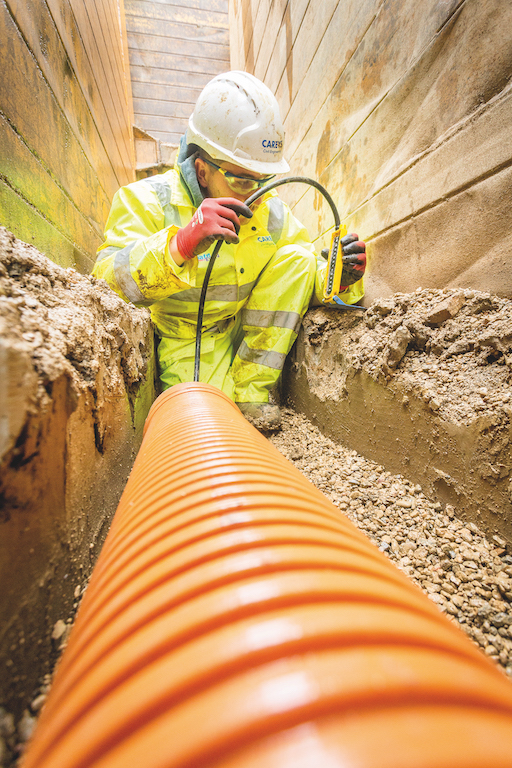
A typical structural inspection averages at around £90 per hour in the UK, according to MyBuilder. Assessing buildings for damage and structural soundness is a crucial part of ensuring safety and longevity. One can say it’s just as important as controlling the dust that comes from their construction. However, building size complexity can present a challenge to that requirement, beyond driving up costs.  Made to skip time-consuming disassemblies and ventures into cramped spaces, borescopes allow inspectors to focus on problematic sectors and diagnose issues quickly and efficiently. Here’s why borescopes play a vital role in building construction and maintenance. How Video Borescopes Compare to Mirror-Based  Before fiber-optic technology, borescopes were stiff, narrow tubes that contained an angled mirror on the far end and an eyepiece on the other. Rigid borescopes could only be inserted in relatively straight holes. Nowadays borescopes are also known as videoscopes and are fitted with every available technology to assist visibility. High-definition cameras are increasingly becoming the standard with modern videoscopes. These models have the ability to capture videos and photos, just as modern cameras do.  The landmark difference between videoscopes and old borescopes, however, is that most videoscopes possess a frame of flexible steel wires. This frame allows it to be articulated at will, letting it snake through meandering holes with ease. A modern borescope has the ability to provide brilliant clarity on any screen that ranges from 6 to 60 inches. It allows for detailed observation of an internal area. This articulation gives it a non-destructive way to view the insides of any machine or structure that would fit the videoscope. Guidelines For Selecting Borescopes It is often difficult to judge what length and diameter you need until you have the borescope in your hands, so it’s useful to consult borescope dealerships that offer free demos. As a rule of thumb, there are several things to remember when selecting a borescope. As the foremost example, tube diameter and length are the main qualities to pay attention to for any application of a borescope. These define the range of use of a borescope. It is also worth remembering that as borescopes get smaller and picture quality higher, the tradeoff for cost or durability often gets larger.  When the pathway to the inspection area is winding, a borescope that can articulate well would be the only choice. For a cramped target area, a borescope must be able to articulate the tip just as well. This is so that the camera can focus on the target despite having little room to maneuver.  Applications and Proper Use The biggest defining factor of its range of use is the diameter of the tube. However, with the steady shrinking of camera tech over the past few decades, borescope users can have both compactness and visual fidelity in the same package. Nowadays, insertion tube diameters have been reduced from 6 millimeters to 2.8mm. With this, borescopes can now visually inspect the most cramped of spaces, as well as the most minute internal components. Virtually no disassembly is required to perform such observations, speeding up the process of diagnosing mechanical and structural issues. Even small sections cut out from those could bring damage and make something that only needs a touch-up need full-on repairs. They’re also useful for inspecting instruments that need to be constantly running, such as pumps.  With greater flexibility and compactness comes a touch of fragility. Borescope operators are not to let the tip collide too sharply with anything, as the camera and LED components housed in it are very prone to breaking. Operators are advised to feel for resistance being encountered by the inserting tip in order to better avoid obstacles. It is also recommended to take more documentation than is needed, to prevent repeating an inspection.  Remember not to select a borescope with too much spare length. As much as possible, a borescope user must select a unit with as large a diameter as the object being inspected will allow. Larger tubes are more durable, can house more and better lighting instruments, as well as higher-definition cameras. 

Read More »

New Appointment From GMS Estates Limited

Tandem Property & Asset Management have been appointed by GMS Estates Limited on their commercial portfolio in central London. The portfolio consists of 18 properties with 113 occupiers, with a further 4 properties to follow post completion of refurbishment projects. The Estate is located in the City of London, Mayfair and Mid – Town, comprising of c360,000 sq ft. Tandem’s supply partner ‘Envirotech’ will support in delivering Facilities Management services. Tandem will work closely with GMS Estates to deliver exceptional customer service, as well as managing future building refurbishment projects. Although this could be challenging to mobilise a new portfolio during these unprecedented times, Tandem has proudly achieved this in a period of 6 weeks.

Read More »

Savills London Development Land team exchange on £146m worth of land since the lockdown

In these extremely challenging times Savills London Development Land team are pleased to be able to report some positive news in the market. The Savills team have had an outstanding few weeks: since working remotely they have exchanged contracts on 9 land transactions with a combined value of £146 million. These disposals and acquisitions take the total number of 2020 deals done to 16 transactions. The results demonstrate continued demand from purchasers for a range of development opportunities across London. Tim Whitmey, Director in Savills London Development Land team said: “We are delighted to be announce this extremely positive news during the most challenging of times. While we are under no illusion that these very difficult conditions will continue, at least in the short term, there are still a number of domestic and international buyers active across both the Central and Greater London residential development sector. The Savills team are working harder than ever alongside their clients and we look forward to building on this successful start to the year”

Read More »

Electrical apprenticeships and training are in safe hands during COVID-19 crisis, SECTT tells electrical industry

The Scottish Electrical Charitable Training Trust (SECTT) has reassured the industry that electrical apprenticeships and training are in safe hands following the introduction of a range of emergency measures during the COVID-19 pandemic. As well as offering ongoing help and guidance to all apprentices, SECTT is working closely with the Scottish Joint Industry Board (SJIB), SELECT and colleges across Scotland to support the collective efforts of employers and colleges throughout the current crisis. To ensure clarity across the board, SECTT ­­– the body charged with managing electrical installation apprenticeships in Scotland – has already communicated nationally and regionally with all colleges, employers and apprentices via email, phone, social media and the OneFile platform. It will also hold an online meeting with all colleges in the week beginning 20 April, to devise a delivery model and take into consideration the needs of employers, apprentice and trainees, so no-one is disadvantaged. Anne Galbraith, CEO of SECTT, said: “We know these are unprecedented times, but we are doing all we can to help apprentices continue with their studies through alternate channels, while maintaining the high standards required. “The Electrical Installation Modern Apprenticeship is a vocational qualification and has safety implications, so we must ensure competency throughout the course, especially in the ‘Key Safety Critical’ areas. “Therefore, SECTT will be looking to complete the coursework as near to normal as possible, but this will depend on when we return to free movement.” Apprentices and trainees are being encouraged to keep in contact with their college lecturers with any coursework they can complete online, and by completing their ePortfolios through OneFile which their training officers will be marking. The objective is to reduce the overall workload when returning to normality to ensure apprenticeships remain on track. Ms Galbraith added: “Apprentices’ health and wellbeing is, of course, the most important aspect to consider and I appreciate sometimes it can be difficult to focus and concentrate on anything at present. However, learning might provide the distraction needed to ensure a healthy mindset. “We want to assure all employers that the SECTT team is still here and happy to answer their questions, we will work with them to allow them and their apprentices to get back to work and back on track as best we can.” SECTT was established in 1990 by SELECT and Unite the Union to manage the SJIB Training Schemes and today runs the only industry approved training scheme for electrical installation apprenticeships in Scotland. Ms Galbraith concluded: “When we do get back to normal, I can assure all apprentices that SECTT and the colleges will continue with the professional level of care to ensure we catch up with least disruption. “We will get through this, so in the meantime, look after yourself and your families, stick to the government guidelines and stay safe.”

Read More »

What Does An MIG Welder Do?

MIG stands for (metal inert gas) it is also the same when one says GMAW (Gas Metal Arc welding). It is a process in which an electric arc forms between a consumable wire electrode and the workpiece metal, which heats the workpiece metal, causing them to melt and join. You can read more about this here.  Method of metal transfer does not just include one but there are four primary methods. One is the GMAW or MIG called globular, short-circuiting, pulsed-spray and spray. Each one has its advantages and limitations when used.  MIG, on the other hand, is a technique that is versatile and suitable for both thick and thin sheets. Most welders use this process as it is very flexible working on different sheets. It is widely used in different industries and sectors as it accounts for more than 50% of almost all weld metal that is deposited. Its flexibility, suitability, and deposition rates have more advantage for various mental tasks. 4 Types of Welding Processes MIG/Metal Inert Gas Welding This machine works to fill in the spot that joins two metals together. Using this process, the welder doesn’t need to change the electrodes in between their welding tasks. The welder just fills in the joint that is being welded and continue to the next.  There are four main parts of a MIG welding machine. First, the MIG welding power supply that provides the electricity to generate heat. Next, is the wire feed system that usually feeds the wire from the spool to the weld joint. There’s also this handle with a trigger that controls the wire feeder that is feeding the wire on the spool into the weld joint. Lastly, is the shielding gas-guards which are the welder’s weld from the air. MIG works best with sheet metals.  TIG Welding-Tungsten Inert Gas Welding  This is also known as Heliarc welding for retired or older welders as this is a manual welding process that is used before. They differ in the way the arc is generated and how the filler metal is filled in or brought in. This is a tougher process to learn but this is also versatile when a welder is dealing with different materials. Based on the noted site, the welder needs to use one hand to hold the torch that generates the arc and their other hand to add the filler metal towards the weld joint. This process is effective and will produce high-quality results as it takes time and can be used for smaller welds since it is more precise.  Stick Welding: Shielded Metal Arc Welding  This process includes, of course, an item in stick form. The electrode on this process that uses the metal comes in a stick form. Electricity is used here to melt a rod, filler or stick that can melt both the metal joint and electrode at one time to bring these 2 metal pieces together while filling the joint with the metal filler simultaneously. Usually used for pipelines, auto repairs, steel construction, and most home steelworks since it is low cost.  Flux Cored Arc Welding This one uses an arc between the consumable electrode and the weld pool with the shielding from the flux that is usually found inside the tubular electrode. An extra shield may or may not be used from a gas supply. This process penetrates well into the base of your works. This is can also be used in indoor and outdoor applications. Mostly for maintenance work, production/fabrication and construction work.  Whatever process is chosen is up to the welder and will be decided depending on what work needs to be done. You can explore websites like http://www.weldingmachinereviews.com to find out more information. Top 5 Skills of a Welder First and foremost is attention to detail, welding steelworks and the like needs to have good eyes for their work. To achieve the design and framing of each work, a welder should be skilled in making clean, accurate lines and cuts. Welders should always maintain focus and a good eye towards what they are working on to achieve their goals or final result. Next is dexterity, not everyone has been gifted with skilled hands. Each person is always good at something but not all the time one has a skillful hand. Good dexterity is being able to coordinate with your fingers and hands as well as one’s hand-eye coordination to finish a single welding task. Third, physically fit and good physical abilities. Of course, a welder should be physically healthy in performing welding tasks. Good eyesight, not too skinny and not too fast so you can hang on buildings, carry or lift steel (as you know metal pieces are very heavy), move freely and with accuracy. Quick or fast Learner, welders should always know the do’s and don’t of their job. They also need to keep up with the latest machines and be able to learn how to use them in a very effective and skilled way. They ought to have a sound understanding of their safety and others when performing the said task. Lastly, stamina and strength. Yes, this is very important as well because welders are always under heat and pressure from their machines as well as the surrounding areas where they usually work. A welder does not work in an office where there is air conditioning, instead, they work while hanging at the side of the building, on the rooftop, outside an establishment, or even hanging down by a bridge. One can never tell where and what they need to be prepared for when welding. They even have to carry and lift heavy machines or steel materials while they work. 

Read More »

Five Tips To Make The Most Of Your Kitchen Extension

It would not be wrong to state that out of all the other rooms in the house, the kitchen would most probably be the busiest one. A kitchen is not just a place where food is cooked; it is a place where families spend time, it is a place where socializing is done during birthdays, dinners, and parties, it is the place where you go to check the fridge in the middle of the night, it is a place where a lot of memories are made.  But there comes a time when you grow out of your house and are faced with two options – move into a new home or renovate and make extensions. Research shows that an increasing number of people are opting to renovate and add extensions to their homes instead of moving into newer ones. Along with internal factors, external factors like economic conditions and rising property prices also play their part in the decision making of people to move or renovate.  A kitchen extension will not only provide you with a room that is a hybrid of a diner and a kitchen with a bright and light-filled atmosphere, but it can also give you a wow-factor when you’re trying to sell your home. When you do renovate your kitchen, you are increasing the square footage of your home, resulting in an increased value of the property. A kitchen extension could potentially cost you £30,000, with the cost depending on flooring, size, and kitchen type, among other factors.  There are a lot of ways you can go about your kitchen extension, and they depend upon the type of property you have, what you want the kitchen extension to be used for, how much you can spend, and of course, how creative you are. Here’s a list of some tips which you can use to make the perfect kitchen extension that is best suited to your needs.    Use your space wisely Unless you are living in a massive estate with acres of land at your disposal, there is a high chance you are working with a limited amount of space. It is imperative that you use this place wisely to make the extension efficient and effective. There are many innovative ways to use up every square inch of the area.  For instance, you can use the storage space efficiently to free up more floor space for other things. There are a lot of storage systems you can get from the market at reasonable rates, which use the space available in an optimal way. By freeing up extra space in the kitchen as a result of smart storage, the room can be used as a social focal point to spend some quality time with your friends and family.   Hire an architect Architects are professionals who specialize in the designing and practical usage of available space and resources for a building, and there is no argument that a professional architect will bring the best out of your kitchen extension. If your extension is simple or straightforward, an architect is not essential because builders and structural engineers can take care of that.  However, if you plan on making your extension project a fancy and complex one, it is better to use the services of a professional architect. Not only will an architect create the best use of the available space and make the space aesthetically pleasing, but they will also make sure that the electrics and plumbing are done in the right places, and the plans for the kitchen extension are structurally sound. Therefore, if you plan on building a fancy kitchen extension and have the budget, it is best to hire the services of a professional architect.  Maximize the light in the kitchen extension Excellent and bright lighting can prove to be one of the essential components of making your kitchen extension a success. Lighting is not only crucial for good and clear visuals, but it also helps create an atmosphere that is social and entertaining.  Your kitchen extension can potentially displace a part of the natural daylight that would have otherwise reached the other rooms, so the lighting might need to be supplemented. You can do this by adding a roof lantern, or a series of roof lights. A roof lantern can be an excellent tool to flood the kitchen extension with light.  For a more intimate setting, you can also opt for mood and ambiance lighting for the kitchen. This setting can be achieved by task lighting, under-counter spots, and specialty lamps. The market is flooded with contemporary, minimal, and efficient lighting fixtures that are cost-effective and aesthetically pleasing.  Use bi-fold doors to connect your kitchen with the garden Bi-fold entries can be helpful to make your kitchen extension awe-inspiring. If you have a garden in front of your kitchen, you can use bi-fold doors that open fully to make the garden a part of your kitchen. Not only will your kitchen feel connected with nature, but it will also add even further extra space, and provide you with endless new ideas.  There are multiple things you can do then. You can have a nice open-air breakfast with fresh food directly from the kitchen, host a dinner for friends, or hold a birthday party. All of these events and functions will become richer in experience due to the free-flow provided by opening up your kitchen to the garden.  Make good use of colors Do not be afraid to use colors. You do not have to go monotone or play safe. You can experiment with bold colors, try unusual color combinations, and give the whole place a playful vibe.  The color theme of your kitchen extension does not necessarily have to follow the general color theme of your home, and by experimenting and playing with colors you can separate it from the rest of the house and give the kitchen extension its own distinct personality.  Conclusion It is not just the economic conditions and rising property prices

Read More »

Industrial Dust Collectors: Safety Measures and Maintenance Tips

Setting up a dust collector in your factory comprises the desire to keep workers, equipment, and the working areas safe from dust. This installation, however, often undergoes a grudge purchase scenario.  The initial thought may be to choose the cheapest dust collector. But, you need to keep in mind that a dust collector’s key purpose is to keep the working environment safe, so corners should not be cut.  According to Baghouse America, a leader in the environmental industry for developing, licensing, and deploying air filtration systems, the cost of the unit and accessories should not interfere with the safety dust collectors are intended to produce.  That said, the following tips will help make your dust collector the safest out there, ensuring the job is done effectively. Even the best dust collector systems need to be well maintained so that they will last longer and serve their purpose better, Read on to know more on how to maintain your dust collector system and to make sure that everyone is safe around it. Equip With Deflagration Protection Does your dust collector handle combustible dust? If so, consider equipping it with proper deflagration protection.  There are several different forms of passive deflagration/explosion protection out there. However, explosion vents tend to be the most common and cost-efficient method.  Typically, an explosion vent opens once a specific amount of pressure builds up within the collector, allowing the flame front and excess pressure to exit to a secure area. Explosion vents are built to prevent your dust collector from blowing up during a deflagration, thereby diminishing the hazard. Also, they help minimize damage to the dust collector itself. The Protection for the Ductwork The National Association for Fire Protection (NFPA) overlooks ductwork protection and the dust collector’s upstream safety procedures. The ducting must be equipped with a valve comprising flow-activated isolation that preserves the downstream workspaces and operations from that of the spreading of pressure and flames via the inlet duct as deflagration occurs in the dust collector. After that, the pressure wave will close the valve through the deflagration of the dust collector, preventing the spread of smoke and flames to parts upstream of the valve. Note that the valve is closed and should be opened manually. Once enabled, the valve parts could be compromised and a comprehensive inspection is needed before it is returned back to regular service. Do Not Use the Hoppers to Collect Dust This is a common mistake people make, especially those new in manufacturing. You shouldn’t use hoppers to store dust.  Keep in mind that the hopper’s key purpose is to funnel processed dust toward the storage bins. As it so happens, the dust that’s about to fill up the hopper will most likely create some potential deflagration or fire risks.  Another important factor to note is that the dust in the hopper may further decrease the dust collector’s performance via blocking the system and pulse-cleaning from performing the task it was designed to. Self-dumping hoppers are an easy dust disposal system while still protecting against dust leaks among the hoppers and the collector. Prevent fire Some applications are able to generate a spark and can cause fires. This must be taken care of quickly and effectively.  The market offers plenty of technologies and features to choose from. For example, there are flame-retardant filter media and spark arrestors in the form of drop-out boxes, cyclone devices mounted at the collectors’ inlets, perforated screens, etc. Even fire sprinkler installations require some implementations. You can also install cartridges vertically mounted to help limit fire and deflagration by reducing the heavier loads of dust on the attached filters. Inversely, particularly with mounted systems arranged horizontally, the dust may get trapped at the filters. In situations like these, the filter life may be shortened, thereby allowing for the dirty surface to spark/ignite and raise the working pressure drop of the filter elements. Create a Maintenance Program Industrial dust collectors have enabled businesses to efficiently capture airborne particles that help provide a clean and healthy work environment.  To make sure an industrial dust collector is working as it should be, periodic inspections in conjunction with a maintenance program will come in handy in terms of keeping the dust collector functioning properly, at a higher level.  Scheduled inspections on an annual, semi-annual, monthly, weekly or even daily level will keep your industrial dust collector working effectively and keep the maintenance expenses down. Remember, failing to regularly check and maintain your dust collector will hurt its performance.  Continued neglect may lead to your dust collector not following EPA outlet emissions standards.  Incorporate Safety Accessories Image source Major concerns like what type of dust collector you should use and how to maintain it must take precedence, but when you’ve actually addressed such concerns, there are several other ways to make your dust collector safer.  Safety accessories can be an excellent way to do this. Turns out they are not simply a great idea— in some situations, safety accessories are an absolute must to ensure the workers’ safety.

Read More »

How CNC Milling Is Improving The Manufacturing Industry

Manufacturing businesses are always looking to increase efficiency and reduce waste. The modern manufacturing unit mostly comprises machinery, robotics, computers, and humans who all work in tandem to deliver the final product. The machines are primarily used to reduce the element of human involvement in the manufacturing process to increase its efficiency. But despite that, when it comes to making crucial decisions while operating these devices, the human mind is used, and that can lead to potential errors. This is where Computer Numerical Control (CNC) machines come in. CNC machines eliminate the need for human intervention, are incredibly accurate, and help avoid accidents. CNC machines have a high demand in the manufacturing industry, and the market of CNC machining is expected to reach USD 100.86 billion by 2025. What are CNC machines and what is CNC milling CNC stands for Computer Numerical Control, and as the name suggests, a CNC machine is controlled through a numerical computer program. A 3-D design of the desired product is created with the help of a Computer-aided design. This design is then converted into a manufactured physical product with the help of computer-aided manufacturing. These two processes complete the CNC machining. There are various types of CNC machines, including winding machines, lathe machines, welding machines, milling machines, grinding units, and lasers. The market shows an increasing trend of opting for CNC machines that are compact sized, come with automatic tool changers, and possess multi-axis machining technology. CNC milling falls into this multi-functional machine category, and right now is the second biggest segment, behind lathe machines. The division of CNC milling machine is further expected to grow, as it provides the benefit of reducing the operational costs. Applications of CNC parts CNC parts machining has gained popularity globally because of their higher tolerances and unmatched repeatability. This rise in popularity is because, unlike a human operator, the performance and precision of a CNC machine do not drop with time due to external factors, and more parts are produced in the same time frame. This makes rapid prototyping very easy and eliminates the need for breaks so that the plant can keep operating round the clock. CNC parts are used in many sectors ranging from prototypes to industrial products. Because of their ability to create extremely complex geometries, and their high precision, CNC parts are prevalent in industries like the aerospace industry. Advantages of CNC Automation, and how they are improving the manufacturing industry CNC milling presents a large number of benefits when compared to the traditional human operator reliant machines. Some of these advantages are listed below: Increased efficiency CNC machines can significantly reduce the wastage per piece due to their high precision. When the material wastage from production is reduced, the cost of production is also reduced. This reduction increases the efficiency of the manufacturing plant. CNC milling also increases efficiency because these machines significantly reduce human error. Since CNC milling does not require direct human intervention, it means that they can work at any time of the day, without stopping or taking breaks, especially round the clock. This way, CNC milling allows the manufacturing unit to remain open and function round the clock.  Increased safety When the instructions for the production of parts are programmed into the machine, it then acts on its own without the need of an operator or individual intervention. This property of CNC milling makes these machines ideal for the manufacturing processes that involve substances that are toxic or corrosive, including incredibly high temperatures or any other factors that can pose potentially dangerous scenarios for the workers. In a way, CNC milling increases the safety of the workers in the manufacturing industry. Increased consistency and capacity CNC automation means that the machines will run 24/7 and 365 days if you want to with the end product that is the same, piece after piece. The only time the machine will stop is when it needs maintenance or repairs. This is possible because no human intervention is required, and the precision stays the same, so does the consistency. Since the machines run for more extended periods and can handle more parts, this increases the capacity of the manufacturing plant. Sustainability CNC milling reduces the carbon footprint of the manufacturing plant, thus playing their role in making the earth a more sustainable planet. This is achieved as a result of various factors. Firstly, CNC milling reduces the wastage in the manufacturing process. Secondly, since these machines are more efficient, and there are fewer chances of errors in production, fewer materials are thrown away. Thirdly, these machines do not require additional parts like sanders or drills, as the main body of the device includes everything. Prototype machining Prototyping in manufacturing can prove to be very expensive and time-consuming. Thus many businesses skip this part, although it is essential as it helps to minimize mistakes and help understand the product in a better way. CNC milling makes prototyping less expensive, more accessible and affordable to attain. To have a better idea of the steps to come in the process, the manufacturers can create mock-ups through CNC milling at an affordable price. CNC milling and the new technologies associated with it also allow the manufacturers to develop designs that are more complex and comprehensive. Reduced labor costs The actual hard and complicated work relating to the manufacturing is done solely by the machines that include drilling, cutting, or stamping. A single human operator that does not necessarily have to be high-skilled can operate several CNC machines. Thus labor costs are significantly reduced. Conclusion CNC milling provides high efficiency, excellent precision, tolerance, and quick processing. CNC parts can be made out of metal, wood, and various other materials, and this makes CNC milling the perfect option for sectors that require customized components. Therefore, regardless of whether you are currently using manual machines and looking to upgrade or looking to use the process of machining for the first time, CNC milling is the perfect tool that

Read More »

All You Need To Know About Making An Insurance Claim After A Car Accident In Texas

Living in the US, consider yourself extremely lucky if you have never been part of a car accident in your life. According to Statista, there are approximately 273 million registered vehicles along with over 225 million licensed drivers in the United States with an average of nearly 10 million car accidents every year. With over 313,000 miles of public roads the most of any state, Texas alone, has more than 13 million licensed drivers. Further, the car insurance industry estimations say that the average driver will file a claim for a car collision about once every 17.9 years, suggesting that if you got your driving license at the age of 16, the odds are that you are going to experience some kind of car accident by the time you turn 34. The average person has a total of 3-4 accidents over the course of a lifetime.  Photo from Pinterest Being involved in a car accident is a shocking and frustrating experience. Moments after a car crash, adrenaline is rushing and emotions are running high. In order to protect your health and your financial interest as well, it’s of the highest importance to remain calm and to know what further steps to take. After checking everybody involved for injuries, it’s time to take the necessary steps following every regular car crash such as filing an insurance claim. Such a claim is a request made to an insurance company for compensation regarding the traffic accident that happened to you. Car repairs can be quite expensive, so if you are involved in a crash, you’d want to know how to file an auto insurance claim. Therefore to know what to do about the claiming process, we’ve highlighted the key information you may need.  What to do right after the accident? First things first, after an accident, move your vehicle to a safe spot out of traffic if possible; if not, turn off the engine and exit the car carefully. Even if no one is seriously injured, it’s important to call the police and report the incident. This step can help clarify what does fault mean in car insurance terms, as the police report often plays a key role in determining responsibility, which can impact claims and future premiums. Gather the proper set of information and details about the car accident, so when it’s time to file a claim you will have everything written down and pictures you can use as evidence. Don’t place blame on the other driver, you’ll figure everything out later with your insurance company. Take photos of the crash scene, photos of the vehicles involved, drivers involved, license plates and any damage done to the vehicles. Also, exchange information with the other driver including contact and insurance details.  Call the police Call the police! As you will probably be shaken up after an accident, having an officer take down the details of the traffic jam in the police accident report is always the best option. Officially titled “CR3 Peace Officer Report”, such a report is used by law enforcement to record the details relating to your accident involving any type of vehicle. You can also claim your Texas crash report online, which is indeed a very important piece of paper to have in order to file the insurance claim.  Whose insurance do I call after the accident?  In general, in accidents where the at-fault driver accepts responsibility, you probably won’t need to call your insurance company unless you were at-fault. In simple clear liability accidents, the sooner you call your insurance provider – the sooner the provider can help you get things back to normal.  What happens if the other driver doesn’t have an insurance policy?  In general, if you get into a car accident, the at-fault driver’s insurance pays for the damages and injuries. Yet, if the other driver is uninsured, things get a little bit more complicated and here’s what you should know.  Driving a car without car insurance for any period of time is considered illegal and that’s why uninsured and underinsured motorist coverage is very important. If you get in an accident by a driver with no insurance, your uninsured or underinsured insurance will kick in and help you cover your medical expenses. Also, if you’re at fault, not only you will be paying out of your pocket for any medical expenses or damages to the vehicle, you’ll be responsible for paying the other driver’s injuries and damages. You might even get sued by the other party for the damages you caused them, could be issued a ticket, potentially lose your license and registration and face jail time.  How do I file an insurance claim? Just give a call to your insurance company and they’ll walk you through the process and ask for all relevant information. As soon as your claim is filed, a claim representative will contact you to go over and claim the process to follow. The insurance company will review your claim and work with you to correctly evaluate it. After that, they will assess and try to complete it as quickly as possible.  Photo from Pinterest What relevant documents do I need to have in order to file a claim?  According to the Texas Department of Motor Vehicles, when filing a claim you will need to submit the policy number which can be found on your insurance card; date, time and location of the accident; a detailed description of how the accident occurred; you will have to name the police department involved and the police crash report number and provide insurance and contact information of the other party involved.  This is why it’s very important to collect all relevant information right after the accident and to write down as many details as you can.  What happens with the car insurance claim after an accident? When your claim is filed, your insurer will assign a claims adjuster to examine your case. The adjuster will do a number of things such as reviewing

Read More »