Kenneth Booth

TURNER & TOWNSEND APPOINTED TO PROJECT MANAGE COMPLETION OF BRADFORD LIVE

Turner & Townsend has been appointed by Bradford Live to project manage the redevelopment of the city’s historic former Odeon building. The scheme which will reinstate the main auditorium, creating the biggest ‘mid-sized’ performance area in the country, will be seen through to completion by the global professional services consultancy.

Read More »

Redress scheme warning for Estate and Letting Agents

Estate and Letting Agents in the UK are being urged to check that they are signed up with an approved redress scheme that covers the full remit of their work. The warning follows a recent tribunal that penalised a business that was signed up to a redress scheme for its

Read More »

Why Trade Roles Need More Diversity

Society has come a long way in the last 35 years, especially when it comes to diversity and equality. In a study released by Sky News in 2019, back in 1984, 42 per cent of people felt men should be the breadwinner of a family. The same respondents agreed that

Read More »

Tolent appointed to build £20m leisure centre in Berwick

A turf cutting ceremony has taken place to officially mark the start of a multi-million pound scheme to transform leisure provision in Berwick. Work is due to commence on Berwick’s new state of the art £20 million leisure centre which is being funded by Northumberland County Council and will be

Read More »

Armstrong Ceiling Solutions has simplified its recycling scheme

The pioneering programme is now even easier for contractors to use. The pioneer of ceiling recycling schemes, Armstrong Ceiling Solutions, has fine-tuned its award-winning* programme to make it as simple and as accessible as possible. It is now even easier for contractors to reduce their environmental impact and divert waste

Read More »

EHS Debut for Bobcat E10e 1 tonne Electric Mini-Excavator

Doosan Portable Power To Show 7/31+ Compressor Generator Bobcat’s E10e, the industry’s first battery driven, zero tail swing mini-excavator in the one tonne class, will be shown on the Doosan Bobcat Stand I40 for the first time at the Executive Hire Show (EHS), the UK’s annual national exhibition for the

Read More »

Priva says National Trust’s 125th birthday is a perfect opportunity to shine spotlight on controls-led future-proofing of historic buildings

Leading building controls manufacturer, Priva says the National Trust’s recent 125th Anniversary celebration is not only to be celebrated, it is a perfect opportunity for heritage professionals to give more time and thought to the protection of historic buildings through control-based technologies. Priva has long provided building management solutions to

Read More »
Latest Issue
Issue 344 : Sep 2026

Kenneth Booth

TURNER & TOWNSEND APPOINTED TO PROJECT MANAGE COMPLETION OF BRADFORD LIVE

Turner & Townsend has been appointed by Bradford Live to project manage the redevelopment of the city’s historic former Odeon building. The scheme which will reinstate the main auditorium, creating the biggest ‘mid-sized’ performance area in the country, will be seen through to completion by the global professional services consultancy. The appointment compliments Turner & Townsend’s existing cost management role on the project. The company will provide project management services to Bradford Live from its head office in Horsforth in Yorkshire.  Bradford Live supports the rebirth of the city and the former Odeon building is a central component of this. With a seated capacity of 3,500 and a standing capacity of 4,000, it is expected to attract national and international performers. The venue’s flexibility will also allow sporting events, corporate product launches exhibitions and conferences. It will be run by NEC when it opens in autumn 2021. About Turner & Townsend Turner & Townsend is an independent professional services company specialising in programme management, project management, cost and commercial management and advisory across the real estate, infrastructure and natural resources sectors. With 110 offices in 45 countries, we draw on our extensive global and industry experience to manage risk while maximising value and performance during the construction and operation of our clients’ assets. www.turnerandtownsend.com

Read More »

Redress scheme warning for Estate and Letting Agents

Estate and Letting Agents in the UK are being urged to check that they are signed up with an approved redress scheme that covers the full remit of their work. The warning follows a recent tribunal that penalised a business that was signed up to a redress scheme for its letting agency work but not for its property management work. In one of the first decisions of its kind, the Upper Tribunal* upheld a fine of £3000 against the business for its failure to belong to an approved redress scheme for property management. Its membership of the Property Ombudsman Scheme covered it for residential sales and lettings, commercial sales and lettings and some property management, but not for residential leasehold management. The decision has prompted National Trading Standards to issue guidance to Estate and Letting Agents across the country, focusing on agents ensuring their redress scheme covers all areas of their work, whether it’s sales, lettings or property management work. James Munro, Head of National Trading Standards Estate and Letting Agency Team, said: “We’re urging all estate and letting agents to double-check their redress scheme to ensure it covers the full breadth of their work. If you’re already signed up to a redress scheme, you may think your business is covered, but you should check that this covers the full breadth of your company’s activities. The recent tribunal decision shows businesses that are signed up to redress schemes for one area of their work but not for others may face hefty penalties in the courts.” Failure to be a member of a redress scheme, when legally required to do so, could result in a penalty notice being issued against the business. The two approved redress schemes are: Property Redress Scheme www.theprs.co.uk The Property Ombudsman www.tpos.co.uk Sean Hooker, Head of Redress at the Property Redress Scheme, said: “Whilst PRS membership covers most agents for all the work they do, they must tell us from the outset the areas they undertake work in so we can record this under their membership. Agents must also ensure that all their branches and offices are registered separately and the appropriate fee paid. If you are in any doubt whether you are fully compliant please contact us immediately” Katrine Sporle, Property Ombudsman, said: “TPO’s online membership and website provides detailed information about the categories of work TPO provides redress for, the options available, and clarity around the need to be registered for each category. Our membership team is on hand to give support and advice for new and existing members alike, so do please contact us if there is anything you are unsure about or need guidance on.” GUIDANCE FOR ESTATE AND LETTING AGENTS  Make sure that your business is signed up with an approved redress scheme for the correct line of work (Sales, Lettings or Property Management Work).  Review your existing terms of agreement/membership to ensure your redress scheme covers the full activities of the business. Check the terms of agreement/membership to confirm if your business is required to pay membership for individual branches. As of 1st April 2019, Letting and Property Management Agents in the private rented sector are required to belong to a Client Money Protection (CMP) scheme if holding client money. If you’re an Agent who is required to belong to a CMP scheme, you should be displaying a certificate of your membership at your premises and online. CMP schemes should all be providing certificates. If you’re having difficulty in obtaining a certificate, please contact CMPschemes@communities.gov.uk

Read More »

Why Trade Roles Need More Diversity

Society has come a long way in the last 35 years, especially when it comes to diversity and equality. In a study released by Sky News in 2019, back in 1984, 42 per cent of people felt men should be the breadwinner of a family. The same respondents agreed that women ought to take the role of homemaker. But, just 35 years later, only eight per cent of people believed that men should be breadwinners and women should be homemakers.   But gender is only a small part of equality and diversity. Everything from age to race, religion to disability can factor into this topic. This is particularly relevant in terms of the workplace, as no one should be left out of a workplace. Luckily, we’re seeing some fantastic stories coming from trade jobs lately, showcasing not only diversity at work, but success from it. Managing quarries at 22 The BBC reported on the success of Emily Burridge in 2019. Burridge had entered into the world of construction via an apprenticeship scheme. But this isn’t just an example of a woman getting her foot in the door to a stereotypically male-orientated industry. Burridge hasn’t just gotten into the sector — she’s excelled, making her a brilliant example of why the industry must recognise the importance of equality and diversity. Her success is certainly inspiring. At 22 years old, Burridge is a technical production manager, having worked on 25 quarries. Not only is she representing the women in a male-dominated sector, she’s also championing the case for age equality and diversity too. Though she is only in her early twenties, Burridge replaced a man who was of retirement age. Even though her staff are mostly older men, Burridge has had no problem in integrating with and leading her staff. 2019’s Apprentice of the Year In the latter half of 2019, On The Tools awarded the prestigious “UK’s Best Apprentice” award to Todd Scanlon. Thirty-year-old Scanlon has Down’s Syndrome, but this has proven to be no obstacle for him on his journey to forge a career. Scanlon has always wanted to work in scaffolding, and after talking to a local company and showing his determination, Scanlon has not only become a permanent worker on their team but has been voted the UK’s best apprentice 2019. Scanlon is a valued member of the team, according to his boss. He’s hard-working, enthusiastic, polite, and the customers love him. Taking Scanlon on as a member of the team wasn’t any cause for concern for Coles Scaffolding, and the apprentice has more than proven his skill and willingness to learn over and over again. What more could an employer ask for from his workforce? “I think it’s mainly because it is thought people with a disability shouldn’t be in our industry,” Martyn Coles, Scanlon’s employer, said of the win. “He’s just shown that you can do it with the right guidance. He’s just a likeable guy.” An industry improvement Going into 2020, more and more diversity is expected in trade roles. And this, says Richard Walker from rubbish removal experts Skip Hire, is exactly what these industries need: “For too many years the industry has suffered with a negative perception and reputation creating a stigma that has acted as a barrier to entry to a more diverse talent pool of workers. As innovation and technology play its part in modernising ways of working in the sector, together with schemes such as apprenticeships, we’re not only seeing a more diverse workplace, but a more talented, skilled, and varied workforce.” The stories above are just a brief snapshot, of course. No doubt we’ll see even more throughout 2020! Sources:

Read More »

Appointment announced on high profile Sovereign Square development in Leeds

GMI confirms appointment as contractor on new 14-storey, 331 room hotel development on last remaining plot. GMI Construction Group has today announced that is been appointed by property management business Marrico as the contractor for the construction of a new 14-storey high, 331 room hotel development within the high profile Sovereign Square scheme in Leeds. Marrico have submitted a planning application for the new hotel development which sits on the last remaining plot. The scheme once complete will feature a high-profile frontage onto the popular Sovereign Square and offer short and long stay accommodation catering for both business and leisure guests.   It will include an on-site gym, meeting facilities, bar, restaurant and coffee shop fronting the square. It has been designed by Leeds-based architectural practice DLA Design, with the façade taking inspiration from the surrounding architecture and Leeds merchandising and textile history. The project will support around 190 construction jobs over the life of the project with the hotel creating 80 full-time jobs upon completion. Talking about the project GMI Divisional Managing Director Lee Powell said: “Sovereign Square is one of the most sought-after destinations within Leeds and an extremely high-profile development.  GMI are delighted to have been appointed by Marrico to deliver the final phase of this development and bring forward another high-quality hotel development.  This project serves as the 12th hotel project that GMI has been entrusted to deliver including 5 in the past 3 years and testament to the strength of our credentials in this growing sector” Also commenting Mark Barnes, partner at Marrico, said: “We are pleased to be able to share plans for a new hotel within the final remaining development site at Sovereign Square. The site is superbly located for hotel use from both business and visitors to the city being adjacent to the station, business core and the vibrant retail and leisure offer Leeds provides.”

Read More »

Tolent appointed to build £20m leisure centre in Berwick

A turf cutting ceremony has taken place to officially mark the start of a multi-million pound scheme to transform leisure provision in Berwick. Work is due to commence on Berwick’s new state of the art £20 million leisure centre which is being funded by Northumberland County Council and will be built on the site of the current Swan Centre in Tweedmouth. Tolent has been appointed as the official contractor and the centre will be constructed in phases to ensure that the existing Swan Centre continues to operate at all times until new facilities open to replace them. Work on Phase 1, which includes a new swimming pool and fitness suite will start on January 6 next year and is due to open in March 2021. The new centre is expected to be fully complete and open to the public in summer 2022. Designed by GT3 Architects, the new centre will feature a five-lane, 25m swimming pool, a teaching pool and leisure pool and spa facilities. There will be a sports hall, indoor bowls, fitness studios, cafe and a sensory room. Outside there will be a 3G full-size playing pitch, play park and trim trail and parking for 175 cars. Northumberland County Councillor Cath Homer, Cabinet Member for Culture, Arts, Leisure and Tourism, said: “This significant investment will create outstanding new facilities for the town and surrounding communities and there is a real sense of anticipation as we mark the start of this work today. “The current Swan Centre has millions of pounds worth of backlog maintenance issues and is no longer fit for its intended purpose. The landmark new centre will be a focal point not just for local residents but for visitors from further afield and will add to the area’s ever growing tourism offer.” Mark Tweedie, Chief Executive of Active Northumberland, the organisation that will manage the centre said: “One of Active Northumberand’s key aims is to get more people, of all ages involved in physical activity to improve and maintain a healthy lifestyle. This new centre and the facilities within it have been designed with this vision in mind. There will be something for all members of the local community and we hope that it will offer opportunities for more people to be active, more often.” Berwick’s three County Councillors, Cllrs Georgina Hill, Gregah Roughead and Catherine Seymour have also welcomed the news that work on the new leisure centre has commenced Cllr Gregah Roughead, local ward  for Berwick West with Ord said: “ It’s an exciting day and I am thrilled that spades are in the ground and work is starting on the development. The local community have had a real say in deciding the facilities within it and I am sure the new centre will be a real asset for the town for generations to come. ” David Thompson, Regional Director for Tolent, said: “We are delighted to have been appointed to such a significant project for Berwick and the wider area. This project will not only deliver outstanding leisure and sports facilities but the unique design of the building will be sure to bring interest from far and wide. “We look forward to working closely with Advance Northumberland and the wider design team to ensure we deliver something that the local community are proud of.” Advance Northumberland, a new regeneration company established by Northumberland County Council is responsible for delivering the project. They appointed a design team that includes lead consultant Henry Riley LLP and GT3 Architects. To find out more about Tolent visit www.tolent.co.ukFor all media enquires please contact Jennifer Scullion at jscullion@tolent.co.uk

Read More »

The Reasons Why Reducing Human Induced Vibrations is Important for Engineers

Vibrations caused by walking is known in engineering as human induced vibrations. This is less like the collapse of a structure and more like a bit of a wobble that can cause discomfort. Although less serious, it’s vital that engineers minimise vibrations for security and comfort. In this article we’ll explain why vibrations are important for engineers to consider. Resonance and Fluttering Structures can be affected by vibrations through resonance and aeroelastic fluttering. Resonance occurs when Object A vibrates the same as Object B’s natural frequency. Object B resonates with this and begins to vibrate too. Think singing to break a wine glass! Although the person singing isn’t touching the glass, the vibrations of their voice are resonating with the glass’s natural frequency, causing this vibration to get stronger and stronger and eventually, break the glass. Although similar, aeroelastic flutter is different in that when force is applied to Object B it shakes. It’s not necessarily at the same frequency as Object B’s natural vibration, but it makes Object B move all the same. If an object resonates, it also flutters. But not everything that flutters is necessarily resonating. This is how confusion over disasters such as the Tacoma Bridge collapse occur — for a long time, and to this day, the event is used as a textbook example of resonance. However, it’s been argued that the bridge’s collapse wasn’t caused by resonance, but by fluttering. In regard to human induced vibrations, when force is applied and causes a structure to vibrate, it’s also categorised as fluttering. Some instances would also see resonation happening too, but it wouldn’t be a certainty. Engineers must, of course, design to reduce the damage or discomfort caused by either fluttering or resonating.  Possible Effects from Human Induced Vibration Resonation and fluttering can result in several effects upon the structure and its users. These include: Effects on human health. According to research, vibrations in buildings and structures can cause depression and even motion sickness in inhabitants. Buildings naturally respond to external factors such as the wind or human footfall within. This low-frequency vibration can be felt, even subconsciously, by people. It has been argued that modern designs featuring thinner floor slabs and wider spacing in column design mean that these new builds are not as effective at dampening vibrations as older buildings are.  Bridges swaying. One of the most famous examples of resonance, human induced vibrations, and fluttering all impacting a structure occurred with the Millennium Bridge. As people walked across the bridge, the vibrations and swaying caused oscillations in the bridge. Everyone crossing the bridge would then sway at the same time to avoid falling over, resulting in a cycle of increasing and amplifying the swaying effect. Risking structural integrity. The build-up of constant vibrations on a structure can, eventually, lead to structural integrity being compromised. A worse-case scenario would be the complete collapse of said structure. For example, retaining wall solutions are effective for sustaining the role of holding back tonnes of soil. Impeding sensitive equipment. Depending on the building’s purpose, what it houses can be affected by the vibrations of people using the building. Universities, for example, may have sensitive equipment whose accuracy and performance could be damaged by vibrations. Ways to Avoid it Contemporary designs tend to include thinner slabs and wider column spacing sensitive to vibrations. Using structural design and analysis software at the design stage is an effective method for engineers to test footfall on a design and see the resulting vibrations. Vibrations are a natural effect of movement, so it’s imperative that engineers’ designs reduce the overall impact. Sources:

Read More »

Armstrong Ceiling Solutions has simplified its recycling scheme

The pioneering programme is now even easier for contractors to use. The pioneer of ceiling recycling schemes, Armstrong Ceiling Solutions, has fine-tuned its award-winning* programme to make it as simple and as accessible as possible. It is now even easier for contractors to reduce their environmental impact and divert waste from landfill which also saves them money from the subsequent taxes as well as from skips and transportation costs. All contractors are now required to do is simply take down the old Armstrong acoustic mineral ceiling tiles** and stack them on pallets. In partnership with the local distributor, Armstrong will arrange collection free of charge*** and the old tiles will be 100% recycled into new ceiling tiles at the company’s production facility in Gateshead. The scheme for the UK and Ireland, which has been in place since 2003, enables Armstrong to minimise its impact on the environment by not only diverting its old products from landfill but also producing mineral ceiling tiles with even higher post-consumer recycled content, currently up to 82%. As well as the support it gets from distributors, Armstrong has also developed a “green” branch of its Omega network of approved sub-contractors, specifically for those installers with proven recycling expertise .. and they claim that as well as saving them landfill tax it also makes then more attractive for main contractors to use. Armstrong’s recycling programme for demolition, construction and renovation schemes has saved 15 million m2 of old ceiling tiles globally and diverted 61,000 tonnes of waste from landfill. And with 2,000m2 of recycled ceiling tiles equating to 7.6 tonnes of waste diverted from landfill, that is a 14,000 kWh saving on energy. Projects have included the headquarters of main contractor Kier Construction, the temporary beach volleyball venue at Horse Guards Parade in London, and the Southern General Hospital in Glasgow. A member of the UK Green Building Council, Armstrong also a partner in the Ceilings Sustainability Partnership, a working party of the AIS (Association of Interior Specialists) technical committee, which delivers on the actions within the Mineral Wool Ceiling Tile Resource Efficiency Action Plan (REAP). The REAP plan is intended to help the sector reduce the amount of mineral wool ceiling tiles going to landfill. Armstrong recycling case studies also feature as WRAP exemplars, including Birmingham University Hospital where almost 43 tonnes of ceiling tiles were diverted from landfill and an estimated 19.5 tonnes of embodied CO2 were offset. A new recycling programme leaflet, which has all the criteria information and steps to follow, is available from https://www.armstrongceilingsolutions.co.uk/en-gb/performance/sustainable-building-design/recycling-programmes.

Read More »

EHS Debut for Bobcat E10e 1 tonne Electric Mini-Excavator

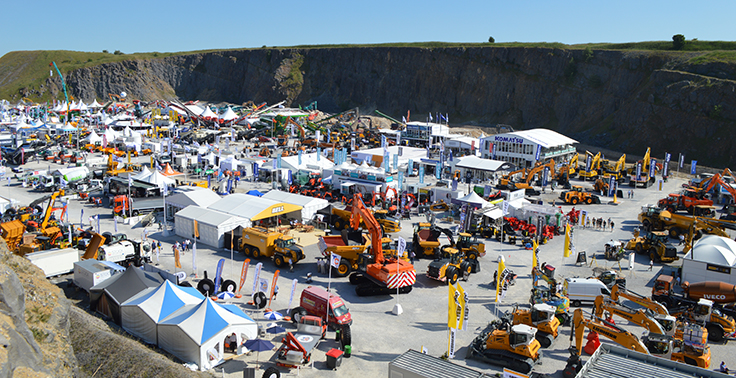
Doosan Portable Power To Show 7/31+ Compressor Generator Bobcat’s E10e, the industry’s first battery driven, zero tail swing mini-excavator in the one tonne class, will be shown on the Doosan Bobcat Stand I40 for the first time at the Executive Hire Show (EHS), the UK’s annual national exhibition for the tools, equipment and plant hire industry, being held in Coventry, England from 5-6 February 2020. The Doosan Bobcat stand will also present the 7/31+ compressor generator from Doosan Portable Power, which incorporates an 8.5 kVA generator and is aimed at the utilities industry and rental companies serving this sector. Launched in 2007, the Executive Hire Show is a trade-only event open to rental company executives throughout the UK and Ireland, and it has also attracted hire industry visitors from Europe and beyond. Senior executives from the procurement and purchasing departments of the national hire operations attend the Show, along with large numbers of independently-owned entrepreneurial hire outlets. Game Changer for Indoor Work As well as indoor work such as demolition and basement projects, there are many other sites where zero emission, low noise machines are required such as urban/city centre developments, night-time work and contracts in quiet zones such as hospitals, cemeteries, schools and so on. Until now, particularly for indoor applications, there has been no standard OEM solution for such work – many jobs had to be worked on manually with less effective tools or with aftermarket conversions providing third party machine adjustments (that often did not meet desired standards). The new Bobcat E10e mini-excavator is a unique proposition in this area. Developed at the Bobcat EMEA Innovation Center, in conjunction with electric vehicle suppliers, the E10e is based on the design of the very successful diesel powered E10 1 tonne mini-excavator, which has achieved sales of well over 10,000 units in just 10 years [the E10 is now called the E10z to reflect that it is a zero tail swing (ZTS) mini-excavator]. The new E10e has the same ZTS profile and identical external dimensions as the standard E10/E10z machine and offers equal or better performance. For example, the E10e offers very low noise levels on site with an LpA of only 71 dBA vs 80 dBA for the standard E10/E10z. As the new machine is designed to be used in demanding indoor applications such as breaker work in demolition, it is equipped with auxiliary lines and an efficient oil cooler system for continuous hydraulic breaker operation. The cooling system capacity has been increased to meet extended demolition application requirements. Amazingly Compact Like the E10/E10z, the E10e is easy to transport. In addition to the access provided by its retractable undercarriage reducing its width to only 710 mm, the integrated foldable TOPS (Tip Over Protective Structure) facilitates passage through openings with low headroom, for work inside buildings and in basements. Once the excavator is positioned and ready for work, the undercarriage on the E10e can be expanded to 1100 mm, for maximum stability in all working conditions. The E10e’s minimal width enables excellent manoeuvrability in confined spaces, while the ZTS design is an additional advantage when working in tight areas. The E10e and E10z are part of a comprehensive selection of mini-excavators from Bobcat covering models from 0.8 to 8.5 tonne, alongside a full line-up of skid-steer, compact track and all-wheel steer loaders, telehandlers and attachments, all aimed at the tool and plant hire industry and the markets it serves. Doosan Portable Power: Meeting the Needs of the Utilities Market Compressor generators from Doosan Portable Power are aimed at the utilities industry and rental companies serving this sector. The larger 8.5 kVA generator option meets a specific requirement in utility work to meet the demands of the latest fusion welding equipment, providing electrical power that can also be used for lights and tools together with compressed air for powering breakers and other pneumatic equipment.  The generator option is available on two machines – the 7/31+ model, providing a free air delivery of 3.0 m3/min at an output pressure of 7 bar and the larger 7/41+ portable compressor, supplying 4.0 m3/min of compressed air at 7 bar output pressure. Another option on these compressors is the ‘Tough Top’ polymer canopy combining durability with aesthetic design, making it an especially attractive investment for everyday applications in the toughest working conditions. In addition to its outstanding durability, the Tough Top canopy is also non-corrodible. It can be supplied in customer colours and retrofitted to existing Doosan compressor units.  Like all Doosan compressors, the modular design of the 7/31+ and 7/41+ ensures that a wide range of optional equipment can be added easily. As well as the polymer canopy, they can include LED lights, a Heavy Duty light grill, a number plate clip, wheel nut indicators and a ‘bunded base’. Doosan Portable Power offers a comprehensive range of portable compressors, generators and lighting products for the plant and tool hire industry. Completing the line-up are construction tools such as air-powered chipping hammers, pickhammers, jackhammers and paving breakers for work in demolition, utilities, quarrying and industrial markets. For more information about Bobcat and Bobcat products, visit www.bobcat.com For more information about Doosan Portable Power products, visit the website: www.doosanportablepower.eu

Read More »

Priva says National Trust’s 125th birthday is a perfect opportunity to shine spotlight on controls-led future-proofing of historic buildings

Leading building controls manufacturer, Priva says the National Trust’s recent 125th Anniversary celebration is not only to be celebrated, it is a perfect opportunity for heritage professionals to give more time and thought to the protection of historic buildings through control-based technologies. Priva has long provided building management solutions to the heritage sector -including the National Trust, the Historic Royal Palaces and high-profile sites such as St Paul’s Cathedral. The company has seen first-hand the benefits of future-proofing special and listed buildings with leading-edge building control technology. Protecting the fabric of the historic or listed buildings is undoubtedly the ultimate priority for anyone associated with building conservation. However, Priva believes that many in the conservation sector may be unaware that it is possible to future-proof heritage buildings with the same control-based technologies found in modern structures.  Priva’s UK & Ireland Sales Manager Gavin Holvey explains: “Organisations such as the National Trust take incredible care of special buildings – and we are delighted that Priva technology is playing an active part in this process. Our message is simple – we want to make sure more UK buildings are future-proofed, and in turn help owners and conservators improve building efficiency and reduce emissions through greater control of heating, ventilating and air-conditioning services. All of this is achieved whilst maintaining a pleasant and welcoming environment for staff, conservators and visitors.” To support heritage building consultants and professionals in the sector, Priva has published a guide which includes case studies covering the integration of building and energy management systems at some of the world’s most famous buildings. Entitled ‘Future-proofing Britain’s Historic Buildings’, this 20-page book offers a non-technical overview of the outcomes and benefits of control technology. The document explains in clear language how Priva’s technology – which is in use at sites such as St Paul’s Cathedral; Westminster Abbey; and Rosslyn Chapel – is delivering significant energy savings; improved indoor climate conditions and greater visibility of energy use. Copies available To request a copy of Priva’s Future-proofing Britain’s Historic Buildings book, please contact the UK Sales office on: T +44 (0)1923 813 480 or contact.priva@priva.co.uk

Read More »

Study provides sun safety recommendations to better protect at-risk workers

Actively managing sun exposure and providing nudging messages via text message are a few ways in which organisations can better protect outdoor workers from harmful UV radiation, a new study led by Heriot-Watt University has suggested. In Britain each year there are almost 1,500 cases of non-melanoma skin cancer caused by exposure at work to UV radiation from the sun and around 250 cases of malignant melanoma. During winter, workers get insufficient sun exposure to make enough vitamin D to maintain good health. A new paper, published in the Institution of Occupational Safety and Health’s (IOSH) journal, Policy and Practice in Health and Safety, has outlined some of the key recommendations for workplaces to consider in order to better protect outdoor workers, including: – Workplace health promotion initiatives to ‘nudge’ workers towards healthier dietary choices, including dietary supplements over winter, to boost serum vitamin D levels in their workers. – Sun-safety remains a low priority on construction sites and awareness of current sun-safe measures is low. Employers should adopt a risk-based approach to manage exposure to solar UV proactively, in which risk management measures should be prescribed and the use of these measures enforced. – Provide health surveillance to detect skin cancers among outdoor workers because of the likely high UV exposure and the consequent increased risk of skin cancer. Nudging messages can be easily delivered via text messages or location-driven phone apps to help a workforce stay safe in the sun. The recommendations follow on from an IOSH-funded study published last year led by Heriot-Watt University, which found almost half of outdoor workers on the construction sites they investigated had insufficient vitamin D during the winter. However, the team found during the summer the desire to get a sun tan remained high among workers, with many being exposed to high UV radiation, increasing their risk of developing non-melanoma skin cancer. Professor John Cherrie, Principal Investigator on the research from Heriot-Watt University and the Institute of Occupational Medicine, said: “In Britain we love the sun and having a sun tan, but unprotected exposure to the summer sun can cause irreversible damage to our skin and ultimately may lead to a diagnosis of skin cancer. “Employers must take the lead in managing sun exposure for outdoor workers and make sure their employees have regular skin checks to look for the early signs of cancer.” Mary Ogungbeje, Research Manager at IOSH, said: “The findings highlight that there’s still work to do in promoting good sun safety behaviour in the workplace. Both workers and employers have a part to play in reducing the risks of excessive UV exposure. “We encourage workers and employers to be more aware of occupational cancer and take positive steps to reduce the risks.” The Institution of Occupational Safety and Health (IOSH) has produced a range of resources and guidance on the risks of solar radiation and how to reduce exposure as part of its No Time to Lose campaign to tackle occupational cancer. More information is available here: https://www.notimetolose.org.uk/free-resources/solar-pack-taster/ The paper, ‘Nudging construction workers towards better sun-safety behaviour: summary of the evidence for practitioners’, published in the Institution of Occupational Safety and Health’s journal, Policy and Practice in Health and Safety, is available here: https://www.tandfonline.com/doi/full/10.1080/14773996.2019.1708614 The study team included researchers from Heriot-Watt University, the University of Edinburgh and the Institute of Occupational Medicine and was funded by IOSH.

Read More »