Kenneth Booth

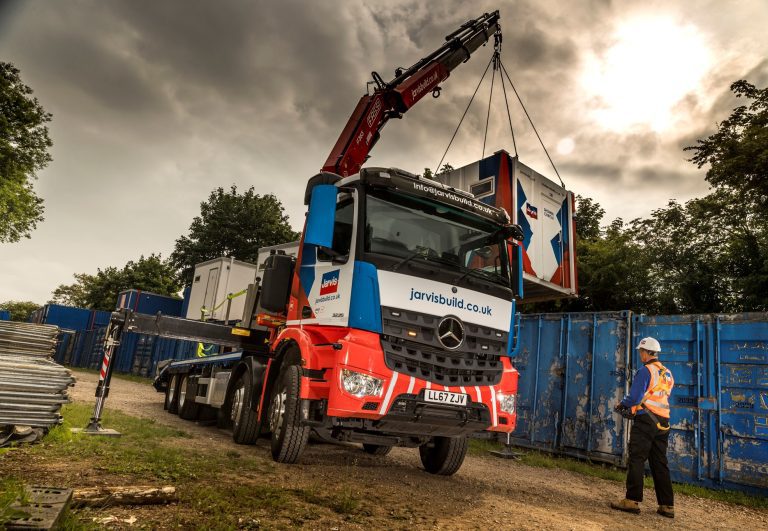
Mercedes-Benz Arocs flagship lifts Jarvis Group to a new high

Jarvis Contracting’s previous, six-wheeled Mercedes-Benz crane truck provided reliable, cost-effective service for 14 years. No surprise, then, that its highly specified successor also wears a three-pointed star. A long-established construction group based in Hertfordshire, the Jarvis Group acquired its muscular new flagship from Dealer S & B Commercials.  The 8×4

Read More »

Smart Pavements Could be Introduced in the UK

New smart pavement technology could soon be introduced to the streets of the UK. Engineers are currently developing pavements that will allow roads to be widened and narrowed depending on the flow of both motor and pedestrian traffic. This technology is called FlexKerb, and it could be the solution to

Read More »

Siemens acquiring Building Robotics to enhance its digital portfolio with workplace app Comfy

Siemens Building Technologies extends its leadership in smart buildings by acquiring Building Robotics Inc., the creator of Comfy® • Comfy is a leading digital workplace app, creating more personalized and responsive workplaces while providing analytics for efficient building operations • Sold as software-as-a-service, Comfy will extend the cloud portfolio of

Read More »

Trailblazers in considerate construction to be recognised at first National Ultra Site Awards

The Considerate Constructors Scheme has launched its first National Awards programme for Ultra Sites  – Considerate Constructors Scheme to award best-performing Ultra Sites with highest accolade in considerate construction. Ultra Sites are the next level of achieving even greater standards and collaboration across the construction industry, with the ultimate objective

Read More »

Build to Rent and the future of housing

An insightful new video from the timber industry’s campaign Wood for Good shines the spotlight on the growing Build to Rent sector and examines the unique nature of this market. According to the British Property Federation, there are now almost 120,000 Build to Rent units already built, under construction or

Read More »
Latest Issue
Issue 344 : Sep 2026

Kenneth Booth

Mercedes-Benz Arocs flagship lifts Jarvis Group to a new high

Jarvis Contracting’s previous, six-wheeled Mercedes-Benz crane truck provided reliable, cost-effective service for 14 years. No surprise, then, that its highly specified successor also wears a three-pointed star. A long-established construction group based in Hertfordshire, the Jarvis Group acquired its muscular new flagship from Dealer S & B Commercials.  The 8×4 Arocs 3235 has a ClassicSpace M-Cab, behind which is installed an Italian-built, 36 tonne-metre Fassi F365A e-dynamic knuckle boom crane. Its beavertail body, meanwhile, is by Sterling Bodies, of Stokesley, North Yorkshire. Purpose-designed for construction-related applications, the Mercedes-Benz Arocs offers a compelling blend of strength, payload capacity and performance. Jarvis Contracting’s truck is powered by a 7.7-litre straight-six engine which transmits its 260 kW (354 hp) output via a 12-speed Mercedes PowerShift 3 automated gearbox. To reflect the fact that the truck will spend most of its time working on road, the operator has chosen rear air suspension in preference to steel springs. As well as being more comfortable and quieter for the driver, this arrangement means the body can be lowered when required, making it easier to load plant. The Arocs is smartly finished in the Jarvis Group’s red, white and blue corporate scheme, and rides on Alcoa alloy wheels, while its appearance is further enhanced by a sun visor and roof-mounted beacons. From a safety perspective, meanwhile, the truck is equipped with a full complement of cameras and a side-scan system that meet the FORS (Fleet Operator Recognition Scheme) Gold standard. Established more than 100 years ago by Ernest Charles Jarvis, the Jarvis Group comprises four specialist divisions: Jarvis Contracting, E7 Building Services, Jarvis Homes and Jarvis Commercial. Individually and together, they design, build and maintain all types of property for private and public sector clients, delivering new build projects with values of up to £20 million. Jarvis Group Plant & Transport Manager David Meadows recalled: “Our last crane vehicle had been on the road since 2004 and was exceptionally reliable, so we certainly got our money’s worth. “This experience was an important factor, of course, but it was not the only reason we chose another Mercedes-Benz. We did a lot of homework on the specification before we ordered this new truck, and S & B were able to provide us with a 32-tonne chassis that ticked all our boxes.” He continued: “Ride height was crucial. We’d had some issues previously when manoeuvring on rough terrain, particularly with the front end, which was dragging. The Arocs provides plenty of ground clearance, with high approach and departure angles that make it ideally suited to site work.” Jarvis Contracting works primarily in the northern Home Counties, London (north of The Thames) and the south Midlands, with its specialist retail and fit-out team operating nationally. It is now using the new eight-wheeler to transport plant and modular accommodation units from its own plant division. The vehicle has been assigned to dedicated driver Andy Bewley. “He’s a very happy lad, and so he should be, because the Arocs is a beautiful piece of equipment,” continued Mr Meadows. “Image is important, too, and the new truck looks fantastic in our branding.” The subject of an eight-year Mercedes-Benz Complete Service Contract, the truck will be inspected and maintained at S & B Commercials’ headquarters in Welham Green, near Hatfield. The Arocs is also equipped with revolutionary Mercedes-Benz Uptime maintenance technology, which employs an array of sensors that monitor its condition constantly. As a result, S & B will know precisely what is required before the truck reaches the workshop, and can order parts in advance while setting aside sufficient time during a single visit to complete all tasks. Thus, the system ensures Maximised Use – one of the three pillars of Mercedes-Benz Trucks’ all-embracing RoadEfficiency strategy – for the operator. David Meadows added: “S & B’s Key Account Manager Vick Croker went to a lot of time and trouble to ensure that we ordered exactly the right truck. He’s a true gent, very easy to deal with, and made the process a real pleasure.”   www.jarvisgroupltd.co.uk

Read More »

Smart Pavements Could be Introduced in the UK

New smart pavement technology could soon be introduced to the streets of the UK. Engineers are currently developing pavements that will allow roads to be widened and narrowed depending on the flow of both motor and pedestrian traffic. This technology is called FlexKerb, and it could be the solution to the growing problem of congested traffic in London, New York, and some of the other busiest cities on the planet. Developed by London-based engineering company Arup, FlexKerb uses smart cameras and various sensors to assess current road conditions. It then uses this data to determine the most efficient way to divide up roads. This is accomplished through lights embedded in the FlexKerb system. Red means that a section of the road is for pedestrians, while green is for cars. Meanwhile, white is the marker for bike lanes, and purple allows loading and unloading for use by couriers and delivery vehicles. More than just an idea, FlexKerb is already gaining lots of traction and could be tested out on UK roads soon. A recent competition held by the UK National Infrastructure Commission called for ideas to prepare UK roads for autonomous vehicles – and FlexKerb was one of the five shortlisted concepts. This earned Arup an official research grant of £30,000 for further development, and if a feasibility study finds that FlexKerb can actually be implemented, another £50,000 will be granted. It’s a sign that the government is taking this new smart pavement technology very seriously. As Arup’s associate director for transport consulting Susan Claris explains to the Highway Industry, “This idea is about having something that’s more responsive and more adaptable to changing travel patterns. Rather than trying to maximise vehicle throughput, which was the thinking that characterised transport planning 20 or 30 years ago, it is about looking at how streets can be managed to make them healthier and happier places.” While most transport experts welcome the idea of developing existing infrastructure to be more responsive to human traffic, some are concerned about the cost of such an undertaking. As our roads get smarter, newly installed technologies need to be powered in better ways. The solution to this lies in new electricity generating methods that utilize the very roads that they’re powering, an idea that BDC Magazine have previously covered. Both in the UK and the US, engineers are working on a speculative way of harnessing road surface movement and heat using thermodynamics and piezoelectrics. A more feasible idea is to create roads and road utilities like barriers, verges, and pavements with photovoltaic capabilities — especially now that the much more efficient crystal silicon solar cell is getting more affordable. If the UK is serious about developing smarter roads, it also needs to be exploring which of these options can viably power smart pavements and other new technologies. In truth, concern for road and pavement safety has been growing in the UK in recent years. Following the 2017 attack at London Bridge, the government has been putting up security barriers in strategic places as deterrents to stop similar incidents. The temporary steel highway safety barrier systems are from a company called Varioguard. Meanwhile, the UK’s own citizens have adopted their own strategies for road and pavement safety as well. Auto Gate Shop on their Hydra bollard page show how the automatic barrier is commonly used to protect pavements. This type of hydraulic barrier is seeing use now in both commercial and residential spaces. If these growing concerns and measures are any indication, it seems that the UK’s citizens are ready for smart pavements, as well as other new and practical innovations to make our roads safer for everyone.

Read More »

Activity improving at the very top end of the London housing market

Activity levels at the very top of the London property market have stabilised after a tumultuous few years, the latest analysis reveals. Sales in the super prime market with homes valued at £10 million plus have been underpinned in many cases by the release of pent-up demand, says the report from international real estate firm Knight Frank. The figures show that the number of new prospective super prime buyers registering in the first three months of 2018 was 7% higher than last year. And, although the number of transactions in the year to March was 9% lower than over the previous 12 months, this is an improvement compared to annual falls of more than 20% registered throughout 2016 and the first half of 2017. The steepest price decline since the peak of the market in prime central London in August 2015 has been in Chelsea where a 15.5% fall took place between then and March 2018. However, buyers have responded to the decline and the value of super prime sales has risen as a result while the effects of a weaker pound also continue to drive sales, alongside the continued appeal of London. The report points out that US dollar denominated buyers would have benefitted from an effective 11% discount at the end of March compared to the period before the European Union referendum ‘Though London has had a tough time recently, it is seeing renewed vigour. The effective discount provided by a weaker pound has certainly helped some buyers seeking value. There is a continued focus on safe haven investments for the long term with increasing focus on income generation and longer-term returns,’ said Paddy Dring, head of global prime sales at Knight Frank. ‘Although political risk remains with us, economic fundamentals underpinning the market remain strong, with interest rates at an all-time low and global economic growth improving,’ he added. Family houses in the Kensington and Chelsea are in relatively strong demand at the start of 2018 among needs driven buyers, according to Thomas van Straubenzee, head of Knight Frank’s private office . ‘While international investors are proceeding with more caution, British families committed to London are more comfortable buying given that pricing has largely adjusted for stamp duty. It means areas like Notting Hill have done very well at the start of 2018,’ he pointed out. But some buyers remain hesitant. ‘There has been a definite uptick in enquiries from prospective buyers, which is feeding through into sales. However, those buyers making commitments have either been in the market for a while or have a pressing social or personal need to move,’ said Daniel Daggers, a prime central London partner with Knight Frank. ‘So there is a ticking clock for many of them which, together with the price declines and favourable currency movement, means they are now deciding to act. Buyers are less location specific and new focal points include Fitzrovia and W2,’ he added.

Read More »

Siemens acquiring Building Robotics to enhance its digital portfolio with workplace app Comfy

Siemens Building Technologies extends its leadership in smart buildings by acquiring Building Robotics Inc., the creator of Comfy® • Comfy is a leading digital workplace app, creating more personalized and responsive workplaces while providing analytics for efficient building operations • Sold as software-as-a-service, Comfy will extend the cloud portfolio of Siemens Building Technologies • Transaction expected to close in the third quarter of 2018 Siemens Building Technologies Division is setting a further milestone in smart building solutions by acquiring Building Robotics Inc., a market leader in the fast growing digital workplace experience app domain. Headquartered in Oakland, California, the start-up achieved its leadership position by developing a simple-to-use app that enables people to take control of their environment. Building Robotics, Inc. is best known by the name of its core product, Comfy. Building Robotics Inc. will be a wholly-owned subsidiary of Siemens Industry Inc. and continue to operate as a vendor-agnostic platform provider. The two co-founders CEO Andrew Krioukov and CTO Stephen Dawson-Haggerty will remain in their current position in the management team of Building Robotics Inc. Both parties have agreed not to disclose any figures. Closing is expected in the third quarter of 2018. “This move further strengthens our leadership position in smart buildings,” said Matthias Rebellius, CEO of Siemens Building Technologies. “With the Comfy app we will bring a consumer-like experience to commercial buildings that simplifies the interaction with buildings to increase employee productivity and engagement.” Through the Comfy app, Siemens Building Technologies will connect people, places and systems to create amazing workplace experiences – putting people in the center of a building. Comfy directly integrates with existing building automation, IT networks and IoT systems to provide on-demand control and smart automation, all within a single intuitive app. At a time when smart technology is becoming a must-have in the office, employees can use the app to make immediate changes in temperature and lighting, book rooms and desks, and provide feedback on their space. “Comfy has successfully redefined the way people interact with their workplaces,” said Andrew Krioukov, CEO and co-founder of Building Robotics Inc. “By joining Siemens, the global leader in total building solutions, we open up greater opportunities to accelerate the development of new functionalities, grow the open protocol ecosystem, and reach more people around the world.” Founded in 2012, the Comfy team leverages expertise in machine learning, UX design and enterprise service to develop software solutions for building operators and occupants. The start-up has leading enterprise customers in major markets such as the US, Australia, Singapore and India. This press release and further material is available at www.siemens.com/press/building-robotics For further information on the Building Technologies Division, please see www.siemens.com/buildingtechnologies For information on #CreatingPerfectPlaces, please see Landing Page: www.siemens.com/perfect-places and Twitter: www.twitter.com/SiemensBT. For further information on Building Robotics, please see www.comfyapp.com

Read More »

McAVOY COMPLETES OFFSITE CONSTRUCTION OF NEW PASSENGER FACILITY AT DUBLIN AIRPORT AND LARGEST SINGLE SPAN MODULAR BUILDING

The McAvoy Group has handed over a new passenger facility at Dublin Airport which was built offsite and at over 19m wide, is believed to be the largest single span modular building delivered to date in the UK and Ireland.  The new €22 million South Gates passenger boarding area has been developed to meet the huge growth in passenger numbers at Dublin Airport and will be used mainly by Aer Lingus for flights to the UK and continental Europe. It provides seven boarding gates to serve nine aircraft stands and is designed to accommodate around 8,000 passengers a day. The management contractor for the project was Flynn Management & Contractors and the lead consultants were Arup. The building was designed by concept architects Kavanagh Tuite and delivered by project architects Blue Sky. The 2,200m2 facility was constructed offsite at the McAvoy production centre in Lisburn, Northern Ireland to reduce time on site. It was craned into position in 16 days as 77 steel-framed modules. The building system was engineered to achieve over 19m wide uninterrupted clear spans, which is believed to be an industry first for modular construction. Hot rolled steel beams were used to remove the requirement for internal columns. The building, which is around 120m long, has the flexibility to accommodate departing flights in the busy early morning period and flight arrivals in the evening. It can also be segregated so around 1,000 departing and arriving passengers can be processed at the same time.  Facilities include boarding gates, a café, toilets, baby changing and a workstation area with plugs and charging points. Dublin Airport has experienced a 6 per cent increase in passenger numbers in the past year and a record 29.6 million passengers used the airport in the last year. Commenting on the new facility, Iain Heath, Project Manager at Dublin Airport, said, “This is one of the fastest projects we have ever completed at the airport – from planning to the first flight in just 18 months. The finished building speaks for itself. It is a handsome new facility with high quality finishes and clean architectural lines.” “We were working to a very constrained programme to have the building operational ahead of the busy summer season. The project and its innovative use of offsite construction is a fantastic achievement for the whole team.” “We were impressed with how McAvoy used BIM and virtual reality. As an airport we have a complex approvals process, but the digital techniques allowed the senior management team to ‘walk through’ the building and to experience the facility, which facilitated design sign off. In addition to the programme benefits, offsite construction also meant fewer trades working on site and a smaller site footprint. This approach had far less operational impact for the airport and the closure of fewer aircraft stands with reduced timeframes.” Brian Looney, Contracts Manager at Flynn Management & Contractors said, “The principal driver for offsite construction was to reduce the programme. The McAvoy solution allowed the building to be delivered to site within weeks of planning approval. Having fewer trades on site is also a benefit for airport projects such as this where the site is very constrained, and the highest standards of security have to be maintained at all times.” “This project has pushed the boundaries of offsite construction to create a valuable infrastructure facility. The quality of the finished building is excellent, and you would never know this is a modular building. The McAvoy Group’s production facilities are impressive, and their systems are robust. We would welcome the opportunity to work with their team again.” Eugene Lynch, Managing Director of The McAvoy Group, added, “This project successfully demonstrates the potential for offsite to improve the efficiency of airport construction, particularly in the development of airside facilities where it is so critical to minimise any impact on existing operations.  We can reduce work on highly secure and constrained sites and rapidly install the buildings in a fast and efficient process, with no compromise on design.” McAvoy has already been shortlisted for two industry awards for the Dublin Airport project and its innovative use of BIM and virtual reality. The Dublin Airport scheme was designed to meet stringent fire safety regulations that exceeded Building Regulations. All mechanical and electrical services – including data communications, fire and security – had to link into the existing live airport terminal systems, which was a hugely complex operation undertaken by McAvoy. A specially-designed ceiling solution provides a high standard of acoustics and its chequerboard appearance has created a strong visual feature. Externally, the highly glazed building is finished in two shades of anthracite grey aluminium cladding to complement the other passenger terminals. A screen of grey louvres wraps around the roof to conceal services and the plant rooms. For further information, visit www.mcavoygroup.com, call 028 8774 0372 or email info@mcavoygroup.com.

Read More »

Worker’s Compensation: 5 Important Facts the Can Affect Your Claim

Accidents happen, they’re just a part of life. When they occur at work, the effects can be devastating. Fortunately, if you suffer an injury or illness while on the job, you won’t have to worry about your medical bills, or lost wages if you can’t work. The North Carolina Worker’s Compensation Act requires all businesses with more than three employees, obtain worker’s compensation insurance, to help workers who are injured on the job. When it comes to filing a worker’s compensation claim, there are a lot of factors that can affect the outcome. Along with the obvious factors, like the seriousness of the injury and the length of time you’re unable to work, here are five lesser-known facts that can affect your claim.   Does Your Injury Qualify as an Accident?   Unfortunately, not every injury suffered on the job will be covered by worker’s compensation. In North Carolina, worker’s compensation insurance typically only covers injuries that happen by accident. It is defined as an unexpected incident that interrupts the workflow. If you’re injured doing your job in a normal way, you may find that your worker’s compensation claim will be denied. If your claim has been denied you should consult with firms like Brent and Adams personal injury lawyers to discuss your situation.   Did Your Employer Pay Any Expenses?   One of the most critical factors in a worker’s compensation case is the proper calculation of the correct average weekly wage (AWW). Any wage replacement disability compensation that is paid by your employer or their insurance through the entire case is based on the AWW. If you received any reimbursement for food, transportation, or lodging, this might qualify as wages, increasing the AWW. Even a slight increase in this number can have an enormous impact over the life of your case in North Carolina.   Have You Previously Injured the Part of Your Body You Injured at Work?   While a previous injury to the same body part won’t automatically disqualify you from receiving worker’s compensation, it can have an impact on your claim. With an earlier injury, your employer and their insurance company will look at the case differently, possibly causing your claim to be denied. When it comes to a prior injury, a worker’s compensation claim must be carefully managed.   Can Your Employer Accommodate Your Work Restrictions?   The goal of worker’s compensation is to have the injured employee returned to employment within their work restrictions imposed by their authorized medical provider, according to North Carolina Office of State Human Resources. If the employer is unwilling or unable to put the employee back to work in a suitable position, you will need to find employment elsewhere, which can be challenging. Not being able to be accommodated after a workplace injury can significantly affect your claim.   Are You Eligible for Benefits?   If you are eligible to receive other private or public wage replacement or health benefits, your worker’s compensation claim can be affected. If you qualify for other benefits, you need to carefully consider the impact they will have on your worker’s compensation case.   Being injured on the job is never a fun prospect. Armed with the right information, you can increase your odds that your claim will be accepted, allowing you to move forward with your healing and getting back to your life before the injury.

Read More »

Trailblazers in considerate construction to be recognised at first National Ultra Site Awards

The Considerate Constructors Scheme has launched its first National Awards programme for Ultra Sites  – Considerate Constructors Scheme to award best-performing Ultra Sites with highest accolade in considerate construction. Ultra Sites are the next level of achieving even greater standards and collaboration across the construction industry, with the ultimate objective to achieve integration of a contractor’s supply chain to meet and exceed the Scheme’s Code of Considerate Practice. They are highest level of attainment with the Considerate Constructors Scheme – the organisation established to improve the image of construction. The inaugural National Ultra Site Awards – taking place on 12 July in central London – are a momentous occasion for the entire construction industry; representing significant progress in how construction sites, the supply chain and clients are increasingly working together to raise standards throughout the construction process. Ultra Sites will be eligible to win Awards in nine categories. Each category represents the key attributes of being an exceptional Ultra Site. They are: Client Recognition Award Collaboration Award Community Engagement Award Construction’s First Impressions Award Environmental Best Practice Award Future Constructors Award Innovation of the Year Supply Chain Recognition Award Workforce Wellbeing Award One Award winner from across the nine categories listed above will also be recognised with the highest honours; receiving the prestigious title of ‘Ultra Site of the Year’. Ultra Sites are recognised by industry and government as an important mechanism in helping to improve the image of the construction industry. This year’s awards are being presented by Dr David Hancock, Construction Director at the Infrastructure and Projects Authority (IPA), Cabinet Office. Ultra Sites were officially launched in February 2018 following a 24-month pilot with a consortium of some the country’s leading contractors and clients. They were introduced in order to achieve even greater standards and collaboration across the industry, with the ultimate objective being integration of a contractor’s supply chain to meet and exceed the Scheme’s Code of Considerate Practice. Considerate Constructors Scheme Chief Executive Edward Hardy said: “The National Ultra Site Awards represent a significant chapter in the progress of the construction industry to reach new unprecedented levels of considerate construction across the entire supply chain. “These Awards recognise and celebrate this unwavering commitment to improving the image and reputation of the industry. We look forward to recognising their success at the upcoming 2018 National Ultra Site Awards.” Dr David Hancock, Construction Director at IPA, Cabinet Office commented: “The industry is facing new challenges around how it operates, and it is crucial for the industry to promote a positive image and continue to strengthen its reputation. “I am pleased to see how the concept of collaboration, through the Ultra Sites model, has rapidly begun to establish itself as a beacon for what can be achieved when the industry works together, to strive for the highest standards. I look forward to presenting at the forthcoming inaugural National Ultra Site Awards ceremony in July.”   Click here for more information about Ultra Sites.

Read More »

HS2 launches plans for unprecedented ‘green corridor’ – stretching alongside the railway

Today, HS2 set out plans to deliver a ‘green corridor’ consisting of new wildlife habitats, native woodlands and community spaces to help integrate the new line into its surrounding landscape and environment. The scale of planned works will be largest ever undertaken by an infrastructure project in the UK, with a network of environmental projects stretching from London to the North of England. Along the Phase One route, which covers 216km from London to the West Midlands, the green corridor will encompass: 7 million new trees and shrubs, including over 40 native species, specific to each location. The new native woodlands will cover over 9 square kilometres of land. Over 33 square kilometres of new and existing wildlife habitat – equating to an area the size of 4,600 football pitches. That’s an increase of around 30% compared to what’s there now. Tailor-made homes for wildlife, ranging from bat houses to 226 new ponds for great crested newts and other amphibians. Earthworks and landscaping which will re-use around 90% of the material excavated during construction. The potential to support community projects and develop amenity spaces such as access routes, public parks, open spaces and nature reserves. Work on the pioneering initiative is expected to set new standards for how Britain and the rest of Europe builds the next generation of major infrastructure projects. As the corridor is being delivered, HS2 is encouraging local people and organisations to get involved in everything from landscape design to tree planting.  This includes supporting local environmental projects through its various community funds. In a related announcement today, the Government confirmed a £2 million extension to the HS2 Woodland Fund, so it can cover Phase 2a of the railway, from the West Midlands to Crewe. The fund is designed to help landowners near to the route directly create new native, broadleaf woodlands and restore existing ancient woodland sites. This is in addition to the extensive green corridor plans and community funds that are already in place along the wider route. Mark Thurston, Chief Executive of HS2 Ltd said: “Alongside improving connectivity, boosting the economy and unlocking new jobs and opportunities, I’m determined to ensure that HS2 also works for the environment and local communities. “This starts by doing everything we can to reduce our environmental footprint and minimise the expected impact of our construction work. Longer-term, we’ll be leaving behind a network of new wildlife habitats, woodlands, and community spaces, helping to create a lasting legacy along the route. “We’ve already got to work by supporting a range of community projects and creating a series of new habitats, including planting over 230,000 trees so far.  We’ll be calling on local people and organisations to get involved as the green corridor starts to take shape” Nusrat Ghani, HS2 Minister, said: “Our unique and beautiful countryside is one of our nation’s greatest assets. As we deliver the new high speed railway our country needs, for economic growth and better journeys for passengers, it is imperative we set a new standard for preserving, protecting and enhancing our diverse woodlands and wildlife. “HS2’s green corridor is one of the most significant tree-planting and habitat creation projects ever undertaken in this country. To support that vision, the government is providing an additional £2 million for the Woodland Fund, to support native species and help more people enjoy more new green spaces than before.” The appearance of the green corridor will be tailored to the surrounding environment, with native tree species used to ensure that the new woodlands reflect the unique landscape and ecology of the different regions the line passes through. As the corridor is gradually delivered, HS2 is encouraging local people and organisations to get involved. This includes supporting local environmental projects, through its various funds including the £45m Community & Environment Fund and Business & Local Economy Fund. Full details are covered in HS2’s official ‘More Than a Railway’ booklet and animation – both published on its website today.

Read More »

Build to Rent and the future of housing

An insightful new video from the timber industry’s campaign Wood for Good shines the spotlight on the growing Build to Rent sector and examines the unique nature of this market. According to the British Property Federation, there are now almost 120,000 Build to Rent units already built, under construction or in planning across the UK; a 30% increase over the last year.  Christiane Lellig, campaign director at Wood for Good said: “Build to Rent is becoming increasingly important in the UK housing market. We teamed up with Build to Rent consultancy LIV Consult and property consultancy Gardiner & Theobald to highlight the growing importance of this sector, to examine some of the opportunities and challenges of this market and also to show how the timber industry can play a central role.” Oliver Booth, partner at property consultancy Gardiner & Theobald, said: “The need for Build to Rent has never been more important. The bottom line is we have an availability of housing crisis in the UK and there are many brave organisations, corporations and institutions stepping up to try and fix that.” Build to Rent developers and investors are in the market for the long haul; choosing higher-end materials such as engineered timber, both within the building’s fabric and the fit and finish that will stand the test of time. Designing for efficiency and specifications that will last long term is a distinct separation from the traditional build for sale market, where cheaper materials and finishes are frequently specified to maximise profits for the developer. Commenting on the unique nature of the Build to Rent market, Ashley Perry, Build to Rent consultancy director at LIV Consult, said: “The Build to Rent market is unique because of its focus on resident experience and efficiency through design, operations and overall long-term use. “Designers and developers have to understand how efficiently the building can operate as that will drive long term income and capital growth for investors.”  Highlighting the pivotal role the timber industry can play, Oliver Booth said: “A major benefit of engineered timber is that it’s fast to construct and that’s good for the Build to Rent model because we need to build quickly. “In addition, organisations want to use timber because it’s such a sustainable product. Those materials that are made and can be disposed of in a sustainable way and that contribute to people’s health and wellbeing, will have a competitive advantage over those that don’t.” Typically, Build to Rent schemes target young professionals, students and downsizers who buy into the lifestyle and convenience of well-built properties with a superior fit and finish, and are close to local amenities.   To view the video click here. To find out more visit www.woodforgood.com

Read More »

Tradespeople shake off stereotypes by choosing work over World Cup

For years, tradespeople have been unfairly tarnished with the reputation for prioritising football over work. Many members of the public see them as being a bit too eager to down tools and head to the nearest big screen. Nearly 20 million viewers tuned in to watch England in their first world cup match on Monday 18th June, however, it is the daytime games that will put loyalties to the test in a clash of the World Cup vs work. However, recent research shows that 75% of tradespeople, including builders, carpenters and joiners, will always choose work over football if the two ever conflicted.  According to a poll of more than 1,000 IronmongeryDirect customers, the vast majority of tradespeople claimed they would never consider skipping work to watch their team or the World Cup. Many poll participants are planning when and where they will be watching their team – but outside of work. If they were to ‘pull a sickie’ to watch their team play during the day, tradespeople offered some of the best excuses they would give, with the more elaborate ones including: “I’ve been called up as a late replacement by Gareth Southgate” “My boyfriend’s in labour.” “I’ve got soap in my eyes and can’t find a towel.” “I’ve been delayed at the airport on holiday…in Scarborough.” “My Auntie’s Gerbil is about to give birth and I’m the nominated birthing partner.” Some of the more convincing examples included: “I have a dentist appointment.” “The children are poorly.” “I’ve got the flu.” Employers are recognising that the World Cup is important to many of their staff. Many responded to the polls saying they would be more than happy to be flexible by offering them time off. One respondent stated: “As the boss, I always give my team the time off. It also saves them giving me the daft excuses!”. The research also revealed ongoing optimism among tradespeople, with more than half believing England will make it to the Quarter Finals. Also, half of those polled (49%) said they would give up alcohol for good to see England win the tournament. The UK’s leading online trade supplier, IronmongeryDirect, ran a series of polls to find out more about tradespeople’s attitude to work during the World Cup in June. Andy Wood, football enthusiast and Marketing Director of IronmongeryDirect, said: “The World Cup is an exciting time for many of us – tradespeople are no exception. We wanted to find out how our customers were preparing for the year’s biggest sporting event. The research was carried out in the name of fun, but it was great to see results challenging the outdated stereotype of contractors and other trades professionals neglecting their jobs for football! Tradespeople in Britain work hard, and we hope they enjoy watching World Cup 2018.”

Read More »