Commercial : Mixed-Use News
Baltic Quarter vision moves forward as Muse and ECF step in

Baltic Quarter vision moves forward as Muse and ECF step in

Plans to regenerate Gateshead’s Baltic Quarter have taken a significant step forward after the council agreed a pre-development deal with Muse and ECF to progress a major mixed-use scheme of around 1,600 new homes. Under the agreement, ECF will work alongside Gateshead Council to develop the long-term vision for the

Read More »
Partnership signed for Stevenage Station Gateway masterplan

Partnership signed for Stevenage Station Gateway masterplan

An agreement has been finalised to push ahead with the Stevenage Station Gateway project, forming a key part of the broader transformation of Stevenage town centre. The scheme is valued at around £1bn. It will deliver a minimum of 1,000 new homes, upgraded station facilities and about 50,000 sqm of

Read More »
Nottingham War Rooms to be brought back to life

Nottingham War Rooms to be brought back to life

The historic Nottingham War Rooms is set for a major transformation after a planning application led by developer Langcroft received approval. The project will see the iconic site redeveloped into a vibrant mixed-use community hub, alongside the creation of 104 affordable homes for East Midlands Housing Group (emh), with all

Read More »
Luton’s ‘Stage’ Set for £136m Town Centre Transformation

Luton’s ‘Stage’ Set for £136m Town Centre Transformation

Willmott Dixon has secured Gateway 2 approval from the Building Safety Regulator, paving the way for a £136m regeneration of Luton town centre. Known as The Stage, the flagship scheme will be delivered through the Southern Construction Framework and will transform the former Bute Street Shoppers car park into a

Read More »
Network Rail creates Platform4 to drive brownfield development

Network Rail creates Platform4 to drive brownfield development

Network Rail has launched a new property development company, with ambitions to deliver 40,000 new homes and 10 million sq ft of commercial space over the next decade. The new business, named Platform4, will focus on regenerating brownfield land within the rail estate. Four initial sites have already been identified

Read More »
Latest Issue
Issue 337 : Feb 2026

Commercial : Mixed-Use News

King’s Cross Greenlights £500m Regeneration to Deliver Homes, Jobs and New Public Spaces

King’s Cross Greenlights £500m Regeneration to Deliver Homes, Jobs and New Public Spaces

A major £500m mixed-use regeneration project close to London’s King’s Cross knowledge quarter has been given the green light, paving the way for hundreds of new homes and substantial employment space. The development, led by Camden Council in partnership with Ballymore and Lateral, will transform a complex site at Camley Street, bordered by railway lines and split by a major road. Delivered through the Council’s Community Investment Programme, the scheme is being positioned as a model for how local authorities can unlock challenging inner-city locations. Planning approval covers the unification of two brownfield sites to provide 401 new homes alongside more than 350,000 sq ft of office and employment space. Around half of the homes will be classed as genuinely affordable. The scheme will be built across six buildings ranging in height from eight to 30 storeys. Site A will be led by Camden as developer and will feature three interconnected mixed-use residential blocks, designed in terracotta and red brick, rising between eight and 13 storeys. Site B will accommodate a 30-storey residential tower, a 12-storey commercial building, and an eight-storey mixed-use block with homes above ground-floor commercial space. Under the agreed structure, Camden is providing the land on a long leasehold basis to the joint venture. While Ballymore will oversee demolition works on Site B, the Council will initially fund these works, with costs later reimbursed through partner contributions and the first land receipt payment. More than 200 private-sale homes delivered by Ballymore will generate capital receipts, which Camden plans to reinvest into the delivery of social housing on Site A and other Community Investment Programme projects. The proposals are rooted in a landscape-led approach, prioritising walking and cycling routes, public squares and play spaces designed to enhance health, wellbeing and biodiversity. A car-free strategy will improve connections to Regent’s Canal and protect future links to the proposed Camden Highline, reflecting a broader national shift towards low-car, active-travel neighbourhoods. Camden Council estimates the development will create more than 1,000 job and training opportunities, including apprenticeships and school placements. These are intended to open pathways into life science, technology and digital careers for local residents, while maximising the wider economic benefits of the scheme. The first homes are expected to be ready for occupation by late 2030. The project team includes architects Feilden Clegg Bradley Studios and Morris + Company, with Hoare Lea providing MEP services and Aecom and Gardiner & Theobald acting as cost consultants. Building, Design & Construction Magazine | The Choice of Industry Professionals

Read More »
Baltic Quarter vision moves forward as Muse and ECF step in

Baltic Quarter vision moves forward as Muse and ECF step in

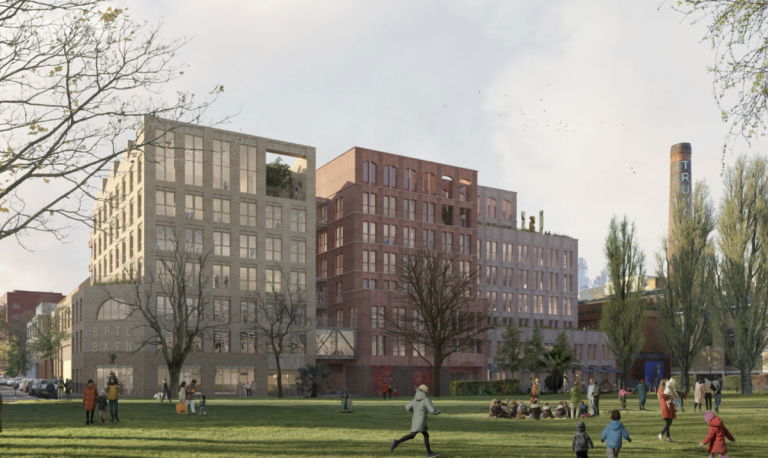
Plans to regenerate Gateshead’s Baltic Quarter have taken a significant step forward after the council agreed a pre-development deal with Muse and ECF to progress a major mixed-use scheme of around 1,600 new homes. Under the agreement, ECF will work alongside Gateshead Council to develop the long-term vision for the site, shaping funding, phasing and delivery. The Baltic Quarter plays a central role in the council’s regeneration strategy unveiled last autumn. Initial work will focus on how new homes and workspaces can be introduced alongside improved public spaces, landscaping, routes and infrastructure. The proposals aim to support the area’s existing business community, including Gateshead College and the Northern Design Centre, while creating space for future growth. The council said the regeneration will build on the quarter’s established creative and commercial character, helping current businesses remain and expand, while attracting new companies and talent to Gateshead and neighbouring Newcastle. An early masterplan for the Baltic Quarter has been prepared by architect Brown + Company. Sustainability sits at the heart of the proposals, with the area already benefiting from a district energy network powered by the UK’s largest urban solar farm and mine water heat. A recently completed 1,000-space car park has also been designed to support large-scale electric vehicle charging. Sir Michael Lyons, chair of ECF, said the pre-development agreement allows partners to work closely with the council and local stakeholders to shape proposals that reflect Gateshead’s industrial heritage while delivering lasting economic and social benefits. The agreement was secured through Pagabo’s developer-led framework. Council leader Martin Gannon said the scheme could deliver more than 1,600 homes, new office space and high-quality public realm, creating a visible statement of confidence in Gateshead that could help attract further investment to the borough.

Read More »
Partnership signed for Stevenage Station Gateway masterplan

Partnership signed for Stevenage Station Gateway masterplan

An agreement has been finalised to push ahead with the Stevenage Station Gateway project, forming a key part of the broader transformation of Stevenage town centre. The scheme is valued at around £1bn. It will deliver a minimum of 1,000 new homes, upgraded station facilities and about 50,000 sqm of additional development, including new public amenities and community spaces. These will be set along a landscaped street linking the town centre to the enhanced station and the Leisure Park. Stevenage Borough Council, supported by the Stevenage Development Board, has entered into a development agreement with Muse Place, backed by ECF — a partnership between Muse, Homes England and L&G. The appointment was made by Pagabo through its Developer Led Framework, which it manages on behalf of the contracting authority Cumbria, Northumberland, Tyne and Wear NHS Trust. Councillor Richard Henry, Leader of Stevenage Borough Council, said: “Ahead of this year’s 80th anniversary of Stevenage becoming designated as the UK’s first New Town, this deal marks an important milestone in the next chapter of the town centre’s regeneration. Delivered in partnership with ECF, Station Gateway will reflect what our town needs and deserves and will bring with it new homes, workspaces and jobs for our local communities.” Sir Michael Lyons, Chair at ECF, said: “Stevenage Borough Council has an ambitious vision for Stevenage and the signing of this agreement helps to move this one step closer to reality. We are pleased to take our commitment to the project further, unlocking this unique opportunity to create growth and community value in this fantastic location.” Chris Scott, Development Director at Muse, said: “We are excited to have formalised our partnership with Stevenage Borough Council for Station Gateway, and look forward to collaborating with the people and businesses of Stevenage as we move into the next phase of masterplanning. We believe successful regeneration is rooted in understanding and responding to the aspirations of the community, and our aim is to shape a detailed vision for Station Gateway that truly reflects the town’s priorities, while also recognising Stevenage’s national and international strategic importance.” The station multi-storey car park area has already seen £6m invested from the government’s Towns Fund, secured by the Stevenage Development Board. ECF’s role will enable wider development and investment in and around the rail station. The next phase is to prepare a detailed masterplan, building on the established vision. Stevenage Borough Council and ECF say they will work closely with residents, ensuring community feedback meaningfully shapes the proposals. Consultation on the detailed masterplan is planned for the first half of 2026, with a range of ways to take part — including online surveys, community drop-ins, stakeholder meetings and written submissions. Further details will be widely publicised to make it easy to participate. Subject to securing the necessary government grant funding, the aim is to start construction in 2028, with the first homes completed in 2030. Image: Stevenage Council Building, Design & Construction Magazine | The Choice of Industry Professionals

Read More »
Amro Partners Lodge Ambitious £650m Redevelopment Proposal for Lewisham Retail Park

Amro Partners Lodge Ambitious £650m Redevelopment Proposal for Lewisham Retail Park

Amro Partners has submitted a major planning application to transform Lewisham Retail Park into a large mixed-use residential neighbourhood, marking one of the most substantial regeneration proposals brought forward in the borough in recent years. The application, submitted on 4 December and currently awaiting validation by Lewisham Council, outlines the full redevelopment of the 2.8-acre site on Loampit Vale, which Amro acquired earlier this year. The plans set out a £650 million scheme comprising five new buildings and close to 2,000 square metres of commercial floorspace. The development would deliver 387 Build-to-Rent homes, 383 co-living studios and 682 student rooms, creating a total of 1,452 residential units. Discussions are said to be under way with specialist food hall operators to take up 1,000 square metres of the proposed commercial space. The Build-to-Rent homes would include one to three-bedroom flats, with layouts intended to accommodate single residents through to larger households of up to six people. Affordable housing levels have yet to be agreed with the council, though the intention is for the scheme to incorporate a blend of social rent and discounted market rent homes. Public realm improvements form a substantial part of the proposals, with plans for two residential garden areas and a central square featuring seating, children’s play spaces, open lawns, walking and cycling routes, and almost 100 new trees. Amro said the aim is to create a vibrant, inclusive environment to support long-term community life. Raj Kotecha, chief executive and co-founder of Amro Partners, described the proposals as a once-in-a-generation opportunity to reshape the site into a new sustainable neighbourhood. He said the team had spent months engaging with local people to help inform the vision and ensure the development delivers meaningful social, environmental and housing benefits. The site was previously owned by Legal & General, which secured consent in 2018 for a residential-led scheme that was never brought forward. If Amro’s plans are validated, they will move into the formal decision-making process, including public consultation and eventual consideration by either a planning officer or planning committee. Should planning permission be granted, Amro anticipates beginning construction in early 2027, with phased completion expected through 2029 and 2030. The scale of the proposals sits alongside other major regeneration activity in the area, including Landsec’s £1.5 billion redevelopment of Lewisham Shopping Centre, approved in October, which will deliver 1,744 homes alongside student accommodation and co-living units. Building, Design & Construction Magazine | The Choice of Industry Professionals

Read More »
Railpen Secures Secretary of State Approval for £1bn Cambridge Beehive Innovation Park

Railpen Secures Secretary of State Approval for £1bn Cambridge Beehive Innovation Park

Railpen has received a major boost for its ambition to transform the Beehive site in Cambridge, after the Secretary of State for Housing, Communities and Local Government, the Rt Hon Steve Reed OBE, approved its plans for a 1 million sq ft mixed-use, lab-led innovation district. Currently operating as a retail park, the Beehive site will be reimagined as a world-class research and technology hub. Railpen’s proposals include flexible workspace for science and technology companies, high-specification laboratories, a new community park, a youth and community hub, a science centre, and around 20 new shops, cafés and restaurants. The scheme places strong emphasis on accessibility and sustainability, supported by significant public transport upgrades designed to remove more than 10,000 car journeys from local roads. Railpen has said the development will deliver substantial economic benefits to Cambridge and the wider region, including a projected £600m uplift in gross value added, increased tax revenues, and expanded employment opportunities. The decision also enables improvements to the neighbouring Cambridge Retail Park, where Railpen has already begun a programme of upgrades intended to enhance the experience for retailers and visitors. The first phase has recently completed with the opening of a new Starbucks. Andy Bord, chief executive officer of Railpen, welcomed the Secretary of State’s decision, describing it as a recognition of the merits and appropriateness of the Beehive proposals. He noted that the approval represents a major milestone for the Oxford-Cambridge Growth Corridor and reflects sustained international confidence in the UK’s business environment. Bord said Railpen remains committed to delivering its Innovation Cluster vision in Cambridge and will continue to work closely with local partners to ensure the scheme contributes meaningfully to the city’s long-term economic and social prosperity. The Beehive development forms part of Railpen’s wider Innovation Cluster in Cambridge, a portfolio of 11 assets totalling 1.9 million sq ft and designed to meet evolving occupier demands across life sciences, technology and research sectors. Other assets in the cluster include the recently consented 230 Newmarket Road; Mill Yard, a 180,000 sq ft mixed-use campus completing in Q1 2027; Botanic Place, a 325,000 sq ft headquarters development due in Q1 2028; and Railpen’s proposed 112,000 sq ft Grade A office building. With central government backing now secured, Railpen’s Beehive scheme is set to play a significant role in shaping the next phase of Cambridge’s innovation landscape. Building, Design & Construction Magazine | The Choice of Industry Professionals

Read More »
McLaren and Arlington Submit Plans for Landmark First Build Phase of £2bn York Central

McLaren and Arlington Advance £2bn York Central Vision with Major First-Phase Planning Submission

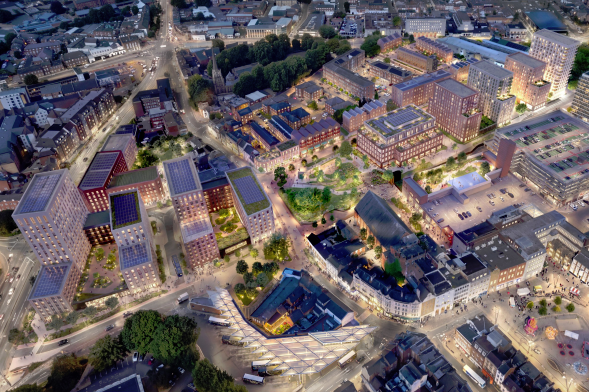
The £2bn York Central regeneration scheme has taken another decisive step forward, with McLaren Property and Arlington Real Estate submitting a comprehensive planning application for the next major building phase. Known as phase 1C, the proposal represents the most substantial package of development brought forward so far and sets the foundations for delivering one of the largest regeneration projects in the country. The application outlines the creation of a new mixed-use district beside York Railway Station, located on a 45-hectare brownfield site that is larger than the scale of the King’s Cross redevelopment in London. The plans include 999 new homes across different tenures, with 20 per cent allocated as affordable housing, marking a significant contribution to meeting local housing need. In addition to residential development, the submission features a 99,188 sq ft innovation hub to support business growth and enterprise, 69,255 sq ft of retail and leisure space, and a 213-bed hotel designed to enhance the city’s visitor offer. Major new infrastructure is also proposed, including a new western entrance to York Railway Station, improving access for passengers and integrating the new neighbourhood with the wider city centre. Extensive parkland, landscaped routes and public realm form a core part of the masterplan, ensuring that the development combines high-quality urban design with generous green spaces. City of York Council is anticipated to make a decision on the application in spring 2026. Headline plans for phase 1C include:• 999 mix-tenure homes, with 20% designated as affordable• A 99,188 sq ft innovation hub• 69,255 sq ft of retail and leisure space• A 213-bed hotel• A new western entrance to York Station• Significant parkland and public realm Earlier reserved matters approvals have already been secured for a 135,000 sq ft government office building and Museum Square, adding momentum to the wider regeneration programme. York Central is being brought forward by a partnership between McLaren Property and Arlington Real Estate, working alongside Homes England and Network Rail. The project team continues to collaborate closely with City of York Council and the National Railway Museum, whose site sits within the broader scheme. With £135m of government funding already secured for enabling infrastructure, the development is set to deliver major economic benefits, supporting up to 6,500 direct and indirect jobs across construction, commercial activity, retail, hospitality and associated supply chains. The project aims to create a thriving live-work-play destination, blending new homes, employment space, community amenities and cultural attractions. Its scale and ambition mark it as one of the most significant regeneration opportunities currently under way in the UK, with long-term benefits expected for residents, businesses and visitors. Tom Gilman, managing director of McLaren Regeneration, said the submission marks an important milestone and demonstrates the project’s continued momentum. He noted that the development aligns with national ambitions to accelerate housebuilding and economic growth, while delivering a modern urban district for York. Leon Guyett, director of regeneration partnerships (York) at Homes England, added that the application illustrates how strategic government investment can unlock transformative regeneration and drive substantial change for cities and communities. Building, Design & Construction Magazine | The Choice of Industry Professionals
Read More »
Green Light for £500 Million Transformation of Maidenhead Town Centre

Green Light for £500 Million Transformation of Maidenhead Town Centre

A major overhaul of Maidenhead town centre has moved a step closer after councillors approved London developer Areli’s long awaited plans to demolish the outdated Nicholson Centre and replace it with a new high rise mixed use quarter. The hybrid planning application, endorsed by the Royal Borough of Windsor and Maidenhead’s planning committee, clears the way for 856 new homes spread across buildings up to 20 storeys tall, along with 55 new shops and commercial units. A ten storey car park providing 452 spaces is also included in the proposals. The scheme involves demolishing almost the entire 1960s shopping centre, with only two existing buildings retained. Four new residential towers of 10, 13, 17 and 20 storeys will take its place. Most of the new homes will be one bedroom apartments, with 100 allocated for residents aged over 75. None of the units will be affordable. Designed by architect JTP, the wider Nicholson Quarter masterplan also introduces a new civic plaza intended to act as the town’s central gathering space. The updated approval replaces an earlier consent granted in 2021 and reflects market changes, including a significant reduction in office space and a drop from the previous 25 storey height peak. Final sign off is subject to a Section 106 agreement, which includes contributions towards local car park improvements. Construction is hoped to begin in the first quarter of next year. Building, Design & Construction Magazine | The Choice of Industry Professionals

Read More »
Nottingham War Rooms to be brought back to life

Nottingham War Rooms to be brought back to life

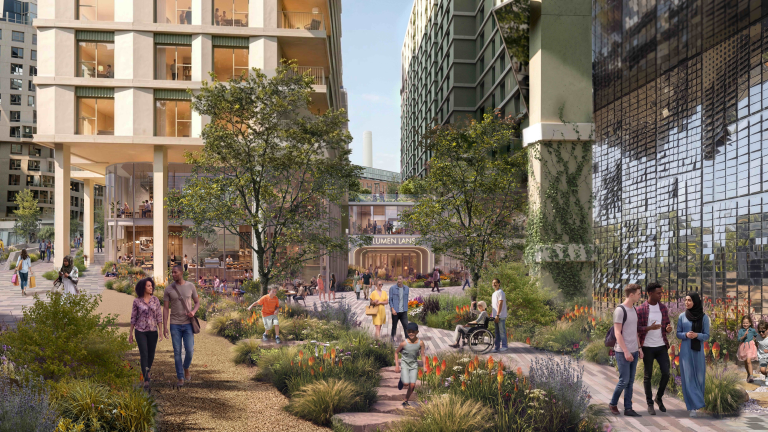
The historic Nottingham War Rooms is set for a major transformation after a planning application led by developer Langcroft received approval. The project will see the iconic site redeveloped into a vibrant mixed-use community hub, alongside the creation of 104 affordable homes for East Midlands Housing Group (emh), with all design work carried out by Nottingham-based CPMG Architects. Situated close to the city centre, the Grade II-listed wartime bunker has long been regarded as one of Nottingham’s most distinctive heritage landmarks. The approval represents a major step forward for a regeneration scheme that aims to combine heritage preservation with new housing and community-focused spaces. Langcroft was appointed to the project through a Homes England tender in 2022, and the development team has since worked to protect the site’s historic character while maximising its social value for the city. Under the approved plans, the 4,563 sq m bunker will be reimagined as a community hub offering workspace, conference facilities, exhibition areas, flexible commercial units, health and wellbeing amenities, food and beverage spaces and media suites. CPMG Architects will also retain several significant features inside the War Rooms, including original 1950s and 1960s rooms such as the Lamson Tube Room, plant rooms, kitchen areas and the former BBC recording studio, which will be restored. Parmi Uppal MSc from Homes England said: “We are pleased to support this important project, which delivers much-needed affordable housing while preserving a historically significant site. The partnership approach taken by Langcroft, CPMG Architects, EMH Group, Historic England and ourselves has been exemplary, and we look forward to seeing the scheme progress into delivery.” Craig Cameron, land and partnerships at Langcroft, added: “This is an exceptionally proud moment for everyone involved. Delivering 104 affordable homes while bringing the historic War Rooms back to life is exactly the kind of development we believe in one that blends heritage with community benefit. The support and collaboration from emh Group, CPMG, Historic England, Homes England and Owl Homes has been outstanding, and we’re thrilled to reach this milestone together.” Originally engineered to function as a protected stronghold in the event of a nuclear strike, the fortress-like structure will undergo significant modernisation to improve accessibility, introduce new entrances, redesign the roof and enhance natural light throughout the building. Sara Harraway, director and interior design lead at CPMG, said: “The plans for the Nottingham War Rooms and surrounding site showcases how the past and the present can align to create a desirable destination for living, working, wellbeing and leisure; it imbues modern design, inspired by its beautifully brutal architectural canvas, to create sustainable and tangible community facilities. As a design team with our HQ so close to the site, the regeneration of the War Rooms is an incredibly exciting project for us, and we’re really proud to be a part of it.” Building, Design & Construction Magazine | The Choice of Industry Professionals
Read More »
Luton’s ‘Stage’ Set for £136m Town Centre Transformation

Luton’s ‘Stage’ Set for £136m Town Centre Transformation

Willmott Dixon has secured Gateway 2 approval from the Building Safety Regulator, paving the way for a £136m regeneration of Luton town centre. Known as The Stage, the flagship scheme will be delivered through the Southern Construction Framework and will transform the former Bute Street Shoppers car park into a vibrant mixed-use neighbourhood. The plans include 292 new homes, ground-floor commercial space, a multi-purpose food and events venue, and a new public garden square designed to act as a focal point for the community. Supported by £20m from the Government’s Local Regeneration Fund, The Stage is a key component of Luton’s town centre masterplan. The project aims to boost footfall, attract new businesses and create a more welcoming environment for residents, visitors and commuters. Sustainability and placemaking sit at the heart of the design. The development will incorporate photovoltaic panels, upgraded insulation and high-performance building fabric to improve energy efficiency. New landscaped spaces will be structured around sustainable drainage systems and biodiverse planting, helping to manage surface water while enhancing the local environment. Located beside the rail station and bus interchange, The Stage occupies one of the most accessible locations in the town. The scheme is intended to make better use of this gateway site, encouraging sustainable travel and supporting the wider regeneration of the surrounding area. Stewart Brundell, chief operating officer at Willmott Dixon’s construction business, said the project represented exactly the kind of comprehensive town centre renewal needed to revitalise urban areas and deliver long-term benefits for local communities. The Luton scheme adds to Willmott Dixon’s growing portfolio of large-scale regeneration projects, which includes the Queen Mary University School of Business and Management redevelopment, the Barnes Hospital regeneration and Oldham’s 450,000 sq ft Spindles Town Square upgrade. Willmott Dixon will deliver The Stage in partnership with Rider Levett Bucknall and WSP. Building, Design & Construction Magazine | The Choice of Industry Professionals

Read More »
Network Rail creates Platform4 to drive brownfield development

Network Rail creates Platform4 to drive brownfield development

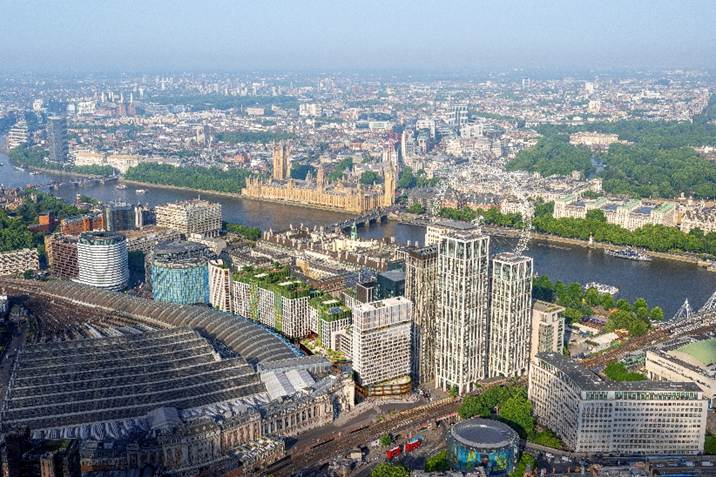
Network Rail has launched a new property development company, with ambitions to deliver 40,000 new homes and 10 million sq ft of commercial space over the next decade. The new business, named Platform4, will focus on regenerating brownfield land within the rail estate. Four initial sites have already been identified in Newcastle, Manchester, Cambridge and Nottingham. Platform4 has been formed through the merger of London & Continental Railways Ltd with Network Rail’s existing Property Development operations. Together, the combined team has a strong track record in housing, commercial and infrastructure-led projects, having delivered more than 7,000 homes in the past year. Robin Dobson, Chief Executive Officer of Platform4, said that the UK’s railways, which once helped drive the first industrial revolution, now had a vital role to play in the next wave of regeneration. He said that by unlocking and transforming brownfield sites, Platform4 would attract further investment, support job creation and help deliver new homes, commercial space and communities in line with the government’s housing ambitions. Jeremy Westlake, Chief Executive of Network Rail, described the launch as a significant milestone, combining the strength of the rail network with a substantial property portfolio. He said Platform4 would help ensure the railway estate continues to create value for both the wider economy and local communities. Building, Design & Construction Magazine | The Choice of Industry Professionals
Read More »