Products & Materials : Building Trade Materials News

Growth Highlighted in Concrete Fiber Market

In recent construction news it has been reported that an increased move towards urbanisation, as well as improvements seen in the wider construction industry, may yet see a notable degree of growth within the concrete fiber market. Highlighted in a report by Transparency Market Research, the report effectively highlights those

Read More »

MPA Warning over Supply & Demand of Aggregates

A worrying statistic; it has been reported that aggregate reserves are being used up at a notably faster rate than permission is being granted for the development of new quarrying capacity – a warning by the Mineral Products Association (MPA) of a tip in the scales of supply and demand

Read More »

The Supply Chain – Utilising Local Contractors

Increasingly, all aspects of the supply chain are facing increased pressured to act with responsibility and sustainability always at the fore. As such, many construction contractors, service providers, designers, architects and even material suppliers are being faced with conditions for work relating to the approach that they take to minimising

Read More »

Industry Tender Prices Insight

For the final quarter of last year it has been reported that, surprisingly, tender prices have remained unaffected since the quarter coming previously, yet prices have been reported to sit 5.4% higher than they were on year previously. These figures a yearly inflation of prices which sits at almost half

Read More »

Windows Just Got Smart Thanks To Revolutionary Innovation

As we move towards a more sustainable economy, our goals have rightly shifted, as has our long-term ambition. With the latest development in window technology revealing the potential to cut cleaning costs and a reduction in heating bills, it is unsurprising to see builders, architects and estate managers eagerly eyeing

Read More »

Sales of Construction Products Continues to Rise, but Slower

Although the overall rate at which the sales of construction-related products is increasing has slowed down, the overall sales figures of such products are still on the rise for the eleventh year running, says a report by the Construction Product Association. The report highlights that over the final four months

Read More »

The Ideal Paints for Renovation Project Surfaces

You may be intimidated by getting out a paint brush and painting your home or workplace, many people are, and this is generally because people are unsure of what paints to use for what surface. But according to DIY Network, anyone can paint a room and get professional results by

Read More »

Emerson Boosted By New Liebherrs

A pair of Liebherr three-axle cranes will boost Emerson’s range and help it remain one of the UK’s leading mobile crane providers in the South. The company, formed in 1991, continues to achieve success thanks to its broad catalogue of products that genuinely add value to customer ambitions alongside proven

Read More »

Thermal Performance Calculation Gets Simpler With Recticel Solution

Recticel is no stranger to industry-leading solutions. Part of the international Recticel Group based in Belgium, its culture of innovation is well-founded while its in-house expertise continues to see it develop products that bring tangible benefits to the PIR market. Customers have become accustomed to reliable, cost effective solutions from

Read More »

Electrorad Brings Home Heating Into The 21st Century

Who knew radiators would get so futuristic? But, as Electrorad’s range of Digi-Line electric radiators proves, heating has entered the 21st century in a big way. The wireless programmer has unveiled a new control hub with wi-fi gateway called Touch E3, an app which allows users to wirelessly control the heating

Read More »
Latest Issue
Issue 339 : Apr 2026

Products & Materials : Building Trade Materials News

Growth Highlighted in Concrete Fiber Market

In recent construction news it has been reported that an increased move towards urbanisation, as well as improvements seen in the wider construction industry, may yet see a notable degree of growth within the concrete fiber market. Highlighted in a report by Transparency Market Research, the report effectively highlights those areas within which the success of the market depends upon, not solely for today, but into the future (2016 to 2023 most specifically). Most commonly used to manage cracks occurring as a by-product of ventilation shrinkage and the reduction of plastic, concrete fibers represent one of the most favourable reinforcement materials as a direct result of the physical, and chemical attributes held within. In particular, concrete fibers are reported to offer a high degree of resistance, stability and the overall strength of the material as a result of its particular environmental, chemical, mechanical and optical attributes. In the report, a degree of expansion has been predicted in the coming years, with the aforementioned reasoning sitting behind this. Additionally, reduced boundaries to entry in the sector has also seen an increasing competitiveness in the industry, with new industry players popping up to serve the specific requirements of smaller development projects; something to which a degree of growth thus far can be attributed. As to where the emerging markets for concrete fibers lie, Asia Pacific has been highlighted as one of those markets enjoying a great deal of growth, with the areas having enjoyed some 40% of the global market back in 2014. As such, there are great hopes and expectation for further growth within this market, amongst others, in the times to come. Whether the market will indeed fall in the line with the predictions made is, as always, uncertain, however the positive outlook portrayed by Transparency Market Research is to which organisations in the sector may find hope in, with the potential to benefit from renewing market confidence levels and growth out of the recession.

Read More »

MPA Warning over Supply & Demand of Aggregates

A worrying statistic; it has been reported that aggregate reserves are being used up at a notably faster rate than permission is being granted for the development of new quarrying capacity – a warning by the Mineral Products Association (MPA) of a tip in the scales of supply and demand for key construction materials. The warning of the supply and demand situation was showcased in the MPA’s Annual Mineral Planning Survey, which covers the period up to the close of 2014, incorporating data submitted by the association’s members from around the UK. As the construction industry as a whole recovers, with increasing workloads and developments coming to the fore, so too has the demand for aggregates. Yet, whilst this would seem like a very positive result for key aggregate suppliers, dwindling reserves and the inability to develop further capacity quickly enough may prevent suppliers from truly taking advantage of the surge in demand. As such, the MPA has urged local authorities to reassess mineral plans and hasten the planning process for new capacity. Other key areas aside from aggregates in a similar situation include the supply of sand and gravel. Shockingly, it was actually reported that reserves are being used at a rate two times as high as the new capacity is being facilitated. And while crushed rock is a material being superficially restocked, it has been argued that this simply acts as a shroud over the lack of replenishment seen across other key construction materials. Yet, it has been argued that it isn’t a case of an actual lack in the availability of raw materials, but simply ineffectiveness in the arrangement of mineral plans. Nigel Jackson, Chief Executive of the MPA commented: “With over half of new permissions being for sites that have not yet been allocated in mineral plans, it is clear that the plan led system is not providing the certainty that it should.”

Read More »

The Supply Chain – Utilising Local Contractors

Increasingly, all aspects of the supply chain are facing increased pressured to act with responsibility and sustainability always at the fore. As such, many construction contractors, service providers, designers, architects and even material suppliers are being faced with conditions for work relating to the approach that they take to minimising their environmental impacts, as well as providing sustainable solutions for clients so as best to support the future growth of the sector. Whilst, to some degree, this is seeing many organisations make a clear push towards effective corporate social responsibility (always a good thing), the most notable achievement is the ever-increasing emphasis placed on the effective utilisation of local labour, contractors and increasingly, suppliers. Whilst many construction companies do indeed have a list of dedicated suppliers for key materials, subcontractors and specialist services, it is increasingly being seen that many projects will maintain a healthier balance of those contractors involved, with a clear mixture of national and local supply chain partners. What this effectively means is that, whilst national supply chain partners are still, in effect prospering, the doors yet remain open for smaller, local businesses who wish to engage in incredible feats of construction. Beyond face value, this not only means that local businesses are able to access more areas of work, should they pursue it with the right contractor, but it also gives such businesses the chance to work on key local developments which may form a part of the communities within which they work. Additionally, as is usually the case with smaller supply chain partners, a keenness to impress main contractors has also been observed which, firstly has helped to support the delivery of high quality works and services yet, secondly also allows for easier relationship development between main and sub contractors who recognise the need to make an impression on any and all works which they secure.


Read More »

Industry Tender Prices Insight

For the final quarter of last year it has been reported that, surprisingly, tender prices have remained unaffected since the quarter coming previously, yet prices have been reported to sit 5.4% higher than they were on year previously. These figures a yearly inflation of prices which sits at almost half the value we’re used to, giving a positive indication of effective workload management at leading contractors despite surging amounts of work – a clear highlight of how well the industry is starting to perform. The report, put together by the BCIS, highlights its predictions of tender pricing increasing by some 3.3% over the course of the upcoming year, with further increases of 4.5-5.5% each year thereafter up to 2020 (perhaps even further). Additionally, it has been reported that the prices for materials actually fell by some 1.1% in the penultimate quarter of last year when compared to the quarter previous, with it coming in at 2.3% on a yearly basis. This has been perceived to be countering inflation of 1.1% during the same quarter of last year, and can be partially attributed to the sudden fall in crude oil and steel billet prices which will have contributed to the fall in material pricing. Yet, despite the recent fall in pricing, it has been estimated that the yearly rate at which pricing for materials will change will sit at around 2% by the final quarter of the year, then surging to circa 4% year-on-year for the next four years. Also, wages have been predicted to grow by 3-4% year-on-year for the next five years, with input costs expected to match this same rate of growth. This also sits well alongside the expected growth to be seen in new work output, which is expected to persist with its present growth rate and hit around 4% growth for this year, 3% next and back up to 5% by 2020.

Read More »

Windows Just Got Smart Thanks To Revolutionary Innovation

As we move towards a more sustainable economy, our goals have rightly shifted, as has our long-term ambition. With the latest development in window technology revealing the potential to cut cleaning costs and a reduction in heating bills, it is unsurprising to see builders, architects and estate managers eagerly eyeing the true benefits of “smart windows”. Believed to be on track to hit the market within five years, University College London (UCL) has produced a prototype that confirms three major benefits. Firstly, the windows offer “self cleaning”. It accomplishes this by being ultra-resistant to water, the material making any moisture hitting its surface form spherical droplets that roll away. As they do so they pick up dirt along the way, removing dust, debris and other contaminants. This is achieved through a conical design; a pencil-like nanastructure etched on the glass which enhances the smart window’s abilities by trapping air and thus allowing only a small amount of water to settle on the surface. This is in comparison to traditional glass which allows rain to settle on the surface and stay there, leaving streak marks as it rolls away. Crucially, the glass also saves energy. Utilising a tiny layer of low-cost vanadium dioxide the glass is capable of stopping thermal radiation from escaping during cold periods preventing heat loss. Meanwhile, when the season changes, the glass stops sunlight radiation penetrating the building. The value and size of vanadium dioxide makes it ideal and a better, more sustainable option over other glass coatings like silver or gold based layers. UCL believes it will enable the glass to help reduce heating costs by up to 40%. In addition, the structure offers anti-glare capabilities – dramatically cutting light reflection internally – that has been estimated to have the anti-reflective capabilities of moths and such creatures that have evolved to evade predators. Dr Ioannis Papakonstantinou, UCL project leader, noted the innovative characteristics of the smart window calling the product a “self-cleaning, highly performing” piece of technology. Discussions are currently underway with glass manufacturers in the UK. Key ambitions going forward involve scaling up the nano-manufacturing methods.  

Read More »

Sales of Construction Products Continues to Rise, but Slower

Although the overall rate at which the sales of construction-related products is increasing has slowed down, the overall sales figures of such products are still on the rise for the eleventh year running, says a report by the Construction Product Association. The report highlights that over the final four months of 2015 overall sales have risen at a slowed rate than previously, yet manufacturers of such products still remain very positive as to the future of the industry over the course of 2016. Another positive aspect of the report was that many UK manufacturers have, in fact noticed a notable reduction in costs associated with energy, fuel and even on the exchange rate. However, on the flip side, the costs associated with staffing organisations has been noted to rise somewhat, which, while a very positive figure for employees in the sector, will also be reducing the benefit employers are seeing from the decreased operational costs. As Rebecca Larkin, Senior Economist for the CPA explains, the figures do highlight positive growth for construction-related products yet, with regard to heavy manufacturing, the figures actually highlighted the lowest balance within a quarter over the past 3 years. She commented that this: “Echoes weakness in overall construction output data for the closing months of last year.” Yet, those operating within the sector do seemingly remain confidence of its success. One of the key factors to which we can attribute the lessening of energy prices is the oft-reported fall in oil pricing around the world, which has greatly assisted manufacturers in maintaining commercial growth despite relatively shaky economic climate. With regard to the change in employment costs, the rise in pay did not, in fact show up the figured expected by inflation and recognition for performing employers, but the widely-reported skill shortages have acted as a catalyst for employees demanding increased wages which have consequently increased bills.

Read More »

The Ideal Paints for Renovation Project Surfaces

You may be intimidated by getting out a paint brush and painting your home or workplace, many people are, and this is generally because people are unsure of what paints to use for what surface. But according to DIY Network, anyone can paint a room and get professional results by working efficiently, neatly and with careful preparation. Below we’ve created a handy guide to painting, listing the different types of paints, and what they are used for. Use anti mould paint in bathrooms This might seem quite obvious but, by using anti mould paint in your bathroom, you won’t have to redo the paint for a long period of time. This is because anti mould paint contains specialised additives in order to create barriers, and prevent mould from occurring. If mould has already started to grow, then use a cleaner to get rid of it first. Prime your radiator before painting Before painting your radiator, ensure it is turned off and cooled down! If you spot any sections that have rusted over the years then use sandpaper to remove the rust. Once clean and rust-free, you can use a primer before applying the top coat. Use solvent-based paints for your radiator, such as non-drip or satinwood which you can find in a range of colours. Satin for bedrooms is advisable Satin paint is usually the best for bedrooms, this is down to them being easy to clean, easy to maintain and durable. Machperson paint is popular, this is because of the quality finish it provides, the large range on offer, and how easily it dries. Matt Emulsion is recommended for ceilings The majority of people tend to use Matt Emulsion paints for ceilings due to their toughness, durability and the ability to be wiped down easily. Matt Emulsion paints are also non-reflective, which is exactly what you need for a ceiling. Undercoats and topcoats are perfect for woodwork For woodwork you’ll need both an undercoat and topcoat and you can choose from either oil-based or water based. The advantages of oil-based paints are that they are hard-wearing and cover well, however the disadvantages include; smelling until they dry and having to use white spirit to get the paint off your brushes. The advantages of water based paints are that they’re easy to apply, don’t smell much and you can clean your brushes with water. But the disadvantages are that you need more coats of paint to get a good finish and they don’t last as long as oil-based paints. Use exterior paint brands for the outside There are a variety of exterior-based paints that you can use for the outside of buildings, depending on what you require. For example Zinsser Perma-White Interior/Exterior Gloss and Satin Paint is great due to resisting cracking, peeling and blistering for up to 7 years before needing a fresh coat. Johnstones Solar Reflective Paint is ideal for roofs that are exposed to direct sunlight. Image source: www.flickr.com/photos/unitedsoybean/10481728754/in/photostream/

Read More »

Emerson Boosted By New Liebherrs

A pair of Liebherr three-axle cranes will boost Emerson’s range and help it remain one of the UK’s leading mobile crane providers in the South. The company, formed in 1991, continues to achieve success thanks to its broad catalogue of products that genuinely add value to customer ambitions alongside proven efficiency, quality and safety. Its latest cranes are two Liebherr LTM 1060-3.1 all-terrain mobile cranes, the three-axle units benefiting from full specification which includes the safe-lifting control system VarioBase providing better overall management of the crane in spite of the specific set-up of the outriggers. With a maximum lifting capacity of 60 tonnes, the LTM 1060-3.1 is great when operated at close radius with its five-section boom extending to 48 metres. Its ability to travel on UK roads is supported by its capacity to remain within STGO regulations even when carrying over a dozen tonnes of counterweight. Moreover, install the double fly jib and the maximum lifting height is increased to 63 metres. The new cranes also benefit from Liebherr enhancements such as Kenwood radios and in-cab Bluetooth with external microphone. Emerson, which enjoys a strong relationship with Liebherr thanks to its attentive customer service and reliable product, gains from the crane-provider’s expertise across the earth-moving and material handling operation where it produces industry-leading mining and quarrying machinery, as well as ancillary equipment supporting its tower and mobile crane units.    

Read More »

Thermal Performance Calculation Gets Simpler With Recticel Solution

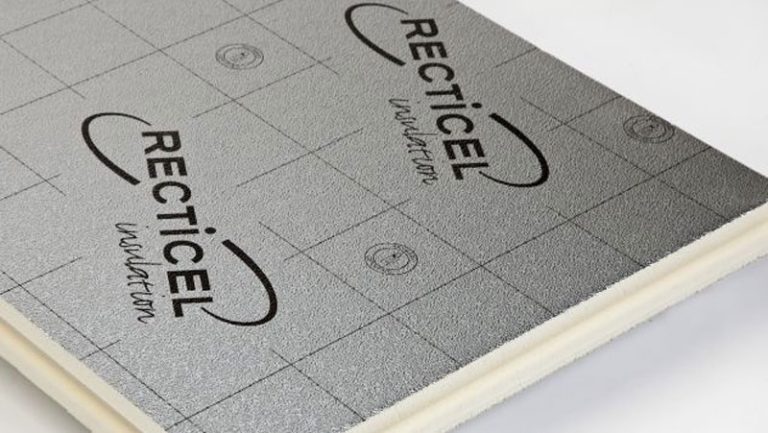
Recticel is no stranger to industry-leading solutions. Part of the international Recticel Group based in Belgium, its culture of innovation is well-founded while its in-house expertise continues to see it develop products that bring tangible benefits to the PIR market. Customers have become accustomed to reliable, cost effective solutions from Recticel’s state of the art facility in Stoke which is certified under BS EN 1SO 9001:2008 and BS EN ISO 14001:2004 for its quality and environmental practices. Its reputation is built upon a technical knowledge like few others thanks to the experience of its in-house team, supporting clients on the best PIR insulation product for their needs. Its latest innovation is less a technology ground-breaker and more an initiative to offer better value. Its new u-value calculator has been produced to help those needing to establish the thermal performance of a building. It will be made freely available by Recticel. The product has wide coverage across Recticel’s portfolio which includes cavity walls, timber and steel-framed walls, floors, soffit lining applications and flat and pitched roofs. It has been specifically designed to provide quick access to accurate calculations of common instructions. Paul Forrester, Recticel technical specialist, called it a “user-friendly” enabler, citing the opportunity for users to gain calculations close to the standards required by the Competency Scheme without having an accredited contractor there to perform it themselves. He said Recticel supported the BBA’s benchmark for u-value calculation but acknowledged that customers at times want to carry out their own work. This latest product will enable users to get a quick “ready-reckoner” or experiment with different solutions to get a better u-value rating. The registration-free calculator is a modified version of the company’s own software. Recticel ensures that calculations comply with the latest regulations surrounding the built environment and carbon reduction programmes alongside providing advice on installation best practices and such elements as condensation risk analysis.      

Read More »

Electrorad Brings Home Heating Into The 21st Century

Who knew radiators would get so futuristic? But, as Electrorad’s range of Digi-Line electric radiators proves, heating has entered the 21st century in a big way. The wireless programmer has unveiled a new control hub with wi-fi gateway called Touch E3, an app which allows users to wirelessly control the heating of their home. This allows complete management of the home heating experience and provides users the ability to activate radiators where ever they be in the world. Just got off a plane and are two hours from home? Get the house warmed up before you get there with Touch E3! “We are excited to take this revered range to a whole new level,” said managing director, Richard Brown, revealing that the Digi-Line range was named one of the best products of 2015 by Professional Electrician. “Digi-Line is renowned for providing an efficient and easy-to-control alternative to traditional gas central heating, and this latest technology will now facilitate the ultimate in flexibility and energy management, enabling homeowners to match their heating to their lifestyle.” Features include constant and auto programming modes, as well as providing better management of frost protection, holiday modes and other elements of the heating system. The easy-to-use software is enhanced by the use of smartphones, tablets or PCs having access to the entire management of heating controls. Users can even set rooms to different temperatures depending on their needs. In addition, data capture will allow users to cut costs, increase energy efficiency and save their own precious time through the CleverTouch App. The device will even tell users the exact temperature in every room with additional information adding to the flexibility of the functionality of the device such as an indication of the thermostat set point and the current heating mode. Digi-Line radiators have proven popular with plumbers in recent years when seeking heating systems for domestic extensions such as conservatories because they can be fitted without having to run from the existing boiler. That’s because the radiators, which are available in many different types and sizes like their gas-powered cousins, are filled with thermal fluid which is heated by energy-efficient elements evenly across the surface.  

Read More »