Trades & Services : Property & Facilities Management News

The Construction Industry’s Latest Health and Safety Statistics

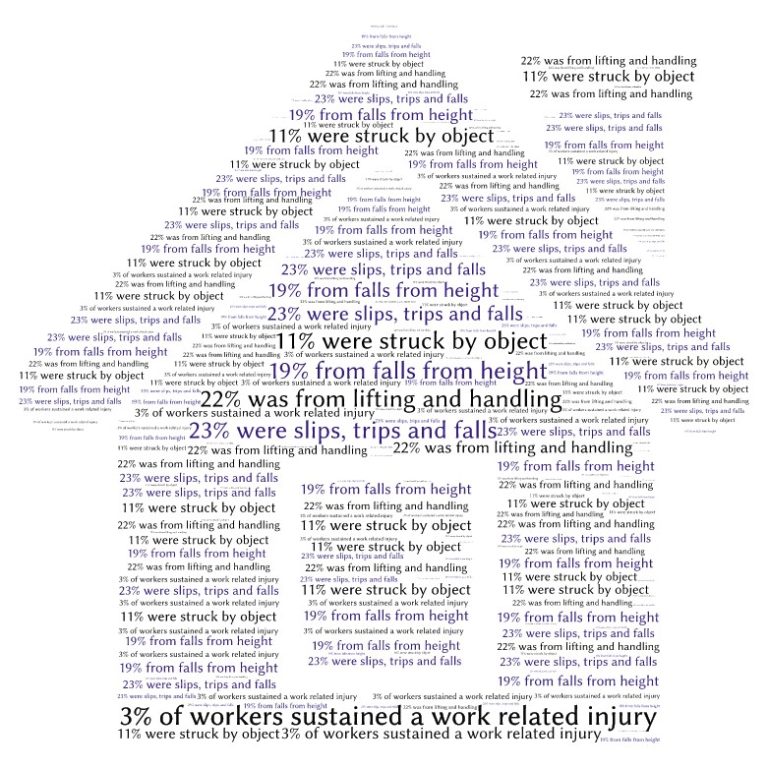
The Construction Industry’s Latest Health and Safety Statistics We know that work related injuries can occur in any commercial sector, and that companies should adhere to health and safety regulations to decrease the amount of accidents occurring. This 2014-2015 health and safety report indicates that:   While 3% of workers

Read More »

Construction growth in 2016 to be driven by offices and housing

A near-doubling in office starts will help to drive a 6 per cent increase in total project starts in 2016, according to new forecasts. The data from construction intelligence unit Glenigan points to total growth of 6 per cent in the value of starts during 2016 compared with 2015, driven

Read More »

Work-related illness within the building industry

Between 2013 and 2014, 1.2 million people in Britain were suffering from a work-related illness. There were 629,000 injuries at work and 27.3 million working days lost. Of these injuries, 142 workers were killed. 2,538 people died from mesothelioma in 2013 too, underlining the dangers of working in industrial environments.

Read More »

SNORKEL SECONDARY GUARDING SYSTEM NOW FITTED AS STANDARD

Snorkel, the global manufacturer of aerial work platforms, is pleased to announce that effective 1st September 2015, all new Snorkel boom lifts with platform heights of 40-feet (12.1m) and above, will be fitted with Snorkel Guard™ as standard. Unveiled at The Rental Show 2015, Snorkel Guard™ is the company’s secondary

Read More »

Jackpad has completed a series of prestigious contracts

Leicester-based Jackpad has completed a series of prestigious contracts, including foundations for office units at Severn Trent Water’s Netheridge plant and at Willmott Dixon’s latest student flat building project  in Brighton. The company’s portable foundations are suitable for single, two and treble storey modular buildings and are growing in popularity

Read More »
Latest Issue
Issue 335 : Dec 2025

Trades : Property & Facilities Management News

The Construction Industry’s Latest Health and Safety Statistics

The Construction Industry’s Latest Health and Safety Statistics We know that work related injuries can occur in any commercial sector, and that companies should adhere to health and safety regulations to decrease the amount of accidents occurring. This 2014-2015 health and safety report indicates that:   While 3% of workers suffered injuries that they believed to be work related: 15% were from other illnesses. 20% were from stress, depression and anxiety. 64% were musculoskeletal disorders. Annually around 69,000 construction workers in Great Britain were suffering from an illness which they believed to be caused or made worse by their work. A breakdown of this is: 45,000 were cases of musculoskeletal disorders. 14,000 were cases of stress, depression or anxiety. 10,000 were cases of other illnesses. Other illnesses include; respiratory disease, occupational asthma, silicosis and chronic obstructive pulmonary disease (COPD). Other health conditions that can affect construction workers include occupational cancer and skin disease. The report however, also shows that over the last decade the rate of work-related illnesses have had a downward drift. The annual average rate for 2013/2014 is around a quarter less than from 2003/2004. From this musculoskeletal disorders have also decreased, whereas depression and anxiety have remained level. Further information on this report can be found at hse.gov.uk. Building maintenance is essential in making sure employers are compliant with health and safety regulations. For PAT testing, drainage solutions, or for anything else contact Chequers Contract Services.

Read More »

The consequence of a scaffolding collapse – three injured, one seriously

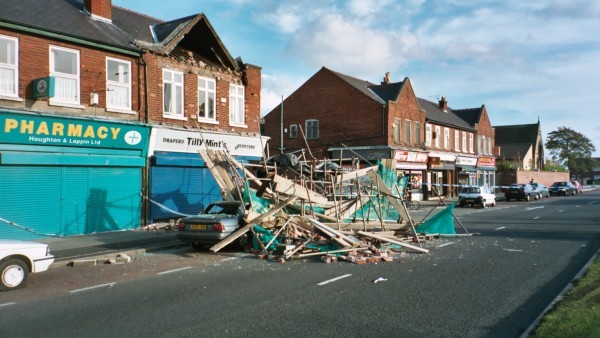
Working from height remains one of the biggest causes of fatalities and major injuries in the UK. In the first of a four-part series, David Thomas reflects on 40 years of progress.   “Those who work at height should never forget that gravity is no respecter of persons. It affects everyone; too many times with disastrous consequences resulting in serious, permanent injuries or death…” So declares the foreword to BS 8437. [1] Gravity is a part of nature that will never change and its consequences have affected countless individuals since the dawn of time. Much has been published over the last 40 years to catalogue the toll of misery. Much has been undertaken to improve the planning of work at height; new products have come to market and new techniques adopted to help make work easier, safer and more cost-effective. New regulations have also acted as both a catalyst and a driver in requiring, and promoting, suitable and sufficient measures to be taken. A number of historical reports provide essential reading for all construction and safety professionals. The four that are reviewed below all include ‘work at height’. The past Construction [1978] [2] was published to place the 1976 accident statistics in an historical context and, “… focuses attention on relatively simple measures which, if tackled nationally, could dramatically reduce the toll of accidents in the construction industry…”. In an interesting review of the development of legislation in construction the report concludes, “… whereas legislation has applied to an ever wider range of building and construction activities, the causes of fatal and serious accidents have generally remained the same for the last 60 or 70 years; falls of persons, particularly from ladders, roofs and scaffolds…”. There were 154 fatal accidents in building operations (117) and engineering construction (37) in 1976. The “… somewhat gloomy, if predictable, message… is that although overall accident levels may vary from year to year, the construction industry continued … to be unable to cope with a large number of well-known and well documented problems…”. The incidence rate of fatal accidents was 15.7. Falls of persons accounted for 30 per cent of all reported accidents in construction processes and 48.1 per cent of fatal accidents. Accidents from ladders and stepladders were consistently the highest category of falls, with the principal cause of ladder accidents being the failure to tie or to satisfactorily foot the ladder. The second highest category of falls was of persons and materials from working platforms, in particular during the erection, alteration and dismantling of scaffolds. It was noted that, “Techniques and equipment should be developed for the scaffolding industry …”. The similarity in the rate of accidents from platforms less than 6 ft 6 inches above the ground and those from platforms above this was noted. Examples of prohibition notices against steelwork erectors were given. It was suggested that, “Further research by the industry is necessary into methods of securing the safety of persons laying roof sheets at exposed edges… consideration should be given to… the proper use of safety nets …”. In terms of fragile roofs, “… All too often, inspectors find that no precautions have been taken or that they were wholly inadequate. Although the provision of suitable crawling boards, crawling ladders and duck boards is quite simple, too often little attention is paid to preventing them slipping, tipping or otherwise being displaced.” Opinion is expressed that, “One of the basic problems is that serious accidents are regarded as happening only to other people. Hazards seen on site are not connected with the accidents which they could cause …”. Safety in Steel Erection [1979] [3] stated, “The incidence rate for injury and death for steel erection workers present a particularly serious problem…” Investigation of accidents revealed, “…a widespread belief that a pre-requisite for the task of fixing steelwork at heights is a state of mind which consciously accepts risks which would be unacceptable to most construction workers… although safety belts and harnesses are often available, they are seldom used and the provision of safety nets is rare…”. Between 1961 and 1969 there were 253 fatalities of steel erectors, equating to 21 per annum (a rate of 1 in 60). With very few exceptions the facilities provided for steel erectors to gain access to their working places was, “…exceptionally poor…”. In terms of working platforms, in the majority of cases little or nothing was done and erectors were, “… left to fend for themselves…”. Very few safety nets were used on steel erection sites and safety belts, although usually available, were, “… seldom worn …”. There was, “…no doubt that steel erectors are prejudiced against the use of safety belts and harnesses and it is likely that only a few have even tied to use them…”; a multiplicity of objections being cited. Used correctly, “…safety belts and harnesses can save lives or prevent serious injury …”. It was noted that where it was possible to the drop to exceed 2 ft the shock of the arrest of the fall should be distributed by the use of a safety harness as distinct from a belt only. Roofs, a study of fatal accidents at work [1985] [4] – part of the series Deadly Maintenance – outlined the dangers to which people are exposed while engaged in maintenance work on roofs, based on information contained in reports of fatal accidents in 1980, 1981 and 1982 and with the aim of promulgating the lessons learnt first-hand by some people at the cost of the life of a colleague or friend. A detailed analysis is made of fatal accidents on roofs (63), with the largest number being falls through fragile roofs (30). It is reported, “… It is clear that over 80 per cent of the accidents could have been prevented. Management and workforce alike seem unable to appreciate, or chose to ignore, the obvious and ever present risk of falling during roof work…”. It was determined that absence or failure in system of work (26) and absent or unsafe equipment, working

Read More »

Construction growth in 2016 to be driven by offices and housing

A near-doubling in office starts will help to drive a 6 per cent increase in total project starts in 2016, according to new forecasts. The data from construction intelligence unit Glenigan points to total growth of 6 per cent in the value of starts during 2016 compared with 2015, driven by a 49 per cent increase in office starts. Offices is expected to be by far the strongest performing sector, its growth rate significantly ahead of second-placed private housing, which is forecast to see starts increase by 11 per cent. Other areas forecast to see robust growth in 2016 include community & amenity (10 per cent) and health (6 per cent), with the latter recovering from a low base, having contracted by 21 per cent in 2015. Retail (5 per cent), civil engineering (5 per cent) and hotel & leisure (3 per cent) are expected to record more modest growth in starts during 2016 compared with the previous year. Only three of the major sectors are forecast to see a fall in project starts during 2016: education (-2 per cent), industrial (-3 per cent) and social housing (-17 per cent). The industrial sector is nevertheless declining from a high base, with starts having grown 49 per cent in 2014, and a further 10 per cent rise expected in 2015. However, next year’s predicted fall in social housing represents the third consecutive decline in the sector, following a 1 per cent fall in starts in both 2014 and 2015. Wales is forecast to see the fastest growth in project starts of any UK region during 2016, with an increase of nearly 30 per cent. However, this is from a low base, after starts in Wales declined by an estimated 18 per cent during 2015. Elsewhere, Scotland, the South-west and London are forecast to see significant growth in starts next year, with modest increases expected for the South-east and the North-west. The East Midlands and the East of England are both expected to see a dip in starts during 2016 compared with a year earlier, owing to a decline in industrial starts.

Read More »

Work-related illness within the building industry

Between 2013 and 2014, 1.2 million people in Britain were suffering from a work-related illness. There were 629,000 injuries at work and 27.3 million working days lost. Of these injuries, 142 workers were killed. 2,538 people died from mesothelioma in 2013 too, underlining the dangers of working in industrial environments. Of all the industries, construction, agriculture, forestry and manufacturing had a significantly higher rate of injury than others. Slingsby, a workplace equipment supplier, has provided a guide to some of the most common injuries workers may experience and how to avoid them. Asbestos-related disease 5,500 cases of work-related cancer are estimated each year in the construction industry. Of these cancers, lung and mesothelioma are the most common. The leading cause of death is exposure to asbestos. Solution: Your employer should have rules regarding asbestos. If you suspect there’s asbestos present, stop working and speak to the building owner or your employer. Ensure you have the correct protective equipment and a proactive policy around washing and cleaning to avoid contamination. Avoid methods that will throw up dust such as power tool usage. Avoid smoking or reusing disposable clothing. Slips, Trips and Falls If you’re stationed in an office, don’t think you’re out of danger — far from it, in fact! The most common workplace injuries come from trips and falls on slippery flooring. In 2007 to 2008, four of every 10 injuries at work were due to slips and trips. Solution: Slippery flooring should be marked with signage or protected with carpet or anti-slip tape. Muscle Strains Every time you’re required to lift something, you should take the right precautions. One of the highest percentages of injuries comes from manual handling, as lifting with incorrect form can strain your back or neck, so take care when lifting even trivial items like boxes. Solution: Lift from your legs rather than your back and ask for proper training if it’s going to be a frequent part of your job. Make sure your back is straight when lifting and ask a colleague to help if it feels too heavy. Falling objects Depending on your workplace, falling objects can be extremely dangerous. On building sites especially, a dropped object can become a fatal projectile. Solutions: Wear your protective equipment whenever you’re on site. Always be aware of people working above you and know the risk. Repetitive strain injury Even if you’re involved with construction but don’t spend much time on site, you’ll have to be aware of the risk of RSI. The problem can grow if left unchecked, so mention to your employer. Solutions: RSI can be prevented with regular breaks, so make sure you take time away from your desk to reinvigorate yourself and prevent injury. You can also ask your employer to bring in ergonomic workstations. Cuts and lacerations When you’re handling any equipment with a bladed edge you should be extra careful. Often this is a case of common sense, but you should always wear gloves and eye protectors when you need to handle bladed equipment such as circular saws. Solutions: A first aid kit or qualified first aider should be near any cutting equipment. Sound pollution If you work in a factory or near loud machinery, you need to be aware of industrial deafness. 130 claims were made in 2014for industrial deafness, a rise on figures in 2012 and 2013 but still an overall fall from figures in 2003 and 2004. Solutions: Ear protectors should be worn if working close to machinery. Frequent breaks should be permitted. With the right precautions, you’ll be protected from the most common injuries in the workplace. You can read more about other injuries here.

Read More »

SNORKEL SECONDARY GUARDING SYSTEM NOW FITTED AS STANDARD

Snorkel, the global manufacturer of aerial work platforms, is pleased to announce that effective 1st September 2015, all new Snorkel boom lifts with platform heights of 40-feet (12.1m) and above, will be fitted with Snorkel Guard™ as standard. Unveiled at The Rental Show 2015, Snorkel Guard™ is the company’s secondary guarding solution. Designed in-house by Snorkel’s engineering team, the simple, mechanical system features a spring-loaded rail that sits above the upper control panel which cuts out machine operations when compressed, for example, in the case of the operator being involuntarily pushed against the controls. The operator can override Snorkel Guard™ using a switch in the platform, in the event that the system is activated in error. Additionally, when Snorkel Guard™ is activated, the lift can be operated from the lower control panel. Snorkel Guard™ has undergone extensive field-testing and has already received high praise from a major global contractor, who favors the simplicity of Snorkel’s design over other more complex systems on the market. Matthew Elvin, Snorkel CEO, said “Snorkel Guard™ is a robust and simple design which does not add any complexity to the lift, yet offers an additional level of protection for the operator. Operator safety is paramount, which is why we have rolled out the system as a standard feature globally, as well as offering it as a retrofit solution.” All new-build Snorkel boom lifts with platform heights of 40-feet (12.1m) and above will be fitted with Snorkel Guard™ as standard from 1st September 2015. In addition, the Snorkel Guard™ system can be easily retrofitted to most Snorkel booms in the field. Available globally, the retrofit kit can be ordered via Snorkel Customer Services or official Snorkel distributors. For regional contact details, visit www.snorkellifts.com.

Read More »

BALI statement on the 30 per cent spending cuts agreed with Defra and DCLG

The British Association of Landscape Industries (BALI) acknowledges that cuts in government departmental spending are necessary to bring public finances back into surplus by 2019/20. What is of concern, however, is that the progress made to date by the landscaping and horticulture industry with Defra and the DCLG could be compromised as a result of the agreed 30 per cent cuts. BALI and other industry bodies are working in a collaborative manner with government departments through the All Party Parliamentary Gardening and Horticulture Group (APPGHG) on a number of key issues affecting our industry, including the chronic skills shortage, the implementation of the National Living Wage, and local authority contracts. Making savings in genuine back office areas is a positive step, assuming that valuable contacts made by the industry within these departments are not lost. This would mean that we struggle to obtain the level of support and recognition we need from government to ensure that landscaping and horticulture is kept at the top of the green infrastructure agenda. It is unclear from the Chancellor’s speech where precisely major cuts to spending will be made and how this will affect us. BALI hopes that his mention of focusing on ‘green jobs’ to grow the economy includes not only ‘green technologies’ but also the landscaping and horticulture industry, which does so much to deliver a sustainable and ‘green’ environment.

Read More »

Long established Heming Group creates new jobs and expands into plumbing services

Family owned Heming Group, which has been trading for nearly 50 years from its Cotswolds base, has announced an expansion drive with a move into plumbing services and the creation of new jobs. The company in Willersey, near Broadway, has launched a domestic plumbing division in Major Building Services, one of four companies in the group. As well as Major Building Services, Heming Group comprises Heming Civil Engineering and Construction Contractors, Ford Electrical and Heming Agricultural and Plant Engineers. Heming Group, which has over 40 employees, has diversified into plumbing in response to a surge in demand for the service from new and existing clients. The company is also creating five new jobs for a plumber, project manager, administration assistant, estimator and air conditioning and refrigeration engineer. Peter Heming, Managing Director of Heming Group, which operates throughout the Midlands and Cotswolds, said: “We have a really hardworking and dedicated team and by recruiting new staff and adding our new domestic plumbing service we are building even firmer foundations for the future. “One of the trades we get asked about most is plumbing.  A lot of our customers will already know that for many years we have been responding to emergency situations involving private and mains water supplies. We are delighted to introduce plumbing services as another string to our bow.” www.heming-services.co.uk  

Read More »

Jackpad has completed a series of prestigious contracts

Leicester-based Jackpad has completed a series of prestigious contracts, including foundations for office units at Severn Trent Water’s Netheridge plant and at Willmott Dixon’s latest student flat building project  in Brighton. The company’s portable foundations are suitable for single, two and treble storey modular buildings and are growing in popularity due to their excellent environmental credentials.  Exhibiting at the Offsite Construction Show last month, Jackpad was delighted with the response from new potential customers.  Managing Director Kris Cartwright said: “We know how well the Jackpad system performs in practice, it’s just a case of ensuring that key customers know about us.  We’re finding that some projects that otherwise would not get past the feasibility stage discover that Jackpad is the solution that makes the difference. A recently completed project for Costain at Severn Trent’s Netheridge Treatment Works is a good example of where the Jackpad system made an otherwise difficult project quite straightforward.   Lloyd Maddon of Costain Natural Resources Division said: “We found the Jackpad system a really safe and efficient alternative to the traditional option of installing concrete pads to support temporary cabins/office units.  The system was easy to install, flexible and offered flexibility to the installation process.  It also mitigated the health and safety hazards (manual handling/Coshh) associated with the alternative concrete solution.  I would not hesitate to recommend it.” Willmott Dixon chose Jackpad for a block of flats in Brighton where it required site offices to be in place for a 52 week period.  “This comment from Kevin Moon, Senior Build Manager of Willmott Dixon Housing Limited (London and Southern Counties) outlines how operational improvements have been demonstrated: “Just to confirm that I was very pleased with the Jackpad installation all carried out in under one working day.  Before becoming aware of the Jackpad system we had planned a concrete slab solution to place the cabins on.  This has saved a large amount of work to install the slab and remove it when we leave site, and also our Environmental KPI’s will reflect a far more environmentally friendly solution.  Thanks for a job well done.” For more information about Jackpad visit www.jackpad.co.uk

Read More »

Considerate Constructors Scheme honours top companies at National Company Awards ceremony

‘Most Considerate Company 2015’ awarded to:  A-one+ Area 12; Devon Medical Turnkey Solutions; T. A. D. Builders; and Yarlington Property Management.      The Considerate Constructors Scheme – the national scheme established by the construction industry to improve its image – has awarded the top accolade of ‘Most Considerate Company 2015’ to four companies at the National Company Awards 2015. Award winners faced stiff competition with only the highest performing companies receiving an award this year; 20 Gold, 29 Silver and 46 Bronze Awards were presented. From the Gold Award winners, a shortlist was produced of the very highest performers and four companies received the top accolade of Most Considerate Company while seven other companies that were considered for this award were presented with the title of Most Considerate Company Runner-up. The awards recognise companies that have registered with the Scheme and have demonstrated exceptional and ongoing commitment to considerate construction and an appreciation of the impact of their work on the community, the environment and their workforce. For the first time ‘value bands’ were introduced to enable companies to be assessed based on their turnover; >£10m; £3.5m-£10m; £250k-£3.5m; <£250k. A-one+ Area 12 (>£10m), Devon Medical Turnkey Solutions (<£250k), T. A. D. Builders (£3.5m-£10m), and Yarlington Property Management (£250k-£3.5m) each received this ‘best of the best’ Most Considerate Company 2015 Award, for their outstanding achievements in exceeding the requirements of the Scheme’s Code of Considerate Practice. A-one+ Area 12 provide construction services to Highways England across East Midlands, Yorkshire, North Lincolnshire and the North East. The company are trailblazers in safety, and were praised by the Scheme for their award-wining ‘No Strikes Safety Training Initiative’ to prevent HGV collisions with motorway maintenance vehicles, which has been replicated throughout the construction and road haulage industries. Clevedon-based Devon Medical Turnkey Solutions specialises in the construction and refurbishment of vital medical imaging facilities. The Scheme was particularly impressed with the professionalism and commitment to best practice, with systems and procedures more typically associated with the larger enterprise. T.A.D. Builders Ltd, based in Carmarthenshire, specialises in construction and maintenance contracts for local authorities and housing associations. The Scheme was particularly pleased with their level of community involvement, including meals-on-wheels to local residents and in hosting charity dinners – the proceeds from which have been used to build a new mill and a maternity ward in Uganda. From its base in Yeovil, Somerset, Yarlington Property Management provides a repair and management service for a leading housing provider. The Scheme praised the company’s truly people-orientated approach which is firmly committed to serving its community and workforce – an exceptional example of construction at its most considerate. Considerate Constructors Scheme Chief Executive Edward Hardy commented: “The Scheme is delighted to recognise the great achievements that the 2015 National Company Award winners have made. Over 600 companies register with the Scheme every year and this year’s competition to win an award was tougher than ever – with companies increasing their standards and performance to the next level. With such high demand for construction activity across the UK, it’s paramount that the industry works collaboratively and continues to raise standards.” Click here to find out each of the winners: Bronze, Silver, Gold and Runner-Up to the Most Considerate Company Award. Go to Twitter @CCScheme #ccsawards and the Scheme’s LinkedIn company page to see more from the awards ceremonies.  

Read More »

ELCA promotes the benefits of urban green infrastructure at Open Day workshop

A workshop at the Open Urban Day on 14th October – part of the 13th European Week of Regions and Cities, held from 12th-15th October in Brussels – discussed and promoted the benefits of incorporating green infrastructure in city planning. The workshop, entitled ‘Green Infrastructure – revitalizes cities and boosts sustainable territorial development’, was attended by over one hundred practitioners, experts and city representatives from across Europe, together with EU parliamentarians and EC commissioners. Neil Huck, Technical Director of the British Association of Landscape Industries (BALI), spoke on behalf of the European Landscape Contractors Association (ELCA) in his role as ELCA Vice President. He used his knowledge and experience of the UK’s approach to incorporating green infrastructure in urban planning to inform and illustrate his presentation. Addressing delegates at the KBC conference centre in the regenerated former industrial Canal Area of Brussels, Neil Huck explained that ELCA represents some 80,000 small and medium sized businesses operating in the landscape gardening sector across Europe. The sector currently generates an annual turnover of Euros 30 billion. ELCA has 23 European national associations as members, including BALI (representing the UK), and a further five partner associations from outside of Europe. It works tirelessly to ensure that EU legislation affecting the natural environment in which its member companies in the landscape gardening sector operate, is well thought through, practical and can be readily implemented. Continuing with the theme of the workshop, Neil Huck said that despite UN predictions that urban populations are likely to increase by 75 per cent by 2050, urban green spaces remain a relatively low priority for political decision makers. He argued that ‘green cities’ can only be considered truly ‘green’ if, in addition to incorporating ‘green’ technologies such as solar cells and electric cars, they offer a high percentage of accessible green space in the form of parks, sports grounds, playgrounds and leisure facilities to mitigate the effects of CO2 emissions and climate change. These green spaces will also benefit the health and wellbeing of those people living and working in cities and encourage flora and fauna to establish and thrive. As cities become more densely populated and green spaces are lost to the built environment, CO2 emissions are causing extreme weather events. Long, hot, dry periods of weather negatively affect those people who work and live in cities and they drain global energy resources. Heavy rainfall, storms and, in some parts of Europe, hurricanes, cause urban flooding. This can present a danger to life and damage urban economies. Neil Huck argued that investment in the construction, development and maintenance of quality urban green spaces will pay dividends by reducing particulate pollution, combating the urban heat island effect, reducing damage caused by flooding, improving climatic conditions in buildings, and improving air quality. With the case argued for incorporating green infrastructure in cities, Neil Huck asked politicians, when they are considering sustainable job creation and the ‘green economy’, to include the many landscape gardening businesses across Europe that create and maintain urban green spaces. An investment of Euro 1 billion in green infrastructure would, he argued, deliver 13,000-15,000 landscape gardening jobs and this should be considered alongside the contribution of businesses delivering low carbon technologies. Neil Huck then cited the European Commission’s recent midterm revision of its biodiversity strategy, which indicated that more work needs to be done to reach its 2020 targets. He said that ELCA strongly supported the strategy and that increasing the amount of green space in cities would make a major contribution to helping the Commission reach those targets. He also expressed ELCA’s commitment to contribute to European policy making by communicating the benefits of green infrastructure to decision makers at a European and national level at every opportunity. Through its ‘Green City’ initiative, established in 2002, ELCA has been instrumental in demonstrating how living conditions in cities can be improved by the inclusion of more public and private green space. Individual countries have subsequently adopted the initiative under their own titles. In bringing his presentation to a close, Neil Huck invited countries not currently signed up to the ‘Green City’ initiative to join and strengthen the cause for more green spaces in cities across Europe and the world.

Read More »