Technology : Software & I.T. News

Conference to Discuss the Digitising Offsite Construction

Explore Offsite Outlooks, in partnership with BRE, will look into the latest innovations and understand which way is the best to implement the technological advancements into an offsite strategy. The one day conference and exhibition invites clients and their professional advisers, contractors and project managers and offsite technology suppliers to

Read More »

Saint-Gobain Weber Goes on YouTube

Saint-Gobain Weber is known for its dedication to train people in the specification and application of their innovative and market leading materials. Those in need can access a team of technical advisors that will give them information on the correct use of the diverse product offering, wither over the telephone

Read More »

VolkerWessels and Trimble Become BIM Partners

The Trimble technology has been announced as one of the key changes that will improve VolkerWessels’ management and predictability of its projects. The aim of this collaboration is to advance innovations in building information management (BIM) technology and to improve the quality of the management and predictability of real estate

Read More »

8 Construction Sector Technology Trends To Watch In 2018

TECHNOLOGY is having an ever-greater impact on the construction sector. Many ideas that were once thought of as gimmicks – or even the stuff of science-fiction – are now being steadily incorporated into the mainstream industry, with new and practical applications for technology being developed at a rapid pace. Here

Read More »

Explore Offsite Outlooks Event to Take Place in February 2018

With the development of technology, more and more work is going in to exploring digital construction and what the best strategy is to implement offsite construction strategy. Explore Offsite Outlooks has been developed by BRE and Explore Offsite and looks into how best to integrate digital solutions into their business

Read More »

Digital transformation at the heart of £600bn infrastructure plan

The government’s Infrastructure and Projects Authority has set out more plans to increase efficiency of the industry in a 43-page document entitled Transforming Infrastructure Performance published today. The document sets out plans to change the way infrastructure is planned, procured and delivered. It follows a commitment in last month’s Budget

Read More »

Study shows 7% cost saving on digitally sharing information

Research supported by the Danish government shows cost reductions of up to 7% by using a digital communications platform on large-scale construction projects. A six-month research project by the Danish Building Research Institute, initiated by a government fund, shows significant cost reductions if stakeholders in a construction project report their

Read More »

AEI Cables Add to Portfolio with New Amtech Electrical Software

AEI Cables, the specialist supplier has announced that they have added a further service to their portfolio in order to allow the company to work more closely with building designers. The new electrical software that has been adopted by the specialist supplier has been delivered to the company from Amtech.

Read More »

Mobilane® Green Screens Installs Solution at Lambeth School

Mobilane® Green Screens is a company that is based in London and has seen a 20% year-on-year growth since 2009. The company works to deliver innovative green screening solutions for their customers. Mobilane delivers a range of solutions that can enhance a space and improve wellbeing by creating a more

Read More »
Latest Issue
Issue 335 : Dec 2025

Commercial : Software & I.T. News

Conference to Discuss the Digitising Offsite Construction

Explore Offsite Outlooks, in partnership with BRE, will look into the latest innovations and understand which way is the best to implement the technological advancements into an offsite strategy. The one day conference and exhibition invites clients and their professional advisers, contractors and project managers and offsite technology suppliers to network with industry experts and discuss the latest developments in digital construction for the offsite sector. BIM has been a debatable subject in recent years and whether driving greater collaboration across the disciplines of architecture, engineering, manufacturing and construction is the right approach, is still unknown. The construction industry has been slower than other industry when it comes to digital transformation and it needs to catch up. Last year, McAvoy was presented with the award for Best Virtual Reality BIM at the third annual RICS BIM4SME Awards, for the design and delivery of a two-storey primary school building for children with special educational needs at West Hill School for Surrey County Council. The new school will incorporate classrooms, teaching training areas, a food technology room, a library, and staffroom, and will connect two separate buildings on the site, with a height difference of 870mm. To offset the height difference in the existing buildings, McAvoy was able to incorporate a ramped gradient within the design, nullifying it. “We are absolutely thrilled that our industry-leading commitment and investment in BIM has been recognised in this way. McAvoy was the first offsite construction specialist to be accredited to BIM Level 2 – which was a major achievement. We are now working towards BIM Level 3 as we really value the efficiency benefits that the process and the latest virtual reality technology can bring to our customers and our offsite projects,” said Eugene Lynch, Managing Director at The McAvoy Group. This achievement and how they implemented the BIM will be discussed at the conference, hoping to inspire and help others to do the same.

Read More »

Saint-Gobain Weber Goes on YouTube

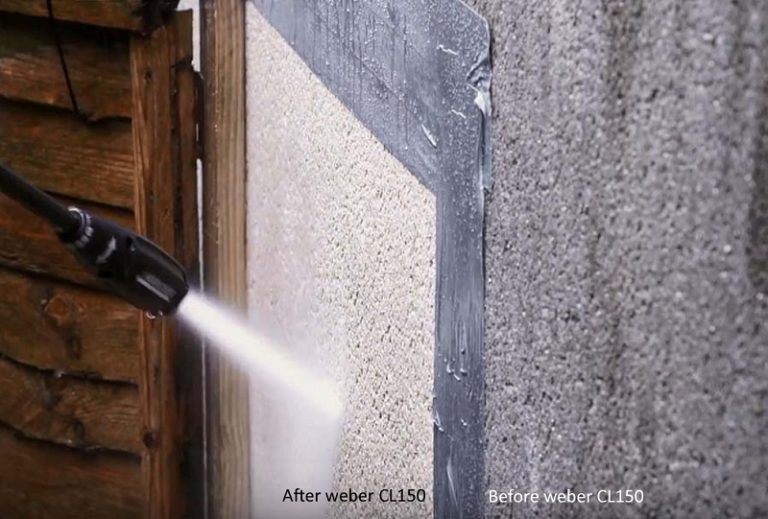
Saint-Gobain Weber is known for its dedication to train people in the specification and application of their innovative and market leading materials. Those in need can access a team of technical advisors that will give them information on the correct use of the diverse product offering, wither over the telephone or on site. Additionally, they have now created a YouTube channel where they post a diverse range of ‘How To’ videos, specifically designed for specifiers and applicators that are not able to attend a related course at the academy. The videos address some of the most frequently raised technical enquiries received by Weber, such as external wall insulation systems, flooring products, renders, and tile preparation. Weber’s most recent video approaches the problem of the growth of algae, bacteria, fungus, and mould on external surfaces including render and brickwork, experienced in the UK and Europe. It illustrates how to remove it using the high performance weber CL150. “This is an easy to use water-based masonry wash containing carefully selected biocides to clean and sterilise substrates,” said Rob Speke, Training Academy Manager at Saint-Gobain Weber. The weber CL150 must be applied undiluted to a dry substrate, saturating the affected area with the use of a brush or sprayer. If the problem is more advanced, agitate the surface with a nylon bristle brush which will speed up the process and improve the results. The algae will be killed in 48 hours and the treated area will need jet washing at low pressure. In case of more severe situations, the process can be repeated. “Once treated the substrate will be protected for a considerable period although in areas of high algae growth, such as north facing walls with limited sunlight, it is advisable to repeat the process every few years to maintain best aesthetics,” said Rob. The video can be found here https://www.youtube.com/watch?v=1EdI4XaJYUY and is one of the 30 currently posted ‘How To’ videos.

Read More »

VolkerWessels and Trimble Become BIM Partners

The Trimble technology has been announced as one of the key changes that will improve VolkerWessels’ management and predictability of its projects. The aim of this collaboration is to advance innovations in building information management (BIM) technology and to improve the quality of the management and predictability of real estate projects and building construction. VolkerWessels’ projects will be standardised on a set of Trimble construction technologies. “Our close collaboration with VolkerWessels enables both companies to innovate while driving greater value in the design, build and operate phases of construction,” said Roz Buick, vice president at Trimble. “We greatly value this key customer relationship enabling us both to seek insights for buildings, infrastructure and real estate asset industries.” Trimble’s role in this partnership will be to work closely with VolkerWessels’ stakeholders so that it could gather real-world feedback to continue the innovation in BIM-centric construction. Professional and integration services performed by Trimble and Construsoft, a Trimble integrator based in the Netherlands, are also part of the deal, in addition to the purchase of construction technologies. “Trimble excels at providing putting construction data to work,” said Marinus den Harder, director of construction and real estate development at VolkerWessels. “Trimble’s data-centric approach to BIM provides us with analytics and business intelligence that we can use to extend our competitive advantage.” Trimble is a provider of technologies for civil and building construction management. It has a full range of tools and its personal approach on how to manage construction activities and team collaboration; skills that help its customers achieve operational excellence. VolkerWessels will be using Trimble ProjectSight for construction management and Trimble Connect software as a central collaboration platform to streamline the sharing of construction models, data and project information between key project stakeholders. VolkerWessels is a leading construction firm and global player in the field of information and communications technologies. It is a Dutch group of companies with 16,000 employees and about 120 companies and offices in the Netherlands, the UK, Germany, Canada, and the United States.

Read More »

8 Construction Sector Technology Trends To Watch In 2018

TECHNOLOGY is having an ever-greater impact on the construction sector. Many ideas that were once thought of as gimmicks – or even the stuff of science-fiction – are now being steadily incorporated into the mainstream industry, with new and practical applications for technology being developed at a rapid pace. Here we’ve shortlisted the 8 construction technology trends to keep your eyes on in 2018. AUTONOMOUS VEHICLES With a drive to improve efficiency and safety on construction sites, autonomous vehicles are gaining traction and could be seen on some projects in 2018. Just as driverless cars promise to revolutionise the way in which we travel, autonomous vehicles could transform our building site environments – helping to address a shortage of skilled labour and enhancing productivity. Above: Autonomous vehicles could transform construction sites and address shortages of skilled labour (image courtesy of Built Robotics) Several developers have already created prototypes of autonomous construction vehicles ranging from bulldozers and tractors, to cranes and excavators. While entry costs and regulations remain serious barriers to adoption, several observers believe that we may see self-driving vehicles on construction sites before we see them on roads – particularly as sites are highly controlled environments. VIRTUAL + AUGMENTED REALITY Next up is a technology area that has been on construction’s radar for several years, and indeed made it onto our 2017 tech roundup; virtual and augmented reality. These visual technologies continue to be “one to watch” in 2018 as they gain greater traction within the construction industry and become valuable tools for project teams and end users alike. Above: Enveloping 360 pop-up tents or rooms allow designers to step inside their buildings (image courtesy of Igloo Vision) Virtual Reality – or VR – creates an immersive environment in a headset or cardboard viewer, or even an enveloping 360 pop-up tent or room – enabling contractors, designers and end users to step into their buildings in the future – either during key stages of construction, or in their completed states. Prominent examples of this in practice include London’s 22 Bishopsgate skyscraper and the impressive “Tomorrowland” at the Shanghai Disney Resort. Augmented Reality – or AR – is also finding its feet, providing a graphic layer to our real-world view and offering a wide array of data to site personnel – from design information and specifications, to statistics on productivity and health and safety warnings. Whilst VR and AR have long been touted for their future potential, they are now being used in anger and are set to drive clear benefits for project teams in 2018. EXOSKELETONS Exoskeletons are a technology that has been long-touted for its potential to make construction more efficient. Like many of the technologies on this list, they might sound more like the stuff of science fiction, than a credible real-world application. However, the wearable mechanical suits – that are worn outside clothing to help with lifting heavy equipment, machinery, or supplies – are now becoming a reality. Above: Exoskeletons have been specifically developed for the construction industry (image courtesy of Lockheed Martin). Designed to “augment with humans” and help them overcome physical weaknesses, these suits could aid construction workers with everyday mundane, repetitive tasks, supporting better physical health and helping to combat conditions such as arthritis and hand-arm vibration. Around 40 companies are now manufacturing exoskeletons worldwide, so you may well see them on a site near you in 2018. ADVANCED MATERIALS The world of construction materials is advancing at an incredible rate as new technologies enter the construction sector, enabling further research and development. In the last 12 months we’ve reported on many innovations including “Self-healing concrete” – which contains calcite-precipitating bacteria which germinate when water enters the cracks in decaying concrete, filling the emerging air gaps. We have also seen “Kinetic paving” which harvests energy from the footsteps of pedestrians to generate electricity, “4D-printed structures” that have the ability to re-shape or self-assemble over time by virtue of how they are formed and how different elements of their composition respond in differing conditions and “smog-eating buildings” coated in photocatalytic titanium dioxide that reacts with light to neutralise pollutants in the air of the some of the world’s most congested cities. UAVs Above: Drones are becoming widely used in the construction industry (image courtesy of Aibotix). The rise of unmanned aerial vehicles (UAVs) in the construction industry – often referred to as drones – was featured on our 2017 list and is set to significantly pick-up pace in 2018. UAVs are now being used for health and safety inspections, progress reporting and most-prominently in site surveying; capturing accurate data on large areas of land in just a few minutes and accessing potentially hazardous zones with ease, keeping surveyors themselves save. While there has been much publicity about the potential for drones to carry out deliveries, it is the construction industry that is predicted to be the biggest user of commercial drones in the coming years. “The construction industry is predicted to be the biggest user of commercial drones in the coming years” Regulation of UAVs remains a hot-topic, particularly as the rate of technology advancement often pulls ahead of legislation and its enforcement. Falling entry costs and the availability of UAVs to a mass market has only served to compound this issue. ROBOTICS The successful application of robotics in the construction sector could enhance efficiency, productivity and safety in many instances, making it a highly-attractive prize for those that see its value. Above: An “in-situ fabricator” developed at the National Centre of Competence in Research (NCCR) Digital Fabrication in Zurich ( image courtesy of NCCR Digital Fabrication). The last 12 months has seen further iterations of brick and track-laying robots and even a machine capable of tying rebar unveiled – the latter being part of a series of in-situ fabricators. The challenge for this area again remains the entry-cost and its credibility. Many struggle to recognise and accept the application of robots, seeing the concept as science fiction. 3D PRINTING Above: 3D printing

Read More »

Explore Offsite Outlooks Event to Take Place in February 2018

With the development of technology, more and more work is going in to exploring digital construction and what the best strategy is to implement offsite construction strategy. Explore Offsite Outlooks has been developed by BRE and Explore Offsite and looks into how best to integrate digital solutions into their business operations. The pace of which technological change it taking place shows no signs of letting up. Because of this it is though that the introduction of technology needs to be embraced. A range of other industries have taken the digital step earlier, however the construction digital revolution is thought to be now well underway. With the more widespread adoption of BIM as well as a range of other technological solutions, the combination of offsite manufacturing and digital construction technology offers a powerful new prospect for the industry. On the 28th February 2018 at BRE in Watford, Explore Offsite Solutions will be looking at the road ahead as the roles and disciplines begin to merge and a new role is created with the creation of a new generation of digital natives who feel BIM is simply business as usual and fully understand the reals meaning of integration, interoperability and design for the manufacture and assembly of construction projects. At this event in February next year, guests will also hear from John Eynon, who is the Engagement Lead at BIM Alliance and who will give a presentation on the topic of ’Digital procurement, standardisation and transformation’. Duri9ng this presentation, John will discuss digital transformation and standardisation as well as drivers for change, a range of case study examples, the place for the UK BIM alliance and the upcoming implementation of BIM Level 2 in industry. Explore Offsite Outlooks is a one-day conference and exhibition that will work to create a space for clients and their professional advisers, contractors, project managers and offsite technology suppliers to network while also discuss with industry experts the latest developments in the digital construction and offsite sector.

Read More »

Digital transformation at the heart of £600bn infrastructure plan

The government’s Infrastructure and Projects Authority has set out more plans to increase efficiency of the industry in a 43-page document entitled Transforming Infrastructure Performance published today. The document sets out plans to change the way infrastructure is planned, procured and delivered. It follows a commitment in last month’s Budget and Sector Deal agreement to favour offsite construction on major public projects from 2019. At the heart of the plan is to use “digital technology and innovation to improve the way we deliver and extract maximum whole-life value from infrastructure, including through supporting effective delivery of the Digital Built Britain programme and building on examples of good practice such as smart motorways”. The document also sets out how the IPA will join the Infrastructure Industry Innovation Platform (i3P), and continue to engage with other innovation initiatives, to strengthen its role in identifying and championing good practice. Alongside these papers, the government confirmed a new £600bn pipeline of UK infrastructure projects covering the next 10 years. The productivity plans include creating a new Infrastructure and Projects Authority benchmarking team to “define cost and performance benchmarks” and a focus on procuring projects based on whole-life cost, rather than capital costs. The IPA also vowed to help drive the uptake of offsite construction by identifying “obstacles to faster uptake”. The industry has broadly welcomed the plans. Cast’s Mark Farmer, and author of the Modernise or Die report, said: “This is an important document which if successfully played out by government in partnership with industry will modernise construction in a way we have not seen before. It addresses two major linchpins of change – the physical delivery model and the way we procure In the foreword to the document Andrew Jones MP, exchequer secretary to the Treasury, said: “Transforming Infrastructure Performance is the government’s long-term plan to change the way infrastructure is planned, procured, delivered and operated so we can make the most out of our increased investment. “Through interventions including benchmarking projects and accelerating the use of modern methods of construction like offsite manufacturing, our programme will help us to support economic growth and exploit a £15bn productivity opportunity in construction every year.” The IPA said that the “programme will, over time, change the ways in which infrastructure is planned, procured and delivered. To drive whole-life value from assets, the IPA will look at how whole-life performance of assets can be assessed between sectors.” “Focusing solely on the upfront capital costs of delivering an asset, and not how to deliver best value over its whole operational lifetime, can lead to missed opportunities to deliver better value for money and benefits to consumers and society.” “The government is taking immediate steps to support the Sector Deal objectives. Firstly, it will use its substantial pipeline of construction projects to drive innovation and increase the adoption of modern methods of construction.” Across the Department for Transport, the Department of Health, the Department for Education, the Ministry of Justice, and the Ministry of Defence, this currently represents a potential pipeline for modern methods of construction of around £20bn a year.

Read More »

Concrete company increases productivity through paperless scheduling solution

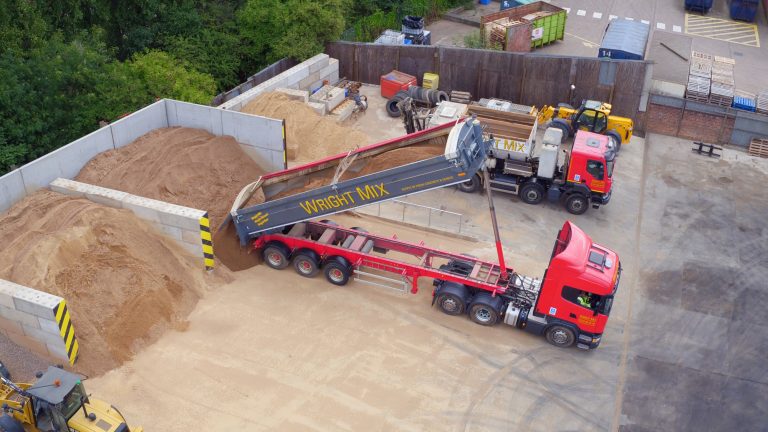
A concrete company has seen its productivity boosted by more than 25 per cent after switching to a paperless system for ordering and job scheduling, underpinned by telematics. Wright Mix, a leading supplier of concrete screed and ready-mix concrete, has been able to complete up to two extra jobs per vehicle each day and reduce administration with help from an integration between the WEBFLEET fleet management solution from TomTom Telematics and routing and scheduling software AGGSMART. This digital system replaced Wright Mix’s previous manual booking and scheduling system, which relied on paper-based records and communication via phone, and enables dynamic job dispatch and workflow, automatic billing, customer ETAs and digital signature capture. Customers place an order and following preauthorisation of payment, the job can be assigned to the most appropriate driver and timeslot within the dynamic scheduling system.  Job details are sent to drivers’ TomTom PRO 8 driver terminals and navigation is automatically provided, giving the driver, office and customer an accurate ETA. WEBFLEET ‘talks’ to AGGSMART throughout whole process. This means that, when arriving onsite with the customer, the driver is able to check the preauthorised payment before dropping the concrete or screed and asks the customer to sign for the delivery on the screen. The exact volume of product delivered to the customer is then recorded in the AGGSMART app, which enables Wright Mix’s accounting system to automatically bill the customer accurately – all without the use of paper or making a phone call. As well as seeing a 25 per cent increase in productivity and removing paperwork processes, the new system has helped streamlined processes, condense administration hours, and reduce ‘bad debt’. Peter Harris, operations manager at Wright Mix, said: “Before we had WEBFLEET and AGGSMART, I was constantly on the phone to customers and our drivers – the days were so frantic.  So much so that I would miss lots of calls during the day.  Now, the office is very calm and I never miss a call.” Phil Wright, owner of Wright Mix, added: “AGGSMART has been a significant addition to our volumetric ready-mix business, creating flexibility, traceability and efficiency in our day-to-day shipping and ordering process.  With a detailed and easy-to-use quotation system integrated to our credit card payment provider, booking jobs has become a seamless process.” The system was implemented by TomTom Telematics partner, FMC FleetTrack.

Read More »

Study shows 7% cost saving on digitally sharing information

Research supported by the Danish government shows cost reductions of up to 7% by using a digital communications platform on large-scale construction projects. A six-month research project by the Danish Building Research Institute, initiated by a government fund, shows significant cost reductions if stakeholders in a construction project report their progress every day through a shared communications platform. Three large-scale construction projects, the Maersk Tower (pictured above), the Niels Bohr Building and the Danish Defence’s Property Agency, have been the basis of the research, where the effects of GenieBelt – the platform used in all three construction projects – have been analysed. “In addition to the immediate cost reductions, it will improve project planning, and everyone involved can prioritise based on a better knowledge base. If we assume that the efficiency through the project is consistent, with a small decrease in the last months, the potential savings could be as much as 7%,” said Jan Fuglsig Lambrecht, researcher at the Danish Building Research Institute. A large construction company in Denmark, Juul & Nielsen, started using GenieBelt a few months after the construction activities at The Maersk Tower began, and they confirm the positive results. Currently, they are developing a “lean” process to initiate before each project begins to further increase the value of the tool. “We did not measure the effects ourselves, but we noticed cost reductions of 2-3% on the construction project, and we experienced great dynamics and fast communication across all units, which contributed with an overview of emerging problems and the necessary knowledge to take action when needed,” said Martin van der Watt, project director at Juul & Nielsen. Ulrik Branner: savings recorded “In addition, there’s more transparency for reporting at construction meetings and the obstacles we encounter.” The contractor of the Niels Bohr Building, The Danish Building and Property Agency, also followed the results closely and sees a potential in better retail and lean planning as a result of using digital communications platforms. “The Danish Building and Property Agency is very aware of the opportunities that digitalisation implies in connection with construction projects. By using a shared digital communications platform, the retail planning of tasks on the construction sites gets strengthened,” said Signe Primdal Lyndrup, deputy director of the Danish Building and Property Agency. “The communications platform is also a valuable tool for lean planning, which we encourage in general. For that reason, we are continuously reviewing the potential with using digital platforms and IT tools in our construction projects.” “No one else in the world has documented financial savings on construction projects this large. And that’s just the immediate savings without including reduced waste, a decrease in bankruptcies, less arbitrations or increase in invested capital that is released,” said Ulrik Branner, CEO of GenieBelt. GenieBelt is used in 43 countries, and in Denmark, several municipalities are using the platform to keep up with the developments in construction projects.


Read More »

AEI Cables Add to Portfolio with New Amtech Electrical Software

AEI Cables, the specialist supplier has announced that they have added a further service to their portfolio in order to allow the company to work more closely with building designers. The new electrical software that has been adopted by the specialist supplier has been delivered to the company from Amtech. The software that has been delivered will odd designers to adapt their specification in a simpler process, for each specific project. The commercial Manager of AEI Cables, Stuart Dover has said that the new Amtech electrical software has been adopted by the supplier in order to help the company better understand the needs of the building designer. This more sophisticated software has been adopted in order to help the building designers. The new software will allow the specialist supplier of cables to work more closely with their building designers on projects in order to offer a more diverse range of products that are used for the maximum benefit of customers around the world. The company is one of the most respected cable suppliers in the world. When operating in the electrical supply chain, a business is only as successful as the projects that they work on. Therefore, whether looking to design and manage a project or to track the progress being made across the job, sites operated on by a company, it is important to make sure that you have the right tools on hand that will help to design electrical circuits. The software that has been created by Amtech allows the designers, consultants and contractors to create and managed the specification documents with access to a comprehensive library of all of the latest and applicable technical guidance in order to deliver a fully robust building construction specification for each project. Ducab is the parent company of AEI Cables and all AEI Cables are supplied with approvals from a range of independent bodies such as BASEC and LPCB which cover the design, manufacture and supply of their products.

Read More »

Mobilane® Green Screens Installs Solution at Lambeth School

Mobilane® Green Screens is a company that is based in London and has seen a 20% year-on-year growth since 2009. The company works to deliver innovative green screening solutions for their customers. Mobilane delivers a range of solutions that can enhance a space and improve wellbeing by creating a more pleasing green environment whether it is inside, outside, rooftop spaces, corridors or in meeting spaces. The green screen company were chosen by the London Borough of Lambeth to look at possible ways to combat air pollution at Lambeth School. The business explored a range of options before deciding on the Mobilane® Green Screen offered a ready-made solution to the council’s air pollution concerns. In order to carry out the work, Paul Garlick the Mobilane UK National Business Manager put London Borough of Lambeth in touch with one of the network installers of Mobilane products. The green screen solution was installed at the school by The Platinum Limited, who also consulted on the work before installation to ensure that the solution properly met the customer’s requirements. In order to meet the school’s air quality aims and offer the best green solution for their client, 31 screens measuring 2.2 meters high and each screen 1.2 meters wide were installed at the school. The work was completed at the end of May 2017 and installation of the green screening solution took only one day. Following installation, the Lambeth school community are now assured with the air pollution reduction features of the screen as well as the private and robust surrounding to the school which is attractive and offers the children a green backdrop to their time at school. The scree has also helped to reduce the traffic noise and makes sure that the grounds have total privacy, creating a safe environment for the children. The screen has been praised by council members, school management, parents and children.

Read More »