

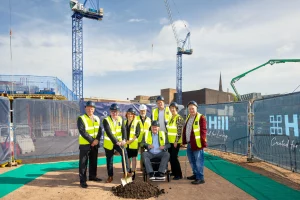
City Centre South reaches major milestone as first tower begins to rise
A major milestone has been reached at Coventry’s transformational City Centre South regeneration project developed by The Hill Group, with the first tower now rising from the ground following the completion of demolition and extensive groundworks across the site. Richard Parker, Mayor of the West Midlands, Councillor George Duggins, Leader of Coventry Council and Councillor Lynnette Kelly, Coventry City Council’s Cabinet Member for Jobs, Regeneration and Climate Change, joined Andy Hill OBE, Founder and Chief Executive of The Hill Group, and Regional Director, Stuart Bale, alongside Paul Loader, Director of Delivery & Aftercare at Legal & General, to celebrate the progress being made. The start of construction marks a significant step forward for one of the UK’s most ambitious city centre regeneration projects, paving the way for the transformation of Coventry city centre over the coming years. Richard Parker, Mayor of the West Midlands, said: “City Centre South is exactly the sort of ambitious regeneration project that will help drive growth, create jobs and deliver the homes our region needs. Seeing the tower rise is a clear sign that progress is being made and this long-awaited development is becoming a reality. “Importantly, this first building includes 200 affordable homes, making it easier to get good quality housing right in the middle of Coventry. And with the skills hub recently opened on site, we are helping to train and offer job opportunities to local people too.” Under an agreement with Legal & General, Hill is delivering the affordable homes in this first phase of the regeneration, comprising 145 homes for social rent and 55 for Shared Ownership. These new homes will help to address local housing need while providing high-quality homes for people and families in Coventry. Andy Hill OBE, Founder and Group Chief Executive of The Hill Group, said: “Seeing the first tower emerge from the ground is an incredibly exciting moment for everyone involved in the project at City Centre South. After years of planning, preparation, and with demolition and groundworks now complete, local people can now start to see tangible progress being made on site and the vision for this part of Coventry becoming a reality.” The milestone follows significant demolition works, enabling and infrastructure works across the site, allowing construction of the first residential building to progress at pace. Paul Loader, Director of Delivery & Aftercare at Legal & General, said: “This is an important milestone for us and a visible sign of the progress being made. Through our partnership with Hill, we’re proud to be delivering the first 200 affordable homes here, helping more people access high-quality housing while supporting the wider regeneration of Coventry city centre. Through our role in delivering these affordable homes, we are pleased to support a partnership that is focused on meeting local housing need, contributing to affordable housing targets and bringing forward energy-efficient homes that will benefit Coventry for the long term.” City Centre South is transforming a large section of Coventry city centre, delivering up to 1,575 new homes, alongside vibrant public spaces, shops, restaurants, cafés and commercial opportunities. The first phase of the regeneration will provide 991 new homes, 8,000 square metres of commercial space and 17,000 square metres of public open space. As construction accelerates, the development is also creating employment and training opportunities for local people through a range of initiatives including The Skills Centre, which was recently launched to help local residents gain the qualifications needed to access careers in construction. Councillor Lynnette Kelly, Cabinet Member for Jobs, Regeneration and Climate Change at Coventry City Council, said: “This is a landmark moment for Coventry. Over the last few months the City Centre South site has been transformed, and people can see it taking shape before their eyes. This development will bring lasting benefits for generations to come. And of course, it will also enable us to make some improvements to the market, which we know is really important to local people and the traders.” Naeem Akhtar, cabinet member for housing and communities, said, “The first tower rising from the ground represents much more than construction progress; it marks the delivery of much-needed affordable homes for local people, demonstrating our commitment to creating a city centre where people from all backgrounds can live, work and thrive.” For further information, visit City Centre South. Building, Design & Construction Magazine | The Choice of Industry Professionals
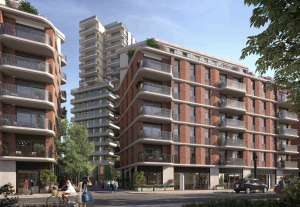
McLaren Secures Gateway 2 Approval for £229m Ebury Bridge Regeneration in Westminster
McLaren Construction has secured a major building safety milestone for the £229 million second phase of Westminster City Council’s Ebury Bridge Estate regeneration, paving the way for construction to progress on 334 new homes in the heart of London. The Building Safety Regulator (BSR) has granted Gateway 2 approval across four separate applications covering five residential buildings, providing the regulatory clearance required for the next stage of the ambitious redevelopment. The approval represents a significant breakthrough for one of Westminster’s largest council-led housing regeneration programmes, which will ultimately transform the former 1930s estate into a modern, mixed-tenure residential neighbourhood. Phase two is the largest of three planned development stages and follows the successful completion of the first phase, as Westminster City Council continues its programme to increase housing supply and address the growing demand for affordable homes across the borough. The wider Ebury Bridge Estate masterplan will deliver 781 new homes, supported by a network of interconnected public squares, a new retail parade and community facilities designed to create a more attractive and accessible neighbourhood. The regeneration aims to establish a high-quality residential environment, combining new housing with improved public spaces and amenities while strengthening connections across the surrounding area. Securing Gateway 2 approval has required months of detailed technical coordination between Westminster City Council, McLaren Construction and the wider project consultancy team. Under the Building Safety Act regulatory framework, Gateway 2 approval is a critical requirement before construction work can commence on higher-risk residential buildings. The process requires developers and contractors to demonstrate that proposed designs and construction arrangements meet the necessary building safety requirements. For the Ebury Bridge development, the complexity of the five-building phase meant that four separate applications were required, each involving detailed design information and supporting documentation. Paul Woodhams, Managing Director for Regeneration at McLaren Construction, highlighted the scale of the achievement. “This is a complex project with five buildings which required four separate building safety applications and approvals,” he said. The milestone provides greater certainty for the construction programme and enables the project team to move forward with the next stage of delivery. Councillor David Harvey, Westminster City Council’s Cabinet Member for Housing and Regeneration, welcomed the decision and acknowledged the importance of collaboration between the local authority and its construction partner. “Collaboration with our main contractor McLaren has been key to achieving this milestone and it now gives the team the certainty needed to move ahead,” he said. He added: “I’m excited that this has been achieved and we can continue the momentum in delivering the largest council development in this part of Westminster in over 60 years.” The Ebury Bridge programme forms part of Westminster’s wider commitment to delivering new housing through the regeneration of existing estates, with an emphasis on creating mixed-tenure communities supported by improved local infrastructure. Alongside the residential accommodation, the planned retail and community facilities will play an important role in establishing a more active neighbourhood, while the interconnected public squares will provide additional outdoor space for residents and visitors. For McLaren Construction, securing the approvals represents an important achievement in navigating the increasingly demanding regulatory environment surrounding higher-risk residential developments. With Gateway 2 clearance now secured, the £229 million second phase can progress towards major construction activity, marking another significant step in the transformation of Ebury Bridge into a new residential neighbourhood for Westminster. Building, Design & Construction Magazine | The Choice of Industry Professionals
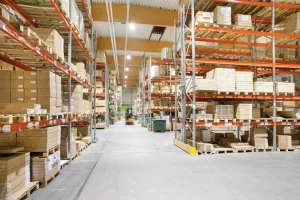
What connected lighting can do for industrial facilities
How smart, connected lighting boosts efficiency, safety, and sustainability in industrial facilities It’s no secret that the manufacturing industry has a heavy responsibility for emissions of greenhouse gases. In the US, manufacturing accounts for almost a quarter (23%) of direct carbon emissions, according to the Environmental Protection Agency. In Europe the situation is equally dire: the industry emits an annual total of 880 million tonnes of carbon dioxide equivalents, making it one of the largest emitters of greenhouse gases on the continent. Big changes need to be made across every aspect of manufacturing facilities to make the industry sustainable and future-proof growth. But its not that simple. The industrial sector faces several challenges: the increasing pressures from ecommerce to produce at speed, the need to stock strategically, the importance of picking accuracy at warehouses, and so on. Broader issues like energy conservation and sustainable operations are also adding pressure on the sector. Gladly, there are (quick) solutions, like connected lighting, that support the digital transformation of any facility. Challenges faced by industries Warehouses, distribution centers, and manufacturing facilities are all tough environments with specific design needs. These include: Industrial environments present unique lighting challenges, from maintaining consistent illumination across varying mounting heights to providing reliable light levels during long operating hours or to support specific tasks. Research shows that poor lighting can reduce task speed and output quality, while also contributing to unplanned maintenance and costly downtime. While the challenges and pressures are many, the good news is that connected lighting can create a safer, more productive working environment for workers in industrial environments. The role of connected lighting In the ever-evolving landscape of industrial and factory environments, the role of lighting extends far beyond illumination. Connected lighting solutions like Signify Interact have emerged as a transformative force, offering unprecedented control, efficiency, and sustainability advantages for industries. As industries worldwide strive to optimise operations, reduce energy consumption, enhance workplace safety, and deliver on their digitalisation and decarbonisation strategies, integrating connected lighting has become a strategic imperative. The right kind of lighting has shown to have a positive impact on production efficiency and quality, employee safety and wellbeing, and a facility’s sustainability and cost efficiency. Significant energy, carbon, cost, and light quality improvements can be made by simply swapping out inefficient legacy lighting for new efficient LED lighting. LED lighting can be up to 80% more efficient and can last longer than conventional lighting, resulting not only in significant energy and cost savings, but also in reduced maintenance costs, which can be very expensive in industrial facilities with high ceilings. Taking it a step further, connected LED lighting can play a significant role in enabling a manufacturing facility or a warehouse to become even more digital and sustainable whilst providing a safer, healthier, and more productive place to work. Connected systems, energy-efficient LED luminaires, sensors, and comprehensive wireless system monitoring and management software create an intelligent network. These connected systems enable businesses and building owners to gather valuable data and insights from the facility. This data can then be used to unlock additional value adds, features and benefits Connected lighting has evolved from an energy-saving technology into a strategic sustainability platform. It not only cuts electricity consumption but also provides the data and intelligence needed to optimise building performance, support ESG reporting, improve worker safety and wellbeing, and extend asset life. As manufacturers and logistics operators face increasing pressure to decarbonise while maintaining productivity, connected lighting offers a practical solution that delivers environmental, operational and financial benefits simultaneously. Connected lighting can significantly improve the management of emergency lighting by enabling remote testing, monitoring and reporting, helping organisations maintain compliance while reducing maintenance costs and operational disruption. This also includes any fault detection and reduced maintenance costs. The future is connected Connected LED lighting solutions are transforming industries and factories/warehouses into more efficient, sustainable, and connected/digital spaces. From energy savings and automated controls to adaptive lighting and enhanced safety features, the benefits of connected lighting systems are multifaceted. As industries continue to embrace digital transformation, connected lighting is emerging as a crucial component in optimising operational processes, reducing costs, and creating safer and more productive work environments. Learn more about Signify Interact and what it can do for your manufacturing facility: Interact IoT lighting | Interact Building, Design & Construction Magazine | The Choice of Industry Professionals
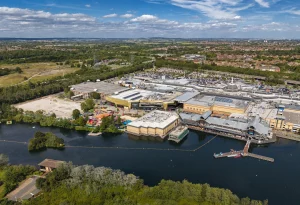
Lakeside hits it out of the park, announcing 50,000 sq ft Destination Club De Padel signing
Lakeside, the UK’s sixth-ranked out-of-town super-regional destination owned and operated by SGS UK Retail, has announced the signing of leading urban padel and lifestyle brand, Club de Padel, for its third location and South of England debut. This sporting facility will further diversify Lakeside’s leisure offer and deliver a standout addition to the 8.5 million-strong catchment population that sits within an hour’s drive. Club de Padel’s arrival at Lakeside will provide visitors with access to a new area of the scheme, dedicated to active leisure. Located on the site of the former Pink Car Park, overlooking the extensive lakefront, the destination will span c. 5o,000 sq ft and comprise 12 padel courts, with four situated outdoors and eight located indoors for all-weather access. A glass and timber-clad clubhouse will complete the space, where visitors can enjoy barista coffee and a licensed bar, and shop both equipment and the brand’s bestselling retail range. The space will host a varied line-up of extra events, including run clubs, to appeal to the Lakeside visitor and encourage repeat visitation. Club de Padel will deliver an industry-leading coaching programme developed and refined by LTA-qualified coaches, which will offer players a six-stage pathway approach. As the sport continues to grow in popularity, Club de Padel’s southern debut and impressive multi-million-pound investment is a vote of confidence in Lakeside, reflecting both its dominance as the premium scheme within the region, and its ability to deliver dynamic, high-demand facilities for its catchment. Its positioning allows visitors to be transported out of a traditional retail destination setting, embracing the unique natural environment of the area, whilst being only a stone’s throw from The Quay and its surrounding F&B and leisure for extended dwell time. Robert Jewell, Managing Director of Asset Management at Pradera, commented: “This multi-million-pound investment from Club de Padel not only forms part of a wider £10 million masterplan at Lakeside, but also demonstrates that leading brands continue to recognise the destination as a key, super-regional hub. Club de Padel will completely transform the space overlooking the lake, and will continue to drive our 17.1 million annual visitors to dwell longer and make memories. It reminds us that Lakeside is more than a place to shop; it’s a lifestyle destination designed to serve the needs of its loyal visitors.” James Wigglesworth, Co-Founder of Club de Padel added: “As the padel market grows and evolves, it’s important we plant our roots in places with not just the promise of longevity and an engaged visitor demographic, but an understanding of how important active socialising is to the community. Lakeside’s position as a leading lifestyle destination means that it offers so much more than the average destination. Locations such as Lakeside are key in our success as we expand and grow, allowing us to build a strong community and a lasting presence. Lakeside’s unrivalled connectivity into London and the wider South East helps us to continue to deepen our commitment to accessibility – ensuring our clubs are equally accessible by rail, road, foot and bicycle.” This news follows a recent flurry of F&B activity so far this year, with the openings of GAIL’S, Black Sheep Coffee, Maki & Ramen, Smoke & Pepper, and a second location for Pret. This series of investments reflects the confidence and commitment brands have in Lakeside, as a result of the stellar success leading hospitality brands continue to experience at the destination. Smith Young and LM are Lakeside’s retail leasing agents, and Metis and LM lead the leisure leasing. Pradera asset manages Lakeside on behalf of SGS UK Retail. Building, Design & Construction Magazine | The Choice of Industry Professionals
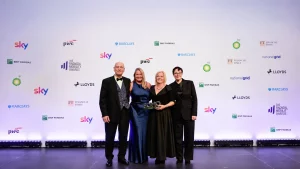
Sodexo recognised for social impact leadership through to operational excellence
This autumn Sodexo UK & Ireland has been recognised at a number of industry awards covering its leadership in driving social mobility, commitment to nurturing talent and delivering exceptional experiences for its clients across different sectors. Sodexo won the Leadership of the Year award at the annual Social Mobility Awards, held on 6 October. It was recognised for embedding inclusive recruitment and progression into its core business model using the scale of 30,000 colleagues to both deliver impact and reshape employer practice. Through initiatives such as Starting Fresh and inclusive talent pathways, Sodexo is creating direct access to employment and progression for underrepresented groups. Sodexo’s Culinary Academy was highly commended at the awards in the Progressive Programme category. Sodexo also celebrated with two wins at the 2026 Foodservice Cateys, Sodexo Live! group executive development chef Ian Page won Chef of the Year and Laura Moorcroft, regional support manager for Sodexo at Colchester Garrison was awarded the Extra Mile award for developing a partnership with Essex Cares, a local charity which supports people with learning disabilities, autism and other neurodivergent conditions and creating positive, inclusive and enriching workplace experiences for young people with special educational needs and disabilities, providing them with genuine routes to employment. Last week Gary Broadhurst, contract retail development chef at Colchester Garrison won Higher Apprentice of the Year at the East of England regional final of the National Apprenticeship Awards. Gary now progresses into the National final. Over the last month Sodexo teams have received recognition for delivering operational excellence for the company’s clients. This has included: Bill Buchan, HR Director, Sodexo UK & Ireland said: “At Sodexo, our people are our greatest strength, and these awards showcase the impact they make every day. From helping individuals overcome barriers to employment and progression, to delivering innovative solutions and exceptional service for our clients, our teams consistently live our values in action. Their commitment to improving quality of life, supporting communities and creating better everyday experiences for those we serve is what makes recognitions like these so meaningful. We couldn’t be prouder of what they have achieved together.” Building, Design & Construction Magazine | The Choice of Industry Professionals
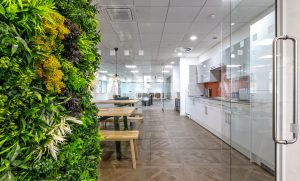
Full refurbishment of 13,000 sq ft of Grade A office space in Southampton completes
Crown House 1 has completed its transformation into a high-quality, Grade A workspace in the heart of Southampton. Landlord, Craigard, has invested heavily in Crown House 1 since their purchase in 2018 including new and energy-efficient HVAC systems throughout. The design and layout of the property provides a modern, attractive space to suit a variety of businesses. Spread across four floors, Crown House 1 boasts high-quality facilities close to the train station and within walking distance of parks and restaurants and has a secure car park. CBRE Southampton and Realest have been instructed to market the 13,000 sq ft opportunity, which can be let as a whole or as separate units. The ground floor (1,518 sq. ft.) provides a fully fitted, high-specification office suite, ready for immediate occupation. This space has been thoughtfully designed to create an inviting workspace to accelerate productivity and collaboration. The landlord’s attention to detail ensures a light and bright characterful space with a generous kitchen breakout space and zoom room. The suite has been designed using soft colours and a variety of different materials to break the space up and provide a relaxed environment. The first (4,031 sq. ft.) and second floors (4,026 sq. ft.) offer open-plan floor plates ready for a tenant fit-out. These have been refurbished with LED lighting, new carpets and fully redecorated. The first floor also benefits from its own dedicated shower and toilets. The Penthouse (3,670 sq ft) provides high-quality workspace with glass partitioning defining a fully fitted kitchen and breakout area, a dedicated boardroom/conference room and bespoke meeting pods. Workstations are provided throughout the space anda distinctive feature that sets the space apart is its dedicated private shower/changing and toilet facilities. Emma Lockey, Director at CBRE Southampton, said: “The attention to detail in Crown House 1 provides a specification rarely found in a city centre location. In a prime location, the space offers an exciting opportunity for any occupier.” Lauren Udall, Director at Realest said: “The short supply of quality office suites in the wider Southampton market, allows Crown House 1 to provide occupiers market leading space over a variety of suite sizes.” David Foster, Craigard said: “We are acutely aware that in order to let office space in today’s market a landlord needs to create a building and environment that occupiers and their employees want to come too and we believe we have done that at Crown House 1. Combined with highly competitive overall occupational costs, and its own secure car park, the building ticks all the boxes.” Building, Design & Construction Magazine | The Choice of Industry Professionals