


Dialight supports safe and efficient operations at new Port of Tilbury grain store
Dialight, the global leader in industrial and hazardous-location LED lighting, has supplied a complete lighting solution for a major new bulk grain storage facility at the Port of Tilbury in Essex, UK. The Tilbury Berth 43 Cefetra Bulk Grain Store was completed in July 2026 and handed over to the Port of Tilbury, part of Forth Ports, shortly afterwards. Delivered by principal contractor Harmonix Construction, the project has transformed a former open-air container depot into a purpose-built storage facility designed to support the growing demand for imported grain handling and storage. Grain storage presents particular safety and operational requirements, as airborne combustible dust can create a potentially explosive atmosphere. The internal area of the new store has therefore been designated as a Zone 22 hazardous area, requiring suitably certified lighting capable of performing consistently within a demanding industrial environment. The exposed port location also meant that luminaires needed to withstand wet, marine conditions. Dialight became involved during the early design phase after Harmonix Construction first approached the company in November 2024. Following Harmonix’s appointment as principal contractor in February 2025, Dialight developed the lighting scheme using the construction drawings and the Port of Tilbury’s specifications. The design covered the grain store, surrounding external areas and a vehicle refuelling point, with particular requirements for operational areas including the quayside. The final installation comprises more than 200 Dialight luminaires, including ProSite Floodlights, SafeSite luminaires, Emergency GRP Linears and Vigilant Bulkheads, selected to meet the different requirements across the site. The project showcases a large-scale deployment of the Zone 22 ProSite Floodlight in a hazardous-area application. An initial scheme based on 110 SafeSite High Bay luminaires was refined to 78 ProSite Floodlights. The wider range of optical distributions available with ProSite enabled Dialight’s lighting designers to reduce the number of fittings required whilst also maintaining the specified light levels. The design also needed to account for the shadowing created by the facility’s large traversing cranes, as well as the defined light levels required around the quayside and water’s edge. Careful positioning and alignment were necessary because of the building’s mounting heights, while the use of marine-grade luminaires supports performance in the exposed and wet conditions found within a port environment. Aidan Brown, UK/EIRE Sales – EMEA at Dialight, said, “The project demonstrates the value of involving the lighting manufacturer early, particularly when a facility has hazardous-area classifications and several distinct operational requirements. Working closely with Harmonix allowed us to refine the design as the project developed. By using the different optical options available with the ProSite Floodlight, we reduced the number of luminaires required within the grain store while still achieving the specified light levels. The result is a lighting scheme that combines the required safety and performance with a more efficient use of equipment, supporting long-term reliability in a demanding port environment.” Port of Tilbury is an established Dialight customer and has used the company’s ATEX-certified lighting during maintenance upgrades across existing parts of its grain terminal. Berth 43 provided the first opportunity for Dialight products to be incorporated into a new-build project at the port, allowing the environmental, safety and access requirements to be considered from the outset. Jenis Mistry, Project Engineer at the Port of Tilbury, commented, “The new grain store has been developed to provide the safe, reliable infrastructure required for this important area of our operations. Lighting needed to meet the requirements of the hazardous internal environment, the external areas and the quayside, while also being suited to the exposed conditions at the port. The completed installation provides the light levels needed across these different spaces and supports the facility’s long-term operation.” Close coordination between Dialight and Harmonix Construction continued throughout the design and delivery stages. Early product selection and advance ordering with Dialight’s factory helped ensure that the luminaires were available well before they were required on site, supporting the construction programme and installation process. David Thrower, Project Director of Harmonix Construction, added, “The successful delivery of the lighting package was supported by early engagement and a close working relationship throughout the project. Dialight responded to changes in the construction design and developed the lighting scheme in line with the Port of Tilbury’s specifications. Having the products ordered and delivered well ahead of installation also gave our team the certainty needed to plan the work effectively.” Alongside its ability to meet the project’s safety and performance requirements, the selected LED lighting provides a long-life solution for areas where access for future maintenance can be challenging. Dialight’s standard luminaires offer a rated life of more than 150,000 hours and are backed by a ten-year warranty, helping to reduce the frequency of replacement and associated maintenance interventions. Emergency lighting batteries will be included within the facility’s ongoing inspection and replacement programme. The completed project demonstrates the importance of early collaboration, clearly defined lighting requirements and appropriate product selection when designing lighting for ports, grain stores and other complex industrial facilities. By combining hazardous-area certified products with considered lighting design, the scheme provides a robust solution for the Port of Tilbury’s new grain storage operation. For more information about Dialight’s industrial and hazardous-location LED lighting solutions, visit www.dialight.com. Building, Design & Construction Magazine | The Choice of Industry Professionals

Sika UK launches SikaFiber®-200, a natural fibre alternative for concrete crack control
Sika UK has introduced SikaFiber®-200, a 100% natural, biodegradable cellulose microfibre developed to help manage plastic and drying shrinkage cracking in structural and non-structural concrete, screeds and mortars. The launch adds a natural, biodegradable cellulose-based option to Sika’s fibre reinforcement range, offering specifiers, contractors and architects an alternative to synthetic polypropylene microfibres without a change in handling or mix design. Shrinkage-related cracking during the early curing period remains a persistent issue across floors, screeds, pavements and decorative concrete work, often driven by moisture loss as fresh concrete cures. SikaFiber®-200 is designed to address this directly. The ultra-fine cellulose fibres disperse evenly through the mix, creating a three-dimensional network that supports more uniform stress distribution as the concrete cures, reducing the formation of early-age cracks. As a cellulose-based product, SikaFiber®-200 is fully biodegradable, offering a lower-impact option for projects where material sourcing and embodied carbon considerations form part of the specification process. The fibre is suitable for a range of non-structural applications, including floors and screeds, pavements and hardstandings, decorative concrete finishes, and mortars. Amy Sapien, National Fibre Manager at Sika UK, commented on the launch: “SikaFiber®-200 gives specifiers and contractors a natural alternative to polypropylene fibres, without asking them to change how they work. It disperses through the mix in exactly the same way, but offers a biodegradable option for projects where material sourcing is increasingly part of the conversation. We see this as a practical step forward for crack control, not a compromise on performance, which is why we are incredibly excited to introduce it to the market.” SikaFiber®-200 is available now. Full technical data, application guidance and the product brochure are available from Sika’s website. Building, Design & Construction Magazine | The Choice of Industry Professionals

BBC investigation into illegal working offers glimpse into the future for construction
The BBC’s latest investigation into illegal working has exposed the lengths some will go to circumvent the UK’s enforcement system. The investigation uncovered a solicitor allegedly offering to make a £45,000 illegal-working fine disappear by arranging for an individual overseas to declare themselves the owner of a mini-market facing a penalty for employing an illegal worker. In response, Home Secretary Shabana Mahmood has announced a review of the way these fines are issued and collected. For the construction industry, the investigation should serve as a stark warning. As new legislation extends liability through contractual chains and enforcement activity increases, principal contractors face growing financial and reputational exposure if they cannot demonstrate effective oversight of their supply chains. Robert Brent, CEO of construction workforce management solutions provider MSite, warns of the growing financial and reputational risks facing principal contractors as tougher illegal-working legislation and increased enforcement place greater scrutiny on construction supply chains. “The BBC’s investigation exposes a much wider problem. Illegal working is not always the result of an overlooked document or an administrative error. It can involve deliberate attempts to circumvent the very systems designed to prevent it. “For construction, where thousands of workers can operate across multiple subcontracting tiers, this raises serious questions about how effectively businesses understand and oversee their supply chains. “Principal contractors must wake up to the risks within their supply chains before the financial and reputational consequences threaten their ability to operate. “The reality is that many principal contractors have limited visibility of who is actually delivering work beyond their immediate subcontractors. With the legislative changes introduced on 1 October extending accountability further up the chain, that lack of oversight now carries significant risk, particularly as the Home Office and HMRC enforcement intensifies, and the consequences of non-compliance become increasingly severe. “Under Section 48 of the Border Security, Asylum and Immigration Act 2025, the Right to Work regime has expanded to cover additional working arrangements. While direct employers remain responsible for conducting the prescribed checks, new extended-liability provisions mean civil penalties can reach further up the contractual chain, including principal contractors who do not directly employ the individuals involved. “The financial implications are substantial. Civil penalties can reach £45,000 per illegal worker for a first breach and £60,000 for repeat breaches. Across major construction projects, even a handful of breaches could have devastating consequences for a contractor’s bottom line and reputation. “Enforcement is already intensifying. During the first six months of 2026, the Home Office carried out 268 illegal-working visits on construction sites, a 150% increase on the same period in 2025. Arrests also rose by 29%. “These figures make one thing clear: construction businesses can no longer afford to rely on paperwork and compliance checks alone to protect themselves from illegal working risks. “Most responsible contractors already have compliance processes established. The challenge is whether those processes provide a reliable picture of what is happening beyond their immediate subcontractors. “A worker passing a Right to Work check does not, on its own, demonstrate that a principal contractor has the necessary controls in place to address its wider legal exposure. “Contractors need to understand who employs or engages each worker, where those relationships sit within the contractual chain, whether the approved supply chain reflects what is happening on site, and what evidence exists to demonstrate effective oversight. “That requires greater coordination between procurement, HR, legal, commercial and operational teams. Each holds part of the picture, but effective assurance depends on connecting that information and demonstrating that the appropriate controls are working. “The BBC investigation is an uncomfortable reminder that declared business relationships and paperwork alone cannot always be relied upon to reveal the reality. “Contracts establish how a supply chain should operate. Assurance requires evidence of how it actually operates. “For an industry built on complex, multi-tier arrangements, this represents a significant shift. It is about understanding the wider supply chain, identifying the risks before they escalate and demonstrating that appropriate safeguards are in place. “With legislation tightening and enforcement increasing, principal contractors have an opportunity to address potential gaps before they become costly consequences.” Building, Design & Construction Magazine | The Choice of Industry Professionals
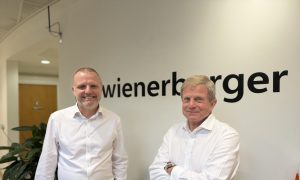
Building for what’s next: Simon Nevitt succeeds Keith Barker as COO of wienerberger UK & Ireland
wienerberger UK & Ireland has announced that Simon Nevitt will succeed Keith Barker as Chief Operating Officer from 1 November 2026, following Keith’s planned retirement. Keith will remain with the business until the end of December to support the final stages of the transition and ensure a smooth handover. Simon Nevitt takes on the role as part of a long-planned succession, after eight years with the business, having served as both Operations Director and Chief Development Officer. The appointment marks the next chapter in wienerberger’s evolution, providing continuity for customers, suppliers and employees while bringing fresh perspectives as the business responds to changing customer needs and market demands. “I am honoured to have the opportunity to lead wienerberger UK & Ireland,” said Simon Nevitt. “Thanks to the work of Keith and our colleagues, together we have built a more resilient business, expanded our capabilities and created exciting opportunities across wall, roof, water and heating. While the construction industry continues to navigate challenging market conditions, working alongside a talented executive team, my focus will be on supporting our customers, investing in our people and continuing to build for what’s next.” Keith Barker retires after more than 16 years with wienerberger UK & Ireland, including nine years spent at the helm. During his tenure, the company underwent significant transformation through strategic investment, diversification and acquisitions. The acquisition of Building Product Design strengthened the company’s wall and roof offering, while FloPlast, Cork Plastics and Maincor expanded the business and formed the foundations of today’s water and heating division. “One of the greatest strengths of any successful organisation is knowing when it is the right time to pass the baton,” said Keith Barker. “This transition has been part of our long-term plans, and Simon was the natural choice to lead the business forward. He understands our business, our people and our customers, and he has played an important role in helping shape the organisation we are today. I have every confidence in his ability to build on everything we have achieved together.” “I leave knowing the business is in a strong position, with a clear strategy and a talented leadership team. When I reflect on my time with wienerberger, what makes me proudest is not any individual achievement, but the strength of the business and the people within it. It has always been our colleagues who have made the difference.” To find out more about wienerberger UK & Ireland, visit www.wienerberger.co.uk Building, Design & Construction Magazine | The Choice of Industry Professionals

Cityscape Qatar brings real estate leaders and global experts together for 4th Qatar Real Estate Forum
From how investors assess opportunities to how cities are designed and experienced, Cityscape Qatar 2026 will put the questions shaping Qatar’s real estate market at the centre of the 4th Qatar Real Estate Forum. Powered by Cityscape, the Forum will take place from 27–29 October at the Doha Exhibition & Convention Center (DECC), bringing together leading voices from Qatar and around the world. Headline speakers include H.E. Sheikh Hamad bin Talal Al-Thani, CEO of Qatari Diar Real Estate Investment Company; H.E. Sheikh Nasser Bin Abdulrahman Al-Thani, CEO of Qetaifan Projects; H.E. Sheikh Jassim Bin Jabor Al Thani, CEO of Ariane Projects; and Eng. Ahmad Mohamad Al-Tayeb, Group CEO of Barwa Real Estate Group. International speakers include Jan Vapaavuori, Chairman of Finnvera, Finland’s export credit agency, former Mayor of Helsinki and member of the World Economic Forum’s Global Future Council on Cities; Nikki Greenberg, CEO of Real Estate of the Future; and Professor Carlos Moreno of IAE Paris-Sorbonne, creator of the ‘15-Minute City’ concept. Alexander Heuff, Group Director, Cityscape, said: “Strong real estate markets need to work for both investors and the people who use them every day. Investment decisions may begin with confidence in the market, but long-term performance is ultimately tested by whether a place continues to attract people, businesses and activity. That is why this year’s Forum looks at investment and the way cities are planned and experienced as part of the same conversation. Bringing those perspectives together gives visitors a fuller understanding of what can sustain opportunity over time, rather than looking at individual projects in isolation.” The programme will open on 27 October with a focus on Qatar’s investment outlook and the market’s next phase of growth. Senior leaders from Qatari Diar, Qetaifan Projects and Barwa will discuss the priorities behind some of the country’s largest developments, how projects move from masterplan to delivery and what international investors now look for before committing capital. Technology will also take the spotlight, with Nikki Greenberg exploring how AI and smart infrastructure are changing the way investors assess markets and assets across the Gulf. Professor Carlos Moreno will then examine how cities work for the people who live in them, looking at how access to work, education, healthcare, retail and public space within a neighbourhood can strengthen its appeal and resilience over time. Day one will also examine regulation and the investment environment, with perspectives from the Real Estate Regulatory Authority (Aqarat), alongside sessions on Qatar’s economic diversification, sustainable development and the changing role of retail and hospitality. The day will conclude with the Qatar Real Estate Awards ceremony. Across the following two days, the focus will move to investment decisions. Sessions will cover how investors evaluate opportunities, diversify portfolios and secure financing, alongside real estate tokenisation and what first-time buyers in Qatar should understand before investing. The programme will also look ahead to the next generation of development in Qatar, examining how wellness, healthcare, education, connectivity and community design are influencing where people choose to live and where investment follows. Under the theme ‘Where Vision Meets Investment’, Cityscape Qatar 2026 and the 4th Qatar Real Estate Forum will connect the projects and opportunities across the event with the wider market conversations shaping Qatar’s real estate sector. Visitor passes are free for all three days, with registration now open here. Building, Design & Construction Magazine | The Choice of Industry Professionals

Prologis sets UK property record by unveiling its 100th Planet Mark-certified building
Prologis has announced that it has become the first UK property company to reach 100 Planet Mark-certified developments. This sustainability milestone is part of its work with Planet Mark and charity, Cool Earth, providing benefits for the environment, local and indigenous rainforest communities Prologis UK has announced that DC107, a brand-new logistics unit at Daventry International Rail Freight Terminal (DIRFT), will be its 100th Planet Mark-certified development, an internationally recognised sustainability accreditation. Working with Planet Mark’s Charity partner, Cool Earth, this major milestone has helped to protect over 20,000 acres of rainforest and raised £2 million to support indigenous rainforest communities. Prologis was the first UK property company to measure, reduce and mitigate the carbon emissions embodied in the structures and fabrics of its buildings, achieving its first certification nearly two decades ago at Prologis Park Pineham. Since 2008, every new building has been certified by Planet Mark, with each project targeting rigorous environmental and sustainability requirements. Certified projects include distribution centres and logistics hubs in Prologis Parks, provided for customers from grocers such as Sainsbury’s, Tesco and M&S to distribution businesses, such as Royal Mail. The assessment measures whole-life carbon across raw materials, construction, operation, maintenance and end-of-life. Projects must demonstrate continuous improvement by reducing carbon in design, construction and operation, and through positive engagement with communities and the development supply chain. Unavoidable embodied carbon is mitigated, and communities and stakeholders engaged to raise awareness and encourage further action. Over the past 20 years, this approach has resulted in the certification of 23.6 million sq ft of new buildings. The programme extends beyond carbon reduction, supporting rainforest protection and sustainability education in local communities. Simon Cox, Senior Vice President, Head of Development Management at Prologis UK, said: “This milestone highlights our dedication to making sure our buildings deliver cost savings for customers and better environmental outcomes for communities, helping protect the environment, educate local children and support indigenous people by protecting the rainforest they call home. This legacy of sustainable development is something we pass on to every customer of a new Prologis building, with facilities designed to optimise energy use and support the transition to renewable energy sources. Today, 25 million sqft of our UK portfolio have achieved BREEAM Excellent or Outstanding ratings.” Steve Malkin, Founder at Planet Mark said: “To avert a climate disaster, we need to take action now. By providing a credible, robust and verified approach to measuring and significantly reducing whole-life carbon emissions, we have forged an effective partnership with Prologis that demonstrates the far-reaching impact businesses can achieve when they take responsibility for their carbon emissions. Prologis has kept ahead of its industry with its commitment to sustainable and responsible real estate, and our shared, continuous work to decarbonise their buildings. The business has captured the attention and support of stakeholders, including investors, suppliers, and customers.” Each new development certified through Planet Mark provides direct support for communities protecting the rainforest. Through its long-term partnership with Cool Earth, a climate change charity working with indigenous peoples and local communities, Prologis has mitigated 100% of the unavoidable embodied carbon emissions from its new developments by supporting efforts to protect endangered rainforest and tackle the climate crisis. As part of Cool Earth’s unique model, funding goes straight to indigenous and local communities through investment, technology and training to prevent deforestation at a grassroots level. In the areas where Cool Earth works, 99% of rainforest remains intact. These ecosystems play a vital role in absorbing carbon dioxide and releasing oxygen, and are crucial for regulating the planet’s climate, protecting biodiversity and supporting the livelihoods of indigenous communities. Matthew Owen, CEO at Cool Earth said: “When you see the personal and environmental impact that deforestation brings it’s hard not to want to go the extra mile and play your part in protecting the rainforest for future generations. Together, Prologis and Cool Earth are working to safeguard some of the world’s most vital rainforests, creating benefits not only for the environment but also for local communities and future generations. As the partnership approaches the milestone of reaching a cumulative donation of £2m, we are extending protection further into the forest, with five new communities in Papua New Guinea set to join the programme.” This partnership has meant reliable, long-term funding to ensure communities can be reached effectively and directly, on their own terms. Since 2008, Prologis buildings have helped to protect over 20,000 acres of rainforest in the Peruvian Amazon, Peru and Papua New Guinea. Prologis has been funding work across five community areas, supporting 1,264 people and stewarding 4.8m trees that store 5.7m tonnes of carbon. Prologis also educates children close to its developments on the importance of protecting the local and global environment, and its sustainability programme funds education officers from The Eden Project to go into local schools and empower children to protect the planet. Prologis has delivered this programme to 13,875 students in 94 schools and colleges. The team also sponsor Warwickshire College Group’s involvement with the Planet Mark certification scheme to reduce carbon, energy, water and waste. Building, Design & Construction Magazine | The Choice of Industry Professionals