bdc magazine

Why you might need mobile plant insurance?

Whatever be the type of insurance you have or for anything, they are always helpful. Whatever be the damage the types of equipment get into, insurances are always there to cover for it. Although there are certain restrictions to every insurance, it is always better to have an insurance policy.

Read More »

How To Promote Construction Business On Instagram

For business owners, accumulating a backlog of projects is a significant roadblock. Understanding how to effectively use social media to generate leads and opportunities is critical for a construction company’s success. Instagram is yet another marketing tool that can promote your company, regardless of the industry you belong to. You

Read More »

7 Helpful Ways You Can Use Your Vacant Land 

You might not know what to do with your spare acres since you already have a home. Fortunately, the list of ways to use your vacant land is extensive. Here are a few ideas. Rewilding or Wildlife Preservation There are loads of species dying all around us. Human habitation forces

Read More »

How to Improve Project Cash Flow with Development Exit Finance

While property development can be a very profitable pursuit, many developers find themselves limited by poor cash flow. That’s because the nature of property development dictates that cash flow events occur in large single events, when a property sells, rather than through consistent, smaller returns, as is the case with

Read More »

5 Benefits Of Using RFID For Maintenance Management

Today’s business environment is a mix of complex and dynamic processes, to make businesses function in the way that they should. Nowadays, businesses are under so much pressure to deliver and to compete. To achieve such things, behind the scenes, there’s a lot that has to be done to ensure

Read More »

White Label Software: How to Get It Right?

We are used to buying software for our businesses and simply uploading it and getting used to using it. Yet there is something you consider when purchasing software that will be used by clients. We’re talking in this article about the whitelabel app and software package, and why you should

Read More »

BESA and BSRIA refrigerant guide published ‘at crucial time’

The Building Engineering Services Association (BESA) has joined forces with the sector’s leading research body BSRIA to produce a comprehensive free guide for the use of refrigerant gases in building services.  The new publication has been written by BESA’s head of technical Graeme Fox and is available now for free

Read More »

AEI Cables clinches prestige Hong Kong hospital project

Industry leader AEI Cables has been awarded the contract for the major expansion of a hospital in Hong Kong to supply fire performance and low voltage cables. Working in partnership with its long-term Hong Kong distributor Fordex Electric Company Limited, AEI Cables will supply its range of products for power,

Read More »

Orthogonal relocates to Moorfield’s Aberdeen Innovation Park

Orthogonal Ltd, the engineering company, has relocated to Moorfield Group’s Aberdeen Innovation Park in Bridge of Don, as part of its business expansion plans. The company has agreed a five-year lease at Unit 7A of Crombie Lodge, moving into its new headquarters at the end of February. Orthogonal, founded in

Read More »
Latest Issue
Issue 335 : Dec 2025

bdc magazine

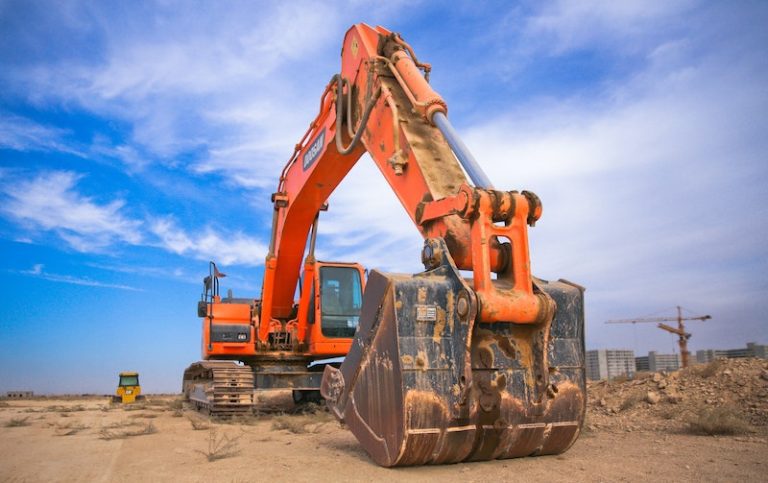
Why you might need mobile plant insurance?

Whatever be the type of insurance you have or for anything, they are always helpful. Whatever be the damage the types of equipment get into, insurances are always there to cover for it. Although there are certain restrictions to every insurance, it is always better to have an insurance policy. Especially if you are in the civil, mining, landscaping or construction industry, you will always have the benefits of heavy machinery insurance. This article has been penned down for you to know the benefits of having plant insurance and why you might need it. Let us get started. Breakdowns The heavy machinery of the construction industry costs quite a fortune. So, it might be unfortunate if it breaks down. From transporting the machinery to the repairing centre, getting the job done, and finally getting it back might cost you a lot of amounts. And this is one of the first and foremost reasons you get mobile plant insurance. You will be under no pressure to get your damaged equipment transported from one place to another and back forth on getting insurance done. Your insurance policy will cover the entire breakdown cost. So, you can just sit back and relax and let the insurance company do the hectic work for you. 2. Damage to the Material If you ever face a loss in your business due to collateral damage, theft of any of your assets, or destruction, your insurance policy will cover it for you. And one of the helpful facts, or better to say, the rule of this policy, is that you will find a limitation to the accidental overloading of lifting machines. Even when you have the substitution for your machine costs or dry hire due to any kind of damage or loss of your own equipment, the insurance policy is not limited to it. Let us get a clearer picture of this benefit of the insurance with the help of an example. Say you have a concrete truck in your warehouse, and the thieves are stealing it by crashing it through the roller doors and then down the road racing. Then on crashing it into the river. In this situation, even if you can find your truck, you will not be able to repair it. You simply have to replace it with a new one as it won’t even be possible to send it to the wreckers. The damage that has been done to your warehouse also needs to be fixed, and you need to either buy or bring in substitutional equipment to continue working. 3. Hired in Plant There might be times when you will have to work on sites with hired pieces of equipment. And for this very purpose, you need the insurance- hired in plant. This is not only because of the fact that the person from whom you are hiring will expect you to have such a kind of policy but also for some other reasons. This type of heavy machine insurance sets the rule that if the pieces of equipment get stolen, lost or broken during the contract period, it will be upon you to repair them or replace them. The entire cost is to be borne by you. Heavy machine insurance is one of the most important types of insurance that falls on the list of must-haves. If you are a business owner or deal with heavy machineries, such as lending or owning them, then having mobile plant insurance becomes essential. It will get you covered for any theft, material damage, breakdown, or hired

Read More »

How To Promote Construction Business On Instagram

For business owners, accumulating a backlog of projects is a significant roadblock. Understanding how to effectively use social media to generate leads and opportunities is critical for a construction company’s success. Instagram is yet another marketing tool that can promote your company, regardless of the industry you belong to. You can share content in a variety of ways on the platform. With the help of Instagram Business, building firms can do just that. Companies can see their accounts’ activity in real-time, including stories, posts, and followers. Business accounts also can create, launch, and track advertisements. Are you thinking about expanding your construction business? Instagram growth might be exactly what your company requires. Engage With Your Audience You demonstrate your willingness to go above and beyond by using social media platforms to respond to online inquiries or share exciting news updates. You can connect with your target audience on Instagram by following, liking, and commenting on their photos. Remember that the higher the level of engagement, the more likely you are to develop strong brand ambassadors who’ll continue to use your services while recommending them to others. Instagram allows you to think visually and creatively about how you want to present your content. Whether it’s to show how your product works in real life, keep your followers up to date on a renovation project, highlight points from an architect interview, or build excitement for an upcoming launch campaign. Tools like Buy Real Media can help you keep up with engagements and connect with your audience. Use Hashtags Smartly To attract the right audience and grow your following, use hashtags wisely. While there’s much debate about the relevance of hashtags across social media platforms, they’re essential to include in Instagram posts to maximize exposure and ensure that the right people see your updates. Find trending keyword hashtags that accurately describe or align with your brand or products using hashtag tools. Product category keywords like ‘timber doors’ or ‘aluminum doors,’ simple brand category keywords like ‘doors’ should all be included. It’s a good idea to go over keyword hashtags every few months to ensure you don’t miss a new one that’s trending in your industry. Create Videos Use time-lapse and accelerated videos of construction sites to increase viewership. On construction sites, drone footage is also gaining popularity. Instagram now supports live video in stories in addition to regular posts. You can include a tour of your office or a walk-through of a new project in your presentation.  You can also include a countdown reminder in your stories, allowing interested viewers to set reminders to watch your live video or reels. You can also share your live video on your social media accounts for those unable to attend.  Maximize Your Visuals Construction companies have a lot to offer on Instagram. Instagram is a very visual platform, and its users are enormous fans of transformation and progress photos. Instagram has a lot to offer if your construction company is willing to try something new. If you work in construction daily, you may be unaware of how fascinating your surroundings are. While mundane to you, scenes like a hammer lying in gravel surrounded by nails or an excavator arm tearing into the ground are pretty spectacular to others. Use Instagram’s built-in filters to improve the visual appeal of your photos. A construction site could be ideal for some truly unique Instagram photos. Post Regularly It can be challenging to post as frequently as you should, but regularly posting and creating stories can pay off. Because most users follow hundreds of other users and businesses, your posts will most likely be buried in their newsfeeds within hours. As a result, you should schedule your Instagram posts at least 3-5 times per week if you want them to be seen. If you don’t have time to handle this task yourself, consider delegating it to a social media savvy employee. It can increase their productivity, often being a problem in construction companies. Utilize Stories Instagram stories are a great way to show off what’s new in your company. There are also a variety of Story stickers available for communicating with your audience. Because responses to your Stories are delivered directly to your inbox, it’s a fantastic tool for communicating directly with your audience. While stories are only visible for 24 hours, you can save them to your highlights to keep them visible indefinitely. Additionally, it provides excellent branding opportunities. Your followers will be able to view previous Stories by clicking on your profile highlights. Takeaway In such a visually-oriented industry, photographs and videos serve as a visual representation of your work. Take a photo, do some quick editing, or use one of the many Instagram filters to enhance your image. It doesn’t have to be difficult to market on Instagram. You only need a social media strategy and a set of platform-specific goals. Increase the connection between you and your audience and brand awareness and leads.

Read More »

7 Helpful Ways You Can Use Your Vacant Land 

You might not know what to do with your spare acres since you already have a home. Fortunately, the list of ways to use your vacant land is extensive. Here are a few ideas. Rewilding or Wildlife Preservation There are loads of species dying all around us. Human habitation forces wildlife out of the equation. It has a massive impact on animals and bugs that play a significant role in the ecosystem. Rather than sell land for profit, why not make use of it by allowing nature to flourish? Rewilding is a trendy subject these days. All it means is that you simply do nothing to your land. Doing nothing encourages the plant life to grow as it would naturally. It makes habitation for surrounding wildlife and insects to rebalance a dwindling animal population. Use Your Vacant Land for Farming and Community Gardens The cost of living is rising again. Gas and electricity prices alone have recently increased by 60%, adding a lot of pressure on families to provide the basics. In the UK alone, one of the world’s wealthiest countries, people are having to choose between heating or eating. So even in the 21st century, people are going hungry. Therefore, a practical and charitable use of your land is to build community gardens or free to use farmland. If you have knowledge of gardening for food, perhaps you could encourage people to contribute and teach others how to grow. Raising Livestock Further to using your land for farming, raising livestock is not a bad idea. Of course, no one suggests you bring the cows home. But perhaps, like a community garden, you could show people the ins and outs of caring for smaller livestock such as chickens, rabbits or pigs. These animals are readily available from stockists, and even some lifestyle DIY stores sell chickens and coops. At the least, some of the less fortunate people in your area have access to fresh and organic eggs and food. But you can also teach a child essential skills they will carry for life. Renewable Energy Resources The time has come to begin building renewable energy power plants before it’s too late. You can contribute to helping the environment, and the planet, by offering access to renewables like: Solar panels Wind turbines Geothermal energy Hydroelectric energy Biofuel storage Of course, any of these depends on the type of land you have. For instance, hydroelectricity requires running water and wind turbines work better in elevated areas. Easement Right of Way If you don’t know what easement is, it just means accessing one piece of land by going through another. As you can imagine, easements aren’t very popular since people don’t want strangers making their way through their land. However, areas of outstanding natural beauty often have easement issues because the land around them might be private. Because of this, tourists, ramblers and sightseers often have to go out of their way to access somewhere. But if your land sits between public access and a popular area, you could consider allowing people through. Use Your Vacant Land as a Caravan Park  Caravans are a popular holiday accommodation all over the world. But given they are large and bulky, they require a lot of land. So now would be a great time to offer it up for caravans and RVs if you have the land. Summer is approaching, which means it’s prime caravan season. But another reason is COPD-19. Because of travel restrictions and unpredictable international tourism, the number of people taking a staycation is the highest it’s ever been. So you could profit from your land with a caravan park, as tourists look for somewhere reasonable to stay. Build a Dog Park Almost every country on earth loves dogs and cats. And the dog accessory industry is booming right now. While competing with an established pet retailer would be tough, you could take advantage of our love of dogs with a unique park. There probably isn’t a dog park within walking distance of your home if you think about it. So there is a gap in a very lucrative market if you have the land. And it doesn’t take much either. Of course, you will need to provide poop disposal facilities and clean them regularly. And some climbing frames would be nice too. Summary You can make your land work for you. For example, you could consider charitable uses like community gardens. Or encourage wildlife. And a caravan park could make money.

Read More »

How to Improve Project Cash Flow with Development Exit Finance

While property development can be a very profitable pursuit, many developers find themselves limited by poor cash flow. That’s because the nature of property development dictates that cash flow events occur in large single events, when a property sells, rather than through consistent, smaller returns, as is the case with most businesses. In this article, we will introduce what development exit finance is, how it can be used to improve cash flow for developers, the pros and cons of doing so and the alternatives available. What is development exit finance? Development exit finance is a type of bridging loan that is used to repay development finance as a property development project nears completion, usually raising additional capital for the developer. Lenders are usually happy to offer development exit finance once a property is wind and watertight. While this is a general rule, some lenders are happy to offer development exit finance earlier than this, and others will only lend once practical completion sign-off has been achieved. This type of finance is commonly used for two main reasons:- 1. To release equity back to the developer, which can either be used to manage any cost overruns on the project or to fund the acquisition of the next project. 2. To allow the developer to extend the term remaining on the existing development finance facility, ensuring there is sufficient time to secure a premium price for the completed units. 3. As the interest rates charged on development exit finance is lower than those offered by development finance lenders, it is often used to reduce interest charges. How does it work? A development exit loan is arranged over a set term, often between 6-12 months, with the interest rolled into the loan. This means there are no monthly payments to make. As the properties sell, a portion of the loan is repaid from each sale, reducing the loan by either 100% of the net sale price, or the agreed loan to value (LTV) ratio. The level of repayment is usually agreed upon upfront, although it can be renegotiated on occasion should things change. While interest is usually set aside for the whole term, it is usually rebated to the borrower in the event of sales coming in before the term end. What does it cost? Rates start from 0.4% per month and are usually between 0.4-0.75%. The rate charged depends on the security type, location, current build state and the loan to value requested. Applications that are wind and watertight and at a low LTV will usually receive the best interest rates. In addition to the interest charged, lenders usually charge an arrangement fee for arranging development exit finance. This usually costs 1-2% of the loan and must be factored in. How can it be used to improve cash flow for developers? In simple terms, development exit finance allows developers to save money on their finance costs and release cash from a project before it sells. This allows the developer to ‘keep the wheels turning’ rather than having to wait for a large, single cash flow event. While many development finance lenders allow borrowers to finance up to a maximum of 55-65% of the end value of the scheme, development exit lenders offer between 75-80%. This additional money can be the difference between being able to secure the next project, or missing out while waiting for their completed units to sell. What are the pros and cons? While development exit finance can be a great help to property developers, as with everything, there are pros and cons to consider. Pros ·        Development exit finance is great for cash flow. ·        It’s cheaper than property development finance, saving you money. ·        It allows you to take your time when selling your completed stock, potentially leading to you securing a better price. ·        It can lead to increased profits by allowing you to move on to your next project quicker. Cons ·        While it’s cheaper than property development finance, there are still costs involved. ·        There is an application process that, while simple, still takes up some of your time.

Read More »

5 Benefits Of Using RFID For Maintenance Management

Today’s business environment is a mix of complex and dynamic processes, to make businesses function in the way that they should. Nowadays, businesses are under so much pressure to deliver and to compete. To achieve such things, behind the scenes, there’s a lot that has to be done to ensure the customization of products, meet customers’ requirements, and be flexible, to name a few. Fortunately, technology is also present to make those functions more doable and achievable. One of those advancements in technology is what’s known as RFID, or radio frequency identification. In a nutshell, this refers to a wireless system that’s made out of two main components, the readers and the tags. The reader has one or two antennas responsible for emitting the radio waves and signals back from the RFID tag. What are the benefits of adopting and utilizing RFID technology for maintenance management?  This article lists them all down. It Offers Top-Notch Speed And Convenience The speed of work that RFID technology can do in your maintenance systems and processes can’t be denied. It can work automatically and scan multiple tags in milliseconds. In the past, a more manual system may have been used, resulting in effects working less quickly. There’s time wasted from the starting point of aligning the reader and the code exactly to scan the subject materials effectively. Now, with RFID, this process is sped up. There’s that convenience factor wherein information can be passed on speedily, all through the simple act of scanning codes. Moreover, cashless transactions and records spent during every maintenance session or date are also properly accounted for and recorded. It May Improve The Transparency And Quality Of Data Across The Supply Chain Second, having that automated system can also significantly improve the transparency and quality of data through the whole maintenance department. Having accurate data that are also easily accessible can help solve a multitude of inefficiencies in the maintenance management.  Because data are now more accurate, this means that repairs and maintenance can be achieved and done in a timelier manner. No time is wasted whenever there’s work that needs to be done. Moreover, the highest levels of reliability and availability are also achieved. It Helps Increase Operational Efficiency Good maintenance management of your machinery and equipment is crucial to operational efficiency. With RFID, this operational efficiency can be successfully achieved for the reason that there’s less monitoring required through the automated advancements brought in by RFID. Because less monitoring is needed, employees will have more time to spend on other more productive tasks. More work can be done at a lesser time frame, making it a much more effective and efficient solution for many businesses. Moreover, with RFID, the need to have a direct line of sight to read the tags may not necessarily be required. This means that multiple tags can be read in one go. In fact, depending on the kind of RFID system that you have, you can even set it up such that it can automatically read tag data whenever it’s needed to. It Eliminates The Risk Of Human Error No matter how skilled your team members are, the risk of committing human error will always be there. This fact is even truer when you have team members who are overworked, or if each one of them has so many functions they need to perform at any given day. Eventually, they’re bound to make a few lapses and mistakes here and there. With automation through RFID, that likelihood of error can be significantly reduced. In fact, to read the data that an RFID scans, little to no human intervention is necessary. The most that a human being would do is simply operate the RFID machine for it to read the data. This benefit alone is sufficient to show how the benefits of having a RFID system in place outweigh the costs. The errors that come with manual logging may be significantly lower. It’s Easier To Implement Flexible Maintenance Process Fifth, automation makes it significantly easier to implement a flexible maintenance process. Staying competitive means that businesses are also required to be flexible with changes in their maintenance systems. If, one day, your business discovers that there’s a new and better way to maintain the upkeep of your equipment, then your business has to adapt. The more flexible, the better. However, if you’re stuck with manual processes, it’ll be extra challenging to be flexible, as the necessary adjustments to be made will be significantly bigger. Automation will make it a lot easier to switch to any other mode of maintenance, depending on what’s needed by your business. Conclusion Radio frequency is an automatic ID system. You can liken it to that of a barcode or magnetic strip on a credit card, wherein a unique code is read by a scanning device. Compared to other types of ID systems, however, RFID uses radio waves to communicate with the device reading it. As you can see, there are numerous benefits to using this type of technology in your maintenance management. Like any other technology, however, it does have its limitations as well. To balance those out and enjoy more of the advantages than the drawbacks, be sure you’re choosing a good RFID system.  

Read More »

White Label Software: How to Get It Right?

We are used to buying software for our businesses and simply uploading it and getting used to using it. Yet there is something you consider when purchasing software that will be used by clients. We’re talking in this article about the whitelabel app and software package, and why you should be considering white label software. What is white label software, and why are you missing a trick if you don’t use it? Let’s begin with a brief explanation of white label software and other white label goods.  What is White Label Software? White label software is a software package made by a developer yet not branded with their brand name. Let’s use an example of another type of white label product. Go to your local grocery store – choose a well-known range – and find their ‘own label’ canned foods. These are usually the budget range of essential goods. Now, they are all branded with the store chains name and in their colors. Yet, these goods are not made especially for the store chain. They are simply branded goods – generally a well-known make – but labelled especially for the store. Another example could be you buying in goods branded with your name as give away gifts.  Now, with branded software, instead of it saying – let’s choose a famous brand for the example – Apple, it comes to you without branding ready for your brand name to go on there. What are the benefits of white label products and software? We want to talk about software specifically, as while branded store goods are usually for budget reasons, software is for a different reason altogether.  How Will White Label Software Benefit my Business? The recent couple of years of turmoil have had some surprising effects on the world of commerce. Many small businesses did not make it through the pandemic, and for many other people the need for change was apparent. Furthermore, a lot of people discovered that working from home is actually productive and convenient. In the wake of this a lot of small businesses have launched online.  Let’s imagine that you are a professional therapist. You offer video consultations for your clients. They use a booking system whereby they choose a slot on a calendar that they access with a password. This software is bought off the shelf and comes with the developer’s brand name all over it. So, every time a client books a slot – or uses software for other reasons – the developer’s brand name is there to see. But you don’t want that! Not only do you not want to advertise their brand for free, you want your brand to be consistent throughout all visible applications. This applies to accounting software, your video app, and so. Consistent branding across the board shouts of professionalism and attention to detail, rather than the lazy image of a software company’s brand taking up valuable space. Some of your clients will not notice it but believe us when we say that a good proportion will. Consumers like to see that professional approach as it gives them further reason to trust your brand.  Using White Label Software Using white label software means paying for a licence, but the benefit far outweighs what will be a minor outlay. We are not just talking about therapists here but other online professionals, plus hotels and restaurants, even shops and cafes. Anywhere that uses software from another supplier should definitely consider the white label option. Ultimately, your goal is to make your brand one that people see as trustworthy and professional, so check out white label software now and get your brand across the board. 

Read More »

Glencar awarded contract to develop significant last mile industrial scheme in Croydon.

The project will see the construction of 155,000 sq ft of grade A standard industrial/warehouse space in a range of sizes from 5,000 to 85,000 sq ft at a strategically positioned site in Croydon. Glencar, a leading UK construction company that was recently ranked amongst Europe’s fastest growing businesses, has today announced that it has been awarded a contract to construct 155,000 sq ft of grade A industrial and distribution space in a range of units from 5,000 to 85,000 sq ft at a site in Croydon. The development, which is being marketed as Segro Park Croydon, is situated on a seven-acre site at Redhouse Road, just off the A236 and well connected to London via the M25, The site serves as a well-established strategic location for trade counter, light industrial and warehousing. Units are expected to complete and be ready for occupation in early 2023, In keeping with the developer’s sustainability commitments, the site is being developed to Grade EPC A specification, incorporating a variety of sustainability features including photovoltaic panels, intelligent low energy lighting and EV charging points. Speaking about the contract award Roy Jones Glencar Managing Director London and South said: “Glencar are absolutely delighted to have been appointed on this high-quality last mile logistics scheme in one of the most connected urban centres in the Southeast. This instruction serves to reinforce Glencar’s continued expansion across London and the South and within the fast-expanding last mile urban logistics sector.  This is the second appointment Glencar have been given by our customer having previously undertake the design and construction of a new industrial development in Acton comprising a single unit including associated external works and services. We are committed to going above and beyond our customer expectations and to develop long-term relationships and repeat business opportunities” Also commenting Alan Holland, Managing Director, Greater London at SEGRO said: “This is another milestone in the execution of our strategy to significantly grow our Greater London portfolio in key strategic sub-markets in the capital.” The project team includes Liberty QS, UMC Architects and WSP Structures and the scheme is expected to be complete by Q4 2022. Segro Park Croydon offers occupiers the opportunity to locate within the most connected urban centre in the Southeast, one of the only London boroughs linked by multiple modes of public transport, tram, road, bus and rail.

Read More »

BESA and BSRIA refrigerant guide published ‘at crucial time’

The Building Engineering Services Association (BESA) has joined forces with the sector’s leading research body BSRIA to produce a comprehensive free guide for the use of refrigerant gases in building services.  The new publication has been written by BESA’s head of technical Graeme Fox and is available now for free download from the BSRIA Bookshop.  It has been prepared to help consultants, specifiers, facilities and project managers, installers and end users deal with a period of considerable change for the industry as legislation and tightening environmental and performance targets combine to increase restrictions on how refrigerants are used and what gases will be allowed in the future.  The increased use of heat pumps and greater focus on climate change mitigation, including the need to address overheating in buildings, means industry professionals are faced with greater design and installation challenges and opportunities to adopt new practices, which are covered in the guide.  ‘Refrigerants in Building Services’ (TG 21/2022) includes information and advice on:  * Current environmental and health and safety legislation affecting refrigerants  * Forthcoming changes to legislation  * Energy efficiency issues  * Commonly used refrigerants  * Applications including DX coils, chillers, split systems, VRF/VRV systems and heat pumps  * Sources of further information.  The two bodies were keen to work together to promote best practice across the sector and to fully explain the implications of stringent cuts to the use of HFCs and other bans as part of proposals to strengthen the European F-Gas regulation.  The UK continues to ‘mirror’ the regulation, despite its departure from the EU, and the latest proposals from the European Commission include an acceleration of the current phase down process in 2024. This could be followed by a ban on the use of HFCs with global warming potential (GWP) of 150 and above in many split systems and heat pumps from 2027.  “The timing of this guide is crucial,” said Fox. “There is so much change going on in the industry and there is a danger that people will be bamboozled by all the current and proposed legislative changes. If people are confused, they can end up simply ignoring their obligations with extremely unfortunate consequences.  “We were, therefore, very keen to work with BSRIA on a document that would be both informative, practical and relevant to building engineering systems designers.”  Fox added that the new guide reinforced the importance of people being properly trained and holding up-to-date technical and health & safety qualifications to work with both traditional and alternative refrigerants. This is particularly important because many HFC replacement refrigerants are mildly flammable, he pointed out.  It also reminds end users that they should only employ F-Gas registered firms to remain legally compliant and to achieve their environmental goals.  BESA manages the UK’s primary F-Gas register REFCOM and offers F-Gas Awareness training via its online Academy.  BESA and BSRIA will also be jointly presenting a webinar on May 3rd featuring Graeme Fox and BSRIA publications manager, David Bleicher. This will be an opportunity to learn more about the new guidance, understand its wider context and why it is such a timely and important publication.  To book your webinar place click here www.theBESA.com

Read More »

AEI Cables clinches prestige Hong Kong hospital project

Industry leader AEI Cables has been awarded the contract for the major expansion of a hospital in Hong Kong to supply fire performance and low voltage cables. Working in partnership with its long-term Hong Kong distributor Fordex Electric Company Limited, AEI Cables will supply its range of products for power, control and fire performance on the new extension of the United Christian Hospital project. Stuart Dover of AEI Cables, said: “There is a need for the highest levels of quality cabling in a building such as this where medical care relies on continuity of power supply and with such large numbers of people moving about, many of them vulnerable. We are proud to be chosen to supply the cables for such an iconic project.” Kevin Siu, Business Development Director of Fordex Electric Co, Ltd, said: “We are pleased to be awarded an important project like this and also proud to work alongside our partner AEI Cables.  We are happy to have earned the trust and confidence from our client knowing Fordex Electric is here to fully support them throughout the project.  I believe the UCH project will create opportunities for us to supply to similar projects of this scale in the Hong Kong market.” A new block to the hospital will provide specialist out-patient services, including psychiatric and day hospital, electro-diagnostic, multi-speciality day services, renal dialysis, diabetes, oncology and pathology. The design of the new block adopted a twin-tower approach to help with the function and flexibility of the building and to maintain major view corridors and breezeways at the upper levels, whilst enhancing the visual aesthetic of the design. A further wing will also provide endoscopy, peri-operative and in-patient services. Using the very latest in technology and science, AEI Cables’ Firetec Total Fire Solutions range offers enhanced fire performance cabling, accessories and technical support from its distribution facility at Washington, Tyne and Wear. Applications for Firetec include residential and commercial buildings, shopping malls, airports and protected buildings ensuring that fire alarms, sprinkler systems, building monitoring and security systems can continue to operate in a fire. All AEI Cables’ products are supplied with approvals from independent bodies including BASEC and LPCB. It also holds approvals from organisations including Lloyds, the MoD, Network Rail and LUL and works to international standards around the world.

Read More »

Orthogonal relocates to Moorfield’s Aberdeen Innovation Park

Orthogonal Ltd, the engineering company, has relocated to Moorfield Group’s Aberdeen Innovation Park in Bridge of Don, as part of its business expansion plans. The company has agreed a five-year lease at Unit 7A of Crombie Lodge, moving into its new headquarters at the end of February. Orthogonal, founded in 2020 by John Niven, provides industrial 3D CAD printing services and solutions for the engineering, electronics, architectural, aerospace and automotive sectors, as well as the oil and gas industry. Currently working towards ISO9001 certification, with support via Digital Boost, the company also develops bespoke prototypes or custom models and is planning to scale operations to enable production of a wide range of engineering polymers including PEEK, Carbon PEEK and ULTEM and a selection of metals. John Niven, Director of Operations at Orthogonal, said: “Having operated in the oil and gas sector for many years, I saw a gap in the market for 3D printing services and decided to set-up the business. Launching at the onset of the pandemic was certainly a challenge, but we have weathered the storm and have been steadily building a strong customer base. With an increase in demand for our services, we decided to look for suitable premises. “Crombie Lodge is an outstanding location for us and this move marks the beginning of an exciting new chapter for the development of our business. It offers great facilities, is modern and innovative, as well as being set in a beautiful green environment. It offers expansion options and we can easily access our markets. Quite simply, it is the perfect base for our business to develop and thrive. Hugh Canham, Head of Asset Management at Moorfield Group added: “Crombie Lodge is a well-located, high-quality base for Orthogonal which will give the business the flexibility it needs to scale at pace. We wish John and his team the very best in achieving their development plans and we look forward to seeing the business grow and develop here. “With the easing of work-from-home restrictions and more businesses returning to the workplace, recent months have seen an uptake in letting activity across both parks. We expect to see the positive momentum continue, particularly as companies adopt hybrid working arrangements and examine their office space requirements.  “We remain committed to an ongoing programme of improvement and refurbishment across both parks to ensure that Aberdeen Energy & Innovation Parks remain in demand from occupiers across Aberdeen and the North East.” Aberdeen Energy & Innovation Parks comprise 200,000 sq ft of multi-let office and industrial space for more than 80 companies and a workforce of nearly 2,000 employees. The Parks offer a varied mix of office solutions, including leased offices, serviced offices and coworking space, catering to the needs of occupiers of all sizes. The Parks are conveniently located approximately three miles north of Aberdeen city centre and close to the Third Don Crossing. Crombie Lodge comprises 12,000 sq ft of serviced office space over two floors and has recently undergone a comprehensive reconfiguration and refurbishment programme, which was managed by Aberdeen-based architect Cooper & MacGregor. The programme of works was completed to Grade A standard and includes upgrades to the building exterior, along with the reconfiguration of the entire building, including reception and shared areas. The development incorporates the best achievable sustainability and environment standards. Knight Frank and Ryden are joint agents for Aberdeen Energy & Innovation Parks, which is managed by Avison Young.

Read More »