bdc magazine

NBS & RIBA LAUNCH SURVEY TO MAP THE FUTURE OF RIBA-APPROVED CPD

Latest research survey calls for architect feedback to improve educational offering A new survey has been launched by NBS, a leading specification and product information platform for the construction industry, and RIBA (The Royal Institute of British Architects) to find out how architects and specifiers are using RIBA-approved CPDs (Continuing

Read More »

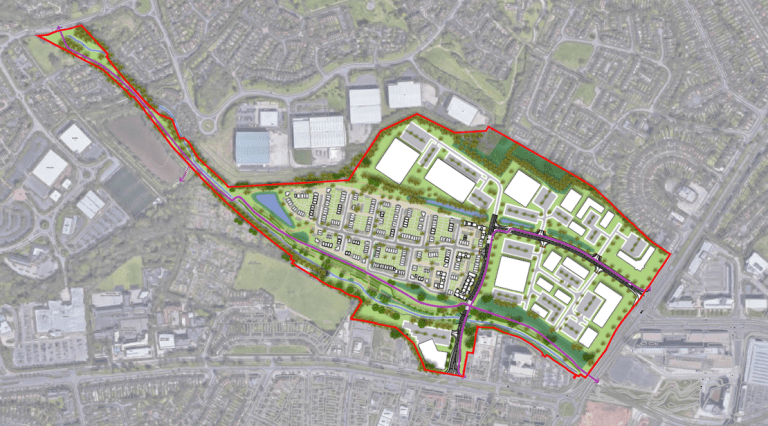
St. Modwen secures planning to deliver 350 new homes in Longbridge

Latest phase adds to 1,450 homes already created at flagship development Approval now means work could begin by Autumn 22 St. Modwen, a leading developer of new communities and high-quality homes, has reached the latest milestone at its flagship Longbridge development after Birmingham City Council granted planning permission for a

Read More »

CREATING BETTER ENVIRONMENTS FOR A BETTER EDUCATION

The effectiveness of education provided to students is directly proportional to the quality of the learning environment where the teaching is delivered. Optimal acoustics, thermal performance, air quality, natural lighting, security and aesthetics work harmoniously together to positively impact how students and teachers stay comfortable and focused, and perform academically.  

Read More »

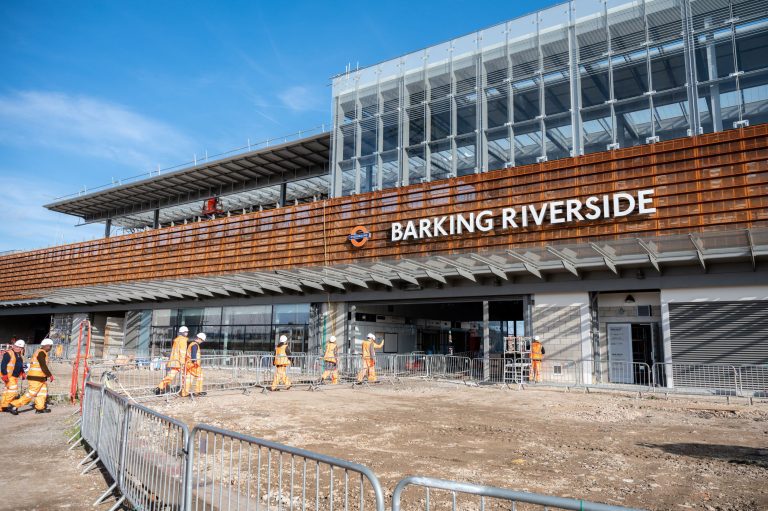
Barhale wins Barking Riverside station water infrastructure work

Barhale has been awarded a design and build contract to enable completion of Barking Riverside train station – the new London Overground station that will service over 10,000 new homes planned in East London. Barking Riverside Limited (BRL) has appointed civil engineering and infrastructure specialist Barhale to install a new

Read More »

LEVELLING UP WHITEPAPER: A WELCOME SIGHT – BUT IT MUST DELIVER

THE government’s long-awaited levelling up whitepaper has been unveiled in full at long last. The document outlines the government’s commitments to rebalancing the UK’s services and economies, which is segmented into 12 key mission statements. Gerard Toplass, executive chairman of The 55 Group, which heads a collective of businesses operating

Read More »

RLB appointed to leading transport operator First Group £150 Million framework

Leading infrastructure, construction and management consultancy, Rider Levett Bucknall UK (RLB UK) has been appointed to key transport operator First Group’s Property Projects Consultancy Framework on its Project Management and Principal Designer lots. The Framework contract, which lasts for two years with a one year option, covers England and Wales

Read More »

Housing Pattern Books set to transform affordable homes delivery

Advanced Industrialised Methods for the Construction of Homes (AIMCH), the three-year project to support the sector to tackle the UK housing crisis, has arrived at an answer to the UK’s chronic housing shortage.  Following 18 months of intense collaboration and research, AIMCH partners Stewart Milne Group (SMG) and L&Q have

Read More »
Latest Issue
Issue 342 : Jul 2026

bdc magazine

NBS & RIBA LAUNCH SURVEY TO MAP THE FUTURE OF RIBA-APPROVED CPD

Latest research survey calls for architect feedback to improve educational offering A new survey has been launched by NBS, a leading specification and product information platform for the construction industry, and RIBA (The Royal Institute of British Architects) to find out how architects and specifiers are using RIBA-approved CPDs (Continuing Professional Development). The RIBA CPD Providers Network survey will help monitor satisfaction levels as a springboard for improvement, delivering a deep dive into the most popular topics covered and ways to increase programme effectiveness in the digital era. Each year, RIBA Chartered Members are required to achieve 35 hours’ worth of CPD, as part of their continual development. Through CPD delivered by experts from manufacturers and advisory bodies, accredited by the RIBA CPD Providers Network, architects are able to stay up to date on industry changes to deliver the highest quality services to clients. Through the survey, NBS and RIBA aim to pinpoint how CPD is evolving and how new formats can quickly disseminate pertinent information about major changes in the industry whilst meeting the needs of a faster-paced, more technologically savvy workforce. NBS is now calling on architects and specifiers to offer their opinions to inform this year’s report and help identify some of the barriers to success, to ultimately improve the future success of RIBA-approved CPDs. David Bain, Research Manager at NBS, said: “It’s been five years since our last RIBA CPD Research Report and the industry has changed significantly in that time. In a sector that’s undergone such a dramatic transformation, particularly with the swift turn to digital adoption, we want to find out what’s important to specifiers and architects so we can enhance their learning potential in the years to come and propel new recruits to close the skills gap. “Specifically, we’ll be drilling down into the preferred ways of doing CPD and whether or not that has changed since the pandemic. We’ll also look at what format and content are most beneficial to them and the importance of RIBA accreditation when it comes to reviewed and approved content.” Once the results have been collated, the findings will be produced into a 2022 report due out in May this year. Those that choose to take part will then receive an early copy of the report, ahead of general release. Joni Tyler, RIBA Head of CPD, said: “RIBA-approved Providers Network CPDs have set the blueprint when it comes to quality – providing a distinct advantage over non-approved CPD materials. “We’ve seen a huge shift to digital CPDs over the past 18 months and with so much development in the industry we want to ensure that architects are getting exactly what they need. “This will also be a hugely useful exercise for companies looking to present or host CPDs, gaining a deeper understanding of how to effectively communicate with their architect and specifier audiences – what drives them and what makes them tick. Architects and other specifiers interested in taking part in the survey can do so by clicking here. The survey will take about 10 minutes to complete and respondents will receive a copy of the report automatically once published. For every completed response, NBS will donate £1 to the UK construction industry charity CRASH.

Read More »

St. Modwen secures planning to deliver 350 new homes in Longbridge

Latest phase adds to 1,450 homes already created at flagship development Approval now means work could begin by Autumn 22 St. Modwen, a leading developer of new communities and high-quality homes, has reached the latest milestone at its flagship Longbridge development after Birmingham City Council granted planning permission for a new neighbourhood of 350 new homes. This latest phase builds on the 1,450 homes and 3,000 full-time jobs already delivered by St. Modwen, which has already boosted the local community and economy. St. Modwen has worked in partnership with the West Midlands Combined Authority which has contributed £6 million of grant funding to support the redevelopment of the West Longbridge area. Work is already underway on the infrastructure throughout the 75-acre site and represents a significant part of the overall £1 billion regeneration project that is being undertaken. The new homes will be built by St. Modwen Homes and construction is expected to begin by Autumn 2022. The planning success builds on the momentum from late 2021 when planning permission was granted to build a new state of the art veterinary hospital which will create up to 150 skilled new jobs at West Longbridge Business Park. It represents a major milestone in the development of the park as it becomes a leading centre for science and technology, medicine, advanced manufacturing and R&D. The importance of Longbridge was highlighted by former Minister for Housing, Chris Pincher, when he visited the site in November of last year. The UK Government has made the regeneration of brownfield sites such as Longbridge a top priority as part of a national target to build a million new homes. On completion of the regeneration works, St. Modwen will have created over 3,000 new homes, 2 million sq ft of commercial floorspace and up to 10,000 jobs at Longbridge. Rob Flavell, Senior Director for St. Modwen, said: “Housing has always been an integral part of our plans here at Longbridge. More businesses are coming to Longbridge and employees require good quality, local housing. I’m delighted that the next phase of this regeneration can progress and the whole team here at St. Modwen are looking forward to more significant developments at Longbridge throughout 2022.” West Longbridge will also feature 27 acres of attractive, green space connected to the nearby Austin Park, including a mile of the River Rea which will open to the public for the first time, increasing biodiversity and promoting health and wellbeing throughout the area. Andy Street, the Mayor of the West Midlands, said: “Securing planning permission for this latest development of housing represents yet another important step for the regeneration of Longbridge. For those of us familiar with the troubled history of this site it really is brilliant to see the rejuvenation of Longbridge coming along, and I am delighted the WMCA has been able to play its part in making that happen. “This scheme is the latest in a long line that we have helped fund, bringing derelict brownfield land back into use to create much-needed new homes and new jobs for local people. Not only that, but our brownfield-first approach to redevelopment across the West Midlands also helps protect our precious and irreplaceable greenbelt land.” For more information about the ongoing regeneration of Longbridge town centre, visit: https://www.longbridgebirmingham.co.uk

Read More »

CREATING BETTER ENVIRONMENTS FOR A BETTER EDUCATION

The effectiveness of education provided to students is directly proportional to the quality of the learning environment where the teaching is delivered. Optimal acoustics, thermal performance, air quality, natural lighting, security and aesthetics work harmoniously together to positively impact how students and teachers stay comfortable and focused, and perform academically.   Kawneer continuously invests in façade systems that create excellent learning environments, allowing specifiers to choose from a wide variety of market leading products designed and built to the highest possible standards. From a suite of products specifically designed for the Education sector, highlights include the AA®190 TB, a severe duty welded commercial entrance door that offers robust performance, the AA®720 SL window, offering great thermal characteristics and slim sightlines, and our market leading AA®100 curtain wall system, which provides a best-in-class performance. Facing the challenges together With a vast amount of experience in this sector, helping to create buildings that deliver aesthetic, cost and performance requirements, Kawneer understands the challenges faced by architects, fabricators and maintenance teams. That’s why it specialises in aluminium façade solutions that provide excellent performance, best value, unmatched durability, reduced maintenance and a low carbon footprint. Kawneer manufactures high performance aluminium curtain wall systems at its purpose-built manufacturing facility in Runcorn, Cheshire. These products allow specifiers to meet both the technical performance and cost brief of any project, creating excellent learning environments that provide great aesthetics and optimise natural light and ventilation. Leading by example As all aluminium façade products are manufactured in the UK, Kawneer can also guarantee supply and competitive lead times, while ensuring that its systems remain competitive. Fully tested in accordance with the BSI standards, Kawneer products are responsibly sourced with BES 6001 accreditation, supported by Life Cycle Assessments and Environmental Product Declarations for all main systems and low carbon aluminium billet solutions. Teachers strive to ensure the experience and knowledge they pass on to a new generation lasts a lifetime. Kawneer wants the buildings it has helped to create to withstand the test of time and ensure they provide comfortable learning environments for all future generations. Discover more at: Kawneer-education.com

Read More »

Barhale wins Barking Riverside station water infrastructure work

Barhale has been awarded a design and build contract to enable completion of Barking Riverside train station – the new London Overground station that will service over 10,000 new homes planned in East London. Barking Riverside Limited (BRL) has appointed civil engineering and infrastructure specialist Barhale to install a new foul water pumping station at the terminus which is currently being built as part of the £260M extension of the Gospel Oak to Barking Overground Line. BRL is the joint venture between L&Q and the Mayor of London spearheading Barking Riverside, the mixed-use development that will regenerate the 443 acre brownfield site of the former Barking Power Station. Barhale will enter a three month design phase with design partner Nicholas O’Dwyer before the main construction work commences in May 2022. The programme will also include laying a linking length of foul sewer to a new rising main and the drainage within the pump station to connect the incoming sewer to the inlet chamber and to a new emergency storage. A key consideration is overcoming the challenging ground conditions, predominantly tidal alluvium, presented by the location alongside the River Thames. Barhale’s Daniel Meadowcroft, regional manager, explained that the team had been able to bring its experience of similar scenarios to bear in its recommendations. “Our approach will see the originally-specified, shallower-laid, large diameter pipes replaced by a storage tank,” he said. “Given that we are literally working on the banks of the Thames, it will provide a firmer foundation and minimise the risk of settlement. “It’s a great example of how we are able to draw upon our extensive expertise in overcoming engineering challenges to find an optimum solution. “Barking Riverside is a hugely important project to help build the transport infrastructure for a new community in East London. We are very excited to be playing a part.” Barking Riverside station is scheduled to open later this year.

Read More »

BUREAU VERITAS URGES FIRMS TO TAKE HEED OF NEW PART F REGULATIONS, AS UK GOVERNMENT FURTHER RELAXES COVID RESTRICTIONS

Leading air quality specialist Bureau Veritas has welcomed the recent updates to Approved Document F, which is part of significant changes to Building Regulations, as a step in the right direction for indoor ventilation – particularly as the Government announces its ‘Living with COVID’ plan, and an end to COVID-19 isolation laws.  Recent research found that more than 12 million residents in the UK are living with health issues that can be exacerbated by air pollution, and three million working days are lost every year because the UK’s air pollution exceeds the World Health Organization’s recommended limits.   The last two years have highlighted the importance of indoor air quality and ventilation and the task at hand now, according to Bureau Veritas, is to take learnings from COVID-19 and the habits formed to manage air flow to ensure compliance to new Part F regulations.   Joe Marais, Occupational Hygiene Manager at Bureau Veritas, comments: “Ventilation has become something of a clear focus both within the home and workplace over the last two years, with a greater awareness of poor air quality and ventilation linked to COVID-19. As the Government announces its living with COVID strategy and an end to all remaining restrictions, it’s even more vital that businesses remain alert to the importance of good ventilation in mitigating the spread of the virus – as well as other illnesses such as the common cold – ensuring wellbeing for its staff, and efficiency and productivity for the business.  “There are a number of simple steps businesses can take to drive towards greater fresh air ventilation, by opening windows or utilising air handling units – both of which COVID shone a spotlight on. However, the introduction of Part F places strict technical requirements on what must be achieved through ventilation.”  Under new Part F regulations, there is a requirement for whole building ventilation to meet a standard of 10 litres of fresh air per person per second, or one litre per second per square metre – whichever is highest (compared to only the former requirement in the past). Common spaces will also require natural ventilation under Part F, with openings equal to at least 1/50th of the floor area or mechanical ventilation to supply 0.5 litres of fresh air per second per m2 of the common floor space area.  Joe continues: “The pandemic highlighted that ventilation is a vital component for all buildings, placing a requirement on businesses and building managers to monitor indoor air quality, specifically within ‘high risk’ occupiable rooms, where there is a risk of airborne infection. COVID-19 measures temporarily enhanced standards, with many employers having invested in improved mechanical ventilation and air circulation services to support employee health and wellbeing. However, these temporary standards must become permanent if businesses hope to comply to new Part F rulings, and not slip back to pre-COVID attitudes.  “To ensure a robust strategy is in place to promote good ventilation within the workplace, businesses must first ensure a quantitative assessment has been completed within the premises to monitor the ratio of fresh air to the size of the room or number of occupants, as well as qualitative reviews of air handling units to scrutinise their functionality.   “This may sound like quite an undertaking, which is why we would always recommend partnering with a third party compliance specialist to complete the relevant audits and assessments, enabling the building manager to focus on creating a strategy to implement any recommendations.”  Bureau Veritas’ experienced Occupational Hygiene division has a longstanding history is supporting businesses to protect staff and customers from exposure to poor ventilation, as well as maintaining compliance with relevant regulations. The firm’s hygienists will assess, monitor, and evaluate a business’ current levels of ventilation and air quality, and provide sound advice on how to bring these up to standard to meet Part F regulations, or how they can be further improved. This allows businesses to operate effectively and efficiently whilst protecting health and achieving compliance.  Businesses and building managers can also receive further advice and support on Part F from Bureau Veritas, by registering for its free webinar on Thursday 3 March at 11:00am. The webinar will cover what the updates to Part F mean for indoor air quality, what we have learnt from COVID-19 and what is expected from air handling units for new buildings.  Click here to register for Understanding Part F updates: The role of indoor air quality to support wellbeing.  To find out more about Bureau Veritas’ Occupational Health services or to discuss individual requirements with a member of the team, call 0345 600 1828 or visit www.bureauveritas.co.uk.

Read More »

GLP completes record leasing & announces new round of spec development at Magna Park Lutterworth

GLP, a leading investor and developer of logistics warehouses and distribution parks, today announces that it has successfully leased multiple warehouses at Magna Park Lutterworth to top-tier customers, along with commencing speculative development on four units at Magna Park South Lutterworth. Magna Park Lutterworth is the UK and Europe’s largest dedicated logistics and distribution park, situated within the Midlands’ ‘Golden Triangle’ of logistics. Home to 36 different customers and occupying over 11 million SQ FT of sustainable floor space across 41 buildings, Magna Park Lutterworth is GLP’s flagship distribution park. The deals in the park include two spec build lettings and a build to suit transaction in the North, plus a letting of an existing building in Magna Park Central: Bleckmann, a fashion and lifestyle supply chain expert, has leased the first of the three “spec builds” in Magna Park North, taking a 200,102 SQ FT building (MPN1) on a long-term lease. The warehouse will be used to service Bleckmann’s increasing number of contracts and will be the company’s second unit leased at Magna Park Lutterworth, after it acquired Tornado-186 18 months ago. Iron Mountain, an information management services company, has signed an agreement to lease MPN3, the third spec building under construction, totaling 297,194 SQ FT. This will support Iron Mountain’s UK expansion strategy.  MPN3 is expected to complete by the end of March 2022.  LX Pantos has taken a building on a built to suit basis – MPN4, totaling 310,000 SQ FT, which is expected to complete by July 2022. LX Pantos is upsizing from an existing facility and plans to use the warehouse to service LG Electronics, amongst other top brands. In a separate development, GLP has completed the letting of Hurricane-258, a 258,000 SQ FT cross-docked distribution unit located within the Magna Park Central Lutterworth development, to Rhenus Home Delivery.  Rhenus intends to operate the unit as a two-man lift operation in response to the further growth of their home delivery business. The letting brings the park close to 100% occupancy, with only MPN2, GLP’s 500,000 SQ FT spec build, available. MPN2 is currently under construction and is expected to complete in March 2022. Following the highly successful development of 1.2 million SQ FT (Phase one) last year in Magna Park South (MPS), GLP has announced it has commenced the next phase (Phase two) of speculative development in MPS, with another 1 million SQ FT being constructed across four buildings. The development will see the construction of 186,000, 211,000, 256,000 and 355,000 SQ FT buildings respectively. Work on-site will commence in Q2 and is expected to complete by Q4 2022. As with all GLP’s developments, the existing and new units follow GLP’s rigorous ESG development standards and benefit from best-in-class specification including wide service yards, significant HGV and car parking allocations, dock levelers, level access doors, increased natural light, electric vehicle charging and abundant power supply. Each development is also BREEAM Excellent, designed to WELL principles and features a range of sustainability and energy efficiency measures. Joe Garwood, Senior Development Director at GLP, explains: “This marks an exciting time in the ongoing development of Magna Park Lutterworth, which has been firmly established as Europe’s leading logistics and distribution park. The park has seen unprecedented development and leasing activity in recent months, with GLP completing eight deals over the course of last year totaling 2.2 million SQ FT. We are delighted to partner with such well-established companies, and we look forward to working with Bleckmann, Iron Mountain, LX Pantos and Rhenus Home Delivery and supporting them as they grow.”  

Read More »

LEVELLING UP WHITEPAPER: A WELCOME SIGHT – BUT IT MUST DELIVER

THE government’s long-awaited levelling up whitepaper has been unveiled in full at long last. The document outlines the government’s commitments to rebalancing the UK’s services and economies, which is segmented into 12 key mission statements. Gerard Toplass, executive chairman of The 55 Group, which heads a collective of businesses operating within the construction sector – including national framework provider Pagabo, along with risk, compliance and contract management software company Sypro, social value specialists Loop, and digital-first training platform Tequ – has a positive outlook on the whitepaper. He said: “The levelling up whitepaper has been long-awaited by us all, and it’s great to see it has finally been published in full. While generally speaking, the 12 missions outlined by the government cover pretty much every aspect of daily life, we’re especially pleased to see a number of aims that align with our values. “Our businesses operate nationally but are headquartered in central Hull, which is a city that understands the value that comes from investment – something that we have supported by investing in the transformation of 55 Whitefriargate to bring it back into use. “We are really encouraged by the approach to devolved administrations, decentralising the power from Whitehall and putting it in the hands of people in the areas it is needed. It’s really pleasing that our region is one of the first areas to be able to open negotiations on this topic and we look forward to seeing how this develops in time.” A number of mission statements within the whitepaper focus on improving infrastructure and huge regeneration projects, which will need to be led by local authorities and public sector bodies. Jason Stapley, managing director of national framework provider Pagabo, believes that construction professionals and their expertise will be the key in taking these schemes beyond promises and into reality. He said: “The whitepaper puts great emphasis on restoring local pride, detailing how the government will support 20 towns and city centres with the undertaking of ambitious regeneration projects. It’s a proven fact that positive environments and delivering the infrastructure communities need will elevate an area or region in terms of jobs, productivity and economic boost. “Such large-scale ambition for regeneration is met with the detail of dozens of local authorities set to be supported by the High Streets Task Force to transform town centres. For built environment specialists, our support of public sector bodies for the delivery of such schemes will be key – and ensuring the gold standard of procurement will make sure that true value can be delivered to communities in a way that creates maximum positive impact, while streamlining processes and budgets. “Equally, there is a focus on levelling up infrastructure and transport connections. With net zero carbon targets also set in place by government, it is these large-scale projects that provide huge opportunity for decarbonisation, along with an approach to refurbishment and retrofit to make sure existing building stock also minimises impact on our environment. “Our frameworks are placed to support with all of these aims, with the ability to track all-important KPIs around a scheme as required, such as social return on investment, carbon reduction and local impact. We are set to go live with our civils and infrastructure framework in the coming weeks, which has been designed with these kinds of schemes in mind – so we look forward to working with clients on their projects that will work towards the levelling up agenda.” Social value is a hot topic within the industry, and one that will extend into every reach of life. One of The 55 Group’s businesses is social value calculation specialist, Loop. With several of the mission statements outlined by the government focussing on social-led topics, making sure that organisations are able to identify the actual positive impact of their work on communities will become a big operation. Angus Townsend, group social value lead, said: “Some of the missions outlined within the whitepaper may appear to some as ‘softer elements’, such as improving life expectancy. However, these elements are all interlinked and very much tied to social value and the types of outcomes we help our clients demonstrate from their operations. “It’s likely that generating social value and delivering the levelling up agenda will become synonymous with each other – but the responsibility on doing both will be on all of us. It will be important to make sure we can examine the impact of everything we do and how that plays into the core mission statements from the whitepaper. As ‘the social value people’, we are primed and ready to work with our clients to help demonstrate both quantitative and qualitative evidence to show how they are helping to work towards these outcomes.” Gerard concluded: “There has been a mixed reaction to the whitepaper so far, but we are hopeful that it will mark a moment where direction changes towards making actionable change to rebalance the country. The key will be ensuring it delivers what it promises – and it will be up to us all to keep momentum and hold leadership accountable to making process. “Of course, a lot of our operations are within the construction industry so there are ample ways our work will be able to support the aims around regeneration and infrastructure. However, our work stretches far beyond this, working on key areas including social return on investment and seeking to modernise skills and training to make it fit for the modern world. “Seeing a focus on research and development and improving education standards is hopeful – but will largely rely on adequate funding. Part of levelling up is putting the power into the hands that need it, so making sure that we are working towards practises fit for the future will be a huge part of the journey. For example, in the construction sector there is an ongoing shortage of skills that training courses are simply not fit for purpose in tackling due to relevance, complexity or overall length.

Read More »

RLB appointed to leading transport operator First Group £150 Million framework

Leading infrastructure, construction and management consultancy, Rider Levett Bucknall UK (RLB UK) has been appointed to key transport operator First Group’s Property Projects Consultancy Framework on its Project Management and Principal Designer lots. The Framework contract, which lasts for two years with a one year option, covers England and Wales and spans all First Group’s existing railway property including more than 400 stations managed across the UK network.  RLB was awarded the framework based on the extensive experience of its team on project managing works and maintenance across the railway infrastructure. This team experience includes projects such as Crossrail, High Speed 2, Midland Metro Alliance, East West Rail, Network Rail Infrastructure Projects, Network Rail platform extension programme and the Manchester Piccadilly station. As well as their reputation within the industry, RLB’s award-winning team is spread across 12 national offices combining global best practice and innovation with local knowledge and complementing the First Group’s regional footprint. Stuart Parker from First Group commented, “We wanted to work with partners who not only understood the transportation and property sectors but also had an in-depth knowledge of best practice across the built environment, and a complementary added value attitude to provide better rail services, keep people moving and communities prospering across the country.  RLB’s breadth of service delivery and range of sector experience as Project Managers and Principal Designers, alongside the outstanding technical expertise of their proposed team, made them an obvious choice to be involved in the framework.” Simon Pledger, RLB Project Management lead for Infrastructure and National Framework Project Management Account Manager for First Group comments, “Transportation infrastructure is more than a way of getting people from A to B. It works towards driving social equality, boosting the economy and bringing accessibility to all. We are delighted to be supporting First Group in ensuring it provides optimised facilities across its railway estate, in retaining a leading position in the thriving UK rail market, and in improving their customer experience offering.”

Read More »

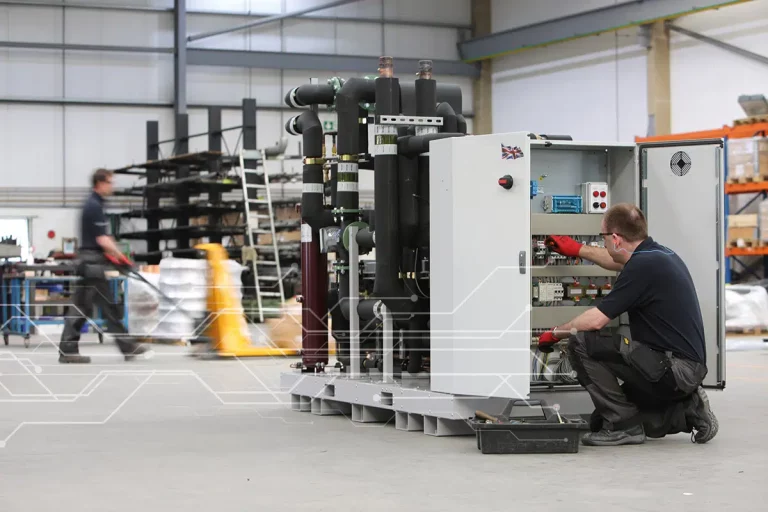
Clade opens new factory in boost to green heating production and jobs

Leading industrial engineering firm, Clade, has opened its newly expanded Technology Centre in Morley, Leeds, boosting production of heat pumps and creating over 300 new jobs in the area. Andrea Jenkyns, MP for Morley, formally opened the factory in a ceremony on 11 February 2022.  For over 30 years, Clade has been leading energy transformation in heating and cooling using cutting-edge natural refrigerants. In order to furthersupport the UK’s transition to a greener economy, the new 29,000 sq foot factory will be dedicated to the production of Clade’s range of industry-leading CO2 heat pumps.  Demand for Clade’s range of natural refrigerant heat pumps has grown across, commercial and industrial sectors. The expansion will enable Clade to significantly increase production by 400%. In addition, the company is creating over 300 new jobs over the next four years, split between factory floor and office roles.  As a sustainable company, Clade ensures that its production processes are as green as possible. This includes the installation of solar PV to help generate clean energy, fitting electric vehicle charging points, using LED lighting and implementing waste reduction strategies. Alongside this, the company maintains its operation-wide policy for offsetting carbon generation through tree planting, with over 1000 trees planted, removing CO2 from the atmosphere and creating space for wildlife.  On the factory opening, Dean Frost, Managing Director at Clade, said: “Opening this new technology centre is an important step for us to take. The last few years have been challenging for everyone, so it is fantastic to be able to share this celebration of success with our valued stakeholders, staff, customers and suppliers who have been with us on this journey, and will be for many years to come.  “We are committed to tackling the challenges of climate change and our new facility will enable us to increase production, develop innovative new products and support the local community through job creation and subsequent impact on the supply chain” Dean added. Tim Rook, Chief Markets Officer at Clade, said the new facility will enable the company to  accelerate the adoption of green heating technologies:“As the importance of tackling the climate emergency has become more urgent, Clade have developed high-performance heat pumps which will decarbonise heat in buildings and industrial processes throughout the UK and beyond. Heat makes up 40% of the UKs carbon footprint and heat pumps are the only viable solution, readily available and able to be deployed at scale quickly enough to make a difference.” “We are passionate about making our products work in the real world, supporting customers to get the very best long-term value from them and are looking forward to being able to expand our production, enabling more people to benefit from the carbon savings heat pumps create,” Tim concluded. For more information visit www.clade-es.com

Read More »

Housing Pattern Books set to transform affordable homes delivery

Advanced Industrialised Methods for the Construction of Homes (AIMCH), the three-year project to support the sector to tackle the UK housing crisis, has arrived at an answer to the UK’s chronic housing shortage.  Following 18 months of intense collaboration and research, AIMCH partners Stewart Milne Group (SMG) and L&Q have developed housing blueprints for developers, housing associations and SMEs to bring affordable homes to market quickly and cost effectively. The affordable housing pattern books, featuring 24 designs, have been created to facilitate the construction of cottage flats, bungalows, semi-detached and terraced houses, all of which offer the flexibility to meet planners needs, and to fit in with local character. Designs from the pattern book can also be pieced together to accommodate a range of elevations and streetscapes. A central element of the type approved housing collections is their use of closed panel MMC timber technology, optimised to meet 55% PMV (Premanufactured Value), a requirement of Homes England grant funding. Their 0.20 U-Value provides a fit-and-forget, fabric first approach to energy efficient building envelope, set to comply with new Jun 22 Part L building regulations. Both gas and ASHP heating options are factored into the designs, and the layout and fabric efficiency of the building envelope ensures that homes in the pattern books are heat pump ready as we move towards zero gas developing, making it easy to use the technology now or retrofit in the future. In creating the pattern books, the developers have leveraged learnings from Design for Manufacture and Assembly (DFMA), Design Standardisation and Product Families (Kit of Parts) and BIM (3D modelling) outputs. AIMCH developers plan to exploit the standard house type pattern books on their own sites, or through strategic partnerships with other developers and clients. Through Stewart Milne Timber Systems, some of the homes will be available under free of charge license agreement, for other developers to use, as a whole house MMC supply chain solution. This novel approach, means SMEs, smaller HA/developers and new entrants, have immediate access to a range of fully considered, efficient and technically robust affordable homes, for use on their site, reducing development costs and fast-tracking appraisals and planning consents. Pattern books feature: L&Q range – 6 designs ●     Two and three bedrooms ●     Two storey accommodation, suitable for terracing ●     All homes 100% compliant with NDSS ●     Beyond the AIMCH R&D project, further L&Q typologies are planned. SMG House Range – 18 designs ●     Wide mix of one to four bedroom homes ●     Two storey accommodation, suitable for terracing ●     Broad range of typologies including bungalows and cottage flats ●     Homes offer 85% and 100% NDSS compliance Stewart Milne Group (SMG) and L&Q are confident that the pattern book route will guarantee fast delivery of high quality homes at reasonable cost and plan to deploy the designs in their own development portfolio from Spring 2022. In the case of Stewart Milne Homes, current affordable housing developments are being remixed or designed from scratch, using the new range of homes. L&Q are similarly rolling out their range on all new sites, as these come through their production pipeline. Stewart Dalgarno, Director of Innovation and Sustainability at Stewart Milne Group, and AIMCH Project Director said, “Typically, in the affordable homes sector, design and housing procurement are done on an isolated project-by-project basis, which potentially leads to higher costs, inefficiencies and variability in quality. Because of this, AIMCH sees enormous potential for accelerated use of pattern books in the sector. “Homes England affordable housing funding is already encouraging a more diverse mix of affordable home providers – SMEs and new entrant developers. This group is unlikely to have in-house technical teams to develop house type designs and associated collateral, so being able to reach for pre-configured, pre-approved housing designs, that can be deployed at pace, to accelerate and increase overall housing output is going to be an attractive option. “Furthermore, through endorsement from regulators, funders, and insurers, AIMCH believes that housing pattern books and standardised products will become commonplace in the affordable housing sector.” Wayne Hill, Production Strategy Director at L&Q said, “L&Q is proud to be leading the way in the adoption of off site technologies in the affordable housing sector. These developed approaches offer a clear way for housebuilders, housing associations and local authorities to adopt MMC methods, and the efficiencies which come with them, to build homes for those who need them the most. We have an ambitious roadmap which is seeing us roll out MMC across our development programme, and look forward to utilising the great learning of this project in our portfolio this year.” AIMCH see pattern books, together with the use of standardised product families, DFMA and BIM, developed in an earlier part of their research, as key ingredients in transitioning residential construction towards, industrialisation and off-site manufacturing, transforming how homes are delivered.


Read More »