December 10, 2025
Prologis announces cutting edge new development at DIRFT

Prologis announces cutting edge new development at DIRFT

Prologis UK, a leading property developer, investor and owner, has secured planning approval for a 107,000 sq ft distribution centre at Daventry International Rail Freight Terminal (DIRFT), the UK’s largest inland freight hub. Construction works will begin in January 2026, paving the way for DC107 to be ready for occupation

Read More »
Railpen completes state-of-the-art Rotunda office space in Camden’s Jamestown Courtyard development

Railpen completes state-of-the-art Rotunda office space in Camden’s Jamestown Courtyard development

Railpen, manager of the £34bn railways pension scheme in the UK, has completed the renovation of the Rotunda, a Grade II-listed former piano factory, into state-of-the-art offices at its Jamestown Courtyard development in London’s Camden neighbourhood.  Jamestown Courtyard, the 45,000 sq ft development comprised of seven heritage buildings, now has

Read More »
Brogan Group and Alimak Group Form Strategic Alliance to Deliver the CAS Common Tower and Atlas Gantries Worldwide

Brogan Group and Alimak Group Form Strategic Alliance to Deliver the CAS Common Tower and Atlas Gantries Worldwide

Brogan Group, owner of the CAS Common Tower and Atlas gantry systems, has entered into a strategic alliance with Alimak Group’s Construction Division. The partnership brings together Brogan’s proprietary CAS technology with Alimak’s global sales and rental network, giving clients worldwide access to fully integrated vertical access solutions that improve

Read More »
Hortons expands portfolio with acquisition of 132,000 sq ft Leamington Spa campus

Hortons expands portfolio with acquisition of 132,000 sq ft Leamington Spa campus

Hortons has strengthened its Midlands portfolio with the acquisition of a 12.8-acre, fully-let research, development and manufacturing facility in Leamington Spa. The campus-style development, located off the A425 Southam Road at Radford Semele, comprises 132,569 sq ft across three buildings, including a manufacturing facility, a hi-tech warehouse unit and an

Read More »
NHS SBS scoops ‘Procurement Team of the Year’ award and ‘Highly Commended’ for complex capital projects

NHS SBS scoops ‘Procurement Team of the Year’ award and ‘Highly Commended’ for complex capital projects

Leading corporate services provider, NHS Shared Business Services (NHS SBS), is proud to announce its Procurement Solutions Team has been named the winner of this year’s Health Care Supply Association’s (HCSA) ‘Procurement Team of the Year’ award. The HCSA annual awards recognise the outstanding contributions of individuals and teams driving

Read More »
How AI Image Editing Is Transforming Architectural Visualization and Property Marketing

How AI Image Editing Is Transforming Architectural Visualization and Property Marketing

The construction and property development industry has always relied heavily on visual communication. From initial concept presentations to final marketing materials, the ability to convey architectural vision through compelling imagery can determine whether a project secures funding, wins a tender, or attracts buyers. Yet producing high-quality visual content has traditionally

Read More »
What Online Casinos Can Borrow from Physical Casino Design

What Online Casinos Can Borrow from Physical Casino Design

Online casinos have convenience down. Click, play, cash out. But something is still missing. Step into a well-designed land-based casino and you feel the difference right away. The atmosphere and the flow work together because every detail has been planned with purpose. Physical casinos have spent decades learning how to

Read More »
Latest Issue
Issue 335 : Dec 2025

December 10, 2025

Prologis announces cutting edge new development at DIRFT

Prologis announces cutting edge new development at DIRFT

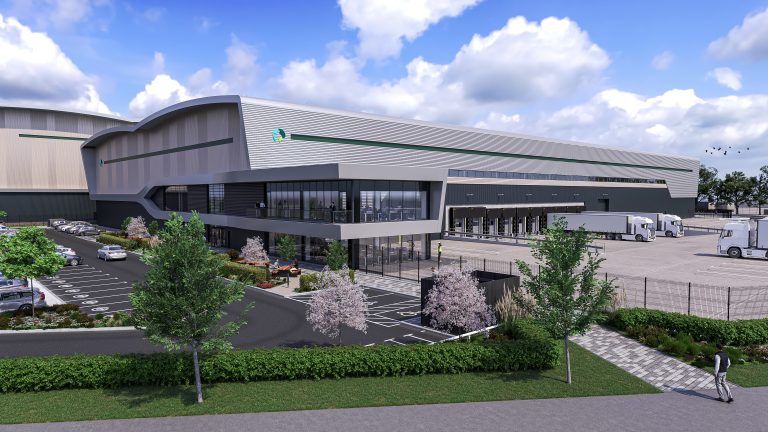
Prologis UK, a leading property developer, investor and owner, has secured planning approval for a 107,000 sq ft distribution centre at Daventry International Rail Freight Terminal (DIRFT), the UK’s largest inland freight hub. Construction works will begin in January 2026, paving the way for DC107 to be ready for occupation from August of that year. A distinctive new building for DIRFT The rail-linked new development will use a contemporary architectural approach that pushes the boundaries of logistics design. Features include a glazed south-facing external balcony and full-width bifold doors, integrating the outdoors with the internal work environment to support placemaking and wellbeing. The building will also target EPC A+ and BREEAM Outstanding. Enhanced Fit-Out for speed and efficiency Built on a speculative basis, DIRFT DC107 will include LED lighting and fire alarm systems alongside optimised racking options that can be provided by Prologis Essentials. Launched in 2025, Prologis’ Enhanced Fit-Out programme offers market leading “ready-to-operate” logistics facilities, saving customers time and money on design and installation of key high-level and long lead time elements. Building off the success of the enhanced fit-out campaign delivered during 2025, DC107 will come ready to operate from day one. Digital connectivity built in from day one DC107 will include high-quality, resilient digital infrastructure to support robust and scalable connectivity. Targeting WiredScore Gold, with Wi-Fi installed from day one, customers can plug and play immediately, helping save valuable operational time. This new approach aligns with Prologis UK’s commitment to improving and streamlining the customer experience for businesses of all sectors and sizes. James Hemstock, Vice President Capital Deployment at Prologis UK, said: “At just over 100,000 sq ft this unit’s size is quite a rarity at DIRFT, and offers the market a distinctive proposition. With a clear focus on developing logistics real estate in the most desirable locations, Prologis aims to meet growing demand and changing industry needs. The wide range of customers at DIRFT shows that the site offers a best-in-class logistics location for businesses needing to reach every corner of the UK efficiently and we anticipate that this new development will generate a high level of interest.” Design approach DC107 is a modern logistics facility designed by Stephen George + Partners (SGP) on behalf of Prologis UK. Tariq Khan, Studio Director at SGP, said: “This unit represents contemporary logistics design, where future proofing functionality, architectural quality and customer experience work hand in hand. Our approach focused on creating a building that not only performs efficiently but also enhances everyday wellbeing, with features helping to elevate the overall working environment.” DIRFT’s strategic location With three build-to-suit projects on site and further infrastructure being delivered, DC107 will complete the northern gateway to DIRFT with a statement building. DIRFT is strategically positioned at the UK’s centre of logistics (M1/M6/A14), with the added benefit of three on-site rail freight terminals. Recent leases at DIRFT include a 1.3 million sq. ft. build to suit development for M&S and a 327,689 sq. ft speculative unit for GXO. Paul Weston, Regional Head of Prologis UK, said: “This has been an exceptional year for DIRFT. With construction and planning progressing well across the remainder of Phase III, DC107 marks our first speculative development onsite for some time and is our only available building at the park. We’re planning on bringing more positive news to the market in 2026 as we build on our strong momentum.” Building, Design & Construction Magazine | The Choice of Industry Professionals

Read More »
Railpen completes state-of-the-art Rotunda office space in Camden’s Jamestown Courtyard development

Railpen completes state-of-the-art Rotunda office space in Camden’s Jamestown Courtyard development

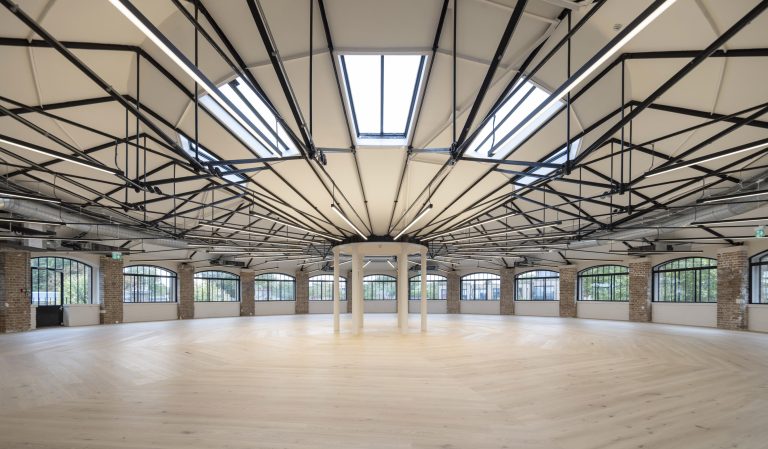
Railpen, manager of the £34bn railways pension scheme in the UK, has completed the renovation of the Rotunda, a Grade II-listed former piano factory, into state-of-the-art offices at its Jamestown Courtyard development in London’s Camden neighbourhood.  Jamestown Courtyard, the 45,000 sq ft development comprised of seven heritage buildings, now has only two floors to let in the completed Rotunda: the 4,054 sq ft courtyard floor and the 4,742 sq ft third floor.  The Rotunda – which provides panoramic, 360-degree views across Regents Park, Camden Lock and Central London – is a four-minute walk from Camden Town tube station and an eight-minute cycle to King’s Cross and St Pancras International stations. As a key anchor to the development, the Rotunda is a character-rich workspace, creating the ideal, open-plan structure environment for the likes of architecture firms, production and studio companies, and other creative industry professionals. Railpen is also committed to enhancing the wider public realm of Jamestown Courtyard, adding greenery and seating to create a space that the local community wants to spend time in, and drive growth for nearby retailers and hospitality operators. The Rotunda is already home to a range of tenants, including Acamar Films on the ground floor, while building services consultants Max Fordham occupy the first and second floors. The completion of the Rotunda is complemented by 12 Oval Road, also part of Railpen’s Jamestown Courtyard development, being fully let, following the lease renewal of music management company, Trinifold.  Emily Atkinson, Asset and Transaction Manager at Railpen, said: “Across our entire UK portfolio, we are dedicated to developing standout, state-of-the-art office developments, and the Rotunda at Jamestown Courtyard is absolutely no exception. The blend of history and modernity, as well as its proximity to Central London and other major landmarks, reflects our commitment to supporting the evolving needs of modern occupiers, offering flexibility, character and a strong sense of place within a vibrant community. “This project is a key part of our wider office strategy to create well-designed, sustainable workplaces that support how people want to work today and in the future, creating lasting value for both occupiers and the wider community.”  Alasdair Reid, Director at Max Fordham, said: “The Rotunda at Jamestown Courtyard really is something unique. Whether it’s the prime location, spectacular views or characterful interiors, we are proud to call it our home. Railpen positively engaged with our wishes for a much-improved environmental performance, and they have delivered a state-of-the-art office asset within this wonderful historic building. We look forward to welcoming our new neighbours in the near future.” Jamestown Courtyard forms just one of Railpen’s office developments in London and the wider UK, sitting alongside the recently launched 101 Bayham Street, which is also situated close by in Camden, as well as 125 Wood Street in the heart of the city, 4 Coleman Street, which is being delivered in Q2 2026, and the upcoming refurbishment of Red Lion Square in Holborn. Its portfolio also includes 11 assets across Cambridge, including Mill Yard and Botanic Place, both of which are under construction, and Multistory in Birmingham.  JLL and Edward Charles & Partners are the leasing agents on Jamestown Courtyard. Building, Design & Construction Magazine | The Choice of Industry Professionals

Read More »
Brogan Group and Alimak Group Form Strategic Alliance to Deliver the CAS Common Tower and Atlas Gantries Worldwide

Brogan Group and Alimak Group Form Strategic Alliance to Deliver the CAS Common Tower and Atlas Gantries Worldwide

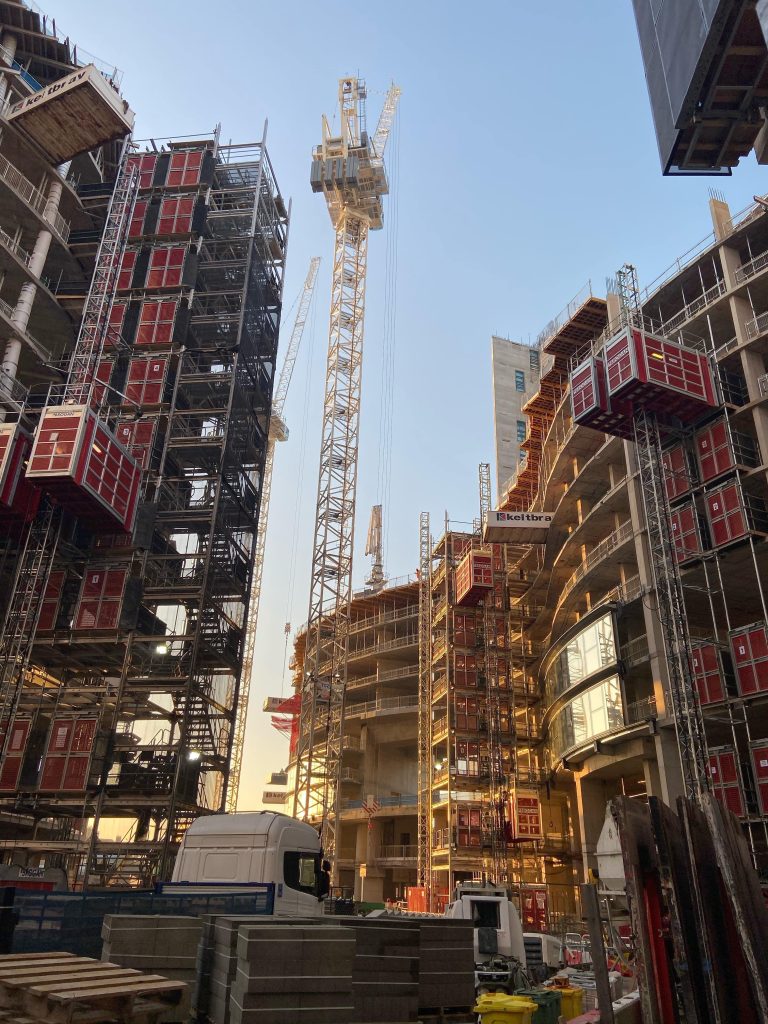
Brogan Group, owner of the CAS Common Tower and Atlas gantry systems, has entered into a strategic alliance with Alimak Group’s Construction Division. The partnership brings together Brogan’s proprietary CAS technology with Alimak’s global sales and rental network, giving clients worldwide access to fully integrated vertical access solutions that improve safety, efficiency and project delivery. As part of this alliance, the CAS Common Tower and Atlas gantries—built on CAS technology—will now be available through Alimak’s international contracts and operations, working in tandem with Alimak’s hoists and transport platforms to create a fully coordinated vertical access system. The CAS Common Tower is engineered for high-rise projects, while Atlas gantries are well-suited to low-rise applications, including data centres and street gantries. This provides project teams with a single, integrated solution, supported by Brogan’s design expertise and Alimak’s global service footprint. CAS Common Tower: Safer, Smarter, More Efficient The CAS Common Tower centralises hoisting operations on high-rise projects, allowing multiple hoists to serve a single access point. This improves logistics, maximises the use of limited ground space, and accelerates façade installation. By reducing reliance on cranes and minimising the need for working at height, it also enhances site safety and speeds up project delivery. CAS’s design team works closely with client engineers from the earliest stages of a project to configure hoist and tower layouts that maximise space and minimise structural impact. Atlas Gantries: Innovation for Industrial and Data Centre Projects Atlas gantries complement the CAS Common Tower by providing a faster, safer alternative to scaffold gantries. Particularly suited to industrial and data centre projects, they offer significant advantages where tie-in points are limited or where large, fragile plant components must be installed quickly and securely. Alimak Portfolio and Digital Advantage Alimak Group’s Construction Division contributes a broad portfolio of vertical access solutions, including hoists, mast climbing work platforms, and transport platforms. Its digital platform, My Alimak, supports fleet management with real-time diagnostics, location tracking, BIM integration, and advanced safety tools — ensuring maximum uptime and streamlined asset management. “This alliance marks a step change for the industry,” said Wayne Smith, Director at Brogan Group. “The CAS Common Tower has already transformed project delivery on some of the world’s most complex builds. By combining that technology with Alimak’s global network, clients everywhere can now access safer, smarter and more efficient vertical access solutions as part of their projects.” “Alimak Group and CAS have a long history of working together,” said Cameron Reid, Sales Director at Alimak Group’s Construction Division. “This agreement reflects our continued commitment to safe, efficient vertical access and outstanding customer service in high-rise construction.” This alliance underscores both companies’ commitment to advancing safety, efficiency and service in vertical access, supporting the successful delivery of complex construction projects across the globe. Building, Design & Construction Magazine | The Choice of Industry Professionals

Read More »
Private equity real estate investor Paloma Capital and its development partner Graftongate have announced the pre-let of the first unit at Bedford Trade Park, a new £25 million trade and mid-box scheme on the Elm Farm Industrial Estate. Aetna UK has signed for Unit 300, a 24,886 sq ft development fronting Caxton Road, which will be occupied by its end-of-line packaging machinery brand, Robopac. The new scheme comprising 10 Grade A industrial and trade units ranging from 3,663–41,711 sq ft will be built to a modern, energy-efficient specification, targeting EPC A+ and BREEAM Excellent. Each unit can be taken individually or combined, offering flexibility to meet a wide range of occupier requirements. Detailed planning consent has been secured and construction is scheduled to commence in Q1 2026 with occupation available from Q3 2026. Further pre-let interest is being sought on units of up to 42,000 sq ft. Unit 300 will include a state-of-the-art Tech Lab, inspired by the Aetna Group TechLab in Italy. The facility will allow products to be tested and refined for wrapping quality and load stability, and will be fully connected to the Group’s global network of TechLabs. A spokesperson for Aetna UK said that the new premises will strengthen its long-term commitment to the UK market and enhance services for customers nationwide. They added: “This investment ensures we can deliver faster support, greater technical capability, and an improved customer experience. The facility will expand parts availability and engineering resources, and provide modern spaces for demonstrations, trials and training, reinforcing Aetna UK’s focus on delivering world-class end-of-line packaging solutions.” Tim Harding of Colliers who advised Paloma and Graftongate on the transaction said: “This pre-let represents a fantastic example of investment from an existing Bedfordshire-based occupier in the local economy to support their long-term growth ambitions. The remainder of the forthcoming scheme will provide much needed Grade A stock in the supply starved Bedford market.” Situated on a 5.77-acre plot, Bedford Trade Park benefits from a prominent roadside location adjacent to the A4280 dual carriageway. It has excellent transport links, lying c.six miles from the A1 and 15 miles from Junction 13 of the M1, and offers a direct rail connection to St Pancras International via Bedford Station. The development marks the fourth collaboration between Paloma Capital and Graftongate, following Banbury 200, Exeter Trade Park, and Urban Logistics, Tottenham. For more information about Bedford Trade Park, contact joint letting agents Colliers and Cushman & Wakefield.

Paloma Capital and Graftongate secure pre-let at new £25m Bedford Trade Park

Private equity real estate investor Paloma Capital and its development partner Graftongate have announced the pre-let of the first unit at Bedford Trade Park, a new £25 million trade and mid-box scheme on the Elm Farm Industrial Estate. Aetna UK has signed for Unit 300, a 24,886 sq ft development fronting Caxton Road, which will be occupied by its end-of-line packaging machinery brand, Robopac. The new scheme comprising 10 Grade A industrial and trade units ranging from 3,663–41,711 sq ft will be built to a modern, energy-efficient specification, targeting EPC A+ and BREEAM Excellent. Each unit can be taken individually or combined, offering flexibility to meet a wide range of occupier requirements. Detailed planning consent has been secured and construction is scheduled to commence in Q1 2026 with occupation available from Q3 2026. Further pre-let interest is being sought on units of up to 42,000 sq ft. Unit 300 will include a state-of-the-art Tech Lab, inspired by the Aetna Group TechLab in Italy. The facility will allow products to be tested and refined for wrapping quality and load stability, and will be fully connected to the Group’s global network of TechLabs. A spokesperson for Aetna UK said that the new premises will strengthen its long-term commitment to the UK market and enhance services for customers nationwide. They added: “This investment ensures we can deliver faster support, greater technical capability, and an improved customer experience. The facility will expand parts availability and engineering resources, and provide modern spaces for demonstrations, trials and training, reinforcing Aetna UK’s focus on delivering world-class end-of-line packaging solutions.” Tim Harding of Colliers who advised Paloma and Graftongate on the transaction said: “This pre-let represents a fantastic example of investment from an existing Bedfordshire-based occupier in the local economy to support their long-term growth ambitions. The remainder of the forthcoming scheme will provide much needed Grade A stock in the supply starved Bedford market.” Situated on a 5.77-acre plot, Bedford Trade Park benefits from a prominent roadside location adjacent to the A4280 dual carriageway. It has excellent transport links, lying c.six miles from the A1 and 15 miles from Junction 13 of the M1, and offers a direct rail connection to St Pancras International via Bedford Station. The development marks the fourth collaboration between Paloma Capital and Graftongate, following Banbury 200, Exeter Trade Park, and Urban Logistics, Tottenham. For more information about Bedford Trade Park, contact joint letting agents Colliers and Cushman & Wakefield. Building, Design & Construction Magazine | The Choice of Industry Professionals

Read More »
Hortons expands portfolio with acquisition of 132,000 sq ft Leamington Spa campus

Hortons expands portfolio with acquisition of 132,000 sq ft Leamington Spa campus

Hortons has strengthened its Midlands portfolio with the acquisition of a 12.8-acre, fully-let research, development and manufacturing facility in Leamington Spa. The campus-style development, located off the A425 Southam Road at Radford Semele, comprises 132,569 sq ft across three buildings, including a manufacturing facility, a hi-tech warehouse unit and an office building. The site is let to UK-based engineering consultancy Ricardo plc on a long-term lease. Ricardo, which was recently acquired by global professional services firm WSP, has occupied the campus for more than 25 years and has made significant ongoing investment in the premises, including a comprehensive ESG-focused upgrade programme. The acquisition supports Hortons’ strategy of broadening its geographical footprint and sector exposure, and follows several recent industrial/logistics acquisitions across the Midlands. Steve Benson, chief executive of Hortons, said: “Securing this high quality, long established site represents another important step in diversifying our portfolio, both geographically and by sector. Ricardo is a long-standing and well invested occupier, and we look forward to supporting their continued presence on the estate, as well as exploring opportunities to enhance the facility further.” Hortons was advised by Atlas Real Estate and Gateley. James Madill, real estate partner at Gateley Legal, led the transaction alongside real estate solicitor Amanda Matyjaszczyk. He commented: “It’s really encouraging to see the completion of this significant acquisition — the second in a short period of time — as we continue our long standing relationship with Hortons. “Gateley delivered multi-disciplinary advice on a range of real estate, construction, tax and planning matters, as well as GIS support from Gateley Hamer. This acquisition was completed to an accelerated timetable and was a real team effort from all involved.” Building, Design & Construction Magazine | The Choice of Industry Professionals

Read More »
Moving Past ‘Fit and Forget’ – How Building Owners, Developers & Facilities Managers Can Take Control of the Fire Safety Lifecycle

Moving Past ‘Fit and Forget’ – How Building Owners, Developers & Facilities Managers Can Take Control of the Fire Safety Lifecycle

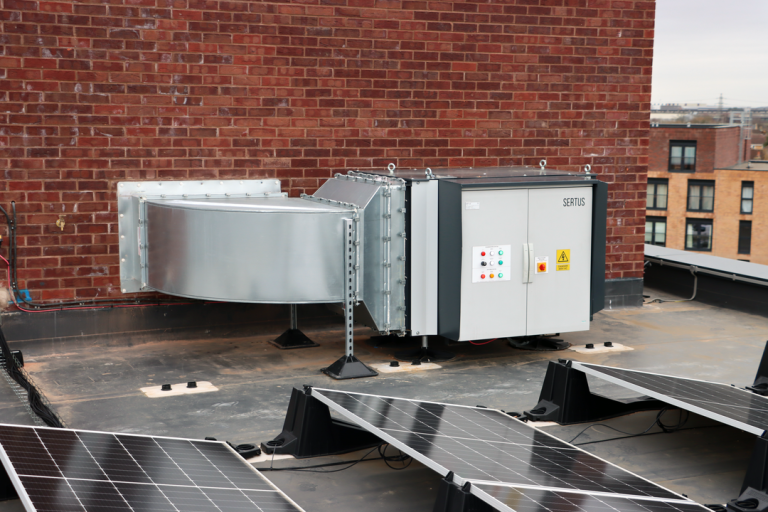
By Brad Crisp, Commercial & Specification Manager at Sertus For building owners, developers and facilities managers across the UK, it can be easy to fall into the trap of ‘fit and forget’ – especially when it comes to a whole host of installed safety equipment. Ensuring you’re keeping on top of all of your installed safety systems is essential, especially when it comes to fire safety. The notion that fire safety is a one-time box-ticking exercise from years gone by couldn’t be further from reality. Those in a position of authority must undertake a continuous journey to keep up with the fire safety lifecycle. Brad Crisp, Commercial & Specification Manager at Sertus takes a closer look at the importance of keeping on top of the fire safety lifecycle, with actionable tips on taking control for build owners and facilities managers. Why Fire Safety Requires Ongoing Attention The attitude of ‘fit and forget’ has long been an issue within the industry, which is a huge issue when it comes to fire safety. When investing in high-quality systems, in theory, they should stand the test of time and not require any real intervention – but it’s essential that building managers, developers and facilities managers keep on top of maintaining and upgrading fire safety systems. Even the most robust fire safety systems require regular testing and maintenance, and there’s good reason for this: System Deterioration – Over time, any system will begin to run into issues, especially if not maintained by a competent professional regularly. Changing Regulations – While regulations aren’t changing regularly, it’s important to keep on top of any regulations that do change and how this impacts your existing safety set-up. For example, the impact the 2024 update to BS991 had on smoke control. Human Error & Oversights – While a safety system might appear to be in good working order after being installed, there’s always a chance that something may have been missed in the initial installation that hasn’t been picked up. Changes in Facilities Use – If, for any reason, there’s a change to your premises’ primary function, there could be implications for how safety systems are used and what regulations now apply. There are a whole host of reasons that fire safety requires ongoing attention, with one of the most important being in compliance with section 3 of the ONS’ Fire Prevention and Protection statistics, which relates to fire protection and formal & informal notices. If your building fails a fire audit, the repercussions can be severe, with several informal and formal notification categories depending on the severity of non-compliance. Between April 2024 and March 2025, there were 8,666 breaches of compliance relating to fire-safety equipment maintenance (Article 17), which highlights the issues currently facing the industry when it comes to keeping up with fire safety obligations. The Fire-Safety Lifecycle Approach Fully understanding and implementing the fire safety lifecycle approach is complex, but extremely worthwhile for those who work in (M&E) and facilities management. Neglect at any stage can impose risk, leading to fines, legal liability or in the worst case, the loss of life. This is why proactive management is essential in fire safety. Here’s an in-depth look at the 5 stages involved in the fire safety lifecycle: An essential stage, this ensures that the fire safety system is appropriate for the building’s specific use, occupancy and risk profile. This stage is especially critical when undertaking a refurbishment of an existing building, or if there’s a change of use for the property. The following should be put in place during this stage: Fire Strategy – Hire a fire and safety consultant to define what is required from the system you are implementing. System Selection & Specification – Ensure the correct type of system is selected and establish requirements based on building codes and standards. For example, addressable vs conventional fire alarms, or wet pipe vs dry pipe sprinklers and smoke ventilation requirements, such as roof AOVs or smoke control dampers . Documentation – Begin developing design specifications and the Golden Thread of information, ensuring you have accurate and up-to-date records of your building’s fire safety. The Golden Thread & Why It’s Important The Golden Thread is an integral part of building managers, developers and facilities managers roles, with a digital, secure and tamper-proof record of information on the buildings design, construction and management throughout its entire lifecycle. Following the Grenfell Enquiry, and subsequent Building Safety Act 2022  being instated, the Golden Thread played a key role in providing a digital alternative to the historic paper file system ensures that all of the building safety information is accurate, accessible and used to mitigate safety risks. During this stage, it’s essential to consider the longevity of the solution you’re looking to install. For example, at Sertus, we pride ourselves on all of our smoke ventilation products standing the test of time, thanks to meticulous design, in-house manufacturing and unrivalled technical support after install. Now that the planning and design are in place, it’s time to put the physical aspects of your fire safety equipment into place with a trusted supplier and installer. Here’s an overview of the steps you should take: Appoint Contractors – Take time to pick a trusted partner to carry out the installation and ensure that all installers onsite are certified and competent. It’s essential to pick a contractor that you’re confident in, so take the time to get this stage right and ask for recommendations. For example, if you are having smoke ventilation installed, it’s important to ensure your contractor of choice has the relevant qualifications such as the SDI19 certification or SKEB (Skills Knowledge, Experience, Behaviours). Quality Assurance – It’s essential that you carry out regular site inspections to personally verify that the installation follows the approved design and fire strategy. You’ll be held responsible for any problems, so take the time to properly check all aspects of the installation. Commissioning – An essential part of the process, commissioning refers to testing the


Read More »
NHS SBS scoops ‘Procurement Team of the Year’ award and ‘Highly Commended’ for complex capital projects

NHS SBS scoops ‘Procurement Team of the Year’ award and ‘Highly Commended’ for complex capital projects

Leading corporate services provider, NHS Shared Business Services (NHS SBS), is proud to announce its Procurement Solutions Team has been named the winner of this year’s Health Care Supply Association’s (HCSA) ‘Procurement Team of the Year’ award. The HCSA annual awards recognise the outstanding contributions of individuals and teams driving improvement, efficiency and value across the NHS, particularly in healthcare procurement and the supply chain in the UK. The award was presented to NHS SBS in recognition of its dedication, teamwork and commitment to delivering Framework Agreements (FWAs) that ensure the NHS and wider public sector receive only the best products and services. NHS SBS’s 82-strong Procurement Solutions team manages a portfolio of over 40 FWAs with a combined multi-billion-pound value, and is responsible for commissioning, procurement and ongoing management, to ensure customers benefit from high-quality, cost-effective solutions. Developed by the organisation’s category experts and used by NHS trusts and wider public sector across the UK, the FWAs span four key categories – Construction & Estates, Health, Digital & IT and Business Services. The portfolio comprising award-winning FWAs is continually enhanced with innovative solutions including surgical robots, estate decarbonisation, offsite construction and AI stroke‑decision software, and strengthened through close collaboration with external partners to deliver maximum impact.  A unique collaboration with Barts Health NHS Trust for instance, resulted in the creation of NHS SBS’s Sustainable Healthcare Recycling and Waste Management FWA which delivered £1.2m in savings for the trust, increased recycling rates from 11% to 30% in just 10 weeks, increased carbon reduction by over 500 tonnes and had an annual social value impact of £3.1m.  “The judging panel recognised the Procurement team for its strategic focus, service excellence, delivery of financial benefits, adoption and sharing of best practice, collaboration with other organisations and commitment to the development of our team members,” says Paddy Howlin, Head of Procurement Solutions at NHS SBS. “These are all key factors in what makes NHS SBS standout in a competitive and ever challenging landscape.” Capital Projects ‘Highly Commended’ NHS SBS Capital Projects Manager, Chris Parkin, was named runner‑up and ‘highly commended’ in HCSA’s prestigious ‘Unsung Hero’ award. This honour celebrates individuals who consistently make substantive contributions, often going above and beyond their role. The commendation recognised his dedication as the quiet, yet brilliant driving force behind some of the NHS’s most complex hospital capital projects, like equipping the new £68m Greater Manchester Major Trauma Hospital which has five emergency theatres, including the UK’s first hybrid trauma theatre. Originally estimated at £13m, Chris used his expertise to reduce this to £10.2m, delivering end-to-end service from business case to handover, sourcing and installing over 3,800 items – from patient furniture to highly specialised theatre equipment. All delivered and installed on time, to budget and fit. Howlin concludes: “We are immensely proud of our procurement team and its achievements. Being recipients of both the team award and attaining the ‘highly commended’ status underscores the dedication and meaningful difference each member makes every day. “We remain committed to supporting the NHS and wider public sector with solutions that drive efficiency, deliver value, and improve patient outcomes.” Building, Design & Construction Magazine | The Choice of Industry Professionals

Read More »
How AI Image Editing Is Transforming Architectural Visualization and Property Marketing

How AI Image Editing Is Transforming Architectural Visualization and Property Marketing

The construction and property development industry has always relied heavily on visual communication. From initial concept presentations to final marketing materials, the ability to convey architectural vision through compelling imagery can determine whether a project secures funding, wins a tender, or attracts buyers. Yet producing high-quality visual content has traditionally required significant investment in specialized software, skilled personnel, and considerable time. The Visual Communication Challenge in Construction Architects, developers, and construction firms face mounting pressure to deliver impressive visual content at every stage of the project lifecycle. Planning applications require clear visualizations that demonstrate how proposed developments will integrate with existing surroundings. Investor presentations demand photorealistic renders that communicate design intent and market potential. Marketing campaigns for residential and commercial properties need consistent, professional imagery across multiple platforms and formats. The traditional approach to meeting these demands typically involves engaging visualization specialists or maintaining in-house teams equipped with expensive software suites. A single architectural render can cost hundreds of pounds and take days to produce. When clients request modifications or alternative concepts, the meter runs again. This reality creates bottlenecks that slow decision-making and inflate project costs. Traditional Visualization Methods and Their Limitations Conventional architectural visualization relies primarily on 3D modelling software such as Autodesk Revit, SketchUp, or specialized rendering engines like V-Ray and Lumion. While these tools produce stunning results in skilled hands, they present several challenges for construction businesses. First, the learning curve is substantial. Becoming proficient with professional visualization software requires months or years of dedicated practice. This makes it impractical for project managers or marketing staff to produce quick visualizations without involving specialized team members. Second, hardware requirements are demanding. Complex architectural scenes require powerful workstations with high-end graphics cards and substantial RAM. Rendering a single high-quality image can tie up expensive equipment for hours, limiting throughput when multiple visualizations are needed simultaneously. Third, flexibility is limited. Traditional renders are essentially static outputs. If a client wants to see a building with different cladding materials or adjusted landscaping, the entire rendering process must begin again from modified 3D models. AI-Powered Image Editing Enters the Picture Artificial intelligence is fundamentally changing how visual content is created and modified across industries, and construction is no exception. Modern AI image editing tools now enable users to transform existing photographs and renders through simple text descriptions, bypassing the complexity of traditional software entirely. Platforms like Nano Banana represent this new generation of AI-powered editing tools. By understanding natural language instructions, these systems allow users to modify images in seconds rather than hours. Background replacement, material changes, lighting adjustments, and object manipulation become as straightforward as describing the desired outcome. For construction professionals, this capability opens remarkable possibilities. A site photograph can be transformed to show proposed developments in context. Existing building images can be modified to demonstrate refurbishment concepts. Marketing images can be quickly adapted for different audience segments or campaign requirements. Practical Applications Across the Construction Lifecycle The applications of AI image editing span the entire construction project lifecycle, offering value at each stage. Pre-Planning and Feasibility Studies During early project stages, teams often need quick visualizations to assess site potential and communicate initial concepts to stakeholders. AI tools enable rapid creation of concept imagery from site photographs, helping teams explore possibilities without committing to expensive formal renders. Planning Applications and Public Consultations Effective planning submissions require clear visualizations that show how developments will appear in their surroundings. AI editing can quickly produce contextual images showing proposed buildings integrated into existing streetscapes, demonstrating considerations like scale, massing, and visual impact. ### Tender Submissions and Client Presentations Winning competitive tenders often depends on presenting compelling visions that differentiate one proposal from another. AI tools enable teams to produce multiple visualization options quickly, testing different approaches and refining presentations based on client feedback without extensive revision costs. Marketing and Sales Campaigns Property marketing requires consistent, high-quality imagery across brochures, websites, hoardings, and digital advertising. AI editing allows marketing teams to adapt source images for different formats and audiences rapidly, maintaining campaign momentum without delays for traditional editing workflows. ### Refurbishment and Retrofit Projects Showing clients how existing buildings will appear after renovation presents unique challenges. AI tools excel at transforming photographs of current conditions to show proposed improvements, from facade upgrades to interior reconfigurations. Competitive Advantages for Early Adopters Construction firms that integrate AI image editing into their workflows gain measurable advantages over competitors still reliant on traditional methods. Cost reduction is immediate and significant. Tasks that previously required specialist involvement or external agency engagement can often be accomplished in-house by team members without specialized training. This democratization of visual content creation reduces both direct costs and project delays. Speed improvements are equally dramatic. Concepts that would take days to visualize traditionally can be produced in minutes with AI tools. This acceleration enables more iterative design exploration, faster client feedback cycles, and more responsive marketing campaigns. Quality consistency becomes more achievable. AI tools apply transformations uniformly, reducing variability that can occur when multiple team members or external suppliers handle similar tasks. Brand guidelines and visual standards are easier to maintain across large content volumes. Implementation Considerations Successfully integrating AI image editing requires thoughtful implementation. Organizations should consider several factors when adopting these tools. Training requirements, while modest compared to traditional software, still exist. Team members benefit from understanding both the capabilities and limitations of AI editing tools. Setting realistic expectations prevents disappointment and ensures appropriate task allocation. Quality control remains important. While AI tools produce impressive results quickly, human review ensures outputs meet professional standards and accurately represent design intent. Establishing review workflows prevents errors from reaching external audiences. Integration with existing processes requires attention. AI editing tools work best when incorporated into established workflows rather than operating as isolated capabilities. Connecting them to asset management systems and approval processes maximizes their value. The Future of Visual Communication in Construction The trajectory of AI technology points toward increasingly sophisticated capabilities. Future tools will likely offer enhanced understanding of architectural elements,

Read More »
Looking to buy a house in Moraira? 5 things to consider before choosing an Estate Agent

Looking to buy a house in Moraira? 5 things to consider before choosing an Estate Agent

The decision to purchase a property in Moraira, with its idyllic Mediterranean coastline and unique charm, is an exciting first step toward a new life or a lucrative investment. However, navigating the Spanish property market, especially as an international buyer, requires expert guidance. The quality of your experience hinges almost entirely on the professional you choose to represent you. For a region as sought-after as the Costa Blanca, finding the right partner among the many estate agents in Moraira is critical. Before you sign any agreement, here are the five most important criteria to evaluate in a prospective agent, ensuring your journey to homeownership is secure and smooth. 1. Deeply rooted local history and expertise The Moraira property landscape is nuanced, with micro-markets in surrounding areas like Benissa and Jávea offering distinct advantages. Avoid agencies that are simply international franchises with transient staff. Look for a real estate agency like Brassa Homes, established in 1979 with decades of experience in Moraira. A truly local expert won’t just know the asking price of a villa; they’ll know the history of the plot, the suitability of the soil for construction, and the future development plans of the town hall. This generational, extensive local knowledge provides an invaluable layer of security and ensures you are buying into the right part of the region, whether it’s for a luxury villa, a sprawling finca, or a new build project. 2. Commitment to legal transparency and integrity In any foreign property transaction, trust is paramount. An excellent estate agent must operate with absolute transparency regarding all costs, taxes, and legal processes. They should provide clear, documented proof of the property’s legal standing, including energy certificates and land registry details. Your agent is your frontline defense against potential legal complications. Look for established agencies whose core values explicitly centre on honesty and clarity, offering a professional service that prioritises your peace of mind over a quick sale. 3. Proven specialisation in relevant property types The Costa Blanca offers a diverse range of homes, from modern, minimalist to traditional Spanish fincas and premium plots for custom construction. A generalist agent may lack the specific market insight you need. If you are seeking an exclusive villa in the hills or a specific plot of land to develop, ensure your agent has a proven, successful portfolio in that exact niche. Their focus should align with your goal, whether it is selling you a ready-made home or guiding you through the complex stages of a new build project from start to finish. 4. Multilingual communication and understanding international needs The target audience in Moraira is overwhelmingly international. The best agent is one who not only speaks your language fluently, but also understands the cultural and financial requirements of international clients. They should be experienced in coordinating with foreign banks, notaries, and lawyers, simplifying the often-confusing process of transferring funds and legal ownership across borders. A smooth transaction relies heavily on effective, nuanced communication between all parties, eliminating costly misunderstandings. 5. Offering comprehensive post-sale customer service An agent’s duty doesn’t end when the papers are signed at the notary. The hallmark of a truly personalised service is the support offered after the purchase. This could include help setting up utilities, finding reliable maintenance services, connecting you with reputable builders for renovations, or even simply advising on local schooling. When choosing an agent, ask about their after-sales care package. This seamless service transition from buyer to homeowner is crucial for ensuring a stress-free start to life in your new Moraira property. Choosing a villa for sale in Moraira is a life-changing decision. Choosing the right estate agent is the first and most important investment you will make. By focusing on deep local experience, transparency, niche specialisation, international competence, and personalised service, you secure a partner committed to making your Costa Blanca dream a secure and joyful reality.

Read More »
What Online Casinos Can Borrow from Physical Casino Design

What Online Casinos Can Borrow from Physical Casino Design

Online casinos have convenience down. Click, play, cash out. But something is still missing. Step into a well-designed land-based casino and you feel the difference right away. The atmosphere and the flow work together because every detail has been planned with purpose. Physical casinos have spent decades learning how to keep people engaged and comfortable. That experience has plenty to teach the digital side of the industry. When online platforms study these design cues, they can create spaces that feel just as thoughtful and inviting, even without the lights and movement of a real casino. Layout That Doesn’t Confuse Land-based casinos use clear sightlines and logical zones. You know where the tables are, where the slots sit, where the bars hang out. Everything flows. Online casinos, though, sometimes bury their best games three clicks deep or scatter navigation haphazardly. Taking inspiration from physical layouts means creating digital spaces where players understand the geography instantly. Intuitive navigation isn’t flashy, but it works. Offshore poker platforms demonstrate this well. UK poker sites not on GamStop, for example, have become popular alternatives for those seeking greater flexibility and control over their gaming experiences. The smartest operators achieve that by designing interfaces that mirror the logical flow of physical poker rooms. According to the poker experts at CardPlayer, successful non-GamStop sites cater to wide audiences through variety in poker formats, from quick games to high-stakes tournaments with valuable prize pools, ensuring intuitive pathways to whatever game style a player prefers. That same principle of clear, effortless movement helps any digital experience feel more natural to navigate. Atmosphere Beyond Pixels Casino floors use lighting, sound, and even scent to set the mood. Online casinos rely on graphics and music, and there’s room to bring those elements together more naturally. A digital lobby could shift its colors based on the time of day, while background audio adjusts to the game being browsed. UX touches like soft motion cues, smooth menu transitions, quick-glance activity badges, and gentle highlights on popular games add energy without overwhelming the screen. Small touches build immersion. Land-based venues show how atmosphere elevates the experience, and digital platforms can bring that same intention into their own spaces by treating screens as functional spaces where every element has a purpose. Generous Spaces That Breathe Physical casinos give players room to move, to sit comfortably, and to navigate without feeling crowded. Online interfaces can echo that experience by spacing out menus and reducing visual noise. They can also group options in ways that feel open and easy to follow. You see this same idea in the physical world. Land-based venues know when to let the space breathe, and retail store design builds on that with open layouts and thoughtful product placement that guide people naturally through the room. Online casinos can borrow these cues to shape screens that feel open and welcoming, helping players find what they need without effort. Social Cues Without the Crowd Casinos thrive on social energy. Even solo players pick up on the buzz around them. Online platforms naturally have a different vibe, and some already make solid progress in bridging that gap. Live dealer games help, and with a few more social indicators like active player counts, recent big wins, and real-time leaderboards, digital casino lobbies can feel a bit livelier and more connected, without leaning on chat features that not everyone wants to use. The Path Forward Digital casinos already have what they need to match the feel of a real casino floor. The challenge is taking what works in physical spaces and shaping it for online play. The best platforms focus on simple choices that make the experience feel welcoming. Whether someone enters a casino or opens a lobby on their phone, they want a place that treats their time with care. Physical venues offer plenty of clues on how to guide people smoothly, and those ideas help online operators build experiences that players enjoy coming back to.

Read More »