January 19, 2026
Morgan Sindall appointed to refurbish Kings Hall Leisure Centre

Morgan Sindall appointed to refurbish Kings Hall Leisure Centre

Morgan Sindall Construction’s London division has commenced the refurbishment of the Grade II listed Kings Hall Leisure Centre in Hackney, aiming to preserve the building’s historic features while delivering new, state-of-the-art facilities. Selected by Hackney Council through the Southern Construction Framework (SCF), the £68.7 million project includes refurbishing the existing

Read More »
Liverpool City Region Targets 63,000 New Homes Under £2bn Housing Pipeline

Liverpool City Region Targets 63,000 New Homes Under £2bn Housing Pipeline

The Liverpool City Region has unveiled ambitious plans to accelerate the delivery of more than 63,000 new homes through a £2bn housing pipeline designed to unlock stalled sites and drive large-scale regeneration across the region. Led by metro mayor Steve Rotheram, the initiative brings together local authorities, housing associations and

Read More »
Winvic exceeds social value targets at Prologis Park, South London

Winvic exceeds social value targets at Prologis Park, South London

Winvic Construction Ltd, a leading main contractor that specialises in the design and delivery of private and public sector construction and civil engineering projects, has exceeded social value targets in its delivery of the second phase of Prologis Park at Beddington Lane in Croydon, South London.  In alignment with real estate logistics provider Prologis’ Social Value Charter, Winvic implemented a robust Employment and Skills

Read More »
Different pile foundations and their construction methods

Different pile foundations and their construction methods

Structural stability starts deep below the surface, invisible to the human eye but playing a critical role in the overall structural performance. The type of foundation is determined by the characteristics of the ground because if the ground is weak, inconsistent or highly compact, conventional shallow foundations just don’t cut

Read More »
Why charred wood is suddenly everywhere in modern exteriors

Why charred wood is suddenly everywhere in modern exteriors

A couple years back, “black timber on the outside” felt like something you’d only spot in a glossy architecture mag. Now? You’ll see it on new builds, extensions, garden rooms, even that one house on your street that used to look a bit… tired. Then it got a dark coat,

Read More »
Latest Issue
Issue 337 : Feb 2026

January 19, 2026

Benniman Appointed to Deliver Final Phase of Major Longbridge Logistics Transformation

Benniman Appointed to Deliver Final Phase of Major Longbridge Logistics Transformation

Benniman has been appointed to deliver the final phase of development at Indurent Park Longbridge West, completing the long-running transformation of the former MG Rover car plant in Birmingham into a major industrial and logistics hub. The final construction package will see the delivery of approximately 380,000 sq ft of new industrial and logistics accommodation, arranged across 13 units ranging in size from 12,000 sq ft to 115,000 sq ft. The scheme is designed to appeal to a broad range of occupiers, including advanced manufacturing, logistics and distribution businesses, strengthening Longbridge’s position as a key employment location in the West Midlands. The project represents a significant milestone in the regeneration of the historic brownfield site, which has been redeveloped in phases following the closure of the MG Rover plant. Benniman’s appointment reflects its growing reputation for delivering complex industrial schemes and its established working relationship with developer Indurent. Sustainability is a central focus of the development, with all buildings designed to meet high environmental performance standards. The units are targeting BREEAM Excellent certification alongside EPC ratings of A and A+, aligning with occupier demand for energy-efficient, future-ready facilities and supporting wider decarbonisation goals across the industrial sector. Paul Barfoot, director at Benniman, said the company was pleased to be delivering the final phase of the Longbridge scheme and building on a strong partnership with Indurent. He highlighted the shared commitment to quality and long-term value, adding that the development would provide modern, sustainable space capable of supporting regional growth for many years to come. The appointment further strengthens Benniman’s pipeline of work with Indurent, following its involvement at Indurent Park Gloucester and phase one of Indurent Park Lichfield in Staffordshire. Across the three developments, Benniman will have delivered more than one million sq ft of new industrial and logistics space. As demand for high-quality industrial accommodation continues to rise, Benniman’s latest contract underlines its role in supporting large-scale regeneration projects and delivering modern logistics infrastructure across the UK. Building, Design & Construction Magazine | The Choice of Industry Professionals

Read More »
Lidl Accelerates UK Expansion with 19 New Stores and £43m Estate Investment

Lidl Accelerates UK Expansion with 19 New Stores and £43m Estate Investment

Lidl is pressing ahead with a rapid phase of UK expansion, announcing plans to open 19 new stores over the next eight weeks while simultaneously committing £43m to upgrade more than 70 existing locations across its estate. The store openings, which equate to a new Lidl site launching almost every other day, will see the discount retailer extend its footprint into new communities, including towns such as Calne in Wiltshire and Brough in Yorkshire. The programme forms part of Lidl’s wider strategy to strengthen its national presence through a combination of new-build developments and targeted investment in existing assets. Alongside the new stores, Lidl is undertaking a significant modernisation drive across its established portfolio. The £43m investment will focus on improving customer flow and in-store efficiency, with upgrades including new till systems, expanded freezer capacity and revised layouts designed to accommodate growing demand for frozen and chilled products. Sustainability remains a central element of Lidl’s development strategy. The refurbishment programme will incorporate energy-saving measures such as chillers that use natural refrigerants and intelligent lighting systems that automatically reduce electricity consumption. These upgrades align with the retailer’s longer-term ambition to lower operational emissions while delivering more efficient buildings across its UK estate. Richard Taylor, chief real estate officer at Lidl GB, said the latest round of investment reflects the company’s intent to begin the year with momentum. He said the expansion would not only improve the shopping experience for customers but also deliver tangible benefits for the communities in which Lidl operates. The programme also represents a notable pipeline of construction activity, supporting contractors, consultants and local supply chains involved in both new-build delivery and refurbishment works. With food retail continuing to demonstrate resilience amid wider market uncertainty, Lidl’s accelerated rollout highlights the ongoing demand for modern, energy-efficient retail space in the UK. As competition among supermarkets intensifies, Lidl’s focus on rapid delivery, cost-effective construction and sustainable design positions the retailer to capture further market share while reinforcing its long-term commitment to investing in the UK built environment. Building, Design & Construction Magazine | The Choice of Industry Professionals

Read More »
IKEA Selects The Boulevard Banbridge for First Northern Ireland Outlet as Scheme Enters New Growth Phase

IKEA Selects The Boulevard Banbridge for First Northern Ireland Outlet as Scheme Enters New Growth Phase

IKEA has chosen The Boulevard outlet shopping centre in Banbridge as the location for its first-ever outlet store in Northern Ireland, marking a significant milestone in the continued evolution of the retail-led scheme. The new 2,691 sq ft store forms part of a revised, smaller-format concept for the Swedish furniture retailer and will operate as a pop-up until spring 2026. The unit has been delivered as a flexible fit-out, offering planning services, a curated home furnishings range and a hub for online order collections, aligning with changing customer behaviour and omnichannel retail strategies. The opening follows a standout year for The Boulevard, which recorded double-digit growth in both sales and footfall. The performance underlines the strength of the scheme as a destination and highlights the importance of well-located, experience-led retail environments in the current market. Owned by Lotus Property, The Boulevard has benefited from ongoing investment in tenant mix, infrastructure and placemaking. Its strategic position close to the A1 corridor, linking Belfast and Dublin, has been a key factor in attracting national and international brands looking to test new store formats outside traditional city centres. Alastair Coulson, managing director at Lotus Property, said the scheme’s combination of strong footfall, accessibility and on-site management expertise made it an ideal environment for retailers trialling new concepts. The centre’s ability to deliver adaptable retail space quickly has also proved attractive, particularly for brands seeking lower-risk entry into new markets. The Boulevard, which opened in 2006, continues to build momentum through a mix of new lettings and phased enhancements. Recent arrivals include Northern Irish cosmetics brand BPerfect, alongside fashion names such as Vila and French Connection, both of which selected the scheme for market-first locations. The centre is also home to the only standalone Northern Irish stores for several global brands, reinforcing its regional importance. Beyond retail, the scheme is expanding its leisure and food and beverage offer as part of a broader strategy to create an all-day destination. A new Hollywood Bowl is due to open later this year, introducing a bowling alley, restaurant and family entertainment space, and supporting the growth of a night-time economy at the site. With a critical mass of retail, leisure and adjacent big-box operators already in place, The Boulevard is positioning itself as a long-term investment location capable of adapting to evolving occupier requirements. IKEA’s outlet debut is the latest endorsement of that strategy, signalling confidence in the scheme’s future as one of Northern Ireland’s most dynamic retail destinations. Building, Design & Construction Magazine | The Choice of Industry Professionals

Read More »
Morgan Sindall appointed to refurbish Kings Hall Leisure Centre

Morgan Sindall appointed to refurbish Kings Hall Leisure Centre

Morgan Sindall Construction’s London division has commenced the refurbishment of the Grade II listed Kings Hall Leisure Centre in Hackney, aiming to preserve the building’s historic features while delivering new, state-of-the-art facilities. Selected by Hackney Council through the Southern Construction Framework (SCF), the £68.7 million project includes refurbishing the existing large pool and constructing a new large pool alongside a smaller teaching pool. Key heritage elements, such as the historic entrance, glazed bricks, and balustrades, will be carefully retained and restored. The redevelopment will also introduce new build features, including a cycle store, double-height sports hall, accessible entrance, sauna, and steam room. Morgan Sindall has committed to matching new structures to the existing brickwork to maintain the original character of the building. The restoration and construction work is scheduled for completion in autumn 2028. In line with Morgan Sindall’s sustainability goals, solar PV panels will be installed, and a new, energy-efficient M&E system will replace the centre’s current HVAC system, powering the leisure centre in a greener, more cost-effective manner. The project will also provide substantial local engagement opportunities, including work placements, apprenticeships, T-Level placements, and training weeks. Morgan Sindall plans to employ 30% local labour during construction to benefit residents in Hackney and surrounding boroughs. Morgan Sindall is working with FaulknerBrowns Architects, Alan Baxter Civil and Structural Engineering, Atkins Realis Cost Consultants, Hadron Consulting, and Ares Landscape Architects on the project. Richard Dobson, Area Director of Morgan Sindall Construction in London, said: “It’s a real privilege to work with Hackney Council to restore Kings Hall Leisure Centre. This historic building is a cornerstone of the borough, so we’re immensely proud to be part of its revitalisation, bringing life back to the centre with fresh facilities all while preserving the original features that the community has grown to love. “Not only is this project an opportunity to deliver a much-needed upgrade on Kings Hall Leisure Centre, but to give the people of Hackney the space they deserve to stay active and enjoy the centre’s facilities. “This is a great chance to get to know Hackney’s local community who will be joining us on site through apprenticeships, work placement opportunities, and local labour employment.” Building, Design & Construction Magazine | The Choice of Industry Professionals

Read More »
Liverpool City Region Targets 63,000 New Homes Under £2bn Housing Pipeline

Liverpool City Region Targets 63,000 New Homes Under £2bn Housing Pipeline

The Liverpool City Region has unveiled ambitious plans to accelerate the delivery of more than 63,000 new homes through a £2bn housing pipeline designed to unlock stalled sites and drive large-scale regeneration across the region. Led by metro mayor Steve Rotheram, the initiative brings together local authorities, housing associations and delivery partners to identify over 300 development sites capable of supporting new housing. Nearly half of the proposed homes, around 31,000 units, would be delivered within the city of Liverpool itself. The Liverpool City Region Housing Pipeline sets out a coordinated approach to housing delivery, aligning land preparation, infrastructure investment and funding support to speed up development. It follows a recent commitment of £700m for new social and affordable housing across the region, representing the largest investment of its kind locally. The combined authority is being asked to formally approve the work completed to date and endorse the pipeline as a priority framework for directing development funding. Approval would allow detailed preparation of sites to move forward, coordinated alongside wider investment in transport infrastructure, economic development and place-based regeneration. Working jointly with Homes England, the combined authority is already investing £1.3m to bring forward 309 priority sites across Halton, Knowsley, Liverpool, Sefton, St Helens and Wirral. This work forms part of a strategic place partnership aimed at tackling viability challenges and accelerating delivery. Members will also be asked to endorse the creation of a new Housing Investment Fund to unlock difficult sites and support early-stage development. Analysis suggests around £1bn of public support will be required to deliver 139 of the identified schemes, with the full pipeline potentially needing up to £2bn in total investment. Rising construction costs, higher borrowing rates and increasingly stringent building standards have created significant viability gaps, particularly on complex urban brownfield sites. To further accelerate delivery, the combined authority is exploring the establishment of a mayoral development corporation, initially focused on a North Docks development area, with the potential to extend the model to other priority regeneration zones. The next phase will involve active engagement with the wider housing market. A meeting scheduled for early February will bring together developers, contractors, investors, housing associations and local authorities, marking the launch of a new Liverpool City Region Developer Forum aimed at building market confidence and supporting delivery. If delivered in full, the pipeline would represent one of the most significant housing and regeneration programmes in the region’s history, reshaping communities and supporting long-term economic growth. Building, Design & Construction Magazine | The Choice of Industry Professionals

Read More »
UK Government Steadies £56bn New Hospital Programme as Delivery Pressures Mount

UK Government Steadies £56bn New Hospital Programme as Delivery Pressures Mount

The UK Government’s reset of the £56bn New Hospital Programme has brought greater stability to one of the country’s largest construction pipelines, but significant delivery challenges remain, particularly around the replacement of hospitals affected by reinforced autoclaved aerated concrete. A recent update indicates the programme is now on a more credible footing, with the final hospitals expected to complete in 2045–46. However, seven hospitals prioritised due to extensive RAAC use are not forecast to open until 2032–33, well beyond the original 2030 replacement deadline. For contractors and consultants, the reset offers longer-term certainty and a clearer forward pipeline. However, the next five years will be critical, with a tightly sequenced construction programme and limited contingency leaving little tolerance for early delays or cost overruns. Key milestones are approaching. The Hospital 2.0 alliance contract, originally expected to be awarded by the end of last year, is now anticipated in early 2026. Work to finalise the standardised Hospital 2.0 designs is due to be completed by April 2026. Market interest in the alliance has been strong, with more than 20 contractors expressing interest and 16 firms shortlisted to take part in competitive dialogue. Wave 1 schemes are currently scheduled to begin construction in 2028–29, including major developments at Milton Keynes Hospital and Leighton Hospital. These projects will be among the first to adopt the Hospital 2.0 standardised design approach. Despite improved programme structure, capacity constraints within public sector client teams remain a concern. Vacancy rates stood at nearly 40% in late 2025, with shortages in digital, commercial and technical expertise identified as a key delivery risk. The reset followed a review which concluded that the original programme was not deliverable as planned. It now comprises 41 hospital schemes delivered across four waves over the next 20 years, alongside five schemes that were completed prior to the reset in early 2025. Total funding for all 46 schemes now stands at £60bn, including £56bn of capital expenditure. This represents a significant increase on earlier assumptions and includes a £12bn contingency to reflect inflation, market pressures, engineering complexity and environmental requirements. Capital investment of £8.9bn has been allocated between 2025–26 and 2029–30, with annual spending rising to around £3bn from 2030–31 onwards. RAAC remains the most immediate risk to the programme. An independent review recommended replacing seven RAAC hospitals by 2030, but that deadline will be missed. By 2025, more than £500m had already been spent on mitigation measures, while NHS trusts continue to incur between £100m and £140m a year in additional maintenance costs as replacement projects are delayed. The reset places strong emphasis on the Hospital 2.0 model, which aims to standardise layouts, improve buildability and create a more predictable market for contractors. Features include single-patient rooms, reduced staff travel distances, digital patient records and enhanced monitoring technology. Across 28 Hospital 2.0 schemes, average overnight bed numbers are expected to increase by around 6%. While the programme now rests on firmer foundations, maintaining delivery discipline will be essential if long-term ambitions are to be realised and further delays avoided. Building, Design & Construction Magazine | The Choice of Industry Professionals

Read More »
Winvic exceeds social value targets at Prologis Park, South London

Winvic exceeds social value targets at Prologis Park, South London

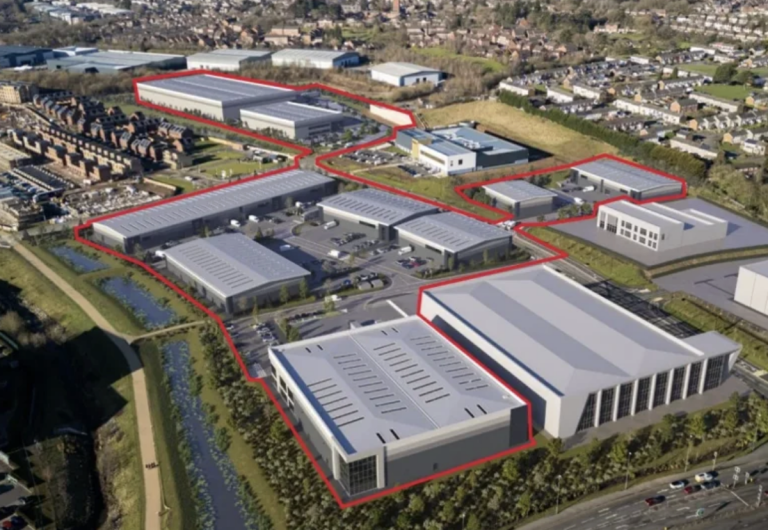
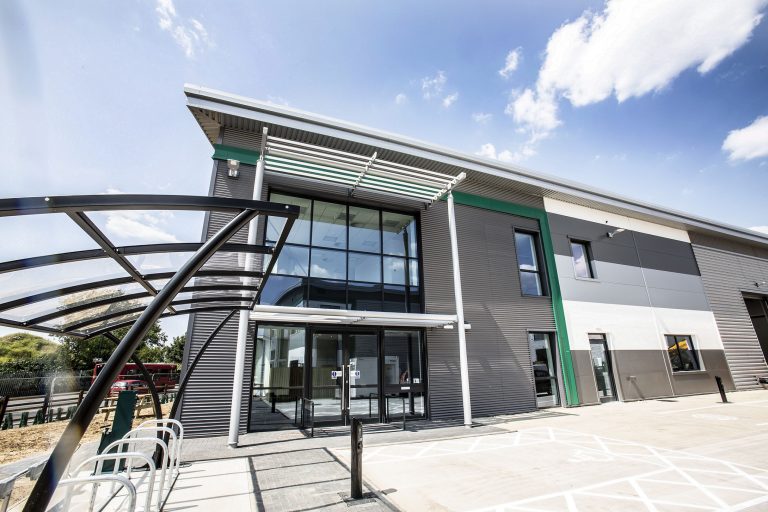
Winvic Construction Ltd, a leading main contractor that specialises in the design and delivery of private and public sector construction and civil engineering projects, has exceeded social value targets in its delivery of the second phase of Prologis Park at Beddington Lane in Croydon, South London.  In alignment with real estate logistics provider Prologis’ Social Value Charter, Winvic implemented a robust Employment and Skills Plan in collaboration with Sutton Council, Sutton and District Training, and the South London Careers Hub.   The contractor surpassed its Section 106 Employment and Skills commitments, delivering high-impact social value initiatives as part of its partnership with Prologis and the London Borough of Sutton.  The expansion of Prologis Park Beddington Lane comprises of four low-carbon logistics units totalling over 110,640 sq. ft, including 97,105 sq. ft of warehouse space and 13,535 sq. ft of modern office facilities built to BREEAM Excellent and EPC A+ ratings.  Winvic surpassed extensive training and skills targets, hosting 11 work insight sessions (83% above target) and seven site visits.   Work insight sessions included six engagement with students from Sutton and District Training, helping to raise awareness of construction careers and skills pathways, and two tailored construction and sensory sessions for SEN learners at Greenholm School, offering an inclusive and engaging experience and engaging for young people with additional learning needs.   Further activities included supporting a speed networking event at Harris Academy Sutton, where students interviewed members of the site team, and providing an employer talk as part of a site visit with representatives from London Borough of Sutton Council, to the same school. This led to one of the students completing a work experience placement with Winvic. In addition, mock interviews were delivered at Greenshaw School, helping Year 12 students prepare for future employment.  Winvic coordinated apprenticeships and work placements, including a local Civil Engineering apprentice who was recruited directly onto the Beddington Lane site and continues to train with Winvic on another project. Another local Civil Engineering apprentice, engaged through shared apprenticeship provider Co-Train, successfully gained employment with Winvic to continue her apprenticeship.   Winvic’s social value activities extended to supporting charity and community sector organisations including social enterprise Hey Girls, site signage provider Nuneaton Signs, who provide employment for people with disabilities , and the Daniel Baird Foundation, a charity which provides publicly accessible bleeding control packs for stab victims, with Winvic donating a pack for the local community.  Emma Alderman, Senior Social Responsibility Manager at Winvic, said: “We’re incredibly proud of what we’ve achieved at Beddington Lane. Our goal was not just to meet the extensive targets but to do so in a meaningful way. By working closely with Sutton and District Training, local schools, and shared apprenticeship providers, we’ve delivered a wide range of impactful opportunities that reflect our long-term commitment to social value.”  Danny Nelson, Managing Director – Industrial, Logistics & Data Centres at Winvic, said: “Beddington Lane Phase 2 is a great example of delivering not only sustainable, high-quality logistics units, but also long-lasting benefits for the local community. We’re pleased to be building on our long-standing relationship with Prologis with whom we share many of our core values. The team’s passion for engaging with local learners and creating real employment pathways has been wonderful to watch. I’m incredibly proud of our results and how we’ve embedded social value into the very fabric of this project, making a difference to people’s lives and the community.”  Tim Burn, Director – Development Management at Prologis UK, added “Projects like Prologis Park Beddington Lane show how we bring our Social Value Charter to life on the ground. Working with partners such as Winvic, local authorities and education providers allows us to create opportunities that have a lasting impact on people and communities, not just buildings. We are proud of what has been achieved at Beddington Lane and of the positive legacy it is creating locally.”  Recognising the quality and impact of the social value work, Beddington Lane has been awarded a Silver National Site Award by the Considerate Constructors Scheme, achieving an exceptional 44 out of 45 score, including a best practice point.  Building, Design & Construction Magazine | The Choice of Industry Professionals

Read More »
Different pile foundations and their construction methods

Different pile foundations and their construction methods

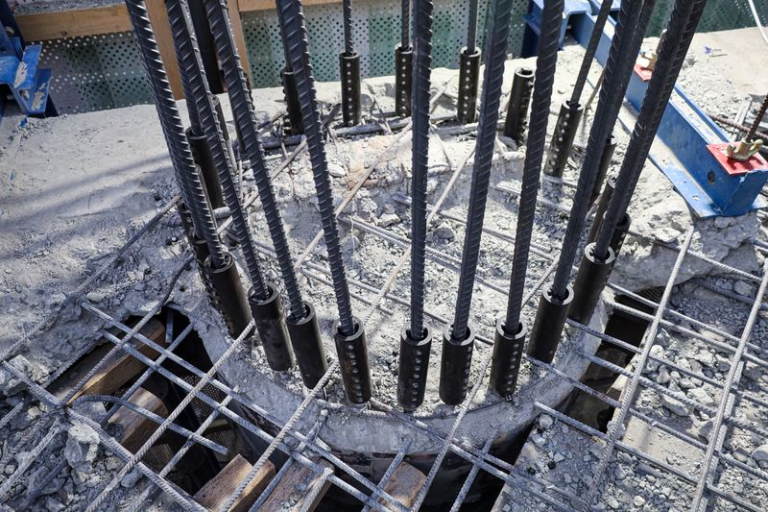
Structural stability starts deep below the surface, invisible to the human eye but playing a critical role in the overall structural performance. The type of foundation is determined by the characteristics of the ground because if the ground is weak, inconsistent or highly compact, conventional shallow foundations just don’t cut it. Instead, we use pile foundations which offer a dependable, deep-foundation solution. Understanding pile foundations Here at DSA, we have experience in designing all types of pile foundations. Long, slender structural elements, often cylindrical, the piles are driven, drilled or cast into the ground until they reach deeper, more suitable ground conditions. This means that they can take the weight and load of a range of heavy structure types, such as buildings, high-rise towers and large-scale industrial warehouses. In turn, this minimises settlement issues, uplift or lateral forces, enhancing the overall integrity of the structure. And this is why pile foundations are so indispensable in construction-they make it possible to develop unsuitable shallow foundation sites such as reclaimed land or waterlogged areas. Because of this, piling does come at a price depending on the load capacity, budget, construction time and site impact. The main types of pile foundations Foundation piles are classified by material, load transfer mechanism or installation method and is how a structural engineer knows which piling construction method is most suited to the construction project. Concrete piles: Can be bought ready-made as precast or cast-in-situ by boring onsite and pouring concrete in. The latter is particularly suited to ground where there is a variety of soil layers, often found in built-up urban areas. Steel piles: These can be used for deep pile foundations for lighter-load applications, such as bridges and marine works. End-bearing piles: Transfer loads directly onto a strong stratum such as dense sand or bedrock. Friction piles: These work by causing skin friction between the pile shaft and surrounding soil. Combined piles: Use both end bearing and friction resistance for maximum stability. Piling construction methods The selection of piling construction method is determined by the soil conditions, constraints and overall project requirements: Driven piles: Heavy weight machinery hammers or vibrates pre-formed piles into the ground, made from steel, timber or precast concrete. The result is reliable, consistent and immediate load-bearing capacity. The noise however is very extreme making it unsuitable in some highly populated areas. Bored (cast-in-situ) piles: If noise needs to be kept to a minimum in a restricted or noise-sensitive location this is the most suitable piling method. Compared to driven piles, bored piles cause less disruption. For this method, a hole is carefully drilled to the suitable depth and then filled with reinforced concrete. When it sets it forms a strong and stable foundation. This method also gives exact control over the depth and diameter of the pile foundation so that performance can be optimised to suit a variety of soil conditions. Rotary bored piles: High-load projects demand exceptionally high-strength piles, and rotary bored piles are ideal for more major infrastructure projects of a bigger scale. Continuous flight auger (CFA) piles:  Also less disruptive and noisy they are a vibration-free option for urban sites, widely used in modern piling construction work. Screw (helical) piles: If the project is a light structure, commercial or residential, screw piles are a good option, being quick to install with minimal vibration and even better, they deliver immediate load-bearing capacity. The piles are installed by screwing steel shafts with helical plates into the ground until they reach suitable soil. What’s the right type of pile foundation? There are four main factors that influence the pile selection: Soil conditions: Load bearing capacity, compressibility and groundwater level. Structural loads: Magnitude and direction of applied forces. Site environment: Access limitations, vibration control and spoil disposal. Cost and sustainability: Balancing economic efficiency with environmental responsibility. The first and most crucial step is a thorough geotechnical investigation to give the structural engineer the essential information needed about the soil properties, subsurface conditions and load-bearing capacity, all of which influence the stability, safety and long-term efficiency of the structure. Pile foundations for long-lasting construction Pile foundations are a groundbreaking solution in the world of structural and civil engineering because they enable construction to happen on sites that might otherwise be deemed unsuitable for development.  With so many piling methods DSA engineers can design efficient, economical and environmentally responsible solutions to suit the unique needs of every project. Innovative technologies and continuous advances in materials and installation equipment mean that pile foundations are becoming even more low impact, reducing vibration and noise to more acceptable levels, securing them a vital role in the future of resilient and sustainable construction the world over.

Read More »
Why charred wood is suddenly everywhere in modern exteriors

Why charred wood is suddenly everywhere in modern exteriors

A couple years back, “black timber on the outside” felt like something you’d only spot in a glossy architecture mag. Now? You’ll see it on new builds, extensions, garden rooms, even that one house on your street that used to look a bit… tired. Then it got a dark coat, new windows, and suddenly it looks like it belongs in a design shoot. Charred wood is having a moment, and it’s not just because it photographs well (it really does). There’s history behind it, there’s a practical side to it, and there’s also a bit of that human thing we all want: a home that feels calm, solid, and properly “done”. Let’s talk about why it’s popping up everywhere. It isn’t new. It’s old school Japan, showing up in modern builds Charred timber cladding comes from a traditional Japanese method called Yakisugi. The idea is simple: lightly char the outside face of timber so the surface carbonises. This was used in Japan for wood protection and it’s been written about as a centuries old technique, often linked to waterproofing Japanese cedar. And here’s a funny twist: in the West, people often call it “Shou Sugi Ban”, but that’s not really how it’s used in Japan. The Japan Woodcraft Association notes it’s basically a mistranslated or misread term and “Yakisugi” is what’s commonly understood in Japan. So yeah, it’s not some brand new trend cooked up for Instagram. It’s a proven technique that got picked up again because modern homes started craving texture, contrast, and materials that feel real. People got bored of exteriors that look like everyone else’s You know the look: neat render, grey frames, same brick, same roofline. Clean, fine, but a bit… copy paste. Charred wood does something that paint and render can’t quite pull off. It gives depth. Even if you don’t know why, your eyes notice it. In bright sun it reads sharp and bold. In cloudy weather it looks soft, almost velvety. At night, with warm lights, it turns cosy. Not cute cottage cosy, more “quiet luxury” cosy. I remember standing outside a new extension where the owner had only clad one section, just the rear wall facing the garden. The rest of the house stayed as is. And still, the whole place felt upgraded. Like putting on a good jacket and suddenly you walk different, if you know what I mean. That’s why you’re seeing it on feature walls, porch returns, garden studios, and fences that aren’t trying to disappear. It’s tied to a bigger trend: darker façades are back There’s been a steady rise in “dark exterior” design. Blackened timber, deep charcoal finishes, dark metal trims, sharp lines. It’s less about looking fancy and more about looking intentional. Design sites have been featuring charred timber façades across a range of projects, from traditional uses in Japan to modern builds that use the material for texture and longevity. And because this material has a distinct finish, it’s easy to spot and easy to share. Charred timber catches the eye fast, simple as that. The practical side: water, bugs, and the “less fuss” appeal A big reason homeowners and builders are interested is the promise of durability. The Yakisugi process is often described as carbonising the surface, which can reduce water absorption and help protect against insects, fungi, and mould. That’s one of the core “why people do it” points you’ll see referenced in explainers on Yakisugi. Now, quick reality check, because this matters if you want the post to feel trustworthy: some research and reviews note that surface charring alone doesn’t automatically guarantee better fire or water performance in every setup. It depends on the system, timber species, the depth of char, and how it’s installed and finished. Wikipedia itself even flags that some studies show surface charring alone doesn’t improve durability or resistance the way people sometimes assume. That honesty is actually good for sales, weirdly. People can smell “too perfect” claims a mile away. What’s true in day to day terms is this: charred wood is chosen because it can be lower maintenance than many painted finishes, and it hides small marks better than a pristine painted board. Plus, you’re not constantly repainting because the colour “is” the surface, not a top coat you’re babysitting every year. Fire talk, but in a sensible way Charred wood and fire resistance get mentioned together a lot, and you’ll see brands explain that charring changes the surface layer in a way that can help slow ignition compared to raw timber. At the same time, building requirements vary, and fire performance is a serious topic. If a project needs a certain classification (especially for multi residential or particular boundary situations), specs may require fire rated systems or extra treatments. There are industry pieces talking about combining charred finishes with fire rated approaches to meet stricter criteria. So the useful takeaway for a homeowner is: treat it like any other external material choice. Ask what the product is designed for, what the install details are, and what your local requirements look like. No bravado, just good building practice. It’s not just homes. Designers are using it because it behaves nicely on a wall Another reason it’s spreading: professionals like using materials that are predictable on site. Architizer’s collection on charred timber façades points out that untreated cedar can stain unevenly in sun exposure, while charred timber can help avoid that kind of blotchy look and extend façade life. That’s the kind of line that makes builders nod. Nobody wants callbacks because one elevation aged differently to the other and now the client is fuming. Charred wood also plays nicely with other materials. Pair it with light stone, pale brick, big glass, warm lighting, simple black metal. It just works without screaming for attention. The “eco” pull, without the preachy stuff People are more cautious now about what they put on the outside of their home. Not everyone is thinking in terms of policies or carbon


Read More »