January 30, 2026
Costa Coffee sets sights on next wave of UK store expansion

Costa Coffee sets sights on next wave of UK store expansion

Costa Coffee has outlined a fresh set of acquisition requirements as it looks to continue expanding its estate across the UK. The coffee chain opened more than 80 new stores in 2025 and is now targeting further growth across a range of locations, including retail parks, high streets, shopping centres

Read More »
Arla Foods and XPO Logistics to launch distribution centre, centralising UK chilled operations by late 2027

Arla Foods and XPO Logistics to launch distribution centre, centralising UK chilled operations by late 2027

Arla Foods and XPO Logistics to launch distribution centre, centralising UK chilled operations by late 2027 Arla Foods, the UK’s largest dairy cooperative, and XPO Logistics, a leading provider of innovative and sustainable end-to-end supply chain solutions across Europe, today announce a further extension of their strategic partnership. This new chapter will

Read More »
Treveth celebrates construction milestone at Bodmin’s Normandy Way Business Hub

Treveth celebrates construction milestone at Bodmin’s Normandy Way Business Hub

Cornish developer Treveth has marked a key milestone in the delivery of the sustainable Normandy Way Business Hub, Bodmin, with a topping out ceremony to celebrate completion of the roof and main steel portal frame.   The ceremony marks significant progress on the development of seven high-quality, energy-efficient workspace units designed to meet the needs of light industrial, manufacturing, distribution, and warehouse occupiers.   Supported by

Read More »
Housebuilding sector shows early signs of recovery as firms ramp up productivity and innovation investment

Housebuilding sector shows early signs of recovery as firms ramp up productivity and innovation investment

The latest Barclays Business Prosperity Index report1 reveals that despite affordability pressures, regulatory challenges and financial caution, four in five businesses (83 per cent) operating in housebuilding and its supply chains remain confident about their outlook for the year ahead. Barclays’ anonymised client data from around 70,000 UK businesses, combined

Read More »
A2Dominion achieves SHIFT Silver accreditation

A2Dominion achieves SHIFT Silver accreditation

A2Dominion has been awarded a Silver accreditation in its latest SHIFT environmental assessment, achieving a 9% improvement on the previous year.   SHIFT is an independent review looking at how well organisations manage energy efficiency, heating, water use, waste and the wider environment across its homes, offices and neighbourhoods.   A2Dominion manages more than 38,000 homes across London and the South of England, and the reports’ findings has helped to guide the G15 member on the

Read More »
Design-Led Workplaces: How Striking Aesthetics Can Mask Critical Safety Risks and Operational Challenges

Design-Led Workplaces: How Striking Aesthetics Can Mask Critical Safety Risks and Operational Challenges

Modern workplaces are often designed to impress. Sleek open-plan layouts, glass balustrades, high-gloss finishes, polished concrete floors, and striking communal spaces are now standard. But while these environments are visually compelling, they often conceal hidden risks. According to a recent Health and Safety Executive (HSE) survey*, an estimated 680,000 workers

Read More »
Latest Issue
Issue 337 : Feb 2026

January 30, 2026

Costa Coffee sets sights on next wave of UK store expansion

Costa Coffee sets sights on next wave of UK store expansion

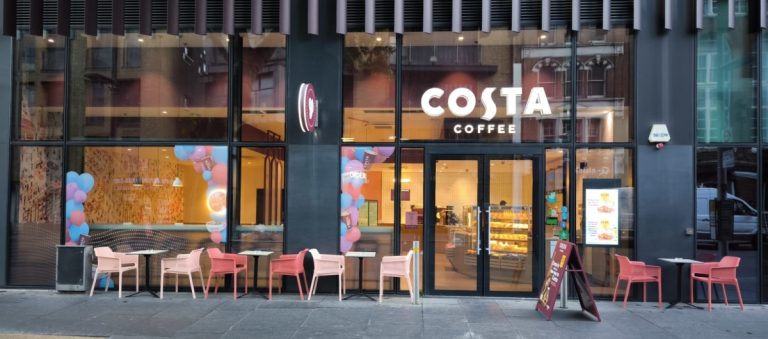
Costa Coffee has outlined a fresh set of acquisition requirements as it looks to continue expanding its estate across the UK. The coffee chain opened more than 80 new stores in 2025 and is now targeting further growth across a range of locations, including retail parks, high streets, shopping centres and travel destinations. A key focus of the expansion strategy is also the continued rollout of drive-through formats. Within retail parks, Costa is seeking units ranging from 1,500 sq ft to 2,500 sq ft, with external seating and nearby car parking. Both freestanding and in-line units will be considered, particularly in out-of-town locations with strong traffic flow and close proximity to foodstores, retail and leisure clusters. For high street and shopping centre locations, the operator is looking for similarly sized units between 1,500 sq ft and 2,500 sq ft, again with outside seating where possible. Costa is also open to opportunities in locations such as universities, hospitals and leisure destinations, where consistent footfall supports all-day trading. Travel locations form another strand of the growth plan, with Costa seeking sites within transport hubs and train stations. Units from as little as 125 sq ft are being considered in these settings, including grab-and-go kiosks, standard retail units and suitable conversions, provided footfall levels are high. Drive-through expansion remains a priority, with Costa targeting units between 1,250 sq ft and 2,200 sq ft. Ideal sites will be located in out-of-town areas, close to foodstores, retail warehousing and leisure uses, and will include a dedicated drive-through lane, external seating and either dedicated or shared car parking. Property adviser Savills, which was appointed by Costa in 2025, is leading the search for suitable new locations as the brand continues to build momentum across its UK estate. Building, Design & Construction Magazine | The Choice of Industry Professionals

Read More »
£74m Low-Carbon Refit Approved for Bristol’s Landmark Canons Wharf Offices

£74m Low-Carbon Refit Approved for Bristol’s Landmark Canons Wharf Offices

A £74m redevelopment of Bristol’s prominent Canons Wharf office complex is set to move forward after a major financing agreement cleared the way for construction to begin. Puma Property Finance has secured its largest loan to date, providing £74m to support a joint venture between Mactaggart Family & Partners and Kinrise. The funding will enable a comprehensive low-carbon refit of the Grade II-listed waterfront estate, located at the heart of Bristol’s Harbourside. The scheme will transform the former Lloyds Banking Group regional headquarters into around 165,000 sq ft of modern office accommodation across two buildings, complemented by 18,000 sq ft of food and beverage space overlooking the Amphitheatre. Designed for flexibility, the buildings can operate either as a single corporate headquarters or as a multi-let campus, responding to changing occupier demands. Alongside office space, the redevelopment will deliver a wide range of amenities aimed at creating a high-quality workplace environment. These include a gym and wellness facilities, saunas, an auditorium, a rooftop pavilion, landscaped gardens and terraces, helping to position the scheme as a leading example of next-generation office design. Sustainability sits at the core of the project. The refit is targeting BREEAM Excellent, EPC A, WiredScore Platinum and SmartScore Gold ratings. A low-carbon retrofit strategy will be employed, retaining and reusing the existing structures to significantly reduce embodied carbon while upgrading performance through improved glazing and natural ventilation. The all-electric buildings will be powered by green energy and will utilise water-source heat pumps drawing from the adjacent harbour. Rooftop solar panels, new tree planting and extensive green landscaping will further support the scheme’s environmental credentials. Originally designed by Arup Associates and constructed by Bovis Construction in the late 1980s, Cannons House was awarded Grade II-listed status in 2023 in recognition of its architectural importance and contribution to the regeneration of Bristol’s docks. Construction is expected to begin in summer 2026, with practical completion targeted for late 2027. Once complete, the project is expected to play a key role in redefining Bristol’s office market, delivering a landmark example of sustainable retrofit within a historic urban setting. Building, Design & Construction Magazine | The Choice of Industry Professionals

Read More »
Arla Foods and XPO Logistics to launch distribution centre, centralising UK chilled operations by late 2027

Arla Foods and XPO Logistics to launch distribution centre, centralising UK chilled operations by late 2027

Arla Foods and XPO Logistics to launch distribution centre, centralising UK chilled operations by late 2027 Arla Foods, the UK’s largest dairy cooperative, and XPO Logistics, a leading provider of innovative and sustainable end-to-end supply chain solutions across Europe, today announce a further extension of their strategic partnership. This new chapter will transform Arla’s chilled network – creating a future-ready, more efficient, resilient, safe and sustainable operation – through a new leading UK central distribution centre (CDC) that will handle all Arla’s UK chilled palletised products*. Currently under development at Prologis RFI DIRFT in Northamptonshire, UK, the new facility will bring Arla’s chilled dairy products, such as cheese, butter and yoghurts, into a single, centralised location. The move will strengthen Arla’s supply chain resilience, reduce road miles, and support more efficient distribution across the UK. XPO Logistics is project managing the delivery of the CDC and will operate the site from late 2027, when it becomes operational. As part of a long-term partnership model, XPO Logistics is supporting Arla Foods beyond day-to-day operations, bringing expertise in transformation, automation and scalable operating design. The new CDC illustrates how XPO Logistics works with major brands to build future-ready supply chains. XPO Logistics’ investment in state‑of‑the‑art automation will create skilled warehousing roles in the region, including automation operations, maintenance, quality, inventory control, and safety. Appropriate training and upskilling for advanced automation will be provided by XPO Logistics as part of the recruitment and onboarding process. Fran Ball, SVP UK Supply Chain for Arla Foods UK, comments: “Consolidating our chilled pallet operations into a single, advanced facility in Northamptonshire is a strategic leap forward for Arla. By partnering with XPO Logistics and Prologis, we are improving the resilience of a critical part of our supply chain and making meaningful progress on reducing waste and road miles.” Dan Myers, Senior Vice President, Dedicated Supply Chain – Europe, XPO Logistics, said: “Arla stands for quality; their products are loved and trusted by every household in the UK. This future-ready CDC will play a key role in ensuring that Arla continues to deliver great products whilst improving the resilience, sustainability, and efficiency of its supply chain. Working together, we’re driving positive strategic change which will support Arla’s business to continue to prosper today and tomorrow.” Phil Oakley, SVP, Prologis UK, said: “Partnerships and developments like this play an important role in creating long term economic value for West Northamptonshire, helping to attract investment and underpin jobs across the region. At Prologis RFI DIRFT, we’ve built a community with the capacity and skills to support high-performing logistics operations like this one, and we look forward to supporting Arla and XPO as the project moves forward.” Today’s announcement follows the €107.7m (£90m) investment at Arla Lockerbie to create a UHT and lactose-free milk centre of excellence. This builds on more than €355m of UK investments announced in 2024 across five sites, underpinning Arla’s growth and continued support for UK manufacturing and the future of British dairy. Speaking about Arla’s support for British dairy, Bas Padberg, managing director, Arla Foods UK, said: “Today’s announcement further signals our commitment to driving change in the UK, and supporting the future of British dairy. The UK food sector has a vital role in public health, and we’re committed to delivering nutritious, affordable dairy for more people – this is another important step forward.” Building, Design & Construction Magazine | The Choice of Industry Professionals

Read More »
Treveth celebrates construction milestone at Bodmin’s Normandy Way Business Hub

Treveth celebrates construction milestone at Bodmin’s Normandy Way Business Hub

Cornish developer Treveth has marked a key milestone in the delivery of the sustainable Normandy Way Business Hub, Bodmin, with a topping out ceremony to celebrate completion of the roof and main steel portal frame.   The ceremony marks significant progress on the development of seven high-quality, energy-efficient workspace units designed to meet the needs of light industrial, manufacturing, distribution, and warehouse occupiers.   Supported by the Cornwall and Isles of Scilly Good Growth Programme and part-funded by the UK Government through the UK Shared Prosperity Fund, the scheme represents a major new investment in Cornwall’s business infrastructure. Located on the established Walker Lines Industrial Estate, it will enhance local capacity for growing and incoming businesses.   Councillor Leigh Frost, Leader of Cornwall Council, joined representatives from Treveth, Poltair Construction and the Good Growth Programme for the ceremony. Guests were given a tour of the site with updates on construction progress and the sustainability-led approach being delivered throughout the build.   Despite challenging winter weather, Poltair Construction has made strong progress. The full steel portal frame is now complete, the roof is in place, and solar PV panels have been installed.  Each of the new units is designed to B2/B8 use class and built to high sustainability and accessibility standards. Key features include:   The development will also deliver a biodiversity net gain through enhanced landscaping and sustainable site design. Through smart engineering, the project team has already saved five tonnes of CO2e and avoided 4,000m3 of soil movement by re-working the sub-base design to reuse material on site.   Robert Churchill, Senior Commercial Property Manager at Treveth, commented: “The  topping out ceremony is an important moment for Normandy Way and a chance to reflect on what has been achieved to date. We were pleased to share this milestone with partners who have helped make the project possible.  “Despite difficult weather and earlier remediation and utility diversion delays, progress remains strong, and we are on track for completion in Spring 2026.  “With the buildings now taking shape, it’s an excellent time for local businesses seeking space between 1,400 sq ft and 9,850 sq ft to get in touch. Units can still be combined to meet specific operational needs, and we can offer incentives for early engagement, including tailored internal layouts. Interested businesses should contact our agents at Vickery Holman as soon as possible.”  Councillor Leigh Frost, Leader of Cornwall Council, said: “It’s great to see this project moving towards completion, and I look forward to seeing the first businesses move into these units. Building a resilient Cornish economy that creates growth and jobs is one of our key priorities, and providing the infrastructure needed by businesses is a key part of that work. This is good news for Bodmin, and good news for Cornwall.”   The Normandy Way Business Hub ads to Treveth’s expanding commercial property portfolio, which includes developments across Cornwall aimed at stimulating local jobs, attracting inward investment, and delivering long-term economic value for the region. The Cornwall Council founded developer is progressing with further commercial space in Bodmin for an end user led scheme, in addition to plots at Newquay Aerohub for bespoke and larger units to meet business needs.   As a recent addition to this portfolio, the Normandy Way Business Hub supports Treveth’s mission to deliver flexible, tenant-focused commercial space that drives economic growth while championing environmental performance.   Treveth owns and manages commercial units across Bodmin, Helston, Pool, and Falmouth, all of which are currently fully let. The developer aims to deliver at least 5,000 sqm of commercial space across Cornwall each year.   For more information on Treveth, visit www.treveth.co.uk. For enquiries about the new units at the Normandy Way Business Hub, contact rbrenton@vickeryholman.com / eferris@vickeryholman.com.   Building, Design & Construction Magazine | The Choice of Industry Professionals

Read More »
Housebuilding sector shows early signs of recovery as firms ramp up productivity and innovation investment

Housebuilding sector shows early signs of recovery as firms ramp up productivity and innovation investment

The latest Barclays Business Prosperity Index report1 reveals that despite affordability pressures, regulatory challenges and financial caution, four in five businesses (83 per cent) operating in housebuilding and its supply chains remain confident about their outlook for the year ahead. Barclays’ anonymised client data from around 70,000 UK businesses, combined with research from 500 industry leaders1 and 2000 consumers2, also shows strengthening activity at the start of the development pipeline, sustained buyer demand for new-build homes and a major uplift in planned investment. Key findings from the Barclays Business Prosperity Index include: Sector investment and innovation gathers pace Talent, skills and AI are all becoming major investment focus areas. Four in 10 (40 per cent) businesses with skills shortages are investing in new construction methods to reduce manual labour, alongside developing early career schemes (39 per cent), and focusing on training and upskilling (36 per cent). Meanwhile the average intended AI investment of £441,281 reflects growing demand for AI assisted design and planning (37 per cent), renewable and energy efficient materials (36 per cent), business management automation software (35 per cent) and building information modelling (29 per cent). Momentum is particularly strong in Electronics, where intended AI spend exceeds £500,000, while trades such as Plumbing (£380,000), Carpentry (£347,320) and Painting & Decorating (£328,371) signal smaller, though material allocations. Future Homes Standard: A top priority but confidence in readiness lags Nearly all firms (98 per cent) say aligning with the Government’s Future Homes Standard is a priority for the next 12 months, yet 82 per cent express concern about their readiness. Key areas where support is most needed include installing low carbon heating systems (21 per cent), applying the new Home Energy Model (20 per cent) and meeting updated ventilation standards (18 per cent).  Despite this, businesses are taking proactive steps, with 30 per cent investing in specialist equipment, training and technology to boost compliance. Strong Gen Z new-build appetite despite affordability pressures A quarter of homeowners (25 per cent) report they live in a new-build property. This rises amongst first-time buyers, with nearly half (47 per cent) of those who bought their first home in the past year opting for a new‑build property. New properties are most popular amongst Gen Z (61 per cent of homeowners) with desirable location named as the top driver of purchases (28 per cent). A fifth (20 per cent) cited favourable mortgage terms, such as higher loan-to-value ratio, and 17 per cent also reported energy efficiency as a major reason for buying new. This comes as young people report improving, but significant affordability challenges, as 61 per cent of Gen Z hoping to buy a home in the next 12 months said that mortgage rates have a bigger impact on affordability than house prices themselves. Despite strong buyer demand, there are still barriers to building. A quarter (25 per cent) of housebuilders report high construction costs as a major barrier, followed by rising inflation, cost of raw materials and meeting the requirements of the Future Homes Standard (all 19 per cent). Location, location, location Over the next 12 months, new-build property developers expect that consumers’ desire for customisation options, such as layout and finishes, to have the greatest impact on their approach (31 per cent), followed by expectations for upgraded digital infrastructure including high speed broadband (27 per cent). However, consumers report slightly different priorities. When surveyed about which features most influence their choice of property, the top factor was access to gardens or communal green spaces (42 per cent), followed by proximity to transport hubs (31 per cent) and proximity to parks or countryside (30 per cent). Just 17 per cent named digital infrastructure as a key influence, and just 11 per cent cited customisation. Jason Constable, Head of Real Estate, Barclays Corporate Banking, said: “The level of innovation we’re seeing across the industry from larger developers to specialist trades is encouraging, with businesses investing in technology, skills and modern construction methods to boost productivity. “These innovations, combined with stronger consumer demand for new-builds, present a significant opportunity for housebuilders. While affordability and planning delays still pose challenges, the underlying strength of demand points to clear potential for growth as market conditions stabilise.” John Ainsworth, Head of Real Estate, Barclays Business Banking, added: “Activity is generally subdued among SME housebuilders, with nearly three in 10 expecting no increase in output in the year ahead. Yet SMEs are working hard to overcome skills shortages and regulatory alignment, with their resilience coming through strongly as they show confidence in their future success. “If the industry is to hit the Government’s target and build the much-needed homes of the future, it’s vital we continue to support the scaleup of smaller regional players. At Barclays we are committed to providing the external finance needed to scale via our Business Prosperity Fund.” The Barclays Business Prosperity Fund is available to new and existing Business Banking and Corporate Banking clients across the UK to apply for lending and refinancing on existing projects. Terms and conditions apply. Businesses can read the full Barclays Business Prosperity Index Housebuilding report and find out more about the Business Prosperity Fund at home.barclays/businessprosperity. Building, Design & Construction Magazine | The Choice of Industry Professionals

Read More »
A2Dominion achieves SHIFT Silver accreditation

A2Dominion achieves SHIFT Silver accreditation

A2Dominion has been awarded a Silver accreditation in its latest SHIFT environmental assessment, achieving a 9% improvement on the previous year.   SHIFT is an independent review looking at how well organisations manage energy efficiency, heating, water use, waste and the wider environment across its homes, offices and neighbourhoods.   A2Dominion manages more than 38,000 homes across London and the South of England, and the reports’ findings has helped to guide the G15 member on the steps needed to deliver further improvements.   Conan McKinley, Asset Director at A2Dominion, said: “The SHIFT Silver accreditation shows the real progress we’re making, but it also sets out clearly where we need to do more. The report’s findings will help us focus our investment on the things that matter most to residents, warmer, more efficient homes, reliable heating, reduced waste, and neighbourhoods that feel clean and cared for.    “To help achieve this we’re establishing a dedicated sustainability team to drive the agenda forwards and we’re committed to using this assessment to guide practical improvements that support comfort, affordability and a more sustainable future for our communities.”   A2Dominion is already developing long-term plans to bring all its homes up to at least Energy Performance Certificate (EPC) C by 2030, starting with those needing the most improvement. A2Dominion is making changes to improve day-to-day comfort for customers living in blocks with shared heating systems, including better monitoring to quickly spot issues and upgrades in the poorest performing homes.   It is estimated that A2Dominion homes currently use 141.97 litres of water per person per day. The Government has outlined a target of 110 litres per person by 2050.   The G15 member is taking steps to reduce usage by updating specifications for taps, toilets and showers, installing more efficient fittings during kitchen and bathroom upgrades, improving how it records water-saving features in each home and installing rain water harvesting systems.   The SHIFT report is also helping A2Dominion with waste and fly tipping, with measures including installing built-in recycling bins in new kitchens and providing customers with clearer guidance on recycling.   Going forward, A2Dominion is also committed to supporting customers with more sustainability advice and information, including help articles and regular tips on saving energy, water and reducing waste.  Building, Design & Construction Magazine | The Choice of Industry Professionals
Read More »
Design-Led Workplaces: How Striking Aesthetics Can Mask Critical Safety Risks and Operational Challenges

Design-Led Workplaces: How Striking Aesthetics Can Mask Critical Safety Risks and Operational Challenges

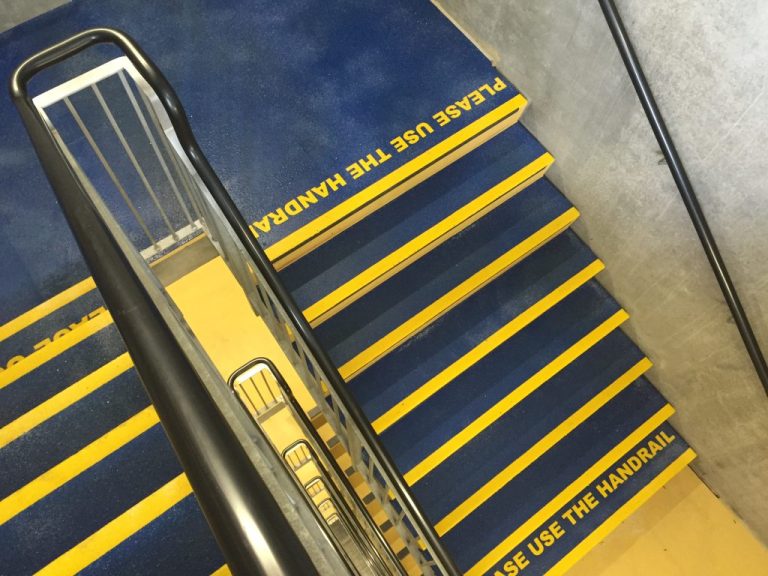
Modern workplaces are often designed to impress. Sleek open-plan layouts, glass balustrades, high-gloss finishes, polished concrete floors, and striking communal spaces are now standard. But while these environments are visually compelling, they often conceal hidden risks. According to a recent Health and Safety Executive (HSE) survey*, an estimated 680,000 workers sustained non-fatal injuries at work last year, with slips, trips, and falls remaining the leading cause. These incidents carry significant operational and financial implications. Beyond the human cost, they impact productivity, drive up insurance claims, and create potential legal exposure. In today’s connected world, a single accident can be captured and shared widely, placing an organisation’s reputation under intense scrutiny. As workplaces evolve to support hybrid working, innovation, and employee experience, safety cannot be an afterthought. While design-forward features look impressive, they can increase the risk of slips and trips if not carefully managed. Leading organisations are now auditing high-traffic areas, implementing engineered anti-slip solutions, and ensuring that aesthetics and safety coexist, because a visually stunning workspace should never compromise wellbeing or operational integrity. The way people move through a workplace increasingly shapes perceptions of the space and the organisation itself. Executed correctly, this creates a safer, more trusted, and more productive environment. Executed poorly, one misstep can become a very public and costly issue. Thermapply Group, specialists in engineered anti-slip systems, is urging organisations to reassess how flooring, stairways, and walkways are designed and maintained. Mike King, Co-MD of Thermapply Group, comments, “Modern workplaces are increasingly design-led and visually striking, but if spaces aren’t engineered for how people actually move, slip, trip, and fall risks grow unnoticed. When accidents happen, they’re no longer just a facilities or HR concern; they become a serious reputational and operational issue.” Investing in culture and employee experience is essential, but the physical environment is equally strategic. Safety is no longer merely a compliance requirement; it is a visible indicator of organisational standards and commitment to people. Thermapply Group’s patented Thermagrip anti-slip system is being utilised across industrial, commercial, and public environments, keeping high-traffic areas safe, durable, and seamlessly integrated into design-led spaces. Forward-thinking organisations now recognise underfoot safety as a core component of operational performance, brand credibility, and risk management, not just routine maintenance. To find out more, visit www.thermapply.co.uk Building, Design & Construction Magazine | The Choice of Industry Professionals

Read More »