April 7, 2026
UK Construction Activity Collapses

UK Construction Activity Collapses

Glenigan’s April Construction Index uncovers an industry struggling to cushion the blows from ongoing international conflict and a persistently weak economy. Glenigan releases the April 2026 edition of its Construction Index. The Index focuses on the three months to the end of March 2026, covering all underlying projects, with a

Read More »
Citrus Secures Planning For £340M Second Phase Of Integra 61

Citrus Secures Planning For £340M Second Phase Of Integra 61

Durham County Council Gives Green Light For Extra 3M Sq Ft Citrus Durham has secured planning consent from Durham County Council for the next £340M investment at its Integra 61 mixed-use development at J61 of the A1(M). Approval has been granted for an extension to the west of the Integra

Read More »
“Every part of the build must be lower carbon”: Holcim UK says new towns plan and Future Homes Standard will test industry readiness

“Every part of the build must be lower carbon”: Holcim UK says new towns plan and Future Homes Standard will test industry readiness

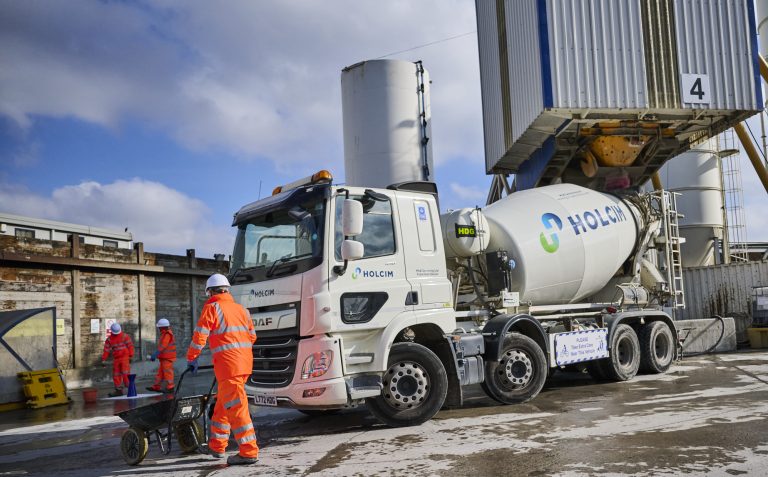
The housebuilding sector has been urged to embed lower carbon delivery into every part of the build following the publication of the Future Homes Standard. According to Ian Dean, Managing Director, Concrete Products at Holcim UK, the combination of the new regulatory requirements with government plans for seven new towns

Read More »
Hygiene and Acoustic Standards delivered for Alhambra Centre, Barnsley

Hygiene and Acoustic Standards delivered for Alhambra Centre, Barnsley

The Alhambra Centre in Barnsley, once a shopping centre, is undergoing a major transformation into a town centre health hub. This redevelopment aims to alleviate growing pressures on Barnsley Hospital by providing easily accessible healthcare services in a more central location. To support this transition, the interior design required a

Read More »
Shoosmiths adds Head of Planning to drive practice build-out

Shoosmiths adds Head of Planning to drive practice build-out

Shoosmiths is pleased to announce the appointment of Sarah Fitzpatrick as Partner and Head of Planning. Her arrival marks a significant milestone in the continued build-out of Shoosmiths’ Planning team across the UK, following the promotion of Matt Nixon to Partner in London and appointment of Steven Stewart as Partner

Read More »
How Can Smart Storage Solutions Improve Workplace Efficiency in Ireland in 2026?

How Can Smart Storage Solutions Improve Workplace Efficiency in Ireland in 2026?

In 2026, workspace efficiency is no longer just about productivity tools or digital systems—it’s also about how physical environments are organised. Across Ireland, businesses are increasingly recognising that well-designed storage systems can directly impact workflow, safety, and operational performance. From warehouses and offices to retail and industrial facilities, the demand

Read More »
Latest Issue
Issue 339 : Apr 2026

April 7, 2026

Metrocentre partners with Gateshead Council on major riverside regeneration scheme

Metrocentre partners with Gateshead Council on major riverside regeneration scheme

Metrocentre has entered into an agreement with Gateshead Council to bring forward Metro Riverside, a large-scale mixed-use development set to transform brownfield land along the south bank of the River Tyne. Located around three miles west of Newcastle-Gateshead city centre, the project will regenerate under-utilised land surrounding Metrocentre, creating a new urban neighbourhood comprising up to 4,500 homes alongside improved infrastructure, public spaces and leisure amenities. The scheme is being designed as a walkable, well-connected destination, with a focus on creating compact neighbourhoods that prioritise accessibility and strong links to public transport. The ambition is to establish a high-quality waterfront environment that supports both residential and economic growth. Metro Riverside has been identified as a key housing-led regeneration project within the North East Combined Authority’s Local Growth Plan, as well as forming part of the Strategic Place Partnership with Homes England, aimed at accelerating the delivery of new homes across the region. A central element of the development will be the evolution of Metrocentre itself, with plans to reposition the retail destination to better serve the day-to-day needs of a growing local population, while continuing to attract visitors from across the North East. The agreement highlights the importance of long-term collaboration between the public and private sectors in delivering complex regeneration projects at scale. By aligning investment, planning and delivery strategies, the partners aim to unlock a new phase of growth for the area. Martin Healy, chair of Metrocentre, said the scheme demonstrates how coordinated partnerships can drive meaningful change, bringing together investment and local leadership to create a sustainable urban community. The project is expected to deliver a mix of residential, commercial and leisure uses, supporting job creation and long-term economic activity, while reinforcing Metrocentre’s role as a key regional destination. Building, Design & Construction Magazine | The Choice of Industry Professionals

Read More »
Contractors circle £30m high-rise container storage project at London Gateway

Contractors circle £30m high-rise container storage project at London Gateway

Contractors are preparing to bid for a £30m landmark logistics project at London Gateway, where plans are advancing for a 12-storey automated container storage facility at the major Thames-side port. The scheme, known as BOXBAY, will deliver a next-generation, high-density storage system for empty containers within the port’s existing MT Park area in Thurrock. Once complete, the structure will rise to around 55 metres in height, with a footprint of approximately 323 metres by 159 metres, making it one of the most technically ambitious industrial buildings of its kind in the UK. Procurement for the project is now underway, with contractors invited to participate in a competitive flexible tender process. A shortlist of bidders will be selected before final submissions are assessed on a 60:40 split between price and quality, with contract award expected in July. Construction is scheduled to begin shortly afterwards, with a two-year delivery programme. The project presents a complex engineering challenge, combining heavy civil engineering works with a substantial structural steel package. More than 15,000 tonnes of steelwork will be required, alongside around 50,000 sq m of cladding and a 46,500 sq m roof. Groundworks will also be extensive, involving the installation of over 5,000 precast piles, each approximately 28 metres in length, to support a 1.2 metre deep reinforced concrete raft foundation. The contractor will additionally deliver a full suite of infrastructure works, including drainage, power, firewater systems, IT networks and heavy-duty external pavements, as well as associated ancillary structures. A defining feature of the development will be its integration of advanced automation. The building will house 15 automated storage and retrieval machines operating along around 3km of rail, although the specialist systems themselves will be supplied separately. One of the key challenges will be delivering the project within a fully operational port environment. This will require careful sequencing, logistics planning and strict safety management to ensure ongoing terminal operations are not disrupted. The BOXBAY system is designed to significantly increase storage density and improve operational efficiency compared with traditional container stacking methods, helping to reduce congestion and maximise the use of available land. The project forms part of wider ongoing investment at London Gateway, reinforcing its position as one of the UK’s most advanced logistics and port infrastructure hubs, and highlighting the growing role of high-specification, automated industrial facilities in modern supply chains. Building, Design & Construction Magazine | The Choice of Industry Professionals

Read More »
UK Construction Activity Collapses

UK Construction Activity Collapses

Glenigan’s April Construction Index uncovers an industry struggling to cushion the blows from ongoing international conflict and a persistently weak economy. Glenigan releases the April 2026 edition of its Construction Index. The Index focuses on the three months to the end of March 2026, covering all underlying projects, with a total value of £100m or less (unless otherwise indicated), with all figures seasonally adjusted.  It’s a report which provides a detailed and comprehensive analysis of year-on-year construction data, giving built environment professionals a unique insight into sector performance over the last 12 months. April’s Index highlights the serious challenges facing the UK construction sector, which seem to be relentless. The industry remains in the tight grip of decline which, if not terminal, is having a deeply damaging effect, pushing its resilience to a breaking point. A phenomenal series of socioeconomic events and foreign policy decisions have resulted in a severely disrupted supply chain and unprecedented market volatility. It all comes as yet another hammer blow falling on contractors and subcontractors alike; stalling activity, flattening margins and denting profits. The US-Israel/Iran War started at the end of February and shows no sign of coming to an end any time soon, resulting in considerable uncertainty that’s set to keep sector performance subdued. Whilst some of the negative effects are being felt in the here and now, the expected aftershock of the continued closure of the Strait of Hormuz, alongside the increasing threats posed to the Suez Canal and Red Sea, mean disruption is predicted to continue through Q2 and Q3 2026. Amid this maelstrom, new projects commencing in the coming months are expected to be impacted. This comes after work starting on site fell once again, particularly when seasonally adjusted, dropping by 17% compared to Q4 to finish almost a fifth (-18%) below 2025 levels. Residential construction tumbled yet again, as international conflict, persisting confusion around planning policy and a weak economy continue to hinder development. Ice-cold investors and apprehensive potential buyers are keeping their hands firmly in their pockets for the time being. For Non-Residential, Offices remained a strong outlier, posting impressive project-start increases compared to both the previous quarter and last year. However, these impressive figures were not nearly enough to outweigh overall disappointment in these verticals, with civils tanking against both periods covered by the Index. Commenting on the April Index, Glenigan’s Allan Wilen says, “Superficially, looks can be deceiving. A seasonal rise during the first quarter is masking a renewed weakening in project starts. All three main verticals: housing, non-residential buildings and civil engineering are considerably lower than a year ago and on the previous quarter on a seasonally adjusted basis. He continues, “The sector is fighting on all fronts, home and abroad. Particularly, the Iran War will depress activity further near-term as private developers and house purchasers delay investment decisions due to fears of higher than anticipated interest rates, rising material costs, spiralling energy costs and stalled economic growth. It will have a knock-on effect on the non-residential verticals which, although many have ring-fenced funding, will no doubt be putting activity on hold to ensure they don’t waste budgets whilst rates spike.” Taking a closer look at the sectors, verticals and regions…                            Sector Analysis – Residential As above, Residential experienced a particularly poor period, according to Glenigan’s figures. Project-starts declined by13% on the preceding three months and by almost a third (-30%) on 2025. Drilling a little deeper, private housing construction-starts declined by 9% against the preceding three months and by 34% against the previous year. Social Housing starts were similarly depressed, dropping by roughly a quarter (-24%) against the preceding three months and by 16% against the previous year. Sector Analysis – Non-Residential According to Glenigan’s data, Offices were the only vertical to experience a growth spurt compared to the previous quarter, up 37%, to stand over two-thirds (+67%) above 2025 levels. This uptick in activity was primarily supported by the £50 million 105 Old Broad Street office development in the City of London. The only other vertical to increase against the previous quarter was Retail, which rose 12% against the preceding three months. However, this modest leap wasn’t enough to bring it above last year’s results, falling 17% by comparison. Hotel & Leisure and Education had a mixed period, with both falling by around a quarter (-25% and -24% respectively) compared to the previous quarter. However, both finished up when measured against last year, rising 1% and 23% respectively. Elsewhere, performance plummeted. Industrial experienced an especially lacklustre period, nosediving by 36% against the preceding three months to stand 31% below the previous year. Likewise, Health declined 16% against the preceding three months to stand 13% lower than the previous year. Community and Amenity project-starts, which have recently posted positive results are now in recession, falling by 37% against the preceding three months to stand 10% down against the previous year.  Sector Analysis – Civils The bottom fell out of Civils, with work starting on-site cascading 37% against the preceding three months and falling 34% against the previous year.  Breaking it down, Infrastructure work starting on-site declined 32% against the preceding three months and declined by 37% on the previous year. Similarly, Utilities declined 42% against the preceding three months and by 30% against the previous year. The Regional Outlook According to Glenigan’s regional data, the performance picture was inconsistent. Once again, London was the stand out performer, experiencing a strong performance, rising 26% against the preceding three months to stand 69% up against the previous year. This was underpinned by a strong performance from the Office sector, which helped drive growth in the region. It was more of a mixed bag for some of the regions. Northern Ireland experienced a mixed performance, dipping 2% against the preceding three months to finish 37% up against the previous year. The North East performed similarly, dropping 27% against the preceding three months to stand


Read More »
Citrus Secures Planning For £340M Second Phase Of Integra 61

Citrus Secures Planning For £340M Second Phase Of Integra 61

Durham County Council Gives Green Light For Extra 3M Sq Ft Citrus Durham has secured planning consent from Durham County Council for the next £340M investment at its Integra 61 mixed-use development at J61 of the A1(M). Approval has been granted for an extension to the west of the Integra 61 scheme to accommodate a further 3 million sq ft of employment space. The plans for the second phase follow the success of the existing £400M Integra 61 development, where 90% of the 3m sq ft of developable space is already complete. The major investment into the second phase has the potential to create some 300 new jobs throughout the build resulting in up to £30m in additional economic output (GVA) into the economy each year. Operationally the development could support c3000 jobs once operational dependant on occupiers, generating up to £100m of additional economic output (GVA) into the economy each year. The outline planning consent allows for a range of storage/distribution and manufacturing units of varying sizes, to reflect market demand from regional businesses as well as those looking to invest in premises in the region. Now that the fundamental development principles of bringing a scheme forward have been approved, later reserved matters applications will evolve the exact design and scale, following the principles now established. The proposed development will, dependant on speed of uptake and demand, require the delivery of the Bowburn Development Route (relief road) in conjunction with Durham County Council and other stakeholders. Integra 61 is already home to Amazon’s 2m sq ft fulfilment centre, a further 640,000 sq ft of speculative logistics space at Connect at Integra 61 and an impressive roadside portfolio including Costa and Greggs along with an incoming £4 million EG On The Move petrol station with a convenience store and separate Starbucks drive-thru. Tesla has also installed 19 new Superchargers on site. Construction is well underway on Marton Care’s new 73 bedroom care home facility to complement the 260 new homes already developed by Persimmon and Bellway. James Taylor, Regional Director at Citrus, said: “We are extremely pleased to have secured outline planning consent, which is a significant milestone and the culmination of a long-held vision to expand Integra 61 and build on our successes across two phases, together once complete creating one of the region’s largest employment destinations. We’d like to thank the many stakeholders that continue to support us on this journey and we look forward to delivering this exciting phase with our partners.” Building, Design & Construction Magazine | The Choice of Industry Professionals

Read More »
“Every part of the build must be lower carbon”: Holcim UK says new towns plan and Future Homes Standard will test industry readiness

“Every part of the build must be lower carbon”: Holcim UK says new towns plan and Future Homes Standard will test industry readiness

The housebuilding sector has been urged to embed lower carbon delivery into every part of the build following the publication of the Future Homes Standard. According to Ian Dean, Managing Director, Concrete Products at Holcim UK, the combination of the new regulatory requirements with government plans for seven new towns across England demands a far more holistic and coordinated approach to sustainable construction. He said the UK is entering one of its most ambitious phases of housebuilding in decades, and that meeting rising expectations will depend on earlier collaboration and stronger attention to embodied carbon. He also stressed the pressures the sector faces as 2028 approaches. “We all want to get spades in the ground tomorrow, but the industry needs time to adapt. Planning cycles are long and 2028 is not far away, which means we must move faster and close regulatory loopholes if the policy is going to deliver what it promises.” Lower carbon materials must be embedded throughout construction Dean emphasised that decarbonising new homes begins long before heat pumps or rooftop solar are installed. “It is a positive step to see heat pumps and rooftop solar mandated, but if the concrete blocks, the foundations, the groundworks and the driveway materials are not low carbon or made with recycled content, you undercut the green credentials of the development from the start. We have to embed lower carbon delivery into every part of the build.” He said attention must now turn to embodied carbon in core materials. “The structure, the subbase and the infrastructure around the home all have a major role to play. If we get that right, the operational improvements delivered through the Future Homes Standard will go even further.” Early involvement is essential to achieving the best outcomes Holcim UK argues that early project involvement is fundamental to delivering the performance expected from new housing developments. According to Dean, early collaboration allows the company to combine traditional and lower carbon solutions in the most effective way. “Collaboration at the design stage allows us to bring forward the right mix of traditional and sustainable products and identify the best solution for each project.” He highlighted Holcim UK’s ability to support the full construction process. “Whether it is aggregates, asphalt, recycled materials, ready mix concrete using lower carbon cement, recycled aggregates or recycled blocks, we support developers at every stage. We invest in innovation because customers need solutions that are high quality, cost efficient and lower carbon.” Performance, he added, remains non-negotiable. “Quality and cost efficiency are always central. The shift toward more sustainable construction only works if it delivers higher quality outcomes at the same time.” New towns require deeper collaboration across the value chain The scale of the new towns programme makes supply chain coordination more important than ever. Dean believes early engagement will be critical to building places that are genuinely fit for the future. “If we get involved early with construction teams and supply chain partners, we can build better towns and better places to live.” Yet he also pointed to the hurdles. “There is still friction in parts of the value chain. We need more holistic partnerships if we are to deliver these new communities at the scale and quality required.” A positive policy direction, but delivery capability must follow Dean welcomed the ambition behind the new towns programme and the Future Homes Standard, while urging continued focus on practical delivery. “This is a step in the right direction, but we must ask whether everything needed to make it happen is fully in place. The hope is that it leads to greener construction and greater quality, but we all have a role to play in making sure it does.” Holcim UK plans to work with its construction sector partners to establish a new benchmark for integrated, low carbon development. Early collaboration, thoughtful material choices and consistent regulation will be essential to creating communities that work well now and, in the years, ahead. Building, Design & Construction Magazine | The Choice of Industry Professionals

Read More »
Hygiene and Acoustic Standards delivered for Alhambra Centre, Barnsley

Hygiene and Acoustic Standards delivered for Alhambra Centre, Barnsley

The Alhambra Centre in Barnsley, once a shopping centre, is undergoing a major transformation into a town centre health hub. This redevelopment aims to alleviate growing pressures on Barnsley Hospital by providing easily accessible healthcare services in a more central location. To support this transition, the interior design required a ceiling solution that met rigorous hygiene and acoustic standards while delivering strong aesthetic impact. CHALLENGE The project team faced several key challenges in transforming the Alhambra Centre into a functional and welcoming health hub. Aesthetic appeal was one of the top priorities, as the space required a fresh, modern look with a visually impactful ceiling design that would not only impress visitors but also create a calming and visually comfortable environment or all users. Hygiene compliance was equally important. Given the building’s new role as a healthcare facility, all materials, including ceiling systems, needed to meet strict hospital-grade hygiene standards to ensure a safe and sanitary environment for patients and staff. Acoustic performance also had to be carefully considered. A calm, quiet atmosphere is essential in healthcare settings, especially in waiting areas and treatment rooms. The team needed a ceiling solution that could help manage sound effectively to promote patient comfort and well-being. Lastly, service integration and accessibility presented a practical challenge. The ceiling system had to accommodate complex mechanical and electrical installations while still allowing easy access for future maintenance, ensuring long-term functionality without compromising design. SOLUTION Following a CPD session with Zentia and a review of relevant case studies, the architectural team, James Totty Partnership, selected a range of Zentia ceiling solutions to address the project’s diverse and complex requirements. In the reception and waiting areas, the architect envisioned a bold, eye-catching ceiling feature to make a strong first impression. They opted for Sonify Curved Baffles in a mixture of green and black, installed on the patented Sonify Create grid system. This combination not only delivered the striking visual impact they were after, but also provided Class A sound absorption to ensure patients would be in an acoustically comfortable space. For the circulation spaces, the team chose Prestige SL2 Planks. These were selected for their modern, streamlined appearance and, importantly, their ease of accessibility. In areas with frequent foot traffic and the need for ongoing service access, these planks offer a practical and efficient solution that supports long-term maintenance without compromising the aesthetic. In the clinical and utility areas, performance and hygiene were essential. The team specified Biobloc Acoustic tiles for treatment rooms and general medical zones, where sound control and cleanliness are essential. The Biobloc Acoustic tile delivers both excellent sound absorption, and compliance with hospital-grade hygiene standards, such as the Health Building Note 00-10 Part B: Walls and Ceilings, due to its additional coating that actively inhibits the growth of micro-organisms. For high-moisture environments such as shower rooms, Hydrabloc was chosen for its 100% Humidity Resistance (RH), water resistance, and easy-clean properties, ensuring both durability and safety in demanding conditions. However, Zentia’s involvement did not end with supplying products. The team delivered a full Sonify 3D Studio design service, working closely with the architects to bring the ceiling vision to life. In addition, Zentia collaborated with main contractor’s O&P Construction and installers JR Whinfrey Ltd to provide detailed system walkthroughs, support with quotations and order planning, and on-site guidance during installation to ensure a smooth project delivery. The redesigned Alhambra Centre is set to become a welcoming, efficient health hub with ceilings that do more than cover the space – they define it. With bold design statements in public areas and robust technical performance in clinical zones, Zentia’s ceiling systems have helped ensure the redevelopment meets both functional demands and architectural ambition. Building, Design & Construction Magazine | The Choice of Industry Professionals

Read More »
CBRE Secures letting of 411,470 sq ft at Gateway 4, Doncaster in Rapid Deal

CBRE Secures letting of 411,470 sq ft at Gateway 4, Doncaster in Rapid Deal

A 411,470 sq ft grade A distribution unit at Gateway 4, Doncaster has been let to Danish global logistics leader A.P. Moller – Maersk (Maersk) in a deal completed in just seven days. The landlord, CBRE Investment Management (“CBRE IM”) was advised by real estate advisory firm CBRE. The letting of the high-specification unit, prominently located adjacent to Junction 4 of the M18, reflects strong demand for prime, large-scale, fitted logistics space across South Yorkshire and the wider Yorkshire region. Gateway 4 offers best-in-class specification, including 15m eaves height, extensive yard depths, a strong power supply and excellent connectivity to the UK’s strategic road and rail networks, making it ideally suited to modern distribution requirements. Maersk, one of the world’s leading integrated logistics companies and the second largest container shipping operator globally, will use the facility to further enhance its UK logistics and distribution capabilities. Rosie Hulbert, UK Industrial and Logistics Director, CBRE Investment Management said: “We’re delighted to welcome Maersk to Gateway 4, Doncaster. This deal underscores CBRE IM’s operator capabilities, having completed the letting in just seven days, and is a direct result of the close relationships we have with the occupiers across our portfolio. We look forward to supporting more businesses seeking strategic, well‑connected locations both within our standing portfolio and our extensive portfolio of land under development.” Mike Baugh, Head of the Leeds Office, CBRE said: “Completing a transaction of this scale within just seven working days is a remarkable achievement and a testament to the strong landlord–tenant relationship demonstrated between CBRE IM and Maersk.  This letting highlights the continued demand from occupiers for high‑specification, fitted logistics space, and we are delighted to have supported CBRE IM in securing such a high‑calibre tenant as Maersk.” Gateway 4 forms part of a key logistics corridor, benefiting from immediate access to the M18 and proximity to major distribution hubs including iPort Rail. CBRE’s Industrial team in Leeds acted on behalf of CBRE IM in the letting, alongside CPP. Building, Design & Construction Magazine | The Choice of Industry Professionals

Read More »
Nixon Hire brings modular buildings to Scotland with Dundee launch at ScotPlant 2026

Nixon Hire brings modular buildings to Scotland with Dundee launch at ScotPlant 2026

Nixon Hire is pleased to announce that it will be exhibiting at ScotPlant 2026, Scotland’s largest construction equipment exhibition, taking place on Friday 24 and Saturday 25 April at the Royal Highland Centre, Edinburgh. Modular buildings launch in Scotland In a significant milestone for the company’s Scottish operations, Nixon Hire will use ScotPlant to unveil its new Modular Buildings Centre of Excellence at Dundee – the first dedicated modular hub across its five Scottish depots. Supported by the company’s Renewable Power Centre of Excellence in Glasgow, the new facility represents a major investment in Scotland and underlines Nixon Hire’s commitment to bringing its full range of sustainable site solutions to Scottish customers. A live sustainable site setup Visitors to the Nixon Hire stand will find a fully operational, live sustainable site setup, running in real conditions exactly as it would on a customer site. At its centre is an eight-bay modular building, demonstrating the thermal performance and build quality – a reflection of Nixon Hire’s higher spec modular range. Alongside it, on show will be Nixon Hire’s largest and most powerful battery storage unit to date, designed to support larger sites with clean, reliable power, as well as a fully refurbished 12′ Smart Air Solar mobile welfare unit – rebuilt entirely from existing materials. Monitoring the setup behind the scenes will be a working replica of Nixon Hire’s Renewable Energy Hub, a sophisticated control centre designed, configured and run by its in-house Technical Support Team. Pulse: the new customer portal Visitors will be able to experience Pulse, Nixon Hire’s recently launched online customer portal – the result of an 18-month, seven-figure investment. The browser-based platform gives customers autonomous insight into energy use, carbon impact and cost performance across their renewable energy equipment on hire. By replacing the manual collation and estimates that have traditionally been the norm across the sector, Pulse enables teams to report quickly, compare performance across locations and make more informed decisions about how equipment is deployed and operated. Brian Cornett, CEO of Nixon Hire, commented: “Nixon Hire has supported customers across Scotland for more than 40 years, and ScotPlant is an exciting opportunity to demonstrate the breadth of our offer there today. The opening of our new Dundee Modular Buildings Centre of Excellence reflects our continued investment in the region and our focus on delivering more sustainable, full-service site solutions closer to where customers need them. “We look forward to engaging with customers and industry stakeholders at ScotPlant and discussing how Nixon Hire can support the changing needs of sustainable site projects across Scotland.” Visit Nixon Hire at ScotPlant 2026 at Ave D No 3 on Friday 24 and Saturday 25 April at the Royal Highland Centre, Edinburgh. To book a walkthrough with one of the company’s senior team, please contact Rose Docherty at rose@almastrategic.com. Building, Design & Construction Magazine | The Choice of Industry Professionals

Read More »
Shoosmiths adds Head of Planning to drive practice build-out

Shoosmiths adds Head of Planning to drive practice build-out

Shoosmiths is pleased to announce the appointment of Sarah Fitzpatrick as Partner and Head of Planning. Her arrival marks a significant milestone in the continued build-out of Shoosmiths’ Planning team across the UK, following the promotion of Matt Nixon to Partner in London and appointment of Steven Stewart as Partner in Scotland. Sarah joins from Norton Rose Fulbright, where she was a partner and head of planning, and will lead the Shoosmiths’ national Planning team, arriving with more than 25 years of experience advising on all aspects of planning law. She brings particular expertise in London regeneration and redevelopment, compulsory purchase, high-rise development, energy infrastructure, road and rail, and large-scale multi-use schemes. She has a wide-ranging client base and strong network across mixed-use and residential developers, housebuilders, industrial and freight operators, hotel & leisure providers and major sports organisations. Her strength in compulsory purchase further enhances Shoosmiths’ ability to support complex development, regeneration and infrastructure projects, and expands its capabilities in key sectors including Energy & Infrastructure. Joe Mazzucca, Partner and Head of Real Estate, said: “We’re thrilled to welcome Sarah to Shoosmiths. Her appointment is a significant step forward in the growth of our Planning offering, strengthening our capabilities at a national level and positioning us to support on increasingly complex mandates. “Sarah’s depth of experience reflects our ambitions to drive growth and deliver outstanding results for clients. As Head of Planning, Sarah will play a leading role in building out this key pillar of the firm as we progress our ambitious 2030 strategic growth plan.” Sarah Fitzpatrick said: “I’m delighted to be leading Shoosmiths’ Planning offering, working alongside colleagues like Matt and Steven to build on the excellent work the team is undertaking. The firm’s innovative, forward-thinking approach to client delivery aligns closely with my own practice and leadership style, and I look forward to contributing to the team’s continued growth.” Sarah’s hire builds on sustained, strategic investment in Shoosmiths’ Planning practice. The firm promoted Matt Nixon to Partner in March 2026 and added Steven Stewart as a Partner in Scotland in September 2025. Matt heads the London and Southern planning teams, advising on all aspects of planning throughout the lifecycle of developments. Steven leads Shoosmiths’ Scottish planning and environmental team across both contentious and non-contentious matters. The Planning team works closely with Shoosmiths’ wider Real Estate teams. Real   Estate—one of three core practice areas for the firm—has seen several hires in recent months, reflecting increased focus on the most complex real estate client work and the firm’s strategic priority to build a market-leading practice. Building, Design & Construction Magazine | The Choice of Industry Professionals

Read More »
How Can Smart Storage Solutions Improve Workplace Efficiency in Ireland in 2026?

How Can Smart Storage Solutions Improve Workplace Efficiency in Ireland in 2026?

In 2026, workspace efficiency is no longer just about productivity tools or digital systems—it’s also about how physical environments are organised. Across Ireland, businesses are increasingly recognising that well-designed storage systems can directly impact workflow, safety, and operational performance. From warehouses and offices to retail and industrial facilities, the demand for smarter storage solutions is growing rapidly. But what exactly makes a storage system effective, and how can businesses choose the right setup? Why Is Storage Optimisation Critical for Modern Businesses? As businesses scale, clutter and disorganisation become major barriers to efficiency. Poor storage systems can lead to wasted time, reduced productivity, and even safety risks. Key benefits of optimised storage include: In competitive industries, even small improvements in organisation can lead to significant gains in performance. What Are the Best Shelving Solutions for Businesses in Ireland? Choosing the right shelving system is one of the most important decisions for any workspace. The ideal solution depends on the type of items being stored, available space, and frequency of use. Businesses looking for Best Shelving in Ireland often prioritise systems that offer flexibility, durability, and scalability. Common shelving options include: Boltless Shelving Easy to assemble and adjust, ideal for warehouses and stockrooms. Heavy-Duty Industrial Shelving Designed for high-load capacity and long-term use. Archive and Office Shelving Perfect for document storage and organised office environments. Retail Display Shelving Combines functionality with visual presentation. Selecting the right shelving system ensures that businesses can maximise storage capacity without compromising accessibility. How Do Storage Systems Impact Workplace Productivity? Storage solutions are directly linked to how efficiently a team operates. When items are properly organised: In contrast, poorly structured storage systems can slow down operations and create unnecessary frustration for staff. Which Storage Solutions Work Best for Different Industries? Different industries have unique storage requirements, and choosing the right solution depends on operational needs. Industry Recommended Storage Solution Key Benefit Warehousing Heavy-duty shelving High load capacity Retail Display shelving Improved customer experience Offices Document shelving + lockers Organisation + security Manufacturing Industrial racks Durability Tailoring storage systems to specific industry needs ensures maximum efficiency and usability. Why Are Lockers Essential in Modern Workspaces? Storage is not just about inventory—it’s also about people. Secure storage for personal belongings is increasingly important in modern workplaces. Solutions like Best Lockers provide: Lockers are especially useful in environments such as warehouses, gyms, offices, and educational institutions where multiple users need safe storage options. How Are Adjustable Standing Desks Changing Office Environments? Workspaces in 2026 are evolving to prioritise employee well-being alongside productivity. Adjustable Standing Desks are becoming a standard feature in modern offices due to their ergonomic benefits. Advantages include: When combined with effective storage systems, these desks contribute to a more organised and healthier work environment. What Makes a Storage Provider Reliable in Ireland? Choosing the right supplier is just as important as selecting the right products. A reliable storage provider should offer: Businesses across Ireland often rely on experienced providers who specialise in shelving and storage systems, ensuring both quality and long-term value. How Can Businesses Maximise Space Without Expanding? With rising operational costs, many businesses are looking for ways to optimise existing space rather than expanding. Effective strategies include: These approaches allow businesses to increase capacity without additional real estate costs. What Common Storage Mistakes Should Businesses Avoid? Even well-intentioned storage upgrades can fail if not planned correctly. Common mistakes include: Avoiding these issues ensures that storage investments deliver long-term benefits. Final Thoughts: Why Smart Storage Is a Competitive Advantage in 2026 In today’s fast-paced business environment, efficiency is everything. Smart storage solutions are no longer optional—they are a strategic investment that directly impacts productivity, safety, and growth. From selecting the Best Shelving in Ireland to integrating secure lockers and ergonomic workstations, businesses that prioritise organisation gain a clear operational advantage. By working with experienced providers and choosing high-quality systems, companies can transform their workspaces into efficient, scalable, and future-ready environments. FAQ What is the best shelving system for businesses? It depends on your needs, but heavy-duty and modular shelving systems are commonly used for flexibility and durability. Are lockers necessary in offices? Yes, they provide secure storage and improve organisation, especially in shared workspaces. Do standing desks improve productivity? They can enhance comfort and focus, contributing to better overall performance. How can businesses optimise storage space? Using vertical shelving, modular systems, and efficient layouts can significantly improve space utilisation.

Read More »